


Brepols Online Books Medieval Miscellanea Collection 2023 - bob2023mime

Collection Contents
1 - 50 of 55 results
-
-
Animals and Animated Objects in the Early Middle Ages
show More to view fulltext, buy and share links for:Animals and Animated Objects in the Early Middle Ages show Less to hide fulltext, buy and share links for: Animals and Animated Objects in the Early Middle AgesSince time immemorial, animals have played crucial roles in people’s lives. In Continental and Northern Europe, especially in the Migration Period and the Early Middle Ages, animals were both feared and revered. Varying and often ambivalent perceptions of fauna were expressed through everyday practices, religious beliefs, and the zoomorphic ornamentation of a wide plethora of objects that ranged from jewellery, weapons, and equestrian equipment to wagons and ships. This timely volume critically investigates the multivalence of animals in medieval archaeology, literature, and art in order to present human attitudes to creatures such as bears, horses, dogs, and birds in a novel and interdisciplinary way.
The chapters gathered together here explore the prominence of animals, animal parts, and their various visual representations in domestic spaces and the wider public arena, on the battlefield, and in an array of ritual practices, but also examine the importance of zoomorphic art for emerging elites at a time of social and political tensions across Scandinavia and the oft-overlooked Western Slavic and Baltic societies. This innovative book draws together scholars from across Europe in order to pave the way for a nuanced international and interdisciplinary dialogue that has the capacity to substantially increase our perception of human and animal worlds of the Early Middle Ages.
-
-
-
Archaeological Landscapes of Late Antique and Early Medieval Tuscia
show More to view fulltext, buy and share links for:Archaeological Landscapes of Late Antique and Early Medieval Tuscia show Less to hide fulltext, buy and share links for: Archaeological Landscapes of Late Antique and Early Medieval TusciaThis volume, the third in the series MediTo, investigates the changing landscapes of Tuscany during Late Antiquity and the Early Middle Ages. Through a selection of thematic case studies, presented initially during the second International workshop held in Paganico (Grosseto, Italy) in June 2019 and here further developed, the volume explores the concepts of settlement, economic, and societal changes in both Tuscany and its broader Mediterranean context over the course of several centuries. Together, the contributions gathered here showcase how cities and rural settlements, when studied in their archaeological and historical context, shed light on a dynamic landscape in which natural resources played a crucial role in defining the success or later abandonment of sites.
-
-
-
Constructing Saints in Greek and Latin Hagiography
show More to view fulltext, buy and share links for:Constructing Saints in Greek and Latin Hagiography show Less to hide fulltext, buy and share links for: Constructing Saints in Greek and Latin HagiographyThis book explores representations of saints in a variety of Latin and Greek late antique hagiographical narratives, such as saints’ Lives, martyr acts, miracle collections, and edifying tales. The book examines techniques through which the saints featured in such texts are depicted as heroes and heroines, i.e., as extraordinary characters exhibiting both exemplary behaviour and a set of specific qualities that distinguish them from others. The book inscribes itself in a growing body of relatively recent scholarship that approaches hagiographical accounts not just as historical sources but also as narrative constructions. As such, it contributes to the development of a scholarly rationale which increasingly values imaginative and fictional aspects of hagiography in their own right, with the aim of answering broader questions about narrative creativity and ideology. For instance, individual chapters examine how hagiographical accounts mobilize and capitalize on earlier literary and rhetorical traditions or narrative models. These questions are specifically addressed to explore the narrative construction of characters. The chapters thereby encourage us to acknowledge that many hagiographers were more skilful than is often accepted.
-
-
-

Crafting Knowledge in the Early Medieval Book
show More to view fulltext, buy and share links for:Crafting Knowledge in the Early Medieval Book show Less to hide fulltext, buy and share links for: Crafting Knowledge in the Early Medieval BookThis volume explores how knowledge was made in the early medieval book in the Latin West through two interrelated practices: collecting and concealing. The contributions present case studies across cultures and subject areas, including exegesis, glossography, history, lexicography, literature, poetry, vernacular and Latin learning. Collectio underpinned scholarly productions from miscellanies to vademecums. It was at the heart of major enterprises such as the creation of commentaries, encyclopaedic compendia, glosses, glossaries, glossae collectae, and word lists. As a scholarly practice, collectio accords with the construction of inventories of inherited materials, the ruminative imperative of early medieval exegesis, and a kind of reading that required concentration. Concealment likewise played a key role in early medieval book culture. Obscuration was in line with well-known interpretative practices aimed at rendering knowledge less than immediate. This volume explores the practices of obscuring that predate the twelfth-century predilection, long recognised by historians, for reading that penetrates beneath the “covering” (integumentum, involucrum) to reveal the hidden truth. Cumulatively, the papers spotlight the currency of two crucial practices in early medieval book culture and demonstrate that early medieval authors, artists, compilers, commentators, and scribes were conspicuous collectors and concealers of knowledge.
-
-
-
Essays on Jews and Christians in Late Antiquity in Honour of Oded Irshai
show More to view fulltext, buy and share links for:Essays on Jews and Christians in Late Antiquity in Honour of Oded Irshai show Less to hide fulltext, buy and share links for: Essays on Jews and Christians in Late Antiquity in Honour of Oded IrshaiLeading scholars in the study of Late Antiquity discuss the religious landscape of the eastern Roman Empire, with expert discussion of the theological, political, and social issues which confronted Jews and Christians in late Roman Palestine and surrounding regions. Individual chapters analyse in depth the rabbinic, patristic, and archaeological evidence to produce a sophisticated account of religious lives in provincial societies in which rabbinic Judaism took root within a Roman world increasingly dominated from the early fourth century CE by competing Christian power structures, particularly within Palestine. Detailed studies investigate, among other topics, rabbinic speculation about the origins and nature of the Roman state; the implications of the sharing of urban space by different religious traditions and the sharing of religious iconography; competition both within Judaism and Christianity and between Jews and Christians in light of the political pressures exerted by the Christian Roman state; and both similarities and differences in speculation by Jews and Christians about the nature of the expected end of days.
-
-
-
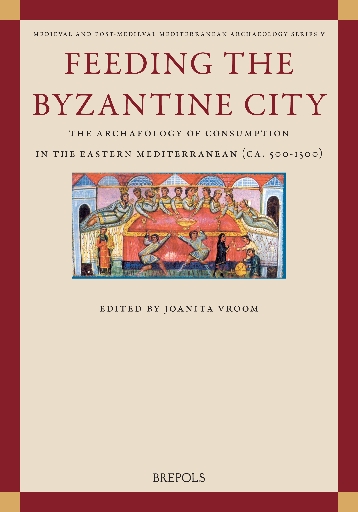
Feeding the Byzantine City
show More to view fulltext, buy and share links for:Feeding the Byzantine City show Less to hide fulltext, buy and share links for: Feeding the Byzantine CityThis book offers new and innovative perspectives on the archaeology of consumption in Byzantine cities and their hinterlands. Case-studies range from towns in eastern Macedonia, north-western and central Greece, and Crete to urban centres in Serbia, Bulgaria and western Turkey. The archaeological data and historical insights presented in this volume are always of great interest, often exciting, and more than once outright astonishing. The commodities discussed in the volume are dated between the 6th and the 16th century CE and include pottery (e.g., glazed table wares, amphorae, cooking pots, storage jars), textile fragments, metal objects, bronze and golden jewellery, marble carved slabs and columns.
Feeding the Byzantine City sheds compelling light on a world which was much more complex and interconnected than has often been assumed, which makes it essential reading for scholars and a larger audience alike.
-
-
-
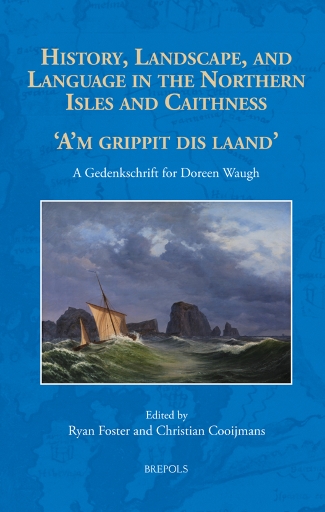
History, Landscape, and Language in the Northern Isles and Caithness
show More to view fulltext, buy and share links for:History, Landscape, and Language in the Northern Isles and Caithness show Less to hide fulltext, buy and share links for: History, Landscape, and Language in the Northern Isles and CaithnessDoreen Waugh was a native Shetlander and a well-renowned scholar of Old Norse and Gaelic place-names in Northern Scotland and the Northern Isles. Not only did Waugh’s research significantly advance scholarly understanding of the ‘Viking’ settlement of the North Atlantic, her generosity with both her time and knowledge inspired and motivated a wide range of scholars from a variety of disciplines, from archaeology and history to historical geography, linguistics, and place-name studies.
Based on - and written in tribute to - Waugh’s work, this interdisciplinary volume draws together essays covering Northern Scotland, the Northern Isles, and beyond, both during and after the early medieval period. The contributions gathered here draw on Waugh’s wider-ranging research interests to offer a range of novel insights into the many communities, cultures, and customs that have characterized and connected the Northern Isles and their North Atlantic neighbours.
-
-
-
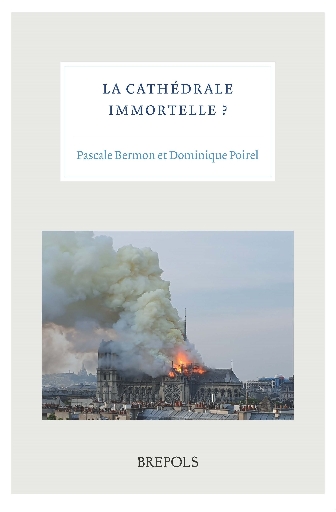
La cathédrale immortelle ?
show More to view fulltext, buy and share links for:La cathédrale immortelle ? show Less to hide fulltext, buy and share links for: La cathédrale immortelle ?Que brûle une ancienne cathédrale, et soudain l’église redevient maison commune. Pour mieux comprendre ceci, qui s’est singulièrement manifesté lors de l’incendie de Notre-Dame de Paris en avril dernier, l’Institut d’Études Médiévales souhaite croiser les regards de diverses spécialités sur l’église cathédrale, telle qu’elle nous vient des temps médiévaux. Quel est son mystère ? Comment comprendre son indéniable puissance de signification et d’attachement ? D’où lui vient cette aptitude à rassembler un peuple, fût-il au comble de la désunion, et à susciter l’émotion par-delà toutes les frontières ? Quels sont les enjeux techniques, liturgiques, théologiques, spirituels, artistiques, juridiques et politiques qui s’enchevêtrent quand la cathédrale a souffert et qu’il faut la rénover, la restaurer, voire la reconstruire ? À quoi tient l’identité profonde d’un bâtiment, qui n’a cessé de changer au cours des âges ? Quelle restauration respecte sa nature, quelle autre au contraire la défigure ? Comment les cathédrales meurent-elles, ou restent-elles vivantes ? Sur toutes ces questions actuelles, on a pensé que les médiévistes pouvaient apporter l’éclairage de leurs divers savoirs, qu’ils soient historiens de l’architecture, de la liturgie, de la théologie, de l’Église ou du fait religieux.
-
-
-
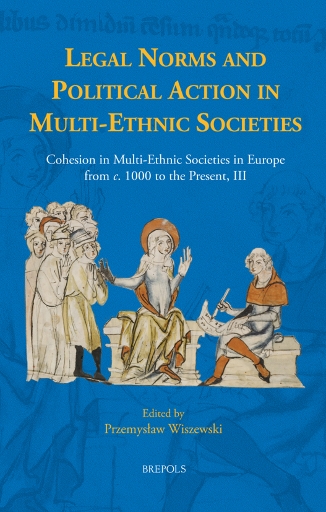
Legal Norms and Political Action in Multi-Ethnic Societies
show More to view fulltext, buy and share links for:Legal Norms and Political Action in Multi-Ethnic Societies show Less to hide fulltext, buy and share links for: Legal Norms and Political Action in Multi-Ethnic SocietiesThe three-volume project Cohesion in Multi-Ethnic Societies in Europe from c.1000 to the Present explores and seeks to find solutions to a crucial problem facing contemporary Europe: in what circumstances can different ethnic groups co-operate for the common good? They apparently did so in the past, combining to form political societies, medieval and early modern duchies, kingdoms, and empires. But did they maintain their ethnic traditions in this process? Did they pass on elements of their cultural memory when they were not in a dominant position in a given polity?
The first volume in the project explored ethnic cohesion as evidenced by narratives about the past, while volume two analysed communal events and activities. This third volume focuses on how relations between ethnic groups were influenced by political activities and related legal norms. Both cooperation and conflict between ethnic communities find their expression in political activities, although they usually have a significant cultural and economic background as well. This book examines the causes of political cooperation between ethnic groups, despite the risk of conflict, and the methods of stabilizing this cooperation through the enactment of law.
-
-
-
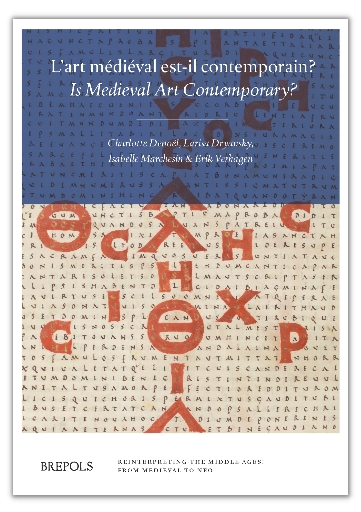
L’art médiéval est-il contemporain ? Is Medieval Art Contemporary?
show More to view fulltext, buy and share links for:L’art médiéval est-il contemporain ? Is Medieval Art Contemporary? show Less to hide fulltext, buy and share links for: L’art médiéval est-il contemporain ? Is Medieval Art Contemporary?This publication brings together essays by scholars of both medieval and contemporary art, offering a cross-disciplinary approach of both periods. It investigates how contemporary artists and contemporary art historians perceive medieval art, and, reciprocally, how medieval art historians envisage the echoes of medieval artforms and esthetics in contemporary art. The volume follows on from the symposium organized in conjunction with the exhibition "Make it New: Carte Blanche à Jan Dibbets" that was held at the Bibliothèque Nationale de France (Paris) in 2019, and which presented side by side Hrabanus Maurus’s De Laudibus Sanctae Crucis (In Praise of the Holy Cross), a masterpiece of Carolingian art, with works by artists associated with conceptual art, mininimal art, and land art.
How and why has medieval art, and particularly early medieval art, inspired contemporary artists since the 1950s? What has medieval art contributed to contemporary art? How has medieval art’s treatment of figures, color, space, geometry, and rhythm provided inspiration for contemporary artists’ experiments with form? In what way does contemporary artists’ engagement with the topics of formatting, writing, semiosis, mimesis, and ornamentation draw inspiration from medieval models? To what extent and in what sense are the notions of authorship and performativity relevant for understanding conceptions of artmaking in both periods? Rather than focusing on medievalism and citational practices, or on the theory of images—both approaches having already produced an important body of comparative readings of medieval and contemporary art—the essays in this volume address the question of medieval art’s contemporaneity thematically, through three trans-chronological topics: authorship, semiosis and mathematics, and performance. Engaging the artists’ works as well as their writings, these studies conflate conceptual and esthetic perspectives.
-
-
-

Marsilius of Padua
show More to view fulltext, buy and share links for:Marsilius of Padua show Less to hide fulltext, buy and share links for: Marsilius of PaduaMarsilius of Padua (c. 1275–c. 1342) was one of the most influential and controversial political thinkers of the Middle Ages. He is best known for his seminal text Defensor Pacis (1324) in which he attacks the papal theory of plenitude of power and defends an idea of political community based on the strict separation of political and religious authority. Marsilius’ work lies at the crossroads of different disciplines, ranging from political philosophy to civil and canon law, to medicine. Indeed, he presents an original synthesis of several contemporary themes and traditions such as Aristotelianism, Augustinianism, the debate on Franciscan property, the communal tradition of the Italian city-states, ecclesiology, medicine, and astrology.
This edited volume analyses the life and thought of Marsilius of Padua in his own context and beyond. Gathering many of the leading experts in Marsilian studies across different national and linguistic traditions working today, this volume has two main goals. First, it aims to bring together experts who come from distinct fields in order to investigate the many branches of knowledge present in Defensor Pacis without losing sight of Marsilius as a comprehensive theorist. Second, the volume aims to shed new light on one of the most neglected aspects in Marsilian studies: the Marsilian influence, i.e., his impact in the early modern period during the Renaissance, the Reformation and the Counter-Reformation, up to twentieth century.
-
-
-
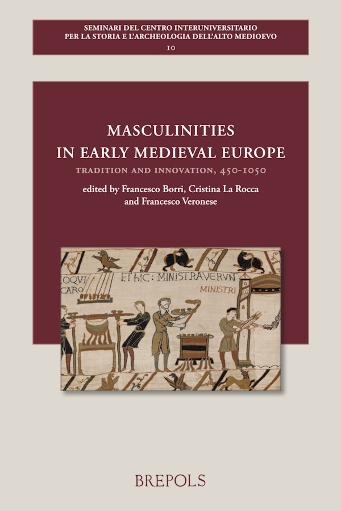
Masculinities in Early Medieval Europe
show More to view fulltext, buy and share links for:Masculinities in Early Medieval Europe show Less to hide fulltext, buy and share links for: Masculinities in Early Medieval EuropeThis volume brings together a collection of essays that delve into the shifts in ideas, roles, and practices of masculinities and male attitudes during the transition from late Antiquity to the early Middle Ages. This period was marked by significant changes, including the collapse of Roman political authority in the West, the fragmentation of imperial universalism in polities, and the rise of Christianity, which all challenged the gender roles inherited from Antiquity.
Within this historical context, the book explores the evolution of men’s privileges, responsibilities, and burdens through eleven case studies focusing on different categories of men and manly behaviour. The volume brings to life husbands and fathers, kings and workers, clerics and warriors from both the East and the West, as revealed through contemporary textual and material sources and preserved in the physical remains of male bodies and actions. In doing so, this volume will bring to the fore new perspectives on masculinities and gender history.
-
-
-
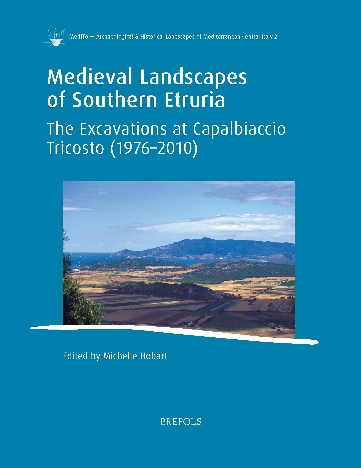
Medieval Landscapes of Southern Etruria
show More to view fulltext, buy and share links for:Medieval Landscapes of Southern Etruria show Less to hide fulltext, buy and share links for: Medieval Landscapes of Southern EtruriaThe fortified hilltop town of Capalbiaccio is a lost Etruscan settlement, a site that developed out of prehistory to become an important colony and grain provider for the Roman Empire, before being sacrificed to medieval intrigue and conquest by the Republic of Siena. The site, together with the castle of Tricosto, was first excavated forty-five years ago, but the results were never published. Then, in recent years, archaeologist Michelle Hobart was invited to explore the area with a new team and employ the latest techniques of remote sensing to explore the landscape and fortifications. The results of both explorations are presented here for the first time in this volume, which combines the invasive and non-invasive approaches of two generations of archaeologists to reveal what attracted settlers to this site, from the inhabitants of the late Bronze Age through to the most important families of medieval Tuscany. This book employs the best of the latest geophysical techniques and time-tested approaches to ground the history of Capalbiaccio, and to narrate how the fate of this small village was inextricably linked to regional and national networks, as control of the territory and the settlement’s reason for being evolved over time.
-
-
-
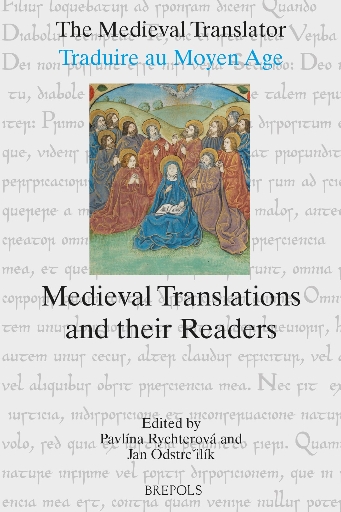
Medieval Translations and their Readers
show More to view fulltext, buy and share links for:Medieval Translations and their Readers show Less to hide fulltext, buy and share links for: Medieval Translations and their ReadersThe papers gathered in this volume focus on ‘Medieval Translations and their Readership’, the special strand of the 11th Cardiff Conference on the Theory and Practice of Translation in the Middle Ages. The volume discusses the role of the reader in the process of translation, communities of readers and their active participation in translators’ choices, and the translation as a result of a dialogue between author, text and its reader.
Translations of works of theology and religious education, the focus of most of the contributions to this volume, constitute excellent material for research into medieval lay audiences. Vernacular religious educational texts from the thirteenth to the sixteenth century show a great deal of conformity. Individual authors resorted to similar strategies and techniques to meet any translation challenges, to fulfil educational aims, or to relate to their readers and to accommodate their expectations. Simultaneously, the readers played a crucial role as they shaped the production of texts in many ways.
Research into Middle English pastoral and devotional literature and the conditions of its production still dominates scholarly work in the field. Religious texts in vernaculars other than Middle English have so far received little attention. This volume tries to tackle this lacuna by offering a careful comparative analysis of relevant vernacular texts across Europe, including Slavonic works, using historiographical, philological, and linguistic methods as well as literary scholarly approaches.
The sixteen chapters are organized in three sections. The first one, ‘Authors and Readers’, brings together articles examining the idea of a model reader as expressed in translations of biblical texts and texts of religious instruction. The contributions in the second section, on the ‘Dissimination of Knowledge’, focus on how translators addressed readers, how people read, and how they used the manuscripts and printed books made for them. The target audience or model reader of the first section is here put into perspective with the help of discussions of reading practices. The last section, ‘Religious Education in Transition’, comprises contributions which focus on textual material from the period when printed books gradually changed, the relationship between languages, texts, authors, and readers.
-
-
-
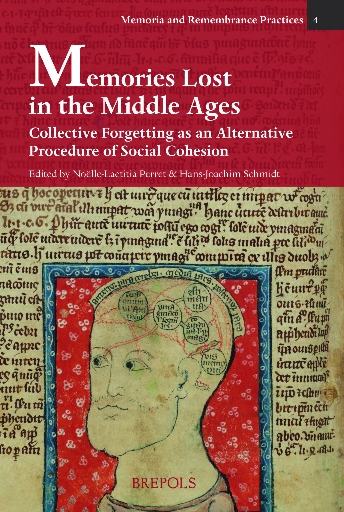
Memories Lost in the Middle Ages: Collective Forgetting as an Alternative Procedure of Social Cohesion/L’oubli collectif au Moyen Âge: Un autre processus constitutif de la cohésion sociale
show More to view fulltext, buy and share links for:Memories Lost in the Middle Ages: Collective Forgetting as an Alternative Procedure of Social Cohesion/L’oubli collectif au Moyen Âge: Un autre processus constitutif de la cohésion sociale show Less to hide fulltext, buy and share links for: Memories Lost in the Middle Ages: Collective Forgetting as an Alternative Procedure of Social Cohesion/L’oubli collectif au Moyen Âge: Un autre processus constitutif de la cohésion socialeThe aim of this book is to examine the social, political and cultural consequences of ‘collective forgetting’ in the Middle Ages. Since the seminal work of Maurice Halbwachs, historical research has focused on ‘collective memory’ as the basis of social cohesion. Jan Assmann has introduced the slightly different concept of ‘cultural memory’, which he sees as a constitutive condition of political organisations and their stabilisation. Drawing on this Assmannian concept, this book examines this other process of ‘collective forgetting’.
Cet ouvrage ambitionne d’examiner les conséquences sociales, politiques et culturelles de « l’oubli collectif » au Moyen Âge. Depuis les études fondatrices de Maurice Halbwachs, la recherche historique s’est intéressée à la « mémoire collective » en tant que fondement de la cohésion sociale. Jan Assmann a introduit le concept légèrement différent de « mémoire culturelle », condition constitutive selon lui des organisations politiques et de leur stabilisation. Tout en s’appuyant sur ce concept assmannien, cet ouvrage propose d’étudier cet autre processus que constitue « l’oubli collectif ».
-
-
-
Monastères, convergences, échanges et confrontations dans l’Ouest de l’Europe au Moyen Âge
show More to view fulltext, buy and share links for:Monastères, convergences, échanges et confrontations dans l’Ouest de l’Europe au Moyen Âge show Less to hide fulltext, buy and share links for: Monastères, convergences, échanges et confrontations dans l’Ouest de l’Europe au Moyen ÂgeL’orientation vers les convergences, échanges et confrontations dans l’histoire monastique du grand Ouest européen au Moyen Âge permet de porter un regard nouveau sur la dynamique de divers établissements en observant les relations qui s’y sont développées tant au sein des communautés, qu’avec la société environnante. Les influences externes subies par les monastères et les conflits internes qui s’y jouent, les échanges dus aux pèlerinages, aux rouleaux des morts et aux confraternités sont au nombre des thèmes explorés.
-
-
-

Multi-disciplinary Approaches to Medieval Brittany, 450–1200
show More to view fulltext, buy and share links for:Multi-disciplinary Approaches to Medieval Brittany, 450–1200 show Less to hide fulltext, buy and share links for: Multi-disciplinary Approaches to Medieval Brittany, 450–1200While it is well-established that Brittany and the Insular world were closely linked during the medieval period, the precise nature of these connections continues to spark debate. Was there a significant migration in the fifth century, or were the connections more multi-faceted and enduring than medieval accounts suggest? And how might we triangulate the Atlantic connections with other influences on medieval Brittany, including those from the Carolingian world?
Drawing together research that was first presented at the conference ‘Brittany and the Atlantic Archipelago: Contact, Myth and History 450-1200’, held in Cambridge in December 2017, this volume seeks to present new and ground-breaking research into both Brittany and its broader European context during the medieval period. The chapters gathered here range across various disciplines, including textual history, archaeology, hagiography, onomastics, and the study of liturgical evidence, offering new insights into our understanding of medieval Brittany, as well as drawing out particular connections (and disconnections) between Brittany and its neighbours.
-
-
-
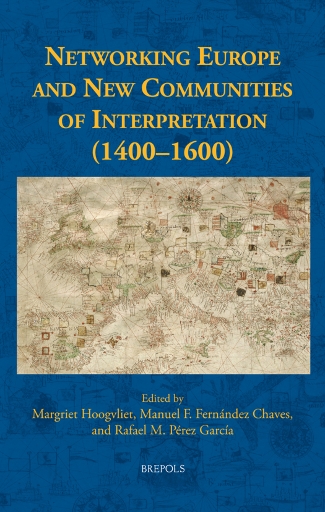
Networking Europe and New Communities of Interpretation (1400–1600)
show More to view fulltext, buy and share links for:Networking Europe and New Communities of Interpretation (1400–1600) show Less to hide fulltext, buy and share links for: Networking Europe and New Communities of Interpretation (1400–1600)Long-distance ties connecting Europeans from all geographical corners of the continent during the fifteenth and sixteenth century facilitated the sharing of religious texts, books, iconography, ideas, and practices. The contributions to this book aim to reconstruct these European networks of knowledge exchange by exploring how religious ideas and strategies of transformation ‘travelled’ and were shared in European and transatlantic cultural spaces. In order to come to a better understanding of Europe-wide processes of religious culture and religious change, the chapters focus on the agency of the laity in ‘new communities of interpretation’, instead of intellectual elites, the aristocracy, and religious institutions. These new communities of interpretation were often formed by an urban laity active in politics, finance, and commerce. The agency of religious literatures in the European vernaculars in processes of religious purification, reform, and innovation during the long fifteenth century is still largely underestimated. ‘Networking Europe’ aims to step away from studying ‘national’ textual production and consumption by approaching these topics instead from a European and interconnected perspective. The contributions to this book explore late medieval and early modern networks connecting people and transporting texts following three main axes of investigation: ‘European Connections’, ‘Exiles, Diasporas, and Migrants’, and ‘Mobility and Dissemination’.
-
-
-
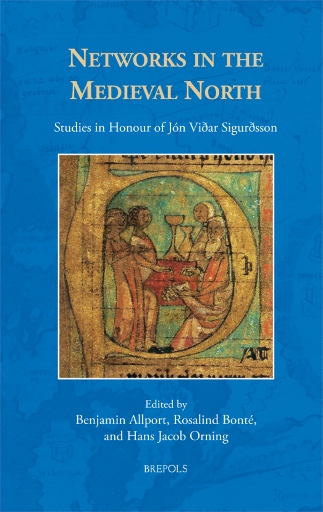
Networks in the Medieval North
show More to view fulltext, buy and share links for:Networks in the Medieval North show Less to hide fulltext, buy and share links for: Networks in the Medieval NorthBy the late thirteenth century, Norgesveldet - the Norwegian realm - stretched far beyond its core in western Scandinavia. At its height in 1264, Norgesveldet connected Norse speakers in tributary territories ranging from the Irish Sea to Orkney and across the Atlantic to the Faroes, Iceland, and Greenland. But what held this disparate realm together? What were the dynamics of power between the men and women of the governing and elite classes of Norgesveldet? And what roles did different bodies play at different levels of society in creating and maintaining these networks - from kings and bishops to scribes and scholars, traders, and law-makers?
This volume aims to expand on and further recent important research into connections between Norway and the wider Norse North Atlantic from the eleventh century, during which the Norwegian kingdom began to emerge, through to the fourteenth-century decline of Norgesveldet with the creation of the Kalmar Union. Each chapter addresses a different facet of the Norgesveldet networks, building a complex picture of both their function and their evolving nature. Taking as its inspiration the research and career of its honorand, Jón Viðar Sigurðsson, the volume explores medieval Norway and its wider connections using three key frameworks - sociopolitical networks, legal and material networks, and literary networks - with the aim of shedding new light on the people and processes of this North Atlantic polity.
-
-
-
Non est excellentior status : Vaquer à la philosophie médiévale
show More to view fulltext, buy and share links for:Non est excellentior status : Vaquer à la philosophie médiévale show Less to hide fulltext, buy and share links for: Non est excellentior status : Vaquer à la philosophie médiévaleCe volume regroupe les contributions de vingt-deux chercheur.es universitaires, collègues et ami.es de Claude Lafleur, qui ont voulu lui rendre hommage à l’occasion de son départ à la retraite en tant que professeur titulaire à la Faculté de philosophie de l’Université Laval. La diversité des aires géographiques et la pluralité des strates générationnelles auxquelles appartiennent les chercheur.es qui ont contribué à ce livre témoignent éloquemment de l’envergure de la « sphère d’influence » des productions intellectuelles de Claude Lafleur.
Les textes réunis relèvent des principaux champs de recherche que leur ami et mentor a patiemment labourés au cours de sa carrière académique : histoire des corpus et des manuscrits; transmission des textes philosophiques et de leurs notions fondamentales, de l’Antiquité au Moyen Âge; éditions critiques de textes issus des Facultés des arts et de théologie de l’Université de Paris aux xiiie-xive siècles; enseignement de la philosophie au xiiie siècle à la lumière des textes didascaliques; histoire des pratiques discursives dans les Facultés des arts médiévales; étude de concepts clés de la pensée de Thomas d’Aquin; discussion médiévale sur les universaux; philosophie de l’histoire des médiévistes contemporains.
Ce recueil d’études souhaite ainsi se faire le reflet de certains des intérêts heuristiques, des orientations méthodologiques et des thématiques historico-philosophiques que Claude Lafleur a poursuivis, explorées et étudiées dans ses propres écrits, ayant toujours été convaincu « qu’il n’y a pas de statut plus excellent que de vaquer à la philosophie ».
-
-
-

Per cognitionem visualem. The Visualization of Cognitive and Natural Processes in the Middle Ages
show More to view fulltext, buy and share links for:Per cognitionem visualem. The Visualization of Cognitive and Natural Processes in the Middle Ages show Less to hide fulltext, buy and share links for: Per cognitionem visualem. The Visualization of Cognitive and Natural Processes in the Middle AgesVisual representations were deeply involved in medieval traditions related to the dissemination and teaching of philosophy and science. Consequently, they were not only examples of theological or philosophical interpretation, but rather brought together manifold intellectual activities, illuminating various perceptual, cognitive, and spiritual concerns. Visual tools, which appear frequently in medieval manuscripts, have often been considered as “illustrative material” intended to facilitate the comprehension and interpretation of texts. These “visual aids” offer something more than a straightforward correspondence between a conceptual interpretation and its figurative depiction. They are, in fact, key to understanding the methods of acquiring and shaping knowledge through visual frameworks with didactical, disputational or heuristic purposes. The aim of this volume is to deepen our understanding of medieval visual tools that represented and demonstrated philosophical and scientific knowledge and, to an extent, the accumulation of empirical information.
-
-
-
Pilgrimage in the Christian Balkan World
show More to view fulltext, buy and share links for:Pilgrimage in the Christian Balkan World show Less to hide fulltext, buy and share links for: Pilgrimage in the Christian Balkan WorldThe purpose of this volume is to explore, re-interpret and re-contextualise the various natures of practices performed by the Orthodox and Catholic pilgrims in Balkan countries in their devotional ʽpath to touch the sacred and holyʼ through the prism of pilgrimage contents, and their articulating, using, and handling strategies. Inter- and transdisciplinary perspectives constitute a strong point for exploring the essence of this collective practice of worship, which is theoretically and critically interpreted, and chronologically and diachronically analysed. Therefore, the various visions of the authors, formed on the basis of qualitative and critical analysis of primary (ethnographic and folkloric data from field interviews, archive documents, samples, etc.) and secondary sources, come to fill a gap in research on pilgrimage in southeast Europe, and especially on pilgrimage practices in Eastern Orthodoxy. Particularly, the ritual practices, sacred places in contemporary Balkan societies, religious folklore, divine intervention stories, miracle-working icons, relics and reliquaries as part of the structure of pilgrimage are discussed.
The authors explore the context in which the Christian shrines in the Balkans are spaces where the ethnic and denominational patterns in pilgrimage are revealed openly on multiple levels; they delve into how the correlative effects between politics and religion are manifested. In this volume, which is the result of a project initiated by the Balkan History Association, the authors focus on theoretical analysis, stressing the historical and contemporary behaviour performed by the Christian pilgrims, and highlighting the fact that the motivations for going to the sacred places can vary, from seeking and obtaining Divine help to leisure, religious/faith tourism, etc.
-
-
-
Sources of Knowledge in Old English and Anglo-Latin Literature
show More to view fulltext, buy and share links for:Sources of Knowledge in Old English and Anglo-Latin Literature show Less to hide fulltext, buy and share links for: Sources of Knowledge in Old English and Anglo-Latin LiteratureThis volume positions source scholarship as integral to an understanding of the transmission of knowledge across intellectual, social, and material networks in early medieval England. Essays in this collection situate source studies in Old English and Anglo-Latin literature within a range of theoretical and methodological approaches as varied as disability studies, feminist theory, history of science, and network analysis, tracing how ideas move across cultures and showing how studying sources enables us to represent the diversity of medieval voices embedded in any given text.
The essays in this volume extend the work of Charles D. Wright, who mentored a generation of scholars in methodologies of source study. The essays are organized into three sections. The first demonstrates how source studies facilitate tracing ideas across space and time. The second explores what happens to texts and ideas when they are transmitted from one culture, language, or historical moment to another. The third shows how sources illuminate wider cultural discourses. The volume attests to the flexibility of source work for early medieval English literature and argues for increased access to the tools that make such work possible.
-
-
-
Spes Italiae
show More to view fulltext, buy and share links for:Spes Italiae show Less to hide fulltext, buy and share links for: Spes ItaliaeIl regno di Pipino, figlio di Carlo Magno, è stato a lungo trascurato dalla ricerca storica, nonstante la sua importanza per l’Italia, le regioni transalpine e il mondo carolingio nel suo insieme. I contributi qui raccolti, esito di due convegni tenutisi a Trento e a Vienna, mettono in luce con approcci diversi e innovativi i molteplici aspetti della cultura del suo regno, la sua azione politica e militare e la rappresentazione che ne diedero i contemporanei. Questo volume, pertanto, offre un sguardo inedito su Pipino; nuove prospettive di ricerca su un sovrano dimenticato.
-
-
-
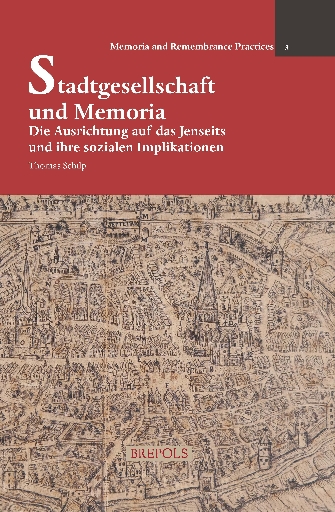
Stadtgesellschaft und Memoria
show More to view fulltext, buy and share links for:Stadtgesellschaft und Memoria show Less to hide fulltext, buy and share links for: Stadtgesellschaft und MemoriaDie Beschäftigung mit der Memoria, dem mittelalterlichen Totengedenken, zieht sich leitmotivisch durch die Forschungstätigkeit von Thomas Schilp 19. Oktober 1953 – 28. September 2019). Angeregt durch die Arbeiten von Otto Gerhard Oexle zur mittelalterlichen Erinnerungskultur erschloss er mit seiner ihn auszeichnenden Sorgfalt im historischen Sehen und Denken sowie in der präzisen und gleichzeitig interdisziplinären Analyse der uellen immer weitere Dimensionen dieses alle sozialen Schichten und alle Bereiche des täglichen Lebens umfassenden Phänomens. Dabei war für ihn von zentraler Bedeutung – wie auch in diesem Band – die Art und Weise, wie die Konstituierung unterschiedlichster gesellschaftlicher Gruppen zur Gewährleistung des Totengedenkens erfolgte. Seine Forschungen verdeutlichen auf verschiedenen, sich durchdringenden Ebenen eine von heutigen Denkformen unterschiedene Auffassung gesellschaftlichen Lebens. Dabei rücken die neue Leseart von Bildern, die Interpretation von Tönen und Klängen (wie beispielsweise Schlag und Geläute von Glocken) als akustische Zeichen sowie ephemere Erscheinungen wie etwa die mittelalterlichen Lichtinszenierungen in Kirchen immer stärker in den Blickpunkt seiner Ausführungen. Thomas Schilps früher Tod ermöglichte es ihm nicht mehr, die begonnene umfassende Monographie zum Thema Stadt und Memoria fertig zu stellen. Dieser Band vereint eine Auswahl von Aufsätzen, welche die Dimensionen seiner intensiven Beschäftigung mit Formen mittelalterlichen Denkens und Handelns reflektieren.
-
-
-
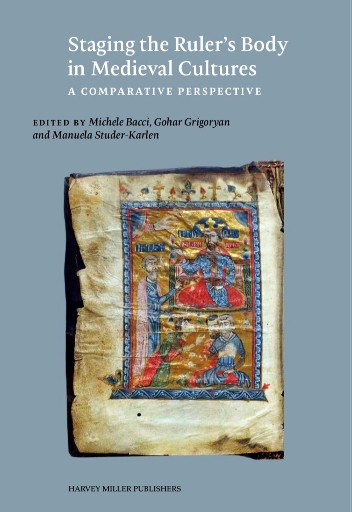
Staging the Ruler’s Body in Medieval Cultures: A Comparative Perspective
show More to view fulltext, buy and share links for:Staging the Ruler’s Body in Medieval Cultures: A Comparative Perspective show Less to hide fulltext, buy and share links for: Staging the Ruler’s Body in Medieval Cultures: A Comparative PerspectiveThis book explores the viewing and sensorial contexts in which the bodies of kings and queens were involved in the premodern societies of Europe, Asia, and Africa, relying on a methodology that aims to overcoming the traditional boundaries between material studies, art history, political theory, and Repräsentationsgeschichte. More specifically, it investigates the multiple ways in which the ruler’s physical appearance was apprehended and invested with visual, metaphorical, and emotional associations, as well as the dynamics whereby such mise-en-scène devices either were inspired by or worked as sources of inspiration for textual and pictorial representations of royalty. The outcome is a multifaced analysis of the multiple, imaginative, and terribly ambiguous ways in which, in past societies, the notion of a God-driven, eternal, and transpersonal royal power came to be associated with the material bodies of kings and queens, and of the impressive efforts made, in different cultures, to elude the conundrum of the latter’s weakness, transitoriness, and individual distinctiveness.
-
-
-

The Cent Nouvelles nouvelles (Burgundy-Luxembourg-France, 1458 - c. 1550)
show More to view fulltext, buy and share links for:The Cent Nouvelles nouvelles (Burgundy-Luxembourg-France, 1458 - c. 1550) show Less to hide fulltext, buy and share links for: The Cent Nouvelles nouvelles (Burgundy-Luxembourg-France, 1458 - c. 1550)A collaborative investigation of one of the best-known works of late medieval European literature, the Franco-Burgundian collection of short stories known as the Cent Nouvelles nouvelles. Modelled loosely on Boccaccio’s Decameron and incorporating elements from Old French fabliaux as well as Poggio Bracciolini’s Liber Facetiarum, the anonymous collection attributes its morally challenging and frequently humorous tales to named narrators including Philip the Good, Duke of Burgundy and Louis of Luxembourg, Count of Saint Pol.
The contribution of this new volume of essays is threefold: - empirical, in that it brings entirely new interdisciplinary insights into the study of the genesis and reception of the work; - methodological, in that it integrates study of the text within a 360-degree evaluation of the work’s manuscript and early printed context; and - conceptual, in that it seeks to understand the social dimensions of textual production and consumption.
These approaches unite ten principal contributions by specialists in the fields of art history, book history, court history and linguistics from France, the Netherlands, the USA and the UK.
-
-
-
The Art of Publication from the Ninth to the Sixteenth Century
show More to view fulltext, buy and share links for:The Art of Publication from the Ninth to the Sixteenth Century show Less to hide fulltext, buy and share links for: The Art of Publication from the Ninth to the Sixteenth CenturyWritten transmission relies on the fact of ‘publication,’ the step between the authorial process and reception. But what does ‘publishing’ mean in the context of a manuscript culture, in which books were copied slowly and singly by hand? This is a fundamental question. If one fails to appreciate the act of publication, one’s understanding of any authorial work and its reception from any period will remain defective. The case studies in this volume ask what it meant for medieval and renaissance authors and their associates to publish. The contexts under scrutiny range from England to Italy, from hagiography to literary criticism, and from Carolingian monasteries to renaissance libraries. Medieval publishing remains undiscovered territory in the main. This volume constitutes a first effort towards a long-term narrative, from the ninth to the sixteenth century.
-
-
-
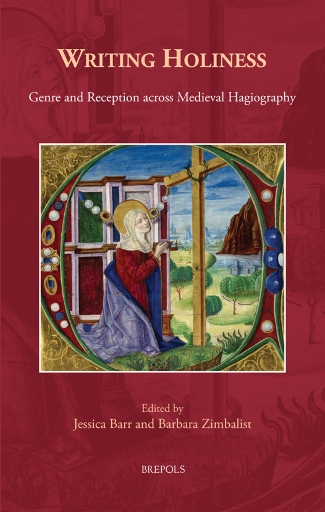
Writing Holiness
show More to view fulltext, buy and share links for:Writing Holiness show Less to hide fulltext, buy and share links for: Writing HolinessWriting Holiness contributes to exciting new critical conversations in the study of medieval hagiography in Western Christianity. Recent years have seen innovative approaches to the literatures of sanctity through emergent theoretical discourses, such as disability studies and trans theory. At the same time, traditional methodologies such as manuscript studies and reception history continue to generate new perspectives on the production, circulation, and reception of the sacred textual canon.
Through ten unique contributions that draw from both new and established theories and methodologies, this volume charts the development, movement, and reception of Christian hagiographic texts in localities ranging from the Iberian Peninsula to the Scandinavian Archipelago from the early to the late Middle Ages. Each chapter traces hagiographic development over generic, temporal, cultural, and linguistic boundaries, and considers the broader contours of the sacred imaginary that come into view as a result of such critically intersectional inquiry.
-
-
-
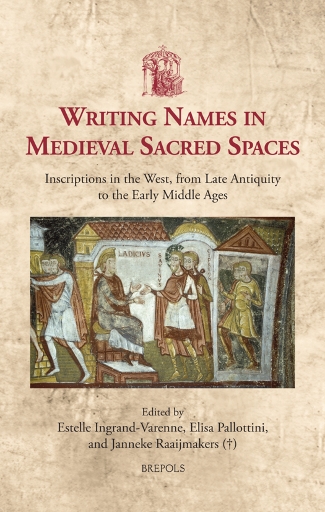
Writing Names in Medieval Sacred Spaces
show More to view fulltext, buy and share links for:Writing Names in Medieval Sacred Spaces show Less to hide fulltext, buy and share links for: Writing Names in Medieval Sacred SpacesThis volume proposes a framework for reflection on practices of writing personal names in medieval sacred spaces, uniting historians, art historians, and specialists in written culture (both epigraphers and palaeographers). It traces the forms and functions of names that can be found within the space of early medieval churches and cemeteries, focusing mainly, but not solely, on inscriptions. By examining names written in various kinds of media, from liturgical books to graffiti and more formal inscriptions, the contributors investigate the intentions and effects of the act of writing one’s own name or having one’s name written down. Their interest resides less in the name itself than the interactions it had with its spatial, iconographic, linguistic, ritual, and cultural context, and what this indicates about medieval graphical practices. What is a name from a graphic point of view? What are the specificities of the epigraphic manifestations of names? By whom were names written, and for whom were they intended (if they were even meant to be accessed)? Addressing these and other questions, this volume shows the importance of inscriptions as historical sources and the contribution they give to the study of medieval societies at the intersection of history, anthropology, archaeology, linguistics, and semiology.
-
-
-
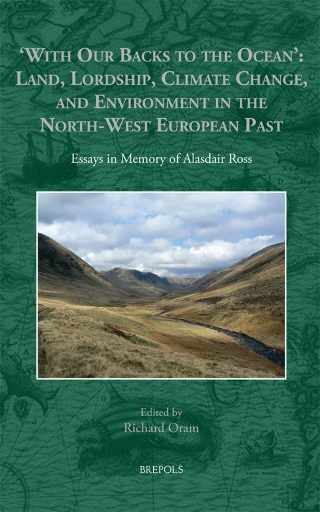
‘With Our Backs to the Ocean’: Land, Lordship, Climate Change, and Environment in the North-West European Past
show More to view fulltext, buy and share links for:‘With Our Backs to the Ocean’: Land, Lordship, Climate Change, and Environment in the North-West European Past show Less to hide fulltext, buy and share links for: ‘With Our Backs to the Ocean’: Land, Lordship, Climate Change, and Environment in the North-West European PastThis collection of ten essays celebrates the life and career of Dr Alasdair Ross, one of Britain’s foremost environmental historians, who died in 2017. Inspired by Ross’ own research interests, the chapters gathered here explore interlinked themes of land management and property rights, terrestrial and aquatic resource exploitation, mortality crises, and environmental change, viewed largely through the lens of the Scottish experience within the broader context of the eastern North Atlantic region and covering a chronology that spans from the sixth century ce up to the present. Including a previously unpublished paper by Ross himself, which overturns long-held perceptions of fiscal regimes in medieval Scotland, the contributors present radically revisionist or wholly new analyses of key documents and datasets, mostly through applying an interdisciplinary ‘environmental turn’ to primary record and narrative sources, or advancing new methodological approaches to systems analysis. From saintly interactions with nature to monastic exploitation of natural resources, charter records of land-ownership to the physicality of the landscapes recorded on parchment, and the human cost of subsistence and mortality crises, these papers humanize the discourse around historical climate and environmental change.
-
-
-
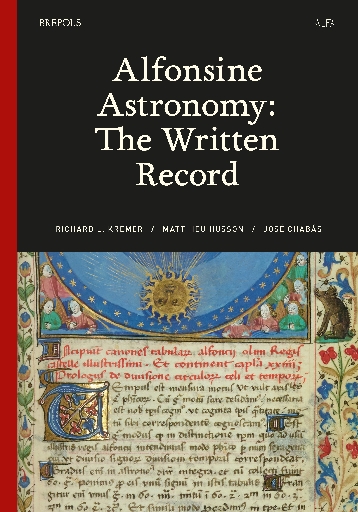
Alfonsine Astronomy
show More to view fulltext, buy and share links for:Alfonsine Astronomy show Less to hide fulltext, buy and share links for: Alfonsine AstronomyCompiled between 1262 and 1272 in Toledo under the patronage of Alfonso X, the Castilian Alfonsine Tables were recast in Paris in the 1320s, resulting in what we now call the Parisian Alfonsine Tables. These materials circulated widely and fostered astronomical activities throughout Europe. This resulted in a significant number of new works, of which there are a few hundred, extant in more than 600 manuscript codices and dozens of printed editions. These manuscripts and imprints, broadly contemporary to the works they witness, comprise the written record of Alfonsine astronomy and provide the focus of this volume.
A first series of essays examines individual manuscripts containing Alfonsine works. The authors seek to reconstruct, from the manuscript evidence, the cultural, astronomical and mathematical worlds in which the manuscripts were initially copied, compiled, used and collected. A second series of essays turns from the particular codex to the individual work or author. These contributions ask how particular works have been transmitted in surviving manuscript witnesses and how broader manuscript cultures shaped the diffusion, over two centuries, of Alfonsine astronomy across Europe. A final essay reflects on the challenges and opportunities offered by digital humanities approaches in such collective studies of a large manuscript corpus.
-
-
-

Celts, Gaels, and Britons
show More to view fulltext, buy and share links for:Celts, Gaels, and Britons show Less to hide fulltext, buy and share links for: Celts, Gaels, and BritonsCelts, Gaels, and Britons offers a miscellany of essays exploring three closely connected areas within the fields of Celtic Studies in order to shed new light on the ancient and medieval Celtic languages and their literatures. Taking as its inspiration the scholarship of Professor Patrick Sims-Williams, to whom this volume is dedicated, the papers gathered together here explore the Continental Celtic languages, texts from the Irish Sea world, and the literature and linguistics of the British languages, among them Welsh and Cornish. With essays from eighteen leading scholars in the field, this in-depth volume serves not only as a monument to the rich and varied career of Sims-Williams, but also offers a wealth of commentary and information to present significant primary research and reconsiderations of existing scholarship.
-
-
-
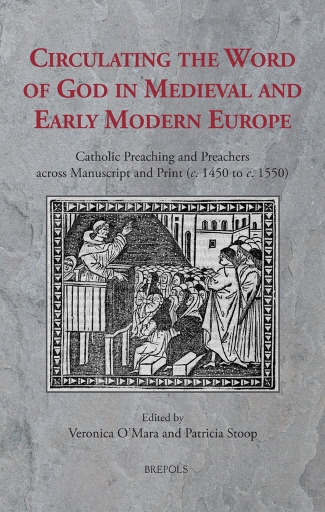
Circulating the Word of God in Medieval and Early Modern Europe
show More to view fulltext, buy and share links for:Circulating the Word of God in Medieval and Early Modern Europe show Less to hide fulltext, buy and share links for: Circulating the Word of God in Medieval and Early Modern EuropeThis volume concentrates on how the sermon, a pivotal element in mass communication, aimed to shape the people of Europe. Rather than setting up the usual binary divides, it highlights the linguistic complications, the textual inter-relationships, the confessional cross-currents, and the variations between public and private sermon dissemination operating at different rates and with variable results throughout Europe. Effectively the emphasis here is on how Catholic preachers and Catholic preaching carried on in the period between the handwritten and the printed sermon, a time when not only the mode of production was changing but when the very purpose and meaning of preaching itself would soon alter in a western Christian world that was becoming no longer completely Catholic. By examining case-studies chosen from countries with contrasting manuscript and printing traditions (Denmark, England, Finland, France, Germany, Italy, the Low Countries, Romania, Spain, and Sweden), we aim to examine some of the main historical, literary, and theological factors in the development of the sermon in Latin and the vernaculars, which is itself in the process of changing formats, and sometimes languages, at a time of religious ferment from the advent of print to the death of Martin Luther. These essays, which are effectively in dialogue with each other, are divided into geographical/linguistic sections organized along broadly chronological lines. They circulate from the peripheries of Europe to the centre, moving from areas where evidence is now scarce to situations of thriving production.
-
-
-
Crusading, Society, and Politics in the Eastern Mediterranean in the Age of King Peter I of Cyprus
show More to view fulltext, buy and share links for:Crusading, Society, and Politics in the Eastern Mediterranean in the Age of King Peter I of Cyprus show Less to hide fulltext, buy and share links for: Crusading, Society, and Politics in the Eastern Mediterranean in the Age of King Peter I of CyprusThe King of Cyprus, Peter I of Lusignan (1359-1369), was one of the most fascinating figures in the history of the Latin East and the later crusades. He was involved in European power politics, his crusading activities brought him into conflict with the Turkish beyliks of Anatolia and the Mamluk sultanate of Egypt, and his rule was closely linked with broader developments in the Eastern Mediterranean, such as the decay of Byzantium, the East-West schism, and the beginning of the Ottoman expansion in the Balkans. His adventurous life constitutes a captivating case study of court life, feudal and chivalric ethos, and political culture in the fourteenth century. This volume investigates developments in the Eastern Mediterranean before and during the reign of Peter I from a comparative perspective. It consists of five parts, which treat the political, diplomatic, and ecological context of the crusading movement in the time between the fall of Acre (1291) and the sack of Alexandria (1365), Peter I’s crusading policy and the Alexandrian crusade, Cypriot society and court life in the time of Peter I, the situation in Muslim-Turkish Anatolia, the second target of King Peter’s crusading policy, and, finally, Byzantium, its encounter with the Turks, the schism of the Churches, and theological trends in the time of the Hesychast Controversy.
-
-
-
From Sun-Day to the Lord’s Day
show More to view fulltext, buy and share links for:From Sun-Day to the Lord’s Day show Less to hide fulltext, buy and share links for: From Sun-Day to the Lord’s DayEver since the Christianization of the planetary week in Late Antiquity, the notion of Sunday as a day of rest, as well as the rhythm of a seven-day week, has been a constant. Yet the cultural history of Sunday in Late Antiquity and the Early Middle Ages is complex. Detailed research reveals a greater diversity than appears at first glance. For example, Sunday did not simply replace the Sabbath, nor was the Jewish Sabbath commandment directly adopted. Furthermore, the Sunday laws of Emperor Constantine officially gave the inhabitants of the Roman Empire a day of rest free of work, but the effect and reception of the laws is hard to grasp, even among Christian authors. Moreover, Sunday was by no means a central theme in the history of late antique Christianity, so that the scattered references must be interpreted.
This edited collection, based on a conference in Vienna in 2019, investigates the relevance of Sunday and the weekly rhythm in Late Antiquity and the Early Middle Ages in the everyday life of people, in monasticism, in synods, in further imperial and ecclesiastical laws, and in disciplinary and liturgical developments. It also covers controversies with the Jewish Sabbath as well as reflections on the aspect of rest, freedom, and of charity. While exploring different views and regional differences, the contributions show the growing importance of the Lord’s Day, especially since the sixth century, as part of the Christianization of society and the sacralization of the calendar.
-
-
-
Historiography and Identity V
show More to view fulltext, buy and share links for:Historiography and Identity V show Less to hide fulltext, buy and share links for: Historiography and Identity VIn many countries in Northern and Eastern Europe, the period after 1000 saw the emergence of new Christian kingdoms. This process was soon reflected in works of historiography that traced the foundation and development of the new polities. Many of these texts had a lasting impact on the formation of political, ethnic, and religious identities of these states and peoples.
This volume deals with some of these earliest histories narrating the past of the new polities that had emerged after 1000 in Northern, East Central, and Eastern Europe, as well as in the Adriatic regions. They have often been understood as ‘national histories’, but a closer look brings out the differences in their aims and construction. One question addressed here is to what extent these historians built on models of identification developed in earlier historiography. The volume provides an overview of several fundamental texts in which identities in the new Christian kingdoms were negotiated, and of recent research on these texts.
-
-
-
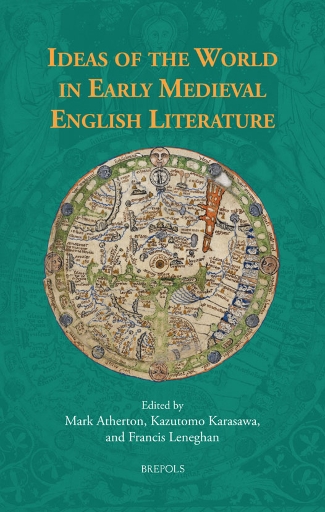
Ideas of the World in Early Medieval English Literature
show More to view fulltext, buy and share links for:Ideas of the World in Early Medieval English Literature show Less to hide fulltext, buy and share links for: Ideas of the World in Early Medieval English LiteratureAcross three thematically-linked sections, this volume charts the development of competing geographical, national, and imperial identities and communities in early medieval England. Literary works in Old English and Latin are considered alongside theological and historical texts from a range of disciplinary perspectives. Accounts of travel, foreign contacts, conversion, migration, landscape, nation, empire, and conquest are set within the continual flow of people and ideas from East to West, from continent to island and back, across the period. The fifteen contributors investigate how the early medieval English positioned themselves spatially and temporally in relation to their insular neighbours and other peoples and cultures. Several chapters explore the impact of Greek and Latin learning on Old English literature, while others extend the discussion beyond the parameters of Europe to consider connections with Asia and the Far East. Together these essays reflect ideas of inclusivity and exclusivity, connectivity and apartness, multiculturalism and insularity that shaped pre-Conquest England.
-
-
-
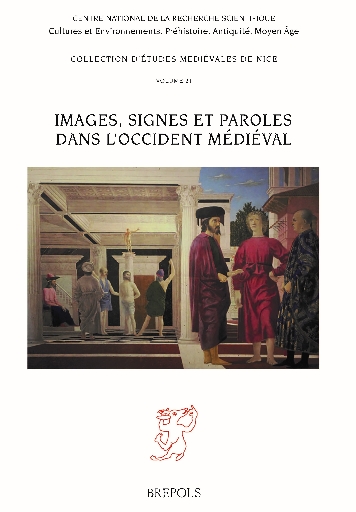
Images, signes et paroles dans l’Occident médiéval
show More to view fulltext, buy and share links for:Images, signes et paroles dans l’Occident médiéval show Less to hide fulltext, buy and share links for: Images, signes et paroles dans l’Occident médiévalCet ouvrage rassemble dix contributions qui proposent des perspectives originales pour l’analyse conjointe des modes d’expression figurée de l'Occident médiéval. Menées tant par des « historiens de l’art » que par des « historiens », elles abordent la question de l’image-objet, des signes alphabétiques et iconiques, du lieu peint, de la liturgie et de la prédication. Documents d’archives, exégèse biblique, sermons et récits hagiographiques sont exploités de manière fine et exhaustive pour rendre compte, au plus près, du contexte d’exécution des œuvres, qu’elles soient inconnues ou célèbres. Ce sont alors les angles d’approches adoptés, comme l’anthropologie des images ou les études transgenre, mais aussi les relations complexes entre art, architecture et rites, qui enrichissent ici l’exploration et d’objets de culte - les lipsanothèques catalanes, les linges de l’autel ou les ex-voto - et de panneaux peints - comme la Flagellation du Christ de Piero della Francesca - et des cycles de peintures décorant la Tour Ferrande à Pernes-les-Fontaines, San Pellegrino à Bominaco, et cinq chapelles de la Ligurie et du Piémont.
-
-
-
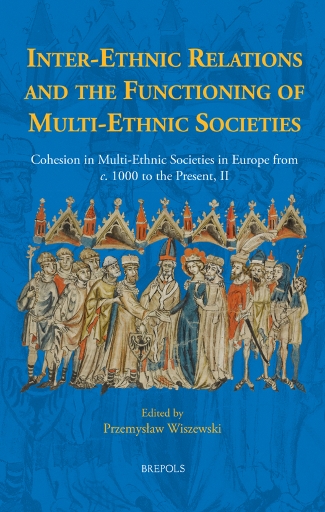
Inter-Ethnic Relations and the Functioning of Multi-Ethnic Societies
show More to view fulltext, buy and share links for:Inter-Ethnic Relations and the Functioning of Multi-Ethnic Societies show Less to hide fulltext, buy and share links for: Inter-Ethnic Relations and the Functioning of Multi-Ethnic SocietiesThe three-volume project Cohesion in Multi-Ethnic Societies in Europe from c.1000 to the Present explores and seeks to find solutions to a crucial problem facing contemporary Europe: in what circumstances can different ethnic groups co-operate for the common good? They apparently did so in the past, combining to form political societies, medieval and early modern duchies, kingdoms, and empires. But did they maintain their ethnic traditions in this process? Did they pass on elements of their cultural memory when they were not in a dominant position in a given polity?
The first volume of the project explored written sources about the past to show how communities shaped their collective memories in order to ensure the smooth functioning of multi-ethnic political communities. This second volume looks beyond texts and focuses on activities and events that were designed to build a sense of community within a political community made up of different ethnic groups. The coexistence of different ethnic groups is considered not through the prism of theoretical analyses by intellectual elites, but by following community members’ responses to current events as recorded in the sources.
-
-
-

La triade dell’Essere
show More to view fulltext, buy and share links for:La triade dell’Essere show Less to hide fulltext, buy and share links for: La triade dell’EssereLa storia della filosofia tardo-antica, medievale e umanistica ha visto ricorrere con frequenza e continuità una peculiare struttura terminologico-concettuale di origine neoplatonica, definita dai termini essenza (οὐσία - substantia o essentia) - potenza (δύναμις - virtus) - atto (ἐνέργεια - operatio). Essa trova le sue prime attestazioni in Galeno e Giamblico, e sviluppi in Proclo, Damascio e Simplicio, sebbene il suo modello ontologico emergesse già in Plotino. Talvolta assimilata allo schema aristotelico atto - potenza, questa triade comporta in realtà una radicale rielaborazione dell’ontologia aristotelica - dalla cui base terminologica e concettuale prende peraltro le mosse -, attraverso la reintroduzione dell’elemento esemplaristico platonico, configurandosi così come struttura causalistico-processionale. Essa venne ripresa dal pensiero cristiano patristico, e attraverso lo snodo fondamentale dello pseudo-Dionigi, conoscerà una inesauribile fortuna nel Medioevo greco e latino, dove verrà utilizzata per spiegare questioni di angelologia, di psicologia e di dottrina trinitaria. A Bisanzio la triade converge verso la teologia delle energie divine, venendo impiegata da autori quali Massimo il Confessore, Giovanni Damasceno e Gregorio Palamas. Nel Medioevo latino, essa viene utilizzata da autori come Eriugena, Ugo di San Vittore, Isacco della Stella, Egidio Romano, Enrico di Gand, Bonaventura, Alberto Magno, Tommaso d’Aquino e Dante, diffondendosi fino alle soglie dell’Età moderna (Ficino, Bruno). Attraverso le fonti neoplatoniche la triade conosce fortuna anche nella filosofia araba (Al-Fārābī, Ibn Sīnā). Questo volume mira a offrire una quanto più possibile esaustiva identificazione e discussione delle occorrenze e delle trasformazioni concettuali (nonché, talvolta, delle metamorfosi lessicali) che la triade ha conosciuto nei contesti storico-filosofici qui presi in esame.
-
-
-
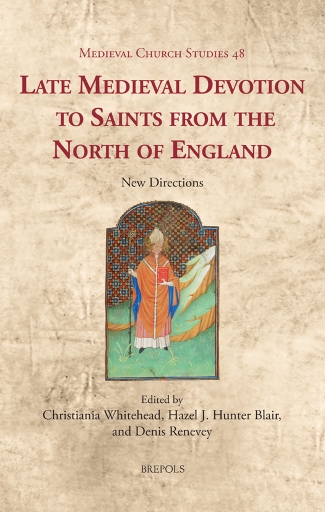
Late Medieval Devotion to Saints from the North of England
show More to view fulltext, buy and share links for:Late Medieval Devotion to Saints from the North of England show Less to hide fulltext, buy and share links for: Late Medieval Devotion to Saints from the North of EnglandThis volume fills an important gap in the study of medieval English sanctity. Focused on the period 1150-1550, it examines later manifestations of pre-conquest northern English cults (John of Beverley, Oswald, Hilda, Ætheldreda etc.), and the establishment and development of many more during the twelfth to fifteenth centuries (Godric of Finchale, Robert of Knaresborough, Oswine of Tynemouth, Æbbe of Coldingham, Bega of Copeland, William of York, etc.). It showcases the diversity of new northern cults that emerged after 1150, and pays particular attention to cultures of episcopal and eremitic devotion and hagiographic production in Yorkshire, Cumbria and Lincolnshire.
Divided into five subsections, the volume opens by exploring the relation of sanctity to constructions of northern identity through targeted examinations of northern textual and material cultures. It then turns to a series of case studies of northern saints’ cults, grouped with reference to the eremitic life, female networks and locations, and the contextualisation of northern sanctity within national, transnational and post-medieval currents of veneration. Underlying all these essays is a concern with the conflicted idea of ‘northernness’. This collection argues for a northern sanctity that is imagined in varying ways by different communities (monastic, diocesan, national etc.), allied to a series of conceptual ‘norths’ that differ significantly in accordance with the bodies of evidence under survey.
-
-
-
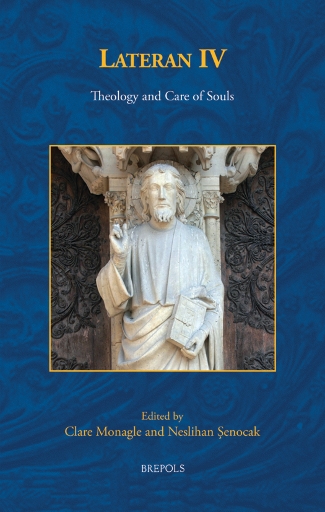
Lateran IV
show More to view fulltext, buy and share links for:Lateran IV show Less to hide fulltext, buy and share links for: Lateran IVThe Fourth Lateran Council of 1215 was a foundational event in the history of Western Christendom. Lead by the reformist Pope Innocent III, the Council ushered in a new era of papal policy in governance, the implications of which would be felt throughout the continent. To some, Lateran IV represents the flourishing of the medieval papacy, as the institution sought to improve pastoral care across Europe, as well as to define theological orthodoxy. For others, Lateran IV constitutes the founding moment of the so-called ‘persecuting society’, the moment at which the Papacy articulated its identity via the category of heresy. Lateran IV: Theology and Care of Souls assesses the pastoral and theological legacies of the Council. The volume brings together scholars of high theology, as well as those whose work engages with the practices of clerical governance in the thirteenth century. Lateran IV: Theology and Care of Souls maps the key intellectual, theological, and pastoral concerns of Lateran IV, especially revealing the influence of the medieval theologians connected to the universities on the decrees of the Council.
-
-
-
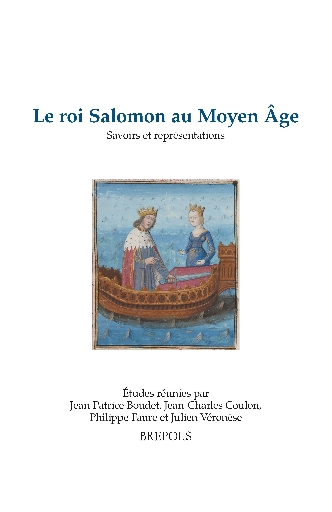
Le roi Salomon au Moyen Âge
show More to view fulltext, buy and share links for:Le roi Salomon au Moyen Âge show Less to hide fulltext, buy and share links for: Le roi Salomon au Moyen ÂgeÀ l’époque médiévale, en Orient et en Occident, se conjuguent sur la figure mythique du roi Salomon des aspects variés et parfois contradictoires touchant aussi bien au secret qu’à une diffusion d’idées et de représentations visant à un consensus social et politique. Les contributions ici réunies s’inscrivent dans une optique comparative dans la mesure où la place qu’occupe Salomon dans les trois religions du Livre (judaïsme, christianisme, islam) n’a fait que croître et embellir durant la période médiévale, dans le cadre d’une symbolique du pouvoir en partie commune et de ce que l’on pourrait qualifier une « culture de l’équivoque » (Bruno Roy). Paradigme du roi sage et juste d’après le texte biblique, Salomon est en effet également un souverain dépravé, pourvu de 700 épouses et de 300 concubines, femmes qui, au temps de sa vieillesse, détournèrent son cœur pour l’inciter à suivre d’autres dieux et à sombrer dans l’idolâtrie. Son sort dans l’au-delà a ainsi fait l’objet de nombreuses spéculations. En outre, plusieurs traités pseudépigraphiques grecs des premiers siècles de notre ère, ainsi que la tradition juive rapportée par Flavius Josèphe et abondamment exploitée dans l’Occident médiéval (notamment à partir du XIIe siècle), en font un roi exorciste et magicien, capable de contraindre les démons à lui obéir. Salomon joue également un rôle fondamental dans la littérature magique byzantine, copte et arabo-musulmane, dont certains spécimens ont été traduits ou adaptés en latin. À l’instar d’Hermès et d’Aristote, il est donc l’un des grands héros emblématiques du vaste mouvement de transfert culturel entre l’Orient et l’Occident qu’a connu la seconde moitié du Moyen Âge.
-
-
-
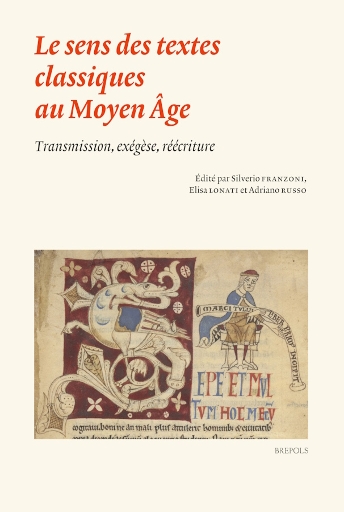
Le sens des textes classiques au Moyen Âge
show More to view fulltext, buy and share links for:Le sens des textes classiques au Moyen Âge show Less to hide fulltext, buy and share links for: Le sens des textes classiques au Moyen ÂgeDe l’Italie lombarde à l’Italie humaniste, de la renaissance carolingienne à celle de la France et de l’Angleterre aux xii e-xiii e siècles, ce volume se propose d’interroger une thématique connue - celle de la fortune des auteurs classiques latins au Moyen Âge - à partir de quelques perspectives nouvelles et en multipliant les types d’approche. Organisées autour de trois axes - la transmission, l’exégèse et la réécriture - douze contributions s’intéressent à la manière dont les textes de l’Antiquité, tant en prose qu’en poésie, ont été cités, commentés et réemployés au fil des siècles, afin de conserver le patrimoine du passé tout en l’infléchissant pour atteindre des buts nouveaux.
En s’attachant à des produits littéraires variés, des œuvres originales à l’univers des gloses, des commentaires, des florilèges et des miscellanées, cette sélection raisonnée d’enquêtes montre comment les auteurs classiques ont connu une vie nouvelle - celle qui les a conduits jusqu’à nous - grâce à la copie et aux échanges, à la redécouverte fortuite ou à une renommée solide, à travers l’emprunt occasionnel ou le dépouillement systématique, l’excerption, l’adaptation et les vraies erreurs d’interprétation. Méthode philologique, critique littéraire et recherche historique se combinent, avec une attention particulière pour les modalités concrètes de la lecture et de l’exploitation des Anciens, et conduisent à de multiples approfondissements sur la genèse matérielle et intellectuelle de certaines œuvres : parmi elles, plusieurs doivent encore faire l’objet de travaux de première main, dont on donne ici les tout premiers résultats.
-
-
-
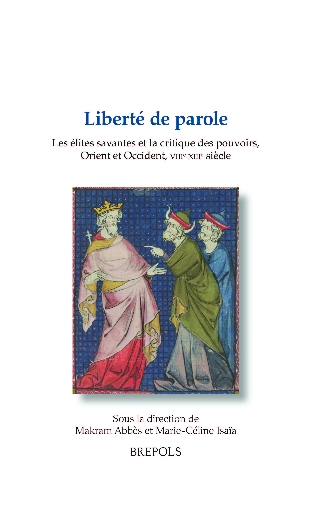
Liberté de parole
show More to view fulltext, buy and share links for:Liberté de parole show Less to hide fulltext, buy and share links for: Liberté de paroleLa parrhésia antique idéalisée, cette parole franche qu’autorise et exige la démocratie, devrait disparaître avec l’installation des pouvoirs souverains du Moyen Âge. De fait, la répression légale des paroles sacrilèges signale la naissance de la théocratie pontificale et de l’État moderne au tournant des XIIIe et XIVe siècles. L’absolutisme va de pair avec une réduction de la liberté de parole à un simulacre politique.
Entre le XIIIe et le XIIIe siècle cependant, en Occident latin, en Islam et dans l’empire byzantin, des pouvoirs souverains qui disent tenir de Dieu leur autorité voient leurs élites religieuses continuer à revendiquer et à pratiquer une forme de liberté de parole. Ces élites exercent une critique justifiée par leur maîtrise de la tradition écrite et par leur expérience du gouvernement. Elles envisagent la liberté de parole comme un devoir religieux vis-à-vis du prince, en appellent à sa conscience et l’exhortent à être à la hauteur du pouvoir reçu de Dieu. Leurs paroles critiques prennent aussi un public à témoin, dans le cadre d’un rituel politique qui n’est jamais parfaitement contrôlé ni instrumentalisé. Elles contribuent ainsi à associer une large communauté, fondée religieusement, à l’exercice du pouvoir.
En comparant la liberté de parole assumée par ces élites médiévales, c’est donc le fonctionnement des empires du Moyen Âge central qu’on analyse – des empires dont l’assise théocratique reste compatible avec la critique et implique la participation sous contrôle d’une partie des populations. Au début de la période, celui qui critique le prince lui donne un gage de fidélité ; il déclare que le pouvoir exercé peut être amélioré. À la fin de la période, le critique fait d’abord valoir son amitié pour le souverain – indice de la réduction de l’assise collective de ces régimes.
-
-
-
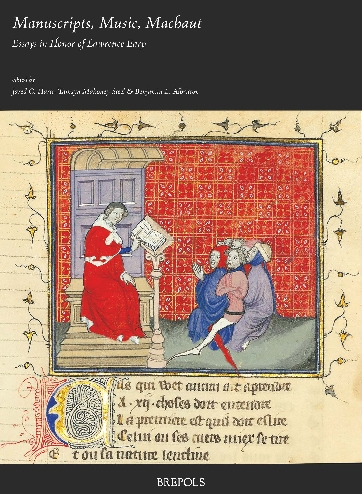
Manuscripts, Music, Machaut: Essays in Honor of Lawrence Earp
show More to view fulltext, buy and share links for:Manuscripts, Music, Machaut: Essays in Honor of Lawrence Earp show Less to hide fulltext, buy and share links for: Manuscripts, Music, Machaut: Essays in Honor of Lawrence EarpThis multidisciplinary volume celebrates the scholarship and career of Lawrence Earp, whose work has profoundly shaped the fields of Machaut studies, musicology, codicology, and fourteenth-century studies in general. For over four decades, Earp’s meticulous scholarship and generosity in collaboration have been a constant inspiration for medieval scholars, students, and colleagues alike. The twenty-six innovative essays herein gratefully acknowledge his influence and showcase a variety of fresh approaches. Recognizing both the breadth and depth of Earp’s work, the sections of this book are devoted to bibliography, historiography, literature, art history, and several musicological topics. Many of the chapters focus on the oeuvre of Guillaume de Machaut, but readers will also find explorations on Hildegard of Bingen, Philippe de Vitry, child performers in medieval theater, notation, genre, motets from the late thirteenth to the early fifteenth centuries, and polyphony in Italy and England. Made possible by Earp’s foundational and guiding work, this amply illustrated volume invites future interdisciplinary research.
-
-
-
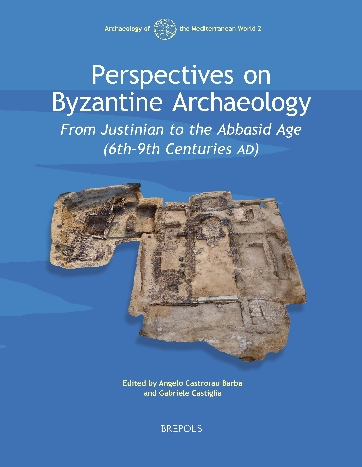
Perspectives on Byzantine Archaeology
show More to view fulltext, buy and share links for:Perspectives on Byzantine Archaeology show Less to hide fulltext, buy and share links for: Perspectives on Byzantine ArchaeologyFrom the rule of Justinian (AD 527-AD 565) up to the Islamic conquests in the Byzantine Empire, the lands of the Mediterranean basin underwent significant change from the sixth to the ninth centuries AD. Urban and rural areas were transformed, landscapes altered, and material cultures saw a fundamental shift. But such changes were by no means uniform across the region. From Jordan, Greece, and the Danube, to the Italian peninsula, Sicily, Spain, and the Horn of Africa, the contributions gathered together in this volume explore new advances and perspectives from the field of ‘Byzantine’ archaeology over the longue durée in order to shed new light on this period.
What was the impact of the reconquest of Justinian? What was the impact of Byzantium in archaeological record? What are the archaeological indicators of urban and rural transformations from the sixth to the ninth centuries? Did architecture represent a marker of socio-economic and cultural change within the Byzantine world? By engaging with such key questions, and by drawing on new data from surveys, excavations, material culture, and historical sources, this volume offers new insights into archaeological perspectives on the broader Byzantine world.
-
-
-
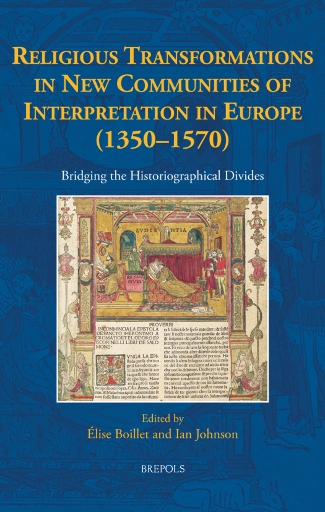
Religious Transformations in New Communities of Interpretation in Europe (1350–1570)
show More to view fulltext, buy and share links for:Religious Transformations in New Communities of Interpretation in Europe (1350–1570) show Less to hide fulltext, buy and share links for: Religious Transformations in New Communities of Interpretation in Europe (1350–1570)This volume brings together medievalist and early modernist specialists, whose research fields are traditionally divided by the jubilee year of 1500, in order to concentrate on the role of the laity (and those in holy orders) in the religious transformations characterizing the ‘long fifteenth century’ from the flourishing of the Devotio Moderna to the Reformation and Counter-Reformation.
Recent historiography has described the Christian church of the fifteenth century as a world of ‘multiple options’, in which the laity was engaged with the clergy in a process of communication and negotiation leading to the emergence of hybrid forms of religious life. The religious manifestations of such ‘new communities of interpretation’ appear in an array of biblical and religious texts which widely circulated in manuscript before benefiting from the new print media.
This collection casts a spectrum of new yet profoundly historical light on themes of seminal relevance to present-day European society by analysing patterns of inclusion and exclusion, and examining shifts in hierarchic and non-hierarchic relations articulated through religious practices, texts, and other phenomena featuring in the lives of groups and individuals. The academic team assembled for this collection is internationally European as well as interdisciplinary and multidisciplinary in its methodology.
-
-
-
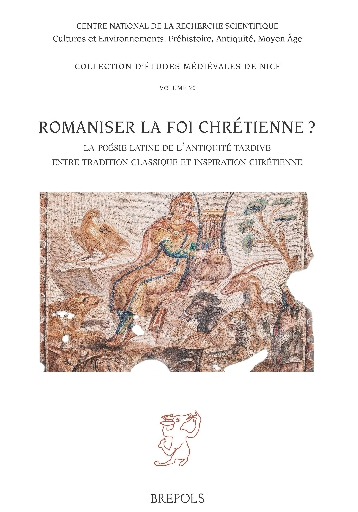
Romaniser la foi chrétienne ?
show More to view fulltext, buy and share links for:Romaniser la foi chrétienne ? show Less to hide fulltext, buy and share links for: Romaniser la foi chrétienne ?Le présent ouvrage participe aux recherches sur la poésie latine tardo-antique qui s’efforcent de situer et de décrire l’émergence, puis le développement de cette poésie dans le cadre de la christianisation de l’Empire. Tout en situant les auteurs et les œuvres par rapport aux grands changements et aux convulsions idéologiques qui ont traversé la société romaine du iii e au vi e siècle, les dix contributions de ce volume, réunies par Giampiero Scafoglio et Fabrice Wendling, tentent d’appréhender par le biais de la littérature un phénomène désormais bien étudié par les historiens, celui de la transformation du christianisme dans le contexte constantinien et théodosien d’une religion devenue romaine. Si l’on observe dans la sacralisation des bâtiments et des lieux un processus qui opère une rupture avec la religion spirituelle des premiers siècles, ne peut-on trouver trace d’une telle mutation dans la poésie des iv e et v e siècles ? Une expression désignant le Christ comme Saluator generis Romulei (Prudence), l’effacement des thématiques chrétiennes dans certains poèmes d’Ausone, l’apparition dans les hymnes de Prudence d’une topographie sacrée, l’éloge hyperbolique de l’art oratoire chez un Ennode de Pavie ou, encore, la stigmatisation de la virginité dans tel Épithalame du même Ennode ne témoignent-ils pas d’une forme de « romanisation » ou - plus exactement peut-être - d’interpretatio romana de la foi chrétienne, d’origine hébraïque ? Autrement dit, symétriquement à la « conversion » de la culture classique dont témoigne la littérature chrétienne, ne peut-on mettre au jour dans les textes poétiques un processus sans doute déconcertant, mais réel, de transformation de la foi, de transmutation de ses contenus originels, sous l’effet d’une poésie chrétienne qui garde des attaches profondes, non seulement avec la poésie classique, mais encore avec tout le « passé » de la civilisation romaine antique, jusque dans ses aspects religieux ?
-