


Brepols Online Books Medieval Miscellanea Collection 2023 - bob2023mime

Collection Contents
21 - 40 of 55 results
-
-

Per cognitionem visualem. The Visualization of Cognitive and Natural Processes in the Middle Ages
show More to view fulltext, buy and share links for:Per cognitionem visualem. The Visualization of Cognitive and Natural Processes in the Middle Ages show Less to hide fulltext, buy and share links for: Per cognitionem visualem. The Visualization of Cognitive and Natural Processes in the Middle AgesVisual representations were deeply involved in medieval traditions related to the dissemination and teaching of philosophy and science. Consequently, they were not only examples of theological or philosophical interpretation, but rather brought together manifold intellectual activities, illuminating various perceptual, cognitive, and spiritual concerns. Visual tools, which appear frequently in medieval manuscripts, have often been considered as “illustrative material” intended to facilitate the comprehension and interpretation of texts. These “visual aids” offer something more than a straightforward correspondence between a conceptual interpretation and its figurative depiction. They are, in fact, key to understanding the methods of acquiring and shaping knowledge through visual frameworks with didactical, disputational or heuristic purposes. The aim of this volume is to deepen our understanding of medieval visual tools that represented and demonstrated philosophical and scientific knowledge and, to an extent, the accumulation of empirical information.
-
-
-
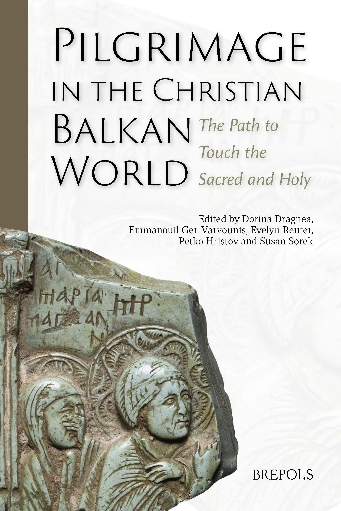
Pilgrimage in the Christian Balkan World
show More to view fulltext, buy and share links for:Pilgrimage in the Christian Balkan World show Less to hide fulltext, buy and share links for: Pilgrimage in the Christian Balkan WorldThe purpose of this volume is to explore, re-interpret and re-contextualise the various natures of practices performed by the Orthodox and Catholic pilgrims in Balkan countries in their devotional ʽpath to touch the sacred and holyʼ through the prism of pilgrimage contents, and their articulating, using, and handling strategies. Inter- and transdisciplinary perspectives constitute a strong point for exploring the essence of this collective practice of worship, which is theoretically and critically interpreted, and chronologically and diachronically analysed. Therefore, the various visions of the authors, formed on the basis of qualitative and critical analysis of primary (ethnographic and folkloric data from field interviews, archive documents, samples, etc.) and secondary sources, come to fill a gap in research on pilgrimage in southeast Europe, and especially on pilgrimage practices in Eastern Orthodoxy. Particularly, the ritual practices, sacred places in contemporary Balkan societies, religious folklore, divine intervention stories, miracle-working icons, relics and reliquaries as part of the structure of pilgrimage are discussed.
The authors explore the context in which the Christian shrines in the Balkans are spaces where the ethnic and denominational patterns in pilgrimage are revealed openly on multiple levels; they delve into how the correlative effects between politics and religion are manifested. In this volume, which is the result of a project initiated by the Balkan History Association, the authors focus on theoretical analysis, stressing the historical and contemporary behaviour performed by the Christian pilgrims, and highlighting the fact that the motivations for going to the sacred places can vary, from seeking and obtaining Divine help to leisure, religious/faith tourism, etc.
-
-
-
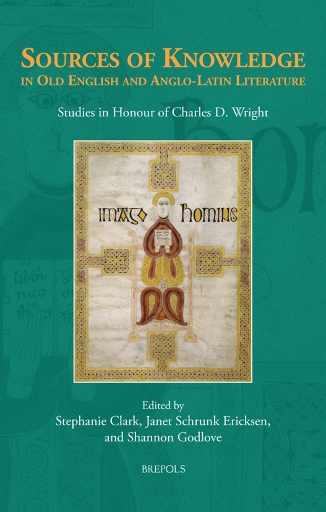
Sources of Knowledge in Old English and Anglo-Latin Literature
show More to view fulltext, buy and share links for:Sources of Knowledge in Old English and Anglo-Latin Literature show Less to hide fulltext, buy and share links for: Sources of Knowledge in Old English and Anglo-Latin LiteratureThis volume positions source scholarship as integral to an understanding of the transmission of knowledge across intellectual, social, and material networks in early medieval England. Essays in this collection situate source studies in Old English and Anglo-Latin literature within a range of theoretical and methodological approaches as varied as disability studies, feminist theory, history of science, and network analysis, tracing how ideas move across cultures and showing how studying sources enables us to represent the diversity of medieval voices embedded in any given text.
The essays in this volume extend the work of Charles D. Wright, who mentored a generation of scholars in methodologies of source study. The essays are organized into three sections. The first demonstrates how source studies facilitate tracing ideas across space and time. The second explores what happens to texts and ideas when they are transmitted from one culture, language, or historical moment to another. The third shows how sources illuminate wider cultural discourses. The volume attests to the flexibility of source work for early medieval English literature and argues for increased access to the tools that make such work possible.
-
-
-
Spes Italiae
show More to view fulltext, buy and share links for:Spes Italiae show Less to hide fulltext, buy and share links for: Spes ItaliaeIl regno di Pipino, figlio di Carlo Magno, è stato a lungo trascurato dalla ricerca storica, nonstante la sua importanza per l’Italia, le regioni transalpine e il mondo carolingio nel suo insieme. I contributi qui raccolti, esito di due convegni tenutisi a Trento e a Vienna, mettono in luce con approcci diversi e innovativi i molteplici aspetti della cultura del suo regno, la sua azione politica e militare e la rappresentazione che ne diedero i contemporanei. Questo volume, pertanto, offre un sguardo inedito su Pipino; nuove prospettive di ricerca su un sovrano dimenticato.
-
-
-
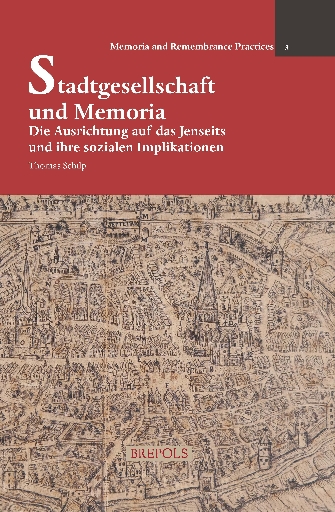
Stadtgesellschaft und Memoria
show More to view fulltext, buy and share links for:Stadtgesellschaft und Memoria show Less to hide fulltext, buy and share links for: Stadtgesellschaft und MemoriaDie Beschäftigung mit der Memoria, dem mittelalterlichen Totengedenken, zieht sich leitmotivisch durch die Forschungstätigkeit von Thomas Schilp 19. Oktober 1953 – 28. September 2019). Angeregt durch die Arbeiten von Otto Gerhard Oexle zur mittelalterlichen Erinnerungskultur erschloss er mit seiner ihn auszeichnenden Sorgfalt im historischen Sehen und Denken sowie in der präzisen und gleichzeitig interdisziplinären Analyse der uellen immer weitere Dimensionen dieses alle sozialen Schichten und alle Bereiche des täglichen Lebens umfassenden Phänomens. Dabei war für ihn von zentraler Bedeutung – wie auch in diesem Band – die Art und Weise, wie die Konstituierung unterschiedlichster gesellschaftlicher Gruppen zur Gewährleistung des Totengedenkens erfolgte. Seine Forschungen verdeutlichen auf verschiedenen, sich durchdringenden Ebenen eine von heutigen Denkformen unterschiedene Auffassung gesellschaftlichen Lebens. Dabei rücken die neue Leseart von Bildern, die Interpretation von Tönen und Klängen (wie beispielsweise Schlag und Geläute von Glocken) als akustische Zeichen sowie ephemere Erscheinungen wie etwa die mittelalterlichen Lichtinszenierungen in Kirchen immer stärker in den Blickpunkt seiner Ausführungen. Thomas Schilps früher Tod ermöglichte es ihm nicht mehr, die begonnene umfassende Monographie zum Thema Stadt und Memoria fertig zu stellen. Dieser Band vereint eine Auswahl von Aufsätzen, welche die Dimensionen seiner intensiven Beschäftigung mit Formen mittelalterlichen Denkens und Handelns reflektieren.
-
-
-
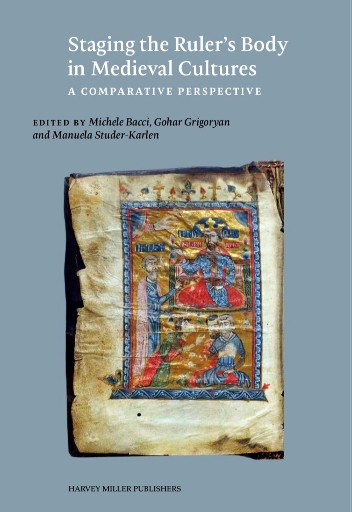
Staging the Ruler’s Body in Medieval Cultures: A Comparative Perspective
show More to view fulltext, buy and share links for:Staging the Ruler’s Body in Medieval Cultures: A Comparative Perspective show Less to hide fulltext, buy and share links for: Staging the Ruler’s Body in Medieval Cultures: A Comparative PerspectiveThis book explores the viewing and sensorial contexts in which the bodies of kings and queens were involved in the premodern societies of Europe, Asia, and Africa, relying on a methodology that aims to overcoming the traditional boundaries between material studies, art history, political theory, and Repräsentationsgeschichte. More specifically, it investigates the multiple ways in which the ruler’s physical appearance was apprehended and invested with visual, metaphorical, and emotional associations, as well as the dynamics whereby such mise-en-scène devices either were inspired by or worked as sources of inspiration for textual and pictorial representations of royalty. The outcome is a multifaced analysis of the multiple, imaginative, and terribly ambiguous ways in which, in past societies, the notion of a God-driven, eternal, and transpersonal royal power came to be associated with the material bodies of kings and queens, and of the impressive efforts made, in different cultures, to elude the conundrum of the latter’s weakness, transitoriness, and individual distinctiveness.
-
-
-

The Cent Nouvelles nouvelles (Burgundy-Luxembourg-France, 1458 - c. 1550)
show More to view fulltext, buy and share links for:The Cent Nouvelles nouvelles (Burgundy-Luxembourg-France, 1458 - c. 1550) show Less to hide fulltext, buy and share links for: The Cent Nouvelles nouvelles (Burgundy-Luxembourg-France, 1458 - c. 1550)A collaborative investigation of one of the best-known works of late medieval European literature, the Franco-Burgundian collection of short stories known as the Cent Nouvelles nouvelles. Modelled loosely on Boccaccio’s Decameron and incorporating elements from Old French fabliaux as well as Poggio Bracciolini’s Liber Facetiarum, the anonymous collection attributes its morally challenging and frequently humorous tales to named narrators including Philip the Good, Duke of Burgundy and Louis of Luxembourg, Count of Saint Pol.
The contribution of this new volume of essays is threefold: - empirical, in that it brings entirely new interdisciplinary insights into the study of the genesis and reception of the work; - methodological, in that it integrates study of the text within a 360-degree evaluation of the work’s manuscript and early printed context; and - conceptual, in that it seeks to understand the social dimensions of textual production and consumption.
These approaches unite ten principal contributions by specialists in the fields of art history, book history, court history and linguistics from France, the Netherlands, the USA and the UK.
-
-
-
The Art of Publication from the Ninth to the Sixteenth Century
show More to view fulltext, buy and share links for:The Art of Publication from the Ninth to the Sixteenth Century show Less to hide fulltext, buy and share links for: The Art of Publication from the Ninth to the Sixteenth CenturyWritten transmission relies on the fact of ‘publication,’ the step between the authorial process and reception. But what does ‘publishing’ mean in the context of a manuscript culture, in which books were copied slowly and singly by hand? This is a fundamental question. If one fails to appreciate the act of publication, one’s understanding of any authorial work and its reception from any period will remain defective. The case studies in this volume ask what it meant for medieval and renaissance authors and their associates to publish. The contexts under scrutiny range from England to Italy, from hagiography to literary criticism, and from Carolingian monasteries to renaissance libraries. Medieval publishing remains undiscovered territory in the main. This volume constitutes a first effort towards a long-term narrative, from the ninth to the sixteenth century.
-
-
-
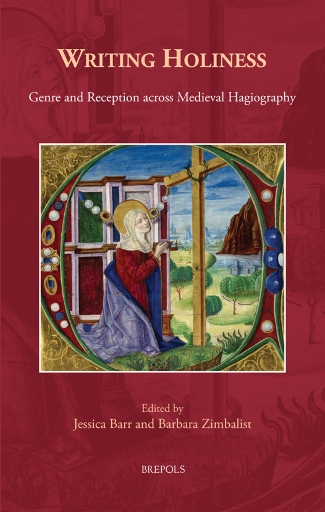
Writing Holiness
show More to view fulltext, buy and share links for:Writing Holiness show Less to hide fulltext, buy and share links for: Writing HolinessWriting Holiness contributes to exciting new critical conversations in the study of medieval hagiography in Western Christianity. Recent years have seen innovative approaches to the literatures of sanctity through emergent theoretical discourses, such as disability studies and trans theory. At the same time, traditional methodologies such as manuscript studies and reception history continue to generate new perspectives on the production, circulation, and reception of the sacred textual canon.
Through ten unique contributions that draw from both new and established theories and methodologies, this volume charts the development, movement, and reception of Christian hagiographic texts in localities ranging from the Iberian Peninsula to the Scandinavian Archipelago from the early to the late Middle Ages. Each chapter traces hagiographic development over generic, temporal, cultural, and linguistic boundaries, and considers the broader contours of the sacred imaginary that come into view as a result of such critically intersectional inquiry.
-
-
-
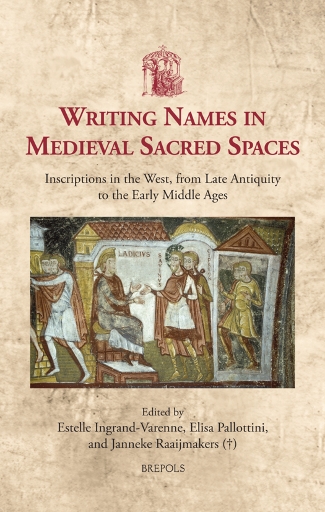
Writing Names in Medieval Sacred Spaces
show More to view fulltext, buy and share links for:Writing Names in Medieval Sacred Spaces show Less to hide fulltext, buy and share links for: Writing Names in Medieval Sacred SpacesThis volume proposes a framework for reflection on practices of writing personal names in medieval sacred spaces, uniting historians, art historians, and specialists in written culture (both epigraphers and palaeographers). It traces the forms and functions of names that can be found within the space of early medieval churches and cemeteries, focusing mainly, but not solely, on inscriptions. By examining names written in various kinds of media, from liturgical books to graffiti and more formal inscriptions, the contributors investigate the intentions and effects of the act of writing one’s own name or having one’s name written down. Their interest resides less in the name itself than the interactions it had with its spatial, iconographic, linguistic, ritual, and cultural context, and what this indicates about medieval graphical practices. What is a name from a graphic point of view? What are the specificities of the epigraphic manifestations of names? By whom were names written, and for whom were they intended (if they were even meant to be accessed)? Addressing these and other questions, this volume shows the importance of inscriptions as historical sources and the contribution they give to the study of medieval societies at the intersection of history, anthropology, archaeology, linguistics, and semiology.
-
-
-
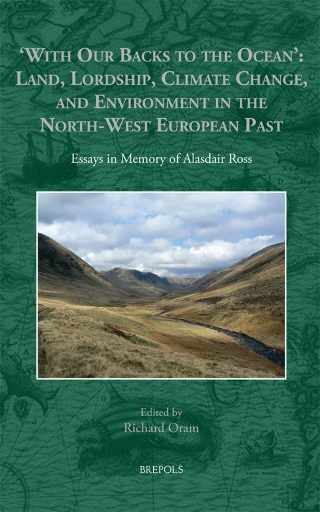
‘With Our Backs to the Ocean’: Land, Lordship, Climate Change, and Environment in the North-West European Past
show More to view fulltext, buy and share links for:‘With Our Backs to the Ocean’: Land, Lordship, Climate Change, and Environment in the North-West European Past show Less to hide fulltext, buy and share links for: ‘With Our Backs to the Ocean’: Land, Lordship, Climate Change, and Environment in the North-West European PastThis collection of ten essays celebrates the life and career of Dr Alasdair Ross, one of Britain’s foremost environmental historians, who died in 2017. Inspired by Ross’ own research interests, the chapters gathered here explore interlinked themes of land management and property rights, terrestrial and aquatic resource exploitation, mortality crises, and environmental change, viewed largely through the lens of the Scottish experience within the broader context of the eastern North Atlantic region and covering a chronology that spans from the sixth century ce up to the present. Including a previously unpublished paper by Ross himself, which overturns long-held perceptions of fiscal regimes in medieval Scotland, the contributors present radically revisionist or wholly new analyses of key documents and datasets, mostly through applying an interdisciplinary ‘environmental turn’ to primary record and narrative sources, or advancing new methodological approaches to systems analysis. From saintly interactions with nature to monastic exploitation of natural resources, charter records of land-ownership to the physicality of the landscapes recorded on parchment, and the human cost of subsistence and mortality crises, these papers humanize the discourse around historical climate and environmental change.
-
-
-
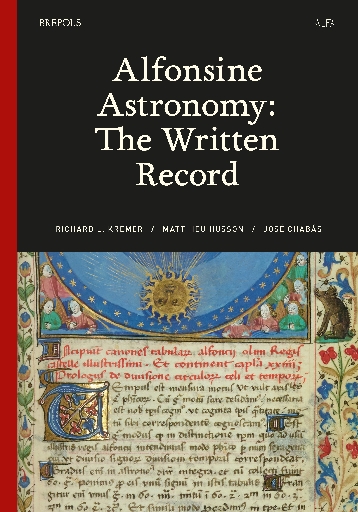
Alfonsine Astronomy
show More to view fulltext, buy and share links for:Alfonsine Astronomy show Less to hide fulltext, buy and share links for: Alfonsine AstronomyCompiled between 1262 and 1272 in Toledo under the patronage of Alfonso X, the Castilian Alfonsine Tables were recast in Paris in the 1320s, resulting in what we now call the Parisian Alfonsine Tables. These materials circulated widely and fostered astronomical activities throughout Europe. This resulted in a significant number of new works, of which there are a few hundred, extant in more than 600 manuscript codices and dozens of printed editions. These manuscripts and imprints, broadly contemporary to the works they witness, comprise the written record of Alfonsine astronomy and provide the focus of this volume.
A first series of essays examines individual manuscripts containing Alfonsine works. The authors seek to reconstruct, from the manuscript evidence, the cultural, astronomical and mathematical worlds in which the manuscripts were initially copied, compiled, used and collected. A second series of essays turns from the particular codex to the individual work or author. These contributions ask how particular works have been transmitted in surviving manuscript witnesses and how broader manuscript cultures shaped the diffusion, over two centuries, of Alfonsine astronomy across Europe. A final essay reflects on the challenges and opportunities offered by digital humanities approaches in such collective studies of a large manuscript corpus.
-
-
-

Celts, Gaels, and Britons
show More to view fulltext, buy and share links for:Celts, Gaels, and Britons show Less to hide fulltext, buy and share links for: Celts, Gaels, and BritonsCelts, Gaels, and Britons offers a miscellany of essays exploring three closely connected areas within the fields of Celtic Studies in order to shed new light on the ancient and medieval Celtic languages and their literatures. Taking as its inspiration the scholarship of Professor Patrick Sims-Williams, to whom this volume is dedicated, the papers gathered together here explore the Continental Celtic languages, texts from the Irish Sea world, and the literature and linguistics of the British languages, among them Welsh and Cornish. With essays from eighteen leading scholars in the field, this in-depth volume serves not only as a monument to the rich and varied career of Sims-Williams, but also offers a wealth of commentary and information to present significant primary research and reconsiderations of existing scholarship.
-
-
-
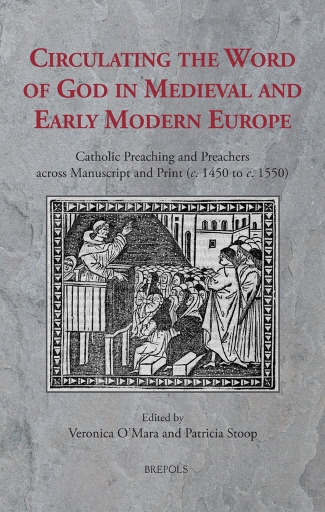
Circulating the Word of God in Medieval and Early Modern Europe
show More to view fulltext, buy and share links for:Circulating the Word of God in Medieval and Early Modern Europe show Less to hide fulltext, buy and share links for: Circulating the Word of God in Medieval and Early Modern EuropeThis volume concentrates on how the sermon, a pivotal element in mass communication, aimed to shape the people of Europe. Rather than setting up the usual binary divides, it highlights the linguistic complications, the textual inter-relationships, the confessional cross-currents, and the variations between public and private sermon dissemination operating at different rates and with variable results throughout Europe. Effectively the emphasis here is on how Catholic preachers and Catholic preaching carried on in the period between the handwritten and the printed sermon, a time when not only the mode of production was changing but when the very purpose and meaning of preaching itself would soon alter in a western Christian world that was becoming no longer completely Catholic. By examining case-studies chosen from countries with contrasting manuscript and printing traditions (Denmark, England, Finland, France, Germany, Italy, the Low Countries, Romania, Spain, and Sweden), we aim to examine some of the main historical, literary, and theological factors in the development of the sermon in Latin and the vernaculars, which is itself in the process of changing formats, and sometimes languages, at a time of religious ferment from the advent of print to the death of Martin Luther. These essays, which are effectively in dialogue with each other, are divided into geographical/linguistic sections organized along broadly chronological lines. They circulate from the peripheries of Europe to the centre, moving from areas where evidence is now scarce to situations of thriving production.
-
-
-
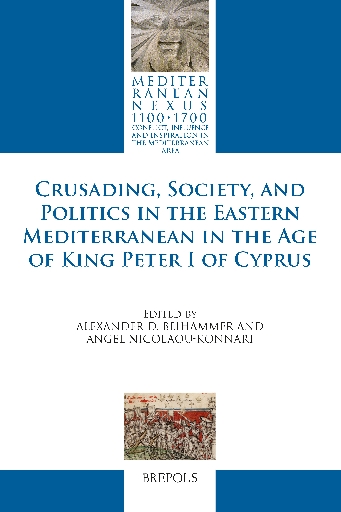
Crusading, Society, and Politics in the Eastern Mediterranean in the Age of King Peter I of Cyprus
show More to view fulltext, buy and share links for:Crusading, Society, and Politics in the Eastern Mediterranean in the Age of King Peter I of Cyprus show Less to hide fulltext, buy and share links for: Crusading, Society, and Politics in the Eastern Mediterranean in the Age of King Peter I of CyprusThe King of Cyprus, Peter I of Lusignan (1359-1369), was one of the most fascinating figures in the history of the Latin East and the later crusades. He was involved in European power politics, his crusading activities brought him into conflict with the Turkish beyliks of Anatolia and the Mamluk sultanate of Egypt, and his rule was closely linked with broader developments in the Eastern Mediterranean, such as the decay of Byzantium, the East-West schism, and the beginning of the Ottoman expansion in the Balkans. His adventurous life constitutes a captivating case study of court life, feudal and chivalric ethos, and political culture in the fourteenth century. This volume investigates developments in the Eastern Mediterranean before and during the reign of Peter I from a comparative perspective. It consists of five parts, which treat the political, diplomatic, and ecological context of the crusading movement in the time between the fall of Acre (1291) and the sack of Alexandria (1365), Peter I’s crusading policy and the Alexandrian crusade, Cypriot society and court life in the time of Peter I, the situation in Muslim-Turkish Anatolia, the second target of King Peter’s crusading policy, and, finally, Byzantium, its encounter with the Turks, the schism of the Churches, and theological trends in the time of the Hesychast Controversy.
-
-
-
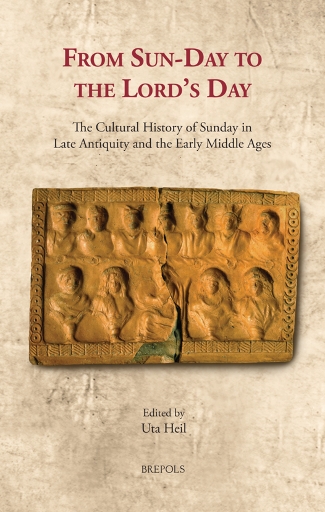
From Sun-Day to the Lord’s Day
show More to view fulltext, buy and share links for:From Sun-Day to the Lord’s Day show Less to hide fulltext, buy and share links for: From Sun-Day to the Lord’s DayEver since the Christianization of the planetary week in Late Antiquity, the notion of Sunday as a day of rest, as well as the rhythm of a seven-day week, has been a constant. Yet the cultural history of Sunday in Late Antiquity and the Early Middle Ages is complex. Detailed research reveals a greater diversity than appears at first glance. For example, Sunday did not simply replace the Sabbath, nor was the Jewish Sabbath commandment directly adopted. Furthermore, the Sunday laws of Emperor Constantine officially gave the inhabitants of the Roman Empire a day of rest free of work, but the effect and reception of the laws is hard to grasp, even among Christian authors. Moreover, Sunday was by no means a central theme in the history of late antique Christianity, so that the scattered references must be interpreted.
This edited collection, based on a conference in Vienna in 2019, investigates the relevance of Sunday and the weekly rhythm in Late Antiquity and the Early Middle Ages in the everyday life of people, in monasticism, in synods, in further imperial and ecclesiastical laws, and in disciplinary and liturgical developments. It also covers controversies with the Jewish Sabbath as well as reflections on the aspect of rest, freedom, and of charity. While exploring different views and regional differences, the contributions show the growing importance of the Lord’s Day, especially since the sixth century, as part of the Christianization of society and the sacralization of the calendar.
-
-
-
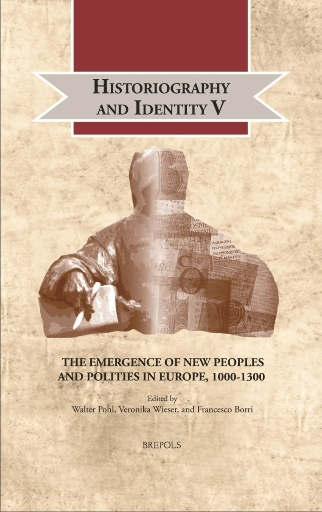
Historiography and Identity V
show More to view fulltext, buy and share links for:Historiography and Identity V show Less to hide fulltext, buy and share links for: Historiography and Identity VIn many countries in Northern and Eastern Europe, the period after 1000 saw the emergence of new Christian kingdoms. This process was soon reflected in works of historiography that traced the foundation and development of the new polities. Many of these texts had a lasting impact on the formation of political, ethnic, and religious identities of these states and peoples.
This volume deals with some of these earliest histories narrating the past of the new polities that had emerged after 1000 in Northern, East Central, and Eastern Europe, as well as in the Adriatic regions. They have often been understood as ‘national histories’, but a closer look brings out the differences in their aims and construction. One question addressed here is to what extent these historians built on models of identification developed in earlier historiography. The volume provides an overview of several fundamental texts in which identities in the new Christian kingdoms were negotiated, and of recent research on these texts.
-
-
-
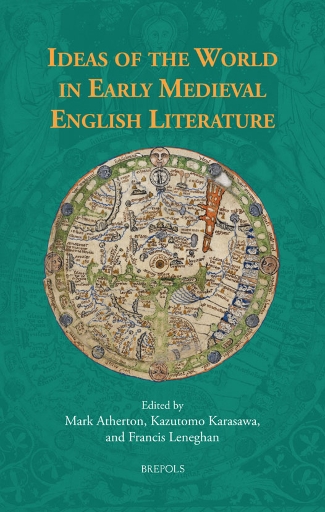
Ideas of the World in Early Medieval English Literature
show More to view fulltext, buy and share links for:Ideas of the World in Early Medieval English Literature show Less to hide fulltext, buy and share links for: Ideas of the World in Early Medieval English LiteratureAcross three thematically-linked sections, this volume charts the development of competing geographical, national, and imperial identities and communities in early medieval England. Literary works in Old English and Latin are considered alongside theological and historical texts from a range of disciplinary perspectives. Accounts of travel, foreign contacts, conversion, migration, landscape, nation, empire, and conquest are set within the continual flow of people and ideas from East to West, from continent to island and back, across the period. The fifteen contributors investigate how the early medieval English positioned themselves spatially and temporally in relation to their insular neighbours and other peoples and cultures. Several chapters explore the impact of Greek and Latin learning on Old English literature, while others extend the discussion beyond the parameters of Europe to consider connections with Asia and the Far East. Together these essays reflect ideas of inclusivity and exclusivity, connectivity and apartness, multiculturalism and insularity that shaped pre-Conquest England.
-
-
-
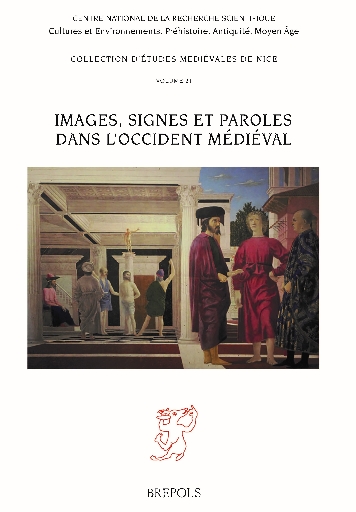
Images, signes et paroles dans l’Occident médiéval
show More to view fulltext, buy and share links for:Images, signes et paroles dans l’Occident médiéval show Less to hide fulltext, buy and share links for: Images, signes et paroles dans l’Occident médiévalCet ouvrage rassemble dix contributions qui proposent des perspectives originales pour l’analyse conjointe des modes d’expression figurée de l'Occident médiéval. Menées tant par des « historiens de l’art » que par des « historiens », elles abordent la question de l’image-objet, des signes alphabétiques et iconiques, du lieu peint, de la liturgie et de la prédication. Documents d’archives, exégèse biblique, sermons et récits hagiographiques sont exploités de manière fine et exhaustive pour rendre compte, au plus près, du contexte d’exécution des œuvres, qu’elles soient inconnues ou célèbres. Ce sont alors les angles d’approches adoptés, comme l’anthropologie des images ou les études transgenre, mais aussi les relations complexes entre art, architecture et rites, qui enrichissent ici l’exploration et d’objets de culte - les lipsanothèques catalanes, les linges de l’autel ou les ex-voto - et de panneaux peints - comme la Flagellation du Christ de Piero della Francesca - et des cycles de peintures décorant la Tour Ferrande à Pernes-les-Fontaines, San Pellegrino à Bominaco, et cinq chapelles de la Ligurie et du Piémont.
-
-
-
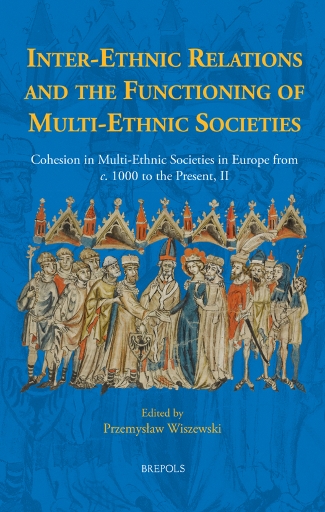
Inter-Ethnic Relations and the Functioning of Multi-Ethnic Societies
show More to view fulltext, buy and share links for:Inter-Ethnic Relations and the Functioning of Multi-Ethnic Societies show Less to hide fulltext, buy and share links for: Inter-Ethnic Relations and the Functioning of Multi-Ethnic SocietiesThe three-volume project Cohesion in Multi-Ethnic Societies in Europe from c.1000 to the Present explores and seeks to find solutions to a crucial problem facing contemporary Europe: in what circumstances can different ethnic groups co-operate for the common good? They apparently did so in the past, combining to form political societies, medieval and early modern duchies, kingdoms, and empires. But did they maintain their ethnic traditions in this process? Did they pass on elements of their cultural memory when they were not in a dominant position in a given polity?
The first volume of the project explored written sources about the past to show how communities shaped their collective memories in order to ensure the smooth functioning of multi-ethnic political communities. This second volume looks beyond texts and focuses on activities and events that were designed to build a sense of community within a political community made up of different ethnic groups. The coexistence of different ethnic groups is considered not through the prism of theoretical analyses by intellectual elites, but by following community members’ responses to current events as recorded in the sources.
-