


Brepols Online Books Medieval Miscellanea Collection 2023 - bob2023mime

Collection Contents
51 - 55 of 55 results
-
-
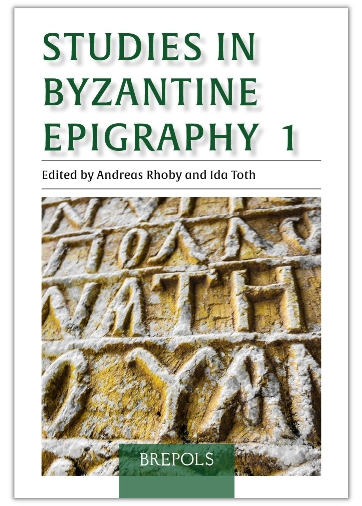
Studies in Byzantine Epigraphy 1
show More to view fulltext, buy and share links for:Studies in Byzantine Epigraphy 1 show Less to hide fulltext, buy and share links for: Studies in Byzantine Epigraphy 1The Studies in Byzantine Epigraphy series testifies to an ever-greater focus on inscriptions within Byzantine Studies. The present, inaugural volume includes selected papers from the two panels dedicated to Byzantine Epigraphy held at the XXIII International Congress of Byzantine Studies in Belgrade, August 2016, and the XV International Congress of Greek and Latin Epigraphy in Vienna, August/September 2017. The papers, as indeed the events for which they were initially produced, celebrate both the progress and the promise of epigraphic research within medieval and early modern scholarship as a whole.
-
-
-
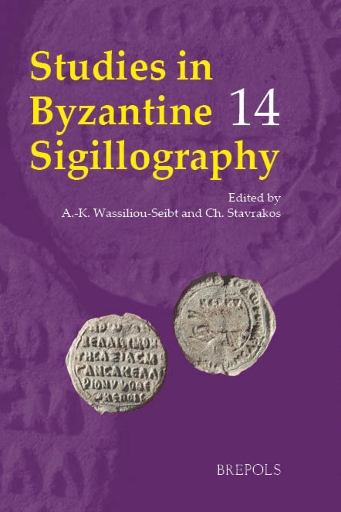
Studies in Byzantine Sigillography
show More to view fulltext, buy and share links for:Studies in Byzantine Sigillography show Less to hide fulltext, buy and share links for: Studies in Byzantine SigillographyThe present volume contains the papers from the 12th International Symposium of Byzantine Sigillography, held at the State Ermitage Museum in St. Petersburg, May 27-30, 2019. The papers discuss seals as historical sources and archaeological findings, presenting their role in the Byzantine prosopography, administration, historical geography and art history.
-
-
-
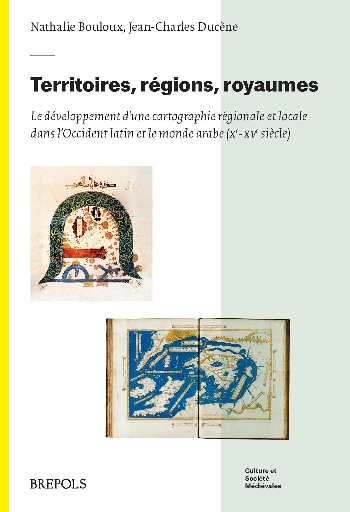
Territoires, régions, royaumes
show More to view fulltext, buy and share links for:Territoires, régions, royaumes show Less to hide fulltext, buy and share links for: Territoires, régions, royaumesPendant longtemps, les travaux sur la cartographie ont surtout porté sur les mappemondes, aussi bien dans le monde latin que dans le monde arabo-musulman. Les représentations cartographiques des espaces locaux et régionaux ont suscité un intérêt plus modéré, même si les études sur la cartographie à grande ou à moyenne échelle des xii e-xv e siècles connaissent depuis quelques années un renouveau notable tant dans le domaine latin que dans le domaine arabe.
La publication des actes du colloque international qui s'est tenu à Tours en juin 2018 rassemble quinze études consacrées à la représentation cartographique du territoire, et, plus généralement, à la cartographie des espaces régionaux et locaux qui émerge dès le x e siècle dans le monde arabo-musulman et à partir du xii e siècle dans l’Occident latin, pour connaître un essor remarquable dans les deux derniers siècles du Moyen Âge. Le livre réunit des articles de synthèse et des études de cas, abordant les questions complexes de l'émergence de cette cartographie, de ses formes et de ses usages dans le monde arabo-musulman et dans l'Occident latin.
-
-
-

Trilingual Learning
show More to view fulltext, buy and share links for:Trilingual Learning show Less to hide fulltext, buy and share links for: Trilingual LearningIn 1517, the Brabant city of Louvain witnessed the foundation of the Collegium Trilingue (Three Language College). Funded by means of the legacy of the humanist and diplomat Jerome of Busleyden (d. 1517) and steered by guiding spirit Erasmus of Rotterdam, this institute offered courses in the three so-called sacred languages Hebrew, Greek, and Latin, which students could attend for free. However, this kind of initiative was not unique to Louvain in the early 16th century. In a time span of barely twenty years, Greek and Hebrew were also offered in Alcalá de Henares (near Madrid), Wittenberg, and Paris, among other places. It would not take long before these ‘sacred’ languages were also on the educational agenda at universities throughout the whole of Europe.
The present volume examines the general context in which such polyglot institutes emerged and thrived, as well as the learning and teaching practices observed in these institutes and universities. Devoting special attention to the study of the continuity, or rather the discontinuity, between the 16th-century establishment of language chairs and the late medieval interest in these languages, it brings together fifteen selected papers exploring various aspects of these multilingual undertakings, focusing on their pedagogical and scholarly dimensions. Most of the contributions were presented at the 2017 LECTIO conference The Impact of Learning Greek, Hebrew, and ‘Oriental’ Languages on Scholarship, Science, and Society in the Middle Ages and the Renaissance, which was organized at the occasion of the 500th anniversary of the foundation of the Louvain Collegium Trilingue.
-
-
-
Visions of Medieval History in North America and Europe
show More to view fulltext, buy and share links for:Visions of Medieval History in North America and Europe show Less to hide fulltext, buy and share links for: Visions of Medieval History in North America and EuropeIn this volume, scholars from North America and Europe explore the intersection of medieval identity with ethnicity, religion, power, law, inheritance, texts, and memory. They offer new historiographical interventions into questions of identity, but also of ethnonyms, conflict studies, the feudal revolution, gender and kinship studies, and local history. Employing interdisciplinary approaches and textual hermeneutics, the authors represent an international scholarly community characterized by intellectual restlessness, historiographical experimentation, and defiance of convention.
-