


Brepols Online Books Medieval Miscellanea Collection 2023 - bob2023mime

Collection Contents
41 - 55 of 55 results
-
-

La triade dell’Essere
show More to view fulltext, buy and share links for:La triade dell’Essere show Less to hide fulltext, buy and share links for: La triade dell’EssereLa storia della filosofia tardo-antica, medievale e umanistica ha visto ricorrere con frequenza e continuità una peculiare struttura terminologico-concettuale di origine neoplatonica, definita dai termini essenza (οὐσία - substantia o essentia) - potenza (δύναμις - virtus) - atto (ἐνέργεια - operatio). Essa trova le sue prime attestazioni in Galeno e Giamblico, e sviluppi in Proclo, Damascio e Simplicio, sebbene il suo modello ontologico emergesse già in Plotino. Talvolta assimilata allo schema aristotelico atto - potenza, questa triade comporta in realtà una radicale rielaborazione dell’ontologia aristotelica - dalla cui base terminologica e concettuale prende peraltro le mosse -, attraverso la reintroduzione dell’elemento esemplaristico platonico, configurandosi così come struttura causalistico-processionale. Essa venne ripresa dal pensiero cristiano patristico, e attraverso lo snodo fondamentale dello pseudo-Dionigi, conoscerà una inesauribile fortuna nel Medioevo greco e latino, dove verrà utilizzata per spiegare questioni di angelologia, di psicologia e di dottrina trinitaria. A Bisanzio la triade converge verso la teologia delle energie divine, venendo impiegata da autori quali Massimo il Confessore, Giovanni Damasceno e Gregorio Palamas. Nel Medioevo latino, essa viene utilizzata da autori come Eriugena, Ugo di San Vittore, Isacco della Stella, Egidio Romano, Enrico di Gand, Bonaventura, Alberto Magno, Tommaso d’Aquino e Dante, diffondendosi fino alle soglie dell’Età moderna (Ficino, Bruno). Attraverso le fonti neoplatoniche la triade conosce fortuna anche nella filosofia araba (Al-Fārābī, Ibn Sīnā). Questo volume mira a offrire una quanto più possibile esaustiva identificazione e discussione delle occorrenze e delle trasformazioni concettuali (nonché, talvolta, delle metamorfosi lessicali) che la triade ha conosciuto nei contesti storico-filosofici qui presi in esame.
-
-
-
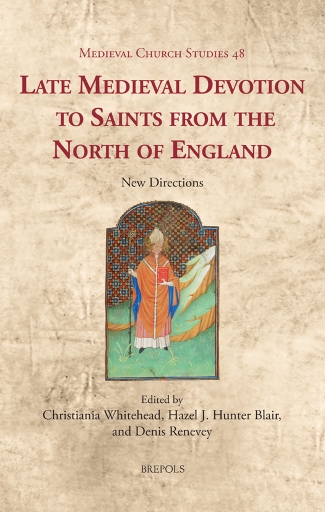
Late Medieval Devotion to Saints from the North of England
show More to view fulltext, buy and share links for:Late Medieval Devotion to Saints from the North of England show Less to hide fulltext, buy and share links for: Late Medieval Devotion to Saints from the North of EnglandThis volume fills an important gap in the study of medieval English sanctity. Focused on the period 1150-1550, it examines later manifestations of pre-conquest northern English cults (John of Beverley, Oswald, Hilda, Ætheldreda etc.), and the establishment and development of many more during the twelfth to fifteenth centuries (Godric of Finchale, Robert of Knaresborough, Oswine of Tynemouth, Æbbe of Coldingham, Bega of Copeland, William of York, etc.). It showcases the diversity of new northern cults that emerged after 1150, and pays particular attention to cultures of episcopal and eremitic devotion and hagiographic production in Yorkshire, Cumbria and Lincolnshire.
Divided into five subsections, the volume opens by exploring the relation of sanctity to constructions of northern identity through targeted examinations of northern textual and material cultures. It then turns to a series of case studies of northern saints’ cults, grouped with reference to the eremitic life, female networks and locations, and the contextualisation of northern sanctity within national, transnational and post-medieval currents of veneration. Underlying all these essays is a concern with the conflicted idea of ‘northernness’. This collection argues for a northern sanctity that is imagined in varying ways by different communities (monastic, diocesan, national etc.), allied to a series of conceptual ‘norths’ that differ significantly in accordance with the bodies of evidence under survey.
-
-
-
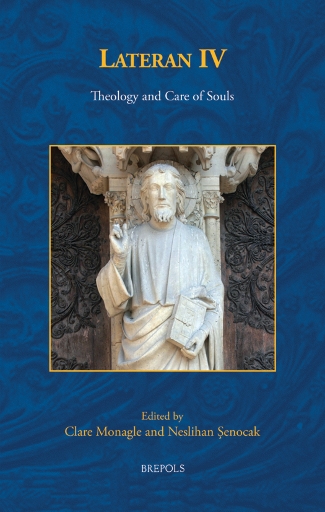
Lateran IV
show More to view fulltext, buy and share links for:Lateran IV show Less to hide fulltext, buy and share links for: Lateran IVThe Fourth Lateran Council of 1215 was a foundational event in the history of Western Christendom. Lead by the reformist Pope Innocent III, the Council ushered in a new era of papal policy in governance, the implications of which would be felt throughout the continent. To some, Lateran IV represents the flourishing of the medieval papacy, as the institution sought to improve pastoral care across Europe, as well as to define theological orthodoxy. For others, Lateran IV constitutes the founding moment of the so-called ‘persecuting society’, the moment at which the Papacy articulated its identity via the category of heresy. Lateran IV: Theology and Care of Souls assesses the pastoral and theological legacies of the Council. The volume brings together scholars of high theology, as well as those whose work engages with the practices of clerical governance in the thirteenth century. Lateran IV: Theology and Care of Souls maps the key intellectual, theological, and pastoral concerns of Lateran IV, especially revealing the influence of the medieval theologians connected to the universities on the decrees of the Council.
-
-
-
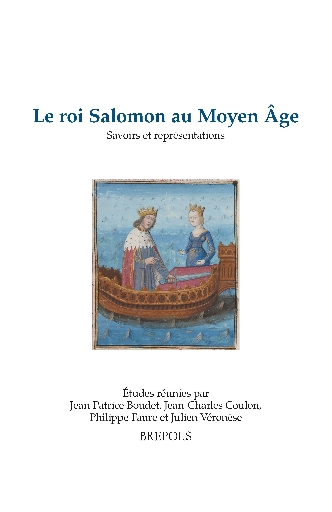
Le roi Salomon au Moyen Âge
show More to view fulltext, buy and share links for:Le roi Salomon au Moyen Âge show Less to hide fulltext, buy and share links for: Le roi Salomon au Moyen ÂgeÀ l’époque médiévale, en Orient et en Occident, se conjuguent sur la figure mythique du roi Salomon des aspects variés et parfois contradictoires touchant aussi bien au secret qu’à une diffusion d’idées et de représentations visant à un consensus social et politique. Les contributions ici réunies s’inscrivent dans une optique comparative dans la mesure où la place qu’occupe Salomon dans les trois religions du Livre (judaïsme, christianisme, islam) n’a fait que croître et embellir durant la période médiévale, dans le cadre d’une symbolique du pouvoir en partie commune et de ce que l’on pourrait qualifier une « culture de l’équivoque » (Bruno Roy). Paradigme du roi sage et juste d’après le texte biblique, Salomon est en effet également un souverain dépravé, pourvu de 700 épouses et de 300 concubines, femmes qui, au temps de sa vieillesse, détournèrent son cœur pour l’inciter à suivre d’autres dieux et à sombrer dans l’idolâtrie. Son sort dans l’au-delà a ainsi fait l’objet de nombreuses spéculations. En outre, plusieurs traités pseudépigraphiques grecs des premiers siècles de notre ère, ainsi que la tradition juive rapportée par Flavius Josèphe et abondamment exploitée dans l’Occident médiéval (notamment à partir du XIIe siècle), en font un roi exorciste et magicien, capable de contraindre les démons à lui obéir. Salomon joue également un rôle fondamental dans la littérature magique byzantine, copte et arabo-musulmane, dont certains spécimens ont été traduits ou adaptés en latin. À l’instar d’Hermès et d’Aristote, il est donc l’un des grands héros emblématiques du vaste mouvement de transfert culturel entre l’Orient et l’Occident qu’a connu la seconde moitié du Moyen Âge.
-
-
-
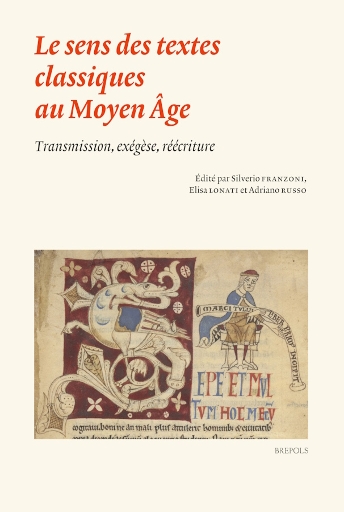
Le sens des textes classiques au Moyen Âge
show More to view fulltext, buy and share links for:Le sens des textes classiques au Moyen Âge show Less to hide fulltext, buy and share links for: Le sens des textes classiques au Moyen ÂgeDe l’Italie lombarde à l’Italie humaniste, de la renaissance carolingienne à celle de la France et de l’Angleterre aux xii e-xiii e siècles, ce volume se propose d’interroger une thématique connue - celle de la fortune des auteurs classiques latins au Moyen Âge - à partir de quelques perspectives nouvelles et en multipliant les types d’approche. Organisées autour de trois axes - la transmission, l’exégèse et la réécriture - douze contributions s’intéressent à la manière dont les textes de l’Antiquité, tant en prose qu’en poésie, ont été cités, commentés et réemployés au fil des siècles, afin de conserver le patrimoine du passé tout en l’infléchissant pour atteindre des buts nouveaux.
En s’attachant à des produits littéraires variés, des œuvres originales à l’univers des gloses, des commentaires, des florilèges et des miscellanées, cette sélection raisonnée d’enquêtes montre comment les auteurs classiques ont connu une vie nouvelle - celle qui les a conduits jusqu’à nous - grâce à la copie et aux échanges, à la redécouverte fortuite ou à une renommée solide, à travers l’emprunt occasionnel ou le dépouillement systématique, l’excerption, l’adaptation et les vraies erreurs d’interprétation. Méthode philologique, critique littéraire et recherche historique se combinent, avec une attention particulière pour les modalités concrètes de la lecture et de l’exploitation des Anciens, et conduisent à de multiples approfondissements sur la genèse matérielle et intellectuelle de certaines œuvres : parmi elles, plusieurs doivent encore faire l’objet de travaux de première main, dont on donne ici les tout premiers résultats.
-
-
-
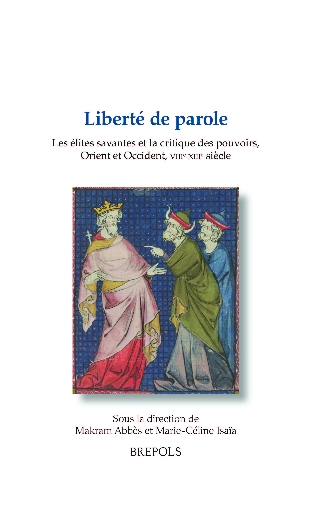
Liberté de parole
show More to view fulltext, buy and share links for:Liberté de parole show Less to hide fulltext, buy and share links for: Liberté de paroleLa parrhésia antique idéalisée, cette parole franche qu’autorise et exige la démocratie, devrait disparaître avec l’installation des pouvoirs souverains du Moyen Âge. De fait, la répression légale des paroles sacrilèges signale la naissance de la théocratie pontificale et de l’État moderne au tournant des XIIIe et XIVe siècles. L’absolutisme va de pair avec une réduction de la liberté de parole à un simulacre politique.
Entre le XIIIe et le XIIIe siècle cependant, en Occident latin, en Islam et dans l’empire byzantin, des pouvoirs souverains qui disent tenir de Dieu leur autorité voient leurs élites religieuses continuer à revendiquer et à pratiquer une forme de liberté de parole. Ces élites exercent une critique justifiée par leur maîtrise de la tradition écrite et par leur expérience du gouvernement. Elles envisagent la liberté de parole comme un devoir religieux vis-à-vis du prince, en appellent à sa conscience et l’exhortent à être à la hauteur du pouvoir reçu de Dieu. Leurs paroles critiques prennent aussi un public à témoin, dans le cadre d’un rituel politique qui n’est jamais parfaitement contrôlé ni instrumentalisé. Elles contribuent ainsi à associer une large communauté, fondée religieusement, à l’exercice du pouvoir.
En comparant la liberté de parole assumée par ces élites médiévales, c’est donc le fonctionnement des empires du Moyen Âge central qu’on analyse – des empires dont l’assise théocratique reste compatible avec la critique et implique la participation sous contrôle d’une partie des populations. Au début de la période, celui qui critique le prince lui donne un gage de fidélité ; il déclare que le pouvoir exercé peut être amélioré. À la fin de la période, le critique fait d’abord valoir son amitié pour le souverain – indice de la réduction de l’assise collective de ces régimes.
-
-
-
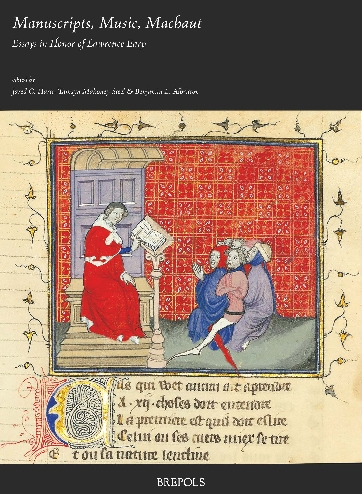
Manuscripts, Music, Machaut: Essays in Honor of Lawrence Earp
show More to view fulltext, buy and share links for:Manuscripts, Music, Machaut: Essays in Honor of Lawrence Earp show Less to hide fulltext, buy and share links for: Manuscripts, Music, Machaut: Essays in Honor of Lawrence EarpThis multidisciplinary volume celebrates the scholarship and career of Lawrence Earp, whose work has profoundly shaped the fields of Machaut studies, musicology, codicology, and fourteenth-century studies in general. For over four decades, Earp’s meticulous scholarship and generosity in collaboration have been a constant inspiration for medieval scholars, students, and colleagues alike. The twenty-six innovative essays herein gratefully acknowledge his influence and showcase a variety of fresh approaches. Recognizing both the breadth and depth of Earp’s work, the sections of this book are devoted to bibliography, historiography, literature, art history, and several musicological topics. Many of the chapters focus on the oeuvre of Guillaume de Machaut, but readers will also find explorations on Hildegard of Bingen, Philippe de Vitry, child performers in medieval theater, notation, genre, motets from the late thirteenth to the early fifteenth centuries, and polyphony in Italy and England. Made possible by Earp’s foundational and guiding work, this amply illustrated volume invites future interdisciplinary research.
-
-
-
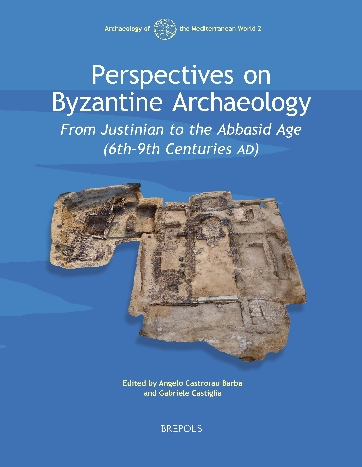
Perspectives on Byzantine Archaeology
show More to view fulltext, buy and share links for:Perspectives on Byzantine Archaeology show Less to hide fulltext, buy and share links for: Perspectives on Byzantine ArchaeologyFrom the rule of Justinian (AD 527-AD 565) up to the Islamic conquests in the Byzantine Empire, the lands of the Mediterranean basin underwent significant change from the sixth to the ninth centuries AD. Urban and rural areas were transformed, landscapes altered, and material cultures saw a fundamental shift. But such changes were by no means uniform across the region. From Jordan, Greece, and the Danube, to the Italian peninsula, Sicily, Spain, and the Horn of Africa, the contributions gathered together in this volume explore new advances and perspectives from the field of ‘Byzantine’ archaeology over the longue durée in order to shed new light on this period.
What was the impact of the reconquest of Justinian? What was the impact of Byzantium in archaeological record? What are the archaeological indicators of urban and rural transformations from the sixth to the ninth centuries? Did architecture represent a marker of socio-economic and cultural change within the Byzantine world? By engaging with such key questions, and by drawing on new data from surveys, excavations, material culture, and historical sources, this volume offers new insights into archaeological perspectives on the broader Byzantine world.
-
-
-
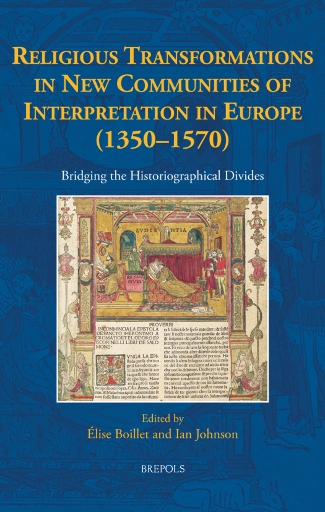
Religious Transformations in New Communities of Interpretation in Europe (1350–1570)
show More to view fulltext, buy and share links for:Religious Transformations in New Communities of Interpretation in Europe (1350–1570) show Less to hide fulltext, buy and share links for: Religious Transformations in New Communities of Interpretation in Europe (1350–1570)This volume brings together medievalist and early modernist specialists, whose research fields are traditionally divided by the jubilee year of 1500, in order to concentrate on the role of the laity (and those in holy orders) in the religious transformations characterizing the ‘long fifteenth century’ from the flourishing of the Devotio Moderna to the Reformation and Counter-Reformation.
Recent historiography has described the Christian church of the fifteenth century as a world of ‘multiple options’, in which the laity was engaged with the clergy in a process of communication and negotiation leading to the emergence of hybrid forms of religious life. The religious manifestations of such ‘new communities of interpretation’ appear in an array of biblical and religious texts which widely circulated in manuscript before benefiting from the new print media.
This collection casts a spectrum of new yet profoundly historical light on themes of seminal relevance to present-day European society by analysing patterns of inclusion and exclusion, and examining shifts in hierarchic and non-hierarchic relations articulated through religious practices, texts, and other phenomena featuring in the lives of groups and individuals. The academic team assembled for this collection is internationally European as well as interdisciplinary and multidisciplinary in its methodology.
-
-
-
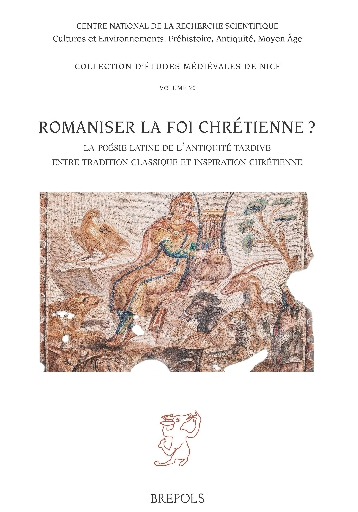
Romaniser la foi chrétienne ?
show More to view fulltext, buy and share links for:Romaniser la foi chrétienne ? show Less to hide fulltext, buy and share links for: Romaniser la foi chrétienne ?Le présent ouvrage participe aux recherches sur la poésie latine tardo-antique qui s’efforcent de situer et de décrire l’émergence, puis le développement de cette poésie dans le cadre de la christianisation de l’Empire. Tout en situant les auteurs et les œuvres par rapport aux grands changements et aux convulsions idéologiques qui ont traversé la société romaine du iii e au vi e siècle, les dix contributions de ce volume, réunies par Giampiero Scafoglio et Fabrice Wendling, tentent d’appréhender par le biais de la littérature un phénomène désormais bien étudié par les historiens, celui de la transformation du christianisme dans le contexte constantinien et théodosien d’une religion devenue romaine. Si l’on observe dans la sacralisation des bâtiments et des lieux un processus qui opère une rupture avec la religion spirituelle des premiers siècles, ne peut-on trouver trace d’une telle mutation dans la poésie des iv e et v e siècles ? Une expression désignant le Christ comme Saluator generis Romulei (Prudence), l’effacement des thématiques chrétiennes dans certains poèmes d’Ausone, l’apparition dans les hymnes de Prudence d’une topographie sacrée, l’éloge hyperbolique de l’art oratoire chez un Ennode de Pavie ou, encore, la stigmatisation de la virginité dans tel Épithalame du même Ennode ne témoignent-ils pas d’une forme de « romanisation » ou - plus exactement peut-être - d’interpretatio romana de la foi chrétienne, d’origine hébraïque ? Autrement dit, symétriquement à la « conversion » de la culture classique dont témoigne la littérature chrétienne, ne peut-on mettre au jour dans les textes poétiques un processus sans doute déconcertant, mais réel, de transformation de la foi, de transmutation de ses contenus originels, sous l’effet d’une poésie chrétienne qui garde des attaches profondes, non seulement avec la poésie classique, mais encore avec tout le « passé » de la civilisation romaine antique, jusque dans ses aspects religieux ?
-
-
-
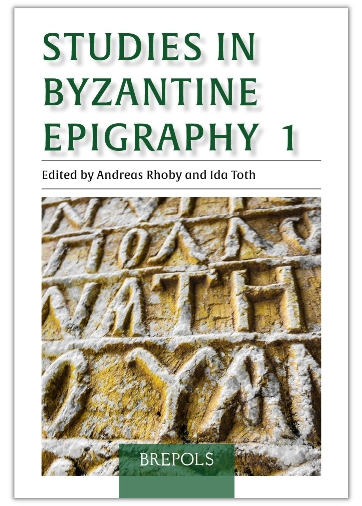
Studies in Byzantine Epigraphy 1
show More to view fulltext, buy and share links for:Studies in Byzantine Epigraphy 1 show Less to hide fulltext, buy and share links for: Studies in Byzantine Epigraphy 1The Studies in Byzantine Epigraphy series testifies to an ever-greater focus on inscriptions within Byzantine Studies. The present, inaugural volume includes selected papers from the two panels dedicated to Byzantine Epigraphy held at the XXIII International Congress of Byzantine Studies in Belgrade, August 2016, and the XV International Congress of Greek and Latin Epigraphy in Vienna, August/September 2017. The papers, as indeed the events for which they were initially produced, celebrate both the progress and the promise of epigraphic research within medieval and early modern scholarship as a whole.
-
-
-
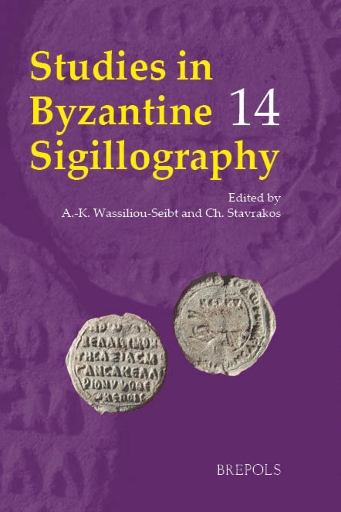
Studies in Byzantine Sigillography
show More to view fulltext, buy and share links for:Studies in Byzantine Sigillography show Less to hide fulltext, buy and share links for: Studies in Byzantine SigillographyThe present volume contains the papers from the 12th International Symposium of Byzantine Sigillography, held at the State Ermitage Museum in St. Petersburg, May 27-30, 2019. The papers discuss seals as historical sources and archaeological findings, presenting their role in the Byzantine prosopography, administration, historical geography and art history.
-
-
-
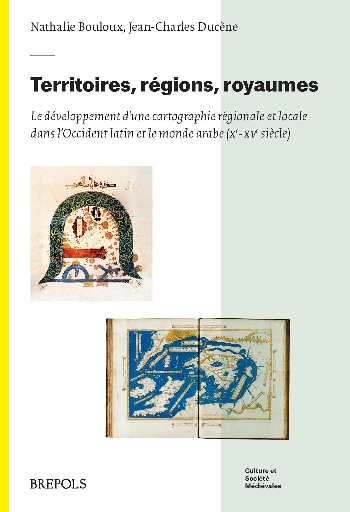
Territoires, régions, royaumes
show More to view fulltext, buy and share links for:Territoires, régions, royaumes show Less to hide fulltext, buy and share links for: Territoires, régions, royaumesPendant longtemps, les travaux sur la cartographie ont surtout porté sur les mappemondes, aussi bien dans le monde latin que dans le monde arabo-musulman. Les représentations cartographiques des espaces locaux et régionaux ont suscité un intérêt plus modéré, même si les études sur la cartographie à grande ou à moyenne échelle des xii e-xv e siècles connaissent depuis quelques années un renouveau notable tant dans le domaine latin que dans le domaine arabe.
La publication des actes du colloque international qui s'est tenu à Tours en juin 2018 rassemble quinze études consacrées à la représentation cartographique du territoire, et, plus généralement, à la cartographie des espaces régionaux et locaux qui émerge dès le x e siècle dans le monde arabo-musulman et à partir du xii e siècle dans l’Occident latin, pour connaître un essor remarquable dans les deux derniers siècles du Moyen Âge. Le livre réunit des articles de synthèse et des études de cas, abordant les questions complexes de l'émergence de cette cartographie, de ses formes et de ses usages dans le monde arabo-musulman et dans l'Occident latin.
-
-
-

Trilingual Learning
show More to view fulltext, buy and share links for:Trilingual Learning show Less to hide fulltext, buy and share links for: Trilingual LearningIn 1517, the Brabant city of Louvain witnessed the foundation of the Collegium Trilingue (Three Language College). Funded by means of the legacy of the humanist and diplomat Jerome of Busleyden (d. 1517) and steered by guiding spirit Erasmus of Rotterdam, this institute offered courses in the three so-called sacred languages Hebrew, Greek, and Latin, which students could attend for free. However, this kind of initiative was not unique to Louvain in the early 16th century. In a time span of barely twenty years, Greek and Hebrew were also offered in Alcalá de Henares (near Madrid), Wittenberg, and Paris, among other places. It would not take long before these ‘sacred’ languages were also on the educational agenda at universities throughout the whole of Europe.
The present volume examines the general context in which such polyglot institutes emerged and thrived, as well as the learning and teaching practices observed in these institutes and universities. Devoting special attention to the study of the continuity, or rather the discontinuity, between the 16th-century establishment of language chairs and the late medieval interest in these languages, it brings together fifteen selected papers exploring various aspects of these multilingual undertakings, focusing on their pedagogical and scholarly dimensions. Most of the contributions were presented at the 2017 LECTIO conference The Impact of Learning Greek, Hebrew, and ‘Oriental’ Languages on Scholarship, Science, and Society in the Middle Ages and the Renaissance, which was organized at the occasion of the 500th anniversary of the foundation of the Louvain Collegium Trilingue.
-
-
-
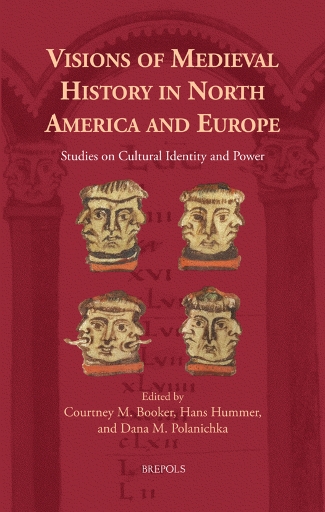
Visions of Medieval History in North America and Europe
show More to view fulltext, buy and share links for:Visions of Medieval History in North America and Europe show Less to hide fulltext, buy and share links for: Visions of Medieval History in North America and EuropeIn this volume, scholars from North America and Europe explore the intersection of medieval identity with ethnicity, religion, power, law, inheritance, texts, and memory. They offer new historiographical interventions into questions of identity, but also of ethnonyms, conflict studies, the feudal revolution, gender and kinship studies, and local history. Employing interdisciplinary approaches and textual hermeneutics, the authors represent an international scholarly community characterized by intellectual restlessness, historiographical experimentation, and defiance of convention.
-