


Brepols Online Books Medieval Miscellanea Collection 2024 - bob2024mime

Collection Contents
3 results
-
-
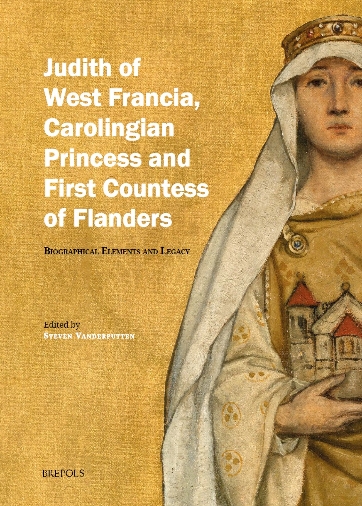
Judith of West Francia, Carolingian Princess and First Countess of Flanders
show More to view fulltext, buy and share links for:Judith of West Francia, Carolingian Princess and First Countess of Flanders show Less to hide fulltext, buy and share links for: Judith of West Francia, Carolingian Princess and First Countess of FlandersJudith of West Francia is one of the most enigmatic of Charlemagne’s early descendants. The daughter of the king of West Francia and future emperor Charles the Bald and his wife Ermentrude, she was one of only a handful of Carolingian princesses who were destined for marriage. Over the course of her teenage years she married two successive kings of Wessex, became the first consecrated queen of England, was widowed twice, returned to Francia with an immense dowry, and sparked a major diplomatic incident when she eloped with a nobleman from Flanders called Baldwin. Eventually she married Baldwin in early 864, and together they established the dynasty of the counts of Flanders. In doing so the couple laid the groundwork for what would become one of the mightiest and most prestigious territorial principalities in north-western Europe in the tenth and eleventh centuries. But even in the tenth century, exceedingly few written memories of Judith’s life survived. This explains why she was never the subject of a biography in the medieval or early modern eras, and why scholarship’s understanding of her life and legacy remains highly fragmented. This volume sets the record straight, offering an accessible and interdisciplinary discussion of all relevant and documented aspects of Judith’s life and legacy.
-
-
-
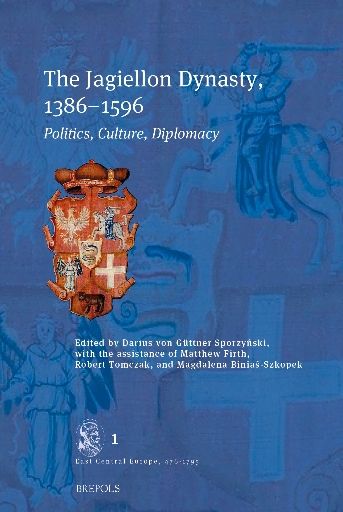
The Jagiellon Dynasty, 1386‑1596
show More to view fulltext, buy and share links for:The Jagiellon Dynasty, 1386‑1596 show Less to hide fulltext, buy and share links for: The Jagiellon Dynasty, 1386‑1596The volume offers a re-examination of the rise of the Jagiellon dynasty in medieval and early modern Central Europe. Originating in Lithuania and extending its dominion to Poland, Hungary, and Bohemia, the Jagiellon dynasty has left an enduring legacy in European history. This collection of studies presents the Jagiellons as rulers with dynamic and negotiated authority. It begins with the dynasty’s origins and its dynastic union with Poland, milestones that have shaped the political and cultural trajectory of the dynasty’s reign. The volume places significant emphasis on the role of royal consorts, thereby broadening traditional gender-focused perspectives. Far from being mere accessories, queens had a considerable influence on governance, economic matters, and diplomacy. The cultural impact of Jagiellon rule is analysed through interactions with humanists and the intellectual milieu of the court. The performative aspects of Jagiellon power, including the use of words, gestures, and even intentional silences, are examined as powerful tools of articulation. Emotional factors that influence governance and intricate dynastic relationships are explored, revealing how political decisions, especially constitutional reforms, are made more rapidly when faced with perceived dynastic vulnerabilities. In Poland, the rise of parliamentary institutions under the earlier Jagiellon monarchs epitomises the concept of negotiated authority, underscoring the growing political role of the nobility. This volume thus provides a multi-faceted and nuanced understanding of the Jagiellon dynasty’s legacy in political, cultural, and gender-related spheres, enhancing understanding of European history.
-
-
-
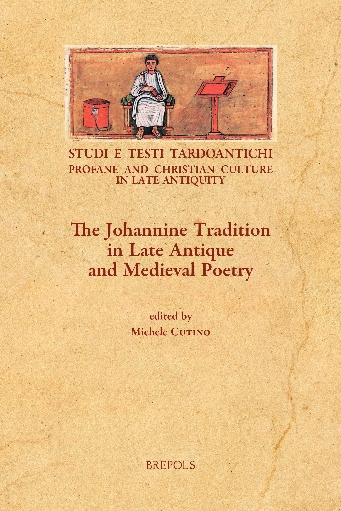
The Johannine Tradition in Late Antique and Medieval Poetry
show More to view fulltext, buy and share links for:The Johannine Tradition in Late Antique and Medieval Poetry show Less to hide fulltext, buy and share links for: The Johannine Tradition in Late Antique and Medieval PoetryThe Johannine Tradition in Late Antique and Medieval Poetry proposes to examine the impact of the Gospel of John, which is fundamental from the point of view of the history of Christian doctrines, on ancient poetic production, with some forays into the Middle Ages. The critical literature on these aspects is particularly abundant, but hitherto an overall view of the presence and importance of the Johannine tradition in the evolution of Christian poetry was lacking. Based on the Strasbourg colloquium that took place on 16-17 September 2021, the present volume aims to fill this gap, with contributions highlighting not an episodic presence of Johannine texts in poetic compositions, but a structuring function in the definition of the poetic choices of the various authors. The focus of attention could therefore only be on the genre of biblical rewritings, which derive their particular significance from their organic attempt to “remake” the biblical text in accordance with very precise cultural objectives and the expectations of a select audience.
-