


Brepols Online Books Medieval Miscellanea Collection 2024 - bob2024mime

Collection Contents
2 results
-
-
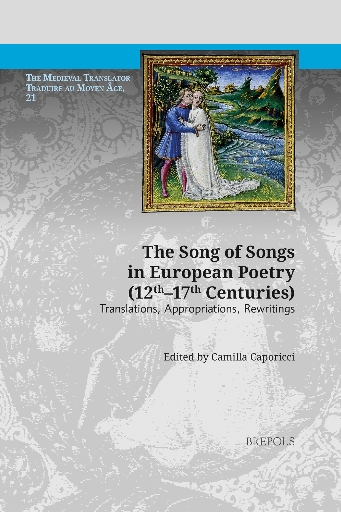
The Song of Songs in European Poetry
show More to view fulltext, buy and share links for:The Song of Songs in European Poetry
(Twelfth to Seventeenth Centuries)
(Twelfth to Seventeenth Centuries) show Less to hide fulltext, buy and share links for: The Song of Songs in European Poetry
(Twelfth to Seventeenth Centuries)Traditionally attributed to King Solomon and defined by Rabbi Aqiva as the Holy of Holies among the sacred Scriptures, the Song of Songs is one of the most fascinating and controversial biblical books. Celebrated as a key to the supreme mystery of the union between God and the faithful, this ambivalent book, which combined a sensual celebration of love with a well-established tradition of allegorical interpretation, was a text crucial to both the Middle Ages and the Renaissance, and held a particular appeal for poets. Indeed, the Song of Songs played a significant role in the development of European poetry from its very beginning, creating an exceptional convergence of sacred and secular languages and horizons of meaning.
Written by a group of distinguished international scholars, this volume explores the complex and multifaceted processes through which the Song of Songs entered, influenced, and interacted with medieval and Renaissance European poetry (twelfth to seventeenth centuries). Focusing on both individual authors – including Peter Riga, Dante Alighieri, Richard Rolle, and George Herbert – and particularly relevant poetic traditions – including Hebrew liturgical poetry and the Tristan and Ysolt tradition, Middle English and Petrarchan lyric, Renaissance verse versions and seventeenth-century musical compositions, dissident and prophetic texts – the volume unveils the relevant role played by the biblical book in the development of European poetry, thought and spirituality, highlighting its ability to contribute to different poetic genres and give voice to a variety of religious, political, philosophical, and artistic intentions.
-
-
-
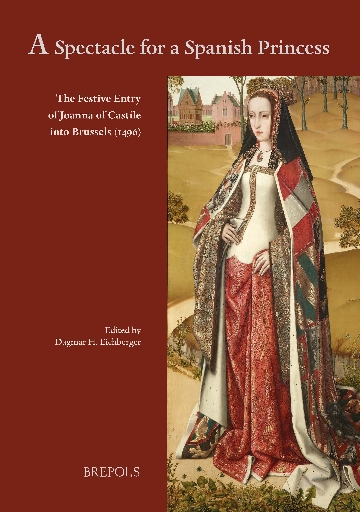
A Spectacle for a Spanish Princess
show More to view fulltext, buy and share links for:A Spectacle for a Spanish Princess show Less to hide fulltext, buy and share links for: A Spectacle for a Spanish PrincessOn the evening of 9 December 1496, Princess Joanna, Infanta of Castile, reaches the outskirts of Brussels where a procession of secular and ecclesiastical dignitaries welcomes her. After having been married to Philip the Fair in Lier, Joanna travelled to Brussels by herself. Equipped with torches and processional crosses, the citizens accompany her all the way to the heart of the city, the large market square with its magnificent town hall. The Berlin manuscript 78 D5 is the first illustrated report of an entry concentrating on one single lady. The manuscript is a treasure to all those interested in urban culture of the Early Modern period. The author of the festival booklet compares the well-lit city with the splendours of Troy and Carthage. Twenty-eight stage sets, or Tableaux Vivants, and an elaborate procession mirror the costly intellectual program presented to the sixteen-year-old princess. The carefully planned theatrical productions underscore themes of marriage, female virtues and the politics of war and peace. The program includes entertainments, soundscapes, and pyrotechnic amusements. The Latin texts are made available in English translation. The entire manuscript, with its sixty-three folios, is reproduced in colour. Eleven leading scholars present their new findings on this spectacular entry from an interdisciplinary approach.
-