


Brepols Online Books Medieval Miscellanea Collection 2024 - bob2024mime

Collection Contents
46 results
-
-

Agir en commun durant le haut Moyen Âge
show More to view fulltext, buy and share links for:Agir en commun durant le haut Moyen Âge show Less to hide fulltext, buy and share links for: Agir en commun durant le haut Moyen ÂgeAu-delà des communautés stables et durables qu'on peut saisir autour des lieux ou dans un cadre institutionne, les petites communautés locales du haut Moyen Âge n’avaient habituellement pas de statut formalisé : en l’absence de cadres institutionnels, nous ne pouvons souvent saisir leurs caractères qu’à travers les récits de leurs actions, ou à travers d’autres traces, laissées par leurs actes dans la documentation, écrite ou archéologique. Mais encore faut-il se poser la question de savoir comment agissaient les communautés au haut Moyen Âge, dans quels contextes et dans quels buts ? L'action commune, surtout si elle est récurrente, fortifie-t-telle ou forme-t-elle la communauté ? Le présent ouvrage vise à décrypter les différentes manières "d'agir en commun" dans les sociétés du haut Moyen Âge, en posant les questions de l'initiative de l'action, des différents modes d'action et de leur influence sur la structure de la communauté, des types et des formes d'action communautaire.
-
-
-
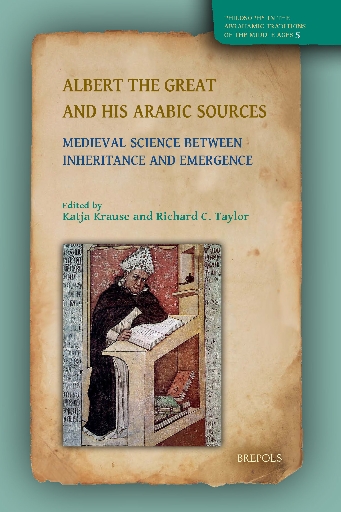
Albert the Great and his Arabic Sources
show More to view fulltext, buy and share links for:Albert the Great and his Arabic Sources show Less to hide fulltext, buy and share links for: Albert the Great and his Arabic SourcesAlbert the Great created a new programme of science in the thirteenth-century Latin world by extensively commenting upon Aristotle’s philosophical corpus and supplementing that corpus with works of his own wherever he saw gaps. What were the preconditions for the emergence of such a comprehensively new scientific agenda and its centuries of success at the University of Paris and Dominican study houses across Europe? One answer is found in the rich Arabic sources that Albert had at his disposal in Latin translation, including Alfarabi, Avicenna, and Averroes, as well as Isaac Israeli, Maimonides, and more.
Never before in the history of Albert scholarship has there been a collected volume that examines this inheritance from the Arabic-speaking lands in its role as a major condition for the emergence of Albert’s scientific programme. In the present volume, twelve leading scholars in the field offer studies that range from Albert’s early theological works to his late philosophical writings. The volume focuses on the teachings that Albert actively inherited from the Arabic sources, the ways in which he creatively implemented those teachings into his scientific corpus, and the effects that these implementations had on his own programmatic take on scientia.
-
-
-
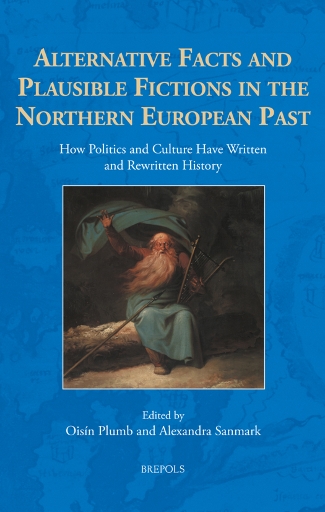
Alternative Facts and Plausible Fictions in the Northern European Past
show More to view fulltext, buy and share links for:Alternative Facts and Plausible Fictions in the Northern European Past show Less to hide fulltext, buy and share links for: Alternative Facts and Plausible Fictions in the Northern European PastThe use of the past for contemporary purposes has been a feature of historical and archaeological investigation from ancient times. This ‘politicization of the past’ is often associated with, at best, an inadvertent detachment from an objective use of evidence, and at worst, its wilful misuse. Such use of the past is perhaps most evident in the construction of narratives of nations and ethnic groups — particularly in relation to origins or the perceived ‘golden ages’ of peoples.
This book seeks to assess the role played by different ideologies in the shaping of the past, from early times up until the present day, in the interpretation of the history and archaeology of Northern Europe, whether in Northern Europe itself or further afield. It also considers how those who research, interpret, and present the Northern European past should respond to such uses. The chapters drawn together here explore key questions, asking how contemporary ideologies of identity have shaped the past, what measures should be taken to discourage an inaccurate understanding of the past, and if scholars should draw on the past in order to counter racism and xenophobia, or if this can itself lead to potentially dangerous misunderstandings of history.
-
-
-
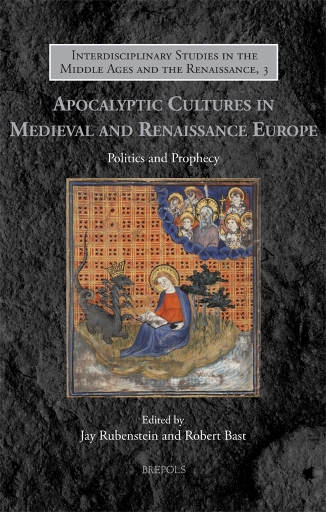
Apocalyptic Cultures in Medieval and Renaissance Europe
show More to view fulltext, buy and share links for:Apocalyptic Cultures in Medieval and Renaissance Europe show Less to hide fulltext, buy and share links for: Apocalyptic Cultures in Medieval and Renaissance EuropeThe essays in this collection were presented at the 2020 Symposium on Apocalypticism, sponsored by the Marco Institute for Medieval and Renaissance Studies at the University of Tennessee. The authors offer new readings of medieval and Renaissance Apocalypticism in quotidian terms, not as ‘counterculture’ but as the pragmatic expression of spiritualities that informed both debate and practice, on subjects as mundane and diverse as warfare, pilgrimage, gender, cartography, environmentalism, and governance. Topics include the origins of imperial eschatology; reflections on cosmology and the fate of the earth; the fusion of history, prophecy, and genealogy; Joachite readings of the political landscape of Italy; the influence of the Great Schism on Burgundian art; eschatology and gender in pilgrimage literature; the late medieval interpretation of the Revelationes of Pseudo-Methodius; and the appropriation of apocalyptic tropes in the propaganda and policies of the German emperor Maximilian I. The essays that open and close this collection offer meditations on the enduring legacy of Apocalypticism by focusing on the events — pandemic, political unrest, and the proliferation of conspiracy theories manifest in both — that mark the historical era in which this symposium took place.
-
-
-
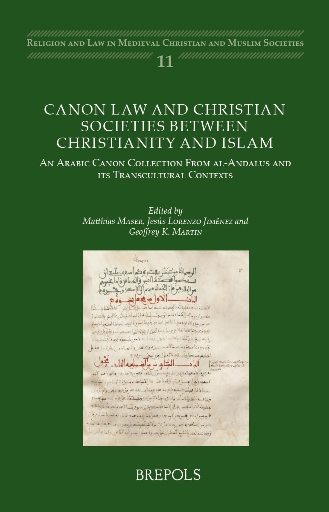
Canon Law and Christian Societies between Christianity and Islam
show More to view fulltext, buy and share links for:Canon Law and Christian Societies between Christianity and Islam show Less to hide fulltext, buy and share links for: Canon Law and Christian Societies between Christianity and IslamThe unique Arabic version of the Iberian canon law code 'Collectio Hispana', preserved in a mid-eleventh-century manuscript of the Royal Library of El Escorial, has been deemed “the most distinguished and characteristic” work of medieval Andalusi Christian writing. It represents an exceptional source witness to the internal legal organisation of Christian communities in Muslim-dominated al-Andalus as well as to their acculturation to Islamicate environments. Yet, the Arabic collection has received only little scholarly attention so far. This volume presents the results of a recent interdisciplinary research project on the Arabic canon law manuscript, flanked by contributions from neigbouring fields of research that allow for a comparative assessment of the substantial new findings. The individual chapters in this volume address issues such as the origins of the Arabic law code and its sole transmitting manuscript, its language and translation strategies, its source value for both the persistence and transformation of ecclesiastical institutions after the Muslim conquest, or the law code's position in the judicial practice of al-Andalus. The volume brings together the scholarly expertise of distinguished specialists in a broad range of disciplines, e.g. history, Arabic and Latin philology, medieval palaeography and codicology, archaeology, coptology, theology and history of law.
-
-
-
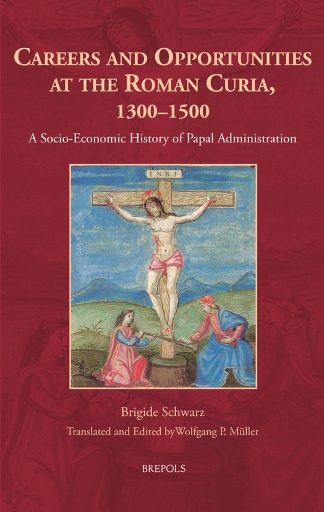
Careers and Opportunities at the Roman Curia, 1300–1500
show More to view fulltext, buy and share links for:Careers and Opportunities at the Roman Curia, 1300–1500 show Less to hide fulltext, buy and share links for: Careers and Opportunities at the Roman Curia, 1300–1500Brigide Schwarz (1940–2019), a leading German historian of the Renaissance papacy, is presented here for the first time in a dossier of ten previously untranslated scholarly studies.
The volume brings the mechanisms of late medieval career building back to life. Success among churchmen was measured in access to ever more lucrative ecclesiastical endowments (or benefices). As the fifteenth century progressed, their treatment assumed highly monetized and abstract dimensions. Guided by Dr Schwarz, economic historians can discern many transactions that foreshadow the asset management of present-day Wall Street.
From the 1400s, administrative positions at the papal court (or Curia) were increasingly auctioned off. This created a marketplace for bidders expecting returns by way of ‘creative’ fee regulations or through the cornering of services in monopolies.
Only recently, scholarship has begun to question older depictions of the late medieval Church as one of decay and moral corruption. Dr Schwarz points to the ‘modernity’ of the fiscal arrangements which nation states like France soon copied as an efficient model of public financing.
-
-
-
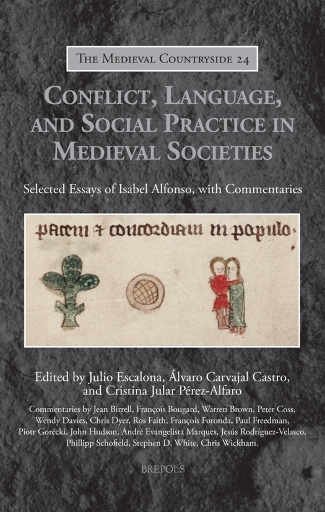
Conflict, Language, and Social Practice in Medieval Societies
show More to view fulltext, buy and share links for:Conflict, Language, and Social Practice in Medieval Societies show Less to hide fulltext, buy and share links for: Conflict, Language, and Social Practice in Medieval SocietiesIsabel Alfonso is one of the finest scholars on the rural and political history of the European Middle Ages. She is widely known for her contributions to the study of the peasantry, social conflict, and political discourses. Her research has transcended the boundaries of medieval studies, incorporating insights from disciplines beyond including legal anthropology, philology, and discourse analysis, among others. Over her academic career Isabel Alfonso has made a continued effort to make the work of international scholars known in Spain and to communicate advancements in Spanish historiography to international audiences; and yet most of her own research has only been published in Spanish. As a means to acknowledge her long-standing commitment to bridge different historiographies and overcome national boundaries, this unusual Festschrift offers a selection of her most relevant publications, many of which appear in English for the very first time. Each paper is preceded by commentaries by leading scholars that discuss the enduring relevance of Isabel Alfonso’s work, its richness and complexity, and its potential to inspire further research along a vast array of lines.
Commentaries by Jean Birrell, François Bougard, Warren Brown, Peter Coss, Wendy Davies, Chris Dyer, Ros Faith, François Foronda, Paul Freedman, Piotr Gorécki, John Hudson, André Evangelista Marques, Jesús Rodríguez-Velasco, Phillipp Schofield, Stephen D. White, Chris Wickham.
-
-
-
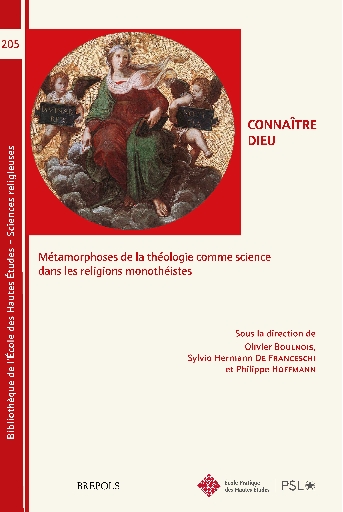
Connaître Dieu
show More to view fulltext, buy and share links for:Connaître Dieu show Less to hide fulltext, buy and share links for: Connaître DieuLa théologie est née comme science métaphysique. Dès Aristote, la science la plus haute se présente comme une discipline philosophique qu’il appelle épistémè théologikè, « science théologique ». Ce que nous appelons aujourd’hui « métaphysique », c’est ce que les traductions latines d’Aristote appellent scientia divina, « science divine ». Or cette « science divine » aristotélicienne ne porte pas sur les dieux de la religion. Aristote emploie d’ailleurs un terme tout à fait différent pour désigner le discours mythique et religieux sur les dieux : il parle alors de theologia ; la theologia est une autre sorte de discours, celui des mythologies sur les dieux, tandis que la « science divine » du philosophe porte sur une substance première, séparée du monde sensible et principe de son mouvement, soit le premier moteur. Ce principe n’opère aucun salut. Il ne faut donc pas confondre le discours scientifique (la « science théologique » ou « science divine », sur le premier moteur) et le discours religieux. La difficulté est alors de comprendre quand, comment et pourquoi cette discipline philosophique suprême, la science théologique, s’est orientée vers les religions vécues par les hommes. Quand le mur séparant la theologia de la « science théologique » a-t-il été abattu ? Le présent volume s’est donné pour visée de se confronter à la nécessité d’une prise en compte, non seulement du fait religieux, mais aussi de la rationalité religieuse. Le terme « théologie » est ambigu. Il désigne tantôt la compréhension d’une religion par elle-même, tantôt la compréhension du divin par un discours rationnel. C’est pourquoi une étude comparée de la théologie comme science dans les monothéismes a un double objet : il s’agit d’abord d’étudier comment la spéculation métaphysique sur les dieux, le divin et Dieu s’est transformée en « science théologique » ; il convient ensuite de montrer comment les religions monothéistes se sont construites en théologies sur les canons de la rationalité grecque.
-
-
-
Cult, Devotion, and Aesthetics in Later Byzantine Poetry
show More to view fulltext, buy and share links for:Cult, Devotion, and Aesthetics in Later Byzantine Poetry show Less to hide fulltext, buy and share links for: Cult, Devotion, and Aesthetics in Later Byzantine PoetryPublic religious ritual and private devotional practice together occasioned much of the production of Byzantine poetry. This includes not only hymns, an integral part of the liturgy since Late Antiquity, but also versified texts with a specific liturgical function (synaxaria, calendars, metrical prefaces), metrical hagiography, epigrams (inscribed on church buildings, icons, religious objects, books), or poems with a more personal character, such as versified prayers, catanyctic poems (i.e., poems of contrition) and self-addressed poems (eis heauton). These texts often have much in common, well beyond their metrical form: from their contexts of performance and reception to the themes, literary motifs, and rhetorical devices they contain. It was not uncommon for a single author to write in a variety of the aforementioned genres; and yet these texts are rarely studied together (not least due to the specialized nature of the expertise of individual scholars). Later Byzantium offers us a particularly rich spectrum of sacred poetry, which has only recently started to arouse significant interest. While most of its poetic genres have a long history in Byzantine literature, their metamorphoses in this period – connected to changes in socio-political, cultural and religious conditions – deserve closer study. It is the purpose of this volume to propose a broader scholarly approach to the aesthetics of Byzantine poetry, taking into consideration the contexts of religious practice and devotion from c. the 11th to the 15th centuries.
-
-
-
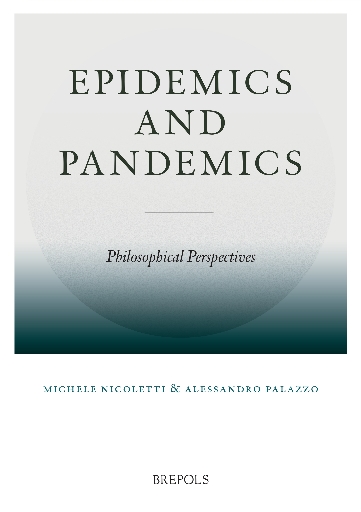
Epidemics and Pandemics
show More to view fulltext, buy and share links for:Epidemics and Pandemics show Less to hide fulltext, buy and share links for: Epidemics and PandemicsEpidemics, pandemics, contagion, immunity, social distance, zoonosis are just a few of the concepts that have become commonplace in the academic community and in everyday conversation since the outbreak of the Covid-19. This book aims to provide the reader with a philosophical guide to this conceptual vocabulary by investigating the meanings, implications, and history of words related to the current emergency of Covid-19.
This book addresses the fundamental anthropological, ethical, and political issues that have come under the spotlight of the public debate (life and death, freedom and authority, fear and protection, poverty and access to medical care). In this context, particular attention is given to the conflict between the scientific discourse on the one hand, and irrational bias, misinformation and fake news on the other.
The SARS-CoV-2 outbreak is only the latest episode in a long history of pandemics and epidemics that have constellated human history since its very beginning. Authoritative accounts have made some of these contagious plagues famous (Thucydides’ pages immortalizing the Athenian epidemic of the 5th century B.C.; Boccaccio’s description of the Black Death; Manzoni’s depiction of the Plague ravaging 17th-century Milan). Because a full understanding of the present is not possible without historical inquiry, several contributions in the book explore debates about calamitous phenomena as documented in philosophical literature from Antiquity to 20th-century philosophy.
-
-
-
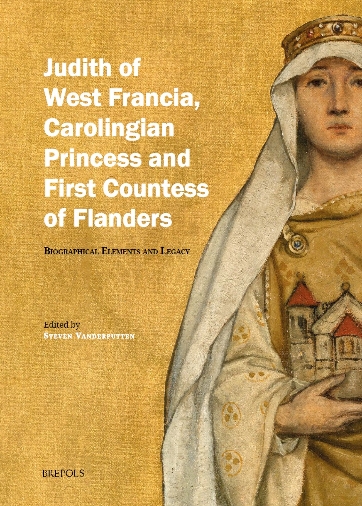
Judith of West Francia, Carolingian Princess and First Countess of Flanders
show More to view fulltext, buy and share links for:Judith of West Francia, Carolingian Princess and First Countess of Flanders show Less to hide fulltext, buy and share links for: Judith of West Francia, Carolingian Princess and First Countess of FlandersJudith of West Francia is one of the most enigmatic of Charlemagne’s early descendants. The daughter of the king of West Francia and future emperor Charles the Bald and his wife Ermentrude, she was one of only a handful of Carolingian princesses who were destined for marriage. Over the course of her teenage years she married two successive kings of Wessex, became the first consecrated queen of England, was widowed twice, returned to Francia with an immense dowry, and sparked a major diplomatic incident when she eloped with a nobleman from Flanders called Baldwin. Eventually she married Baldwin in early 864, and together they established the dynasty of the counts of Flanders. In doing so the couple laid the groundwork for what would become one of the mightiest and most prestigious territorial principalities in north-western Europe in the tenth and eleventh centuries. But even in the tenth century, exceedingly few written memories of Judith’s life survived. This explains why she was never the subject of a biography in the medieval or early modern eras, and why scholarship’s understanding of her life and legacy remains highly fragmented. This volume sets the record straight, offering an accessible and interdisciplinary discussion of all relevant and documented aspects of Judith’s life and legacy.
-
-
-
![[Les cartulaires, Kartulare]](/docserver/fulltext/10.1484/M.ARTEM-EB.5.136747/M.ARTEM-EB.5.136747.largecover.jpg)
[Les cartulaires, Kartulare]
show More to view fulltext, buy and share links for:[Les cartulaires, Kartulare] show Less to hide fulltext, buy and share links for: [Les cartulaires, Kartulare]Ce recueil d’actes est le résultat d’un atelier de recherche dans le cadre d’un partenariat entre l’université franco-allemande, l’université Goethe de Francfort-sur-le-Main et l’Institut français d’Histoire en Allemagne (désormais IFRA-SHS). Cette rencontre a réuni des chercheurs français, allemands et néerlandais autour de la question des mises en ordre opérées par et dans les cartulaires ecclésiastiques. Le parti pris fut de considérer cette dimension dans un temps long (IXe-XIIIe siècle) et dans un vaste espace géographique allant de la Souabe au diocèse de Quimper. Huit études de cas présentent différentes mises en ordres observées au sein d’un unique cartulaire ou d’un corpus. Elles considèrent entre autres la cartularisation comme une mise en ordre des archives par un classement des actes sur un support nouveau ; mais aussi comme un moment où l’établissement cartulariste ordonne de son patrimoine et se définit par rapport à ses voisins, laïcs et/ou ecclésiastiques.
-
-
-
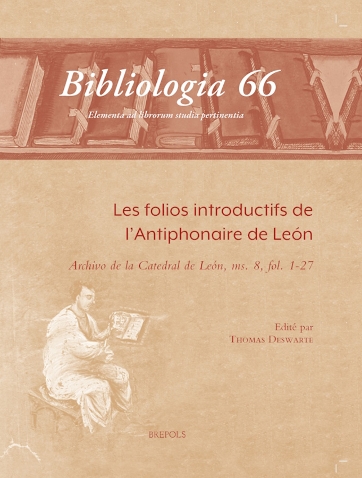
Les folios introductifs de l’Antiphonaire de León (Archivo de la Catedral de León, ms. 8, fol. 1-27)
show More to view fulltext, buy and share links for:Les folios introductifs de l’Antiphonaire de León (Archivo de la Catedral de León, ms. 8, fol. 1-27) show Less to hide fulltext, buy and share links for: Les folios introductifs de l’Antiphonaire de León (Archivo de la Catedral de León, ms. 8, fol. 1-27)L’Antiphonaire de León, « joyau des antiphonaires latins » (dom Louis Brou), est le seul complet de l’ancienne liturgie hispanique. Conservé à la cathédrale de León et daté du dixième siècle, il est introduit par vingt-sept folios qui appartiennent très certainement au manuscrit originel. Encore largement méconnus malgré leur grande richesse, ces folios contiennent des textes littéraires et liturgiques, un calendrier, des miniatures, des tableaux et des roues de comput, ainsi qu’un traité de comput. L’édition de ces pièces – à l’exception du traité – et leur analyse pluridisciplinaire (codicologique, paléographique, iconographique, littéraire, musicologique, liturgique et computistique) permettent d’étudier en profondeur la vie religieuse et la culture de cette époque, l’importance de l’héritage wisigothique, les influences venues du monde ultra-pyrénéen, ainsi que les origines et les remaniements de ce codex. Ces folios introductifs constituent tout à la fois la porte d’entrée et la clef de lecture d’un manuscrit dont l’histoire se trouve au cœur des grands enjeux de son temps : réalisé pour le monastère San Cipriano del Condado, il fut vite transféré au monastère Santiago de León puis au chapitre de la cathédrale. Bien que proche des centres de pouvoir – il comporte les seings du roi Ferdinand Ier et de ses fils –, il sombra dans l’oubli lorsque son fils Alphonse VI accepta en 1080 de renoncer à la liturgie hispanique et d’adopter, à la demande du pape Grégoire VII, le rit romain. Cette étude participe à sa redécouverte.
-
-
-

Navigating Language in the Early Islamic World
show More to view fulltext, buy and share links for:Navigating Language in the Early Islamic World show Less to hide fulltext, buy and share links for: Navigating Language in the Early Islamic WorldTraditional accounts of Arabicization have often favoured linear narratives of language change instead of delving into the diversity of peoples, processes, and languages that informed the fate of Arabic in the early Islamic world. Using a wide range of case studies from the caliphal centres at Damascus and Baghdad to the provinces of Arabia, Egypt, Armenia, and Central Asia, Navigating Language reconsiders these prevailing narratives by analysing language change in different regions of the early Islamic world through the lens of multilingualism and language change. This volume complicates the story of Arabic by building on the work of scholars in Late Antiquity who have abundantly demonstrated the benefits of embracing multilingualism as a heuristic framework. The three main themes include imperial strategies of language use, the participation of local elites in the process of language change, and the encounters between languages on the page, in the markets, and at work. This volume brings together historians and art historians working on the interplay of Arabic and other languages during the early Islamic period to provide a critical resource and reference tool for students and scholars of the cultural and social history of language in the Near East and beyond.
-
-
-
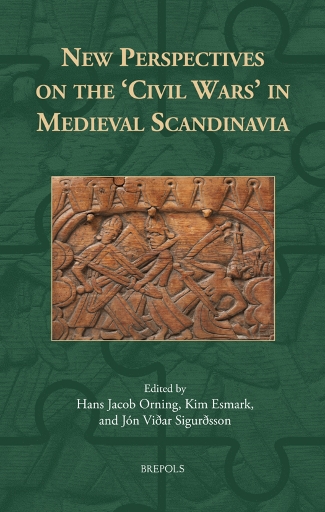
New Perspectives on the ‘Civil Wars’ in Medieval Scandinavia
show More to view fulltext, buy and share links for:New Perspectives on the ‘Civil Wars’ in Medieval Scandinavia show Less to hide fulltext, buy and share links for: New Perspectives on the ‘Civil Wars’ in Medieval ScandinaviaIn the twelfth and thirteenth centuries, Scandinavia was rocked by an ongoing period of ‘civil war’, conflicts traditionally characterized by medieval historians as internal struggles that took place in the context of predominantly national, state-centred, political and constitutional frameworks. This volume, however, aims to overturn these established narratives, with carefully curated essays written by experts in the field offering a new pan-Scandinavian perspective on the period in question that emphasizes the importance of fluid, often overlapping social networks, permeable borders between realms, and constant underlying hostilities between rival groups. Through detailed examinations of pivotal moments in Danish, Norwegian, and Swedish history, together with analyses of topographical patterns, gender issues, diplomacy, and three contributions that draw parallels within similar conflicts outside of Scandinavia, this book provides an important corrective to teleological narratives of the medieval ‘civil wars’ as a necessary stage on the route to state formation and modernity.
-
-
-
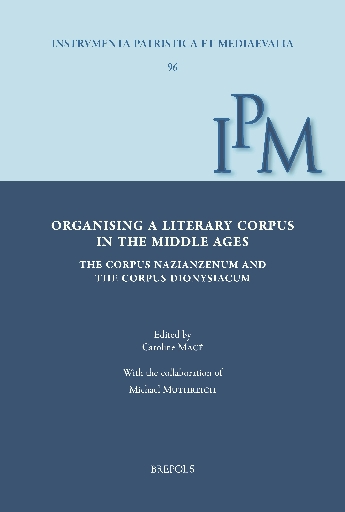
Organising a Literary Corpus in the Middle Ages
show More to view fulltext, buy and share links for:Organising a Literary Corpus in the Middle Ages show Less to hide fulltext, buy and share links for: Organising a Literary Corpus in the Middle AgesThrough the word corpus, the metaphor of the body is applied to a collection of works by the same author that are transmitted together. These works not only share the same skin, the manuscript, but also function organically thanks to a complex system of paracontents. It is possible to see this system at work in the case of only a very few medieval authors throughout history, cultures and languages; the Corpus Nazianzenum and the Corpus Dionysiacum are such instances.
Both Gregory of Nazianzus and Dionysius the Areopagite are super-authors, who forged their own literary identity as much as they shaped the body of their writings. This sets both corpora apart from other collections of patristic works. They are also exceptional because of the large scale and enduring character of their cultural impact in the different cultures in which the corpora were translated, commented and annotated. By confronting these two exceptional cases, it is possible to gain some new light on the intellectual and book-historical aspects of literary creation and reception in Late Antiquity and the Middle Ages.
-
-
-
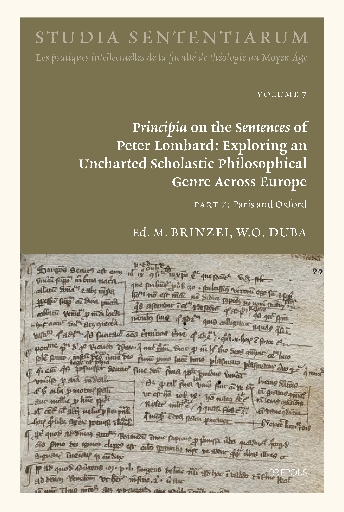
Principia on the Sentences of Peter Lombard
show More to view fulltext, buy and share links for:Principia on the Sentences of Peter Lombard show Less to hide fulltext, buy and share links for: Principia on the Sentences of Peter LombardPrincipia were an obligatory step on the medieval university path to becoming a master of theology. As inaugural lectures on the four books of the Sentences of Peter Lombard, they provided the first opportunity for a scholastic to defend a philosophical-theological worldview. These lectures were also a way for the theologian, now a sententiarius, to present himself and to make a name for himself, initially by delivering in a speech an introduction to the course and by debating with his fellows. The present book takes a collective approach to offer a survey of the evolution of the genre, mapping the dissemination of this exercise during the fourteenth and fifteenth centuries across Europe.
As an academic exercise, principia bridge ideas, texts, authors, and institutions across time. Exploring the corpus of surviving principia illuminates the philosophical creativity cultivated in the faculties of theology. The papers in these volumes thus not only discuss the structural aspects of principia, but also treat the philosophical and theological ideas defended and attacked during the principial debates and the topics and imagery used in the speeches.
The various chapters delve into the surviving material in a common attempt, firstly, to assemble pieces of evidence from Paris and Oxford into an image portraying how, when, and by whom the principia were performed in the first European universities. The second part illustrates the spread of the genre to the new faculties of theology in Central Europe and Italy, with case studies from Bologna, Cracow, Florence, Heidelberg, Prague, and Vienna, highlighting the pan-European diffusion of the practice.
-
-
-
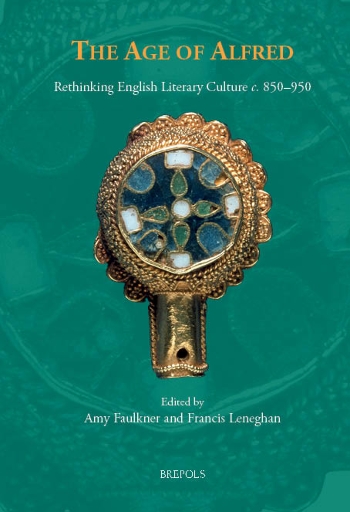
The Age of Alfred
show More to view fulltext, buy and share links for:The Age of Alfred show Less to hide fulltext, buy and share links for: The Age of AlfredKing Alfred the Great (r. 871–899) remains a key figure in English literary history. Although his reputation as a scholar who was personally responsible for the translation of a number of Latin works is no longer secure, the figure of the wise king nevertheless casts a long shadow over vernacular writing from the late ninth century through to the twelfth. This volume takes stock of recent developments and debates in the field of Alfredian scholarship and showcases new directions in research. Individual chapters consider how English authors before, during, and after Alfred’s reign translated and adapted Latin works, often in innovative and imaginative ways. Other contributions provide new contexts and connections for Alfredian writing, highlighting the work of Mercian scholars and expanding the corpus beyond the works traditionally attributed to the king himself. Together, these essays force us to rethink what we mean by ‘Alfredian’ and to revise the literary history of the ‘long ninth century’.
-
-
-

The Cult of Saints and Legitimization of Elite Power in East Central and Northern Europe up to 1300
show More to view fulltext, buy and share links for:The Cult of Saints and Legitimization of Elite Power in East Central and Northern Europe up to 1300 show Less to hide fulltext, buy and share links for: The Cult of Saints and Legitimization of Elite Power in East Central and Northern Europe up to 1300While Northern and East Central Europe are often considered to have been peripheral parts of medieval Latin Christendom, they nevertheless embraced many of the same cultural impulses found in more central areas. Key among these was the way in which social elites, in the first centuries after the introduction of Christianity, recognized the potential to exploit the cult of saints as a way of legitimizing their own social standing. Taking this thematic focus as its starting point, this volume explores the intersection of religion, power, and the reception and development of new impulses from abroad within Northern and East Central Europe. It does so by comparing and contrasting cults that emerged locally with cults that were imported to the region. Through this comparative overview, the chapters of this volume not only contribute to a more nuanced understanding of these outlying regions, but also shed new light on Latin Christian Europe as a whole.
-
-
-

The Defence of the Faith
show More to view fulltext, buy and share links for:The Defence of the Faith show Less to hide fulltext, buy and share links for: The Defence of the FaithThis volume focuses on the complex and often overlooked topic of crusading activities and the crusade movement on the fringes of Latin Christendom in the time frame from approximately 1300 to the beginning of the sixteenth century. It covers a period widely considered as a time of significant political, cultural and religious changes in Europe. A period in which Western Christianity was on the one hand still expanding (vide Lithuania and the western Rus and later the Spanish, Portuguese, French and English expansion in the Americas, Africa and South-East Asia) and on the other hand facing two mighty opponents: the Ottoman Empire and Muscovy. On its eastern and southeastern frontiers, Latin Christian expansion came to a gradual halt — here, the West was now largely under siege! Alone the political, logistical and ultimately also military feasibility of a large-scale crusade to liberate Jerusalem had now receded into a purely theoretical and practically almost unenforceable far distance. Ranging in scope from the Baltic Sea region to the Balkans and Iberia, this book’s nineteen papers explore how these developments influenced the continuation and adaptation of crusading ideas and activities during this later period of crusades.
-
-
-
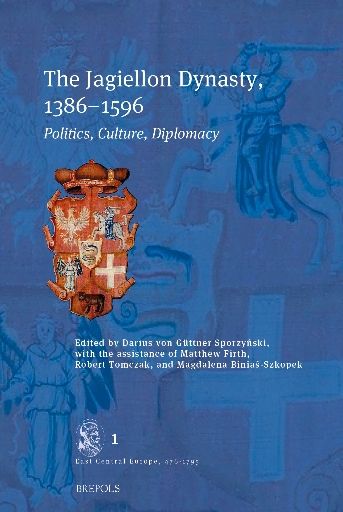
The Jagiellon Dynasty, 1386‑1596
show More to view fulltext, buy and share links for:The Jagiellon Dynasty, 1386‑1596 show Less to hide fulltext, buy and share links for: The Jagiellon Dynasty, 1386‑1596The volume offers a re-examination of the rise of the Jagiellon dynasty in medieval and early modern Central Europe. Originating in Lithuania and extending its dominion to Poland, Hungary, and Bohemia, the Jagiellon dynasty has left an enduring legacy in European history. This collection of studies presents the Jagiellons as rulers with dynamic and negotiated authority. It begins with the dynasty’s origins and its dynastic union with Poland, milestones that have shaped the political and cultural trajectory of the dynasty’s reign. The volume places significant emphasis on the role of royal consorts, thereby broadening traditional gender-focused perspectives. Far from being mere accessories, queens had a considerable influence on governance, economic matters, and diplomacy. The cultural impact of Jagiellon rule is analysed through interactions with humanists and the intellectual milieu of the court. The performative aspects of Jagiellon power, including the use of words, gestures, and even intentional silences, are examined as powerful tools of articulation. Emotional factors that influence governance and intricate dynastic relationships are explored, revealing how political decisions, especially constitutional reforms, are made more rapidly when faced with perceived dynastic vulnerabilities. In Poland, the rise of parliamentary institutions under the earlier Jagiellon monarchs epitomises the concept of negotiated authority, underscoring the growing political role of the nobility. This volume thus provides a multi-faceted and nuanced understanding of the Jagiellon dynasty’s legacy in political, cultural, and gender-related spheres, enhancing understanding of European history.
-
-
-
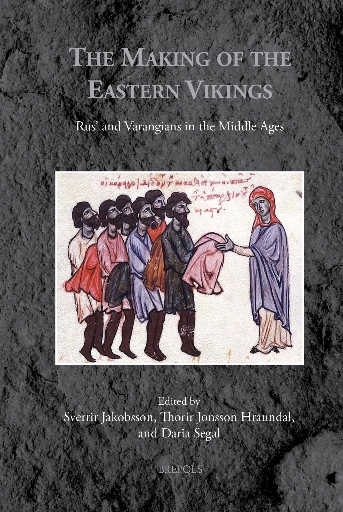
The Making of the Eastern Vikings
show More to view fulltext, buy and share links for:The Making of the Eastern Vikings show Less to hide fulltext, buy and share links for: The Making of the Eastern VikingsHistoriography on the Vikings of the East — the Rus' and the Varangians — has been both multiform and varied, but it has been invariably focused on actual historical events, and the extent to which these are accurately reflected in written sources. In contrast, very little attention has been paid up to now to the narrators behind these medieval accounts, to their motives in writing, or to the context in which they were working.
This volume aims to redress the balance by offering a re-examination of medieval sources on the Eastern Vikings and by highlighting ongoing ‘debates’ concerning the identities of the Rus' and the Varangians in the medieval period. The chapters gathered here compare and contrast sources emanating from different cultures — Byzantium, the Abbasid Caliphate and its successor states, the early kingdoms of the Rus', and the high medieval Scandinavian kingdoms — and examine what significance these sources have attached to the Rus' and the Varangians in different contexts. The result is a new understanding of how different cultures chose to define themselves in relation to one another, and a new perspective on the history of the Scandinavian peoples in the East.
-
-
-
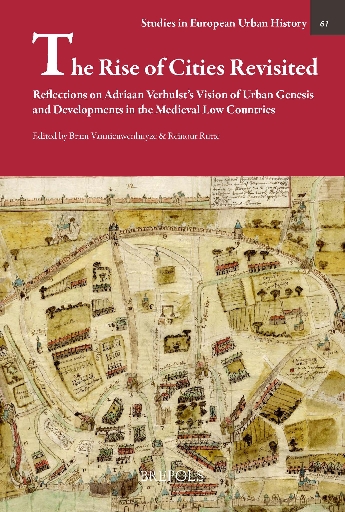
The Rise of Cities Revisited
show More to view fulltext, buy and share links for:The Rise of Cities Revisited show Less to hide fulltext, buy and share links for: The Rise of Cities RevisitedAdriaan Verhulst's The Rise of Cities in North-West Europe (1999) is the last comprehensive work written by a single author on the urban genesis and spatial developments of cities in the medieval Low Countries. Since then, monographs, specialised studies and articles have been published on various cities and towns, while urban archaeologists have carried out numerous excavations. Much new knowledge has been gained, yet many gaps and the need for comparative overviews remain.Twenty-five years after Verhulst’s synthesis, The Rise of Cities Revisited takes a fresh look at the origins and developments of cities and towns in the Low Countries between the tenth and the sixteenth centuries, critically assesses progress made in scholarship and outlines future directions for research. The chapters of the book are written by senior and junior specialists from various fields, including medieval history, historical geography, economic history, archaeology and building history. The Rise of Cities Revisited presents a state of the art and provides scholars with tools to study this complex subject in future.
-
-
-
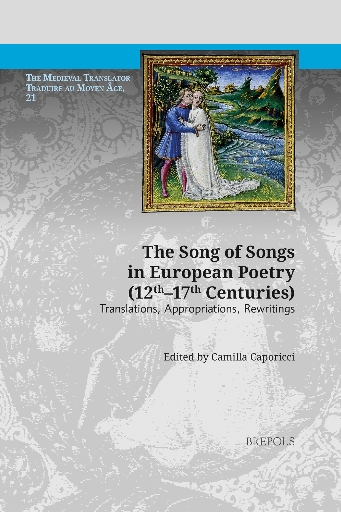
The Song of Songs in European Poetry
show More to view fulltext, buy and share links for:The Song of Songs in European Poetry
(Twelfth to Seventeenth Centuries)
(Twelfth to Seventeenth Centuries) show Less to hide fulltext, buy and share links for: The Song of Songs in European Poetry
(Twelfth to Seventeenth Centuries)Traditionally attributed to King Solomon and defined by Rabbi Aqiva as the Holy of Holies among the sacred Scriptures, the Song of Songs is one of the most fascinating and controversial biblical books. Celebrated as a key to the supreme mystery of the union between God and the faithful, this ambivalent book, which combined a sensual celebration of love with a well-established tradition of allegorical interpretation, was a text crucial to both the Middle Ages and the Renaissance, and held a particular appeal for poets. Indeed, the Song of Songs played a significant role in the development of European poetry from its very beginning, creating an exceptional convergence of sacred and secular languages and horizons of meaning.
Written by a group of distinguished international scholars, this volume explores the complex and multifaceted processes through which the Song of Songs entered, influenced, and interacted with medieval and Renaissance European poetry (twelfth to seventeenth centuries). Focusing on both individual authors – including Peter Riga, Dante Alighieri, Richard Rolle, and George Herbert – and particularly relevant poetic traditions – including Hebrew liturgical poetry and the Tristan and Ysolt tradition, Middle English and Petrarchan lyric, Renaissance verse versions and seventeenth-century musical compositions, dissident and prophetic texts – the volume unveils the relevant role played by the biblical book in the development of European poetry, thought and spirituality, highlighting its ability to contribute to different poetic genres and give voice to a variety of religious, political, philosophical, and artistic intentions.
-
-
-
Contextualizing Conques. Imaginaries, Narratives & Geographies
show More to view fulltext, buy and share links for:Contextualizing Conques. Imaginaries, Narratives & Geographies show Less to hide fulltext, buy and share links for: Contextualizing Conques. Imaginaries, Narratives & GeographiesReapproaching Conques from new contexts is the basis of the present volume, a product of the international project “Conques in the Global World. Transferring Knowledge: from Material to Immaterial Heritage” (Marie Skłodowska-Curie Research and Innovation Staff Exchange H2020). Although it is an important location of cultural heritage and has been consequential historiographically and in the formation of art history, there has never been a comprehensive, interdisciplinary approach to this momentous site. Thus, this volume publishes the first results of the interdisciplinary and international project, which were initially presented at a conference and enriched by workshops held in New York City in the summer of 2022. The collected essays open with reflective and historiographic work on Conques in the nineteenth century. These segue into essays reconsidering specific integral elements of extant medieval materials at the site. Finally, the volume concludes with a series of essays devoted to placing Conques in a broader context. The entire volume aims to open to as yet unaddressed questions in scholarship on Conques, with the hope that this work will provide a foundation for future studies.
-
-
-

A Cathedral of Constitutional Law
show More to view fulltext, buy and share links for:A Cathedral of Constitutional Law show Less to hide fulltext, buy and share links for: A Cathedral of Constitutional LawThe Belgian Dominican friar Antoninus Hendrik Thomas published a critical reconstruction of the earliest Constitutions of the Dominican Order. He identified meticulously where Saint Dominic and his first brothers had borrowed material from other religious and secular juridical systems, as well as where they had been original, thus uncovering the foundational charism of the Order. Even today, researchers in the field regard Fr Thomas’s work as indispensable. Unfortunately, many of his insights are difficult to access for a wider audience, since Fr Thomas wrote his work in his native language, Dutch. To mark the eighth centenary of the death of Saint Dominic in 2021, the Belgian Dominican province therefore decided to publish Fr Thomas’s work in an English translation, as well as to complement this with a selection of essays written by contemporary experts, who – from their particular perspectives – engage with Fr Thomas’s main insights. The essays deal with the historiographical tradition to which Fr Thomas belonged, the Premonstratensian, Cistercian and secular sources of the Constitutions, the manuscript tradition and editing process of the earliest Constitutions, and their reception in the first century of the Order and by the late medieval observant movement.
-
-
-
A Spectacle for a Spanish Princess
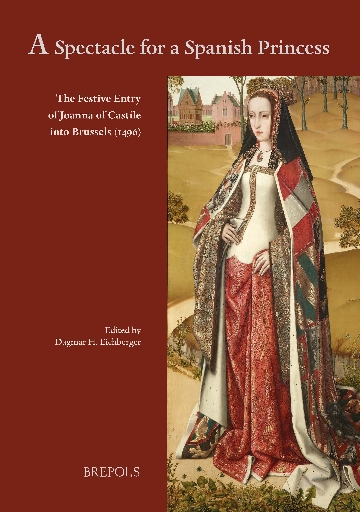
show More to view fulltext, buy and share links for:A Spectacle for a Spanish Princess show Less to hide fulltext, buy and share links for: A Spectacle for a Spanish PrincessOn the evening of 9 December 1496, Princess Joanna, Infanta of Castile, reaches the outskirts of Brussels where a procession of secular and ecclesiastical dignitaries welcomes her. After having been married to Philip the Fair in Lier, Joanna travelled to Brussels by herself. Equipped with torches and processional crosses, the citizens accompany her all the way to the heart of the city, the large market square with its magnificent town hall. The Berlin manuscript 78 D5 is the first illustrated report of an entry concentrating on one single lady. The manuscript is a treasure to all those interested in urban culture of the Early Modern period. The author of the festival booklet compares the well-lit city with the splendours of Troy and Carthage. Twenty-eight stage sets, or Tableaux Vivants, and an elaborate procession mirror the costly intellectual program presented to the sixteen-year-old princess. The carefully planned theatrical productions underscore themes of marriage, female virtues and the politics of war and peace. The program includes entertainments, soundscapes, and pyrotechnic amusements. The Latin texts are made available in English translation. The entire manuscript, with its sixty-three folios, is reproduced in colour. Eleven leading scholars present their new findings on this spectacular entry from an interdisciplinary approach.
-
-
-
Ecocriticism and Old Norse Studies
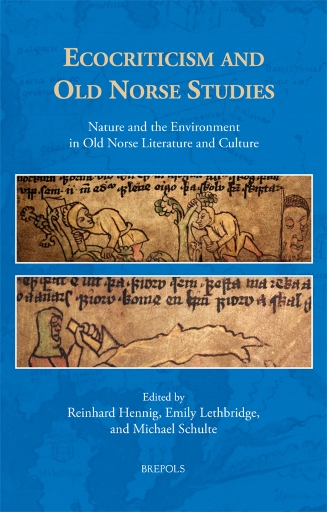
show More to view fulltext, buy and share links for:Ecocriticism and Old Norse Studies show Less to hide fulltext, buy and share links for: Ecocriticism and Old Norse StudiesEcocriticism and Old Norse Studies is the first anthology to combine environmental humanities approaches and the study of premodern Nordic literature and culture. The chapters gathered here present innovative research based on the most recent developments within ecologically informed literary and cultural studies. Covering a wide variety of sources, the volume provides new insights into the Old Norse environmental imagination, showing how premodern texts relate to nature and the environment - both the real-world environments of the Viking Age and Middle Ages, and the fantastic environments of some parts of saga literature. Collectively, the contributions shed new light on the role of cultural contacts, textual traditions, and intertextuality in the shaping of Old Norse perceptions and representations of nature and the environment, as well as on the modern reception and (mis-)use of these ideas. The volume moreover has a contemporary relevance, inviting readers to consider the lessons that can be learned from how people perceived their environments and interacted with them in the past as we face environmental crises in our own times.
-
-
-
Fallacies in the Arabic, Byzantine, Hebrew and Latin Traditions
show More to view fulltext, buy and share links for:Fallacies in the Arabic, Byzantine, Hebrew and Latin Traditions show Less to hide fulltext, buy and share links for: Fallacies in the Arabic, Byzantine, Hebrew and Latin TraditionsFallacy studies are a well established and fast expanding field of argumentation theory. Without notable exception, however, the evergrowing literature on argumentative failure suffers from a conspicuous lack of interest in medieval fallacy theory - arguably the most creative stage in the whole history of argumentation theories. The standard story is that after Aristotle got off to a tentative start, the study of fallacies lay dormant until people at Port Royal and John Locke revived it in spectacular fashion. The volume will show that this picture is both inaccurate and misleading. By working its way from the inside out within each medieval world, Fallacies in the Arabic, Byzantine, Hebrew and Latin Traditions will provide ample and unambiguous record of the exegetical proficiency, technical expertise and argumentative savoir-faire typically displayed by medieval authors on issues about flawed arguments which are all too often our own.
-
-
-

Ibn Gabirol (Avicebron)
show More to view fulltext, buy and share links for:Ibn Gabirol (Avicebron) show Less to hide fulltext, buy and share links for: Ibn Gabirol (Avicebron)One of the most important thinkers of the Middle Ages, the Jewish philosopher Solomon Ibn Gabirol (known in the Latin Middle Ages as ‘Avicebron’) greatly contributed to the history of metaphysics. His most famous work, the Fons vitae, was the source of sophisticated, radical doctrines (like universal hylomorphism and the plurality of substantial forms) that were rigorously debated in the Latin world for centuries.
Breaking a long period of scholarly neglect of his thought, this volume scrutinises Ibn Gabirol’s philosophical contributions by disentangling his original theories from the misconceptions originated by his medieval readers and critics, like Thomas Aquinas and Albert the Great. The first part of the volume expands on the Latin translation of Ibn Gabirol’s philosophical work, the Fons vitae, from which many of these misconceptions seems to have originated. The second part focuses on the sources used by Ibn Gabirol and reconstructs the philosophical framework of his reflections. The final two parts of the volume are dedicated to the influence on Ibn Gabirol’s thought on the Latin and Hebrew traditions, respectively.
Authored by some of the most renowned worldwide experts on Hebrew and Latin philosophy, the cutting-edge contributions included in the volume give a lively picture of a complex yet fascinating medieval philosopher and his unique interpretation of the universe.
-
-
-
Inventing Past Narratives. Venice and the Adriatic Space (13th–15th Centuries)
show More to view fulltext, buy and share links for:Inventing Past Narratives. Venice and the Adriatic Space (13th–15th Centuries) show Less to hide fulltext, buy and share links for: Inventing Past Narratives. Venice and the Adriatic Space (13th–15th Centuries)During the Middle Ages, new past narratives emerged, but several of these narratives are not based on the archaeological rediscovery of a lost history. On the contrary, in many cases that impression of a unique, grandiose, and ancient past is partly the result of accurate dissimulation. Yet, it would not be exact to consider the myth of Venice as a fiction or, somehow, as a fabricated invention – an apocryphal creation that does not include any historical component. Instead, the myth of Venice has been generated through an intricate operation of composing unconnected pieces, through a process of attributing new meanings to previously unconnected pieces of different histories or objects from other pasts. The result is a patchwork that, through the longue durée, has been articulated around both new and ancient stories, local and foreign myths, reconstructed or rediscovered objects and narratives. By the late Middle Ages Venice becomes the main stage of a national and international myth: while enhancing its historical role in the past, the city demonstrates the legitimacy of its role in the present. In light of such phenomenon, this volume will try to demonstrate that Venetian past narratives bring together heterogeneous materials to achieve a common result: that of celebrating Venice’s triumph and erasing its weaknesses and defeats.
-
-
-

Loci Sepulcrales
show More to view fulltext, buy and share links for:Loci Sepulcrales show Less to hide fulltext, buy and share links for: Loci SepulcralesAssembling the contributions of twenty-two authors, this volume aims at revisiting the question of the choice of burial sites throughout the Middle Ages, in their political, emotional, and devotional dimensions, across a wide chronology and in a vast palette of different social statuses. The choice of a burial site inevitably reflets very important statements, made by the living persons, not only regarding what they wished the memory of their passage on Earth to be, but equally enlightening us on what their concern for the future of their souls was and how it should be cared for, in the afterlife.
The first part of this volume is devoted to royal pantheons, considering their development and relevance in the construction of royal legitimacy. Kings and Queens were not the only ones considering their lineage and personal memory: noblemen, ecclesiastics, rich tradesmen, and their wives and daughters, were also involved in a world of changing tendencies, which are dealt with in the second part of the book. The third and last part looks at the strategies and interconnection between building a burial site and constructing collective memories, whether in stone or in writing through the performing influence of rituals, images, or symbols.
This book proposes, therefore a whole new set of approaches on the subject, addressed either in interdisciplinary and all-around syntheses or via analysis of specific case-studies, looking at panteons and other burial sites as the important witnesses of the lives, emotions, and devotions of the medieval society they served.
Contributors to this volume are Xavier Barral i Altet, Catarina Fernandes Barreira, Thiago José Borges, Maria Helena Cruz Coelho, Frederica Cosenza, Antonio Pio de Cosmo, Lorenzo Curatella, Mário Farelo, José Romón González de la Cal, Linsy Grant, Laurent Hablot, Orlindo Jorge, Emma Lano Martínez, Christian de Mérindol, Sonia Morales Cano, Jorge Morín Pablos, Pedro Redol, Martina Saltamacchia, Isabel Sánchez Ramos, Lydwine Scordia, Rosa Smurra and Christian Steer.
-
-
-

Maritime Exchange and the Making of Norman Worlds
show More to view fulltext, buy and share links for:Maritime Exchange and the Making of Norman Worlds show Less to hide fulltext, buy and share links for: Maritime Exchange and the Making of Norman WorldsBetween c. 1000 and c. 1200 ad, emigrants from Normandy travelled long distances from their homeland, spreading their political influence to the shores of the North Sea, the Irish Sea, the Mediterranean, the Black Sea, and the Baltic. Their willingness to cross the seas gave Normans access to new territories and new ideas, extending their authority and reputation far beyond northern France. But how and why were these Norman groups able to develop such power? The chapters collected here engage directly with this question by examining the sites and processes that underpinned this expansion. The contributors ask what different Norman groups took from the societies around them, and what they rejected; they consider how non-Norman powers — in Ireland, England, the Fatimid Caliphate, Byzantium, the Holy Land, and Rus — responded to, and were shaped by, their interactions with Normans in contested zones; and they examine how Normans understood and imagined their own relationship with the sea as a place of exchange, a zone of uncertain control, and an ambiguous kind of border. Drawing together material culture and written evidence, this far-reaching volume offers a fully-developed discussion of how, and in what ways, these Norman worlds and societies could be said to be ‘transcultural’, and in doing so, makes a compelling case that attention to movement and maritime exchange must be central to our understanding of the extension of Norman influence in this period.
-
-
-

Mastering Nature in the Medieval Arabic and Latin Worlds
show More to view fulltext, buy and share links for:Mastering Nature in the Medieval Arabic and Latin Worlds show Less to hide fulltext, buy and share links for: Mastering Nature in the Medieval Arabic and Latin WorldsUnderstanding and influencing nature were preeminent aims of medieval Arabic science, and attracted European fascination with its accomplishments. This volume draws together studies on central themes, presenting a world of enquiry into the earth and the heavens, and ways to harness this information for divination and the occult sciences. It gives examples of how Arabic science travelled to Latin Europe through texts and instruments, and how it underwent transformation there as diverse fields were put to use and reinterpreted. The studies introduce a range of learning and perspectives: astrology conducted with planetary lots; a geography where features of the earth's surface move over time; knowledge of the elements and climates which Adelard of Bath learned from Arab masters; Avicenna’s meteorology explaining the extremes of fire storms and catastrophic floods; debates about the eternity or creation of the world; evaluations of magic as a rational, intellectual discipline, or alternatively a danger needing censorship and linked to female witchcraft; and a precious astrolabe which in the Renaissance was reused and inspired new theoretical writings. Together these studies sketch a landscape of medieval Arabic science and Latin European engagement with this new frontier.
-
-
-

Medieval Svaneti: Objects, Images, and Bodies in Dialogue with Built and Natural Spaces
show More to view fulltext, buy and share links for:Medieval Svaneti: Objects, Images, and Bodies in Dialogue with Built and Natural Spaces show Less to hide fulltext, buy and share links for: Medieval Svaneti: Objects, Images, and Bodies in Dialogue with Built and Natural SpacesThe essays collected in this volume emphasize the importance of Svaneti, a historical region of the Georgian Great Caucasus as an unparalleled treasury of medieval arts, describe some of its outstanding monuments, provide interpretations of their political and religious role at the intersection of different cultural traditions, and explore the dynamics whereby they have constantly invested with new functions and associations throughout their long history.
-
-
-
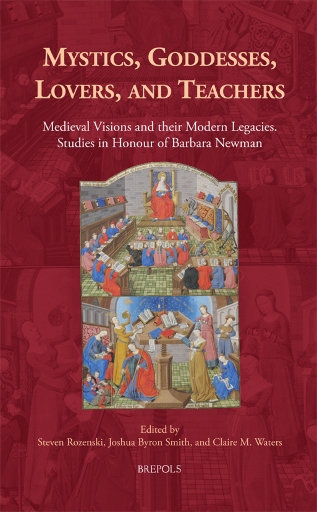
Mystics, Goddesses, Lovers, and Teachers
show More to view fulltext, buy and share links for:Mystics, Goddesses, Lovers, and Teachers show Less to hide fulltext, buy and share links for: Mystics, Goddesses, Lovers, and TeachersThe conjunction of medieval religious studies and gender studies in the past several decades has produced not only nuanced attention to medieval mystics and religious thinkers, but a transformation in the study of medieval culture more broadly. This volume showcases new investigations of mysticism and religious writing in the Middle Ages and the early modern period. It also presents groundbreaking explorations of the feminized divine, from medieval to modern, and the many debts of medieval secular texts and cultures to the religious world that surrounded them. Medieval crossover also defines this volume: the contributors examine the crossovers between male and female, cloister and saeculum, divine and human, and vernacular and Latin that characterized so much of the complexity of medieval literary culture. These collected chapters examine mystics from Hildegard of Bingen and Juliana of Cornillon to Richard Rolle, Julian of Norwich, and Tomás de Jesús; the modern theologies of Philip K. Dick and Charles Williams; goddesses like Fame, Dame Courtesy, and Mother Church; and the role of religious belief in shaping conceptions of pacifism, obscenity, authorship, and bodily integrity. Together, they show the extraordinary impact of Barbara Newman’s scholarship across a range of fields and some of the new areas of investigation opened by her work.
Contributors: Jerome E. Singerman, Kathryn Kerby-Fulton, Jesse Njus, Andrew Kraebel, Nicholas Watson, Laura Saetveit Miles, Bernard McGinn, Carla Arnell, Maeve Callan, Katharine Breen, Lora Walsh, Susan E. Phillips and Claire M. Waters, Carissa M. Harris, Stephanie Pentz, Craig A. Berry, Dyan Elliott.
-
-
-
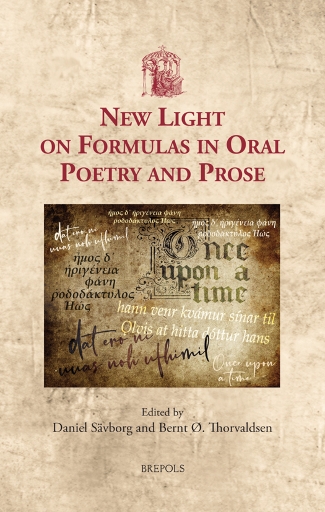
New Light on Formulas in Oral Poetry and Prose
show More to view fulltext, buy and share links for:New Light on Formulas in Oral Poetry and Prose show Less to hide fulltext, buy and share links for: New Light on Formulas in Oral Poetry and ProseDuring the twentieth century scholars discovered that oral poetry in entirely unrelated cultures in the world share a basic characteristic: the use of verbal formulas, more or less fixed word strings, which were inherited from tradition. The discovery of formulas revolutionized the understanding of oral tradition, and how oral poetry was transmitted. Homer, Eddic poems, Karelian laments, Serbian heroic poetry, etc., were suddenly seen in a new light. But the original Oral-Formulaic Theory has also been questioned and revised. New approaches in the study of formulas have been developed among linguists and folklorists.
The present volume discusses new approaches, models, and interpretations of formulas in traditional poetry and prose. The twenty authors in the volume analyze formulas in a broad context by letting oral traditions from all over the world shed light on each other. The volume aims to deepen our understanding of the function and meaning of these formulas. A unique feature is that the volume focuses as much on formulas in oral prose as in poetry – usually formula studies have focused entirely or mainly on poetry.
-
-
-
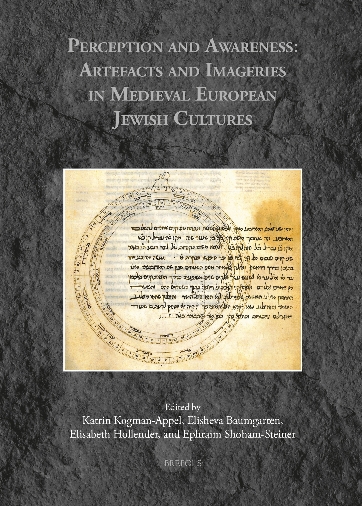
Perception and Awareness: Artefacts and Imageries in Medieval European Jewish Cultures
show More to view fulltext, buy and share links for:Perception and Awareness: Artefacts and Imageries in Medieval European Jewish Cultures show Less to hide fulltext, buy and share links for: Perception and Awareness: Artefacts and Imageries in Medieval European Jewish CulturesWhat did the world look like for Jews living in medieval Europe? How did they perceive and make use of the elements of their daily life, from items on the street to religious iconography within holy spaces — in particular synagogues and at the exterior of churches — and profane elements from the home? And how did they experience the visual and material cultures of their non-Jewish neighbours?
These questions form the core of this volume, which explores pre-modern Jewish approaches to images and material objects from a variety of perspectives. From clothing to manuscripts, and from lighting devices to the understanding of the invisible, the chapters gathered together in this multifaceted volume combine analyses of images and artefacts together with in-depth analyses of texts to offer fresh insights into the visual cultures that informed the world of European Jews in the Middle Ages.
-
-
-
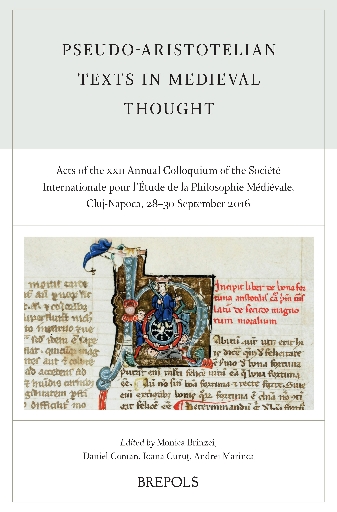
Pseudo-Aristotelian Texts in Medieval Thought
show More to view fulltext, buy and share links for:Pseudo-Aristotelian Texts in Medieval Thought show Less to hide fulltext, buy and share links for: Pseudo-Aristotelian Texts in Medieval ThoughtThe Philosopher, the Master of Those Who Know, was the dominant pagan authority in all four of the main traditions of medieval philosophy: Arabic, Greek, Hebrew, and Latin. Yet we now know that a number of works attributed to Aristotle were in fact spurious, authored by others who claimed to be, or whom others claimed to be, the Stagirite, for example, the Secretum secretorum, the Liber de causis, De mundo, De proprietatibus elementorum, De pomo, and De plantis. These writings strongly impacted medieval thought in various and fascinating ways, both in the original language, be it Arabic, Greek, Hebrew or Latin, and in translation. The mechanisms of their production, dissemination, and translation are themselves worthy of attention. Many of these works spawned commentary traditions of their own, parallel to those involving the classic texts of Peripatetic philosophy. Apparent contradictions between ideas expressed in these treatises and those found in what we consider to be authentic works, for instance ideas that appeared to derive more from the Academy than from the Lyceum, provoked questions about authenticity and about the possible evolution of Aristotle’s thought. Finally, these texts were employed in one way or another in many genres of philosophical literature in the Middle Ages, including metaphysics, natural and moral philosophy, theology, and even more exotic disciplines like chiromancy and alchemy. This volume aims to shed new light on various aspects of the history of Pseudo-Aristotelian texts in the Middle Ages.
-
-
-

Représenter et nommer la Grèce et les Grecs (xiv e-xvi e siècle)
show More to view fulltext, buy and share links for:Représenter et nommer la Grèce et les Grecs (xiv e-xvi e siècle) show Less to hide fulltext, buy and share links for: Représenter et nommer la Grèce et les Grecs (xiv e-xvi e siècle)Que représente la Grèce et les Grecs, pour les auteurs et les artistes des xiv e au xvi e siècle, en Europe occidentale ? Le présent volume explore cette question du point de vue de la perception et de l’imagination spatiales et géographiques. Il porte ainsi sur les représentations de l’espace grec, ancien et « moderne » du xiv e au xvi e siècle. En privilégiant des œuvres latines, françaises et italiennes, écrites principalement en Italie, en France, dans les Pays-Bas bourguignons et en Grèce, il étudie comment les auteurs et les artistes figurent textuellement et visuellement la géographie de la Grèce / de l’espace ou des espaces grec(s). Les difficultés pour définir, nommer et représenter la Grèce comme entité territoriale sont nombreuses durant ces siècles marqués par de très profonds bouleversements, avec du côté grec l’effondrement de l’empire byzantin et, du côté de l’Europe occidentale, des évolutions nombreuses dans les connaissances géographiques, historiques et aussi linguistiques, ainsi que dans les formes d’expression textuelles et iconographiques. La perception d’une identité spatiale, géographique, de la Grèce est d’autant plus délicate que plusieurs temporalités sont en jeu, celle de la Grèce ancienne, celle de la Grèce contemporaine aux auteurs, celle aussi de la Grèce médiévale antérieure au xiv e siècle. Les études réunies s’interrogent sur les différentes perceptions et représentations de l’espace grec, dans son unité et/ou sa diversité, qui s’expriment et se renouvellent durant ces trois siècles, ainsi que sur la nomination des lieux grecs et de la Grèce qui les accompagnent.
-
-
-
The Johannine Tradition in Late Antique and Medieval Poetry
show More to view fulltext, buy and share links for:The Johannine Tradition in Late Antique and Medieval Poetry show Less to hide fulltext, buy and share links for: The Johannine Tradition in Late Antique and Medieval PoetryThe Johannine Tradition in Late Antique and Medieval Poetry proposes to examine the impact of the Gospel of John, which is fundamental from the point of view of the history of Christian doctrines, on ancient poetic production, with some forays into the Middle Ages. The critical literature on these aspects is particularly abundant, but hitherto an overall view of the presence and importance of the Johannine tradition in the evolution of Christian poetry was lacking. Based on the Strasbourg colloquium that took place on 16-17 September 2021, the present volume aims to fill this gap, with contributions highlighting not an episodic presence of Johannine texts in poetic compositions, but a structuring function in the definition of the poetic choices of the various authors. The focus of attention could therefore only be on the genre of biblical rewritings, which derive their particular significance from their organic attempt to “remake” the biblical text in accordance with very precise cultural objectives and the expectations of a select audience.
-
-
-
The Materiality of Sound in Chant Manuscripts in the West
show More to view fulltext, buy and share links for:The Materiality of Sound in Chant Manuscripts in the West show Less to hide fulltext, buy and share links for: The Materiality of Sound in Chant Manuscripts in the WestScriptor, Cantor & Notator is an innovative multi-author project dealing with the complex interconnections between learning, writing and performing chant in the Middle Ages. A number of different methodological approaches have been employed, with the aim of beginning to understand the phenomenon of chant transmission over a large geographical area, linking and contrasting modern definitions of East and West. Thus, in spite of this wide geographical spread, and the consequent variety of rites, languages and musical styles involved, the common thread of parallels and similarities between various chant repertoires arising from the need to fix oral repertories in a written form, and the challenges involved in so doing, are what bring this wide variety of repertoires and approaches together. This multi-centric multi-disciplinary approach will encourage scholars working in these areas to consider their work as part of a much larger geographical and historical picture, and thus reveal to reader and listener more, and far richer, patterns of connections and developments than might otherwise have been suspected.
Scriptor, Cantor & Notator is published in two books. The first, The Materiality of Sound in Chant Manuscripts in the West, brings together articles on several different families of early music scripts in the Latin West and provides a vividly diverse picture of some of the best current scholarship on the various types of ancient and medieval musical notation.
-
-
-
Translation Automatisms in the Vernacular Texts of the Middle Ages and Early Modern Period
show More to view fulltext, buy and share links for:Translation Automatisms in the Vernacular Texts of the Middle Ages and Early Modern Period show Less to hide fulltext, buy and share links for: Translation Automatisms in the Vernacular Texts of the Middle Ages and Early Modern PeriodThe volume deals with the issue of translation automatisms in early vernacular texts predating 1650. It introduces the novel concept of ‘translation clusters’, first defined in machine translation theory, but equally considering a wider array of situations that involve ‘translation units’, ‘language automatisms’, ‘culturemes’, and ‘formulaic borrowings’ in vernacular texts. Contrary to contemporary languages, where translation units, clusters, and automatisms appear frequently due to the influence of standard language varieties or dialects, the vernacular idioms of the Middle Ages and Early Modern period are often pluricentric. Consequently, automatisms are limited to specific cases where diachronic, diatopic, diastratic, and diaphasic variants align similarly in two otherwise different translations. This is a crucial topic for philology, as it can explain accidents that ecdotic methods tend to mistake for variant readings of a single ‘redactio’. The volume aims to determine the organic interplay between three primary situations in which common coincidences between translations or texts occur. Firstly the volume explores the shared elements resulting from the transfer of textual units between multiple translations or adaptations (quotations, corrections, formulas). Secondly chapters study the shared elements arising from the existence of a common source text (translation clusters, based on translation units); and lastly, the volume questions the fixed, inherent, and unchangeable aspects of the target language (language automatisms, often coinciding with translation units). The chapters of this volume focus on numerous vernacular languages and a multitude of case studies, with a particular emphasis on biblical translation—a cornerstone of contemporary translation studies. The chapter format encourages diverse perspectives to push the boundaries of philology, translation studies, and “vernacular theologies”.
-
-
-

True Warriors? Negotiating Dissent in the Intellectual Debate (c. 1100–1700)
show More to view fulltext, buy and share links for:True Warriors? Negotiating Dissent in the Intellectual Debate (c. 1100–1700) show Less to hide fulltext, buy and share links for: True Warriors? Negotiating Dissent in the Intellectual Debate (c. 1100–1700)Dissent, polemics and rivalry have always been at the centre of intellectual development. The scholarly Streitkultur was given a fresh impetus by the newly founded universities in the High Middle Ages and later turned into a quintessential part of early modern intellectual life, with the emergence of the Protestant Reformation creating a new momentum. It was not only mirrored in various well-known intellectual disputations and controversies, but also embodied in numerous literary genres and non-literary modes of expression, as well as discursive or political strategies. Moreover, the harsh debates notwithstanding, consensus was also actively searched for, both within particular disciplines and within society as a whole.
This volume collects thirteen contributions offering a very rich variety of topics with regard to the negotiation of disagreements from the twelfth till the eighteenth centuries. They reflect inter alia upon the rules and conventions of the intellectual debate, upon the media used to negotiate dissent, as well as upon the role of formal institutions created to judge and decide in cases of dissent. The contributions are offered by scholars from fields as diverse as history of literature, political history, history of philosophy, history of Church and theology, and legal history.
-
-
-
What is Medieval?
show More to view fulltext, buy and share links for:What is Medieval? show Less to hide fulltext, buy and share links for: What is Medieval?The Middle Ages and Medievalism have been used and abused throughout history–and this continues. This narrative deserves a reassessment. But, what is Medieval? This is the central question that unifies the contributions in this volume.
‘Medievalism’, or the study of the Middle Ages in its broadest sense, refers to the perception, conceptualisation and movement towards the era post the fifteenth century. Its study is therefore not about the period otherwise referred to as the ‘Middle Ages’, but rather the myriad ways it has since been conceived. And the field of medievalism is still in its relative infancy which has led to the emergence of various existential questions about its scope, remit, theoretico-methodological and pedagogical underpinnings, interpretation, periodization, and its relationship to established disciplines and more emerging subdisciplines and specialised fields—both within and without the academy.
In turn, neomedievalism has allowed insight into and a response to the medieval often dominated by the modern. This has provoked debate over the nature of neomedievalism as a discipline, subdiscipline, genre, field or offshoot in direct or contrasting relation to the more traditional medievalism.
Featuring interdisciplinary contributions from academics, educational practitioners as well as museum, digital and heritage professionals, this volume provides a fresh reflection on past methods to emerging pedagogies as well as new avenues of enquiry into the ways we think about the medieval. It is by reconciling these seemingly disparate forms that we can better understand the continual, interconnected, and often politicised, reinvention of the Middle Ages throughout cultures and study.
-
-
-
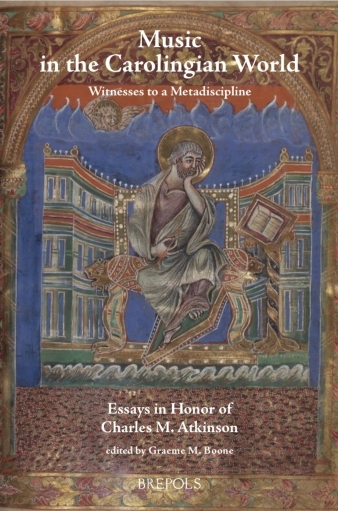
Music in the Carolingian World
show More to view fulltext, buy and share links for:Music in the Carolingian World show Less to hide fulltext, buy and share links for: Music in the Carolingian WorldMusic in the Carolingian World stems from a conference honoring the career and wide-ranging research of Prof. Charles M. Atkinson, leading scholar in early-medieval studies and author of the award-winning monograph, The Critical Nexus (2010). The volume brings together seventeen essays to explore the broad ramifications of music as an arena of study in early-medieval culture; taken together, they manifest the status of music not just as a field of research, but as a metadiscipline that embraces numerous fields and specializations in medieval studies, including philosophy, theology, literature, philology, paleography, liturgy, education, political and institutional history, as well as the practice, theory, and transmission of chant and related musical repertories. The essays are grouped into the four thematic categories of Verbum, Numerus, Ars, and Cultus, bookended by three keynote essays that touch in different ways on the theme of metadisciplinarity.
-