


Brepols Online Books Medieval Miscellanea Collection 2024 - bob2024mime

Collection Contents
41 - 46 of 46 results
-
-
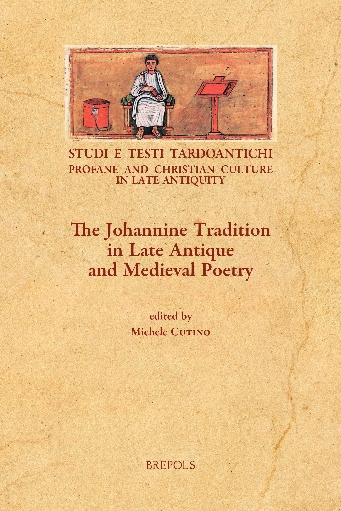
The Johannine Tradition in Late Antique and Medieval Poetry
show More to view fulltext, buy and share links for:The Johannine Tradition in Late Antique and Medieval Poetry show Less to hide fulltext, buy and share links for: The Johannine Tradition in Late Antique and Medieval PoetryThe Johannine Tradition in Late Antique and Medieval Poetry proposes to examine the impact of the Gospel of John, which is fundamental from the point of view of the history of Christian doctrines, on ancient poetic production, with some forays into the Middle Ages. The critical literature on these aspects is particularly abundant, but hitherto an overall view of the presence and importance of the Johannine tradition in the evolution of Christian poetry was lacking. Based on the Strasbourg colloquium that took place on 16-17 September 2021, the present volume aims to fill this gap, with contributions highlighting not an episodic presence of Johannine texts in poetic compositions, but a structuring function in the definition of the poetic choices of the various authors. The focus of attention could therefore only be on the genre of biblical rewritings, which derive their particular significance from their organic attempt to “remake” the biblical text in accordance with very precise cultural objectives and the expectations of a select audience.
-
-
-
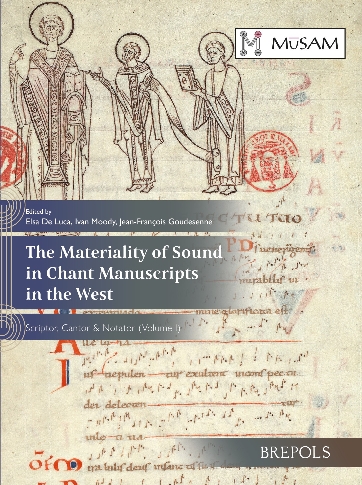
The Materiality of Sound in Chant Manuscripts in the West
show More to view fulltext, buy and share links for:The Materiality of Sound in Chant Manuscripts in the West show Less to hide fulltext, buy and share links for: The Materiality of Sound in Chant Manuscripts in the WestScriptor, Cantor & Notator is an innovative multi-author project dealing with the complex interconnections between learning, writing and performing chant in the Middle Ages. A number of different methodological approaches have been employed, with the aim of beginning to understand the phenomenon of chant transmission over a large geographical area, linking and contrasting modern definitions of East and West. Thus, in spite of this wide geographical spread, and the consequent variety of rites, languages and musical styles involved, the common thread of parallels and similarities between various chant repertoires arising from the need to fix oral repertories in a written form, and the challenges involved in so doing, are what bring this wide variety of repertoires and approaches together. This multi-centric multi-disciplinary approach will encourage scholars working in these areas to consider their work as part of a much larger geographical and historical picture, and thus reveal to reader and listener more, and far richer, patterns of connections and developments than might otherwise have been suspected.
Scriptor, Cantor & Notator is published in two books. The first, The Materiality of Sound in Chant Manuscripts in the West, brings together articles on several different families of early music scripts in the Latin West and provides a vividly diverse picture of some of the best current scholarship on the various types of ancient and medieval musical notation.
-
-
-
Translation Automatisms in the Vernacular Texts of the Middle Ages and Early Modern Period
show More to view fulltext, buy and share links for:Translation Automatisms in the Vernacular Texts of the Middle Ages and Early Modern Period show Less to hide fulltext, buy and share links for: Translation Automatisms in the Vernacular Texts of the Middle Ages and Early Modern PeriodThe volume deals with the issue of translation automatisms in early vernacular texts predating 1650. It introduces the novel concept of ‘translation clusters’, first defined in machine translation theory, but equally considering a wider array of situations that involve ‘translation units’, ‘language automatisms’, ‘culturemes’, and ‘formulaic borrowings’ in vernacular texts. Contrary to contemporary languages, where translation units, clusters, and automatisms appear frequently due to the influence of standard language varieties or dialects, the vernacular idioms of the Middle Ages and Early Modern period are often pluricentric. Consequently, automatisms are limited to specific cases where diachronic, diatopic, diastratic, and diaphasic variants align similarly in two otherwise different translations. This is a crucial topic for philology, as it can explain accidents that ecdotic methods tend to mistake for variant readings of a single ‘redactio’. The volume aims to determine the organic interplay between three primary situations in which common coincidences between translations or texts occur. Firstly the volume explores the shared elements resulting from the transfer of textual units between multiple translations or adaptations (quotations, corrections, formulas). Secondly chapters study the shared elements arising from the existence of a common source text (translation clusters, based on translation units); and lastly, the volume questions the fixed, inherent, and unchangeable aspects of the target language (language automatisms, often coinciding with translation units). The chapters of this volume focus on numerous vernacular languages and a multitude of case studies, with a particular emphasis on biblical translation—a cornerstone of contemporary translation studies. The chapter format encourages diverse perspectives to push the boundaries of philology, translation studies, and “vernacular theologies”.
-
-
-

True Warriors? Negotiating Dissent in the Intellectual Debate (c. 1100–1700)
show More to view fulltext, buy and share links for:True Warriors? Negotiating Dissent in the Intellectual Debate (c. 1100–1700) show Less to hide fulltext, buy and share links for: True Warriors? Negotiating Dissent in the Intellectual Debate (c. 1100–1700)Dissent, polemics and rivalry have always been at the centre of intellectual development. The scholarly Streitkultur was given a fresh impetus by the newly founded universities in the High Middle Ages and later turned into a quintessential part of early modern intellectual life, with the emergence of the Protestant Reformation creating a new momentum. It was not only mirrored in various well-known intellectual disputations and controversies, but also embodied in numerous literary genres and non-literary modes of expression, as well as discursive or political strategies. Moreover, the harsh debates notwithstanding, consensus was also actively searched for, both within particular disciplines and within society as a whole.
This volume collects thirteen contributions offering a very rich variety of topics with regard to the negotiation of disagreements from the twelfth till the eighteenth centuries. They reflect inter alia upon the rules and conventions of the intellectual debate, upon the media used to negotiate dissent, as well as upon the role of formal institutions created to judge and decide in cases of dissent. The contributions are offered by scholars from fields as diverse as history of literature, political history, history of philosophy, history of Church and theology, and legal history.
-
-
-
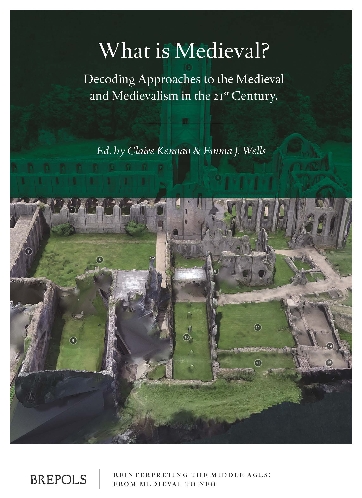
What is Medieval?
show More to view fulltext, buy and share links for:What is Medieval? show Less to hide fulltext, buy and share links for: What is Medieval?The Middle Ages and Medievalism have been used and abused throughout history–and this continues. This narrative deserves a reassessment. But, what is Medieval? This is the central question that unifies the contributions in this volume.
‘Medievalism’, or the study of the Middle Ages in its broadest sense, refers to the perception, conceptualisation and movement towards the era post the fifteenth century. Its study is therefore not about the period otherwise referred to as the ‘Middle Ages’, but rather the myriad ways it has since been conceived. And the field of medievalism is still in its relative infancy which has led to the emergence of various existential questions about its scope, remit, theoretico-methodological and pedagogical underpinnings, interpretation, periodization, and its relationship to established disciplines and more emerging subdisciplines and specialised fields—both within and without the academy.
In turn, neomedievalism has allowed insight into and a response to the medieval often dominated by the modern. This has provoked debate over the nature of neomedievalism as a discipline, subdiscipline, genre, field or offshoot in direct or contrasting relation to the more traditional medievalism.
Featuring interdisciplinary contributions from academics, educational practitioners as well as museum, digital and heritage professionals, this volume provides a fresh reflection on past methods to emerging pedagogies as well as new avenues of enquiry into the ways we think about the medieval. It is by reconciling these seemingly disparate forms that we can better understand the continual, interconnected, and often politicised, reinvention of the Middle Ages throughout cultures and study.
-
-
-
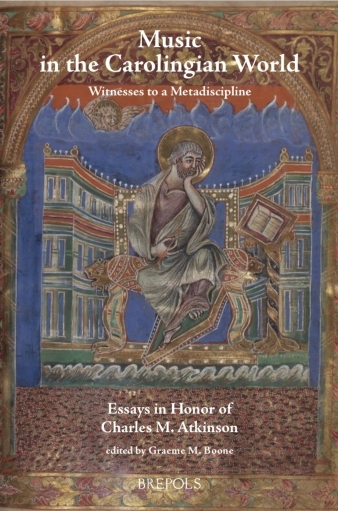
Music in the Carolingian World
show More to view fulltext, buy and share links for:Music in the Carolingian World show Less to hide fulltext, buy and share links for: Music in the Carolingian WorldMusic in the Carolingian World stems from a conference honoring the career and wide-ranging research of Prof. Charles M. Atkinson, leading scholar in early-medieval studies and author of the award-winning monograph, The Critical Nexus (2010). The volume brings together seventeen essays to explore the broad ramifications of music as an arena of study in early-medieval culture; taken together, they manifest the status of music not just as a field of research, but as a metadiscipline that embraces numerous fields and specializations in medieval studies, including philosophy, theology, literature, philology, paleography, liturgy, education, political and institutional history, as well as the practice, theory, and transmission of chant and related musical repertories. The essays are grouped into the four thematic categories of Verbum, Numerus, Ars, and Cultus, bookended by three keynote essays that touch in different ways on the theme of metadisciplinarity.
-