


BOB2024MIOT

Collection Contents
4 results
-
-
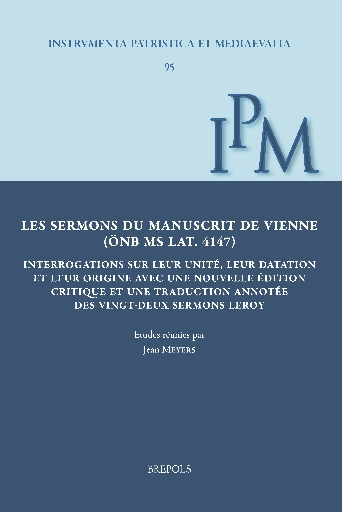
Les sermons du manuscrit de Vienne (ÖNB MS LAT. 4147)
show More to view fulltext, buy and share links for:Les sermons du manuscrit de Vienne (ÖNB MS LAT. 4147) show Less to hide fulltext, buy and share links for: Les sermons du manuscrit de Vienne (ÖNB MS LAT. 4147)En 1994, François-Joseph Leroy publiait vingt-deux sermons inédits, qu’il attribua à un contemporain d’Augustin et dans lesquels il vit une collection, non apologétique et non polémique, de textes donatistes. C’était là une découverte exceptionnelle. Pourtant, depuis l’édition provisoire de Leroy, la recherche ne s’est guère penchée sur ce corpus. C’est la raison pour laquelle le Groupe de Recherches sur l’Afrique Antique (GRAA) a entrepris une nouvelle édition critique de ces 22 sermons, accompagnée de la première traduction annotée, et rassemblé autour de ce corpus les contributions de différents spécialistes, historiens et littéraires, pour en analyser tant la langue, le style et les procédés homilétiques que la portée supposée donatiste, la spiritualité et la théologie.
-
-
-
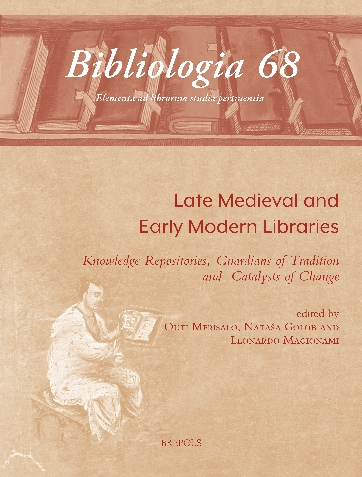
Late Medieval and Early Modern Libraries
show More to view fulltext, buy and share links for:Late Medieval and Early Modern Libraries show Less to hide fulltext, buy and share links for: Late Medieval and Early Modern LibrariesLibraries are an important factor in preserving and transmitting knowledge, thus contributing to historical continuity. The very concept of simultaneous availability of different texts transmitting possibly contradictory ideas, however, implies a great potential for engaging readers in new ways of thinking, thus promoting change. In addition to transmitting texts, historical libraries would often also be perceived as objects of material and spiritual value enhancing the prestige of their owner, e.g. contributing to the image-building of the political entities ruled by emperors, kings and princes. While the history of individual libraries of the Antiquity, the Middle Ages and the Renaissance have been treated in various detail, no large-scale study of the impact of Late Medieval and Early Modern libraries as knowledge repositories and guardians of tradition, on the one hand, and catalysts of change, on the other, seems to exist. This volume, which is inspired by the outcome of the final colloquium of the Lamemoli project held in Siena in March 2022, explores from the book historical point of view a series of both well-known and severely underexplored Late Medieval and Early Modern book collections in existence between c. 1250 and c. 1650, a period of intense mediatic, cultural, religious and political change in Western Europe. Covering an extensive geographical area from France and Italy to Central and Northern Europe, the collections are examined for both their material characteristics and contents, and their historical formation, in order to assess their roles in preserving and transmitting information as well as generating new ideas.
-
-
-
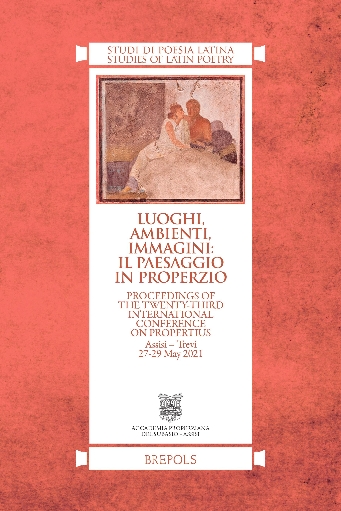
Luoghi, ambienti, immagini: il paesaggio in Properzio
show More to view fulltext, buy and share links for:Luoghi, ambienti, immagini: il paesaggio in Properzio show Less to hide fulltext, buy and share links for: Luoghi, ambienti, immagini: il paesaggio in ProperzioWith an investigation into the landscapes and environments – real, topical, imaginary, recalled and traversed by Propertius’ elegies – the contributors focus on the poet’s complex relationship not only with the images of the literary tradition and with those of artistic culture, but also with the images Rome, Italy and the Mediterranean offered him in his days. This results in the outlines of an original ‘imaginary’ in which the power of personal creation has given Assisi, Rome and the Empire a form going beyond the limits of time and space.
-
-
-
La beauté de l’homme
show More to view fulltext, buy and share links for:La beauté de l’homme show Less to hide fulltext, buy and share links for: La beauté de l’hommeContrairement à la grandeur ou la dignité, la question de la beauté de l’homme n’a guère retenu l’attention des commentateurs. Trop souvent réduite à la seule beauté corporelle, elle est jugée secondaire, relevant de l’histoire sociale des apparences ou de l’esthétique. À l’inverse, le propos de cet ouvrage est de montrer que la beauté joue un rôle essentiel dans la dignification de l’homme, en s’appuyant sur les deux grandes traditions qui ont modelé l’idéal de perfection humaine jusqu’à l’âge classique : d’une part, le culte antique de la beauté, revivifié au Moyen Âge par la « Renaissance du xiie siècle » et magnifié à l’âge humaniste avec le développement des arts plastiques ; d’autre part, la tradition chrétienne dans laquelle l’homme, créé à l’image et selon la ressemblance de Dieu (Gn 1, 26), porte en lui une étincelle de la divine Beauté.
Ainsi entend-on réfléchir moins à la beauté elle-même qu’au sens de la beauté, par un dialogue entre théologie, philosophie, littérature et théorie de l’art. Se révèle alors toute la complexité de la question marquée par une tension constante entre recherche de l’idéal et paradoxes, beauté plastique et beauté vivante, beauté corporelle et beauté spirituelle, kalokagathie et théorie silénique de l’opposition entre extérieur et intérieur, beauté visuelle et beauté musicale, beauté de l’homme et beauté de Dieu.
-