


BOB2024MIOT

Collection Contents
5 results
-
-
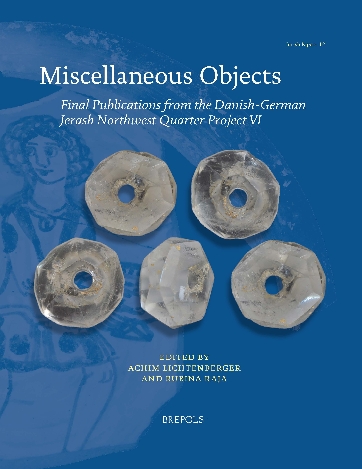
Miscellaneous Objects
show More to view fulltext, buy and share links for:Miscellaneous Objects show Less to hide fulltext, buy and share links for: Miscellaneous ObjectsThe Decapolis city of Jerash has long attracted attention from travellers and scholars, due both to the longevity of the site and the remarkable finds uncovered during successive phases of excavation that have taken place from 1902 onwards. Between 2011 and 2016, a Danish-German team, led by the universities of Aarhus and Münster, focused their attention on the Northwest Quarter of Jerash — the highest point within the walled city — and this volume is the sixth in a series of books presenting the team’s final results.
In this volume, a wide range of miscellaneous items discovered in the Northwest Quarter are presented, ranging from prehistoric lithics to Ottoman pipes. Material finds covered include stone sculpture, utensils, and inscriptions, as well as bone objects, spindle whorls, and bread stamps, while some scientific analyses of jewellery and terracotta figurines complement the studies. These chapters ensure that all finds from the Northwest Quarter — no matter how small — are made available to researchers, with the contributions gathered here offering unique new insights into the material groups from Gerasa, later Jerash, and into the lives of the population of the city from a longue durée perspective.
-
-
-
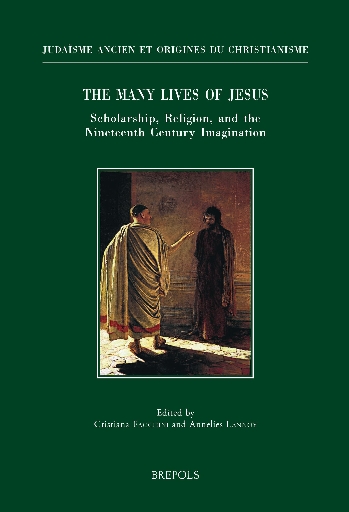
The Many Lives of Jesus
show More to view fulltext, buy and share links for:The Many Lives of Jesus show Less to hide fulltext, buy and share links for: The Many Lives of JesusThis collection of essays aims to offer a multi-disciplinary approach to nineteenth and early twentieth century scholarship on Jesus and early Christianity, which illustrates the width and depth of the questions that critical reflections on the historical Jesus raised in and beyond the field of liberal theology. More precisely, it focuses on Jesus scholarship as practiced in various disciplines and fields that engaged with the academic study of religion. On the other hand, this volume aims for a comprehensive, multi-perspectivist historicization of this scholarship, considering the full range of religious, cultural, racial, political, and national dynamics that hosted the many controversies over the historical Jesus.Divided into five sections, the eleven essays in this book are organized according to guiding themes and a loose chronological structure. The first section revisits the roots of the Forschung in Liberal-Protestant Germany, and especially focuses on the maturation of historical-critical consciousness in the work of Reimarus (and his predecessors), Schleiermacher and Strauss. The second section is concerned with the rise of the “oriental Jesus” against the background of the making of the academic, non-theological study of religion as a scientific discipline. The third section explores how themes related to the historical Jesus and the rise of Christianity were treated among different academic disciplines from the early second half of the nineteenth century onwards. The fourth section explores how the historical Jesus was at the same time further explored by the biblical scholars and theologians who integrated new comparative methods in their research. The fifth section, finally, highlights the cultural-political appropriations that were made of scholarly writings on Jesus, which not rarely constituted the bricks with which radical political movements built their houses.
-
-
-
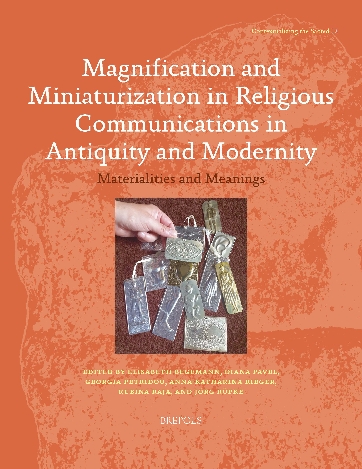
Magnification and Miniaturization in Religious Communication in Antiquity and Modernity
show More to view fulltext, buy and share links for:Magnification and Miniaturization in Religious Communication in Antiquity and Modernity show Less to hide fulltext, buy and share links for: Magnification and Miniaturization in Religious Communication in Antiquity and ModernityHuman agents might not be the measure of all things. Nonetheless, human bodies, and their bodily dimensions, often are, with size impacting on the ways in which we conceive of, interact with, and relate to the world around us. The scaling up or down of features - magnification and miniaturization - is particularly evident in the creation of anthropogenic items intended for use in religious ritual, and here sizing can be employed as a deliberate strategy to encourage shock and awe, admiration and deterrence, among spectators.
Taking as its starting point the concept of ‘materialities and meanings’, this volume explores how human perceptions and understanding of magnified and miniaturized forms and structures are shaped and changed, both synchronically and diachronically, by our understanding of the human body and its size, and the impact that this has in our relationship with the wider world in the context of ritual practices. The chapters collected here consider a range of questions, from a discussion on the essentials of magnification or miniaturization to an exploration of the impact of such strategies on humans and their wider socio-political ramifications. Together, these chapters contribute to a unique discussion that offers new insights into ‘materialities and meanings’, the creation of items for ritual, and the ways in which they influence human perception and understanding.
-
-
-
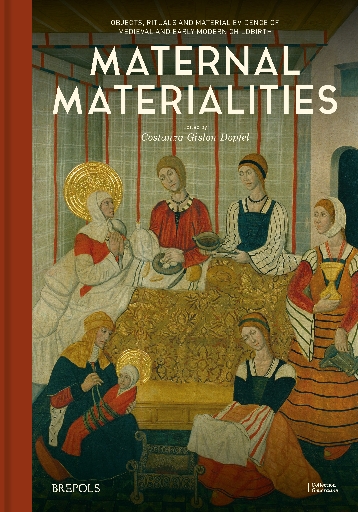
Maternal Materialities
show More to view fulltext, buy and share links for:Maternal Materialities show Less to hide fulltext, buy and share links for: Maternal MaterialitiesAlthough little is known of the process surrounding early modern childbirth, the lack of written testimonials and technical descriptions does not preclude the possibility of reconstructing the reality of this elusive space: drawing on the evidence of clothing, food, rites and customs, this collection of essays seeks to give tangible form to the experience of childbirth through the analysis of physical objects and rituals.
An important addition to the literature of material culture and ‘wordly goods’, this collection of twenty-three essays from international scholars offers a novel approach to the study of pre- and early modern birth by extending its reach beyond the birthing event to include issues concerning the management of pregnancy and post-partum healing.
Grouped into five broad areas, the essays explore the material advantages and disadvantages of motherhood, the food and objects present in the birthing room, the evidence and memorialization of death in childbirth, attitudes towards the pregnant body, the material culture of healing and the ritual items used during childbirth.
-
-
-
The Making of Technique in the Arts
show More to view fulltext, buy and share links for:The Making of Technique in the Arts show Less to hide fulltext, buy and share links for: The Making of Technique in the ArtsWhat is technique in the arts? Now widely used to refer to the practical aspects of art making, ‘technique’ was a neologism in the vernacular, and started to appear in treatises on arts and sciences from around 1750. Rooted in the Greek technè, which was translated routinely as ‘art’ until the mid-eighteenth century, technique referred to processes of making or doing and their products. Described previously as ‘art’, ‘methods’, ‘manners’ or ‘mechanics’, techniques were recorded in text with the intention of documenting or transmitting practical skills and knowledge. This book bridges the gap between the changing concept of technique and the practices currently described by it. It explores the linguistic, philosophical, and pedagogic history of technique in the arts, answering the question why the term ‘technique’ first emerged around 1750, and exploring how its meaning to artists, art theorists, and natural philosophers changed until the twentieth century
-