


BOB2024MIOT

Collection Contents
7 results
-
-
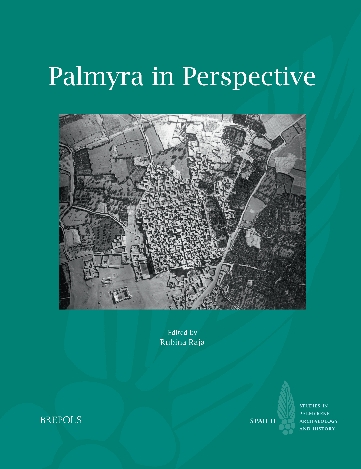
Palmyra in Perspective
show More to view fulltext, buy and share links for:Palmyra in Perspective show Less to hide fulltext, buy and share links for: Palmyra in PerspectiveThe famous oasis city of Palmyra, located in the Syrian Desert, has long been the subject of scholarly research; and over the last decade, it has been the focus of three key projects based at Aarhus University in Denmark. Together, these projects have yielded results that have shed new light on Palmyra and have profoundly changed what we know about both the city itself, and its place in the wider Roman Empire, through a focus on sculptural production and the sustainability and economy that underpinned this, urban development, excavation history, and legacy data. This volume, based on a conference organized under the auspices of the Palmyra research projects in Aarhus, draws together papers that reflect on our understanding of Palmyra up to now, and pave the way for new lines of enquiry. Experts in the field engage with discussions of best practice, offer new perspectives on the city, its society, and its environs, and outline approaches that will allow research to continue to break new ground in our understanding of Palmyra.
-
-
-
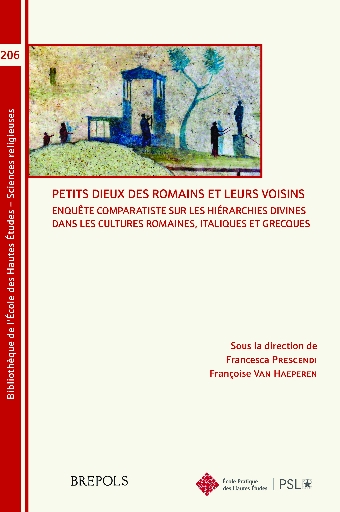
Petits dieux des Romains et leurs voisins
show More to view fulltext, buy and share links for:Petits dieux des Romains et leurs voisins show Less to hide fulltext, buy and share links for: Petits dieux des Romains et leurs voisinsLa formule « petites divinités », qui désigne dans ce volume toutes les puissances revêtant des pouvoirs limités ou une position inférieure dans une configuration divine donnée, est utilisée ici comme un concept exploratoire dont le caractère opérationnel est testé collectivement, en l’appliquant au monde romain et en le comparant aux cultures voisines, grecques et italiques. Si l’étiquette « petites divinités » peut étonner, elle repose cependant sur des catégories antiques. Dans quelques textes latins, en effet, les dieux se définissent eux-mêmes – ou sont définis – comme inférieurs aux autres. Le concept de petites divinités est donc éminemment relationnel mais également contextuel. Les articles réunis dans ce volume abordent ainsi la question des classifications et des hiérarchies divines à partir de sources et de contextes spécifiques, plus ou moins larges, mettant en jeu des panthéons, configurations ou réseaux divins, plus ou moins structurels ou conjoncturels. Si dans le contexte romain, la hiérarchie est une clé pour organiser les groupes des dieux, en se déplaçant vers d’autres contextes culturels, au contraire, les rapports entre divinités semblent plutôt fondés sur des liens de complémentarités entre les dieux.
-
-
-
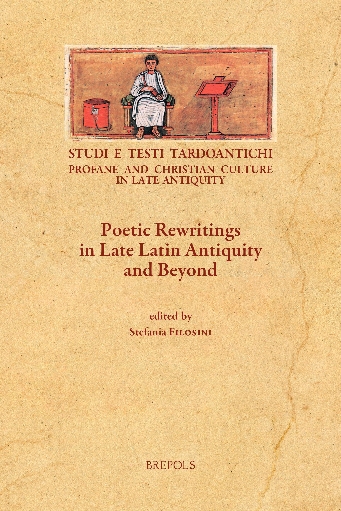
Poetic Rewritings in Late Latin Antiquity and Beyond
show More to view fulltext, buy and share links for:Poetic Rewritings in Late Latin Antiquity and Beyond show Less to hide fulltext, buy and share links for: Poetic Rewritings in Late Latin Antiquity and Beyond‘Rewriting’ as the reworking of narrative material based on conscious strategies of composition plays a significant role in much of the Latin poetry of Late Antiquity. This book, resulting from the conference Riscritture poetiche nell’Occidente latino tra tarda antichità e medioevo, which was held on 9-11 May 2022 at the Department of Human Sciences (DSU) of the University of L’Aquila, looks at the range of practices and purposes that inform this procedure, with particular regard to the processes of transcodification enacted – in different historical and cultural contexts – by the recasting of authoritative prose texts into a classicising poetic idiom. The contributions present a multifaceted approach to rewriting, cover a variety of authors, genres, and texts, and cast a glance also at medieval Latin literature. In short, the essays in this collection, by reflecting on the interpretative contribution of the critical category of ‘rewriting’, not only add further tesserae to the mosaic of literary studies on Late Latinity, they also invite to grasp the difference between secular and Christian rewritings.
-
-
-
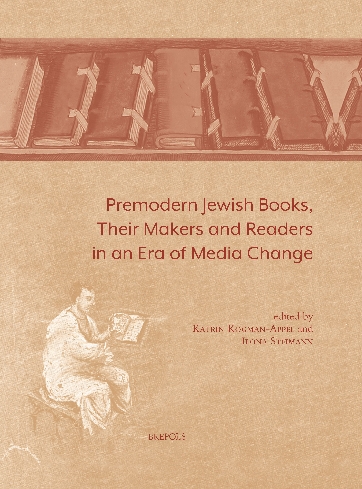
Premodern Jewish Books, their Makers and Readers in an Era of Media Change
show More to view fulltext, buy and share links for:Premodern Jewish Books, their Makers and Readers in an Era of Media Change show Less to hide fulltext, buy and share links for: Premodern Jewish Books, their Makers and Readers in an Era of Media ChangeThis volume brings together studies about books as artefacts within transitional zones. The history of the book from the handwritten to the printed medium is understood as a process marked by innovation and social change, but also by disorientation and bewilderment. The journey of a book from production to use was determined by a complex set of factors: communication among authors, makers of books, patrons, and readership; the emergence of publishers; and decisions to be made concerning production and publication. These factors underwent tremendous changes during the fifteenth and sixteenth centuries owing to the spread of printing and the rise of Humanism in Europe. Particular focus is put on the physical evidence of books, both handwritten and printed, and what it can tell us about a book’s production and its reception.
-
-
-
Procopius the Christian Sophist
show More to view fulltext, buy and share links for:Procopius the Christian Sophist show Less to hide fulltext, buy and share links for: Procopius the Christian SophistThe rich literary production of Gaza in the fifth and sixth centuries AD has received quite some attention in recent scholarship. Yet, the figure and work of Procopius the Sophist, as author of catenae, compiler, and epitomist of patristic exegesis, have remained relatively unknown and under-explored. This collection of essays delves deeply into Procopius’ exegetical work. At the outset, a strong case is made that one should distinguish between the famous orator of Gaza and "the Christian sophist" Procopius. A first large section of the book deals with the Genesis Epitome that is studied from three different angles: the limited and as a rule critical use of Origen and his tradition; the importance given to Theodore of Mopsuestia’s exegesis of Gen 1–3; and the relations between Procopius’ Epitome and John Philoponus’ De opificio mundi. The section on the Exodus Epitome studies the specificity of Procopius’ work in comparison to the Catena on Exodus, the way the material is organised, and the literary genre of the work. The volume further contains contributions on the connections between the Scholia on Kings attributed to Procopius, the type B catena, and the so-called "Catena Lipsiensis"; the relations between Procopius’ Catena on Proverbs and other catenae on this book; the sources of the Isaiah Epitome that show a diligent and able compiler at work; and the comparison between the characteristic features of Procopius’ Epitomes and those of the Catena III on Obadiah. As a whole, it offers a wide perspective and significantly advances research on, and our knowledge of, Procopius the Christian sophist, a still somewhat mysterious early Byzantine author and scholar.
-
-
-
Pre-Carolingian Latin Computus and its Regional Contexts
show More to view fulltext, buy and share links for:Pre-Carolingian Latin Computus and its Regional Contexts show Less to hide fulltext, buy and share links for: Pre-Carolingian Latin Computus and its Regional ContextsThe period between the Fall of Rome and the rise of the Carolingians saw a major shift in knowledge production. Learning became monopolised by a Christian intellectual elite in a rapidly developing monastic landscape. This transition and transformation was only fully achieved by the time of Charlemagne, whose reign saw a ‘Carolingian Renaissance’ that re-created links to Late Antiquity and its curriculum, the seven liberal arts. The centuries in between, from the fifth to the eighth, are generally considered a time of stagnation in terms of intellectual achievements, particularly in the quadruvial arts. From Boethius to Alcuin, not a single noteworthy text was produced in the Latin West in astronomy, geometry, arithmetic and music.
This traditional view has been challenged in recent years by highlighting that the artes liberales may not provide the appropriate lens for this time-period, and that it neglects the plentiful anonymous literature. By the seventh century, a decidedly Christian curriculum had developed principally comprising exegesis, grammar, and computus as its three key pillars. Computus (with the calculation of Easter and therewith the mathematical modelling of the course of the sun and the moon at its core) developed out of the Easter controvery into a discipline of monastic learning in its own right. This volume seeks to highlight the vibrancy and regional characteristics of the study of computus and its underlying controversy about the correct calculation of Easter in this transition period from the mid-fifth to the mid-eighth centuries.
-
-
-
Pietro Metastasio’s Operatic Storm
show More to view fulltext, buy and share links for:Pietro Metastasio’s Operatic Storm show Less to hide fulltext, buy and share links for: Pietro Metastasio’s Operatic StormPietro Metastasio (1698–1782) can be considered as the most renowned operatic dramatist of eighteenth-century Europe. His drammi per musica travelled all around Europe – and beyond – throughout the eighteenth century and the early years of the nineteenth. Courts, palaces, and public theatres were eager to perform his dramas, and so hundreds of composers set them to music, sometimes on more than one occasion.
This volume lets the surviving textual and musical traces speak for themselves. As a catalogue of the sources of five of Metastasio’s most successful titles – Didone abbandonata, Alessandro nell’Indie, Artaserse, Adriano in Siria, and Demofoonte –, it offers their most complete chronology up to date, as well as a detailed presentation of the printers and the theatres in which these texts became alive. In the case of the majority of these works, thousands of manuscripts and copies attest to more than one hundred complete musical versions and over two hundred and fifty productions. They may thus rightly be considered witnesses to the operatic fever that took Europe by storm in the Enlightenment.
-