


BOB2024MOME

Collection Contents
3 results
-
-
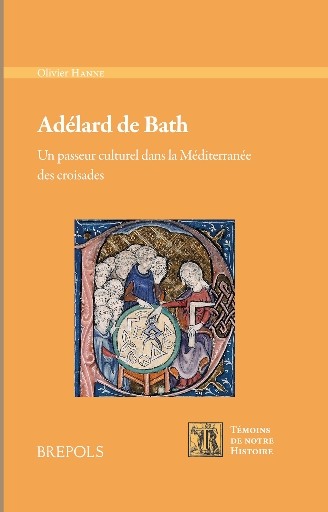
Adélard de Bath
show More to view fulltext, buy and share links for:Adélard de Bath show Less to hide fulltext, buy and share links for: Adélard de BathNé dans le dernier quart du XIe siècle, Adélard de Bath est de ces lettrés anglais formés aux arts libéraux en France. Dans ses premiers textes de philosophie naturelle et de cosmologie, il remet en cause le legs de ses maîtres, puis décide de poursuivre sa formation en Italie du Sud. Grâce aux réseaux des rois normands d’Angleterre, il part soudainement pour la Syrie peu après la première croisade et s’initie plusieurs années sur place à la langue arabe. À son retour, il traduit des sources venues du monde musulman d’une grande complexité, à la fois en astronomie et en mathématique, il en domine les enjeux scientifiques, et va jusqu’à se passionner pour l’astrologie et la magie. Il devient ainsi l’un des initiateurs du grand mouvement de traduction des textes scientifiques depuis l’arabe vers le latin, se faisant le défenseur d’une méthode de critique comparée entre univers culturels, tandis que d’autres choisissent l’affrontement armé.
-
-
-
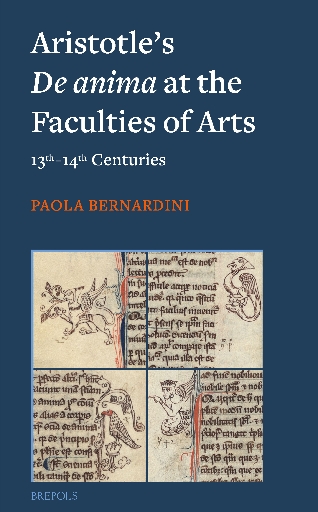
Aristotle’s De anima at the Faculties of Arts (13th-14th Centuries)
show More to view fulltext, buy and share links for:Aristotle’s De anima at the Faculties of Arts (13th-14th Centuries) show Less to hide fulltext, buy and share links for: Aristotle’s De anima at the Faculties of Arts (13th-14th Centuries)This book explores the intersection between the early development of medieval universities and the arrival of Aristotle's works in the Christian West, especially De anima: one of his most famous and obscure writings, straddling the fields of biology and psychology, and devoted to the functions of living beings – including the human being.
The leading figures in this very special meeting of cultures, also involving scientific writings from the Islamic world, are the Masters of Faculties of Arts. From the first half of the 13th century, they embarked on a theoretically very demanding enterprise, namely to restore a complete understanding of De anima; and they accomplished this difficult task by establishing a close – and often polemical – relationship with their more famous colleagues: theologians such as Albert the Great and Thomas Aquinas.
By resorting to the research and teaching methods of their time, the Masters of Arts addressed crucial topics such as the soul/body relationship, sense perception, intellectual knowledge and the special status of the human intellect, mediating, as far as possible, between scientific requirements and those of the Christian faith.
Authors such as Adam of Buckfield, Peter of Spain, Siger of Brabant, John of Jandun and John Buridan, together with other, less famous ones and a small crowd of completely anonymous – yet theoretically no less interesting – scholars, gave rise to a choral narrative that disclosed new philosophical perspectives on man. It is in this intellectual context that the roots of Modern philosophical thought lie.
-
-
-
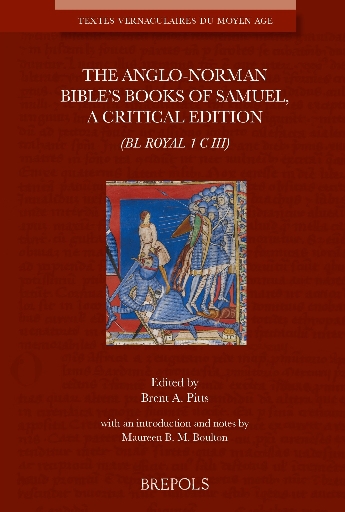
The Anglo-Norman Bible’s Books of Samuel, a Critical Edition
show More to view fulltext, buy and share links for:The Anglo-Norman Bible’s Books of Samuel, a Critical Edition show Less to hide fulltext, buy and share links for: The Anglo-Norman Bible’s Books of Samuel, a Critical EditionTales of treachery and friendship, adultery and murder, rape and revenge, as well as prophecy, repentance, forgiveness and thanksgiving — such is the stuff of the Anglo-Norman Bible’s Books of Samuel. They recount the life of the last of Israel’s judges but include some of the world’s best-known characters — Saul, David and Jonathan, Goliath, Bathsheba, and Absalom.
The first book traces the life of Samuel, and the initial success of King Saul, chosen to satisfy the Israelites’ demand for a king. After Saul loses God’s favour, David enters his court to console him, but Saul envies David’s success. When Saul dies in battle, David succeeds him. In book two, David consolidates control over his kingdom, but his adultery with Bathsheba precipitates the reverses of the final chapters. Historically, the Books of Samuel trace the creation of Israel’s monarchy and explain its ultimate failure. Religiously, they relate Israel’s continuing relationship with God and the establishment of Jerusalem as the religious and political capital of the new kingdom.
Two mid-fourteenth-century manuscripts preserve the text of the Anglo-Norman Bible’s Samuel. The base manuscript (L), British Library Royal 1 C III, notable for its inclusion of multi-lingual glosses, was acquired by Henry VIII from the Benedictine Abbey of Reading in 1530. The lavishly illustrated Paris, Bibliothèque nationale de France, MS français 1 (P), produced in England for the baronial de Welles family, later belonged to King Louis XII of France. Brent A. Pitts has prepared the critical edition and Maureen Boulton’s introduction and notes elucidate the text and its interpretation by medieval commentators.
-