


BOB2024MOME

Collection Contents
4 results
-
-
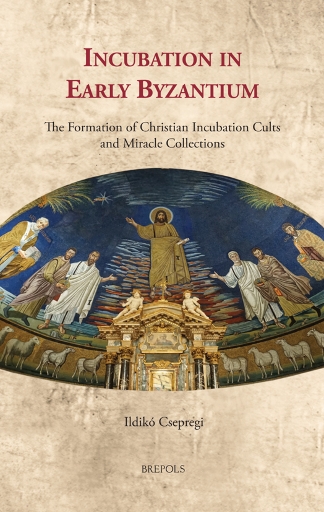
Incubation in Early Byzantium
show More to view fulltext, buy and share links for:Incubation in Early Byzantium show Less to hide fulltext, buy and share links for: Incubation in Early ByzantiumIncubation (temple sleep) was a well-known ritual in the Near East and became increasingly popular in Classical and Hellenistic Greece, becoming attached to Asclepius and other divinities. It flourished in the Eastern Mediterranean, where it was encountered by the emergent Christianity. Temple sleep was so widespread that it was impossible to ban. The Christianization of the incubation ritual was thus a detailed and lengthy (but successful) process that encompassed several aspects of the Church’s self-definition, including important social and theological issues of the era. The list of relevant issues is extensive: the fate of Greek temples and the reinterpretation of sacred space, confronting Hippocratic medicine, and the learned Greek intelligentsia. Since disease and a search for cure is a ubiquitous human need, the early Church embraced a healing ministry, in secular terms as well as in ritual healing. Incubation records show how the Church viewed dreams, conversion, or the notions of magic and divination. All these come within the framework of writing miracles: the transformation of the cult was thus incorporated into standard Church discourse, from ritual practice to proper literary genres.
This first comprehensive monograph on Christian incubation examines the rich material of all the relevant Greek miracle collections: those of Saint Thecla, Cyrus and John, the different versions of Saint Cosmas and Damian and saint Artemios, as well as the minor incubation saints, As a result, it unfolds the transformation of healing sites and practices related to dreams as they spread across Byzantium, from rural Asia Minor to Constantinople and Alexandria.
-
-
-
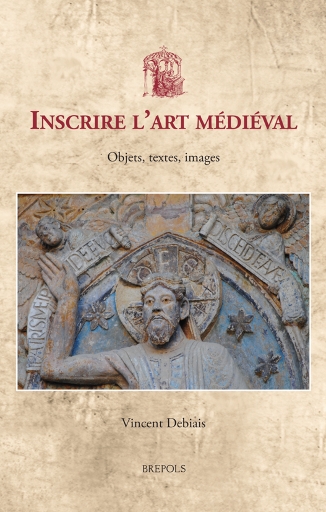
Inscrire l’art médiéval
show More to view fulltext, buy and share links for:Inscrire l’art médiéval show Less to hide fulltext, buy and share links for: Inscrire l’art médiévalCe livre est consacré aux relations entre écriture épigraphique et art médiéval. Il se propose de placer les inscriptions tracées sur la pierre, le métal, le bois, la peinture ou la mosaïque dans le contexte des pratiques écrites et artistiques du Moyen Âge occidental, et de signaler quelques pistes de recherche originales pour appréhender le statut, la forme et la fonction de la rencontre entre l’écriture épigraphique et les oeuvres d’art médiévales.
Cet essai se situe à la confluence de l’histoire de l’écriture et de l’histoire des formes. Il est fondé sur l’analyse d’un certain nombre d’objets graphiques du Moyen Âge central produits en Europe occidentale. Il s’inscrit donc dans une pensée chrétienne de l’écriture et de l’image, et accorde une place importante à la théologie. Il est moins pensé comme un manuel épigraphique à l’attention des historiens de l’art que comme un répertoire de questions à explorer, à repenser ou encore à traiter, et s’adresse à quiconque aspire à la réunion des cultures écrite, visuelle et matérielle du Moyen Âge.
-
-
-
Inventio meditativa
show More to view fulltext, buy and share links for:Inventio meditativa show Less to hide fulltext, buy and share links for: Inventio meditativaThe present volume develops a new conceptual perspective on late-medieval meditation, particularly in Hugh of Saint-Victor, Guigo II, and Bonaventure of Bagnoregio. For the most part, modern commentaries on the subject have relegated rhetoric to the margins of attention, if not to complete silence. In contrast, this book contends that these writers arrived at their distinctive conceptions of meditation by drawing from the Ciceronian rhetorical tradition. They did so by deepening earlier rhetorical treatments of inventio while adapting them to the Christian life. The examination of this topic is divided into three principal and related aspects. First, meditation is studied as a rhetorical notion for a specific kind of mnemonic, rational, and affective exercise. Second, that notion is used to shed light on meditation as a compositional textual practice whose outcomes bear striking analogy to what Umberto Eco called the ‘open works’ of the Western avant-garde. Finally, meditation emerges as a form of literary reception required for approaching and construing certain works. In exploring each of these aspects, the study shows that rhetoric radically informs, not only Hugh’s, Guigo’s, and Bonaventure’s engagement with meditation, but also their views on salvation history, monastic life, divine revelation, scientific learning, and biblical hermeneutics. Thus, despite the omission or relative insignificance of the ars bene dicendi in most modern investigations, it is argued that rhetoric lies at the core of these authors’ entire religious outlook. In this way, the present volume aims to contribute to a better understanding of these medieval figures by filling an important gap in the scholarly literature.
-
-
-
Ideology and Patronage in Byzantium
show More to view fulltext, buy and share links for:Ideology and Patronage in Byzantium show Less to hide fulltext, buy and share links for: Ideology and Patronage in ByzantiumBased on the evidence of epigraphic material in combination with monumental painting, this book explores important dedicatory inscriptions (9th-beginning of the 13th c.) from Macedonia and Thrace, which have so far been investigated mainly from a philological-historical standpoint, thus neglecting the major issue of Middle Byzantine patronage. Through patron inscriptions and textual sources, the role and the motives of military officials in the patronage of defensive and fortification works, and the manner of publicizing them, are examined systematically. Patronage is looked at through the ideological messages that the donors endeavor to promote in a local society or monastic community, and which echo their relationship with the state and their views on education and faith. Interesting methodologically is the co-examination of the various categories of inscriptions in combination with historical texts and donor portraits, which opens up new avenues of research for the study of the interdisciplinary material in question.
-