


BOB2024MOME

Collection Contents
2 results
-
-
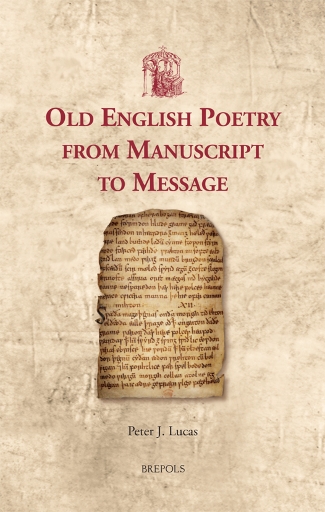
Old English Poetry from Manuscript to Message
show More to view fulltext, buy and share links for:Old English Poetry from Manuscript to Message show Less to hide fulltext, buy and share links for: Old English Poetry from Manuscript to MessageBy comparison with Latin Europe, Anglo-Saxon civilization is notable for the amount of literature preserved in contemporary manuscripts in the vernacular language, formerly called ‘Anglo-Saxon’ but now more usually called ‘Old English’. This literature includes some remarkable poetry, which is the subject of the present collection of essays. Some of the earliest poems may well have been written at a time when northern England held the intellectual leadership of Europe. The approach is holistic, investigating important issues in the manuscripts that affect the integrity of the texts to be studied or the way they relate to each other, examining metrical issues that affect the way the poems are appreciated for their compositional skill, studying particular textual problems that require elucidation or even emendation to make the meaning clear, and finally offering readings of particular poems focussing on themes that are central to Old English poetry. A postscript examines Lewis Carroll’s Jabberwocky, which is presented as a ‘Stanza of Anglo-Saxon Poetry’.
-
-
-
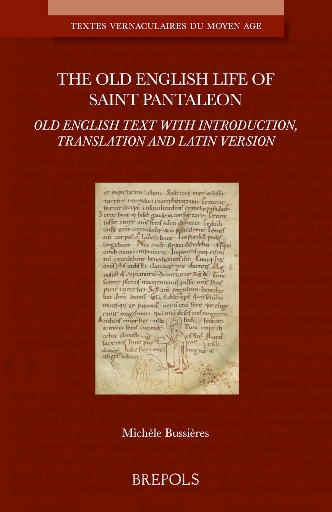
The Old English Life of Saint Pantaleon
show More to view fulltext, buy and share links for:The Old English Life of Saint Pantaleon show Less to hide fulltext, buy and share links for: The Old English Life of Saint PantaleonThe Old English Life of Saint Pantaleon survives in one eleventh century manuscript: it appears here for the first time in an easily available edition. This edition is based both on independent research and on the work of previous scholars. It is a challenging text, from a much-damaged manuscript, but well worth reading: it is interesting both from a linguistic point of view, as a testimony of late Anglo-Saxon language, and also as a sign of continental influence on Anglo-Saxon culture and of a change in literary taste in England on the eve of the Norman Conquest. It is preceded by a full introduction dealing with the history of the text, from Greece to Western Europe and the context of its translation into Old English. The text is accompanied by copious notes dealing with difficult passages and it is made more accessible by a Modern English translation. The edition is completed by a 12th century Latin version which seems to be the closer to its Old English counterpart. The edition is completed by an Anglo-Saxon glossary.
-