


BOB2024MOME

Collection Contents
3 results
-
-
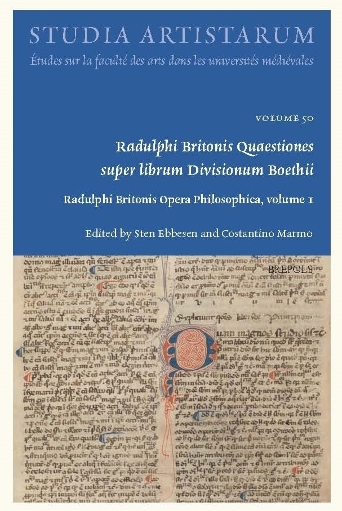
Radulphi Britonis Quaestiones super librum Divisionum Boethii
show More to view fulltext, buy and share links for:Radulphi Britonis Quaestiones super librum Divisionum Boethii show Less to hide fulltext, buy and share links for: Radulphi Britonis Quaestiones super librum Divisionum BoethiiBoethius’ De divisione or Liber divisionum was the authoritative book on mereology in medieval scholasticism. Together with other Boethian works it formed part of the Ars vetus, the core of which was constituted by Porphyry’s Isagoge and Aristotle’s Categories and Peri hermeneias, but after c. 1250 the Boethian works were but rarely taught in university. One master who did do courses on De divisione was Radulphus Brito (c. 1270 – 1320/21), who taught in the Parisian Faculty of Arts in the 1290’s and possibly some years into the 1300’s after having become a student of theology about 1299.
Radulphus was an innovative thinker with a considerable impact on the philosophical de-bate in his lifetime, and he continued to be considered relevant till the end of the 15th century. He left a vast amount of writings, most of them from his days as a teacher of the arts. Among those preserved are quaestiones on the whole of the Ars vetus and Ars nova, Parva naturalia, Physics, De anima, Metaphysics and Ethics, as well as Priscianus minor.
Radulphus taught some courses more than once, and each time revised the text of his lectures, leaving us with two or more versions of the relevant questions. On De divisione there are even two completely different sets of questions, both of which are edited for the first time in the present volume. The introduction contains a detailed study of the way Brito’s question commentaries developed over time.
-
-
-
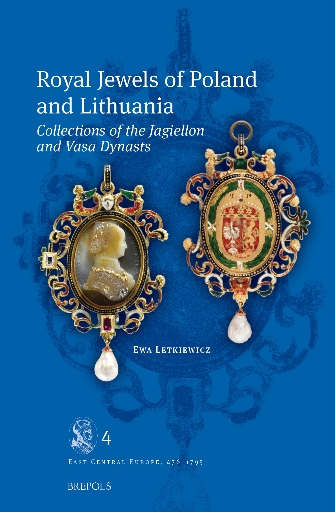
Royal Jewels of Poland and Lithuania
show More to view fulltext, buy and share links for:Royal Jewels of Poland and Lithuania show Less to hide fulltext, buy and share links for: Royal Jewels of Poland and LithuaniaThis volume delves into the rich histories of the Jagiellon and Vasa dynasties, shedding light on the profound interplay between jewellery and socio-political forces. Readers are invited into an era where jewellery bore multifaceted significance, from symbolising power and piety to facilitating economic engagements. The royal perception of value extended beyond traditional treasures, with a keen interest in animal-derived artefacts. These unconventional items, such as elk hooves or eagle stones, were highly esteemed, reflecting both luxury’s diverse nature and the era’s cultural and mystical beliefs. Rather than merely cataloguing these artefacts, this study animates them, intertwining narratives of monarchs, nobles, craftsmen, and the lands from which these treasures emerged. It delves into a world where a gem’s glint signifies might, gold hints at empires’ expanse, and a narwhal’s horn could determine kingdoms’ destinies. Jewellery has long held a central position in history, particularly among the elite. These pieces were not simply decorative; they conveyed prestige, societal position, and authority. They symbolised both worldly and spiritual prominence, enriched with a complex symbolism. Beyond showcasing wealth, jewellery played crucial roles in diplomacy and politics. What meanings did these unique gems carry for their initial owners? This book uncovers the tales, magnetism, and mystery surrounding these jewellery collections. It paints a picture where jewellery transcends mere ornamentation, serving as a powerful testament to influence, devotion, and grandeur.
-
-
-

Remembering the Dead
show More to view fulltext, buy and share links for:Remembering the Dead show Less to hide fulltext, buy and share links for: Remembering the DeadMedieval memoria - the commemoration of the dead - was both a form of collective memory and a social practice present in every sphere of life. It shaped identities and constituted groups, and thus the study of commemorative practices can tell us a great deal about medieval communities. This study shows the importance of memoria as a form of collective memory for different groups and institutions: city government and guilds, the Teutonic Order, bishops and cathedral chapters, and monastic communities, in late medieval Livonia (present-day Latvia and Estonia).
-