


BOB2024MOME

Collection Contents
2 results
-
-
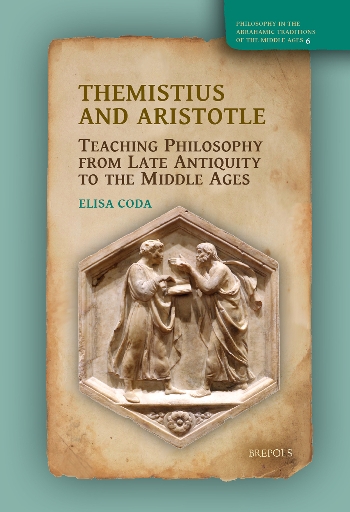
Themistius and Aristotle
show More to view fulltext, buy and share links for:Themistius and Aristotle show Less to hide fulltext, buy and share links for: Themistius and AristotleThis is the first book length examining closely Themistius’ philosophical thought and his understanding of Aristotelian philosophy. Themistius, well known as an eloquent orator and political personality of Constantinople during the fourth century ad, is an influential commentator on works of Aristotle. By assessing both of these aspects of Themistius’ intellectual accomplishments, the present work explores and contextualizes his thought in both his paraphrases of the works of Aristotle and in his orations. Themistius’ interpretation of Aristotelian thought, deeply influential in both the Arab and Latin worlds, and his strategy for teaching Aristotle, even outside the professional schools of philosophy, are major foci of this study.
In particular, this work explicates Themistius’ understanding of the nature and causality of the First Principle, of the cosmic order, and of the human soul and intellect. It argues that Themistius’ approach reflects not only the systematization imparted by Alexander of Aphrodisias to the doctrines of Aristotle, but also the increasing, though oftentimes silent, influence of Plotinus. This is evident in the consideration of the three philosophical issues of God, cosmos, and soul analysed in Themistius, which reveal the preponderance of Plotinus’ philosophy reflected in the Themistian orations. Concomitantly, it explores how Themistius’ teachings proved decisive in the medieval understanding of Aristotle both among Arabic and Hebrew readers, as well as in the universities of Latin Europe. As such, this study challenges our understanding of philosophy in fourth-century Constantinople.
-
-
-

Traumas of 1066 in the Literatures of England, Normandy, and Scandinavia
show More to view fulltext, buy and share links for:Traumas of 1066 in the Literatures of England, Normandy, and Scandinavia show Less to hide fulltext, buy and share links for: Traumas of 1066 in the Literatures of England, Normandy, and Scandinavia1066 is one of the most well-known dates in English history: but how far do we understand the mental and emotional lives of those who experienced it? In just over a month, England was rocked by two separate invasions, multiple pitched battles, and the deaths of thousands. The repercussions of these traumatic events would echo through the history and literature of northern Europe for centuries to come.
Drawing on studies of trauma and cultural memory, this book examines the cultural repercussions of the year 1066 in medieval England, Normandy, and Scandinavia. It explores how writers in all three regions celebrated their common heritage and mourned the wars that brought them into conflict. Bringing together texts from an array of languages, genres, and cultural traditions, this study examines the strategies medieval authors employed to work through the traumas of 1066, narrating its events and experiences in different forms. It explores the ways in which history and memory interacted through multiple generations of writers and readers, and reveals how the field of trauma studies can help us better understand the mental and emotional lives of medieval people.
-