


BOB2024MOME

Collection Contents
45 results
-
-
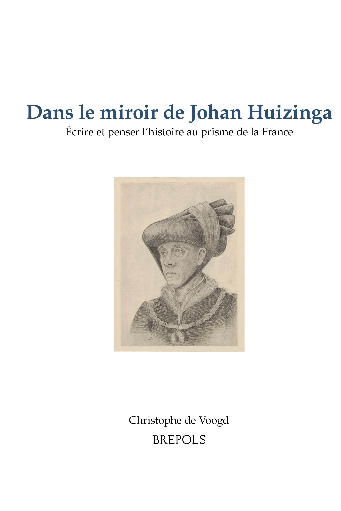
Dans le miroir de Johan Huizinga
show More to view fulltext, buy and share links for:Dans le miroir de Johan Huizinga show Less to hide fulltext, buy and share links for: Dans le miroir de Johan HuizingaÉcrire et penser l’histoire au prisme de la France L’automne du Moyen Âge (1919) est assurément l’un des grands classiques de l’historiographie, et le livre comme son auteur, Johan Huizinga (1872-1945), connaissent une attention internationale renouvelée. Mais force est de constater que l’historien néerlandais demeure en France une référence marginale en dehors du milieu des médiévistes, à la différence de son autre chef d’œuvre, Homo ludens (1938).
Or, la prise en compte de l’ensemble de ses écrits permet de mesurer combien son approche peut éclairer les débats épistémologiques de notre temps. Pionnier de l’histoire culturelle, Huizinga met la force des représentations au premier plan du processus historique ; il pratique et préconise une démarche herméneutique et non causale ou structurelle. Car - et c’est là une divergence majeure avec notamment Lucien Febvre et Marc Bloch - il s’agit moins pour lui d’expliquer le passé à travers ses traces que de comprendre ses acteurs à travers leurs signes. D’où le privilège des sources narratives et iconographiques dans une écriture qui, elle-même, prend la forme du récit : un récit nourri d’abondantes références françaises.
C’est pourquoi le présent livre s’efforce de retracer, à travers les relations de Huizinga avec la France, sa conception et son écriture de l’histoire, notamment dans L’automne du Moyen Âge dont on propose ici une relecture. Mais aussi de regarder la France, son histoire et ses historiens dans le miroir de Johan Huizinga, convaincu que l’on est des vertus d’un regard étranger pour éclairer le débat national.
-
-
-
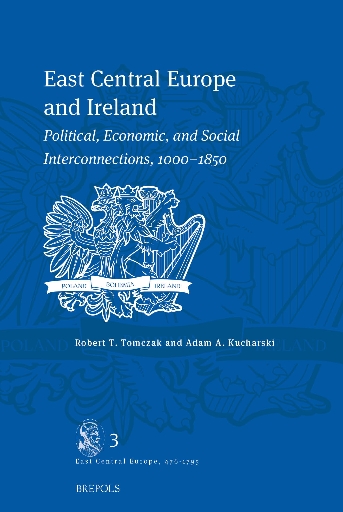
East Central Europe and Ireland
show More to view fulltext, buy and share links for:East Central Europe and Ireland show Less to hide fulltext, buy and share links for: East Central Europe and IrelandThis book explores the broad scope of political, economic, and social aspects of relations between Central Europe (focused on Poland and the lands of the Czechs) and Ireland. Taking a longitudinal approach, this study charts the interaction between the western and the central-eastern peripheries of Europe from the Middle Ages to the period after the Third Partition of Poland-Lithuania in 1795. The authors examine how the relationship between the geographically opposite ends of Europe evolved. Shaped by the shifts of ‘political tectonic plates’ they argue that the evolution can be described in general terms: from a largely unidirectional to an interconnected chain of events. This book demonstrates similarities and analyses differences in a complex, yet unexplored, past of the three emergent nations; nations which in the public perception were overshadowed by their mighty neighbours for far too long.
-
-
-

Exégèses de la « mécréance » et statut du non-musulman dans le Commentaire coranique d’al-Qurtubi (m.671/1273)
show More to view fulltext, buy and share links for:Exégèses de la « mécréance » et statut du non-musulman dans le Commentaire coranique d’al-Qurtubi (m.671/1273) show Less to hide fulltext, buy and share links for: Exégèses de la « mécréance » et statut du non-musulman dans le Commentaire coranique d’al-Qurtubi (m.671/1273)Al-Qurṭubī (m. 671/1273) est l'auteur d'un commentaire coranique qui constitue, depuis le XIIIe siècle jusqu’à nos jours, une référence incontournable dans la transmission du savoir islamique. Ce monumental commentaire offre un matériel pluridisciplinaire permettant d’accéder de manière inédite à une représentation à la fois globale et contextualisée du thème de la non-islamité dans les différentes branches de la pensée islamique. Dans ce texte, l’exégèse coranique renseigne le matériel juridique : elle a pour fonction de l’expliquer. Ainsi les notions coraniques sont réinterprétées, détachées de leur contexte d’origine, en vue de fonder le patrimoine juridique ainsi que les règles de droit dans le Coran considéré comme source de loi.
Cette recherche démontre que la notion de mécréance avait initialement un sens purement politique renvoyant à des actes d’insoumission, de déloyauté et d’iniquité. La notion s’élabore dans le contexte historico-mythique de paix brisées, guerres et conciliations évoquées dans le Coran. L’idée de filiation entre les religions monothéistes, tout particulièrement celle que l’islam provient des religions des « Gens du Livre » –Juifs et Chrétiens -, est dominante. La “mécréance” devient alors l’argument qui permet de réhabiliter la coexistence entre musulmans et non-musulmans. Puis on découvre que c’est d’avantage la non-islamité accompagnée de l’allégeance politique – plutôt que le critère de mécréance en tant que tel -, qui détermine l’octroi de la protection légale (dhimma) aux non-musulmans résidant en Terre d’Islam.
-
-
-
Hagiografía hispana de los siglos ix-xiii en los reinos de Aragón y Castilla y León
show More to view fulltext, buy and share links for:Hagiografía hispana de los siglos ix-xiii en los reinos de Aragón y Castilla y León show Less to hide fulltext, buy and share links for: Hagiografía hispana de los siglos ix-xiii en los reinos de Aragón y Castilla y LeónEste libro reúne las traducciones anotadas de las obras hagiográficas latinas publicadas en el volumen Hagiographica hispana regnorum Aragonum et Castellae Legionisque saeculorum IX-XIII (Corpus Christianorum, Continuatio Mediaeualis, vol. 310), publicado en 2022. Se trata de las más importantes Vidas, traslados de reliquias y colecciones de milagros compuestas en la Edad Media en los monasterios de San Juan de la Peña, San Millán de la Cogolla y San Zoilo de Carrión en honor de san Indalecio (uno de los siete míticos evangelizadores de Hispania); dos santos de época visigoda, san Felices de Bilibio (maestro de San Millán) y el propio san Millán; y dos santos medievales: san Voto y san Félix de Zaragoza (fundadores de lo que más tarde sería San Juan de la Peña). Los otros dos escritos del volumen son dos Vidas dedicadas a san Urbez (eremita aragonés de posible origen francés) y, sobre todo, al famoso patrón de la ciudad de Madrid, san Isidro Labrador. La mayoría de estas traducciones son las primeras que se han realizado en una lengua moderna.
-
-
-
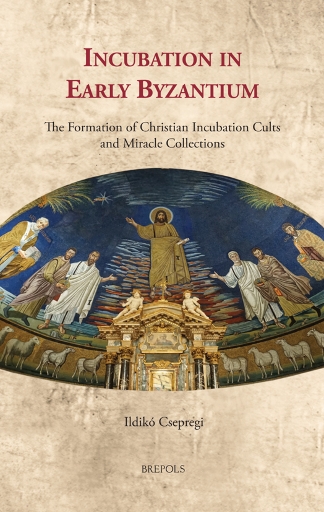
Incubation in Early Byzantium
show More to view fulltext, buy and share links for:Incubation in Early Byzantium show Less to hide fulltext, buy and share links for: Incubation in Early ByzantiumIncubation (temple sleep) was a well-known ritual in the Near East and became increasingly popular in Classical and Hellenistic Greece, becoming attached to Asclepius and other divinities. It flourished in the Eastern Mediterranean, where it was encountered by the emergent Christianity. Temple sleep was so widespread that it was impossible to ban. The Christianization of the incubation ritual was thus a detailed and lengthy (but successful) process that encompassed several aspects of the Church’s self-definition, including important social and theological issues of the era. The list of relevant issues is extensive: the fate of Greek temples and the reinterpretation of sacred space, confronting Hippocratic medicine, and the learned Greek intelligentsia. Since disease and a search for cure is a ubiquitous human need, the early Church embraced a healing ministry, in secular terms as well as in ritual healing. Incubation records show how the Church viewed dreams, conversion, or the notions of magic and divination. All these come within the framework of writing miracles: the transformation of the cult was thus incorporated into standard Church discourse, from ritual practice to proper literary genres.
This first comprehensive monograph on Christian incubation examines the rich material of all the relevant Greek miracle collections: those of Saint Thecla, Cyrus and John, the different versions of Saint Cosmas and Damian and saint Artemios, as well as the minor incubation saints, As a result, it unfolds the transformation of healing sites and practices related to dreams as they spread across Byzantium, from rural Asia Minor to Constantinople and Alexandria.
-
-
-
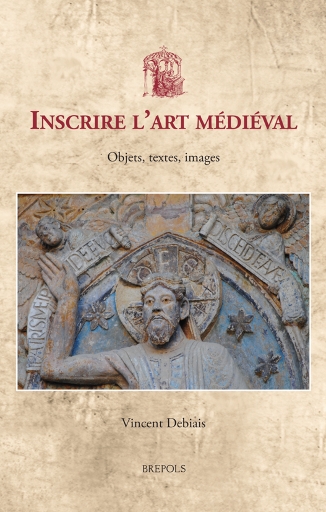
Inscrire l’art médiéval
show More to view fulltext, buy and share links for:Inscrire l’art médiéval show Less to hide fulltext, buy and share links for: Inscrire l’art médiévalCe livre est consacré aux relations entre écriture épigraphique et art médiéval. Il se propose de placer les inscriptions tracées sur la pierre, le métal, le bois, la peinture ou la mosaïque dans le contexte des pratiques écrites et artistiques du Moyen Âge occidental, et de signaler quelques pistes de recherche originales pour appréhender le statut, la forme et la fonction de la rencontre entre l’écriture épigraphique et les oeuvres d’art médiévales.
Cet essai se situe à la confluence de l’histoire de l’écriture et de l’histoire des formes. Il est fondé sur l’analyse d’un certain nombre d’objets graphiques du Moyen Âge central produits en Europe occidentale. Il s’inscrit donc dans une pensée chrétienne de l’écriture et de l’image, et accorde une place importante à la théologie. Il est moins pensé comme un manuel épigraphique à l’attention des historiens de l’art que comme un répertoire de questions à explorer, à repenser ou encore à traiter, et s’adresse à quiconque aspire à la réunion des cultures écrite, visuelle et matérielle du Moyen Âge.
-
-
-
Inventio meditativa
show More to view fulltext, buy and share links for:Inventio meditativa show Less to hide fulltext, buy and share links for: Inventio meditativaThe present volume develops a new conceptual perspective on late-medieval meditation, particularly in Hugh of Saint-Victor, Guigo II, and Bonaventure of Bagnoregio. For the most part, modern commentaries on the subject have relegated rhetoric to the margins of attention, if not to complete silence. In contrast, this book contends that these writers arrived at their distinctive conceptions of meditation by drawing from the Ciceronian rhetorical tradition. They did so by deepening earlier rhetorical treatments of inventio while adapting them to the Christian life. The examination of this topic is divided into three principal and related aspects. First, meditation is studied as a rhetorical notion for a specific kind of mnemonic, rational, and affective exercise. Second, that notion is used to shed light on meditation as a compositional textual practice whose outcomes bear striking analogy to what Umberto Eco called the ‘open works’ of the Western avant-garde. Finally, meditation emerges as a form of literary reception required for approaching and construing certain works. In exploring each of these aspects, the study shows that rhetoric radically informs, not only Hugh’s, Guigo’s, and Bonaventure’s engagement with meditation, but also their views on salvation history, monastic life, divine revelation, scientific learning, and biblical hermeneutics. Thus, despite the omission or relative insignificance of the ars bene dicendi in most modern investigations, it is argued that rhetoric lies at the core of these authors’ entire religious outlook. In this way, the present volume aims to contribute to a better understanding of these medieval figures by filling an important gap in the scholarly literature.
-
-
-
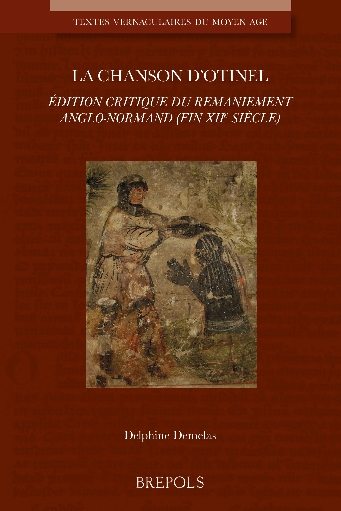
La Chanson d’Otinel
show More to view fulltext, buy and share links for:La Chanson d’Otinel show Less to hide fulltext, buy and share links for: La Chanson d’OtinelLa Chanson d'Otinel est une chanson de geste qui narre les aventures d'Otinel, guerrier musulman venu défier Roland à la cour de Charlemagne ; sur le point de gagner son duel contre le neveu de Charlemagne, un miracle le conduit à se convertir au christianisme ; il est alors promis en mariage à Belissent, la fille de l'empereur. La suite du texte raconte comment Otinel accompagne l'armée des Francs dans le Nord de l'Italie afin de bouter les troupes de l'empereur Garsie hors du territoire après la prise de Rome par les païens. La version anglo-normande, placée sous l'égide de la Fête des Innocents, met en scène un certain bestournement des codes épiques, le tout teinté d'un humour grinçant.
Vraisemblablement composée sur le continent dans la deuxième moitié du xii e siècle, le remaniement anglo-normand du texte semble dater de la fin du xii e siècle. La chanson version anglo-normande du texte est préservée dans deux manuscrits, le codex de Cologny (Cologny, Fondation Martin Bodmer, 168) et le fragment de Mende (Paris, BnF, nouvelles acquisitions françaises, 5094,). La présente édition permet au lecteur d'apprécier la version anglo-normande du texte, en offrant une introduction critique proposant une réflexion sur les aspects littéraires (versification, adaptation) et linguistiques du remaniement.
Ce livre propose d'étudier l'expression locale d'un texte, maillon essentiel pour comprendre l'essor de la légende d'Otinel au Nord de l'Europe, puisque la version anglo-normande servira de modèle pour différentes traductions médiévales du texte en Anglais, Gallois et Norrois à partir du xiv e siècle.
-
-
-
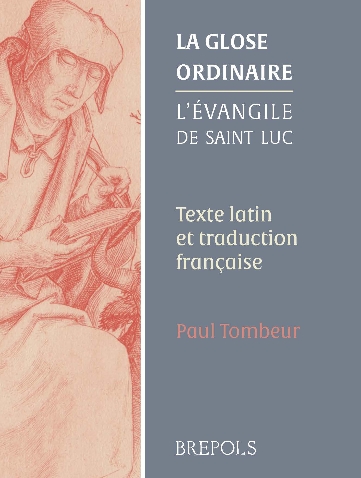
La glose ordinaire. L’Évangile de saint Luc
show More to view fulltext, buy and share links for:La glose ordinaire. L’Évangile de saint Luc show Less to hide fulltext, buy and share links for: La glose ordinaire. L’Évangile de saint LucLa Glose ordinaire est le grand commentaire biblique médiéval, de la Genèse à l’Apocalypse. L’œuvre présentement retenue est l’Évangile selon saint Luc. Le présent ouvrage concerne cet évangile qui a marqué d’une manière incroyable le vécu de nos traditions occidentales, et ce jusqu’à nos jours. Ce trésor d’interprétations et de commentaires est le manuel de base pour tout l’Occident, du XIIe siècle jusqu’à bien au-delà de la Renaissance.
Dès l’apparition de l’imprimerie on a repris ce très vaste ensemble et ce fut l’œuvre d’Adolf Rusch de Strasbourg en 1480-1481, lequel reproduisait scrupuleusement son manuscrit de base. Le texte s’y présente comme les allées d’un parc à la française : le texte biblique même de Luc est au centre, avec des grands caractères, les variantes lexicales et remarques grammaticales figurant entre les lignes, les commentaires marginaux se trouvant tout autour, et on y circule d’allée en allée.
Toutes ces caractéristiques fondamentales sont respectées dans la présente édition, le latin dans la page de gauche, le français dans la page de droite qui fait face. La présentation retenue est ainsi une nouveauté qui rend lisible et connaissable, tant en latin courant qu’en français, toute la documentation biblique : le Luc et les commentaires. Tout cela provoque incontestablement bien des étonnements…
-
-
-
Les visages du cardinal
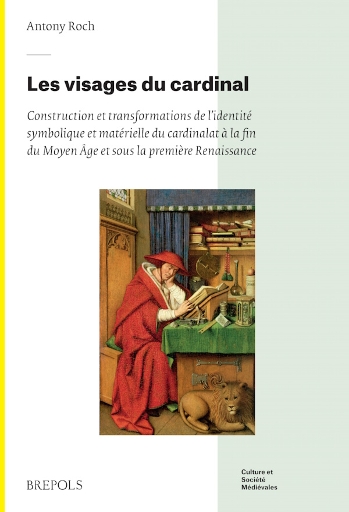
show More to view fulltext, buy and share links for:Les visages du cardinal show Less to hide fulltext, buy and share links for: Les visages du cardinalLe cardinalat, depuis la fin du XIVème siècle jusqu’au début du XVIème siècle, est une entité en transformation, rythmée par les crises successives que traverse l’Eglise d’Occident. Ces crises et les transformations socio-culturelles du Quattrocento ont amené les théoriciens du cardinalat – qu’ils soient juristes, théologiens ou diplomates – à reconsidérer à la fois la place et les modes représentation des cardinaux, influençant également leur incarnation matérielle, et en nous laissant de riches témoignages sur leur réflexion. L’étude présente entend analyser le développement, les transformations, et les perceptions des représentations symboliques et matérielles de l’identité cardinalice idéale depuis le Moyen Âge tardif jusqu’à l’orée de la Réforme. Les éléments mis à jour sur la construction et les mutations de l’identité cardinalice idéale correspondent parfaitement au phénomène transitionnel associé à ce siècle. Le cardinalat apparaît, à travers l’ensemble des sources, comme un palimpseste sur lequel se réécrit constamment les empreintes de sa construction symbolique, matérielle et théorique, chaque couche laissant des traces visibles à celui qui en fait la lecture. Les formes de représentations pérennes qui définissaient le cardinalat et qui apportaient à la fois une justification sacrée et politique par la revendication d’origines prestigieuses finissent au Quattrocento par s’étioler ou se transformer pour laisser place à de nouvelles formes. Ces « couches successives » forment tout entières cette identité cardinalice, qui ne peut se concevoir que de façon multiple par la diversité et la richesse de son développement.
-
-
-
L’Église et les églises
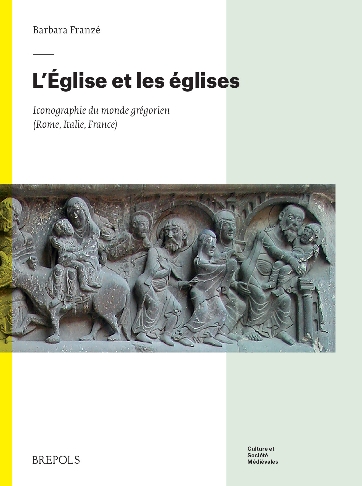
show More to view fulltext, buy and share links for:L’Église et les églises show Less to hide fulltext, buy and share links for: L’Église et les églisesVers le milieu du xi e siècle, le pape s’empare d’un projet à vocation universelle : la réforme de l'Église. L'initiative entraîne à de profonds changements de société, et au renouvellement des formes et moyens d'expression, architecturaux et iconographiques. Nouveau chapitre dans un débat ancien, ouvert dans les années 1970 par Hélène Toubert et Ernst Kitzinger et sans cesse réinvesti par les spécialistes du roman, l'ouvrage vise à mieux comprendre la réception artistique des idées de réforme, à Rome, en Italie et en France. L’enquête procède par cumul d’expériences, acquises sur des monuments singuliers et emblématiques des XIe et XIIe siècles. Elle révèle la diversité des discours et des solutions, en écho à leur temps et à leur lieu, et montre aussi l’unité des répertoires iconographiques, des systèmes de pensée et des enjeux, tous liés au nouveau modèle de la société chrétienne.
-
-
-
Matthieu d’Aquasparta
show More to view fulltext, buy and share links for:Matthieu d’Aquasparta show Less to hide fulltext, buy and share links for: Matthieu d’AquaspartaFranciscain d’origine ombrienne, Matthieu d’Aquasparta (v. 1240-1302) est maître en théologie à l’université de Paris au moment de la censure de 1277. Il rejoint ensuite la Curie pontificale en 1279. Doté de talents politiques certains, il est brièvement ministre général de l’ordre franciscain avant d'être créé cardinal par Nicolas IV en 1288. Il obtient la charge de grand pénitencier et devient un soutien fidèle de Boniface VIII. Depuis le début du XXe siècle, la pensée du théologien avait surtout fait l'objet d'études construites à partir de l'édition progressive de ses Questions disputées. Cet ouvrage propose une biographie complète de Matthieu d’Aquasparta au prisme de ses textes universitaires grâce à l’analyse de sa bibliothèque personnelle, de ses manuscrits de travail, légués aux couvent d'Assise et de Todi et de ses Quodlibets, encore inédits.
-
-
-
Medieval Mausoleums, Monuments, and Manuscripts
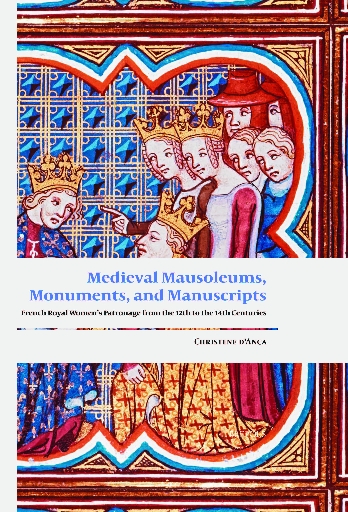
show More to view fulltext, buy and share links for:Medieval Mausoleums, Monuments, and Manuscripts show Less to hide fulltext, buy and share links for: Medieval Mausoleums, Monuments, and ManuscriptsMedieval Mausoleums, Monuments, and Manuscripts: Royal Women’s Patronage from the Twelfth to the Fourteenth Centuries explores the manuscripts, monuments, and other memorabilia associated with the artistic patronage of Eleanor of Aquitaine (1122-1204), her daughters, Marie de Champagne (1145-98) and Matilda of Saxony (1156-98), as well as works generated by three queens of France, Marie de Brabant (1254-1322), Jeanne d’Évreux (1310-71), and Blanche de Navarre (1330-98). Through this study the shift in women’s artistic patronage over the centuries may be brought to light, as well as its evolution, evincing how each generation built upon the previous one.
Further, despite the assorted shapes these women’s efforts embodied, ranging from manuscripts to stained glass windows, from funerary plaques, paintings, jewels and linens to monuments, mausoleums and endowments of institutions, including a variety of other forms, these women were notably unified in that their greatest output tellingly occurred during precarious points in their lives that threatened their positions, such as the potential political turmoil associated with the deaths of husbands or children. At these times their participation in acts of patronage solidified their places at court, in society, and within cultural memory while doubling as assertions of their political power and lineage. Thus, testaments, manuscript books, monuments, and memorials were not only a declaration or signs of one’s possessions, but also sites and documents that continued the politicking of the deceased.
-
-
-
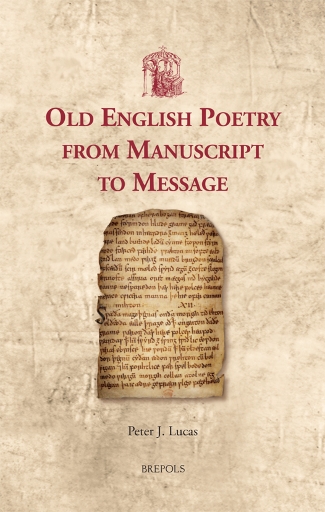
Old English Poetry from Manuscript to Message
show More to view fulltext, buy and share links for:Old English Poetry from Manuscript to Message show Less to hide fulltext, buy and share links for: Old English Poetry from Manuscript to MessageBy comparison with Latin Europe, Anglo-Saxon civilization is notable for the amount of literature preserved in contemporary manuscripts in the vernacular language, formerly called ‘Anglo-Saxon’ but now more usually called ‘Old English’. This literature includes some remarkable poetry, which is the subject of the present collection of essays. Some of the earliest poems may well have been written at a time when northern England held the intellectual leadership of Europe. The approach is holistic, investigating important issues in the manuscripts that affect the integrity of the texts to be studied or the way they relate to each other, examining metrical issues that affect the way the poems are appreciated for their compositional skill, studying particular textual problems that require elucidation or even emendation to make the meaning clear, and finally offering readings of particular poems focussing on themes that are central to Old English poetry. A postscript examines Lewis Carroll’s Jabberwocky, which is presented as a ‘Stanza of Anglo-Saxon Poetry’.
-
-
-
Paolo Diacono e il dolore
show More to view fulltext, buy and share links for:Paolo Diacono e il dolore show Less to hide fulltext, buy and share links for: Paolo Diacono e il dolorePaolo Diacono mette in scena il dolore dei suoi contemporanei o dei grandi del passato, fondendo nelle sue opere elementi autobiografici, topoi letterari e messaggi politici. In epoca altomedievale il dolore non si riduce infatti alla mera lesione fisica, ma presenta una molteplicità di significati e sfumature che lo portano ad essere una delle emozioni protagoniste nella comunità emotiva della corte carolingia di Carlo Magno e di quella longobardo-beneventana di Arechi.
-
-
-
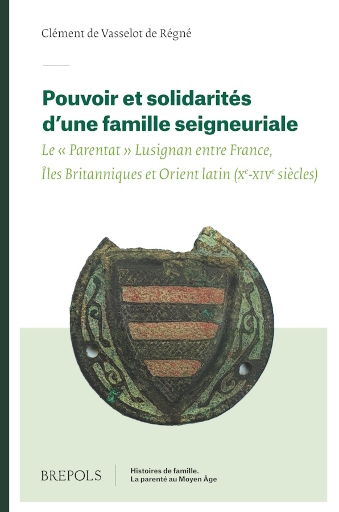
Pouvoir et solidarités d'une famille seigneuriale
show More to view fulltext, buy and share links for:Pouvoir et solidarités d'une famille seigneuriale show Less to hide fulltext, buy and share links for: Pouvoir et solidarités d'une famille seigneurialeLa famille châtelaine de Lusignan est un excellent exemple du phénomène de diffusion dynastique de l'aristocratie française. Elle connaît à la fin du xii e siècle et surtout au début du xiii e siècle, une ascension fulgurante, étendant son emprise sur le Haut puis le Bas-Poitou, s'emparant du comté de la Marche puis de celui d'Angoulême, imposant sa domination sur le nord du duché d'Aquitaine. Une série de mariages ajoute au patrimoine de ses membres le comté d'Eu, en Normandie, celui de Penthièvre et les seigneuries de Fougères et de Porhoët, en Bretagne, ainsi que, dans les îles Britanniques, les honneurs de Hastings et de Tickhill, l'évêché de Winchester, les comtés de Pembroke et de Wexford. La couronne de Jérusalem et son substitut, le trône chypriote, reste leur plus marquante acquisition, d'autant qu'elle est directement liée à la perte de la ville sainte.
Cet ouvrage est né d’une interrogation sur le potentiel politique que pouvait constituer un tel ensemble familial, pourvu que les liens du sang perdurent. De fait, la famille de Lusignan forme un groupe cohérent, structuré par les liens de la parenté, dont les membres partagent une identité entretenue par un certain nombre de repères communs ainsi qu’un réseau de coopération et de soutien mutuel. Leur union constitue une véritable puissance politique et territoriale, qui transcende les limites des royaumes et des principautés. Le concept de « parentat » a été forgé à partir d’un vocable latin emprunté à une chronique médiévale pour saisir de manière holistique ce pouvoir politique réticulaire fondé sur la solidarité des membres d’une même famille, ayant rassemblé, au fil des générations, une grande diversité de principautés et de seigneuries parfois voisines, parfois très dispersées.
Cette étude du parentat Lusignan s’intéresse à sa propagation transrégionale, au pouvoir exercé, à l’échelle de l’individu, comme à celle du groupe familial, sur les hommes et les biens, aux pratiques de gouvernementalité, aux procédés de matérialisation du pouvoir comme aux modes de sa contestation, ainsi qu’aux dynamiques familiales qui concourent à structurer le parentat politiquement et socialement, qui entretiennent sa cohésion, forgent sa mémoire, construisent son identité et affermissent son unité.
-
-
-
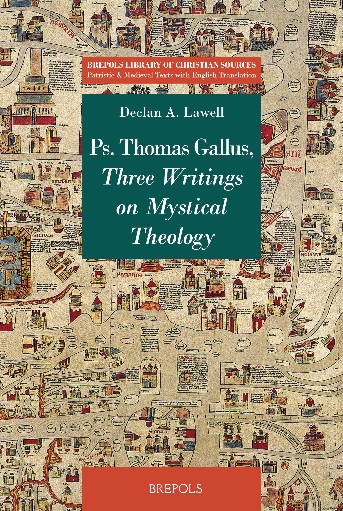
Pseudo-Thomas Gallus, Three Writings on Mystical Theology
show More to view fulltext, buy and share links for:Pseudo-Thomas Gallus, Three Writings on Mystical Theology show Less to hide fulltext, buy and share links for: Pseudo-Thomas Gallus, Three Writings on Mystical TheologyThis volume contains a newly-edited exposition on the Mystical Theology contained in MS UV6 of the Biblioteca degli Intronati in Siena. The MS attributes the work to the abbot of Vercelli (Thomas Gallus), but this is shown to be a false attribution. A commentary on the Canticle of Canticles has also been attributed to Thomas Gallus but argued against by J. Barbet in Brepols' SRSA volume 10 (2005). This commentary is reprinted and accompanied with the first ever English translation. A treatise on the Seven Steps to Contemplation in Latin with an English translation is the third text. An introductory critical study evaluates all three works and argues that they all belong to the same author, pseudo-Thomas Gallus.
-
-
-
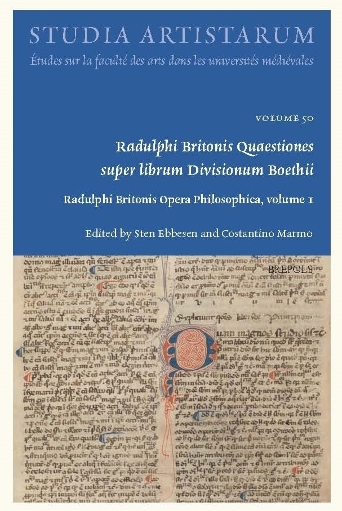
Radulphi Britonis Quaestiones super librum Divisionum Boethii
show More to view fulltext, buy and share links for:Radulphi Britonis Quaestiones super librum Divisionum Boethii show Less to hide fulltext, buy and share links for: Radulphi Britonis Quaestiones super librum Divisionum BoethiiBoethius’ De divisione or Liber divisionum was the authoritative book on mereology in medieval scholasticism. Together with other Boethian works it formed part of the Ars vetus, the core of which was constituted by Porphyry’s Isagoge and Aristotle’s Categories and Peri hermeneias, but after c. 1250 the Boethian works were but rarely taught in university. One master who did do courses on De divisione was Radulphus Brito (c. 1270 – 1320/21), who taught in the Parisian Faculty of Arts in the 1290’s and possibly some years into the 1300’s after having become a student of theology about 1299.
Radulphus was an innovative thinker with a considerable impact on the philosophical de-bate in his lifetime, and he continued to be considered relevant till the end of the 15th century. He left a vast amount of writings, most of them from his days as a teacher of the arts. Among those preserved are quaestiones on the whole of the Ars vetus and Ars nova, Parva naturalia, Physics, De anima, Metaphysics and Ethics, as well as Priscianus minor.
Radulphus taught some courses more than once, and each time revised the text of his lectures, leaving us with two or more versions of the relevant questions. On De divisione there are even two completely different sets of questions, both of which are edited for the first time in the present volume. The introduction contains a detailed study of the way Brito’s question commentaries developed over time.
-
-
-
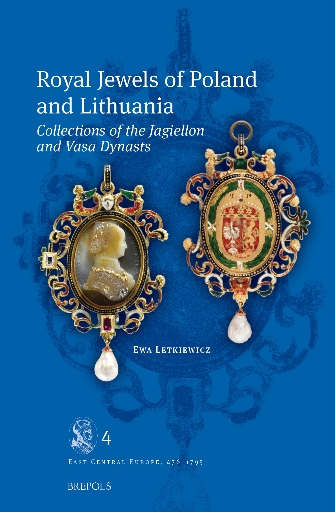
Royal Jewels of Poland and Lithuania
show More to view fulltext, buy and share links for:Royal Jewels of Poland and Lithuania show Less to hide fulltext, buy and share links for: Royal Jewels of Poland and LithuaniaThis volume delves into the rich histories of the Jagiellon and Vasa dynasties, shedding light on the profound interplay between jewellery and socio-political forces. Readers are invited into an era where jewellery bore multifaceted significance, from symbolising power and piety to facilitating economic engagements. The royal perception of value extended beyond traditional treasures, with a keen interest in animal-derived artefacts. These unconventional items, such as elk hooves or eagle stones, were highly esteemed, reflecting both luxury’s diverse nature and the era’s cultural and mystical beliefs. Rather than merely cataloguing these artefacts, this study animates them, intertwining narratives of monarchs, nobles, craftsmen, and the lands from which these treasures emerged. It delves into a world where a gem’s glint signifies might, gold hints at empires’ expanse, and a narwhal’s horn could determine kingdoms’ destinies. Jewellery has long held a central position in history, particularly among the elite. These pieces were not simply decorative; they conveyed prestige, societal position, and authority. They symbolised both worldly and spiritual prominence, enriched with a complex symbolism. Beyond showcasing wealth, jewellery played crucial roles in diplomacy and politics. What meanings did these unique gems carry for their initial owners? This book uncovers the tales, magnetism, and mystery surrounding these jewellery collections. It paints a picture where jewellery transcends mere ornamentation, serving as a powerful testament to influence, devotion, and grandeur.
-
-
-

Saints’ Lives for Medieval English Nuns, II
show More to view fulltext, buy and share links for:Saints’ Lives for Medieval English Nuns, II show Less to hide fulltext, buy and share links for: Saints’ Lives for Medieval English Nuns, IICambridge University Library, MS Additional 2604 contains a unique collection of prose saints’ lives evenly divided into eleven universal and eleven native saints (predominantly culted at Ely). Clearly intended for the devotional life of nuns, presumably in an East Anglian convent, the volume comprises nineteen female figures, all of whom are virgins, martyrs, or nuns, and three male saints (two apostles and a hermit). These late Middle English lives are translated from a variety of Latin sources and analogues including material by Jacobus de Voragine, John of Tynemouth, and others. The collection demonstrates an interest in showcasing native saints alongside their universal sisters. Luminaries of the English Church, such as Æthelthryth of Ely and her sister Seaxburh, are found in the company of notable virgin martyrs like Agatha and Cecilia. Famous saints like John the Evangelist and Hild of Whitby feature alongside others such as Columba of Sens and Eorcengota. Fully analysed and contextualised in its companion volume Saints’ Lives for Medieval English Nuns, I: A Study of the ‘Lyves and Dethes’ in Cambridge University Library, MS Additional 2604, these texts are edited here for the first time. Alongside the edition of the twenty-two saints’ lives and full textual apparatus, there are extensive overviews and commentaries providing details of the sources and analogues as well as explanatory historical and literary notes. The edition concludes with three appendices, a detailed select glossary, and a bibliography of works cited.
-
-
-
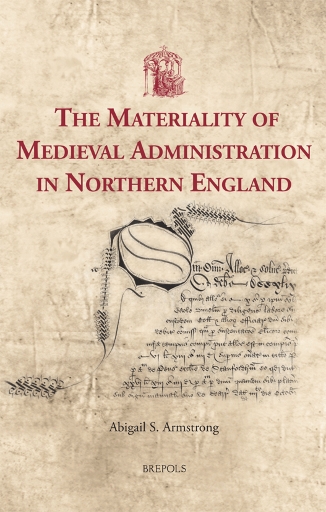
The Materiality of Medieval Administration in Northern England
show More to view fulltext, buy and share links for:The Materiality of Medieval Administration in Northern England show Less to hide fulltext, buy and share links for: The Materiality of Medieval Administration in Northern EnglandIn the late Middle Ages, the Percy earls of Northumberland and the bishops of Durham were two of the largest landholders in the North East of England. This book is a study of their estate administrations based on the extant manorial accounts from the fourteenth through sixteenth centuries. Examining the documents holistically, it investigates the shapes of the records and the materials they were written upon, as well as how they were used and stored to provide new insights into late medieval lordly administration. Such a material-focussed approach explores the concurrent use of rolls, booklets, paper, and parchment for different types of manorial accounts and at different steps of the multistage production and audit process. It also examines the hands drafting, editing, and auditing the accounts, in addition to the layout and presentation of the contents of the records to further our understanding of the written burden of proof required in the management and audit of large estates in late medieval England. Studying the financial accounts of the earls of Northumberland and the bishops of Durham from a material perspective reveals two highly sophisticated administrative systems and structures of accountability.
-
-
-
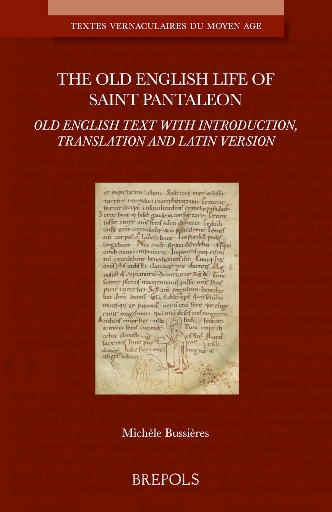
The Old English Life of Saint Pantaleon
show More to view fulltext, buy and share links for:The Old English Life of Saint Pantaleon show Less to hide fulltext, buy and share links for: The Old English Life of Saint PantaleonThe Old English Life of Saint Pantaleon survives in one eleventh century manuscript: it appears here for the first time in an easily available edition. This edition is based both on independent research and on the work of previous scholars. It is a challenging text, from a much-damaged manuscript, but well worth reading: it is interesting both from a linguistic point of view, as a testimony of late Anglo-Saxon language, and also as a sign of continental influence on Anglo-Saxon culture and of a change in literary taste in England on the eve of the Norman Conquest. It is preceded by a full introduction dealing with the history of the text, from Greece to Western Europe and the context of its translation into Old English. The text is accompanied by copious notes dealing with difficult passages and it is made more accessible by a Modern English translation. The edition is completed by a 12th century Latin version which seems to be the closer to its Old English counterpart. The edition is completed by an Anglo-Saxon glossary.
-
-
-
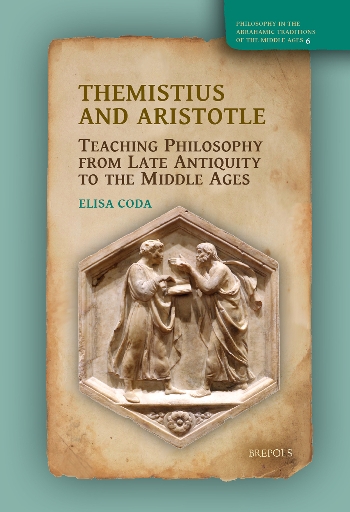
Themistius and Aristotle
show More to view fulltext, buy and share links for:Themistius and Aristotle show Less to hide fulltext, buy and share links for: Themistius and AristotleThis is the first book length examining closely Themistius’ philosophical thought and his understanding of Aristotelian philosophy. Themistius, well known as an eloquent orator and political personality of Constantinople during the fourth century ad, is an influential commentator on works of Aristotle. By assessing both of these aspects of Themistius’ intellectual accomplishments, the present work explores and contextualizes his thought in both his paraphrases of the works of Aristotle and in his orations. Themistius’ interpretation of Aristotelian thought, deeply influential in both the Arab and Latin worlds, and his strategy for teaching Aristotle, even outside the professional schools of philosophy, are major foci of this study.
In particular, this work explicates Themistius’ understanding of the nature and causality of the First Principle, of the cosmic order, and of the human soul and intellect. It argues that Themistius’ approach reflects not only the systematization imparted by Alexander of Aphrodisias to the doctrines of Aristotle, but also the increasing, though oftentimes silent, influence of Plotinus. This is evident in the consideration of the three philosophical issues of God, cosmos, and soul analysed in Themistius, which reveal the preponderance of Plotinus’ philosophy reflected in the Themistian orations. Concomitantly, it explores how Themistius’ teachings proved decisive in the medieval understanding of Aristotle both among Arabic and Hebrew readers, as well as in the universities of Latin Europe. As such, this study challenges our understanding of philosophy in fourth-century Constantinople.
-
-
-

Traumas of 1066 in the Literatures of England, Normandy, and Scandinavia
show More to view fulltext, buy and share links for:Traumas of 1066 in the Literatures of England, Normandy, and Scandinavia show Less to hide fulltext, buy and share links for: Traumas of 1066 in the Literatures of England, Normandy, and Scandinavia1066 is one of the most well-known dates in English history: but how far do we understand the mental and emotional lives of those who experienced it? In just over a month, England was rocked by two separate invasions, multiple pitched battles, and the deaths of thousands. The repercussions of these traumatic events would echo through the history and literature of northern Europe for centuries to come.
Drawing on studies of trauma and cultural memory, this book examines the cultural repercussions of the year 1066 in medieval England, Normandy, and Scandinavia. It explores how writers in all three regions celebrated their common heritage and mourned the wars that brought them into conflict. Bringing together texts from an array of languages, genres, and cultural traditions, this study examines the strategies medieval authors employed to work through the traumas of 1066, narrating its events and experiences in different forms. It explores the ways in which history and memory interacted through multiple generations of writers and readers, and reveals how the field of trauma studies can help us better understand the mental and emotional lives of medieval people.
-
-
-
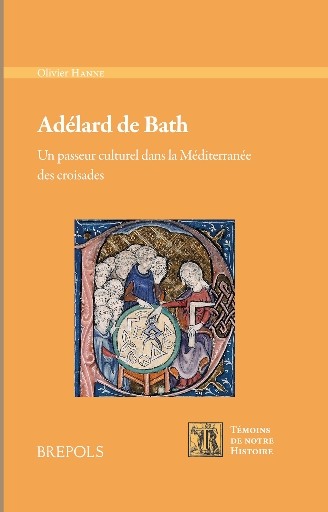
Adélard de Bath
show More to view fulltext, buy and share links for:Adélard de Bath show Less to hide fulltext, buy and share links for: Adélard de BathNé dans le dernier quart du XIe siècle, Adélard de Bath est de ces lettrés anglais formés aux arts libéraux en France. Dans ses premiers textes de philosophie naturelle et de cosmologie, il remet en cause le legs de ses maîtres, puis décide de poursuivre sa formation en Italie du Sud. Grâce aux réseaux des rois normands d’Angleterre, il part soudainement pour la Syrie peu après la première croisade et s’initie plusieurs années sur place à la langue arabe. À son retour, il traduit des sources venues du monde musulman d’une grande complexité, à la fois en astronomie et en mathématique, il en domine les enjeux scientifiques, et va jusqu’à se passionner pour l’astrologie et la magie. Il devient ainsi l’un des initiateurs du grand mouvement de traduction des textes scientifiques depuis l’arabe vers le latin, se faisant le défenseur d’une méthode de critique comparée entre univers culturels, tandis que d’autres choisissent l’affrontement armé.
-
-
-
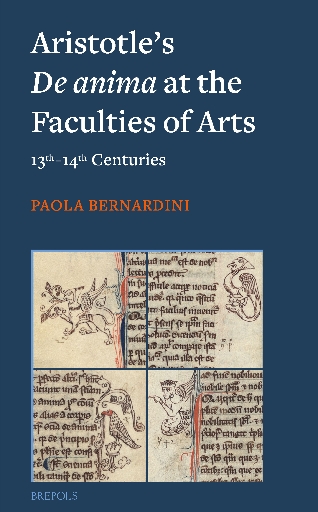
Aristotle’s De anima at the Faculties of Arts (13th-14th Centuries)
show More to view fulltext, buy and share links for:Aristotle’s De anima at the Faculties of Arts (13th-14th Centuries) show Less to hide fulltext, buy and share links for: Aristotle’s De anima at the Faculties of Arts (13th-14th Centuries)This book explores the intersection between the early development of medieval universities and the arrival of Aristotle's works in the Christian West, especially De anima: one of his most famous and obscure writings, straddling the fields of biology and psychology, and devoted to the functions of living beings – including the human being.
The leading figures in this very special meeting of cultures, also involving scientific writings from the Islamic world, are the Masters of Faculties of Arts. From the first half of the 13th century, they embarked on a theoretically very demanding enterprise, namely to restore a complete understanding of De anima; and they accomplished this difficult task by establishing a close – and often polemical – relationship with their more famous colleagues: theologians such as Albert the Great and Thomas Aquinas.
By resorting to the research and teaching methods of their time, the Masters of Arts addressed crucial topics such as the soul/body relationship, sense perception, intellectual knowledge and the special status of the human intellect, mediating, as far as possible, between scientific requirements and those of the Christian faith.
Authors such as Adam of Buckfield, Peter of Spain, Siger of Brabant, John of Jandun and John Buridan, together with other, less famous ones and a small crowd of completely anonymous – yet theoretically no less interesting – scholars, gave rise to a choral narrative that disclosed new philosophical perspectives on man. It is in this intellectual context that the roots of Modern philosophical thought lie.
-
-
-
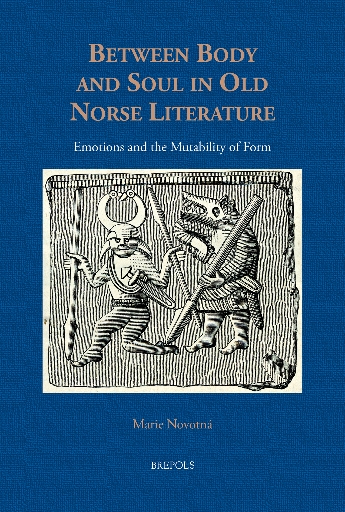
Between Body and Soul in Old Norse Literature
show More to view fulltext, buy and share links for:Between Body and Soul in Old Norse Literature show Less to hide fulltext, buy and share links for: Between Body and Soul in Old Norse LiteratureWhat did the body mean for inhabitants of the medieval Norse-speaking world? How was the physical body viewed? Where did the boundary lie between corporality and the psychological or spiritual aspects of humanity? And how did such an understanding tie in with popular literary motifs such as shape-shifting? This monograph seeks to engage with these questions by offering the first focused work to delineate a space for ideas about the body within the Old Norse world. The connections between emotions and bodily changes are examined through discussion of the physical manifestations of emotion (tiredness, changes in facial colour, swelling), while the author offers a detailed analysis of the Old Norse term hamr, a word that could variously mean shape, form, and appearance, but also character. Attention is also paid to changes of physical form linked to flight and battle ecstasy, as well as to magical shapeshifting. Through this approach, diametrically different ways of thinking about the connection between body and soul can be found, and the argument made that within the Old Norse world, concepts of change within the body rested along a spectrum that ranged from the purely physical through to the psychological. In doing so, this volume offers a broader understanding of what physicality and spirituality might have meant in the Middle Ages.
-
-
-
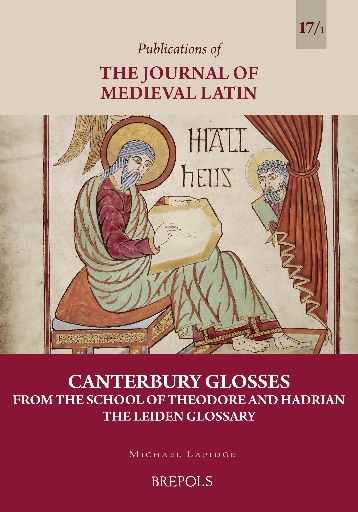
Canterbury Glosses from the School of Theodore and Hadrian: The Leiden Glossary
show More to view fulltext, buy and share links for:Canterbury Glosses from the School of Theodore and Hadrian: The Leiden Glossary show Less to hide fulltext, buy and share links for: Canterbury Glosses from the School of Theodore and Hadrian: The Leiden GlossaryThe ‘Leiden Glossary’ provides a record of the understanding and interpretation of the patristic and grammatical texts studied at the Canterbury School of Theodore and Hadrian, regarded by Bede as the high point of Christian culture in early Anglo-Saxon England. Each entry in the ‘Leiden Glossary’ is provided with detailed commentary on the sources consulted by the two Canterbury masters (earlier glossaries; Isidore; Eucherius) and the later uses of the glossary by compilers of the Epinal-Erfurt and Corpus glossaries. The ‘Leiden Glossary’ is thus a key witness to one of the greatest schools of learning in the early Middle Ages.
-
-
-
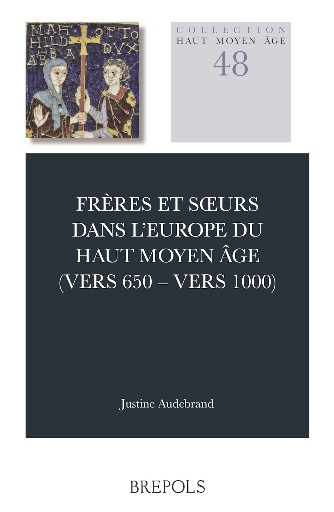
Frères et sœurs dans l’Europe du haut Moyen Âge (vers 650 ‑ vers 1000)
show More to view fulltext, buy and share links for:Frères et sœurs dans l’Europe du haut Moyen Âge (vers 650 ‑ vers 1000) show Less to hide fulltext, buy and share links for: Frères et sœurs dans l’Europe du haut Moyen Âge (vers 650 ‑ vers 1000)Les relations entre frères et sœurs constituent encore un champ mal exploré de l’étude de la famille pour la période allant de 650 à 1000. Pourtant, ce lien est un élément essentiel des sociétés du haut Moyen Âge, tant dans les mondes franc et germanique qu’en Angleterre. Dans les discours de l’Église, il est même un idéal. En outre, dans le contexte démographique médiéval, la relation adelphique - c'est-à-dire entre frères et sœurs - est souvent la plus pérenne : face à la mort précoce des parents et à un veuvage fréquent, elle accompagne les individus tout au long de leur existence. Étudier les relations adelphiques est également une manière d’envisager les relations entre hommes et femmes grâce aux dernières avancées de recherche sur le genre. Pour étudier ces liens spécifiques, il convient de s'intéresser à une large documentation et d'emprunter aux outils de la sociologie et de l'anthropologie. La relation adelphique apparaît alors une donnée importante des sociétés du haut Moyen Âge et que son étude permet de complexifier l'histoire de la famille sur cette période.
-
-
-
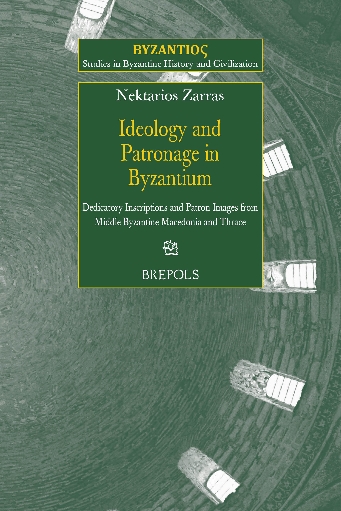
Ideology and Patronage in Byzantium
show More to view fulltext, buy and share links for:Ideology and Patronage in Byzantium show Less to hide fulltext, buy and share links for: Ideology and Patronage in ByzantiumBased on the evidence of epigraphic material in combination with monumental painting, this book explores important dedicatory inscriptions (9th-beginning of the 13th c.) from Macedonia and Thrace, which have so far been investigated mainly from a philological-historical standpoint, thus neglecting the major issue of Middle Byzantine patronage. Through patron inscriptions and textual sources, the role and the motives of military officials in the patronage of defensive and fortification works, and the manner of publicizing them, are examined systematically. Patronage is looked at through the ideological messages that the donors endeavor to promote in a local society or monastic community, and which echo their relationship with the state and their views on education and faith. Interesting methodologically is the co-examination of the various categories of inscriptions in combination with historical texts and donor portraits, which opens up new avenues of research for the study of the interdisciplinary material in question.
-
-
-
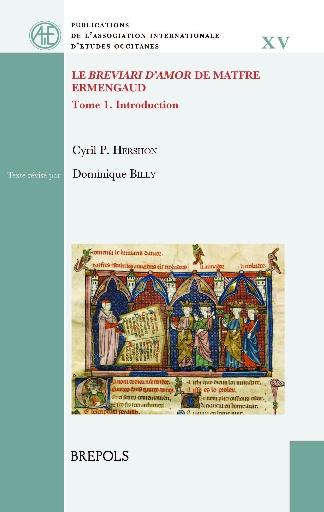
Le Breviari d’amor de Matfre Ermengaud
show More to view fulltext, buy and share links for:Le Breviari d’amor de Matfre Ermengaud show Less to hide fulltext, buy and share links for: Le Breviari d’amor de Matfre ErmengaudThe Breviari d'Amor dates from 1288 (and was probably completed around 1292), is about 34,500 lines long and written in octosyllabic rhyming couplets. It exists in twelve full or almost full manuscripts and twelve fragments. It is written in Medieval Occitan and is the product in part of a long theological tradition and in part of the courtly tradition. This is the first edition to be published since the two-volume work of Gabriel Azaïs (1862-1881), which was of great merit for its time, but used only four of the manuscripts. The numbering of the present edition follows that of Azaïs, given the many works which allude to the Breviari.This didactic text has necessarily been labeled as "encyclopaedic" and this is certainly not a matter of dispute, although, in terms of the subject matter, it is very unusual since the emphasis is not only theological but also courtly. It conforms to the general perspective adopted by summae but the particular integration of the theological aspects with the debate on the nature of fin'amor makes it unique.
The four volumes (volumes II to V) of the complete text have been already published, each with a selective glossary and bibliography. The present, first volume, is the Introduction.
-
-
-
Le Bas-Poitou du xi e au milieu du xiii e siècle
show More to view fulltext, buy and share links for:Le Bas-Poitou du xi e au milieu du xiii e siècle show Less to hide fulltext, buy and share links for: Le Bas-Poitou du xi e au milieu du xiii e siècleCet ouvrage se penche sur une région peu étudiée jusqu’à présent : le Bas-Poitou, situé en périphérie des principautés bretonnes, angevines et charentaises. Grâce à la diversité de ses terroirs et aux circonstances politiques particulières qu’elle a connues, cette région est privilégiée pour étudier l’organisation des sociétés médiévales durant la période charnière des xi e-xiii e siècles.
Cette étude se concentre sur l’ensemble des familles aristocratiques de la région, soit plus de 128 lignées identifiées par des tableaux de filiation, une cartographie, et des recherches archéologiques et monumentales sur les lieux de pouvoir. L’ouvrage se structure autour de trois articulations majeures : l’écrit et la façon dont les moines scribes ont perçu et mis par écrit l’organisation des lignages, la nature des pouvoirs exercés et leurs liens particuliers avec la divinité manifestés par les nombreuses aumônes accordées et l’élévation d’églises et d’abbayes. Leur implantation au sein des territoires en a constitué la seconde, pour comprendre comment ils ont pu transformer un espace en châtellenies polarisées autour d’un château, délimitées précisément et soumis à leur autorité. L’exercice du pouvoir en est la troisième : comment ces familles ont-elles progressivement constitué un réseau capable de relayer leur influence et de surmonter les principaux défis que sont les disparitions et les crises de succession. Si des tendances communes se dégagent, chaque lignage développe ses propres stratégies, (resserrement lignager, viage) et surtout renforce ses liens avec les communautés monastiques, les seules capables de lutter, par leurs prières, contre le pire des fléaux, l’oubli.
À travers l’étude de ces familles, c’est toute l’histoire d’une région qui se construit, intégrant ses rythmes, ses particularités topographiques et historiques qui continuent à dessiner la Vendée d’aujourd’hui.
-
-
-
Les forêts princières dans le comté de Bourgogne aux XIVe et XVe siècles
show More to view fulltext, buy and share links for:Les forêts princières dans le comté de Bourgogne aux XIVe et XVe siècles show Less to hide fulltext, buy and share links for: Les forêts princières dans le comté de Bourgogne aux XIVe et XVe sièclesMembre du Saint-Empire romain germanique depuis 1032, le comté de Bourgogne fut rattaché au duché d’outre-Saône de 1330 à 1361 et de 1384 à 1477. Cette double union bourguignonne se traduisit, entre autres, par la création d’un office (la gruerie) chargé des eaux et forêts princières. L’institution et les eaux ayant donné lieu à la publication de deux ouvrages spécifiques, ce troisième volume termine le triptyque décrivant un aspect important du domaine comtal. La principale caractéristique de la sylve princière était l’absence de résineux. L’exploitation des chartes de franchises, de la comptabilité de la gruerie et d’une remarquable série de terriers (1454-1476) permet une étude précise des feuillus. Leur description nécessite la localisation des forêts par châtellenie, l’évaluation parfois de leur superficie, et l’analyse des peuplements. Quatre essences l’emportèrent sur les autres: chênes, hêtres, pommiers et poiriers. Cette approche est complétée par le statut juridique des bois. Utilisant ces derniers, les princes et Marguerite de France donnèrent des arbres, en vendirent pour diverses raisons. Mais leurs forêts formèrent aussi une réserve de combustible (les salines de Salins étant les principales consommatrices). Quant aux animaux sauvages, ils furent chassés, seuls les porcs donnèrent lieu à la «paisson», source importante du «pesnaige» (redevance). Pendant toute la période, la protection des forêts se traduisit par un personnel et une justice efficaces. Les «mesusants» (délinquants) comparurent devant des juges dans le cadre des «jours» pour être condamnés à des amendes. Peut-on parler de sylviculture?
-
-
-
Lives and Afterlives
show More to view fulltext, buy and share links for:Lives and Afterlives show Less to hide fulltext, buy and share links for: Lives and AfterlivesSaint Patrick is a central figure in the medieval Irish Church. As the converter saint he was a central anchor through which Irish people came to understand their complicated religious past as well as their new place in the wider Christian world. This study considers some of the earliest and most influential writings focused on Saint Patrick, and asks how successive generations forged, sustained and redirected aspects of the saint’s persona in order to suit their specific religious and political needs.
In this book Elizabeth Dawson, for the first time, treats the Hiberno-Latin vitae of Patrick as a body of connected texts. Seminal questions about the corpus are addressed, such as who wrote the Lives and why? What do the works tell us about the communities that venerated and celebrated the saint? And what impact did these Lives have on the success and endurance of the saint’s cult? Challenging the perception that Patrick’s legend was created and sustained almost exclusively by the monastic community at Armagh, she demonstrates that the Patrick who emerges from the Lives is a varied and malleable saint with whom multiple communities engaged.
-
-
-
Michele Savonarola y el primer tratado panitaliano de balneis
show More to view fulltext, buy and share links for:Michele Savonarola y el primer tratado panitaliano de balneis show Less to hide fulltext, buy and share links for: Michele Savonarola y el primer tratado panitaliano de balneisEn la Italia del Renacimiento, Michele Savonarola, abuelo del famoso Girolamo, es llamado a la corte de los Este en Ferrara, donde ejercerá como médico de la familia gobernante y como profesor de la universidad de la ciudad. Poco a poco la escritura se convertirá en su principal ocupación, dando lugar a una prolija y variada producción literaria que acoge temas políticos, religiosos, históricos o morales, sin descuidar su principal interés: la medicina. En este ámbito dedica escritos a materias tan dispares como la ginecología o la parasitología, y acoge todos ellos en su obra enciplopédica Practica. Analizamos en el presente trabajo su obra monográfica sobre el termalismo y los baños de Italia, texto fundamental que marca un punto de inflexión en la evolución del género de balneis, al incluir en su estudio de los baños de Italia termas ubicadas en Sicilia y gran parte de la península itálica, desde Padua hasta Nápoles, además de analizar los diversos tipos de baños y la composición química de las aguas mineromedicinales.
-
-
-
Nicholas Trevet’s Commentary on the Psalms (1317 – c. 1321): A Publishing History
show More to view fulltext, buy and share links for:Nicholas Trevet’s Commentary on the Psalms (1317 – c. 1321): A Publishing History show Less to hide fulltext, buy and share links for: Nicholas Trevet’s Commentary on the Psalms (1317 – c. 1321): A Publishing HistoryHow did medieval authors publish their works in the age before print? This study seeks to achieve new insights into the publishing strategies of medieval authors by focusing on Nicholas Trevet, an English Dominican friar and Oxford master. Shortly after 1317, Trevet was commissioned by his provincial prior to write a literal commentary on the Psalter. He chose as his reference version the less commonly used Latin translation by Jerome from the Hebrew, and delivered his work before 1321/22.
The first book-length examination of Trevet’s commentary, this detailed study traces the ways in which the work was circulated by the author and his proxies. Through a combined analysis of codicological, textual, and historical features of the nine extant fourteenth-century manuscripts, this study identifies contemporary efforts to make Trevet’s work available to readers within and without the Dominican Order, in England and on the Continent. Even during the author’s lifetime the commentary was copied in Paris and reached readers in Avignon and likely in Naples.
-
-
-
Penser l'amour avec Thomas d'Aquin
show More to view fulltext, buy and share links for:Penser l'amour avec Thomas d'Aquin show Less to hide fulltext, buy and share links for: Penser l'amour avec Thomas d'AquinQu'est-ce que l'amour et quelles sont ses différentes formes? C'est la question que Thomas d'Aquin s'est posée dès les débuts de son enseignement. Ce livre étudie ses réponses. Lues au prisme de l'histoire de la philosophie, elles révèlent ce qu'est "essentiellement" l'amour : l'union de l'aimant et de l'aimé, fondée sur une convenance de nature entre les deux. Cette conception philosophique de l'amour, que Thomas déploie en théologie, concerne tous les étants et les relie entre eux dans une sorte d'amitié qui, cependant, est propre aux êtres spirituels et libres. L'intelligence et la volonté, enracinées dans la liberté de la substance spirituelle, concourent à l'acte d'amour selon leur opération propre et réciproque. Le mouvement de la volonté se fait lumière chez l'intelligence: " Là où se trouve l'amour, là est le regard '', écrit Thomas.
-
-
-
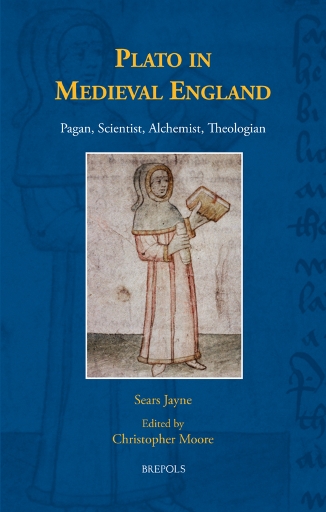
Plato in Medieval England
show More to view fulltext, buy and share links for:Plato in Medieval England show Less to hide fulltext, buy and share links for: Plato in Medieval EnglandFrom the time of the Roman Republic, continental Europeans traveling to England brought knowledge of Greek and Roman intellectual culture in the form of books of every genre. But, until 1111 CE, the island contained not a single Platonic dialogue. And for the next two centuries, it had only a partial Latin translation of the Timaeus. A Latin Phaedo eventually appeared, in 1340, and the Meno in 1423. But this hardly limited the number of ideas people had about Plato. He was a proto-Christian, a sage, a scholar of the cosmos, and a healer. And he had an elaborate oeuvre that did exist in England, works of astrology, numerology, medicine, and science, including Cado, Calf, Circle, Herbal, Question, Alchemy, and Book of Prophecies of a Greek King. This book tells the story of Plato in Medieval England, from a name with too few works to a sage with too many. Based on a complete survey of all extant manuscripts, publications, and library records until the fifteenth century, it traces with extraordinary precision the movement of opinions and information about Plato from Europe to England and then into its various monasteries, schools, and universities. This erudite and illuminating sociology of knowledge provides novel insight into the dubious English career of our best-known philosopher. This is intellectual history and reception studies at its most surprising.
-
-
-

Remembering the Dead
show More to view fulltext, buy and share links for:Remembering the Dead show Less to hide fulltext, buy and share links for: Remembering the DeadMedieval memoria - the commemoration of the dead - was both a form of collective memory and a social practice present in every sphere of life. It shaped identities and constituted groups, and thus the study of commemorative practices can tell us a great deal about medieval communities. This study shows the importance of memoria as a form of collective memory for different groups and institutions: city government and guilds, the Teutonic Order, bishops and cathedral chapters, and monastic communities, in late medieval Livonia (present-day Latvia and Estonia).
-
-
-

Saints’ Lives for Medieval English Nuns, I
show More to view fulltext, buy and share links for:Saints’ Lives for Medieval English Nuns, I show Less to hide fulltext, buy and share links for: Saints’ Lives for Medieval English Nuns, ICambridge University Library, MS Additional 2604 contains a unique prose legendary almost entirely of female saints, all of whom are virgins, martyrs, or nuns. The manuscript, which also has varied post-medieval items, is written in one hand probably dating from c. 1480 to c. 1510. This previously unstudied Middle English collection features twenty-two universal and native saints, both common (like John the Baptist and Æthelthryth) and rare (such as Wihtburh and Domitilla). These texts are dependent on a complex mixture of Latin sources and analogues. Specific linguistic and art-historical features, as well as attention to the predominant female saints of Ely and post-medieval provenance, suggest an East Anglian convent for the original readership. Through an exploration of the manuscript and its later ownership (both recusant and antiquarian), a discussion of its linguistic attributes, a consideration of local female monastic and book history, a comparison of hagiographical texts, and a wide-ranging source and analogue study, this Study fully contextualises these Middle English lives. The book concludes with a survey of the structural and stylistic aspects of the texts, followed by three appendices, and an extensive bibliography. The texts are edited for the first time in its companion volume, Saints’ Lives for Medieval English Nuns, II: An Edition of the ‘Lyves and Dethes’ in Cambridge University Library, MS Additional 2604.
-
-
-

Scotland’s Royal Women and European Literary Culture, 1424–1587
show More to view fulltext, buy and share links for:Scotland’s Royal Women and European Literary Culture, 1424–1587 show Less to hide fulltext, buy and share links for: Scotland’s Royal Women and European Literary Culture, 1424–1587Scotland’s Royal Women and European Literary Culture, 1424–1587 seeks to fill a significant gap in the rich and ever-growing body of scholarly work on royal and aristocratic women’s literary culture in the fifteenth and sixteenth centuries. There has, to date, been no book-length study of the literary activities of the female members of any one family across time and little study of Scotland’s royal women in comparison to their European and English counterparts. This book adopts the missing diachronic perspective and examines the wives and daughters of Scotland’s Stewart dynasty and their many and various associations with contemporary Scottish, English, and European literary culture over a period of just over 150 years. It also adopts a timely cross-border and cross-period perspective by taking a trans-national approach to the study of literary history and examining a range of texts and individuals from across the traditional medieval/early modern divide. In exploring the inter-related lives and letters of the women who married into the Scottish royal family from England and Europe — and those daughters who married outwith Scotland into Europe’s royal families — the resultant study consistently looks beyond Scotland’s land and sea borders. In so doing, it moves Scottish literary culture from the periphery to the centre of Europe and demonstrates the constitutive role that Scotland’s royal women played in an essentially shared literary and artistic culture.
-
-
-
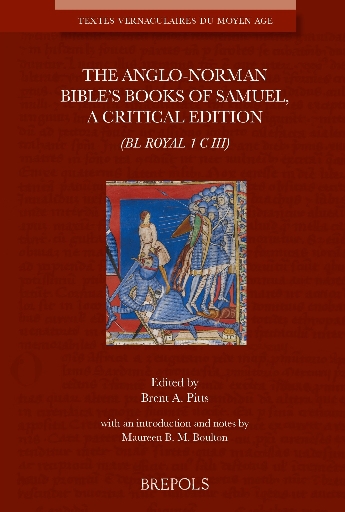
The Anglo-Norman Bible’s Books of Samuel, a Critical Edition
show More to view fulltext, buy and share links for:The Anglo-Norman Bible’s Books of Samuel, a Critical Edition show Less to hide fulltext, buy and share links for: The Anglo-Norman Bible’s Books of Samuel, a Critical EditionTales of treachery and friendship, adultery and murder, rape and revenge, as well as prophecy, repentance, forgiveness and thanksgiving — such is the stuff of the Anglo-Norman Bible’s Books of Samuel. They recount the life of the last of Israel’s judges but include some of the world’s best-known characters — Saul, David and Jonathan, Goliath, Bathsheba, and Absalom.
The first book traces the life of Samuel, and the initial success of King Saul, chosen to satisfy the Israelites’ demand for a king. After Saul loses God’s favour, David enters his court to console him, but Saul envies David’s success. When Saul dies in battle, David succeeds him. In book two, David consolidates control over his kingdom, but his adultery with Bathsheba precipitates the reverses of the final chapters. Historically, the Books of Samuel trace the creation of Israel’s monarchy and explain its ultimate failure. Religiously, they relate Israel’s continuing relationship with God and the establishment of Jerusalem as the religious and political capital of the new kingdom.
Two mid-fourteenth-century manuscripts preserve the text of the Anglo-Norman Bible’s Samuel. The base manuscript (L), British Library Royal 1 C III, notable for its inclusion of multi-lingual glosses, was acquired by Henry VIII from the Benedictine Abbey of Reading in 1530. The lavishly illustrated Paris, Bibliothèque nationale de France, MS français 1 (P), produced in England for the baronial de Welles family, later belonged to King Louis XII of France. Brent A. Pitts has prepared the critical edition and Maureen Boulton’s introduction and notes elucidate the text and its interpretation by medieval commentators.
-
-
-
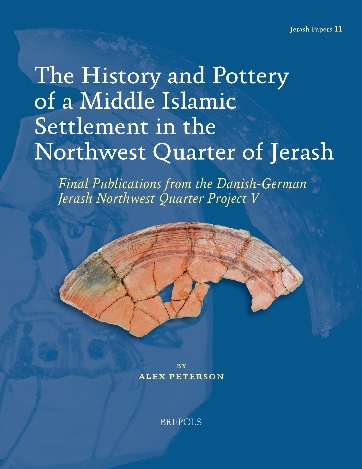
The History and Pottery of a Middle Islamic Settlement in the Northwest Quarter of Jerash
show More to view fulltext, buy and share links for:The History and Pottery of a Middle Islamic Settlement in the Northwest Quarter of Jerash show Less to hide fulltext, buy and share links for: The History and Pottery of a Middle Islamic Settlement in the Northwest Quarter of JerashIn 2015, the Danish-German Northwest Quarter Project working in Jerash uncovered a Middle Islamic farmstead. Subsequent excavations revealed that this settlement, far from marking a decline at the site, is in fact indicative of a broader active and dynamic rural community living within the ancient urban landscape of Jerash.This volume offers an in-depth focus on this Islamic settlement, with a particular focus on the ceramic material yielded by the site, which is here fully quantified and contextually analysed alongside historical sources. Through this approach, the author has reconstructed a new synthesis of Middle Islamic settlement history, shedding new light on the economic and social structures of a rural community in northern Jordan, as well as establishing a typology that can be used to refine the chronologies of Middle Islamic Jerash.
-
-
-
The Life of Count Charles of Flanders and The Life of Lord John, Bishop of Thérouanne
show More to view fulltext, buy and share links for:The Life of Count Charles of Flanders and The Life of Lord John, Bishop of Thérouanne show Less to hide fulltext, buy and share links for: The Life of Count Charles of Flanders and The Life of Lord John, Bishop of ThérouanneThis volume revolves around three men who knew each other well, oversaw the political and spiritual life of much of northern France and Flanders during the first third of the twelfth century, and died within five years of one another: Charles the Good, count of Flanders from 1119 to 1127; John of Warneton, archdeacon of Arras from 1096 to 1099 and bishop of Thérouanne from 1099 to 1130; and their common biographer, Walter, archdeacon of Thérouanne from 1116 to 1132. The volume includes a detailed historical introduction and offers the first English translations of Walter's biographies of Charles and John and of several other texts: Lambert of Saint-Omer’s Genealogy of the Counts of Flanders and its continuation, poems on the death of Charles the Good, the inquest into his murder, and selections from Galbert of Marchiennes’ The Transferal of Saint Jonatus to the Village of Sailly-en-Ostrevant, Simon of Saint Bertin’s continuation of the Deeds of the Abbots of Saint ertin’s, Andreas of Marchiennes’ The Miracles of Saint Rictrude, and the third Genealogy of the Flemish Counts (Flandria generosa). The works translated in this volume are the principal sources for the reign and assassination of Charles the Good and the bishopric of John of Warneton that have not yet been translated into English. This volume will be of particular interest to scholars of medieval Flanders and to medieval legal, ecclesiastical, political and social historians in general.
Most of the source texts of this volume were edited in 2006 by Jeff Rider (Corpus Christianorum, Continuatio Mediaevalis, vol. 217). References to the corresponding pages of the Corpus Christianorum edition are provided in the margins of this translation.
-
-
-
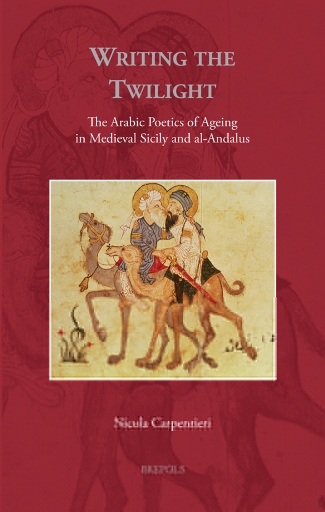
Writing the Twilight
show More to view fulltext, buy and share links for:Writing the Twilight show Less to hide fulltext, buy and share links for: Writing the TwilightIn the eleventh century, as Muslim sovereignty in the Western Mediterranean was eroded by both internal divisions and external attacks, Sicily fell to the Normans. At the same time, al-Andalus fragmented into a series of small kingdoms that were then picked off by powerful conquerors. Against this backdrop, Arabic poets made use of their craft to try and explain the changes in their world. Among them were the Andalusian Abū Ishāq and the Sicilian Ibn Hamdīs, both of whom wrote vividly about their own ageing and mortality, as well as about the broader twilight of the worlds they knew.
Taking these two protagonists as its starting point, this extraordinary volume explores how Abū Ishāq and Ibn Hamdīs, despite their different locations, both made use of poetry. For them, it was a tool to confront their mortality, lament their own physical decay, and appeal to their age and experience, as well as a way of juxtaposing their concerns with the political and social dismemberment of their wider societies and the need for a restoration of world order. The result is also a broader discussion of the relationship between poetry and politics in Maghribī Islam, and a reminder of poetry’s importance as a medium to engage with the world.
-