


BOB2024MOME

Collection Contents
21 - 40 of 45 results
-
-
The Materiality of Medieval Administration in Northern England
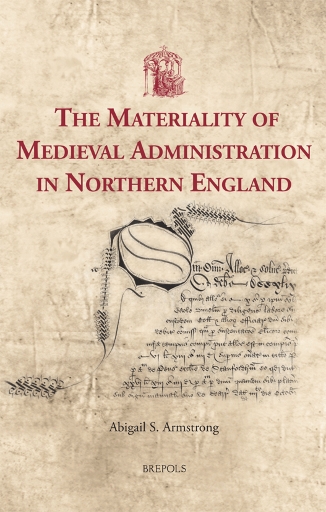
show More to view fulltext, buy and share links for:The Materiality of Medieval Administration in Northern England show Less to hide fulltext, buy and share links for: The Materiality of Medieval Administration in Northern EnglandIn the late Middle Ages, the Percy earls of Northumberland and the bishops of Durham were two of the largest landholders in the North East of England. This book is a study of their estate administrations based on the extant manorial accounts from the fourteenth through sixteenth centuries. Examining the documents holistically, it investigates the shapes of the records and the materials they were written upon, as well as how they were used and stored to provide new insights into late medieval lordly administration. Such a material-focussed approach explores the concurrent use of rolls, booklets, paper, and parchment for different types of manorial accounts and at different steps of the multistage production and audit process. It also examines the hands drafting, editing, and auditing the accounts, in addition to the layout and presentation of the contents of the records to further our understanding of the written burden of proof required in the management and audit of large estates in late medieval England. Studying the financial accounts of the earls of Northumberland and the bishops of Durham from a material perspective reveals two highly sophisticated administrative systems and structures of accountability.
-
-
-
The Old English Life of Saint Pantaleon
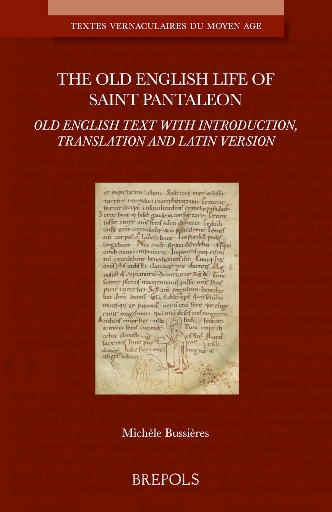
show More to view fulltext, buy and share links for:The Old English Life of Saint Pantaleon show Less to hide fulltext, buy and share links for: The Old English Life of Saint PantaleonThe Old English Life of Saint Pantaleon survives in one eleventh century manuscript: it appears here for the first time in an easily available edition. This edition is based both on independent research and on the work of previous scholars. It is a challenging text, from a much-damaged manuscript, but well worth reading: it is interesting both from a linguistic point of view, as a testimony of late Anglo-Saxon language, and also as a sign of continental influence on Anglo-Saxon culture and of a change in literary taste in England on the eve of the Norman Conquest. It is preceded by a full introduction dealing with the history of the text, from Greece to Western Europe and the context of its translation into Old English. The text is accompanied by copious notes dealing with difficult passages and it is made more accessible by a Modern English translation. The edition is completed by a 12th century Latin version which seems to be the closer to its Old English counterpart. The edition is completed by an Anglo-Saxon glossary.
-
-
-
Themistius and Aristotle
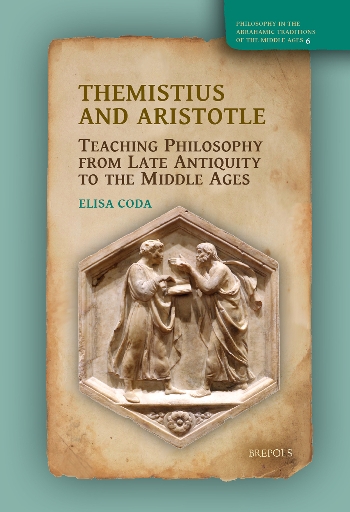
show More to view fulltext, buy and share links for:Themistius and Aristotle show Less to hide fulltext, buy and share links for: Themistius and AristotleThis is the first book length examining closely Themistius’ philosophical thought and his understanding of Aristotelian philosophy. Themistius, well known as an eloquent orator and political personality of Constantinople during the fourth century ad, is an influential commentator on works of Aristotle. By assessing both of these aspects of Themistius’ intellectual accomplishments, the present work explores and contextualizes his thought in both his paraphrases of the works of Aristotle and in his orations. Themistius’ interpretation of Aristotelian thought, deeply influential in both the Arab and Latin worlds, and his strategy for teaching Aristotle, even outside the professional schools of philosophy, are major foci of this study.
In particular, this work explicates Themistius’ understanding of the nature and causality of the First Principle, of the cosmic order, and of the human soul and intellect. It argues that Themistius’ approach reflects not only the systematization imparted by Alexander of Aphrodisias to the doctrines of Aristotle, but also the increasing, though oftentimes silent, influence of Plotinus. This is evident in the consideration of the three philosophical issues of God, cosmos, and soul analysed in Themistius, which reveal the preponderance of Plotinus’ philosophy reflected in the Themistian orations. Concomitantly, it explores how Themistius’ teachings proved decisive in the medieval understanding of Aristotle both among Arabic and Hebrew readers, as well as in the universities of Latin Europe. As such, this study challenges our understanding of philosophy in fourth-century Constantinople.
-
-
-

Traumas of 1066 in the Literatures of England, Normandy, and Scandinavia
show More to view fulltext, buy and share links for:Traumas of 1066 in the Literatures of England, Normandy, and Scandinavia show Less to hide fulltext, buy and share links for: Traumas of 1066 in the Literatures of England, Normandy, and Scandinavia1066 is one of the most well-known dates in English history: but how far do we understand the mental and emotional lives of those who experienced it? In just over a month, England was rocked by two separate invasions, multiple pitched battles, and the deaths of thousands. The repercussions of these traumatic events would echo through the history and literature of northern Europe for centuries to come.
Drawing on studies of trauma and cultural memory, this book examines the cultural repercussions of the year 1066 in medieval England, Normandy, and Scandinavia. It explores how writers in all three regions celebrated their common heritage and mourned the wars that brought them into conflict. Bringing together texts from an array of languages, genres, and cultural traditions, this study examines the strategies medieval authors employed to work through the traumas of 1066, narrating its events and experiences in different forms. It explores the ways in which history and memory interacted through multiple generations of writers and readers, and reveals how the field of trauma studies can help us better understand the mental and emotional lives of medieval people.
-
-
-
Adélard de Bath
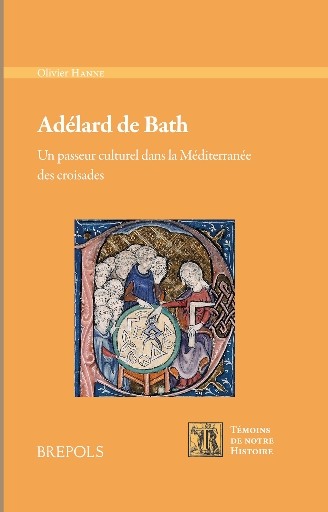
show More to view fulltext, buy and share links for:Adélard de Bath show Less to hide fulltext, buy and share links for: Adélard de BathNé dans le dernier quart du XIe siècle, Adélard de Bath est de ces lettrés anglais formés aux arts libéraux en France. Dans ses premiers textes de philosophie naturelle et de cosmologie, il remet en cause le legs de ses maîtres, puis décide de poursuivre sa formation en Italie du Sud. Grâce aux réseaux des rois normands d’Angleterre, il part soudainement pour la Syrie peu après la première croisade et s’initie plusieurs années sur place à la langue arabe. À son retour, il traduit des sources venues du monde musulman d’une grande complexité, à la fois en astronomie et en mathématique, il en domine les enjeux scientifiques, et va jusqu’à se passionner pour l’astrologie et la magie. Il devient ainsi l’un des initiateurs du grand mouvement de traduction des textes scientifiques depuis l’arabe vers le latin, se faisant le défenseur d’une méthode de critique comparée entre univers culturels, tandis que d’autres choisissent l’affrontement armé.
-
-
-
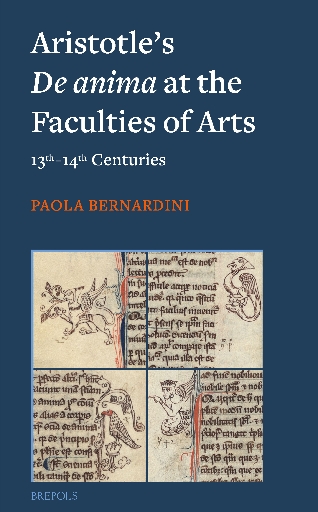
Aristotle’s De anima at the Faculties of Arts (13th-14th Centuries)
show More to view fulltext, buy and share links for:Aristotle’s De anima at the Faculties of Arts (13th-14th Centuries) show Less to hide fulltext, buy and share links for: Aristotle’s De anima at the Faculties of Arts (13th-14th Centuries)This book explores the intersection between the early development of medieval universities and the arrival of Aristotle's works in the Christian West, especially De anima: one of his most famous and obscure writings, straddling the fields of biology and psychology, and devoted to the functions of living beings – including the human being.
The leading figures in this very special meeting of cultures, also involving scientific writings from the Islamic world, are the Masters of Faculties of Arts. From the first half of the 13th century, they embarked on a theoretically very demanding enterprise, namely to restore a complete understanding of De anima; and they accomplished this difficult task by establishing a close – and often polemical – relationship with their more famous colleagues: theologians such as Albert the Great and Thomas Aquinas.
By resorting to the research and teaching methods of their time, the Masters of Arts addressed crucial topics such as the soul/body relationship, sense perception, intellectual knowledge and the special status of the human intellect, mediating, as far as possible, between scientific requirements and those of the Christian faith.
Authors such as Adam of Buckfield, Peter of Spain, Siger of Brabant, John of Jandun and John Buridan, together with other, less famous ones and a small crowd of completely anonymous – yet theoretically no less interesting – scholars, gave rise to a choral narrative that disclosed new philosophical perspectives on man. It is in this intellectual context that the roots of Modern philosophical thought lie.
-
-
-
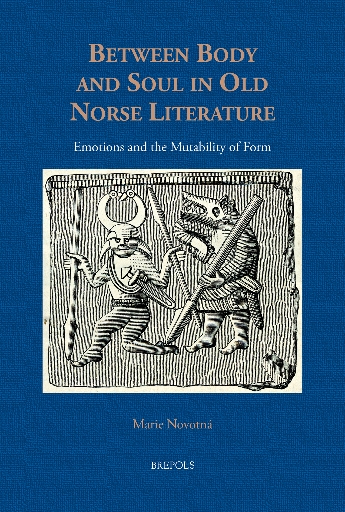
Between Body and Soul in Old Norse Literature
show More to view fulltext, buy and share links for:Between Body and Soul in Old Norse Literature show Less to hide fulltext, buy and share links for: Between Body and Soul in Old Norse LiteratureWhat did the body mean for inhabitants of the medieval Norse-speaking world? How was the physical body viewed? Where did the boundary lie between corporality and the psychological or spiritual aspects of humanity? And how did such an understanding tie in with popular literary motifs such as shape-shifting? This monograph seeks to engage with these questions by offering the first focused work to delineate a space for ideas about the body within the Old Norse world. The connections between emotions and bodily changes are examined through discussion of the physical manifestations of emotion (tiredness, changes in facial colour, swelling), while the author offers a detailed analysis of the Old Norse term hamr, a word that could variously mean shape, form, and appearance, but also character. Attention is also paid to changes of physical form linked to flight and battle ecstasy, as well as to magical shapeshifting. Through this approach, diametrically different ways of thinking about the connection between body and soul can be found, and the argument made that within the Old Norse world, concepts of change within the body rested along a spectrum that ranged from the purely physical through to the psychological. In doing so, this volume offers a broader understanding of what physicality and spirituality might have meant in the Middle Ages.
-
-
-
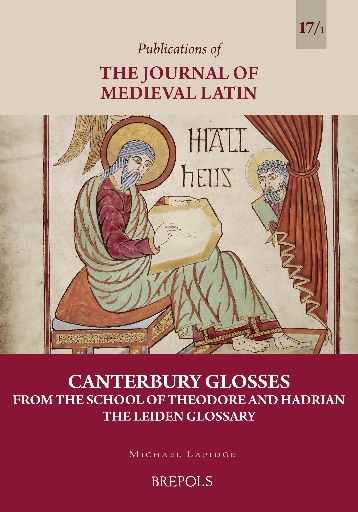
Canterbury Glosses from the School of Theodore and Hadrian: The Leiden Glossary
show More to view fulltext, buy and share links for:Canterbury Glosses from the School of Theodore and Hadrian: The Leiden Glossary show Less to hide fulltext, buy and share links for: Canterbury Glosses from the School of Theodore and Hadrian: The Leiden GlossaryThe ‘Leiden Glossary’ provides a record of the understanding and interpretation of the patristic and grammatical texts studied at the Canterbury School of Theodore and Hadrian, regarded by Bede as the high point of Christian culture in early Anglo-Saxon England. Each entry in the ‘Leiden Glossary’ is provided with detailed commentary on the sources consulted by the two Canterbury masters (earlier glossaries; Isidore; Eucherius) and the later uses of the glossary by compilers of the Epinal-Erfurt and Corpus glossaries. The ‘Leiden Glossary’ is thus a key witness to one of the greatest schools of learning in the early Middle Ages.
-
-
-
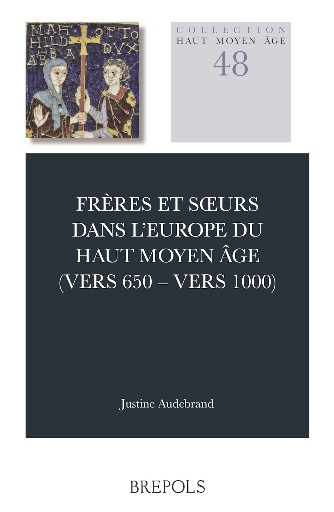
Frères et sœurs dans l’Europe du haut Moyen Âge (vers 650 ‑ vers 1000)
show More to view fulltext, buy and share links for:Frères et sœurs dans l’Europe du haut Moyen Âge (vers 650 ‑ vers 1000) show Less to hide fulltext, buy and share links for: Frères et sœurs dans l’Europe du haut Moyen Âge (vers 650 ‑ vers 1000)Les relations entre frères et sœurs constituent encore un champ mal exploré de l’étude de la famille pour la période allant de 650 à 1000. Pourtant, ce lien est un élément essentiel des sociétés du haut Moyen Âge, tant dans les mondes franc et germanique qu’en Angleterre. Dans les discours de l’Église, il est même un idéal. En outre, dans le contexte démographique médiéval, la relation adelphique - c'est-à-dire entre frères et sœurs - est souvent la plus pérenne : face à la mort précoce des parents et à un veuvage fréquent, elle accompagne les individus tout au long de leur existence. Étudier les relations adelphiques est également une manière d’envisager les relations entre hommes et femmes grâce aux dernières avancées de recherche sur le genre. Pour étudier ces liens spécifiques, il convient de s'intéresser à une large documentation et d'emprunter aux outils de la sociologie et de l'anthropologie. La relation adelphique apparaît alors une donnée importante des sociétés du haut Moyen Âge et que son étude permet de complexifier l'histoire de la famille sur cette période.
-
-
-
Ideology and Patronage in Byzantium
show More to view fulltext, buy and share links for:Ideology and Patronage in Byzantium show Less to hide fulltext, buy and share links for: Ideology and Patronage in ByzantiumBased on the evidence of epigraphic material in combination with monumental painting, this book explores important dedicatory inscriptions (9th-beginning of the 13th c.) from Macedonia and Thrace, which have so far been investigated mainly from a philological-historical standpoint, thus neglecting the major issue of Middle Byzantine patronage. Through patron inscriptions and textual sources, the role and the motives of military officials in the patronage of defensive and fortification works, and the manner of publicizing them, are examined systematically. Patronage is looked at through the ideological messages that the donors endeavor to promote in a local society or monastic community, and which echo their relationship with the state and their views on education and faith. Interesting methodologically is the co-examination of the various categories of inscriptions in combination with historical texts and donor portraits, which opens up new avenues of research for the study of the interdisciplinary material in question.
-
-
-
Le Breviari d’amor de Matfre Ermengaud
show More to view fulltext, buy and share links for:Le Breviari d’amor de Matfre Ermengaud show Less to hide fulltext, buy and share links for: Le Breviari d’amor de Matfre ErmengaudThe Breviari d'Amor dates from 1288 (and was probably completed around 1292), is about 34,500 lines long and written in octosyllabic rhyming couplets. It exists in twelve full or almost full manuscripts and twelve fragments. It is written in Medieval Occitan and is the product in part of a long theological tradition and in part of the courtly tradition. This is the first edition to be published since the two-volume work of Gabriel Azaïs (1862-1881), which was of great merit for its time, but used only four of the manuscripts. The numbering of the present edition follows that of Azaïs, given the many works which allude to the Breviari.This didactic text has necessarily been labeled as "encyclopaedic" and this is certainly not a matter of dispute, although, in terms of the subject matter, it is very unusual since the emphasis is not only theological but also courtly. It conforms to the general perspective adopted by summae but the particular integration of the theological aspects with the debate on the nature of fin'amor makes it unique.
The four volumes (volumes II to V) of the complete text have been already published, each with a selective glossary and bibliography. The present, first volume, is the Introduction.
-
-
-
Le Bas-Poitou du xi e au milieu du xiii e siècle
show More to view fulltext, buy and share links for:Le Bas-Poitou du xi e au milieu du xiii e siècle show Less to hide fulltext, buy and share links for: Le Bas-Poitou du xi e au milieu du xiii e siècleCet ouvrage se penche sur une région peu étudiée jusqu’à présent : le Bas-Poitou, situé en périphérie des principautés bretonnes, angevines et charentaises. Grâce à la diversité de ses terroirs et aux circonstances politiques particulières qu’elle a connues, cette région est privilégiée pour étudier l’organisation des sociétés médiévales durant la période charnière des xi e-xiii e siècles.
Cette étude se concentre sur l’ensemble des familles aristocratiques de la région, soit plus de 128 lignées identifiées par des tableaux de filiation, une cartographie, et des recherches archéologiques et monumentales sur les lieux de pouvoir. L’ouvrage se structure autour de trois articulations majeures : l’écrit et la façon dont les moines scribes ont perçu et mis par écrit l’organisation des lignages, la nature des pouvoirs exercés et leurs liens particuliers avec la divinité manifestés par les nombreuses aumônes accordées et l’élévation d’églises et d’abbayes. Leur implantation au sein des territoires en a constitué la seconde, pour comprendre comment ils ont pu transformer un espace en châtellenies polarisées autour d’un château, délimitées précisément et soumis à leur autorité. L’exercice du pouvoir en est la troisième : comment ces familles ont-elles progressivement constitué un réseau capable de relayer leur influence et de surmonter les principaux défis que sont les disparitions et les crises de succession. Si des tendances communes se dégagent, chaque lignage développe ses propres stratégies, (resserrement lignager, viage) et surtout renforce ses liens avec les communautés monastiques, les seules capables de lutter, par leurs prières, contre le pire des fléaux, l’oubli.
À travers l’étude de ces familles, c’est toute l’histoire d’une région qui se construit, intégrant ses rythmes, ses particularités topographiques et historiques qui continuent à dessiner la Vendée d’aujourd’hui.
-
-
-
Les forêts princières dans le comté de Bourgogne aux XIVe et XVe siècles
show More to view fulltext, buy and share links for:Les forêts princières dans le comté de Bourgogne aux XIVe et XVe siècles show Less to hide fulltext, buy and share links for: Les forêts princières dans le comté de Bourgogne aux XIVe et XVe sièclesMembre du Saint-Empire romain germanique depuis 1032, le comté de Bourgogne fut rattaché au duché d’outre-Saône de 1330 à 1361 et de 1384 à 1477. Cette double union bourguignonne se traduisit, entre autres, par la création d’un office (la gruerie) chargé des eaux et forêts princières. L’institution et les eaux ayant donné lieu à la publication de deux ouvrages spécifiques, ce troisième volume termine le triptyque décrivant un aspect important du domaine comtal. La principale caractéristique de la sylve princière était l’absence de résineux. L’exploitation des chartes de franchises, de la comptabilité de la gruerie et d’une remarquable série de terriers (1454-1476) permet une étude précise des feuillus. Leur description nécessite la localisation des forêts par châtellenie, l’évaluation parfois de leur superficie, et l’analyse des peuplements. Quatre essences l’emportèrent sur les autres: chênes, hêtres, pommiers et poiriers. Cette approche est complétée par le statut juridique des bois. Utilisant ces derniers, les princes et Marguerite de France donnèrent des arbres, en vendirent pour diverses raisons. Mais leurs forêts formèrent aussi une réserve de combustible (les salines de Salins étant les principales consommatrices). Quant aux animaux sauvages, ils furent chassés, seuls les porcs donnèrent lieu à la «paisson», source importante du «pesnaige» (redevance). Pendant toute la période, la protection des forêts se traduisit par un personnel et une justice efficaces. Les «mesusants» (délinquants) comparurent devant des juges dans le cadre des «jours» pour être condamnés à des amendes. Peut-on parler de sylviculture?
-
-
-
Lives and Afterlives
show More to view fulltext, buy and share links for:Lives and Afterlives show Less to hide fulltext, buy and share links for: Lives and AfterlivesSaint Patrick is a central figure in the medieval Irish Church. As the converter saint he was a central anchor through which Irish people came to understand their complicated religious past as well as their new place in the wider Christian world. This study considers some of the earliest and most influential writings focused on Saint Patrick, and asks how successive generations forged, sustained and redirected aspects of the saint’s persona in order to suit their specific religious and political needs.
In this book Elizabeth Dawson, for the first time, treats the Hiberno-Latin vitae of Patrick as a body of connected texts. Seminal questions about the corpus are addressed, such as who wrote the Lives and why? What do the works tell us about the communities that venerated and celebrated the saint? And what impact did these Lives have on the success and endurance of the saint’s cult? Challenging the perception that Patrick’s legend was created and sustained almost exclusively by the monastic community at Armagh, she demonstrates that the Patrick who emerges from the Lives is a varied and malleable saint with whom multiple communities engaged.
-
-
-
Michele Savonarola y el primer tratado panitaliano de balneis
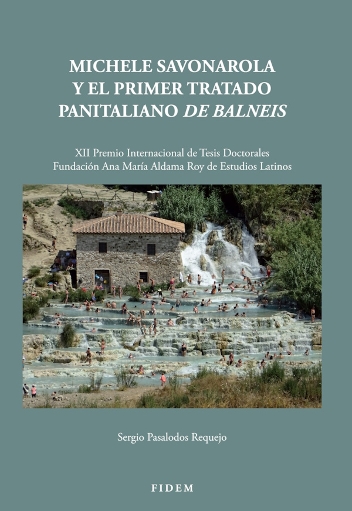
show More to view fulltext, buy and share links for:Michele Savonarola y el primer tratado panitaliano de balneis show Less to hide fulltext, buy and share links for: Michele Savonarola y el primer tratado panitaliano de balneisEn la Italia del Renacimiento, Michele Savonarola, abuelo del famoso Girolamo, es llamado a la corte de los Este en Ferrara, donde ejercerá como médico de la familia gobernante y como profesor de la universidad de la ciudad. Poco a poco la escritura se convertirá en su principal ocupación, dando lugar a una prolija y variada producción literaria que acoge temas políticos, religiosos, históricos o morales, sin descuidar su principal interés: la medicina. En este ámbito dedica escritos a materias tan dispares como la ginecología o la parasitología, y acoge todos ellos en su obra enciplopédica Practica. Analizamos en el presente trabajo su obra monográfica sobre el termalismo y los baños de Italia, texto fundamental que marca un punto de inflexión en la evolución del género de balneis, al incluir en su estudio de los baños de Italia termas ubicadas en Sicilia y gran parte de la península itálica, desde Padua hasta Nápoles, además de analizar los diversos tipos de baños y la composición química de las aguas mineromedicinales.
-
-
-
Nicholas Trevet’s Commentary on the Psalms (1317 – c. 1321): A Publishing History
show More to view fulltext, buy and share links for:Nicholas Trevet’s Commentary on the Psalms (1317 – c. 1321): A Publishing History show Less to hide fulltext, buy and share links for: Nicholas Trevet’s Commentary on the Psalms (1317 – c. 1321): A Publishing HistoryHow did medieval authors publish their works in the age before print? This study seeks to achieve new insights into the publishing strategies of medieval authors by focusing on Nicholas Trevet, an English Dominican friar and Oxford master. Shortly after 1317, Trevet was commissioned by his provincial prior to write a literal commentary on the Psalter. He chose as his reference version the less commonly used Latin translation by Jerome from the Hebrew, and delivered his work before 1321/22.
The first book-length examination of Trevet’s commentary, this detailed study traces the ways in which the work was circulated by the author and his proxies. Through a combined analysis of codicological, textual, and historical features of the nine extant fourteenth-century manuscripts, this study identifies contemporary efforts to make Trevet’s work available to readers within and without the Dominican Order, in England and on the Continent. Even during the author’s lifetime the commentary was copied in Paris and reached readers in Avignon and likely in Naples.
-
-
-
Penser l'amour avec Thomas d'Aquin
show More to view fulltext, buy and share links for:Penser l'amour avec Thomas d'Aquin show Less to hide fulltext, buy and share links for: Penser l'amour avec Thomas d'AquinQu'est-ce que l'amour et quelles sont ses différentes formes? C'est la question que Thomas d'Aquin s'est posée dès les débuts de son enseignement. Ce livre étudie ses réponses. Lues au prisme de l'histoire de la philosophie, elles révèlent ce qu'est "essentiellement" l'amour : l'union de l'aimant et de l'aimé, fondée sur une convenance de nature entre les deux. Cette conception philosophique de l'amour, que Thomas déploie en théologie, concerne tous les étants et les relie entre eux dans une sorte d'amitié qui, cependant, est propre aux êtres spirituels et libres. L'intelligence et la volonté, enracinées dans la liberté de la substance spirituelle, concourent à l'acte d'amour selon leur opération propre et réciproque. Le mouvement de la volonté se fait lumière chez l'intelligence: " Là où se trouve l'amour, là est le regard '', écrit Thomas.
-
-
-
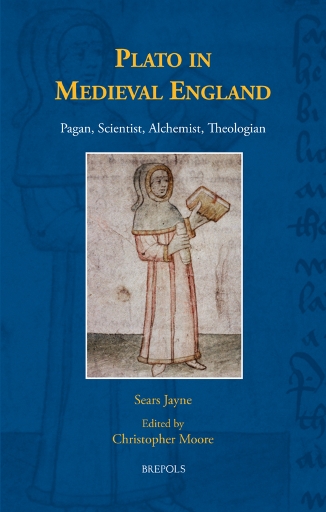
Plato in Medieval England
show More to view fulltext, buy and share links for:Plato in Medieval England show Less to hide fulltext, buy and share links for: Plato in Medieval EnglandFrom the time of the Roman Republic, continental Europeans traveling to England brought knowledge of Greek and Roman intellectual culture in the form of books of every genre. But, until 1111 CE, the island contained not a single Platonic dialogue. And for the next two centuries, it had only a partial Latin translation of the Timaeus. A Latin Phaedo eventually appeared, in 1340, and the Meno in 1423. But this hardly limited the number of ideas people had about Plato. He was a proto-Christian, a sage, a scholar of the cosmos, and a healer. And he had an elaborate oeuvre that did exist in England, works of astrology, numerology, medicine, and science, including Cado, Calf, Circle, Herbal, Question, Alchemy, and Book of Prophecies of a Greek King. This book tells the story of Plato in Medieval England, from a name with too few works to a sage with too many. Based on a complete survey of all extant manuscripts, publications, and library records until the fifteenth century, it traces with extraordinary precision the movement of opinions and information about Plato from Europe to England and then into its various monasteries, schools, and universities. This erudite and illuminating sociology of knowledge provides novel insight into the dubious English career of our best-known philosopher. This is intellectual history and reception studies at its most surprising.
-
-
-

Remembering the Dead
show More to view fulltext, buy and share links for:Remembering the Dead show Less to hide fulltext, buy and share links for: Remembering the DeadMedieval memoria - the commemoration of the dead - was both a form of collective memory and a social practice present in every sphere of life. It shaped identities and constituted groups, and thus the study of commemorative practices can tell us a great deal about medieval communities. This study shows the importance of memoria as a form of collective memory for different groups and institutions: city government and guilds, the Teutonic Order, bishops and cathedral chapters, and monastic communities, in late medieval Livonia (present-day Latvia and Estonia).
-
-
-

Saints’ Lives for Medieval English Nuns, I
show More to view fulltext, buy and share links for:Saints’ Lives for Medieval English Nuns, I show Less to hide fulltext, buy and share links for: Saints’ Lives for Medieval English Nuns, ICambridge University Library, MS Additional 2604 contains a unique prose legendary almost entirely of female saints, all of whom are virgins, martyrs, or nuns. The manuscript, which also has varied post-medieval items, is written in one hand probably dating from c. 1480 to c. 1510. This previously unstudied Middle English collection features twenty-two universal and native saints, both common (like John the Baptist and Æthelthryth) and rare (such as Wihtburh and Domitilla). These texts are dependent on a complex mixture of Latin sources and analogues. Specific linguistic and art-historical features, as well as attention to the predominant female saints of Ely and post-medieval provenance, suggest an East Anglian convent for the original readership. Through an exploration of the manuscript and its later ownership (both recusant and antiquarian), a discussion of its linguistic attributes, a consideration of local female monastic and book history, a comparison of hagiographical texts, and a wide-ranging source and analogue study, this Study fully contextualises these Middle English lives. The book concludes with a survey of the structural and stylistic aspects of the texts, followed by three appendices, and an extensive bibliography. The texts are edited for the first time in its companion volume, Saints’ Lives for Medieval English Nuns, II: An Edition of the ‘Lyves and Dethes’ in Cambridge University Library, MS Additional 2604.
-