


BOB2025MOOT

Collection Contents
4 results
-
-

Chanter par le Si en France au xvii e siècle
show More to view fulltext, buy and share links for:Chanter par le Si en France au xvii e siècle show Less to hide fulltext, buy and share links for: Chanter par le Si en France au xvii e siècleEn 1666, la « Methode facile pour apprendre à chanter la musique » (Paris, Ballard), est le premier ouvrage imprimé en France à recommander l'utilisation du Si. Cette septième syllabe de solmisation permet de s’affranchir du solfège ancien, des hexacordes et des muances. La gamme du Si, ou gamme française, s'impose comme une nouvelle norme, parallèlement à une actualisation du discours sur les échelles musicales, prélude à l’énonciation des principes de la tonalité.
Pourtant, depuis la fin du XVIe siècle, des solmisations heptacordales essaiment ailleurs, de l’Italie au Danemark. La France semble à rebours du reste de l’Europe : elle tarde à réagir à ce nouveau modèle et s’avère finalement être le seul pays où le Si est intégré durablement. Quel fut le cheminement de ces idées et pratiques ? Que disent-elles des représentations de l’espace sonore qui coexistent et s’anamorphosent au XVIIe siècle, isthme entre Humanisme et Lumières ? Ces questions serpentent dans la littérature depuis que Brossard, Montéclair ou Rousseau s’en sont emparés.
L’étude de sources essentiellement manuscrites permet aujourd’hui de préciser les jalons de cette histoire en France, de mettre en lumière des pionniers autant que des détracteurs du Si. Leurs témoignages sont issus de l'entourage scientifique de Mersenne, des sphères huguenotes et mauristes, des chapelles musicales parisiennes et finalement des méthodes destinées aux amateurs. C’est en questionnant ces pionniers, leurs écrits et les contextes dans lesquels ils ont évolué que ce pan de l’histoire du solfège est ici mis en perspective et, d’une certaine manière, humanisé.
-
-
-
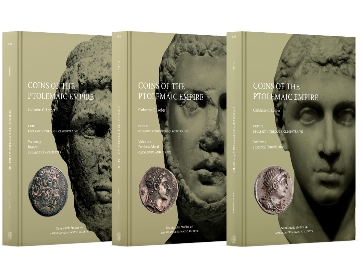
Coins of the Ptolemaic Empire, Part 2: Ptolemy V through Cleopatra VII
show More to view fulltext, buy and share links for:Coins of the Ptolemaic Empire, Part 2: Ptolemy V through Cleopatra VII show Less to hide fulltext, buy and share links for: Coins of the Ptolemaic Empire, Part 2: Ptolemy V through Cleopatra VIIThirty years in the making, Coins of the Ptolemaic Empire, Part II, by Catharine C. Lorber, is the long-anticipated second half of the Coins of the Ptolemaic Empire (CPE) project, featuring the coins struck by Ptolemy V–Cleopatra VII. As with Part 1, Lorber essentially rewrites the sections on these rulers in J. N. Svoronos’ classic, but now much out-of-date, Ta Nomismata tou Kratous ton Ptolemaion (1904). The body of coinage catalogued by Svoronos is enlarged by hundreds of additional emissions in precious metal and bronze, recorded from subsequent scholarship, from hoards, from commercial sources, and from private collections. Lorber’s attributions, dates, and interpretations rest on numismatic research conducted after Svoronos, or on the latest archaeological and hoard information. She also provides extensive historical and numismatic introductions that give the coins deeper context and meaning.
-
-
-
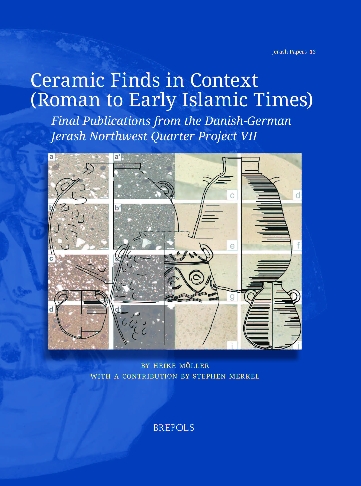
Ceramic Finds in Context (Roman to Early Islamic Times)
show More to view fulltext, buy and share links for:Ceramic Finds in Context (Roman to Early Islamic Times) show Less to hide fulltext, buy and share links for: Ceramic Finds in Context (Roman to Early Islamic Times)The Decapolis city of Jerash has long attracted attention from travellers and scholars, due both to the longevity of the site and the remarkable finds uncovered during successive phases of excavation that have taken place from 1902 onwards. Between 2011 and 2016, a Danish-German team, led by the universities of Aarhus and Münster, focused their attention on the Northwest Quarter of Jerash — the highest point within the walled city — and this volume is the seventh in a series of books presenting the team’s final results.This volume provides an in-depth analysis into the ceramic materials found in Jerash’s Northwest Quarter, much of which comes from largely undisturbed contexts. The ceramic finds presented in this volume are typo-chronologically evaluated and contextually analysed. The authors then use this dataset as a starting point to explore the micro- and macro-networks that existed in ancient Gerasa from Roman to Early Islamic times more broadly, examining how finely meshed exchange could take place on a micro-regional level, and assessing what conditions were required in order for trade to occur.
-
-
-

The Concept of Space in the Book of Judith
show More to view fulltext, buy and share links for:The Concept of Space in the Book of Judith show Less to hide fulltext, buy and share links for: The Concept of Space in the Book of JudithIn the last decade, biblical exegesis has gradually taken into consideration the so-called “spatial turn.” However, the literary concept of space and its narrative analysis have found less interest than the study of space as a social and cultural phenomenon. This obvious gap in biblical research has become the impulse for the present work, dedicated to the book of Judith. Its aim is, on the one hand, to present the narrative analysis of space as a still-developing field in non-biblical literature and, on the other, to show how this promising approach can be developed in biblical studies.
In particular, this monograph provides the narrative analysis and interpretation of space in the book of Judith in response. The first part of the study offers a synthetic overview of perceptions, concepts and theories of space from antiquity to contemporary research, and of the theoretical approaches to space in the Old Testament. The main part is dedicated to the analysis of space on the micro and macro levels of the Judith story through the application of Katrin Dennerlein’s narratological theory of space. Thus, it can be demonstrated to what extent an in-depth analysis of the notion of space can contribute to better understand its thematic and symbolic dimension in the narrative, its function of characterising persons and actions, its role as a structuring element in the story and, last but not least, as a vehicle for an ideological and theological message.
-