


BOB2025MOOT

Collection Contents
3 results
-
-

Rhetoric, Persuasion, and Teaching the Emotions in the Early Modern English Sermon, 1600–1642
show More to view fulltext, buy and share links for:Rhetoric, Persuasion, and Teaching the Emotions in the Early Modern English Sermon, 1600–1642 show Less to hide fulltext, buy and share links for: Rhetoric, Persuasion, and Teaching the Emotions in the Early Modern English Sermon, 1600–1642The early seventeenth-century English sermon was the bestselling print genre of its time, and church preaching was more widely attended than any play. Jennifer Clement argues here that a major aim of these sermons was to teach people how to feel the right emotions — or, as preachers would have said at the time, the passions or affections — to lead a good Christian life. In the process, preachers took a primarily rhetorical approach to the emotions; that is, they used their sermons to define emotions and to encourage their listeners and readers actively to cultivate and shape their emotions in line with Scripture.
This study offers an overview of five key emotions — love, fear, anger, grief, and joy – in the sermons of key preachers such as John Donne, Richard Sibbes, Joseph Hall, Launcelot Andrewes, and others. It shows how these preachers engaged with contemporary treatises on the emotions as well as treatises on preaching to highlight the importance of the rhetorical, as opposed to the humoral, approach to understanding the emotions in a religious context. In addition, Clement reads sermons next to early seventeenth-century religious poetry by writers such as Donne, George Herbert, Amelia Lanyer, and Henry Vaughan to show how the emotional concerns of the sermons also appear in the poetry, reverberating beyond the pulpit.
Bringing together rhetorical theory, sermon studies, and the history of the emotions, Clement shows how the early seventeenth-century English sermon needs to inform our thinking about literature and its engagement with emotion in this period.
-
-
-
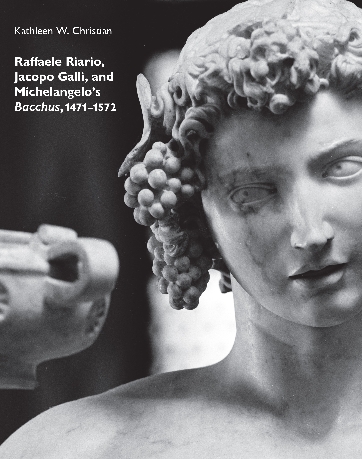
Raffaele Riario, Jacopo Galli, and Michelangelo’s Bacchus, 1471–1572
show More to view fulltext, buy and share links for:Raffaele Riario, Jacopo Galli, and Michelangelo’s Bacchus, 1471–1572 show Less to hide fulltext, buy and share links for: Raffaele Riario, Jacopo Galli, and Michelangelo’s Bacchus, 1471–1572On Michelangelo’s first day in Rome, in June 1496, Cardinal Raffaele Riario asked him if he could create ‘something beautiful’ in competition with the antique. The twenty-one-year old sculptor responded to this unique challenge with the statue of Bacchus now in the Bargello museum. This statue, as well as the Sleeping Cupid which first brought Michelangelo to Riario’s attention, have long been shrouded in mystery, and the Bacchus as well as its patron have long suffered from critical censure.
Through a comprehensive analysis of overlooked and previously-unpublished sources, this study sheds new light on the Sleeping Cupid, the Bacchus,and a fascinating period in the history of Renaissance Rome when the careers of Riario, Galli, and Michelangelo were closely intertwined. It considers the rise of the Riario dynasty starting with the election of Pope Sixtus IV in 1471, Riario’s partnership with Jacopo Galli in the reconstruction of the palace now known as the Palazzo della Cancelleria, the attempted sale of Michelangelo’s Sleeping Cupid in Rome as an antiquity, Riario’s patronage of the Bacchus, and the Bacchus’s displayin the house of the Galli up until its sale to the Medici in 1572. Taking a broad, interdisciplinary perspective, it offers a fundamental reassessment of Cardinal Riario’s career as a patron, of Jacopo Galli’s role as an intermediary for both Riario and Michelangelo, and of Michelangelo’s collaboration with Riario and Galli.
-
-
-
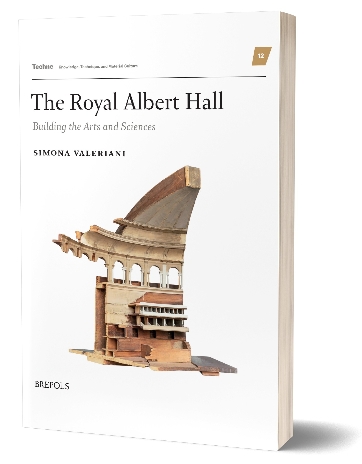
The Royal Albert Hall
show More to view fulltext, buy and share links for:The Royal Albert Hall show Less to hide fulltext, buy and share links for: The Royal Albert HallThis groundbreaking study takes one of London’s most iconic buildings and deconstructs it to offer new insights into the society that produced it. As part of the new cultural quarter built in South Kensington on the proceeds from The Great Exhibition of 1851, the Royal Albert Hall was originally intended to be a ‘Central Hall of Arts and Sciences’. Prince Albert’s overarching vision was to promote technological and industrial progress to a wider audience, and in so doing increase its cultural and economic reach.Placing materiality at its core, this volume provides an intellectual history of Victorian ideas about technology, progress, and prosperity. The narrative is underpinned by a wealth of new sources – from architectural models and archival materials to 19th century newspapers. Each chapter focuses on a particular element of the Royal Albert Hall’s construction, chronicling the previously overlooked work of a host of contributors from all walks of life, including female mosaic-makers and the Royal Engineers.Lighting, ventilation, fireproofing, ‘ascending rooms’, cements, acoustics, the organ, the record-breaking iron dome, and the organisation of internal spaces were all attempts to attain progress - and subject to intense public scrutiny. From iron structures to terracotta, from the education of women to the abolition of slavery, in the making of the Royal Albert Hall scientific knowledge and socio-cultural reform were intertwined.This book shows, for the first time, how the Royal Albert Hall’s building was itself a crucible for innovation. Illustrious techniques from antiquity were reimagined for the new mechanical age, placing the building at the heart of a process of collecting, describing, and systematising arts and practices. At the same time, the Royal Albert Hall was conceived as a ‘manifesto’ of what the Victorians thought Britain ought to be, at a crucial moment of its socio-economic history: a symbolic cultural hub for the Empire’s metropole.This is the Royal Albert Hall: a central piece of the puzzle in Britain’s march towards modernity.
-