


Brepols Online Books Medieval Miscellanea Original Archive v2016 - bobar16mimeo

Collection Contents
11 results
-
-
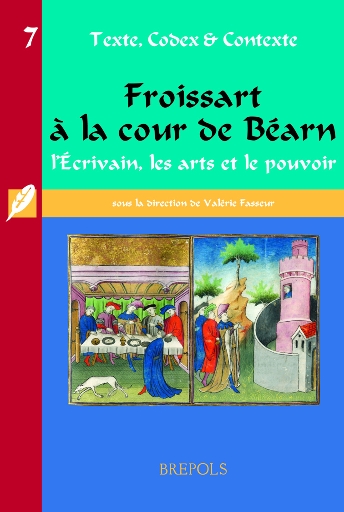
Froissart à la cour de Béarn: l’écrivain, les arts et le pouvoir
show More to view fulltext, buy and share links for:Froissart à la cour de Béarn: l’écrivain, les arts et le pouvoir show Less to hide fulltext, buy and share links for: Froissart à la cour de Béarn: l’écrivain, les arts et le pouvoirLes dix-sept contributions rassemblées dans ce volume se proposent d’aborder l’œuvre de Jean Froissart par le prisme de la rupture que marque la rédaction du Voyage en Béarn. Elles revisitent la cour de Gaston Febus dans ses aspects culturels, sondent le personnage de Gaston III, mesurent la distorsion entre la réalité historique et la représentation littéraire qu’en livre Froissart chroniqueur; elles s’interrogent, enfin, sur la teneur véritable des relations entre les deux hommes — l’écrivain et son mécène.
-
-
-
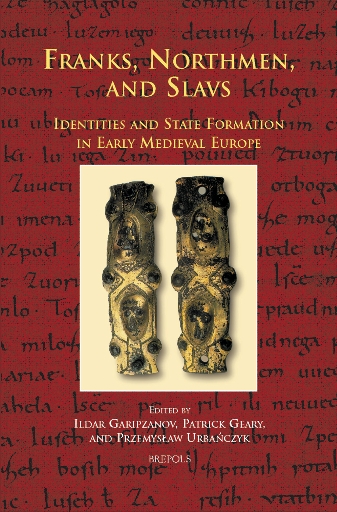
Franks, Northmen, and Slavs
show More to view fulltext, buy and share links for:Franks, Northmen, and Slavs show Less to hide fulltext, buy and share links for: Franks, Northmen, and SlavsIn recent decades, historians attempting to understand the transition from the world of late antiquity with its unitary imperial system to the medieval Europe of separate kingdoms have become increasingly concerned with the role of early medieval gentes, or peoples, in the end of the former and the constitution of the latter.
Eleven specialists examine here the role of ethnic identity in the formation of medieval polities on the periphery of the Frankish world in the eighth through eleventh centuries. In particular, they explore the intertwined issues of ethnic identity and state formation in Scandinavia and in the western and southern Slavic regions, areas in which the new approaches to the history of ethnicity have but little penetrated traditional scholarship. They ask to what extent common identities assisted in the consolidation and creation of early medieval kingdoms and to what extent the formation of these kingdoms created a discourse of common identity as a means to centralization and control. The authors contend that the developments in Scandinavia and in Slavic areas cannot be understood except in dynamic relationship with the process of state formation and group identity within the Frankish kingdoms. This powerful, expansionist society not only interacted and influenced the development of state structures on its northern and eastern borders, but it also provided models of discourse about the relationship between centralizing power and group solidarity. Not that these discourses were simply adopted by the Franks’ neighbours, but rather they became part of the range of possible options selectively adapted to local circumstances.
-
-
-
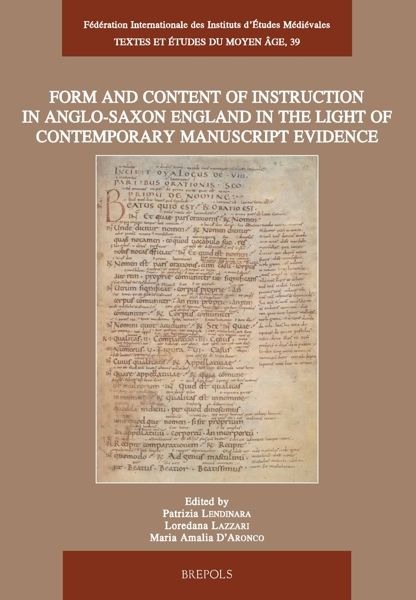
Form and content of instruction in Anglo-Saxon England in the light of contemporary manuscript evidence
show More to view fulltext, buy and share links for:Form and content of instruction in Anglo-Saxon England in the light of contemporary manuscript evidence show Less to hide fulltext, buy and share links for: Form and content of instruction in Anglo-Saxon England in the light of contemporary manuscript evidenceThe essays collected in this volume focus on a prominent aspect of Anglo-Saxon culture: educational texts and the Insular manuscripts which have preserved them.
The English imported manuscripts and texts from the Continent, whilst a series of foreign masters, from Theodore of Tarsus to Abbo of Fleury, brought with them knowledge of works which were being studied in Continental schools. Although monastic education played a leading role for the entire Anglo-Saxon period, it was in the second half of the tenth and early eleventh centuries that it reached its zenith, with its renewed importance and the presence of energetic masters such as Æthelwold and Ælfric. The indebtedness to Continental programs of study is evident at each step, beginning with the Disticha Catonis. Nevertheless, a number of texts initially designed for a Latin-speaking milieu appear to have been abandoned (for instance in the field of grammar) in favour of new teaching tools.
Beside texts which were part of the standard curriculum, Anglo-Saxon manuscripts provide abundant evidence of other learning and teaching instruments, in particular those for a specialized class of laymen, the Old English læce, the healer or physician. Medicine occupies a relevant place in the book production of late Anglo-Saxon England and, in this field too, knowledge from very far afield was preserved and reshaped.
All these essays, many by leading scholars in the various fields, explore these issues by analysing the actual manuscripts, their layout and contents. They show how miscellaneous collections of treatises in medieval codices had an internal logic, and highlight how crucial manuscripts are to the study of medieval culture.
-
-
-
Frères et soeurs : les liens adelphiques dans l’Occident antique et médiéval
show More to view fulltext, buy and share links for:Frères et soeurs : les liens adelphiques dans l’Occident antique et médiéval show Less to hide fulltext, buy and share links for: Frères et soeurs : les liens adelphiques dans l’Occident antique et médiévalComment définir les liens adelphiques? À quelles réalités biologiques, sociales, politiques, renvoient-ils dans l’Occident antique et médiéval?
Les textes rassemblés dans ce volume tentent d’éclairer les liens entre frères et soeurs en se fondant sur des approches linguistiques, historiques, juridiques et littéraires.
Ils abordent des aspects aussi divers et complexes que le rôle du frère aîné, le choix du nom, le lignage, les pratiques successorales, les liens du sang, la défense de l’honneur familial et la solidarité, les affinités, mais aussi les antagonismes, le fratricide et la vengeance.
L’exploration de cette problématique est inévitablement pluridisciplinaire car toute réflexion sur les liens adelphiques doit interroger aussi bien l’histoire, le droit, que les textes littéraires.
-
-
-
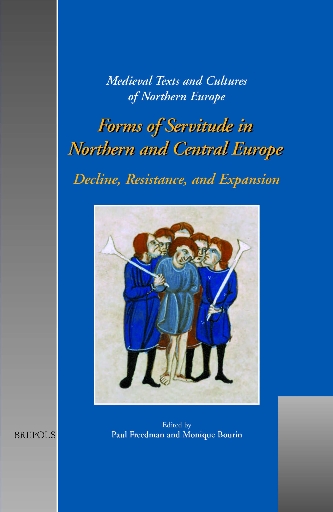
Forms of Servitude in Northern and Central Europe
show More to view fulltext, buy and share links for:Forms of Servitude in Northern and Central Europe show Less to hide fulltext, buy and share links for: Forms of Servitude in Northern and Central EuropeIt was once assumed that nearly all agricultural labourers in medieval Europe were serfs. Serfdom was distinct from slavery in that serfs could contract legitimate marriages, hold personal property and could not be moved around at will. Historians more recently moved away from examining servile condition and its implications and focused on the seigneurial regime and village society with little regard for the influence of status.
In the Middle Ages and indeed in all pre-industrial societies, the vast majority of the population tilled the land. We are still not in a good position to evaluate how noble and ecclesiastical landlords received revenues from lands they were only indirectly engaged in farming, despite this being a basic factor that governed medieval society. What kind of agricultural system provided the impetus for economic growth that so dramatically increased the number of cities and volume of trade?
There is no modern, synthetic book on medieval serfdom that compares regions or draws general conclusions about it. This work attempts such a synthesis and also shows avenues of future research, but most importantly it is intended to reorient attention to the importance of serfdom in the structure of medieval society.
-
-
-
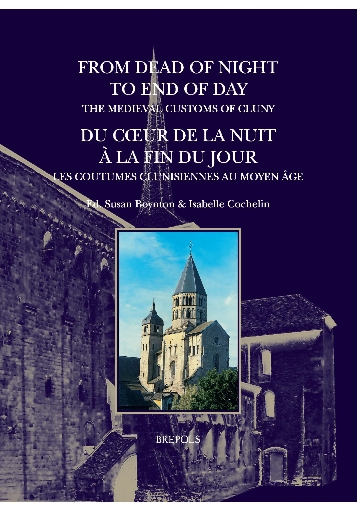
From Dead of Night to End of Day: The Medieval Customs of Cluny
show More to view fulltext, buy and share links for:From Dead of Night to End of Day: The Medieval Customs of Cluny show Less to hide fulltext, buy and share links for: From Dead of Night to End of Day: The Medieval Customs of Cluny[Au cœur des divers articles de cet ouvrage collectif sont quatre coutumiers, rédigés au cours d’une centaine d’année environ à partir de la fin du Xe siècle, qui décrivent la vie quotidienne et liturgique de l’abbaye de Cluny. Deux objectifs principaux motivèrent la création de ce volume: premièrement mettre en valeur la richesse inégalée des coutumiers monastiques pour les chercheurs, à commencer par les médiévistes, toutes disciplines confondues, et deuxièmement faciliter l’emploi de ces sources qui peuvent paraître à première vue difficiles d’un abord. Seule une approche multidisciplinaire pouvait permettre d’illustrer tout l’éventail d’informations contenues dans ces sources; c’est pourquoi les éditrices ont réuni des études extrêmement variées mais complémentaires, qui mettent bien en valeur la richesse de ces écrits. Parmi les thèmes principaux abordés en ce livre se trouvent la genèse et la transmission des coutumiers, la relation entre ces textes et la pratique, l’information qu’ils offrent sur la fonction des espaces monastiques ainsi que la ritualisation de la vie communautaire.
,At the heart of the various articles in this book are four customaries, compiled over the course of nearly a hundred years beginning at the end of the tenth century, that describe daily life and liturgy at the abbey of Cluny. Two principal objectives motivated the creation of the present volume of essays: first, to bring out the unequaled richness of these monastic customaries for scholars, primarily medievalists in all disciplines; and second, to facilitate the use of these sources, which can be challenging at first sight. Drawing upon the multiple disciplines needed to account for the full range of information presented by the customaries, the editors have brought together varied and complementary approaches to these multifaceted documents. Among the principal themes common to the studies in this volume are the genesis and transmission of the customaries, the relationship between texts and practice, and the evidence they offer for the function of monastic spaces as well as for the ritualization of communal life.
]
-
-
-
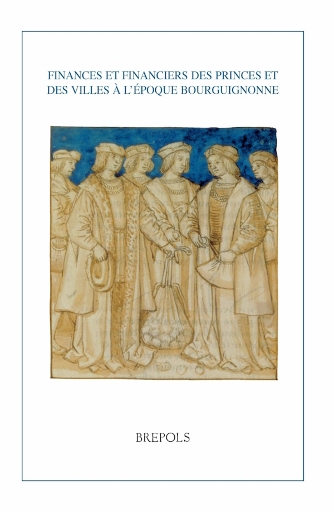
Finances et financiers des princes et des villes à l’époque bourguignonne
show More to view fulltext, buy and share links for:Finances et financiers des princes et des villes à l’époque bourguignonne show Less to hide fulltext, buy and share links for: Finances et financiers des princes et des villes à l’époque bourguignonneGérer les finances des princes et des villes est devenu à la fin du moyen âge l’affaire de professionnels de l’argent et de ses techniques. Ces hommes dont les employeurs requièrent compétence et loyauté appartiennent au monde en pleine ascension des officiers, des «fonctionnaires». Les nécessités de la guerre et de la paix, les coûts des armées et de la diplomatie, l’entretien et le fonctionnement des rouages du gouvernement et de l’administration, les aléas et les pressions de la situation économique, tout cela donne un sens à leur travail et requiert leur vigilante attention.
Accroître des moyens matériels, par des expédients ou des réformes durables, rendre plus performants des outils de gestion, voilà des objectifs qui peuplent ces pages, à travers plus d’un siècle et demi du passé des anciens Pays-Bas. Les études publiées regorgent ainsi d’apports nouveaux pour l’histoire de l’impôt, de l’emprunt, des rentes, du crédit et du commerce de l’argent. Elles éclairent aussi une face essentielle des relations entre gouvernants et gouvernés, dictées par des recettes et dépenses mais en même temps orientées par ceux qui y pourvoient et en font carrière.
-
-
-
Functions and Decorations: Art and Ritual at the Vatican Palace in the Middle Ages and the Renaissance
show More to view fulltext, buy and share links for:Functions and Decorations: Art and Ritual at the Vatican Palace in the Middle Ages and the Renaissance show Less to hide fulltext, buy and share links for: Functions and Decorations: Art and Ritual at the Vatican Palace in the Middle Ages and the Renaissance
-
-
-
Fear and its Representations
show More to view fulltext, buy and share links for:Fear and its Representations show Less to hide fulltext, buy and share links for: Fear and its RepresentationsFear is a topic that appeals to a wide audience and is particularly of interest today. In the modern world, we fear war and terrorism, economic recession, and environmental degradation: these fears make up a great portion of the fabric of our daily lives. This is a volume of essays on fear and its representations in the Middle Ages and Renaissance. In it, the authors raise and try to answer questions about the ways in which individuals, families, and nations five-hundred, one-thousand, or even fifteen-hundred years ago approached the idea of fear.
The interdisciplinary nature of this volume and its editors (an historian of late antiquity and professor of literature of the Middle Ages) motivates an analysis of fear from a multitude of perspectives and within a host of secular and religious literature, historical treatises, scholastic works, art, and political accounts. The volume covers several main topics: Defining the Nature of Fear; Fear and Religion; Fear in Politics and Cultural Identity; Fear as a Literary and Dramatic Device; The Fears of Courtly Lovers, Knights, and Poets; Fear and the Mystic.
Through its breadth, depth, and interdisciplinary focus, the present volume makes a full contribution to the study of fear in medieval and Renaissance culture for historians, art historians, students of language and philosophy and anyone interested in how people in the past have experienced fear.
-
-
-
From Clermont to Jerusalem
show More to view fulltext, buy and share links for:From Clermont to Jerusalem show Less to hide fulltext, buy and share links for: From Clermont to JerusalemThis collection of seventeen original essays offers new perspectives on the history and sources of the crusades from the Council of Clermont in 1095 to the late fifteenth century, and of the societies they established in Palestine, Greece, Cyprus and the Baltic.
The volume begins with a masterly survey of the concepts and strategies of the crusading movement. The historical case studies deal with the reigns of Baldwin I and Baldwin IV of Jerusalem, the role of castles in Greece and Cyprus, the military orders and crusade vows in England, and female warriors in the Baltic crusades. The essays on sources provide critical assessments and re-assessments of the narratives of the First and Fourth Crusades, introduce little known Arabic sources on the Muslim population of crusader Palestine, and analyse interpretations of the last days of the crusader kingdom in medieval theology and modern historiography. The volume concludes with a classified bibliography of the First Crusade, comprising over 400 texts, monographs and articles published up to 1997.
-
-
-
The Future of the Middle Ages and the Renaissance
show More to view fulltext, buy and share links for:The Future of the Middle Ages and the Renaissance show Less to hide fulltext, buy and share links for: The Future of the Middle Ages and the RenaissanceThis volume, containing a selection of essays from ACMRS's 1996 Conference, reflects a broad range of interests in medieval and Renaissance studies. Although most of the eleven essays address western European topics, one essay deals with Byzantine political and theological histroy, and one touches on Arabic poetry in medieval Sicily. The chronological range is also broad, extending from the seventh to the twentieth century and including topics from an early Byzantine polemicist to the recent growing interest in medievalism, and from critical readings of early texts to implications of computer technology for future manuscript study. In some significant ways the volume continues earlier discussions of the state of the profession, such as those in William D. Paden (ed.), The Future of the Middle Ages, and John Van Engen (ed.), The Past and Future of Medieval Studies. More generally, this second volume in the Arizona series extends the theme of the first, Reinventing the Past, and makes fresh contributions to the scholarship on a number of problems. If the current volume provides a reliable gauge for the future of medieval and Renaissance studies, we are on the verge of new beginnings, increasingly outward-looking, reexamining and redefining old boundaries to reach a new and sharpened understanding of the past.
-