


Brepols Online Books Medieval Miscellanea Original Archive v2016 - bobar16mimeo

Collection Contents
3 results
-
-
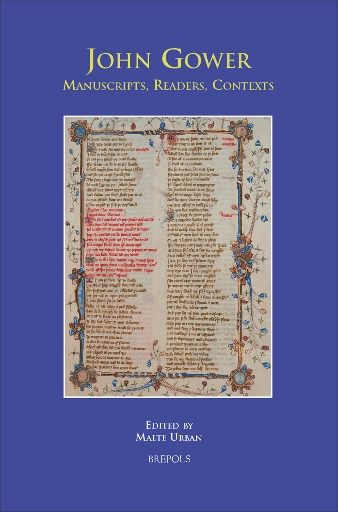
John Gower
show More to view fulltext, buy and share links for:John Gower show Less to hide fulltext, buy and share links for: John GowerThe essays collected here represent the current state of research into the works of John Gower, poet, philosopher, and contemporary of Geoffrey Chaucer. They assess Gower’s literary output within the context of manuscript production and readership/ownership in late medieval England and the triangle of Latin, French, and English as literary and official languages in Ricardian England. Sections of the volume focus on manuscripts and the circulation of Gower’s works in languages other than English. In addition, the literary and philosophical contexts that inform Gower’s poetics and politics are considered here, resulting in readings of the poet’s rhetorical and ethical agenda as well as his texts’ intervention in and reaction to social outsiders in his contemporary London. A wide variety of critical discourses inform the readings presented here, including medieval English, French, and Latin literary studies, art history, manuscript production and reception, postmodern ethics, and historical studies.
-
-
-
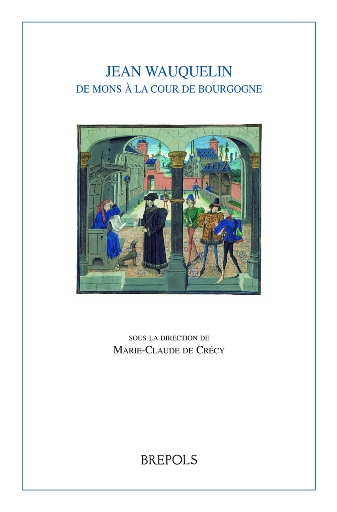
Jean Wauquelin
show More to view fulltext, buy and share links for:Jean Wauquelin show Less to hide fulltext, buy and share links for: Jean WauquelinWauquelin, «escripvaing» de ce grand mécène que fut le duc de Bourgogne, est longtemps resté dans l’ombre de son jeune confrère, David Aubert. Son œuvre embrasse cependant des champs variés, qui accueillent aussi bien des traductions que des compilations et des mises en prose. Les éditions récentes de certains de ses textes, et les études auxquelles elles ont donné lieu, permettent de mieux connaître cet auteur aujourd’hui. Répondant parfaitement aux désirs de ses différents commanditaires, son œuvre s’inscrit dans les courants de pensée et les idéologies de l’époque.
Mais Wauquelin ne fut pas seulement un auteur. Il participa lui-même aux étapes de l’élaboration matérielle des manuscrits dont son atelier assurait la transcription et la reliure, tandis que l’illustration était confiée à des artistes réputés, résidant notamment à Bruges.
Le colloque interdisciplinaire qui lui fut consacré à Tours, en septembre 2004, avait pour ambition d’éclairer toutes les facettes de son activité et de la situer dans les pratiques d’écriture mais aussi «éditoriales» de son temps. Les articles qu’il a inspirés sont accompagnés ici d’une bibliographie exhaustive.
Cette présentation en un volume de l’ensemble des connaissances que l’on peut considérer comme acquises sur Wauquelin, dans des domaines aussi divers que la philologie, la linguistique, la littérature, la codicologie ou l’histoire de l’art, voudrait susciter des interrogations et ouvrir la voie à de nouvelles recherches.
-
-
-
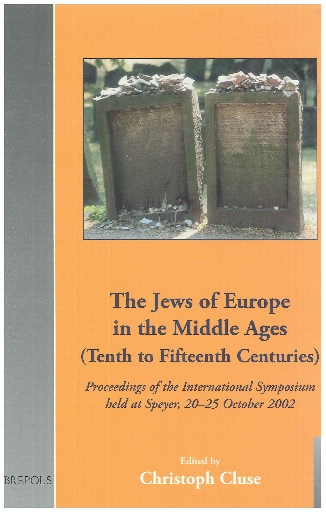
The Jews of Europe in the Middle Ages (Tenth to Fifteenth Centuries)
show More to view fulltext, buy and share links for:The Jews of Europe in the Middle Ages (Tenth to Fifteenth Centuries) show Less to hide fulltext, buy and share links for: The Jews of Europe in the Middle Ages (Tenth to Fifteenth Centuries)The Jews of Europe in the Middle Ages presents the proceedings of an international symposium held at Speyer (Germany) in October, 2002. The collection aims at a comprehensive (and comprehensible) overview describing the variety of historical experience for European Jewries from c. 1000 to c. 1500. Leading European historians firmly based in regional, archival research have here been brought together with a number of Israeli and American scholars who concentrate on legal and constitutional aspects of the Jewish community. Historians working on medieval Mediterranean Jewries (Sicily, Spain, Provence, etc.) and those studying the northern communities (England, Northern France, and Ashkenaz) present their findings in a single, one-language collection. Regional overviews are supplemented by studies on cultural, economic, social, and linguistic aspects as well as by portraits of individual (northern) Jewish communities. The collection highlights the similarities and differences among the various European Jewish cultures, demonstrating that these cultures were no less European than they were Jewish. At the same time, the Jewish heritage has deeply influenced medieval and modern European majority cultures. This cultural symbiosis was epitomized in the European Jewish community (kahal, aljama).
-