


Brepols Online Books Medieval Miscellanea Original Archive v2016 - bobar16mimeo

Collection Contents
21 - 23 of 23 results
-
-
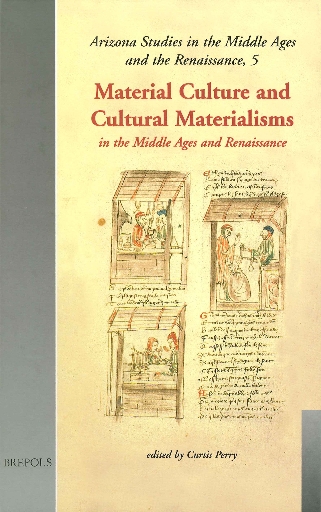
Material Culture and Cultural Materialisms
show More to view fulltext, buy and share links for:Material Culture and Cultural Materialisms show Less to hide fulltext, buy and share links for: Material Culture and Cultural MaterialismsThe phrase ‘cultural materialism’, names an approach to cultural analysis that interrogates the socio-economic conditions within which artefacts are produced as well as their participation in other ideological and material fields of culture. Disciplines that have traditionally studied cultural artefacts like literature and painting have increasingly focused on the material production and ideological operation of objects once thought of in idealized or purely aesthetic terms. By the same token, historians - whose work, of necessity, has always tended to deal with the material traces of culture - have increasingly been willing to consider the social and ideological importance of art. The increasing popularity of this cultural studies approach to the past has in turn spurred investigation into other kinds of materiality. Recent historical and literary scholarship, for example, has become increasingly aware of the ways in which the lived materiality of the human body informs a range of cultural discources.
-
-
-
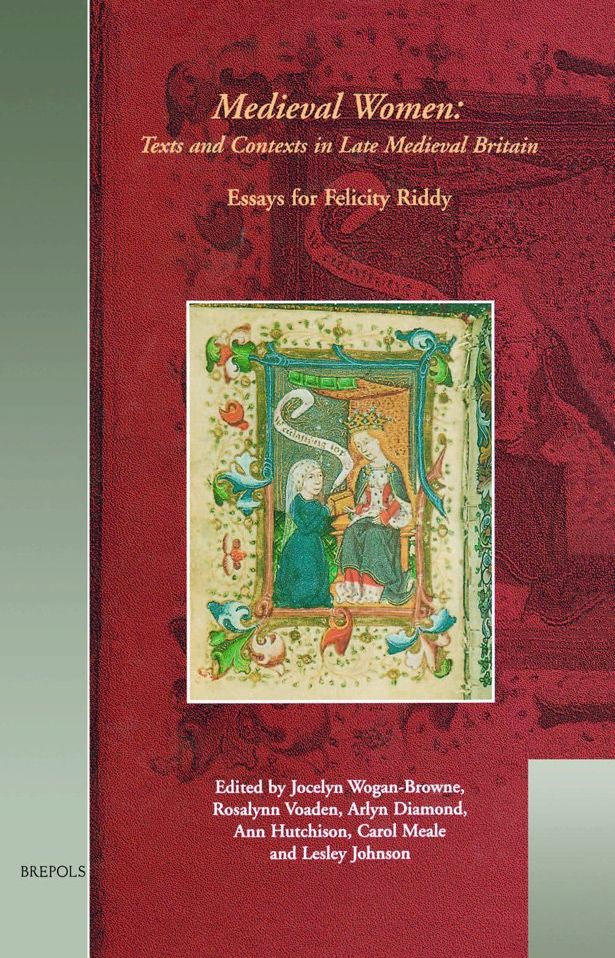
Medieval Women - Texts and Contexts in Late Medieval Britain
show More to view fulltext, buy and share links for:Medieval Women - Texts and Contexts in Late Medieval Britain show Less to hide fulltext, buy and share links for: Medieval Women - Texts and Contexts in Late Medieval BritainIn this themed collection by literary, historical and archaeological scholars, the study of medieval women is confidently and freshly mainstream. Profiting from the development of newly flexible models of gender, literacy, the political, the social, and the domestic, the volume is non-separatist, exploratory both of new source materials and new readings of established sources, and able to consider the broadest implications for the study of medieval culture without simply re-absorbing medieval women into invisibility. Grouped under the headings of matters of reading, of conduct and place, the essays move from legal cases to actual buildings and conceptions of the household, from conduct books to chronicles and romances, from saints’ lives to the medieval unconscious and back again, exemplifying the mature interdisciplinarity of current work on medieval women.
-
-
-
Miracle et Karama. Hagiographies médiévales comparées
show More to view fulltext, buy and share links for:Miracle et Karama. Hagiographies médiévales comparées show Less to hide fulltext, buy and share links for: Miracle et Karama. Hagiographies médiévales comparéesLa reconnaissance du miracle suscita des discussions théologiques dans le christianisme comme dans l’islam. Mais alors qu’une pratique du miracle sur les tombes des saints chrétiens est attestée par les collections de Miracula, la littérature hagiographique musulmane reste généralement sobre en la matière, même lorsqu’il s’agit de saints réputés pour leurs charismes. Les articles de ce volume tentent de déterminer les raisons de ces réticences et leurs rapports avec les circonstances historiques.
Bien que de nombreux miracles soient rapportés dans les Traditions, le Prophète de l’islam ne se signale pas par des miracles spectaculaires, contrairement à Jésus, considéré comme le thaumaturge par excellence. En revanche, Muhammad, recevant la révélation coranique à travers l’archange Gabriel, a été sujet à de multiples visions. Ce contraste entre les modèles, posés par les fondateurs respectifs de l’islam et du christianisme, pourrait expliquer que les miracles, dans l’hagiographie musulmane, soient plutôt constitués d’apparitions, de rêves ou de pouvoir d’ordre initiatique, alors que les miracles à dominante thaumaturgique abondent dans les Vies des saints chétiens.
L’étude des miracles conduit enfin à des comparaisons intéressantes entre christianisme et islam. La proportion entre miracles in vita et post mortem (tombeaux, reliques, images) semble constituer une différence majeure entre les deux religions, tandis que le recensement et la comparaison des topoi mènent à des rapprochements féconds, étant entendu que ces topoi peuvent être réinterprétés à chaque époque.
-