Brepols Online Books Medieval Miscellanea Original Archive v2016 - bobar16mimeo

Collection Contents
19 results
-
-
Raban Maur et son temps
show More to view fulltext, buy and share links for:Raban Maur et son temps show Less to hide fulltext, buy and share links for: Raban Maur et son tempsLe colloque organisé à Lille et Amiens en 2006, à l’occasion du 1150e anniversaire de la mort de Raban Maur, complète une série de manifestations consacrées à trois personnalités majeures du haut Moyen Âge: de Bède le Vénérable (colloque de Lille et Amiens, 2002) à Alcuin (colloque de Tours, 2004) et à Raban qui devait à ce dernier son surnom de Maur, la filiation intellectuelle est manifeste. Celui que, depuis les temps modernes, on orne du titre de praeceptor Germaniae fut l’un des plus éminents personnages de la société carolingienne, par sa culture et par son rang: ce membre de l’aristocratie de la vallée du Main et du Rhin moyen enseigna à l’abbaye de Fulda, l’un des principaux foyers d’étude et des plus importants établissements monastiques du monde franc, dont il fut ensuite l’abbé (822-842) avant d’être promu archevêque de Mayence (847-856) et, par conséquent, premier prélat du royaume de Louis le Germanique. C’est à la diversité des compétences de Raban, à la fois pasteur, gestionnaire et fin lettré, que sont consacrés les actes de ce colloque interdisciplinaire.
L’analyse des relations entre Raban et les évêques de son temps montre combien ce tenant du parti impérial était attaché à l’héritage de Charlemagne, bien que son horizon s’avère moins large que ne le suggère son appartenance à l’élite «d’Empire». Par ses œuvres, Raban s’imposa comme un poète et un maître. Son intérêt ne se portait pas seulement vers la culture latine, mais aussi vers la culture et la langue vernaculaires; de même, il avait des connaissances en médecine. Plusieurs contributions sont consacrées à son œuvre exégétique, à sa diffusion manuscrite et à la teneur de ses commentaires (certains sont intemporels, d’autres s’avèrent en prise directe avec la vie politique). Les analyses, menées par des historiens et des philologues, illustrent la diversité des approches possibles, complétées par une étude du Psautier glosé de Fulda. La vie de Raban était rythmée par la liturgie, dans une église à l’image du Temple de Salomon, devant servir à l’édification du temple intérieur — ce à quoi contribuait la présence de reliques. L’étude de la consécration des autels et des tituli composés à cet effet montre que Raban avait une conception très protocolaire de la répartition des apôtres, martyrs et bienheureux, qui traduit sa conscience aiguë de la communion des saints. L’abbé de Fulda fut un théoricien de la société carolingienne, comme le prouve l’analyse de son idéologie du don. Il était sensible aux aspects tout pragmatiques de la vie sociale et l’on peut déceler chez lui une humanité dont témoignent ses prises de position en matière de droit.
-
-
-
Reading the Anglo-Saxon Chronicle
show More to view fulltext, buy and share links for:Reading the Anglo-Saxon Chronicle show Less to hide fulltext, buy and share links for: Reading the Anglo-Saxon ChronicleThe Anglo-Saxon Chronicle is among the earliest vernacular chronicles of Western Europe and remains an essential source for scholars of Anglo-Saxon and Norman England. With the publication in 2004 of a new edition of the Peterborough text, all six major manuscript versions of the Chronicle are now available in the Collaborative Edition. Reading the Anglo-Saxon Chronicle therefore presents a timely reassessment of current scholarly thinking on this most complex and most foundational of documents.
This volume of collected essays examines the Anglo-Saxon Chronicle through four main aspects: the production of the text, its language, the literary character of the work, and the Chronicle as historical writing. The individual studies not only exemplify the different scholarly approaches to the Chronicle but they also cover the full chronological range of the text(s), as well as offering new contributions to well-established debates and exploring fresh avenues of research. The interdisciplinary and wide-ranging nature of the scholarship behind the volume allows Reading the Anglo-Saxon Chronicle to convey the immense complexity and variety of the Chronicle, a document that survives in multiple versions and was written in multiple places, times, and political contexts.
-
-
-
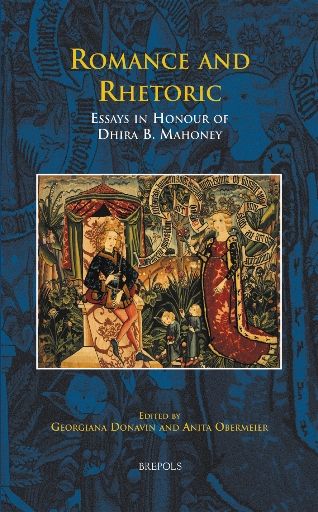
Romance and Rhetoric
show More to view fulltext, buy and share links for:Romance and Rhetoric show Less to hide fulltext, buy and share links for: Romance and RhetoricThis volume honours the academic career of Professor Dhira B. Mahoney, recently retired from the Department of English at Arizona State University, who is well known for her rhetorical readings of medieval literature. Professor Mahoney’s scholarship employs rhetorical theory in readings of late medieval literature, particularly prologues and epilogues, women’s writings, and Arthuriana. As a response to her work, Romance and Rhetoric offers rhetorical readings of a variety of literary pieces from the late Middle Ages, especially for those authors and genres on which Professor Mahoney has published. Its collected essays provide interdisciplinary studies of art, social and literary history, manuscript transmission, and women’s studies in relation to texts in Middle English, Latin, German, and French. In particular, the essays in this volume focus on the writings of courtly authors such as Chaucer, Lydgate, Malory, Guillaume de Machaut, Christine de Pizan, Chrétien de Troyes, and others. In keeping with the ancient tradition of analysing rhetorical principles in the structure of an art work, they also examine the rhetoric of the manuscript art connected to these authors and the genres in which they wrote. This volume thus fills a gap in medieval literary scholarship, as it evaluates with scrutiny how rhetorical teachings or medieval poetic strategies inform the writing of romances.
-
-
-
Recherches sur Dietrich de Freiberg
show More to view fulltext, buy and share links for:Recherches sur Dietrich de Freiberg show Less to hide fulltext, buy and share links for: Recherches sur Dietrich de FreibergDietrich de Freiberg a peu à peu trouvé sa place dans l’historiographie philosophique du Moyen Âge. Dans l’histoire de sa découverte et de sa promotion sur les devants de la scène scientifique, un rôle essentiel revient à Kurt Flasch, à qui rend hommage ce volume recueillant les contributions prononcées à l’occasion de son soixante-quinzième anniversaire. Elles tentent un bilan des recherches récentes sur le dominicain allemand et attestent l’appartenance de Dietrich à l’histoire de l’aristotélisme médiéval, nullement invalidée par le statut de maître en théologie à Paris (en 1296/7), ni par le fait que le dominicain n’ait pas laissé de commentaire des œuvres du Stagirite.
-
-
-
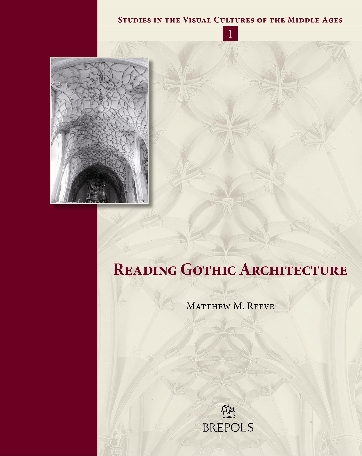
Reading Gothic Architecture
show More to view fulltext, buy and share links for:Reading Gothic Architecture show Less to hide fulltext, buy and share links for: Reading Gothic ArchitectureThe Gothic style is now one of the supreme products of Medieval and Renaissance visual culture. Subject to multiple readings and (re)interpretations from ca. 1500 to the present, Gothic stands as one of two dominant languages of European historical architecture. This volume explores methods of reading and interpreting the Gothic from the twelfth through the sixteenth century. Following the editor’s introduction, it contains ten essays written by leading scholars from Canada, the United States, and Great Britain. In challenging the traditional parameters of Gothic, the papers explore ‘Medieval’ and ‘Renaissance’ manifestations of the Gothic, and they consider material ranging geographically from Ireland to Poland, and from Paris to Sicily. Each paper explores ways in which Gothic was or could be read by the contemporary viewers for which it was designed, and by post-modern commentators. In placing the act of reading at the centre of their investigations, the papers offer significant new insights into the forms and meanings of the Gothic.
-
-
-
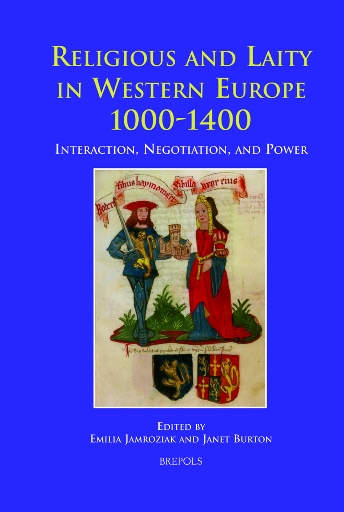
Religious and Laity in Western Europe, 1000-1400
show More to view fulltext, buy and share links for:Religious and Laity in Western Europe, 1000-1400 show Less to hide fulltext, buy and share links for: Religious and Laity in Western Europe, 1000-1400This volume examines forms of interaction between monastic or mendicant communities and lay people in the high Middle Ages in Britain, France, the Low Countries, and Scandinavia. The nineteen papers explore these issues in geographically and chronologically diverse settings in a way that no English-language collection has yet attempted. It brings together the latest research from established as well as younger historians. The first section ‘Patrons and Benefactors: power, fashion, and mutual expectations’ examines lay involvement in foundations, the rights held by patrons, and how they used these powers, as well as networks of relationships within broader groups of benefactors. The authors demonstrate how changing fashions shaped the fortunes of particular orders and houses and explore how power relations between different types of patrons and benefactors - royal figures, kinship, and other social groupings - affected the mutual expectations of the various parties. The second section of the volume, entitled ‘Lay and Religious: negotiation, influence, and utility’, shows how lay people’s ideas of the role of religious houses could impact upon their patronage of, and support for, monastic or mendicant institutions. Conversely, religious communities offered multi-faceted benefits - practical, intellectual, or spiritual - for the secular world. The book concludes by focusing on the rapid growth of confraternities, their relation to their urban mendicant and monastic contexts, and how the role and forms of confraternities evolved in the late medieval period.
-
-
-
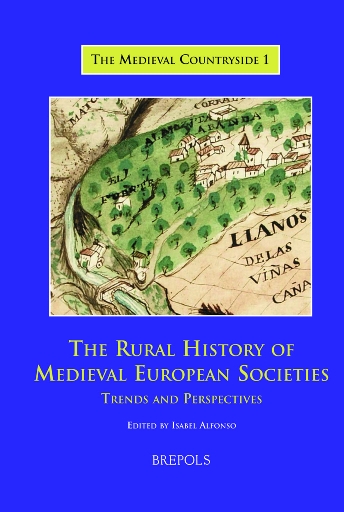
The Rural History of Medieval European Societies
show More to view fulltext, buy and share links for:The Rural History of Medieval European Societies show Less to hide fulltext, buy and share links for: The Rural History of Medieval European SocietiesThis collection gathers together a range of scholars who reflect on recent historiographical developments in medieval rural history within their respective countries. Each contribution provides a survey of a recent area of research, as well as documenting its significant results, and offering perspectives for future investigations. This international approach not only provides a deeper insight into how medieval rural studies relates to current debates in the social sciences, but it also highlights the connections between specific national historical traditions and present-day research issues in their historical contexts. By comparing different European regions it is possible to see more clearly the similarities and the differences which lie between them; this volume therefore constitutes a truer means of constructing syntheses and for identifying fruitful lines of future research.
-
-
-
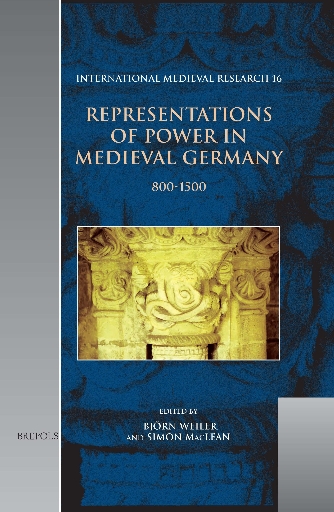
Representations of Power in Medieval Germany
show More to view fulltext, buy and share links for:Representations of Power in Medieval Germany show Less to hide fulltext, buy and share links for: Representations of Power in Medieval GermanyThis book brings together a group of leading experts on the political history of Germany and the medieval Empire from the Carolingian period to the end of the Middle Ages. Its purpose is to introduce and analyze key concepts in the study of medieval political culture. The representation of power by means of texts, buildings and images is a theme which has long interested historians. However, recent debates and methodological insights have fundamentally altered the way this subject is perceived, opening it up to perspectives unnoticed by its pioneers in the middle of the twentieth century. By taking account of these debates and insights, this volume explores a series of fundamental questions. How was power defined in a medieval context? How was it claimed, legitimized and disputed? What were the moral parameters against which its exercise was judged? How did different spheres of political power interact? What roles were played by texts, images and rituals in the maintenance of, and challenges to, the political order? The contributors bring varied and original approaches to these and other questions, illuminating the complex power relationships which determined the changing political history of medieval Germany.
-
-
-
Ramon Llull und Nikolaus von Kues: Eine Begegnung im Zeichen der Toleranz - Raimondo Lullo e Niccolò Cusano: Un incontro nel segno della tolleranza
show More to view fulltext, buy and share links for:Ramon Llull und Nikolaus von Kues: Eine Begegnung im Zeichen der Toleranz - Raimondo Lullo e Niccolò Cusano: Un incontro nel segno della tolleranza show Less to hide fulltext, buy and share links for: Ramon Llull und Nikolaus von Kues: Eine Begegnung im Zeichen der Toleranz - Raimondo Lullo e Niccolò Cusano: Un incontro nel segno della tolleranza[Il presente volume raccoglie i contributi d’un Congresso Internazionale su Raimondo Lullo e Niccolò Cusano, svoltosi dal 25 al 27 novembre 2004 a Bressanone e Bolzano (Alto Adige/Sudtirolo).
Gli articoli, quattordici in tutto, indagano, sotto il profilo storico e sistematico, il perdurevole influsso esercitato dallo studioso maiorchino Raimondo Lullo sui diversi ambiti del pensiero del vescovo di Bressanone, nella cui biblioteca a Kues nessun altro autore è rappresentato con tale frequenza come Lullo. In particolare viene dato ampio spazio all’analisi critica dei modelli di dialogo interreligioso sviluppati da entrambi i pensatori.
,Der vorliegende Band versammelt die Beiträge eines Internationalen Kongresses zu Ramon Llull und Nikolaus von Kues, der vom 25.-27. November 2004 in Brixen und Bozen (Südtirol) stattfand.
Die insgesamt vierzehn Beiträge untersuchen den nachhaltigen Einfluß des mallorquinischen Gelehrten auf den Brixner Bischof — in dessen Kueser Bibliothek kein anderer Autor so häufig vertreten ist wie Lullus — in historischer und systematischer Absicht für die verschiedenen Bereiche des cusanischen Denkens. Ein besonderer Schwerpunkt liegt dabei auf der kritischen Würdigung der Modelle, die beide Denker für das Gespräch zwischen den Religionen entwickeln.
]
-
-
-
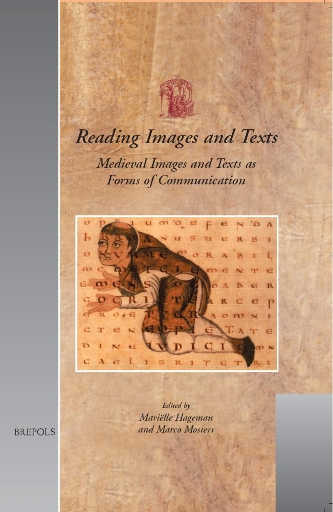
Reading Images and Texts
show More to view fulltext, buy and share links for:Reading Images and Texts show Less to hide fulltext, buy and share links for: Reading Images and TextsRelations between images and texts have benefited from an increase in scholarly attention. In medieval studies, art historians, historians, codicologists, philologists and others have applied their methods to the study of illuminated manuscripts and other works of art. These studies have shifted from a concern about the contents of the messages contained in the artefacts (e.g. in iconography) to an interest in the ways in which they were communicated to their intended audiences. The perception of texts and images, their reception by contemporaries and by later generations have become topics in their own right. According to some, medieval images may be ‘read’. According to others, the perception of images is fundamentally different from that of texts. The analysis of individual manuscripts and works of art remains the basis for any consideration of their transmission and uses. The interactions between non-verbal and verbal forms of communication, more in particular the relations between visual symbols other than writing and the recording of speech in writing, are important for the evaluation of both images and texts.
-
-
-
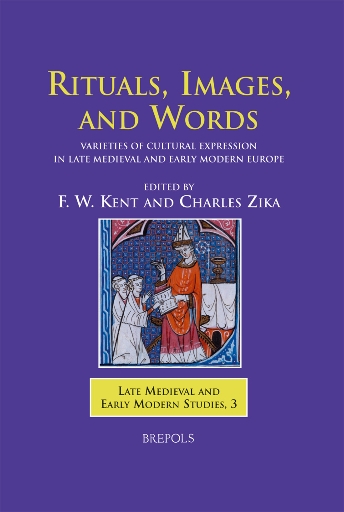
Rituals, Images, and Words
show More to view fulltext, buy and share links for:Rituals, Images, and Words show Less to hide fulltext, buy and share links for: Rituals, Images, and WordsThis collection of essays by Australian scholars offers a wealth of contemporary perspectives on cultural communication amongst men and women in late medieval and early modern Europe. Essays dealing with Florence and Venice, with Rome, Lucca, Ferrara, and Bologna, as well as with Germany, England, and Lorraine, draw attention to the array of cultural expressions which competed for space and influence across European societies of the period.
These rich studies demonstrate the vitality of cultural production during a period of rapid and often violent transition. Variously focused on formal religious rites, on painting, sculpture, and woodcuts, on sermons, poetry, and letters, the contributors pursue cultural meaning as a matter of social identity and social context - as a performance that can be shown to affirm and also exclude particular topical values. Rituals, Images, and Words highlights the complex and subtle power of rhetorical forms in the history and historiography of late medieval and early modern Europe.
-
-
-
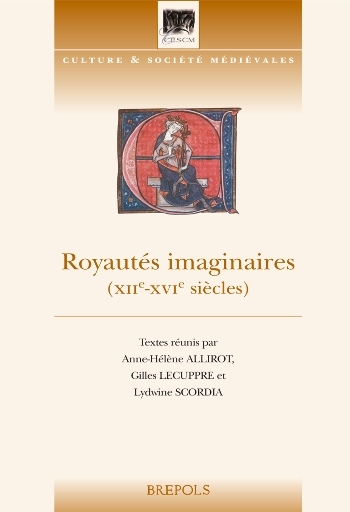
Royautés imaginaires
show More to view fulltext, buy and share links for:Royautés imaginaires show Less to hide fulltext, buy and share links for: Royautés imaginairesL’imaginaire ne se réduit pas au chimérique, au non-être. Depuis l’Antiquité, artistes, poètes et philosophes pressentent qu’il procède du désir et appartient en premier lieu au registre de l’individuel: forces pulsionnelles, messages de soi à soi, le rêve et bientôt la création n’ont pas attendu le discours de la psychanalyse ou des diverses sciences de la culture pour forger leurs mondes autour de la réalité partagée. Les sociétés à leur tour se sont lancées par cette voie dans la quête de leur identité et ont assigné à leurs mythes le soin d’exprimer leur structure. Pour autant, le lecteur s’apercevra au fil des douze communications assemblées ci-après que les royautés évoquées ressortissent rarement du pur imaginaire et conservent jalousement un lien organique avec leur référent concret. Il conviendrait davantage de parler de la royauté comme objet d’imagination, en ce qu’elle représente le point de fixation suprême du désir.
-
-
-
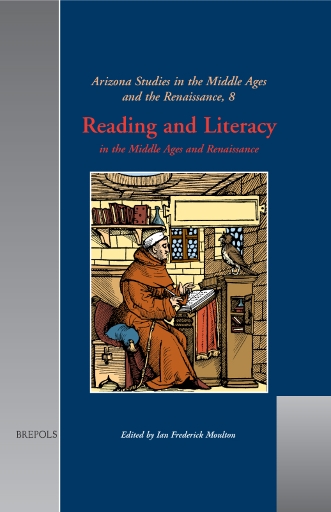
Reading and Literacy
show More to view fulltext, buy and share links for:Reading and Literacy show Less to hide fulltext, buy and share links for: Reading and LiteracyIt is not surprising that the development of the internet and related electronic technologies has coincided with an academic interest in the history of reading. Using and transmitting texts in new ways, scholars have become increasingly aware of the precise ways in which manuscripts and printed books transmitted texts to early modern readers. This volume collects nine essays on reading and literacy in Europe from the fourteenth to the seventeenth centuries. Topics include: the function of marginalia in vernacular medieval manuscripts; the trope of reading in the fourteenth century; the definition of literacy in early modern England; marginalia and reading practices in early modern Italy; revision of medieval texts in the Renaissance; the prevalence of translated French poetry in sixteenth-century England; the use of poems as props in the plays of Shakespeare; the private reading of the playscripts of masques; and early-modern women’s reading practices. These essays demonstrate the energy and excitement of the rapidly developing field of the history of reading. They will appeal to those interested in European cultural history, the transition from manuscript to print culture, the history of literacy, and the history of the book.
-
-
-
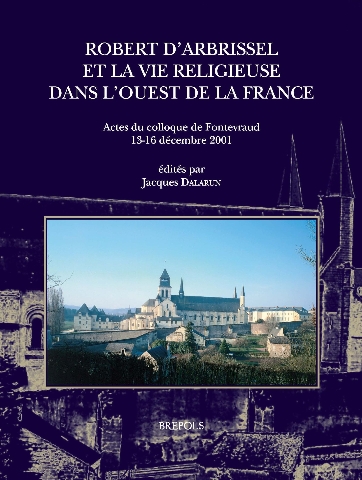
Robert d’Arbrissel et la vie religieuse dans l’Ouest de la France
show More to view fulltext, buy and share links for:Robert d’Arbrissel et la vie religieuse dans l’Ouest de la France show Less to hide fulltext, buy and share links for: Robert d’Arbrissel et la vie religieuse dans l’Ouest de la FranceFontevraud: 1101-2001. Fontevraud: à la fois monastère et congrégation, communauté mixte où, par la singulière volonté du fondateur, les hommes en ce temps féodal étaient soumis au pouvoir des femmes. Célébrer le neuvième centenaire de la fondation de Robert d’Arbrissel s’imposait; ce qui fut fait du 13 au 16 décembre 2001, dans l’enceinte même de la somptueuse abbaye ligérienne.
Le présent volume témoigne de ces denses journées d’étude; il intègre aussi des contributions supplémentaires, pour gagner encore en richesse et en cohérence. Volontairement déroutant, il nous entraîne d’abord bien loin du Val de Loire, dans les solitudes boisées des Apennins, où le ressourcement monastique surgi du haut Moyen Âge inaugure ce Moyen Âge que nous disons central. Les organisateurs scientifiques de la rencontre n’ont en effet pas souhaité la focaliser d’emblée sur l’originalité de Fontevraud et les étranges comportements de son fondateur. Ils ont au contraire voulu donner à lire l’accident de 1101 dans le vaste élan qui ouvre une ère nouvelle pour la Chrétienté et pour notre monde en ce qu’il en procède: cette réforme de l’Église qu’on dit «grégorienne», qui repense en fait toute l’architecture ecclésiale et sociale, des plus hauts aux plus infimes pouvoirs, des institutions aux individus et du sacré au profane.
-
-
-
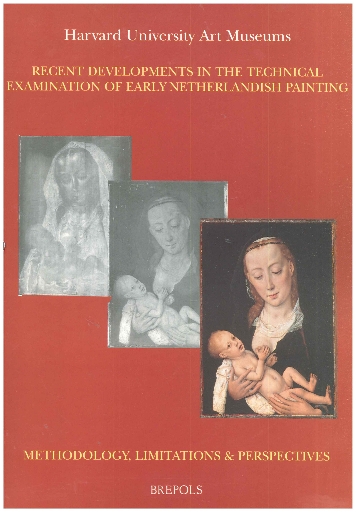
Recent Developments in the Technical Examination of Early Netherlandish Painting: Methodology, Limitations and Perspectives
show More to view fulltext, buy and share links for:Recent Developments in the Technical Examination of Early Netherlandish Painting: Methodology, Limitations and Perspectives show Less to hide fulltext, buy and share links for: Recent Developments in the Technical Examination of Early Netherlandish Painting: Methodology, Limitations and Perspectives
-
-
-
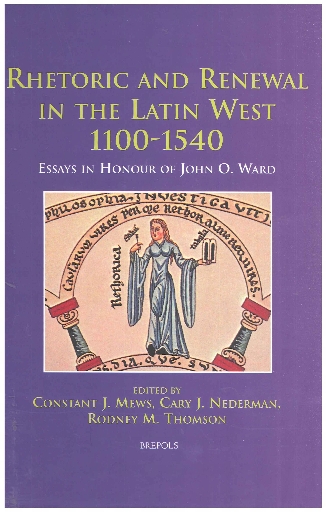
Rhetoric and Renewal in the Latin West 1100-1540
show More to view fulltext, buy and share links for:Rhetoric and Renewal in the Latin West 1100-1540 show Less to hide fulltext, buy and share links for: Rhetoric and Renewal in the Latin West 1100-1540The essays in this volume, presented in honour of John O. Ward, explore the role of rhetoric in promoting reform and renewal in the Latin West from Peter Abelard (1079-1142) to Juan Luis Vives (1492-1540). Ward, who has taught for many years at the University of Sydney, has been an influential and creative force in medieval and renaissance studies both in Australia and internationally. This volume opens with a personal memoir and bibliography of Ward’s publications, as well as an overview of the study of medieval rhetoric. The first of the three sections, ‘Abelard and Rhetoric’, relates Abelard’s rhetoric to his logic, his theology, and his relationship to Heloise. A second section, ‘Voices of Reform’, considers various writers (William of Malmesbury, John of Salisbury, Richard FitzNigel, and William of Ockham) who bring rhetorical techniques to bear upon analysis of social conditions. A third section, ‘Rhetoric in Transition’, deals with the evolution of rhetorical theory between the late fourteenth and early sixteenth centuries. The volume will be of interest not just to specialists in rhetoric, but to all concerned with issues of reform and renewal in European culture during the period 1100-1540.
-
-
-
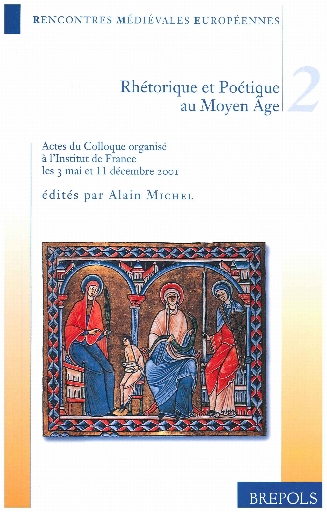
Rhétorique et poétique au Moyen Âge
show More to view fulltext, buy and share links for:Rhétorique et poétique au Moyen Âge show Less to hide fulltext, buy and share links for: Rhétorique et poétique au Moyen ÂgeLe présent Colloque, organisé par les Rencontres médiévales européennes, tend d’abord, ici comme dans d’autres recherches analogues qui ont déjà intéressé la même association, à mettre en lumière, par une démarche pluridisciplinaire, certains aspects de la culture médiévale qui manifestent à la fois sa complexité, sa profondeur et sa beauté. Il s’agit ici de la parole et de la beauté où s’accordent et s’unissent l’art littéraire et la sagesse, philosophique et même théologique.
Il est en effet possible de répondre aujourd’hui à certaines objections qui s’adressent communément au Moyen Âge lui-même et plus largement aux formes d’expression qu’il met en lumière. On lui reproche à la fois d’avoir abusé de la rhétorique et de l’avoir méconnue. Mais les chercheurs savent depuis quelques années que la rhétorique ne se réduit ni à l’abstraction scolastique ni à la sophistique. Dans la forme qu’elle prend jusqu’au xiv e siècle, en se référant à l’Antiquité et en préparant plus qu’on ne croit la Renaissance, elle suscite et reconnaît le progrès du langage, de sa justesse et de ses grâces. Pour cela, elle s’appuie à la fois sur la beauté de l’idéal et sur la rigueur de la pensée, sur la transcendance platonicienne et sur le bon-sens aristotélicien combiné avec l’étendue du savoir. Elle s’accorde aussi avec la poétique, latine ou profane, simplement lyrique, ou tournée vers la liturgie. Nous savons encore aujourd’hui que l’usage positif de l’intelligence peut s’associer avec la naïveté mystique dans un divino-humanisme.
Nous avons voulu montrer dans la tradition qui mène jusqu’à la modernité cette présence constante du coeur: dans la parole la plus fine chacun peut trouver l’amour le plus pur.
-