


Brepols Online Books Medieval Miscellanea Original Archive v2016 - bobar16mimeo

Collection Contents
8 results
-
-
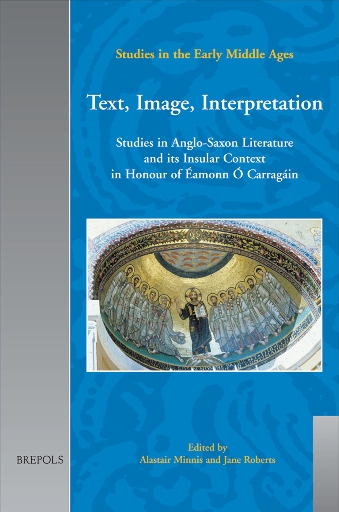
Text, Image, Interpretation:
show More to view fulltext, buy and share links for:Text, Image, Interpretation: show Less to hide fulltext, buy and share links for: Text, Image, Interpretation:In emulation of Professor Éamonn Ó Carragáin, who has, over the last few decades, demonstrated how words and images together join in that extraordinary cultural achievement which is the Ruthwell Cross, the volume seeks to transcend the established methods of the single discipline.
The twenty-six essays draw together insights from fields as diverse as archaeology, art history, and liturgy to reflect on the literature and material culture of the Anglo-Saxons. The first section looks outwards from the insular context, to medieval Rome, more generally to western Europe, and backwards to the world-geography of the ancient world; its illustrations include colour plates to illumine the hangings, clothing and vestments extant from Anglo-Saxon England. A range of texts is considered in the central section, Latin, English, and Old Norse. The third section focuses on sculpture, buildings and the insular landscape, juxtaposing the sculptured stonework of Northern Britain with early Christian monuments and remains from Ireland; among the illustrations are striking coloured photographs of Irish ecclesiastical sites. The contributors are from Canada, the United States, Italy, Britain, and Ireland.
-
-
-

Texte et discours en moyen français
show More to view fulltext, buy and share links for:Texte et discours en moyen français show Less to hide fulltext, buy and share links for: Texte et discours en moyen françaisC’est dans le cadre du renouveau de la linguistique diachronique et de l’attention croissante portée au moyen français que s’inscrivent les présentes études sur la linguistique textuelle du moyen français. Quels sont, dans cette période, les éléments linguistiques contribuant à la structuration du texte? Comment la cohésion textuelle et la continuité thématique sont-elles assurées? Les contributions réunies ici explorent ces domaines, en décrivant l’emploi d’une série de connecteurs, modalisateurs et signes de ponctuation et en analysant les mécanismes sous-jacents au fonctionnement des expressions anaphoriques et des constructions topicalisantes et focalisantes.
Le présent volume, qui est le fruit du XIe colloque international sur le moyen français tenu à Anvers (19-21 mai 2005), offre une analyse originale et détaillée des outils linguistiques dont dispose le moyen français pour rendre accessible son discours.
-
-
-
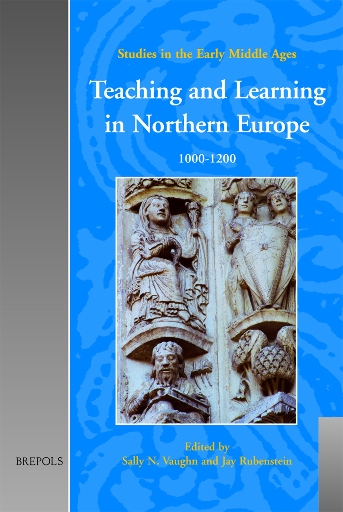
Teaching and Learning in Northern Europe
show More to view fulltext, buy and share links for:Teaching and Learning in Northern Europe show Less to hide fulltext, buy and share links for: Teaching and Learning in Northern EuropeThe essays in this collection focus not on texts but on people, specifically on teachers and their students, beginning with the late Carolingian era and continuing through the creation of monastic and secular schools in the centuries before the first universities. Central to the articles in this volume are the schools and communities of Northern France and England, including Reims, Bec, Soissons, and Canterbury, whose patterns of thought and learning gave shape to intellectual endeavours throughout medieval Europe. In addition to some of the most prominent personalities of the day (among them Gerbert of Reims, Lanfranc and Anselm of Bec, Ivo of Chatres, and John of Salisbury), the contributors examine those teachers and students who worked in the shadows: figures like the biblical exegete Richard of Préaux and the musical innovator Theinred of Dover. The focus throughout the volume is on personalities and personal relationships, thus recreating the human connections that lay behind medieval humanism and the Twelfth-Century Renaissance. Taken together, the essays here create a coherent and compelling picture of the tumultuous time before the universities came to organize and take control of teaching and learning, a seminal period when teaching methods and curricula grew out of the particular experience of specific teachers and their interactions with their students.
-
-
-
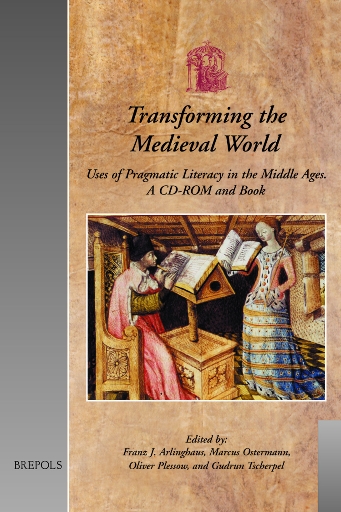
Transforming the Medieval World
show More to view fulltext, buy and share links for:Transforming the Medieval World show Less to hide fulltext, buy and share links for: Transforming the Medieval WorldWhen viewed retrospectively, the period between the eleventh and the fifteenth centuries was a phase of European history that was characterized by a radical and fundamental media transformation. Before this time, the vast majority of the population had never encountered the written word in their day-to-day activities. From the beginning of the second millennium, however, texts began to appear in, and influence, almost every sphere of human life. Medieval written texts were subject to revision, copying, embellishments, and deletions; they were read silently and aloud, and they were recited in a variety of contexts. The multimedia environment offered on the CD visualizes these textual transformations and illustrates the adaptability and dynamism of writing and its reception. The uses of writing in this early phase of intensive European literacy are analysed in eleven separate multimedia presentations, which are almost all based on research carried out by the Special Research Unit (SFB) between 1986 and 1999. The CD also contains an anthology of important essays, which provide the user with further reading materials, as well as a general bibliography. The book which accompanies the CD-ROM facilitates the use of the CD itself, and provides the various multimedia presentations in written format. As such, Transforming the Medieval World will be invaluable to both scholars and students interested in medieval literacy.
-
-
-
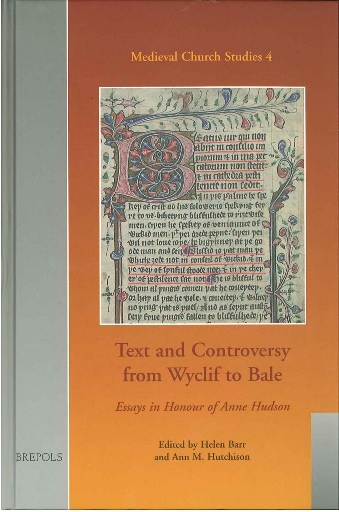
Text and Controversy from Wyclif to Bale
show More to view fulltext, buy and share links for:Text and Controversy from Wyclif to Bale show Less to hide fulltext, buy and share links for: Text and Controversy from Wyclif to BaleText and Controversy from Wyclif to Bale reflects and develops Anne Hudson’s pioneering work in textual criticism and religious controversy from the late medieval period to the Reformation. Written by newly emergent as well as internationally recognised scholars, the volume explores the wide spectrum of religious thought and practices between c. 1360 and c. 1560. Many essays, following the methodology of Anne Hudson’s scholarship, engage in the close study of manuscripts and archival holdings, disclosing new material and offering significant re-evaluation of documentary evidence and neglected texts. At a time of urgent calls for the reform of the Church, both in Britain and in mainland Europe, the voices of heresy can not always be distinguished from those of orthodox critics. Anne Hudson’s coinage of the term ‘grey area’ to describe the indeterminate boundary between radical orthodoxy and heterodoxy provides the lead for investigations into theological debate, devotional habits, and censorship. The volume significantly redefines our understanding of texts, history, and controversies from Wyclif to Bale.
-
-
-
The Theory and Practice of Translation in the Middle Ages
show More to view fulltext, buy and share links for:The Theory and Practice of Translation in the Middle Ages show Less to hide fulltext, buy and share links for: The Theory and Practice of Translation in the Middle Ages[El interés que los autores de estos trabajos demuestran por las complejidades y consecuencias de la traducción en la Edad Media, o de la traducción de textos medievales en el período moderno, ha dado como resultado un volumen diverso y estimulante intelectualmente. Los trabajos del presente volumen, escritos en inglés, francés y español, se centran en el tema de la traducción desde muchas perspectivas, ofreciendo una amplia gama de interpretaciones del concepto de traducción. El volumen contiene trabajos que abarcan en el tiempo desde el período Anglo-Sajón hasta el presente, y en temática desde libros de recetas medievales hasta argumentos a favor de que las mujeres administren la Eucaristía. Las lenguas que se estudian incluyen no sólo lenguas no europeas sino también el Latín y numerosas vernáculas europeas, ya sean como lengua origen o lengua meta. Como cualquier traductor o estudioso de la traducción puede rápidamente constatar, es imposible separar lengua de cultura. Todos los autores de este volumen han analizado en profundidad las complejidades de la traducción como hecho cultural, aún cuando el foco de atención pareciera ser específicamente lingüístico. Son estas complejidades las que dotan al estudio de la teoría y práctica de la traducción en la Edad Media de su perdurable fascinación.
,The interest of the writers of these essays in the intricacies and implications of translation in the Middle Ages, or of the translation of medieval texts in the modern period, has resulted in a diverse and intellectually stimulating volume. The papers in this volume, written in either English, French, or Spanish, approach translation from a wide variety of perspectives and offer a range of interpretations of the concept of translation. The volume contains essays ranging in time from the Anglo Saxon period to the present, and in topic from medieval recipe books to arguments in favour of women administering the sacrament. Languages studied include non-European languages as well as Latin and numerous European vernaculars as both source and target languages. As any translator or student of translation quickly becomes aware, it is impossible to divorce language from culture. All the contributors to this volume struggle with the complexities of translation as a cultural act, even when the focus would seem to be specifically linguistic. It is these complexities which lend the study of the theory and practice of translation in the Middle Ages its enduring fascination.
,Complexité et fascination: deux mots qui reviennent souvent à l’esprit au contact des textes médiévaux, au point qu’ils pourraient servir à caractériser la nature des rapports qui unissent ces textes à leurs traducteurs. Dans leur diversité, les communications entendues à Saint-Jacques-de-Compostelle illustrent, chacune à sa manière, de nombreux aspects de cette complexité, qu’il s’agisse des sujets traités ou des problèmes techniques soulevés. Le rapport au temps qu’impose le texte médiéval se double d’un rapport à la distance, car la différence culturelle se présente au traducteur comme un éloignement, ce qui, dans le travail de rapprochement que constitue alors la traduction, introduit la notion d’interprétation. A son tour cette interprétation, avec ses degrés, est étroitement dépendante des objectifs pédagogiques, culturels, politiques ou religieux que s’est fixés le traducteur, comme cela apparaîtra clairement à la lecture d’un certain nombre de ces communications. Plusieurs études de ce recueil confirment également que la traduction, loin d’être un travail de solitaire, est avant tout un acte social, une activité de mise en relations. C’est cette patiente recherche d’adaptation à des publics différents, en fonction d’époques et de goûts différents, accompagnée de choix tour à tour réjouissants et frustrants, qui constitue le travail de tout traducteur, qu’il appartienne au Moyen Âge ou au monde moderne. C’est aussi cette richesse, venue du passé mais toujours actuelle, et cette recherche sans cesse reprise d’un équilibre toujours instable, qui font que la traduction, dans sa pratique comme dans sa théorie, exerce sur tant d’esprits une réelle fascination.
]
-
-
-
Time and Eternity
show More to view fulltext, buy and share links for:Time and Eternity show Less to hide fulltext, buy and share links for: Time and EternityThis volume is composed of selected papers from the main strand ‘Time and Eternity’ at the seventh International Medieval Congress held in July 2000. It attests to the fact that the medieval experience of time and eternity was rich and complex, and that its investigation is open to various approaches and methods. Time and (the possibility or impossibility of) its beginning and its end were frontiers to be explored and to be understood.
To make the reader more familiar with the field of study, the volume begins with Wesley Stevens’s plenary address ‘A Present Sense of Things Past: Quid est enim tempus?’, a stimulating introduction not only with regard to some of the basic problems in conceptualizing the nature of time but also to the dating of historical events and the use of calendars for that purpose.
Following Stevens’s essay, the volume is organised into seven broader themes covering a variety of questions and trying to offer new insights into the medieval perception and constructions of time. They deal with the computation of time and the use of calendars; Jewish concepts of time and redemption; Christian philosophies of eternity and time; monastic and clerical conceptions; literary representations; time and art; and apocalyptic expectations. The volume’s selection of authors is international in scope and represents some of the leading current scholarship in the field. It proves that we still ‘thirst to know the power and the nature of time’ (St Augustine).
-
-
-
The Translation of the Works of St Birgitta of Sweden into the Medieval European Vernacular
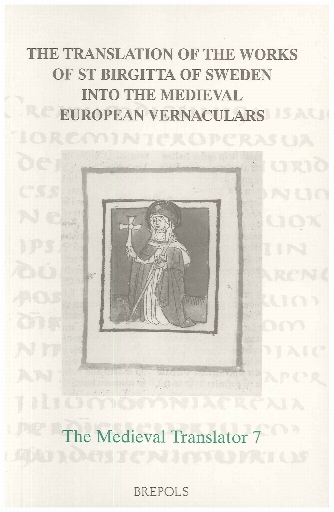
show More to view fulltext, buy and share links for:The Translation of the Works of St Birgitta of Sweden into the Medieval European Vernacular show Less to hide fulltext, buy and share links for: The Translation of the Works of St Birgitta of Sweden into the Medieval European VernacularThis volume of papers, from an international Conference held in Beverley in 1997 on the translation into the medieval European vernaculars of the works of St Birgitta of Sweden, forms volume 7 in the series The Medieval Translator. Previous volumes in the series have been based on papers heard at the Cardiff Conferences on the Theory and Practice of Translation in the Middle Ages (1987- ). While future volumes in the series will continue to provide a record of the Cardiff Conference (the next is planned for Compostella in 2001), the present volume provides a welcome development for the series, and paves the way for scholarly monographs on individual works and writers — including editions of medieval translations — and other publications more narrowly angled at the different questions raised by the study of medieval translation.
-