Brepols Online Books Medieval Miscellanea Original Archive v2016 - bobar16mimeo

Collection Contents
181 - 200 of 254 results
-
-
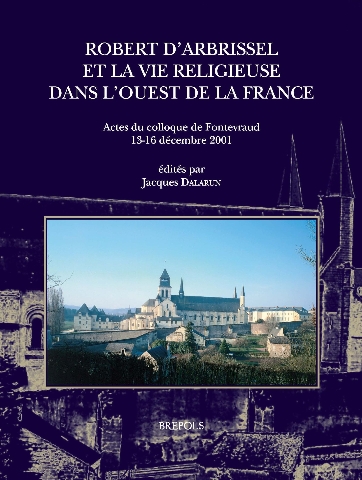
Robert d’Arbrissel et la vie religieuse dans l’Ouest de la France
show More to view fulltext, buy and share links for:Robert d’Arbrissel et la vie religieuse dans l’Ouest de la France show Less to hide fulltext, buy and share links for: Robert d’Arbrissel et la vie religieuse dans l’Ouest de la FranceFontevraud: 1101-2001. Fontevraud: à la fois monastère et congrégation, communauté mixte où, par la singulière volonté du fondateur, les hommes en ce temps féodal étaient soumis au pouvoir des femmes. Célébrer le neuvième centenaire de la fondation de Robert d’Arbrissel s’imposait; ce qui fut fait du 13 au 16 décembre 2001, dans l’enceinte même de la somptueuse abbaye ligérienne.
Le présent volume témoigne de ces denses journées d’étude; il intègre aussi des contributions supplémentaires, pour gagner encore en richesse et en cohérence. Volontairement déroutant, il nous entraîne d’abord bien loin du Val de Loire, dans les solitudes boisées des Apennins, où le ressourcement monastique surgi du haut Moyen Âge inaugure ce Moyen Âge que nous disons central. Les organisateurs scientifiques de la rencontre n’ont en effet pas souhaité la focaliser d’emblée sur l’originalité de Fontevraud et les étranges comportements de son fondateur. Ils ont au contraire voulu donner à lire l’accident de 1101 dans le vaste élan qui ouvre une ère nouvelle pour la Chrétienté et pour notre monde en ce qu’il en procède: cette réforme de l’Église qu’on dit «grégorienne», qui repense en fait toute l’architecture ecclésiale et sociale, des plus hauts aux plus infimes pouvoirs, des institutions aux individus et du sacré au profane.
-
-
-
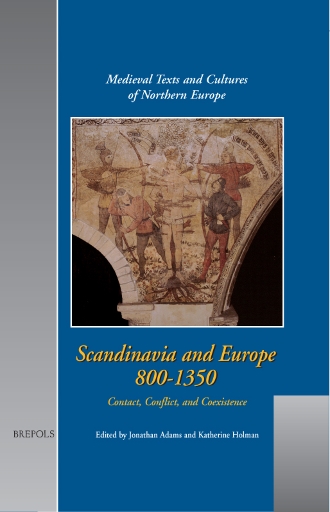
Scandinavia and Europe 800-1350
show More to view fulltext, buy and share links for:Scandinavia and Europe 800-1350 show Less to hide fulltext, buy and share links for: Scandinavia and Europe 800-1350This volume examines the various forms of contact between Scandinavia and the rest of Europe from 800 to 1350. It consists of twenty-five papers from international scholars specialising in archaeology, onomastics, literature, art history, epigraphy, religious history and linguistics. The volume is innovative in three respects: (i) in transcending conventional historical boundaries, by bringing together work on both the viking and medieval periods; (ii) by examining the ways in which mainland Europe influenced Scandinavia (e.g. kingship, law and social organization; and classical and continental literary traditions); and (iii) by synthesising all the material for an English-language readership for the first time. The broader timespan of investigation illustrates the changing nature of contact and the gradual integration of Scandinavia into European society: by 1350 Scandinavia was no longer a heathen outpost on the periphery of the known world, but an integral part of Western Christendom. The cultural impact of mainland Europe on Scandinavia, frequently mediated through religious channels, although less dramatic, is shown to have had a more significant long-term impact than the earlier viking raids. The volume is structured around the following sections: Historical and Archaeological Evidence for [Scandinavian] Contact with the British Isles; Evidence for the Linguistic Impact of Scandinavian Settlement; Evidence for the Impact of Christianity on Scandinavia; and Textual Evidence for Contact, Conflict, and Coexistence.
-
-
-

Seeing and Knowing
show More to view fulltext, buy and share links for:Seeing and Knowing show Less to hide fulltext, buy and share links for: Seeing and KnowingThe transmission of knowledge in clerical and academic settings of the later Middle Ages has been relatively well studied by traditional scholarship. But successes achieved in other subject-areas by the application of a set of methodologies grouped under the rubric of ‘gender studies’ may offer insights into medieval education. This approach invites a re-examination in gender-political terms of the definition of knowledge by clerical elites and the concomitant rejection from the category of ‘knowledge’ of many varieties of knowledge which did not coincide with their template. The ten articles of this volume focus both on the perennial valorization of the content and methods of clerical/academic education, on the limitation of venues for its transmission to sites from which women were categorically excluded, and, in terms of media for the transmission of knowledge, on the attendant restriction of the techniques and media considered valid for the storage, retrieval, and communication of knowledge to those that were current in these privileged sites.
The volume addresses the following issues: what varieties of knowledge were available to communities of women? What kinds of knowledge originated in or became characteristic of women’s communities? What techniques did women develop to preserve and transmit their knowledge? In what ways and with what success was women’s knowledge valorized, both by authors from within these communities and by ‘authoritative’ figures from outside? Under what circumstances could women become authoritative originators of and transmitters of knowledge?
-
-
-
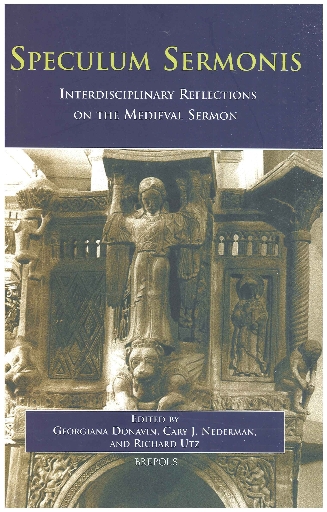
Speculum Sermonis
show More to view fulltext, buy and share links for:Speculum Sermonis show Less to hide fulltext, buy and share links for: Speculum SermonisThe medieval sermon provides the focus for the first volume of Disputatio because it often expresses the concerns of various intellectual milieux, such as the university, Church or court, and attempts to convey those concerns to other parts of medieval society.
Speculum Sermonis is an anthology of essays about medieval sermons in the Christian East and West. It aims to reveal precisely how sermons inform different disciplines (for instance, social and Church history, literature, musicology) and how the methodologies of different disciplines inform sermons. Sermons can, for instance, provide evidence for a reconstruction of medieval liturgy; reciprocally, the field of liturgiology investigates sermons as one aspect of Church performance. The volume’s title image of the mirror and the reference to medieval specula convey the idea of multiple reflections: the sermons’ on culture and the disciplines’ on sermons. Because the contributors to Speculum Sermonis come from a variety of fields, the essays here collectively provide a rich historical and contemporary academic context for reading the medieval sermon.
In addition to essays from across the fields, a number of which establish conclusions transcending disciplinary boundaries, Speculum Sermonis includes an introduction defending interdisciplinary study of sermons and an authoritative bibliography covering both primary and secondary resources for medieval sermons. A unique feature of the volume is the inclusion of response papers to the essays in each of the sections, in the spirit of the book series title Disputatio.
-
-
-

The Appearances of Medieval Rituals
show More to view fulltext, buy and share links for:The Appearances of Medieval Rituals show Less to hide fulltext, buy and share links for: The Appearances of Medieval RitualsAppearances can be deceptive; and medieval ritual practices are in this respect no exception. They perform stability through the codification of repetitive modes of behaviour and simultaneously admit flexibility in their integration of newer forms of representation. They mask the historical contingencies of their own creation and construct alternative narratives of authority and continuity. They do not simply appear; their appearance reflects the mutual interplay of construction and modification.
This collection of eleven essays-which chronologically spans the period from the Carolingians to the Catholic Reform movement of the later sixteenth century-explores this double-edged potential in the appearance of medieval ritual practices; and, in this case, chiefly church rituals. It comprises a series of individual studies by scholars of literature, theology, music, and the visual arts. Each study examines a particular moment of change or transformation in ritual practices, illuminating, thereby, processes of ritualization. In this way, the book both provides an impulse to the recent renewal of methodological interest in ritual studies and presents individual contributions to specific scholarly discourses within this broad area.
-
-
-
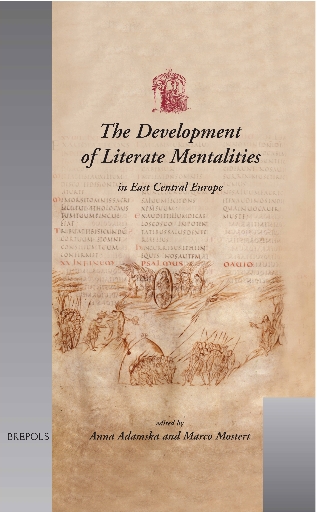
The Development of Literate Mentalities in East Central Europe
show More to view fulltext, buy and share links for:The Development of Literate Mentalities in East Central Europe show Less to hide fulltext, buy and share links for: The Development of Literate Mentalities in East Central EuropeCompared with most of mainland Europe north of the Alps, the introduction of writing in East Central Europe (Bohemia, Poland and Hungary) took place with a considerable delay. Much is known about East Central European uses of writing, although only a fragment of this knowledge is known outside the region. Gathered by historians, palaeographers and codicologists, diplomatists, art historians, literary historians and others, this knowledge has hardly ever been studied in the light of recent discussions on medieval literacy and communication. Work done in the Czech, Polish and Hungarian traditions of scholarship has never been subjected to a comparative analysis. Furthermore, the question of the relation between writing and other forms of communication in the region remains largely unexplored. The volume serves a double purpose. For the first time, a collection of contributions on medieval literacy in East Central Europe is put before the forum of international scholarship. It is also hoped to further discussions of modes of communication, literate behaviour and mentalities among scholars working in the region.
-
-
-
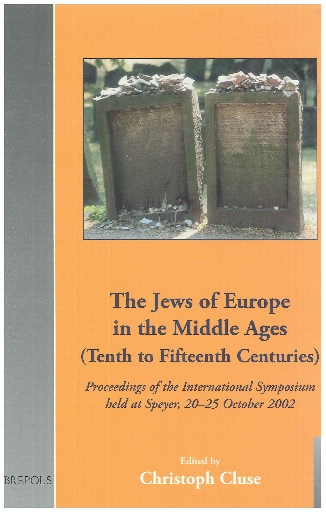
The Jews of Europe in the Middle Ages (Tenth to Fifteenth Centuries)
show More to view fulltext, buy and share links for:The Jews of Europe in the Middle Ages (Tenth to Fifteenth Centuries) show Less to hide fulltext, buy and share links for: The Jews of Europe in the Middle Ages (Tenth to Fifteenth Centuries)The Jews of Europe in the Middle Ages presents the proceedings of an international symposium held at Speyer (Germany) in October, 2002. The collection aims at a comprehensive (and comprehensible) overview describing the variety of historical experience for European Jewries from c. 1000 to c. 1500. Leading European historians firmly based in regional, archival research have here been brought together with a number of Israeli and American scholars who concentrate on legal and constitutional aspects of the Jewish community. Historians working on medieval Mediterranean Jewries (Sicily, Spain, Provence, etc.) and those studying the northern communities (England, Northern France, and Ashkenaz) present their findings in a single, one-language collection. Regional overviews are supplemented by studies on cultural, economic, social, and linguistic aspects as well as by portraits of individual (northern) Jewish communities. The collection highlights the similarities and differences among the various European Jewish cultures, demonstrating that these cultures were no less European than they were Jewish. At the same time, the Jewish heritage has deeply influenced medieval and modern European majority cultures. This cultural symbiosis was epitomized in the European Jewish community (kahal, aljama).
-
-
-
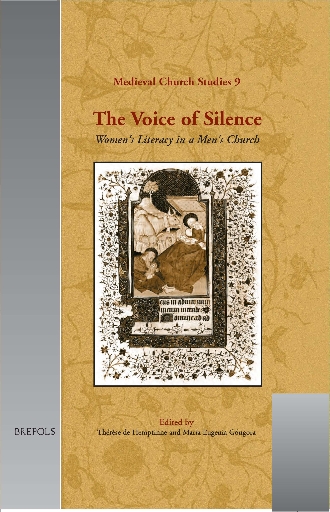
The Voice of Silence
show More to view fulltext, buy and share links for:The Voice of Silence show Less to hide fulltext, buy and share links for: The Voice of SilenceThis book aims to collect and present the results of research done within the context of the project ‘The voice of silence / La voz del silencio: An interdisciplinary research project about literate women and women authors in the West-European late Middle Ages from a gender perspective (11th to 15th centuries)’. The project was a bilateral research project, with participants of the University of Chile in Santiago on the one hand and the Universities of Gent and Antwerpen on the other. Medieval scholars, literary historians and literary theorists joined forces. The angle from which the material was being studied, however, was always the same: gender being the central issue. The project focused on women as participants in late medieval society and culture of the Rhineland and the Low Countries. Indeed, all the researchers involved acquired their expertise in this field and/or the field of women’s literacy.
Several members of this Flemish-Chilean project have contributed an essay to this book, but supplemented by guest authors. The guests are internationally renowned scholars reflecting an expertise in gender studies or in an aspect not covered by the team members of the project. Their contributions complete the research results of the project.
The story told in this book is focused on literate women and gender. In the course of the twelfth and thirteenth centuries, the voices of women authors, many of them religious and mystics, resounded in a literate society dominated by clerics. Hildegard of Bingen and Hadewijch, two of the most famous representatives of this ‘female voice’ are highlighted in Part I. These women were the forerunners of a new reading culture among (semi-)religious and even lay women in which the use of the vernacular was a decisive factor (Part II). Yet, from the thirteenth century onwards, and with increasing intensity towards the end of the Middle Ages, men once more tried to get a grip on women’s reading and writing. Aspects of these attemps are illustrated in part III.
-
-
-
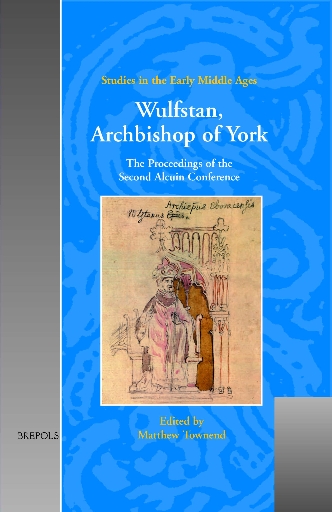
Wulfstan, Archbishop of York
show More to view fulltext, buy and share links for:Wulfstan, Archbishop of York show Less to hide fulltext, buy and share links for: Wulfstan, Archbishop of YorkMost famous for his harrowing ‘Sermon of the Wolf to the English’, Archbishop Wulfstan II of York (1002-23) has emerged in recent decades as one of the most important and influential figures in the late Anglo-Saxon church and state. This volume, which arises from a conference held in 2002 to mark the millennial anniversary of Wulfstan’s appointment as archbishop, is the first collection of essays to be devoted to this crucial figure. Its twenty contributors address the whole range of Wulfstan’s activities and writings, and supply not only an up-to-date survey of Wulfstan studies but also many new directions, discoveries, and insights. The studies within this volume variously explore Wulfstan’s preaching and law-making; his position in the late Anglo-Saxon church; the places and contexts in which he lived and worked; and, more generally, his learning, concerns, and ideas. The contributors, drawn from a variety of disciplines, bring together literary, historical, and art historical approaches to the study of Wulfstan, and a recurrent focus is on the extant manuscripts associated with him. Altogether, therefore, this volume provides a thorough and wide-ranging exploration of the life, works, and contexts of one of the most important of all Anglo-Saxons.
-
-
-
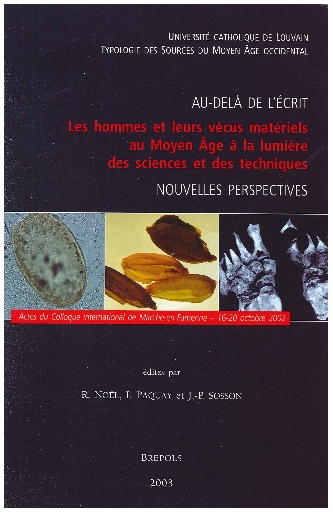
Au-delà de l’écrit. Les hommes et leurs vécus matériels au Moyen Âge à la lumière des sciences et des techniques
show More to view fulltext, buy and share links for:Au-delà de l’écrit. Les hommes et leurs vécus matériels au Moyen Âge à la lumière des sciences et des techniques show Less to hide fulltext, buy and share links for: Au-delà de l’écrit. Les hommes et leurs vécus matériels au Moyen Âge à la lumière des sciences et des techniques«L’histoire se fait avec des documents. Quand il y en a. Mais elle peut se faire, elle doit se faire avec tout ce que l’ingéniosité de l’historien peut lui permettre d’utiliser…» (L. Febvre). Ces propos, les médiévistes les ont faits leurs. Sciences naturelles et de la terre, méthodes de détection et d’enregistrement des traces de l’activité des hommes ont permis des avancées spectaculaires. Toujours plus sûres d’elles-mêmes, elles ouvrent sans cesse des perspectives au vrai vertigineuses.
La Typologie des sources du Moyen Âge occidental s’est résolument inscrite dans ce mouvement. Elle voudrait aujourd’hui faire le point, encourager aussi l’ouverture de nouveaux chantiers. Selon ses perspectives. Et en retenant deux approches complémentaires: théorique et pratique. La première mettra en valeur les développements récents et les perspectives nouvelles qu’offrent potentiellement sciences et techniques pour l’étude des communautés humaines dans leurs «vécus» matériels. La seconde privilégiera des cas particuliers illustrant concrètement les apports et les limites que la critique et la typologie des sources imposent à celles-là.
-
-
-
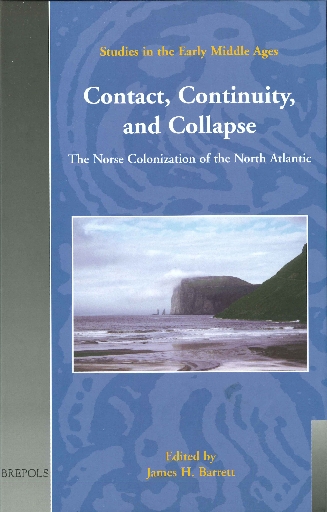
Contact, Continuity, and Collapse
show More to view fulltext, buy and share links for:Contact, Continuity, and Collapse show Less to hide fulltext, buy and share links for: Contact, Continuity, and CollapseThis volume explores the Viking Age colonization and exploration of the North Atlantic, from Arctic Norway to Vinland in eastern North America. Its contributors, predominately archaeologists by training, bring new evidence and an interdisciplinary perspective to a subject often dominated by sources of variable historicity. They explore the creation and transformation of ethnicity in new lands - some occupied, others empty. They also address the historiography of Norse Landnám, unravelling the processes by which scholarly interpretations of the Viking Age have been created. The result illuminates the consequences of migration in the early Middle Ages and the interplay of local and large-scale socio-economic processes. In concluding, the volume assesses the relationship between Norse expansion and later European ‘rediscovery’ of the New World.
-
-
-

Court Culture in the Early Middle Ages
show More to view fulltext, buy and share links for:Court Culture in the Early Middle Ages show Less to hide fulltext, buy and share links for: Court Culture in the Early Middle AgesThe role of the court in early medieval polities has long been recognised as an essential force in the running of the kingdom. The court was not only an organ of central government but a sociological community with its own ideology and culture, and a place where royal power was both displayed and negotiated. The studies within this volume reflect the diversity of modern court studies, considering the court as a social body and considering its educative and ideological activities. The contributors to this volume bring together historical, archaeological, art historical and literary approaches to the topic as they consider aspects of court life in England, Francia, Rome and Byzantium from the eighth to the tenth centuries. The volume therefore looks at court life in the round, emphasizes and invites connections between early medieval courts, and opens new perspectives for the understanding of early medieval courts.
-
-
-
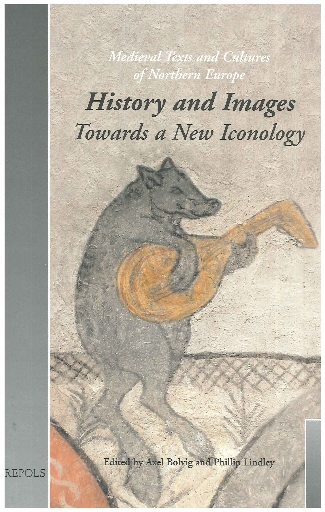
History and Images
show More to view fulltext, buy and share links for:History and Images show Less to hide fulltext, buy and share links for: History and ImagesThis versatile collection of essays sets out to underline the new visual agenda in today’s research into history and the history of art. The impact of alternative imagery, of image databases and of computer-generated material has effectively revealed a separate resource-category, offering further definitions of meaning and information and requiring new methodologies of interpretation. The volume’s subtitle, ‘Towards a New Iconology’, makes the point that our conventional approaches towards the image may no longer be adequate. Its nineteen contributions all represent a moving-away from the tradition passed down ever since Gregory the Great famously pronounced images to be the Bible of the illiterate. On the contrary, the authors of this volume demonstrate that images constitute another world altogether, with its own ideology and store of information, and with its own emotional charge and seductive qualities. History and Images contains articles by eminent scholars from Austria, Denmark, Finland, France, Germany, the Netherlands, Norway, Sweden, Switzerland, the UK and USA.
-
-
-
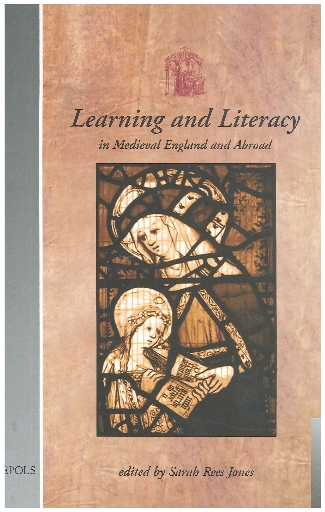
Learning and Literacy in Medieval England and Abroad
show More to view fulltext, buy and share links for:Learning and Literacy in Medieval England and Abroad show Less to hide fulltext, buy and share links for: Learning and Literacy in Medieval England and AbroadHow did people know what they knew, and learn what they learnt? As Derek Pearsall’s introduction makes clear this is the primary focus of the collection of essays published in celebration of the thirtieth anniversary of the foundation of the Centre for Medieval Studies at the University of York.
The learning materials included range from grammar books to mystery plays, and from court records to monastic chronicles, as well as liturgical and devotional texts. But the essays are not only concerned with texts alone, but with the broader and often fluid social environments in which learning took place. Many of the papers therefore question the validity of some distinctions habitually used in the discussion of medieval culture, such as the opposition between orality and literacy, between Latin and the vernacular or between secular and religious.
-
-
-
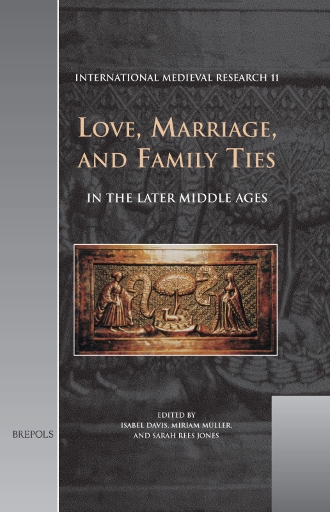
Love, Marriage, and Family Ties in the Later Middle Ages
show More to view fulltext, buy and share links for:Love, Marriage, and Family Ties in the Later Middle Ages show Less to hide fulltext, buy and share links for: Love, Marriage, and Family Ties in the Later Middle AgesThis volume addresses the current fashion for research on the family and domesticity in the past. It draws together work from various disciplines - historical, art-historical, and literary - with their very different source materials and from a broad geographical area, including some countries - such as Croatia and Poland - which are not usually considered in standard textbooks on the medieval family. This volume considers the various affective relationships within and around the family and the manner in which those relationships were regulated and ritualized in more public arenas. Despite their disparate approaches and geographical spread, these essays share many thematic concerns; the ideologies which structured gender roles, inheritance rights, incest law and the ethics of domestic violence, for example, are all considered here. This collection originates from the Leeds IMC in 2001 when the special strand was entitled ‘Domus and Familia’ and attracted huge participation. This book aims to reflect that richness and variety whilst contributing to an expanding area of historical enquiry.
-
-
-
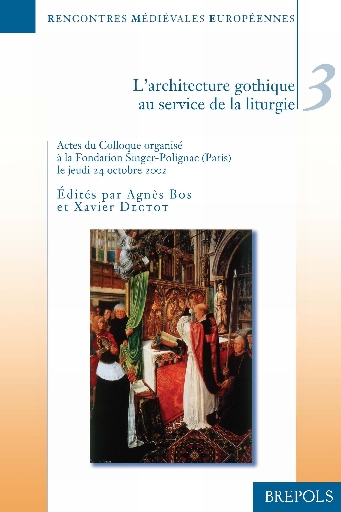
L’architecture gothique au service de la liturgie
show More to view fulltext, buy and share links for:L’architecture gothique au service de la liturgie show Less to hide fulltext, buy and share links for: L’architecture gothique au service de la liturgieContrairement à ce que l’on a longtemps cru, l’architecture gothique ne naît pas simplement d’une évolution des formes et des techniques de construction. Bien au contraire, celles-ci ne sont que le moyen par lequel une génération nouvelle, dont Suger, abbé et maître d’œuvre de Saint-Denis, est le chef de file, adapte les lieux de culte à ses nouvelles exigences. Un premier colloque, tenu en 2000 à la fondation Singer-Polignac, avait permis de dessiner l’ambiance intellectuelle dans laquelle était né l’art nouveau: l’humanisme de l’école de Saint-Victor. À côté de ce renouveau intellectuel, il fallait également prendre en compte l’importance des transformations liturgiques qui se nouent au xii e siècle et qui jouent un rôle fondamental dans le renouveau inauguré par Saint-Denis. C’est la tâche dont se sont chargés sept historiens de l’art, de la littérature, de la musique, de la liturgie et des idées. Le rôle de Rome et des voyages italiens de l’abbé Suger apparaît prépondérant. L’architecture nouvelle adapte les édifices français aux exigences liturgiques créées par la réforme romaine, au lendemain de la querelle des investitures. Plus qu’un simple problème esthétique, et par-delà ses implications théologiques et philosophiques, le gothique est un art profondément ancré dans son époque et qui cherche à répondre aux problèmes nouveaux et aux nouveaux besoins fonctionnels qui s’affirment alors.
-
-
-
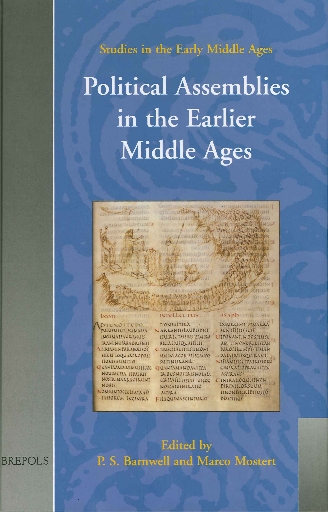
Political Assemblies in the Earlier Middle Ages
show More to view fulltext, buy and share links for:Political Assemblies in the Earlier Middle Ages show Less to hide fulltext, buy and share links for: Political Assemblies in the Earlier Middle AgesAssembly is a central feature of the European political process between the demise of the Roman Empire and the rise of the bureaucratic state in the twelfth and thirteenth centuries. Historians have often neglected the crucial rule of political assemblies in their own right, concentrating instead on exceptional or extraordinary attention-catching events which occurred at assemblies. Earlier generations of scholars tried to discern in such assemblies the forerunners of later medieval parliaments and other forms of representative government. By contrast, the contributors to this volume present medieval assemblies in their own terms.
Were political assemblies in the earlier Middle Ages convened to confirm decisions already taken elsewhere or were they genuinely deliberative? How, if at all, did political assemblies create consensus? At what level(s) of the political and administrative hierarchy were assemblies held, who attended such gatherings, how were they conducted, and where were they held? The main focus is on assemblies of emperors, kings, and princes, and on those of townsfolk, though some more local assemblies are also discussed. The over-arching thematic structure relates to the purposes of assemblies and how they worked, their practical and ritual or symbolic aspects, and the degree to which they were stage-managed, and by whom. The contributors bring archaeological, as well as historical, evidence to bear and present a range of geographical, political and historiographical approaches and traditions.
-
-
-
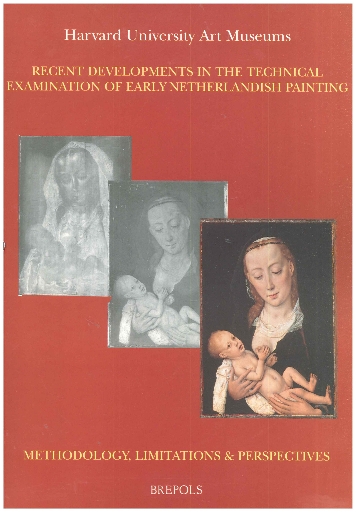
Recent Developments in the Technical Examination of Early Netherlandish Painting: Methodology, Limitations and Perspectives
show More to view fulltext, buy and share links for:Recent Developments in the Technical Examination of Early Netherlandish Painting: Methodology, Limitations and Perspectives show Less to hide fulltext, buy and share links for: Recent Developments in the Technical Examination of Early Netherlandish Painting: Methodology, Limitations and Perspectives
-