Brepols Online Books Medieval Miscellanea Original Archive v2016 - bobar16mimeo

Collection Contents
241 - 254 of 254 results
-
-
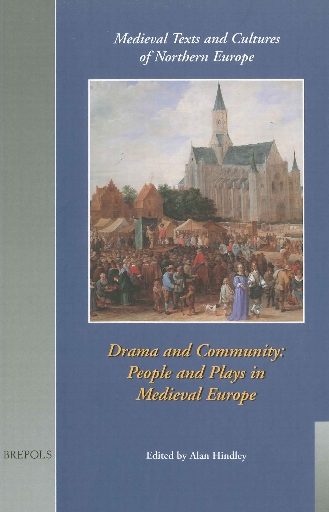
Drama and Community
show More to view fulltext, buy and share links for:Drama and Community show Less to hide fulltext, buy and share links for: Drama and CommunityIn recent years medieval drama has seen a marked revival of interest, much of it informed by an increasing appreciation of its multi-disciplinary nature. The drama of medieval Europe is not just literature; it is a social and indeed commercial event, essentially a communal enterprise, inextricably bound up with the structures of society. This collection of essays by international scholars working in collaboration examines various aspects of the inter-relationship between different European communities and the plays they performed. Its coverage of a wide range of theatres and play-types provides a critical and practical perspective on performance cultures of the Northern Middle Ages. The comparative nature of this volume has the effect of underlining drama as a true medieval mass medium.
-
-
-
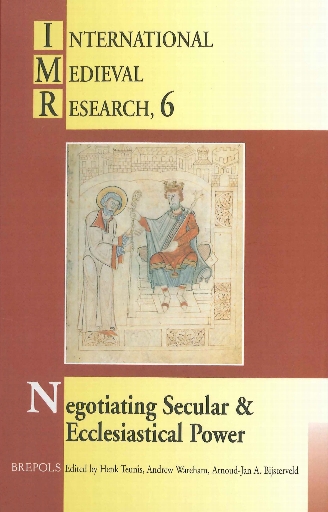
Negotiating Secular and Ecclesiastical Power
show More to view fulltext, buy and share links for:Negotiating Secular and Ecclesiastical Power show Less to hide fulltext, buy and share links for: Negotiating Secular and Ecclesiastical PowerTraditional historiography generally stresses the opposition and contradiction between secular and ecclesiastical power. By contrast, this volume focuses upon the interdependence of secular and ecclesiastical power and on the ways both secular rulers, kings, counts and other lords, and ecclesiastical authorities and institutions continuously interacted, trying to affirm the relationships between them. This selection of a historiographical introduction plus nine case-studies from England, northern France and the Low Countries enables a subtle comparison of secular and ecclesiastical links and social interactions in a series of regional and local contexts during the Central Middle Ages. The volume demonstrates that this process of negotiation led to an affirmation of shared values and contributed to the creation of common social values in medieval Europe.
Ludo Milis (Universiteit Gent), “This book, composed around three major themes (‘Texts as Tools of Power’, ‘Land and Kinship’, and ‘Conflict and Affirmation’), exemplifies how medievalists can reshape their discipline into a more responsive one. Its scope is not to offer a wide range of definitive explanations, but it shows how medievalists should try (and indeed do try) to return to a close reading of their documents. For far too long, institutional history, legal history, and histoire événémentielle have tried to monopolize power relationships and to encapsulate them in rather narrow explanatory schemes. This volume offers a broader and more encompassing approach.”
-
-
-

New Approaches to Medieval Communication
show More to view fulltext, buy and share links for:New Approaches to Medieval Communication show Less to hide fulltext, buy and share links for: New Approaches to Medieval CommunicationThis volume will serve as a textbook for studying this field, and as an introduction to current research. It is written in accessible language for non-specialists. The volume has three sections: introductions by two of the leading exponents worldwide: Michael Clanchy and Marco Mostert; a series of essays by members of the Utrecht ‘Pionierproject’ which consider writing and written culture against the background of all forms of communication available to a given medieval society, both in western and east-central Europe; and a comprehensive bibliography on the subject, comprising 1500 titles which will serve as a fundamental starting-point for work in this field.
-
-
-

New Trends in Feminine Spirituality
show More to view fulltext, buy and share links for:New Trends in Feminine Spirituality show Less to hide fulltext, buy and share links for: New Trends in Feminine SpiritualityWas there a women’s movement in the thirteenth century and is such a question meaningful in its medieval context? Far from being resolved, the issue of whether women had a thirteenth-century renaissance has still decisively to unsettle the periodization of Western European history in twelfth and sixteenth-century humanist renaissances. Herbert Grundmann long ago demonstrated the participation of women in the eremitically-inspired reforming movements of the twelfth and thirteenth centuries, and in the production of vernacular literature. Yet it is upon his work that this volume builds, for the diocese of Liège is the key area in this development. It was from Liège that Jacques de Vitry approached the papacy to secure permission for the women of the bishopric of Liège, France and Germany to live together and to promote holiness in each other by mutual example. The seventeen contributors to this volume examine not only the beguine religious life in the southern Low Countries, but also the impact of this movement on later medieval Sweden, England and France, the new modes of influence exerted by women in their religious lives, and the revivals of feminine spirituality in the late medieval West through to contemporary North America. Research does not yet allow for a whole new synthesis, but this volume directs scholars to detailed work on specific localities and persons, with an awareness of the problems and possibilities of wider European comparisons.
-
-
-
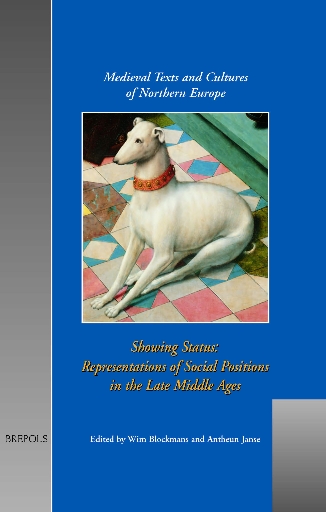
Showing Status
show More to view fulltext, buy and share links for:Showing Status show Less to hide fulltext, buy and share links for: Showing StatusHow did people in the late medieval period perceive and express social status? This volume brings together multi-disciplinary perspectives on representations of social difference in the Low Countries during a time of dynamic social change. The premise of the volume is that medieval social change may only be fully understood if hierarchies of wealth and power are examined alongside literary and artistic sources. Medieval texts and material culture expressed social standing and gave meaning to the experience of social change. The aim of the study is to recognise and translate the language of symbols used to encode and display status in the late Middle Ages.
-
-
-

The Commentary Tradition on Aristotle’s ’De generatione et corruptione’. Ancient, Medieval and Early Modern
show More to view fulltext, buy and share links for:The Commentary Tradition on Aristotle’s ’De generatione et corruptione’. Ancient, Medieval and Early Modern show Less to hide fulltext, buy and share links for: The Commentary Tradition on Aristotle’s ’De generatione et corruptione’. Ancient, Medieval and Early ModernIn this book, a dozen distinguished scholars in the field of the history of philosophy and science investigate aspects of the commentary tradition on Aristotle’s De generatione et corruptione, one of the least studied among Aristotle’s treatises in natural philosophy. Many famous thinkers such as Johannes Philoponus, Albert the Great, Thomas Aquinas, John Buridan, Nicole Oresme, Francesco Piccolomini, Jacopo Zabarella, and Galileo Galilei wrote commentaries on it. The distinctive feature of the present book is that it approaches this commentary tradition as a coherent whole, thereby ignoring the usual historiographical distinctions between the Middle Ages, the Renaissance, and the seventeenth century.
-
-
-
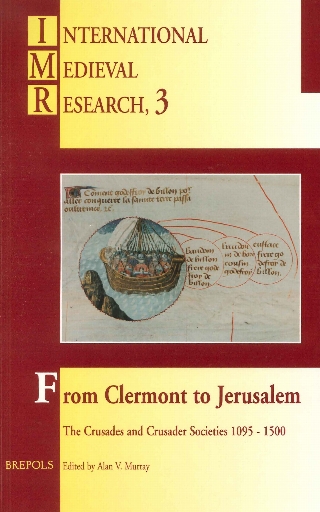
From Clermont to Jerusalem
show More to view fulltext, buy and share links for:From Clermont to Jerusalem show Less to hide fulltext, buy and share links for: From Clermont to JerusalemThis collection of seventeen original essays offers new perspectives on the history and sources of the crusades from the Council of Clermont in 1095 to the late fifteenth century, and of the societies they established in Palestine, Greece, Cyprus and the Baltic.
The volume begins with a masterly survey of the concepts and strategies of the crusading movement. The historical case studies deal with the reigns of Baldwin I and Baldwin IV of Jerusalem, the role of castles in Greece and Cyprus, the military orders and crusade vows in England, and female warriors in the Baltic crusades. The essays on sources provide critical assessments and re-assessments of the narratives of the First and Fourth Crusades, introduce little known Arabic sources on the Muslim population of crusader Palestine, and analyse interpretations of the last days of the crusader kingdom in medieval theology and modern historiography. The volume concludes with a classified bibliography of the First Crusade, comprising over 400 texts, monographs and articles published up to 1997.
-
-
-
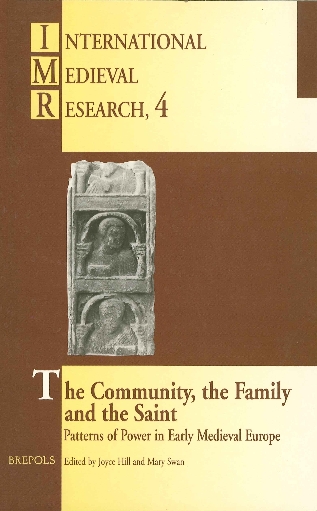
The Community, the Family and the Saint
show More to view fulltext, buy and share links for:The Community, the Family and the Saint show Less to hide fulltext, buy and share links for: The Community, the Family and the SaintThis collection of twenty-two original essays investigates the organising forces of social identity and power in early Medieval Europe. The essays take as their starting-points primary literary and historical texts, artefacts and archaeological evidence from a wide geographical area, ranging from the early Celtic world to the emerging city states of twelfth-century Italy. The essays are arranged in four sections which reflect the nexus of power in this period: Community and Family; Saints; Power; Death, Burial and Commemoration. Contributors to the volume are Mary Alberi, Stefan Brink, Edward Coleman, Mayke de Jong, Philippe Depreux, Matthew Ellis, Guy Halsall, Mark Handley, Karl Heidecker, Dominic Janes, Sarah Larratt Keefer, Harald Kleinschmidt, Rob Meens, Bertil Nilsson, David Pelteret, Joaquin Martinez Pizarro, Mark Redknap, Hedwig Röckelein, Patricia Skinner, Pauline Stafford, Martina Stein-Wilkeshuis and Lisa Weston. Joyce Hill is Professor of Old and Middle English Language and Literature, and a former Director of the Centre for Medieval Studies at the University of Leeds. Mary Swan is Director of Studies of the Centre for Medieval Studies at the University of Leeds. Both are specialists in the early Middle Ages, focussing on the language, literature and history of Anglo-Saxon England.
-
-
-
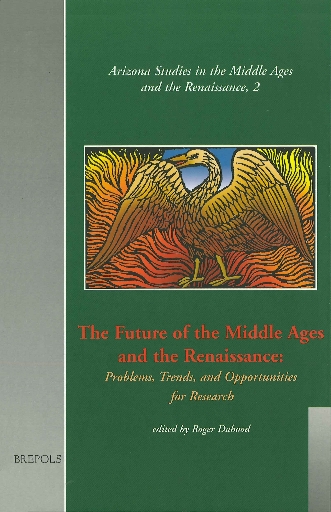
The Future of the Middle Ages and the Renaissance
show More to view fulltext, buy and share links for:The Future of the Middle Ages and the Renaissance show Less to hide fulltext, buy and share links for: The Future of the Middle Ages and the RenaissanceThis volume, containing a selection of essays from ACMRS's 1996 Conference, reflects a broad range of interests in medieval and Renaissance studies. Although most of the eleven essays address western European topics, one essay deals with Byzantine political and theological histroy, and one touches on Arabic poetry in medieval Sicily. The chronological range is also broad, extending from the seventh to the twentieth century and including topics from an early Byzantine polemicist to the recent growing interest in medievalism, and from critical readings of early texts to implications of computer technology for future manuscript study. In some significant ways the volume continues earlier discussions of the state of the profession, such as those in William D. Paden (ed.), The Future of the Middle Ages, and John Van Engen (ed.), The Past and Future of Medieval Studies. More generally, this second volume in the Arizona series extends the theme of the first, Reinventing the Past, and makes fresh contributions to the scholarship on a number of problems. If the current volume provides a reliable gauge for the future of medieval and Renaissance studies, we are on the verge of new beginnings, increasingly outward-looking, reexamining and redefining old boundaries to reach a new and sharpened understanding of the past.
-
-
-
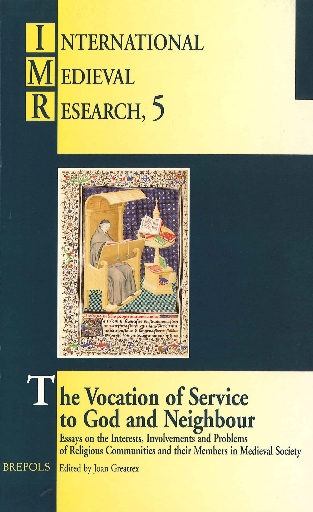
The Vocation of Service to God and Neighbour
show More to view fulltext, buy and share links for:The Vocation of Service to God and Neighbour show Less to hide fulltext, buy and share links for: The Vocation of Service to God and NeighbourThe impingement of monastery on marketplace provides the unifying theme for this collection of nine research papers. Separation from the world, for most members of religious orders in the Middle Ages, did not imply isolation from the rest of society but, rather, a new spirituality orientated relationship which took different forms in different times and circumstances. Three of the contributors are concerned with particular aspects of the intellectual activities of the religious orders in both university and cloister. Two others examine the traumatic effects of the enforced return to secular life of thousands of men and women religious in England when monastic life was brought to an abrupt end in 1540. An individual monk's pastoral role among the laity is explored and evaluated in one paper, while another reveals the extent to which a rural English nunnery was both rooted in the local community and dependent on foreign supervision. Problems encountered by the friars are discussed by two other contributors who, on the basis of their recent research, conclude that the hostility between Franciscans and Benedictines has been overstated and that some German Dominicans risked their reputations in their involvement with contemporary heterodox movements among the laity.
-
-
-
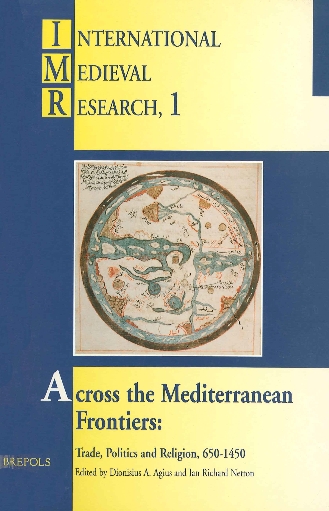
Across the Mediterranean Frontiers:
show More to view fulltext, buy and share links for:Across the Mediterranean Frontiers: show Less to hide fulltext, buy and share links for: Across the Mediterranean Frontiers:Using insights derived from the works of the great annaliste historian Fernand Braudel and those of David Abulafia, this volume aims at presenting a fully-rounded picture of the Medieval Islamic Mediterranean between the years 650 and 1450. It ranges from discussions on Islamic Spain and Sicily through essays on economic and cultural exchange to an examination of Islamic and western politics and religious thought. It also surveys work and warfare in some of the most fascinating centuries of the medieval period and concludes with a profound assessment of the Islamic sources and their transmission. This is a magisterial volume which no historian of the Mediterranean will wish to be without.
Dionisius A. Agius is Senior Lecturer in Arabic at the University of Leeds. He is author and editor of several books. His research interests include Arabic dialectology, the semantics of material culture in medieval Arabic travel and geography literature and the medieval Mediterranean.
Ian Richard Netton is Professor of Arabic Studies at the University of Leeds. He is author or editor of several books in the field of Middle Eastern Studies. His principal research interests are Islamic philosophy and theology, Sufism and Medieval Islamic travellers. His interest in Mediterranean Studies was aroused by his studies of Ibn Baṭṭūṭa and Ibn Jubayr.
-
-
-
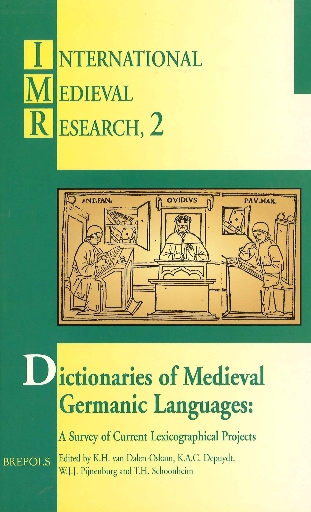
Dictionaries of Medieval Germanic Languages
show More to view fulltext, buy and share links for:Dictionaries of Medieval Germanic Languages show Less to hide fulltext, buy and share links for: Dictionaries of Medieval Germanic LanguagesSelected Proceedings of the International Medieval Congress University of Leeds
This second volume in this series International Medieval Research presents Forschungsberichte as well as papers on twelve current lexicographical projects on medieval Germanic languages. Each Forschungsbericht gives information about the dictionary (title, editors, institute, address), about the contents of the dictionary (type, subject/corpus, described period, described era, example of an entry), about the history of the project and planning (short history of the project, (planned) year of publication, form of publication), and details on lexicographical tools and methods (the hardware, the sofware). The papers were read at the first International Medieval Congress at the University of Leeds (4-7 July 1994), in the three sessions on Dictionaries of Medieval Languages (Projects, Historical Background, Scribes and Scholars). The volume contains valuable information not only for editors of exisitng lexicographical projects but also for editors of future projects. It will also give non-lexicographers a better insight into modern historical lexicography.
K.H. van Dalen-Oskam, K.A.C. Depuydt, W.J.J. Pijnenburg and T.H. Schoonheim are the editors of the Vroegmiddelnederlands Woordenboek (Dictionary of Early Middle Dutch) at the Institute for Dutch Lexicology, Leiden (the Nederlands).
-