


Brepols Online Books Medieval Miscellanea Original Archive v2016 - bobar16mimeo

Collection Contents
21 - 40 of 254 results
-
-
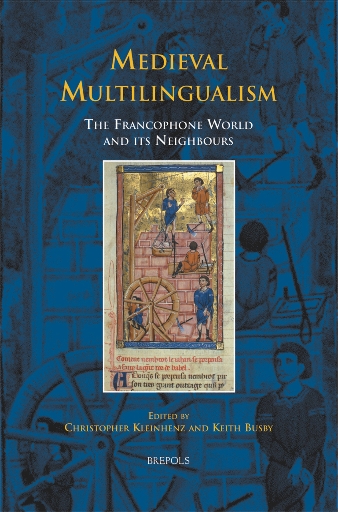
Medieval Multilingualism
show More to view fulltext, buy and share links for:Medieval Multilingualism show Less to hide fulltext, buy and share links for: Medieval MultilingualismThis volume contains essays on various aspects of multilingualism in medieval France, Italy, England, and the Low Countries. The fifteen contributions discuss the use of the different vernaculars and Latin in both literary and non-literary contexts, showing how cultural and social factors determined the choice of language for a particular purpose or type of text. The role of French in non-French contexts is a major theme of these essays: in the British Isles after the Norman Conquest, in Italy as a response to the need for mainly secular types of literature which did not exist in Italian, and in the Low Countries by virtue of geographic contiguity and change of rulers. Special attention is paid in the French context to the use of French and Occitan in areas of the South. Some essays examine specific cases or text-corpora, while others examine questions of multilingualism from more theoretical, linguistic, and rhetorical points of view. Together, they form an invaluable introduction to the topic of medieval multilingualism, illustrated by meticulously executed case-studies, which future work in the area will have to take into account.
-
-
-

Mettre en prose aux XIVe-XVIe siècles
show More to view fulltext, buy and share links for:Mettre en prose aux XIVe-XVIe siècles show Less to hide fulltext, buy and share links for: Mettre en prose aux XIVe-XVIe sièclesLoin de concerner uniquement romans et poèmes épiques — comme le ferait penser l’étude magistrale de Georges Doutrepont (1939) —, le phénomène «mise en prose» a touché aux xiv e-xvi e siècles tous les genres littéraires: vies de saints, œuvres de dérivation biblique, traités de dévotion, nouvelles, pièces de théâtre, voire la traduction en prose française de poèmes antérieurs en langue étrangère. Revisités depuis une trentaine d’années grâce à de nombreuses éditions critiques et à des études surtout littéraires, ces «nouveaux» textes méritaient une réflexion plus articulée: c’est ce qui a fait l’objet du iii e Colloque de l’aiemf (Association Internationale pour l’Étude du Moyen Français), qui s’est tenu à Gargnano del Garda — Università degli Studi di Milano, du 28 au 31 mai 2008. Les contributions réunies ici analysent donc des œuvres très diverses, de trois points de vue: linguistique, philologique, littéraire.
-
-
-
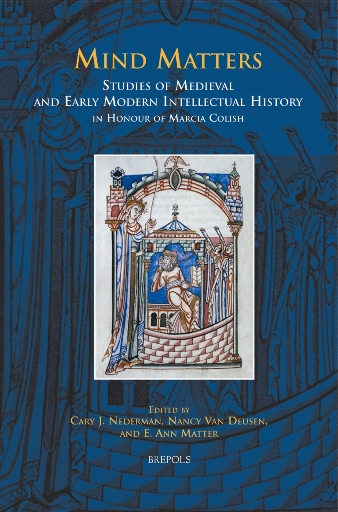
Mind Matters
show More to view fulltext, buy and share links for:Mind Matters show Less to hide fulltext, buy and share links for: Mind MattersMarcia Colish is one of the most influential scholars of the history of medieval and early modern thought, the author of numerous books and scores of articles in the field, as well as a pioneering President of the Medieval Academy of America. This volume honours her accomplishments with papers by her many colleagues, friends, and former students, who are themselves prominent scholars from across a range of disciplines. The chapters are diverse chronologically and topically, yet they are all stimulated by themes that Prof. Colish has explored during her long and distinguished career. They address the richness of European intellectual history between the twelfth and the sixteenth centuries, treating the multiple heritages of philosophy, theology, political theory, historiography, classical reception, and many other subjects to which her scholarship extends. The volume demonstrates the power of ideas in the development of European history generally, revealing that the careful study of the works of the ‘mind’ does indeed ‘matter’.
-
-
-
Raban Maur et son temps
show More to view fulltext, buy and share links for:Raban Maur et son temps show Less to hide fulltext, buy and share links for: Raban Maur et son tempsLe colloque organisé à Lille et Amiens en 2006, à l’occasion du 1150e anniversaire de la mort de Raban Maur, complète une série de manifestations consacrées à trois personnalités majeures du haut Moyen Âge: de Bède le Vénérable (colloque de Lille et Amiens, 2002) à Alcuin (colloque de Tours, 2004) et à Raban qui devait à ce dernier son surnom de Maur, la filiation intellectuelle est manifeste. Celui que, depuis les temps modernes, on orne du titre de praeceptor Germaniae fut l’un des plus éminents personnages de la société carolingienne, par sa culture et par son rang: ce membre de l’aristocratie de la vallée du Main et du Rhin moyen enseigna à l’abbaye de Fulda, l’un des principaux foyers d’étude et des plus importants établissements monastiques du monde franc, dont il fut ensuite l’abbé (822-842) avant d’être promu archevêque de Mayence (847-856) et, par conséquent, premier prélat du royaume de Louis le Germanique. C’est à la diversité des compétences de Raban, à la fois pasteur, gestionnaire et fin lettré, que sont consacrés les actes de ce colloque interdisciplinaire.
L’analyse des relations entre Raban et les évêques de son temps montre combien ce tenant du parti impérial était attaché à l’héritage de Charlemagne, bien que son horizon s’avère moins large que ne le suggère son appartenance à l’élite «d’Empire». Par ses œuvres, Raban s’imposa comme un poète et un maître. Son intérêt ne se portait pas seulement vers la culture latine, mais aussi vers la culture et la langue vernaculaires; de même, il avait des connaissances en médecine. Plusieurs contributions sont consacrées à son œuvre exégétique, à sa diffusion manuscrite et à la teneur de ses commentaires (certains sont intemporels, d’autres s’avèrent en prise directe avec la vie politique). Les analyses, menées par des historiens et des philologues, illustrent la diversité des approches possibles, complétées par une étude du Psautier glosé de Fulda. La vie de Raban était rythmée par la liturgie, dans une église à l’image du Temple de Salomon, devant servir à l’édification du temple intérieur — ce à quoi contribuait la présence de reliques. L’étude de la consécration des autels et des tituli composés à cet effet montre que Raban avait une conception très protocolaire de la répartition des apôtres, martyrs et bienheureux, qui traduit sa conscience aiguë de la communion des saints. L’abbé de Fulda fut un théoricien de la société carolingienne, comme le prouve l’analyse de son idéologie du don. Il était sensible aux aspects tout pragmatiques de la vie sociale et l’on peut déceler chez lui une humanité dont témoignent ses prises de position en matière de droit.
-
-
-
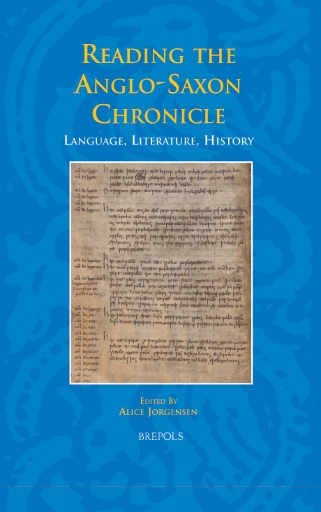
Reading the Anglo-Saxon Chronicle
show More to view fulltext, buy and share links for:Reading the Anglo-Saxon Chronicle show Less to hide fulltext, buy and share links for: Reading the Anglo-Saxon ChronicleThe Anglo-Saxon Chronicle is among the earliest vernacular chronicles of Western Europe and remains an essential source for scholars of Anglo-Saxon and Norman England. With the publication in 2004 of a new edition of the Peterborough text, all six major manuscript versions of the Chronicle are now available in the Collaborative Edition. Reading the Anglo-Saxon Chronicle therefore presents a timely reassessment of current scholarly thinking on this most complex and most foundational of documents.
This volume of collected essays examines the Anglo-Saxon Chronicle through four main aspects: the production of the text, its language, the literary character of the work, and the Chronicle as historical writing. The individual studies not only exemplify the different scholarly approaches to the Chronicle but they also cover the full chronological range of the text(s), as well as offering new contributions to well-established debates and exploring fresh avenues of research. The interdisciplinary and wide-ranging nature of the scholarship behind the volume allows Reading the Anglo-Saxon Chronicle to convey the immense complexity and variety of the Chronicle, a document that survives in multiple versions and was written in multiple places, times, and political contexts.
-
-
-
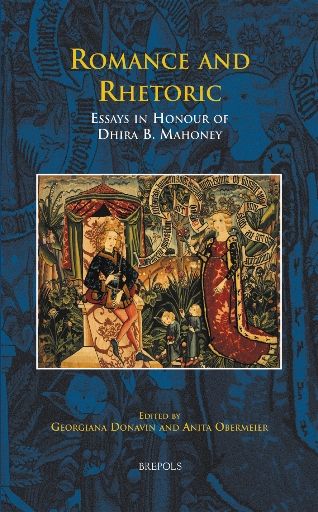
Romance and Rhetoric
show More to view fulltext, buy and share links for:Romance and Rhetoric show Less to hide fulltext, buy and share links for: Romance and RhetoricThis volume honours the academic career of Professor Dhira B. Mahoney, recently retired from the Department of English at Arizona State University, who is well known for her rhetorical readings of medieval literature. Professor Mahoney’s scholarship employs rhetorical theory in readings of late medieval literature, particularly prologues and epilogues, women’s writings, and Arthuriana. As a response to her work, Romance and Rhetoric offers rhetorical readings of a variety of literary pieces from the late Middle Ages, especially for those authors and genres on which Professor Mahoney has published. Its collected essays provide interdisciplinary studies of art, social and literary history, manuscript transmission, and women’s studies in relation to texts in Middle English, Latin, German, and French. In particular, the essays in this volume focus on the writings of courtly authors such as Chaucer, Lydgate, Malory, Guillaume de Machaut, Christine de Pizan, Chrétien de Troyes, and others. In keeping with the ancient tradition of analysing rhetorical principles in the structure of an art work, they also examine the rhetoric of the manuscript art connected to these authors and the genres in which they wrote. This volume thus fills a gap in medieval literary scholarship, as it evaluates with scrutiny how rhetorical teachings or medieval poetic strategies inform the writing of romances.
-
-
-
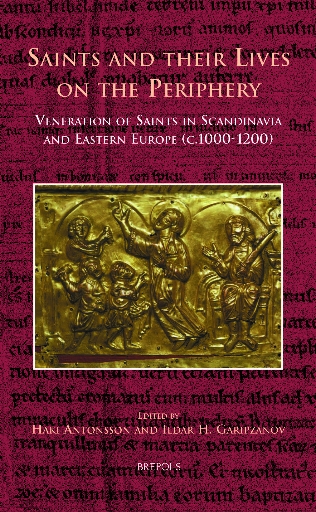
Saints and their Lives on the Periphery
show More to view fulltext, buy and share links for:Saints and their Lives on the Periphery show Less to hide fulltext, buy and share links for: Saints and their Lives on the PeripheryThis volume examines the cult of the saints and their associated literature in two peripheral regions of Christendom that were converted to Christianity around the turn of the first millennium, namely, Scandinavia and Eastern Europe. The thirteen authors focus on how cultures of sanctity were transmitted across the two regions and on the role that neighbouring Christian countries like England, Germany, and Byzantium played in that process. The authors also ask to what extent the division between Latin Christianity and Eastern Orthodoxy affected the early development of the cult of saints on the two peripheries. The first part of the book offers for the first time a comprehensive overview of the veneration of local and universal saints in Scandinavia and northern Rus’ from c. 1000 to c. 1200, with a particular emphasis on saints who were venerated in both regions. The second part presents examples of how some early hagiographic works produced on the northern and eastern peripheries borrowed, adapted, and transformed — i.e. contextualized — literary traditions from the Latin West and Byzantium.
-
-
-
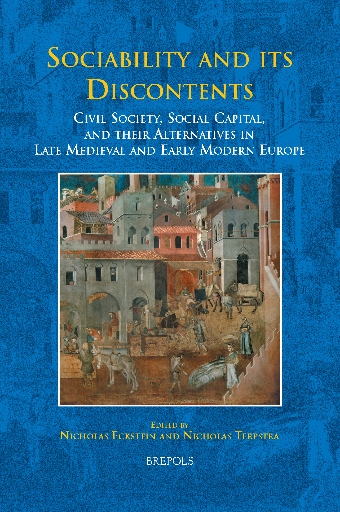
Sociability and its Discontents
show More to view fulltext, buy and share links for:Sociability and its Discontents show Less to hide fulltext, buy and share links for: Sociability and its DiscontentsThis volume advances our knowledge of continuing trends over the longue durée of European history. It also exposes many differences separating contemporaries from their medieval and early modern ancestors. In putting the concept of social capital to the test, the authors also expose the strengths, weaknesses, and limits of the ‘Putnam thesis’. The essays address fourteenth-century English fears of old-age neglect; childhood, friendship, scandal, and rivalry in Renaissance Florence; rebellion in an Italian village; social capital and signorial power in southern and north-central Italy; guild violence in Calvinist Ghent; civil society in early modern Bologna, Naples, and the Papal State; gender in High Renaissance Rome; and critical analyses of the transition from religious to secular sensibilities that scholars (following Jürgen Habermas) have identified in eighteenth-century Europe. In each case, the topic is considered in relation to recent theories of ‘social capital’: the informal, intangible bonds of trust upon which, social scientist Robert Putnam argues, every human community depends. The result is a series of highly original case-studies which reveal the workings of late medieval and early modern European society from new and often unexpected angles.
-
-
-

Survival and Discord in Medieval Society
show More to view fulltext, buy and share links for:Survival and Discord in Medieval Society show Less to hide fulltext, buy and share links for: Survival and Discord in Medieval SocietyThis book, a tribute to an exceptional scholar known for his broad-ranging interests, brings together the new work of students, friends, and colleagues of Prof. Dyer. The volume reflects his interests in the twin disciplines of history and archaeology and his ground-breaking work in medieval standards of living, social tensions, and town-country relations. The varied and stimulating essays presented in this volume examine a host of critical issues dealing with diet, settlement, employment opportunities, taxation, credit and debt, and the tensions felt in town and country alike which often exploded into full-scale revolt. This new work not only looks at these issues from the standpoint of new evidence and theoretical perspectives, but also imparts a strong sense of the controversy surrounding many of these central issues in medieval history, ranging from how well common people managed to live and reproduce to the nature of their relationships with each other and with their social superiors. The volume, in short, stimulates a vital reconsideration of many of the key concerns pertaining to the study of medieval societies.
-
-
-
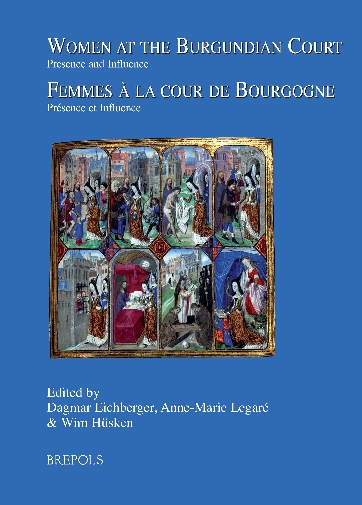
Women at the Burgundian Court: Presence and Influence
show More to view fulltext, buy and share links for:Women at the Burgundian Court: Presence and Influence show Less to hide fulltext, buy and share links for: Women at the Burgundian Court: Presence and InfluenceThis collection of essays charts the role of women at the Burgundian court by analysing the ways in which medieval women, such as Isabella of Portugal, Margaret of York, Mary of Burgundy, Margaret of Austria made an impact through their physical, moral and spiritual presence at court. During the absence of the prince these well-educated and internationally experienced spouses, mothers and aunts were put in charge of the courtly household or were in some cases appointed regent of the Netherlandish territories for a limited period of time. The youngest generation of women represented by the sisters and consorts of Charles V and Ferdinand I — now forming part of the extended family network — continued this tradition and took it to Germany, Spain, France and Portugal. The court developed into a kind of ‘gender laboratory’, in which women actively negotiated their position of power, thus consolidating their influence in politics, diplomacy, education and art.
-
-
-
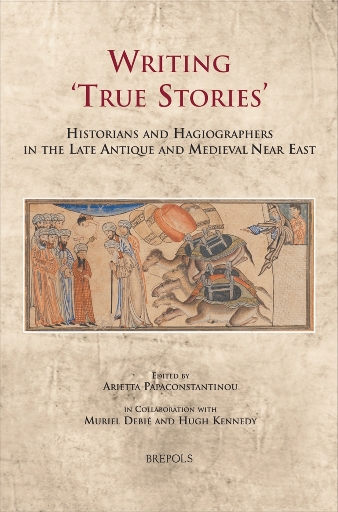
Writing ‘True Stories’
show More to view fulltext, buy and share links for:Writing ‘True Stories’ show Less to hide fulltext, buy and share links for: Writing ‘True Stories’The papers in this volume examine the interaction between history and hagiography in the late antique and medieval Middle East, exploring the various ways in which the two genres were used and combined to analyse, interpret, and re-create the past. The contributors focus on the circulation of motifs between the two forms of writing and the modifications and adaptations of the initial story that such reuse entailed. Beyond this purely literary question, the retold stories are shown to have been at the centre of a number of cultural, political, and religious strategies, as they were appropriated by different groups, not least by the nascent Muslim community. Writing ‘True Stories’ also foregrounds the importance of some Christian hagiographical motifs in Muslim historiography, where they were creatively adapted and subverted to define early Islamic ideals of piety and charisma.
-
-
-
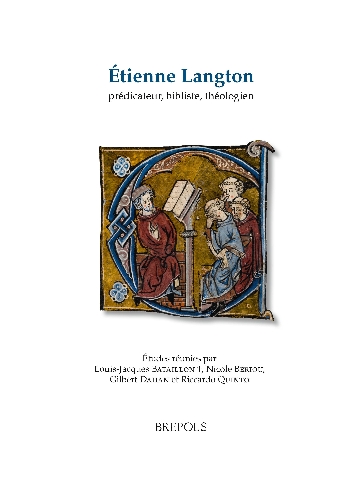
Étienne Langton, prédicateur, bibliste, théologien
show More to view fulltext, buy and share links for:Étienne Langton, prédicateur, bibliste, théologien show Less to hide fulltext, buy and share links for: Étienne Langton, prédicateur, bibliste, théologienÉtienne Langton est probablement un homme-clé dans l’histoire du Moyen Âge. Son implication politique à la tête de l’Église d’Angleterre, en tant qu’archevêque de Canterbury, est bien connue, de même que son rôle dans la promulgation de la Magna Carta, qui s’efforce de trouver une solution aux crises qui secouent le pays. Cependant, tout en proposant des aperçus novateurs sur l’action politique d’Étienne Langton, la plus grande partie des études recueillies dans ce volume examinent les œuvres de celui qui était considéré comme l’un des principaux maîtres de son temps (il a enseigné à Paris durant plus de deux décennies). Il a en effet brillamment illustré les trois volets de l’enseignement des sciences sacrées, tels que les définit Pierre le Chantre, lire, disputer, prêcher. Lire, c’est étudier l’Écriture sainte; Étienne Langton a commenté la quasi-totalité des livres bibliques, en sachant à la fois recueillir toute la tradition qui le précède et ouvrir des voies nouvelles: le point est fait ici sur son herméneutique et sur ses méthodes d’exégèse, avec des études sur des livres bibliques précis, mais aussi sur son commentaire d’un texte majeur de la génération précédente, l’Histoire scolastique de Pierre le Mangeur. Disputer, c’est discuter des thèmes doctrinaux; il s’agit d’un travail théologique, avant même que la théologie ne soit définie comme une science à part entière et Étienne Langton illustre les genres principaux de la «somme» et de la «question», en mettant au service de ses analyses ses compétences particulières en matière de sciences du langage. Enfin, Étienne Langton a laissé un nombre impressionnant de sermons, dont la richesse thématique est grande et qui fournissent également des éléments précieux sur l’état de l’Église. À la charnière du xii e et du xiii e siècle, Étienne Langton pose les bases de ce que sera la culture universitaire du xiii e siècle et apparaît ainsi comme un auteur à la fois important et attachant.
-
-
-
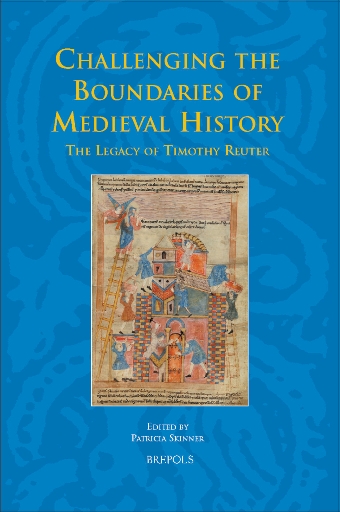
Challenging the Boundaries of Medieval History
show More to view fulltext, buy and share links for:Challenging the Boundaries of Medieval History show Less to hide fulltext, buy and share links for: Challenging the Boundaries of Medieval HistoryHow is the history of medieval Europe written? What national discourses shape the editing of medieval texts and their interpretation in historiography? And how can medieval historians confront these questions by reintegrating their fragmented field through the use of comparison and critiques across national boundaries? In his work, Timothy Reuter regularly posed these challenges to his colleagues, acting as a bridge between the historians of England and Germany, working on an edition of the letters of Wibald of Stavelot (whose own career took him to many of the power centres of medieval Europe), and positioning medieval Europe in the wider discourses of world history. The essays collected here provide a response to this challenge. Dedicated to Prof. Reuter’s memory and in some cases directly continuing his work, all are explicitly comparative in their approach. All of the authors take as their starting point the need to be conscious of the situation from which they themselves are writing and to be sensitive to the training traditions which have shaped their own interpretations. This book shows medieval historians at work, questioning and reflecting on their practice. As well as being of value to specialists in the field, the essays are written in an approachable style and will therefore be of value as a teaching tool to undergraduate and graduate students.
-
-
-
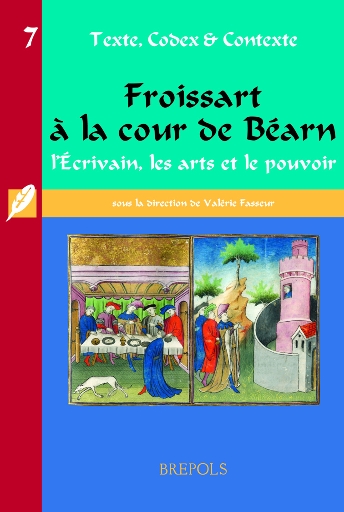
Froissart à la cour de Béarn: l’écrivain, les arts et le pouvoir
show More to view fulltext, buy and share links for:Froissart à la cour de Béarn: l’écrivain, les arts et le pouvoir show Less to hide fulltext, buy and share links for: Froissart à la cour de Béarn: l’écrivain, les arts et le pouvoirLes dix-sept contributions rassemblées dans ce volume se proposent d’aborder l’œuvre de Jean Froissart par le prisme de la rupture que marque la rédaction du Voyage en Béarn. Elles revisitent la cour de Gaston Febus dans ses aspects culturels, sondent le personnage de Gaston III, mesurent la distorsion entre la réalité historique et la représentation littéraire qu’en livre Froissart chroniqueur; elles s’interrogent, enfin, sur la teneur véritable des relations entre les deux hommes — l’écrivain et son mécène.
-
-
-
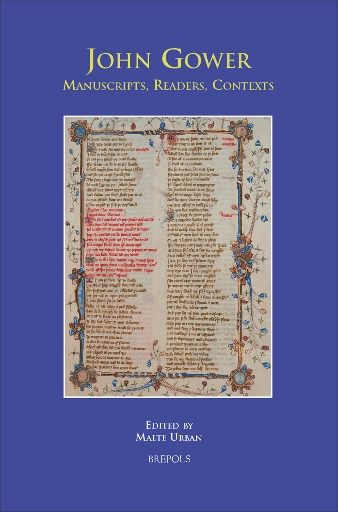
John Gower
show More to view fulltext, buy and share links for:John Gower show Less to hide fulltext, buy and share links for: John GowerThe essays collected here represent the current state of research into the works of John Gower, poet, philosopher, and contemporary of Geoffrey Chaucer. They assess Gower’s literary output within the context of manuscript production and readership/ownership in late medieval England and the triangle of Latin, French, and English as literary and official languages in Ricardian England. Sections of the volume focus on manuscripts and the circulation of Gower’s works in languages other than English. In addition, the literary and philosophical contexts that inform Gower’s poetics and politics are considered here, resulting in readings of the poet’s rhetorical and ethical agenda as well as his texts’ intervention in and reaction to social outsiders in his contemporary London. A wide variety of critical discourses inform the readings presented here, including medieval English, French, and Latin literary studies, art history, manuscript production and reception, postmodern ethics, and historical studies.
-
-
-
La culture du haut moyen âge, une question d’élites ?
show More to view fulltext, buy and share links for:La culture du haut moyen âge, une question d’élites ? show Less to hide fulltext, buy and share links for: La culture du haut moyen âge, une question d’élites ?Quatrième volet de la série sur «les élites au haut Moyen Âge», l’ouvrage explore l’aspect culturel de la question, autour de quatre thèmes: «sociologie et sociographie des élites», «formes et pratiques d’une culture d’élites», «culture et lien social», «culture des clercs, culture des laïcs: formes et produits». Les élites se définissent-elles et se reconnaissent-elles par l’usage de langages propres et comment peut-on apprécier la différenciation des langues à l’intérieur même des élites? Certains produits culturels sont-ils particulièrement destinés aux élites et quelle est leur place dans le système global d’échange? Comment les commandes (manuscrits, constructions, objets du décor) et les soutiens aux médiateurs culturels (précepteurs, écolâtres, missionnaires) contribuent-ils à légitimer la domination, à renforcer la hiérarchie et à soutenir les réseaux? Y a-t-il une relation entre la hiérarchie des savoirs et la hiérarchie des pouvoirs et la culture est-elle signe de légitimation d’une position dans la hiérarchie? Assure-t-elle des possibilités d’ascension sociale? Dans la hiérarchie laïque, ecclésiastique? Les détenteurs d’un savoir spécifique occupent-ils une position privilégiée? Quel est l’impact des transformations politiques et sociales brutales, comme les conquêtes, sur les modèles culturels élitaires? Y-a-t-il des résistances et des phénomènes de marginalisation de certains modèles culturels? En envisageant la culture sous toutes ces formes comme élément et critère de distinction des élites, par l’analyse de sa place dans les stratégies de reproduction, de hiérarchisation et de mobilité sociale, les auteurs du présent volume se sont efforcés de répondre à la plupart de ces questions dans une enquête européenne qui couvre les VIe-XIe siècles.
-
-
-

Land, Power, and Society in Medieval Castile
show More to view fulltext, buy and share links for:Land, Power, and Society in Medieval Castile show Less to hide fulltext, buy and share links for: Land, Power, and Society in Medieval CastileThis work offers an up-to-date discussion of medieval Castilian lordship and social relations, approached through an analysis of behetría lordship, a power-structure of fundamental importance in medieval Castile. The origins of behetría lordship, a complex phenomenon in both theory and practice, are obscure. Knowledge of the behetrías has therefore hitherto been limited to a narrow circle of traditionalist, highly specialized legal historians. The present volume redresses this imbalance, as its various contributors explore the question of behetría lordship from a broad social perspective, thereby demonstrating the crucial role played by this seigneurial structure within medieval Castilian society. This collection of essays thus focuses less on legal intricacies than on deeper social, territorial, and political issues, which are also examined in relation to other better-known forms of lordship exercised both within Castile and beyond. This volume provides rich historical material on medieval Castile rarely available to an English readership. It represents a gateway to a wealth of relatively little-known literature and information on the social history of medieval Spain and will provide an invaluable tool for comparative research.
-
-
-
Le monde carolingien: bilan, perspectives, champs de recherches
show More to view fulltext, buy and share links for:Le monde carolingien: bilan, perspectives, champs de recherches show Less to hide fulltext, buy and share links for: Le monde carolingien: bilan, perspectives, champs de recherchesL’objet de cet ouvrage collectif est d’envisager la civilisation carolingienne dans tous ses aspects: chaque auteur a eu, sur le sujet de son choix, la pleine liberté, soit de se cantonner à dresser un bilan exhaustif de l’état de la recherche, soit d’allier bilan et perspectives nouvelles en proposant ses propres hypothèses ou pistes de recherches. Les thèmes abordés sont d’une grande diversité: idéologie, conception, pratiques et lieux du pouvoir, liturgie, vie monastique, esprit missionnaire, hiérarchie et mobilité sociale, relations entre le roi et les élites du royaume, laïques et ecclésiastiques. Sans couvrir tout l’espace carolingien, les contributions présentes dans ce livre nous conduisent de Rome vers Aix et Saint-Gall, de l’Italie lombarde vers le cœur du vieux pays franc, de la Saxe vers le pays avar et jusqu’au monde scandinave. Sans couvrir tout le temps carolingien, elles concernent aussi bien les origines de la dynastie, voire l’héritage idéologique, politique ou religieux des deux siècles précédents, que les quatre générations qui suivent le règne de Pépin et les années crépusculaires.
-
-
-
Les manuscrits carolingiens
show More to view fulltext, buy and share links for:Les manuscrits carolingiens show Less to hide fulltext, buy and share links for: Les manuscrits carolingiensÀ l’occasion de l’exposition «Trésors carolingiens» présentée dans ses salles du 20 mars au 24 juin 2007, la Bibliothèque nationale de France a organisé une journée internationale d’étude autour du livre manuscrit à l’époque en question. L’exceptionnelle richesse du fonds parisien (auquel avaient été adjoints d’incontournables spécimens de certaines bibliothèques régionales françaises) donnait lieu, en effet, à évoquer pratiquement tous les principaux aspects de la production et du contenu même de ces œuvres, ainsi que de leur devenir.
Après une introduction visant à situer le livre carolingien au regard de ses antécédents antiques profanes et païens, paléochrétiens et haut-médiévaux (Jean-Pierre Caillet), ce sont les étapes — et les raisons — de l’émergence de l’intérêt pour ces manuscrits et de la constitution de leurs collections qui ont été abordés (Marie-Pierre Laffitte). Il importait d’autre part également de dresser le panorama des grands travaux consacrés à ce domaine de la fin du XIXe siècle à nos jours (Jean Vezin). Le statut privilégié du livre religieux en tant que composante majeure du trésor, et tout particulièrement l’assimilation de son contenu à de véritables reliques, devaient ensuite être clairement précisés. Naturellement, la nature du message iconographique, tant à l’égard du texte, dont il offre un contrepoint visuel portant ses propres accents, que des modèles — anciens ou récents — dont il s’avère tributaire à divers degrés, a fourni matière pour de substantielles mises au point (Herbert Kessler, Charlotte Denoël, Fabrizio Crivello, Anne-Orange Poilpré). Les rapports, thématiques aussi bien que stylistiques, des ivoires de la reliure avec l’imagerie interne du livre, ainsi que l’éventuelle diachronie de leur association, n’ont pas non plus manqué de susciter un réexamen serré (Lawrence Nees). Par ailleurs, les derniers développements d’une investigation de laboratoire sur les pigments utilisés dans l’élaboration des miniatures de certains manuscrits, et dont les résultats sont évidemment lourds de conséquences quant aux origines de ceux-ci, ont témoigné d’une notable ouverture des perspectives de recherche (Patricia Roger). La conclusion de l’ensemble (Jean-Pierre Caillet) s’attache à souligner l’opportune complémentarité de ces approches; et, au-delà des nouveaux acquis ainsi opérés, à dégager les orientations encore propres à parfaire la connaissance de ce qui correspond bien à un temps fort de l’évolution culturelle et artistique de l’Occident médiéval.
-
-
-
Lost in Translation?
show More to view fulltext, buy and share links for:Lost in Translation? show Less to hide fulltext, buy and share links for: Lost in Translation?[Les communications présentées dans ce volume témoignent, par leur agencement, de la vitalité de l’activité de traducteur au cours de la période médiévale, ainsi que de l’inventivité de la recherche actuelle dans l’étude de la traduction en général. Aucune autre période ne semble autant dépendre de ce procédé littéraire pour la construction de son identité culturelle. Les traductions du latin vers une langue vernaculaire, ou d’une langue vernaculaire vers une autre, ou encore d’une langue vernaculaire vers le latin, constituent quelques-unes des nombreuses formes de la traduction au Moyen Âge. La codification du processus de traduction en tant qu’appropriation, transformation ou accommodation, fait insuffisamment ressortir le rôle essentiel de la curiosité et de l’intérêt qui sont à l’origine de tout acte de traduction. C’est cette curiosité positive que le présent volume cherche à mettre en valeur.
Il aborde tout d’abord une étude de la traduction de textes du haut Moyen Âge. Il considère ensuite le phénomène du bilinguisme et la relation privilégiée que l’Angleterre entretient avec le continent, en particulier avec les traditions littéraires française et italienne. Une troisième partie, consacrée à la traduction des textes religieux au quinzième siècle en Angleterre, et dans une moindre mesure en France, met en évidence la dimension politique de l’activité de traduction à cette période. Considérée principalement comme transfert culturel, la traduction peut en effet être abordée au-delà de sa dimension purement linguistique. Une quatrième partie présente plusieurs exemples de traduction d’un genre littéraire vers un autre, d’un média vers un autre. Les communications proposées dans ce volume illustrent également des manières nouvelles d’aborder l’entreprise essentiellement littéraire de la traduction. Tout en faisant l’éloge de la diversité et de la différence, elles suggèreront une lecture de l’épisode de Babel moins traumatisante que ce qui en est généralement retenu.
,The contributions to this volume are organised in a way that bear out the vitality of translation activity in the medieval period and the resourcefulness of modern scholarship in addressing the phenomenon of translation at large. No other period relies so heavily on this literary process to construct its cultural identity. Translations from Latin into the vernacular, or from one vernacular into another, or even from a vernacular into the Latin language, are just a few of the many forms medieval translation can take. The codification of the translation process as appropriation, transformation, or accommodation does not sufficiently emphasize the overarching curiosity and interest that motivates any translation activity. Rather, preceding the stages of appropriation and re-interpretation, it is positive inquisitiveness and openness towards linguistic and cultural difference that generate the production of a new text and the transference of culture from one sphere to another. It is that positive inquisitiveness which this volume emphasizes.
The volume initially addresses the way in which translators dealt with texts from the early medieval period. It then considers the phenomenon of bilingualism and the privileged relationship that England held with the continent, especially the Italian and French literary traditions. The third part of this volume tackles the problem of fifteenth-century religious translation in England and, to a lesser extent, France, and complicates it by showing its inevitable political implications. Understood more particularly as an act of cultural transfer, translation activity can also be considered beyond the linguistic process. The fourth part of the volume deals with several instances of translations from one genre into another, and from one media into another. The contributions also point to new ways of considering the literary process of translation, and by praising diversity and difference, they suggest a less traumatic way of reading Babel than is usually implied.
]
-