Brepols Online Books Medieval Miscellanea Original Archive v2016 - bobar16mimeo

Collection Contents
51 - 100 of 254 results
-
-
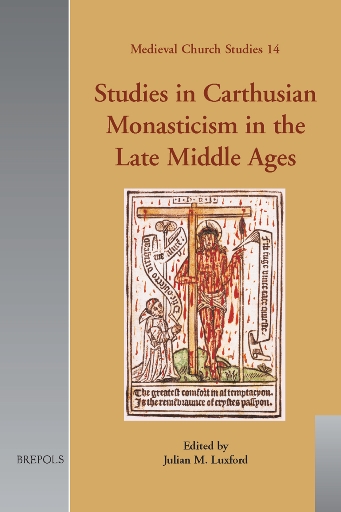
Studies in Carthusian Monasticism in the Late Middle Ages
show More to view fulltext, buy and share links for:Studies in Carthusian Monasticism in the Late Middle Ages show Less to hide fulltext, buy and share links for: Studies in Carthusian Monasticism in the Late Middle AgesThis volume focuses on aspects of Carthusian history and culture of the later Middle Ages, a period of growth and vitality within the order. There is a primary but not exclusive focus on the English Province, which to date has received at best unbalanced attention. While the fundamental ambitions and ideals of Carthusianism formulated, articulated, and lived by the disciples of St Bruno between the late eleventh and the thirteenth centuries changed very little, the fourteenth to sixteenth centuries witnessed developments stimulated by and often commensurate with the progress of external culture. In such areas as devotional practice, literature, art and architecture, patronage, and monastic-lay relations generally, the houses of the order grew increasingly sophisticated: in some cultural spheres Carthusians were in the vanguard. The late Middle Ages thus offer rich opportunities for assessment of how a religious organization defined and justified by essentially reactionary conventions responded to constant forinsec evolution.
The volume’s approach is multi-disciplinary, involving both senior and younger Carthusian scholars in investigation of the main facets of Carthusian life for which significant data survives. This permits a thorough analysis of the order’s character, one that reflects concern with synoptic understanding of medieval Carthusianism rather than partial assessment through a specifically devotional, literary, or more narrowly historical approach. Subject areas covered include the historical growth of individual Charterhouses, patronage of Carthusians by secular agents, Carthusian architecture and manuscript decoration, devotional practice, and textual culture.
-
-
-
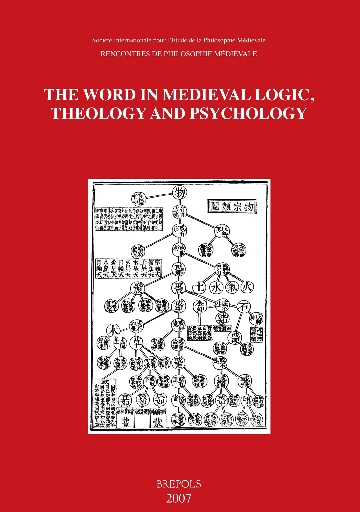
The Word in Medieval Logic, Theology and Psychology
show More to view fulltext, buy and share links for:The Word in Medieval Logic, Theology and Psychology show Less to hide fulltext, buy and share links for: The Word in Medieval Logic, Theology and PsychologyThe holding of the 2005 annual colloquium of the SIEPM in Kyoto, Japan, presented the opportunity to explore the very foundations of communication: the word in all its aspects. Whether mental concepts, as Aristotle had claimed, were the same for all people, whether from the East or the West; how these mental concepts were transformed into words; how words affected the concepts (e.g. in regard to the colour spectrum); how angels communicated with one another, and whether any words were appropriate for talking about God; whether words for things arise merely from convention, or have an essential relationship to what they describe; what exactly do the words for individuals, species and genera describe; why words can have powerful effects; what is the relationship between the inner word and the spoken word. The essays in this volume explore these questions largely from the texts of medieval Western philosophers and theologians from Boethius to Meister Eckhart, but some Hebrew and Arabic texts are also taken into consideration. The contexts range from the lively debates in the Parisian schools of the early twelfth century, through the subtle arguments of thirteenth and fourteenth century scholars, to mystical writings of the fifteenth century. Running as a thread through the essays are the translations and commentaries of Boethius on the Vetus logica of Aristotle, and the divine word of the Bible. The combination of contributions of Japanese scholars with both younger and more established scholars from the Western tradition ensures a rich and varied approach to this subject.
-
-
-
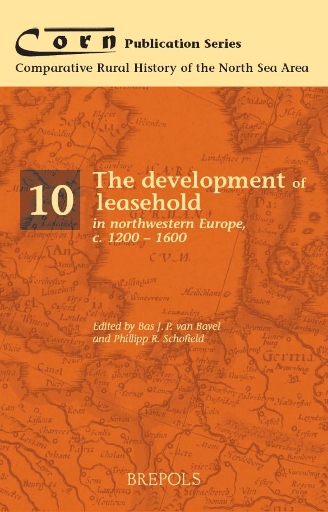
The development of leasehold in northwestern Europe, c. 1200 – 1600
show More to view fulltext, buy and share links for:The development of leasehold in northwestern Europe, c. 1200 – 1600 show Less to hide fulltext, buy and share links for: The development of leasehold in northwestern Europe, c. 1200 – 1600In the twelfth to sixteenth centuries, the exploitation of landownership underwent drastic changes in various parts of Northwestern Europe. In these changes, the emergence of the lease plays a pivotal role. At the end of the Middle Ages, in a number of areas within the North Sea area, the greater part of available land was held at lease for relatively short terms. The competitive and contractual nature of such leasing has caused many to associate it with the emergence of capitalism in the countryside, seeing its rise as a key element in the transformation of the rural economy and society in the last millennium. In view of this, it is surprising that the emergence of leasing has received little systematic attention, particularly where its roots, its early development, its exact arrangements and the social and economic context of its emergence are concerned, let alone the regional and chronological differences in these elements. This volume aims to make a first step in exploring these issues.
-
-
-
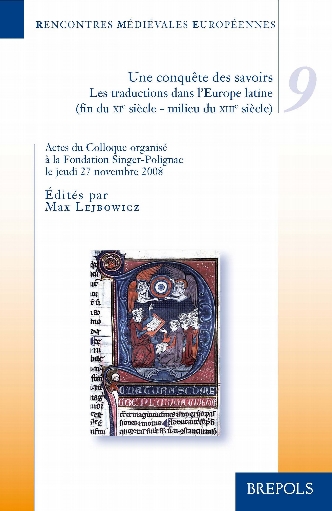
Une conquête des savoirs
show More to view fulltext, buy and share links for:Une conquête des savoirs show Less to hide fulltext, buy and share links for: Une conquête des savoirsLes nouveautés culturelles qui se répandent en Europe latine aux xii e et xiii e siècles sont les expressions les plus hautes d’une longue période de croissance. Bien que déjà largement documentée, cette expansion pluriséculaire mérite d’être reprise et précisée.
Un cercle vertueux s’est enclenché aux alentours de l’an mil dans l’Europe latine, sans qu’il y ait simultanéité de dates et de rythmes sur tout le territoire. Pour être multiples, les composantes de cet essor se réduisent à un même thème: ce sont autant de triomphes de l’homme européen sur son environnement et sur lui-même: amélioration de l’outillage et des techniques agricoles, poussée démographique, défrichements, nouveaux sites de peuplement, renouveau urbain, renforcement de l’artisanat, essor de l’économie monétaire, développement et diffusion de l’écrit, promotion des langues vernaculaires.
Véhicule déterminant du nouveau savoir, les traductions surviennent dans un monde latin à l’essor multiforme. Elles l’accompagnent et le transfigurent. Elles en décuplent les possibilités. Elles expriment un engouement dévorant pour l’étude, dont en retour elles accroissent l’intensité et rehaussent le niveau. Les clercs sont aspirés par cette spirale, dont le terme marque la fin du Moyen Âge. Les acquis des siècles précédents servent aux hommes du xv e à renouer directement avec l’hellénisme et avec le classicisme latin, tout en franchissant les océans d’une terre maintenant centrée sur le soleil.
La polysémie du mot «monde» rend compte de la totalité des nouveautés qui, apparues au cours du xii e siècle de Europe latine, transforment en quelques cent ans le continent: le xii e siècle latin s’est transfiguré en véritable Nouveau Monde.
-
-
-
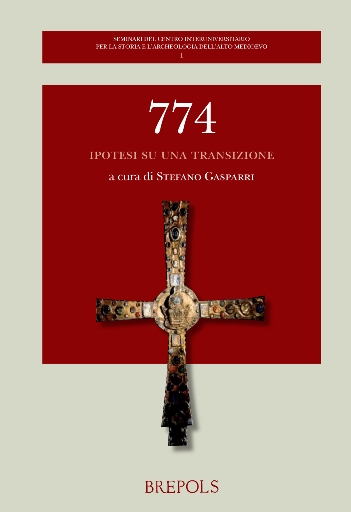
774, ipotesi su una transizione
show More to view fulltext, buy and share links for:774, ipotesi su una transizione show Less to hide fulltext, buy and share links for: 774, ipotesi su una transizioneIn questo volume sono editi gli atti del I seminario organizzatonel 2006 dal Centro interuniversitario per la storia e l’archeologia dell’alto medioevo (SAAME). Al centro del seminario è stato un tema di grande importanza per storia italiana: la conquista franca del regno longobardo e le sue conseguenze in tutti i campi, dai mutamenti politici - indagati soprattutto dal punto di vista della loro rappresentazione - ai mutamenti nell’insediamento rurale e urbano (dalle campagne toscane a capitali come Roma e Ravenna), a quelli nelle attività artistiche (la costruzione di edifici di prestigio) e culturali (epigrafia, documenti, codici, produzione normativa), nella circolazione monetaria (le zecche, i mancosi) e nei flussi commerciali (con in primo piano l’Adriatico). Inoltre si è tentato di inserire la ‘transizione’ italiana, ossia il passaggio della penisola sotto la dominazione carolingia, nell’ambito di un quadro europeo, prendendo in considerazione, con alcuni affondi tematici, la Turingia, la Baviera, l’Austrasia e infine la Spagna, dove è avvenuta un’altra fondamentale transizione, quella tra Visigoti e Musulmani.
Il titolo del libro, che fa riferimento ad una data precisa fornita dalla storia politica, l’anno 774, può apparire paradossale per presentare i risultati di un seminario nel corso del quale sono state interrogate allo stesso modo fonti scritte e fonti archeologiche, e va inteso in senso soprattutto simbolico, come un’ovvia allusione ad un altro anno cardine, il 751, anch’esso oggetto di indagini recenti. Ma al tempo stesso tale riferimento è utile per ribadire l’assoluta necessità di coordinare insieme, ai fini della ricostruzione del passato, i tempi e i risultati della storia politica (in questo caso il passaggio dai Longobardi ai Carolingi), dell’archeologia, della numismatica, della storia della documentazione scritta, della storia dell’arte e di tutte le altre storie.
-
-
-
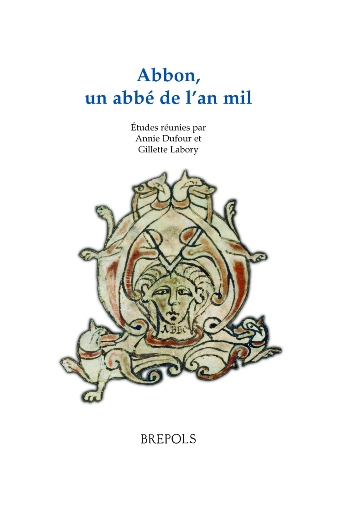
Abbon, un abbé de l’an Mil
show More to view fulltext, buy and share links for:Abbon, un abbé de l’an Mil show Less to hide fulltext, buy and share links for: Abbon, un abbé de l’an MilBien que l’œuvre littéraire et scientifique d’Abbon de Fleury (v. 950-1004) ait été aussi importante que celle de son célèbre contemporain Gerbert (devenu le pape Sylvestre II), l’abbé du monastère fleurisien restait cependant mal connu. Le colloque organisé en 2004 pour célébrer le millénaire de sa mort a voulu donner un souffle nouveau aux études abboniennes. Les contributions, qui s’articulent autour de deux thèmes principaux, vie monastique, religion et culture, abordent la plupart des domaines dans lesquels s’est exercée la compétence d’Abbon: astronomie, comput, musique, droit canon, hagiographie, histoire… Sont également traitées des questions touchant à l’ecclésiologie et à la réforme monastique ou concernant le monastère lui-même et son temporel ou un autre monastère orléanais, Saint-Mesmin de Micy. De ces «éclairages entrecroisés» ressort un portrait renouvelé de ce grand abbé, à la fois homme de science et chercheur d’unité, unité de l’Église, unité de son monastère et de l’ordre bénédictin.
-
-
-
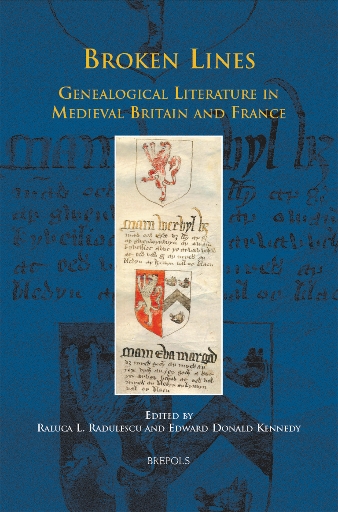
Broken Lines
show More to view fulltext, buy and share links for:Broken Lines show Less to hide fulltext, buy and share links for: Broken LinesThe essays in this important and fascinating collection explore the genealogical literature of late-medieval Britain and France in relation to issues of identity, the transmission of power, and cultural, socio-political, and economic developments. By analyzing the mechanics of cultural and political inheritance and the processes of shaping a sense of identity and descent, the essays in this volume direct the reader towards a complex understanding of genealogical literature and its relationships with other genres, one which will further debate and research in these areas. The present collection presents an interdisciplinary approach to the genealogical literature of the late-medieval period, and brings together specialists in the fields of history, cultural history and literature to raise questions of gender, genre, and theoretical approaches. Broken Lines is also the first book-length study of genealogical literature to date, an exciting intervention into this emerging field of interest.
-
-
-
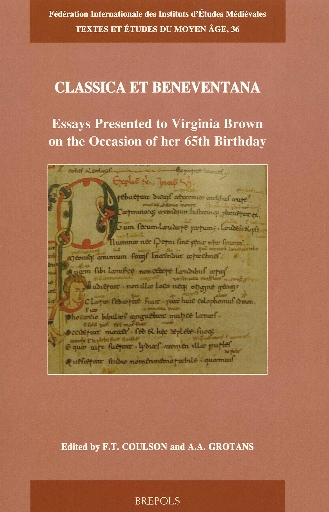
Classica et Beneventana
show More to view fulltext, buy and share links for:Classica et Beneventana show Less to hide fulltext, buy and share links for: Classica et BeneventanaThe Festschrift volume Classica et Beneventana, presented to Virginia Brown on the occasion of her 65th birthday, brings together eighteen insightful new essays by leading scholars devoted to the fields of classical reception and Latin palaeography. The authors investigate a wide-range of topics such as the development and application of the Beneventan script, comparative codicology, use of early liturgical manuscripts, medieval artes and biblical texts and their readers, and the reception and dissemination of classical texts during the Italian Renaissance.
Since 1970, Virginia Brown has been a Senior Research Fellow at the Pontifical Institute of Mediaeval Studies. She is recognized as one of the world’s leading authorities in classical reception and Latin palaeography. Her numerous publications on the Beneventan script have dramatically altered our knowledge of the dissemination of this southern Italian book hand from 800 to 1600. Her editorial work for the Catalogus translationum et commentariorum, as a member of the Editorial Board and since 1986 as Editor-in-Chief, has resulted in several learned volumes tracing the fortuna and study of classical authors from antiquity to the year 1600. As editor of Mediaeval Studies from 1975 to 1988, she single-handedly produced tomes noted for their scholarly rigor and acumen. This collection of essays serves as fitting tribute to a scholar who, via her scholarly research and editorial work, has done so much to advance the fields of palaeography, codicology, and the history of classical scholarship.
-
-
-
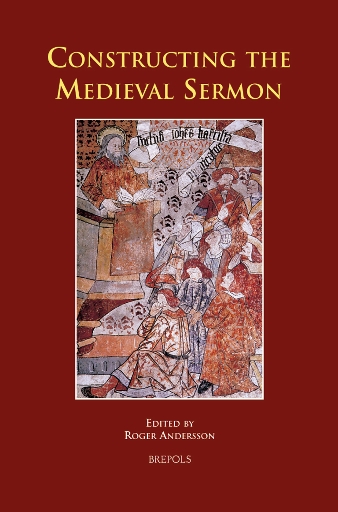
Constructing the Medieval Sermon
show More to view fulltext, buy and share links for:Constructing the Medieval Sermon show Less to hide fulltext, buy and share links for: Constructing the Medieval SermonIn considering the construction of medieval sermons, the term ‘construction’ has many meanings. Those studied here range from questions about sermon composition with the help of artes praedicandi or model collections to a more abstract investigation of the mental construction of the concepts of sermon and preacher. Sermons from a range of European countries, written both in Latin and vernaculars, are subjected to a broad variety of analyses. The approach demonstrates the vitality of this sub-discipline. Most of the essays are more occupied with literary and philological problems than with the religious content of the sermons. While many focus on vernacular sermons, the Latin cultural and literary background is always considered and shows how vernacular preaching was in part based on a more learned Latin culture. The collection testifies both to the increasing esteem of the study of vernacular sermons, and to a revival in the study of all those things contained in a preacher’s ‘workshop’, ranging from rhetorical invention, medieval library holdings and study-aids, through to factors that are crucial for the successful delivery of the sermon, such as the choice of language, mnemonic devices and addressing the audience. The interdisciplinary approach remains ever-present, not only in the diversity of the academic disciplines represented, but also within individual essays. The volume is based on a conference held in Stockholm, 7-9 October 2004.
-
-
-
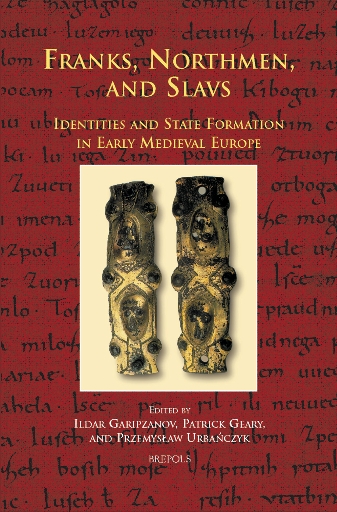
Franks, Northmen, and Slavs
show More to view fulltext, buy and share links for:Franks, Northmen, and Slavs show Less to hide fulltext, buy and share links for: Franks, Northmen, and SlavsIn recent decades, historians attempting to understand the transition from the world of late antiquity with its unitary imperial system to the medieval Europe of separate kingdoms have become increasingly concerned with the role of early medieval gentes, or peoples, in the end of the former and the constitution of the latter.
Eleven specialists examine here the role of ethnic identity in the formation of medieval polities on the periphery of the Frankish world in the eighth through eleventh centuries. In particular, they explore the intertwined issues of ethnic identity and state formation in Scandinavia and in the western and southern Slavic regions, areas in which the new approaches to the history of ethnicity have but little penetrated traditional scholarship. They ask to what extent common identities assisted in the consolidation and creation of early medieval kingdoms and to what extent the formation of these kingdoms created a discourse of common identity as a means to centralization and control. The authors contend that the developments in Scandinavia and in Slavic areas cannot be understood except in dynamic relationship with the process of state formation and group identity within the Frankish kingdoms. This powerful, expansionist society not only interacted and influenced the development of state structures on its northern and eastern borders, but it also provided models of discourse about the relationship between centralizing power and group solidarity. Not that these discourses were simply adopted by the Franks’ neighbours, but rather they became part of the range of possible options selectively adapted to local circumstances.
-
-
-
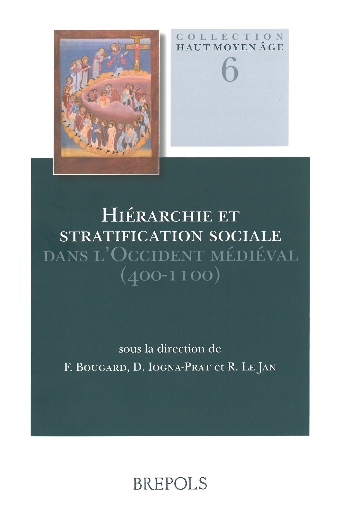
Hiérarchie et stratification sociale dans l’Occident médiéval (400-1100)
show More to view fulltext, buy and share links for:Hiérarchie et stratification sociale dans l’Occident médiéval (400-1100) show Less to hide fulltext, buy and share links for: Hiérarchie et stratification sociale dans l’Occident médiéval (400-1100)Si la notion d’«ordre(s)» est familière aux historiens du Moyen Âge, il est loin d’en être de même pour celle de «hiérarchie». Au reste, le terme n’a pas bonne presse chez les chercheurs en sciences humaines et sociales, qui s’en méfient pour ses relents d’Ancien Régime et préfèrent souvent parler de «stratifications sociales», comme si choisir, distinguer, hiérarchiser les valeurs n’étaient pas dans les mondes du passé comme dans celui d’aujourd’hui à la base même de l’action sociale.
D’origine grecque — hieros (sacré) et archos (fondement, commencement, commandement) — le terme «hiérarchie» est d’un emploi longtemps rare dans la latinité. Les concordances automatisées du latin permettent de savoir avec précision que le succès lexical de hierarchia n’est pas antérieur au tournant des années 800 et qu’il dépend directement de la traduction depuis le grec des écrits du Pseudo-Denys l’Aréopagite, spécialement la Hiérarchie céleste et la Hiérarchie ecclésiastique. Concomitance intéressante, l’adoption généralisée du terme hiérarchie dans l’Occident médiéval, entre le ix e et le xi e siècle, est contemporaine d’une conception de la société rapportée à l’harmonie du cosmos qui fait du monde des hommes un reflet de l’ordonnancement voulu par Dieu — un ordonnancement propre à confondre ecclésial et social ou, dit autrement, à faire d’Église et société deux termes coextensifs. Dans cette logique, puisqu’il ne saurait y avoir de critère laïque d’appartenance aux groupes sociaux, le concept de hiérarchie permet au médiéviste de rendre compte de l’ensemble des processus d’organisation d’une société stratifiée parce qu’aspirée vers le divin. Il permet autant de décrire un jeu de places que de saisir la dynamique de processus à l’œuvre dans la grande fabrique du social.
-
-
-
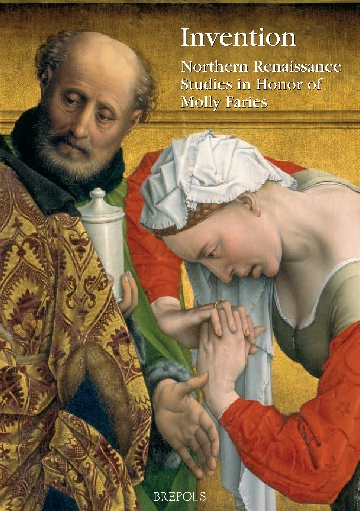
Invention
show More to view fulltext, buy and share links for:Invention show Less to hide fulltext, buy and share links for: InventionElucidating the steps that led to a finished work of art has been one of Molly Faries’ principal concerns in nearly forty years of research and teaching. A pioneer in infrared reflectography, she has demonstrated like no other scholar the importance of technical studies to art history, in the way that they provide insight into an artist’s technique and development, into collaboration within a workshop, and into master-pupil relationships. Molly Faries has taught generations of students and colleagues to view paintings not as static objects but as the results of successive choices.
The volume’s title, Invention: Northern Renaissance Studies in Honor of Molly Faries, evokes Molly’s passion for understanding an artist’s creative process. The term “invention” is here understood in the widest possible sense: How did a work of art come into being? How did an artist react to new stimuli or adapt to a new culture? Was innovation valued above adherence to a local tradition? To what degree could artists shape their patrons’ taste? How did artists transform their own inventions over time and adopt those of others? Was there a concept of invention specific to the Northern Renaissance and how did it differ from ours?
The authors who tackle these and other questions include university professors, curators, conservators, and conservation scientists, all recognized specialists in northern European art of the fifteenth and sixteenth centuries. The artists they discuss are among the greatest painters, manuscript illuminators, printmakers, and sculptors: Johan Maelwael, the Limbourg brothers, Jan van Eyck, Rogier van der Weyden, Hans Memling, Lieven van Lathem, Juan de Flandes, Jean Hey, Albrecht Dürer, Hieronymus Bosch, Master H.L., Jacques Du Broeucq, and Jan Brueghel the Elder.
This book, one of the few devoted specifically to the concept of invention in Northern Renaissance art, is richly illustrated with 32 color plates and 179 black-and-white reproductions; it includes an index.
-
-
-
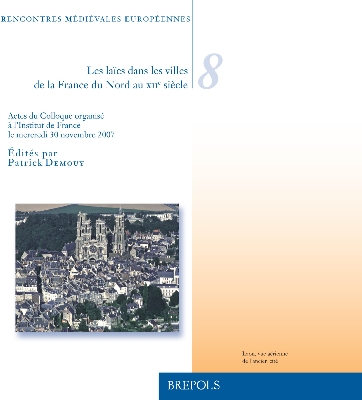
Les laïcs dans les villes de la France du Nord au XIIe siècle
show More to view fulltext, buy and share links for:Les laïcs dans les villes de la France du Nord au XIIe siècle show Less to hide fulltext, buy and share links for: Les laïcs dans les villes de la France du Nord au XIIe siècleLes villes de France du Nord au xii e siècle connaissent de spectaculaires transformations reflétant un dynamisme démographique et économique sans précédent. Leur paysage est bouleversé par les chantiers de constructions tandis que se développent à leurs portes des faubourgs étendus. Ouvertes sur les campagnes qui les approvisionnent en produits et en main d’œuvre, elles voient s’affirmer une société laïque variée et ambitieuse. Ayant obtenu des seigneurs communes et franchises, l’élite des citadins manifeste de réelles compétences juridiques et économiques supposant une éducation élaborée.
Le présent volume tente d’évoquer leurs cadres de vie, quelques aspects de leur mentalité et pose la question de leur formation.
-
-
-
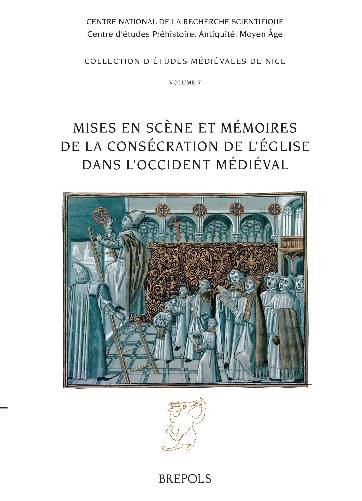
Mises en scène et mémoires de la consécration de l’église dans l’Occident médiéval
show More to view fulltext, buy and share links for:Mises en scène et mémoires de la consécration de l’église dans l’Occident médiéval show Less to hide fulltext, buy and share links for: Mises en scène et mémoires de la consécration de l’église dans l’Occident médiévalLe déroulement de la consécration ou dédicace d’une église est codifié dans l’Église latine aux vii e et viii e siècles pour devenir, au Moyen Âge central, un rituel fastueux. La consécration apparaît alors comme l’acte fondateur d’un nouvel espace-temps polarisé par le bâtiment ecclésial. Les paroles prononcées et les gestes effectués lors du rituel contribuent à manifester cette nouvelle naissance et les transformations qu’elle implique. Les mesures prises pour en conserver le souvenir inscrivent l’événement dans la mémoire de la communauté liée au lieu consacré.
Œuvre commune d’un groupe d’historiens, d’historiens de l’art et d’archéologues médiévistes, le présent ouvrage propose une réflexion sur les implications sociales de la consécration de l’église au Moyen Âge central. Il s’agit tout d’abord de comprendre la dynamique du rituel et ses effets sociaux, en étudiant les déplacements des protagonistes, les gestes des célébrants, tant furtifs (bénédictions, signes de croix, onctions) que durables (marquages au sol ou sur les murs), les paroles prononcées, la musique, les chants et les odeurs qui plongent le rituel dans une atmosphère multi-sensorielle. Il s’agit ensuite d’examiner les conditions de production d’un commentaire normatif et exégétique sur la consécration, tant en amont qu’en aval de la célébration, et de comprendre les liens qui unissent ces différents modes de discours sur le rituel. Il s’agit enfin de comprendre les formes et les effets sociaux des narrations de l’événement-consécration, tant par le verbe (de la notice à la chronique) que par l’inscription monumentale et l’image peinte ou sculptée. Ces trois axes de la réflexion sont envisagés de manière croisée et complémentaire.
Les auteurs ayant contribué à cet ouvrage sont implantés dans des structures universitaires ou de recherche en France, Suisse, Belgique, Canada et États-Unis.
-
-
-
Negotiating Heritage
show More to view fulltext, buy and share links for:Negotiating Heritage show Less to hide fulltext, buy and share links for: Negotiating HeritageA key impulse of cultural transmission is engaging with the past for the benefit of the present. In seventeen essays on subjects that range from Paschasius Radbertus to Orhan Pamuk, the Regularis Concordia to Kurt Weill, and from Augustine to Adorno, Negotiating Heritage examines specific historical case-studies that reveal the appropriation, modification, or repudiation of a legacy. The overall focus of this interdisciplinary volume is memory: medieval conceptions of memory, resonances of the Middle Ages in later periods, and memory as a heuristic methodological device. Through tokens or other vestiges of the past - the physical memorial of a tomb, the ritualized retention of past acts or structures, the reverberations of a doctrinal, literary, musical, or iconographic topos, or the symbolic reminiscences of a past ideal - memory acts as the manifestation of something absent. This anthology studies such tokens in a way that provides a fruitful new perspective for the field of research into memory, and explores the methodological dimension of issues of heritage, genealogy, and tradition. Furthermore, Negotiating Heritage also probes the reception and construction of the Middle Ages in later periods; exploring the shifting territory of the meaning of the medieval itself. In its movement between medievalism and the medieval period, Negotiating Heritage is an important contribution to both established and emerging trends in critical thought.
-
-
-

Parisian Confraternity Drama of the Fourteenth Century
show More to view fulltext, buy and share links for:Parisian Confraternity Drama of the Fourteenth Century show Less to hide fulltext, buy and share links for: Parisian Confraternity Drama of the Fourteenth CenturyParisian Confraternity Drama of the Fourteenth Century is the first volume of studies devoted solely to the Miracles de Nostre Dame par personnages. These anonymous plays, found in a single luxury manuscript, comprise the only major corpus of dramatic works in French that have survived from the fourteenth century. They derive from a rich diversity of sources: narrative miracle accounts, saints’ lives, epic chansons de geste, vernacular romances, and history. Each play is preceded by a richly detailed miniature, some two dozen include a sermon in prose, and each includes at least one rondel to be sung by the cortege accompanying the Virgin. They constitute both a collective demonstration of the fervent late-medieval devotion to the Virgin, and a substantial archive of contemporary insights into the issues of power, authority, and influence that struggled for dominance in fourteenth-century Paris. As this extraordinary collection has, in its entirety, attracted little critical attention to date, this volume will be of significant interest to scholars wishing to explore the plays in their literary context, as well as those interested in medieval drama, the Marian tradition, and the role of confraternities in fourteenth-century French culture.
-
-
-
Practices of Gender in Late Medieval and Early Modern Europe
show More to view fulltext, buy and share links for:Practices of Gender in Late Medieval and Early Modern Europe show Less to hide fulltext, buy and share links for: Practices of Gender in Late Medieval and Early Modern EuropeThis collection argues that gender must be considered as both an approach to history, and as a reflection of the deep workings of the lived, historical past. The sixteen original essays explore social and cultural expressions of gender in Europe from the fourteenth to the eighteenth centuries. They examine theories and practices of gender in domestic, religious, and political contexts, including the Reformation, the convent, the workplace, witchcraft, the household, literacy, the arts, intellectual spheres, and cultures of violence and memory. The volume exposes the myriad ways in which gender was actually experienced, together with the strategies used by individual men and women to negotiate resilient patriarchal structures. Overall, the collection opens up new synergies for thinking about gender as a category of historical analysis and as a set of experiences central to late medieval and early modern Europe.
-
-
-
Prédication et liturgie au Moyen Âge
show More to view fulltext, buy and share links for:Prédication et liturgie au Moyen Âge show Less to hide fulltext, buy and share links for: Prédication et liturgie au Moyen ÂgeLa transmission des traces écrites de la prédication médiévale prend habituellement la forme de recueils de sermons ordonnés selon les fêtes du calendrier liturgique. Pour autant, la relation d’intimité entre prédication et liturgie qu’on serait tenté d’en déduire n’est ni nécessaire, ni évidente. La discrétion des liturgistes médiévaux sur les pratiques de prédication l’atteste, et de même, celle des auteurs d’artes predicandi sur la liturgie.
Comment la prédication et la liturgie, ces deux manières complémentaires, mais clairement distinctes, de construire un discours public sur la foi, et de pratiquer la religion, au sein de la société, sous la forme d’actions auxquelles on prête une efficacité symbolique, se sont-elles rejointes, voire mutuellement renforcées au cours de l’histoire de la christianisation? Telle est la question qui sous-tend la quinzaine d’études réunies dans ce volume. Le millénaire médiéval s’y trouve à dessein enchâssé entre la période d’épanouissement de la prédication des Pères, qui est aussi le temps de l’élaboration d’assises durables pour la liturgie, et le moment crucial des remises en question de tous ordres qui, à partir du xvi e siècle, permettent d’observer le temps passé comme dans un miroir. La parole y est surtout donnée aux prédicateurs, en réalité très diserts sur les textes lus et chantés, les gestes, les vêtements, les rites et les usages de la liturgie – en particulier, sur les rituels de consécration ou de dédicace des églises, et sur les processions de la Fête-Dieu. Si les prédicateurs, de la sorte, donnent sens au culte, la liturgie est aussi pour eux un instrument pédagogique mis au service de la mémorisation de leur message, un langage qu’ils s’approprient en recourant à la citation poétique, ou à la transposition métaphorique des mots du rituel, voire une autorité qui leur sert d’argument de persuasion ou, plus rarement, dont ils éprouvent la validité rationnelle. De plus, dès le xiii e siècle, dans les villes, les frères mendiants n’hésitent pas à détacher leurs prises de parole des temps et des lieux ordinaires de la célébration liturgique au profit de la conquête et de la sacralisation d’un temps et d’un espace du quotidien, alors que le théâtre et les livres de lecture s’emparent des techniques du sermon et des ressources de la liturgie, en des formes renouvelées de la pratique pastorale.
-
-
-
Quant l’ung amy pour l’autre veille
show More to view fulltext, buy and share links for:Quant l’ung amy pour l’autre veille show Less to hide fulltext, buy and share links for: Quant l’ung amy pour l’autre veilleEn hommage à Claude Thiry et dans le but de faire progresser les connaissances dans un domaine dont il est un éminent spécialiste, ce volume réunit une quarantaine d’études toutes centrées sur le moyen français.
En écho à la richesse des travaux du dédicataire, ces contributions se déploient selon six axes: les richesses de la langue, les formes de la prose, la diversité de la production poétique, l’historiographie princière, les œuvres de théâtre, les questions liées à l’édition de textes.
Tant par la variété des sujets traités que par la diversité des approches, ce livre constitue une contribution importante à ce vaste champ de recherche qu’est devenu le français des XIVe-XVIe siècles.
-
-
-
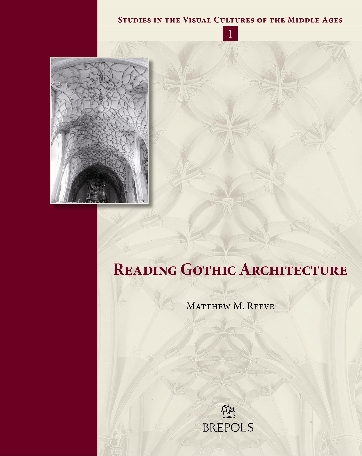
Reading Gothic Architecture
show More to view fulltext, buy and share links for:Reading Gothic Architecture show Less to hide fulltext, buy and share links for: Reading Gothic ArchitectureThe Gothic style is now one of the supreme products of Medieval and Renaissance visual culture. Subject to multiple readings and (re)interpretations from ca. 1500 to the present, Gothic stands as one of two dominant languages of European historical architecture. This volume explores methods of reading and interpreting the Gothic from the twelfth through the sixteenth century. Following the editor’s introduction, it contains ten essays written by leading scholars from Canada, the United States, and Great Britain. In challenging the traditional parameters of Gothic, the papers explore ‘Medieval’ and ‘Renaissance’ manifestations of the Gothic, and they consider material ranging geographically from Ireland to Poland, and from Paris to Sicily. Each paper explores ways in which Gothic was or could be read by the contemporary viewers for which it was designed, and by post-modern commentators. In placing the act of reading at the centre of their investigations, the papers offer significant new insights into the forms and meanings of the Gothic.
-
-
-
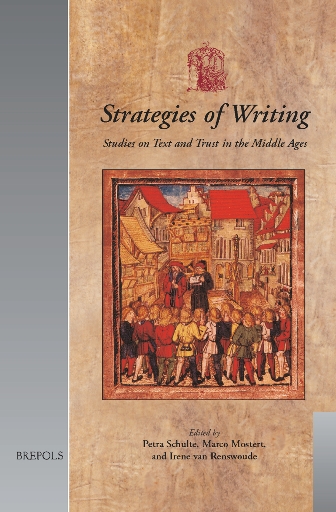
Strategies of Writing
show More to view fulltext, buy and share links for:Strategies of Writing show Less to hide fulltext, buy and share links for: Strategies of WritingTrust is the basis of all social relations. It presupposes the concordance of word and deed. Trust is not created spontaneously, but requires a process of observation and socialization, and thus is culturally determined and subject to change. Writing may engender trust, and trust may be placed in written texts.
The contributions to this volume address the complex relationships between ‘trust’ and ‘writing’ in the Middle Ages. They deal with charters, historiography, letters, political communication, and the possibilities of trust in writing. Some of the questions addressed are: Does writing as a medium engender trust irrespective of the contents of the written text? Was trust in writing dependent on trust in an authority? Was the written form of the text meant to confer trust on its contents? Did rituals take place that were meant to enhance the text’s trustworthiness? Can changes be observed in the strategies of engendering trust? Was trust considered food for reflection in written texts? What was considered to constitute a breach of trust? The volume is dedicated to Michael Clanchy, whose work inspired much of its contents.
-
-
-
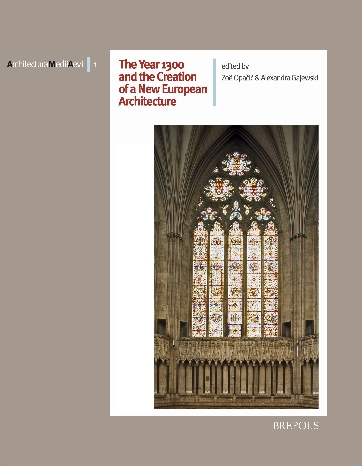
The Year 1300 and the Creation of a new European Architecture
show More to view fulltext, buy and share links for:The Year 1300 and the Creation of a new European Architecture show Less to hide fulltext, buy and share links for: The Year 1300 and the Creation of a new European ArchitectureThe theme of the book is the origin of Late Gothic architecture in Europe around the year 1300. It was then that Gothic ecclesiastical architecture graduated from a largely French into a wholly European phenomenon with new centres of art production (Cologne, Florence, York, Prague, Kraków) and newly-empowered institutions: kings, the higher nobility, towns and friars. Profound changes in spiritual and devotional life had a lasting effect on the relationship between architecture and liturgy. In short, architecture around 1300 became at once more cosmopolitan and more heterogeneous.
The book addresses these radical changes on their own terms-as an international phenomenon. By bringing together specialists in art, architecture and liturgy from many parts of Europe and from the USA it aims to employ their separate expertise, and to integrate each into a broader European perspective.
Dr Zoë Opačić is lecturer in the history and theory of architecture at Birkbeck College, University of London. She specialises in the field of late medieval architecture and art, particularly in Central Europe.
Dr Alexandra Gajewski is a Visiting Assistant Professor at the University of Michigan, Ann Arbor and a Fellow of the Society of Antiquaries, London. She works on Burgundian Gothic architecture and on Cistercian art in medieval France and the Empire.
-
-
-
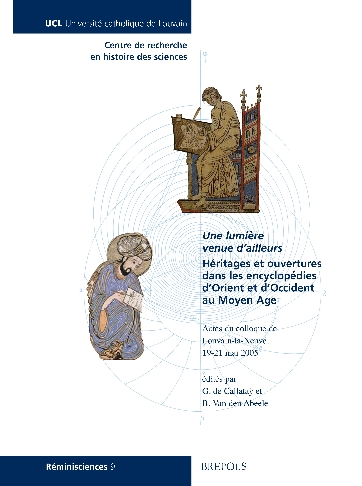
Une lumière venue d’ailleurs. Héritages et ouvertures dans les encyclopédies d’Orient et d’Occident au Moyen Age
show More to view fulltext, buy and share links for:Une lumière venue d’ailleurs. Héritages et ouvertures dans les encyclopédies d’Orient et d’Occident au Moyen Age show Less to hide fulltext, buy and share links for: Une lumière venue d’ailleurs. Héritages et ouvertures dans les encyclopédies d’Orient et d’Occident au Moyen AgeL’encyclopédisme médiéval a fait l’objet de divers colloques ces dernières années, apportant des éclairages complémentaires. Un biais peu exploré encore est celui des relations entre œuvres encyclopédiques orientales et occidentales.
Le colloque de Louvain-la-Neuve «Une lumière venue d’ailleurs» s’est donné pour objectif général de mettre en parallèle les deux traditions, sur base d’études philologiques et historiques. Les onze articles publiés abordent les traditions arabe (C. Baffioni, G. de Callataÿ), persane (Ž. Vesel), juive (M. Zonta), la réception d’auteurs arabes par le Moyen Age latin (A. Galonnier, M.-C. Duchenne et M. Paulmier), la diffusion des textes latins (J. Loncke, B. Van den Abeele) et les avatars tardifs de l’encyclopédisme en Occident (C. Boucher, B. Roling, I. Ventura). Par le croisement de ces éclairages, le volume souhaite faire mieux comprendre les influences que l’Occident chrétien, l’Islam et le monde hébraïque exercèrent réciproquement à cette époque-charnière de leur histoire.
-
-
-
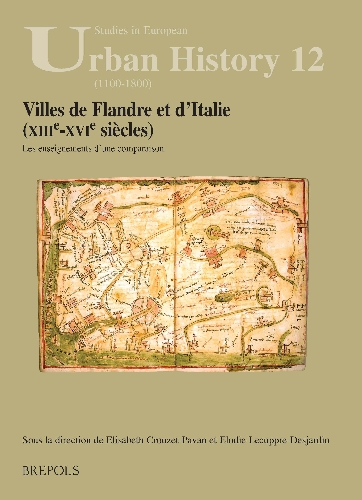
Villes de Flandre et d’Italie (XIIIe-XVIe siècle). Les enseignements d’une comparaison
show More to view fulltext, buy and share links for:Villes de Flandre et d’Italie (XIIIe-XVIe siècle). Les enseignements d’une comparaison show Less to hide fulltext, buy and share links for: Villes de Flandre et d’Italie (XIIIe-XVIe siècle). Les enseignements d’une comparaisonUne comparaison entre les villes de Flandre et d’Italie semble aller de soi tant apparaissent nombreuses, dans les études qui leur sont consacrées, les similitudes et les disparités esquissées. Entre les deux grands espaces urbanisés de l’Europe occidentale, pour qui s’intéresse à l’histoire des villes, le rapprochement paraît s’imposer. Pourtant, bien souvent, la juxtaposition prévaut et la comparaison se limite au seul domaine des convergences de l’histoire économique.
Cinq thèmes ont donc été retenus ici dans un souci de renouvellement et de réorientation des questionnements: la démographie, le fait religieux, les inscriptions et les symboliques du pouvoir, la «fabrique» de la mémoire et la représentation de l’espace. Dans cet ouvrage, est organisée une mise en parallèle qui permet d’identifier les spécificités qui façonnèrent en Italie et au nord de l’Europe les identités urbaines. Sur fond de relations marchandes et d’animation économique, les profils des communautés se précisent alors et la rare gageure d’une véritable histoire comparative est ainsi proposée au lecteur.
-
-
-
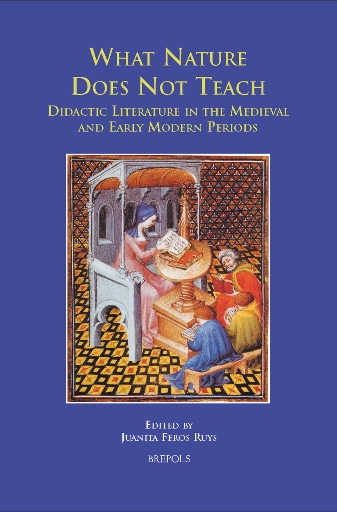
What Nature Does Not Teach
show More to view fulltext, buy and share links for:What Nature Does Not Teach show Less to hide fulltext, buy and share links for: What Nature Does Not TeachThis interdisciplinary study takes as its subject the multi-faceted genre of didactic literature (the literature of instruction) which constituted the cornerstone of literary enterprise and social control in medieval and early-modern Europe. Following an introduction that raises questions of didactic meaning, intent, audience, and social effect, nineteen chapters deal with the construction of the individual didactic voice and persona in the premodern period, didactic literature for children, women as the creators, objects, and consumers of didactic literature, the influence of advice literature on adult literacy, piety, and heresy, and the revision of classical didactic forms and motifs in the early-modern period. Attention is paid throughout to the continuities of didactic literature across the medieval and early-modern periods — its intertextuality, reliance on tradition, and self-renewal — and to questions of gender, authority, control, and the socially constructed nature of advice. Contributors particularly explore the intersection of advice literature with real lives, considering the social impact of both individual texts and the didactic genre as a whole. The volume deals with a wide variety of texts from the early Middle Ages to the eighteenth century, written in languages from Latin through the European vernaculars to Byzantine Greek and Russian, offering a comprehensive overview of this pervasive and influential genre.
-
-
-
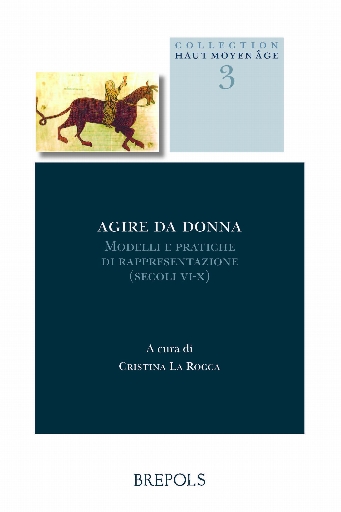
Agire da donna
show More to view fulltext, buy and share links for:Agire da donna show Less to hide fulltext, buy and share links for: Agire da donnaL’evidenza scritta e materiale sulle donne dell’alto medioevo presenta una importante caratteristica di fondo: la descrizione delle azioni femminili non è normalmente il prodotto della percezione delle donne, né appare organizzata e prodotta per fornire una rappresentazione diretta dell’operato, delle capacità e delle caratteristiche femminili in termini reali. Piuttosto, sia sotto il profilo materiale, sia sotto il profilo scritto, le donne sono utilizzate - dal loro gruppo parentale, dagli avversari oppure dai sostenitori dei loro congiunti - come paradigmi simbolicamente efficaci per far apprezzare le possibilità economiche e di prestigio dei gruppi famigliari, i meriti e gli errori dei loro uomini, il clima politico di un regno. Si rafforza quindi, nella società altomedievale, il tema retorico dell’ “influenza femminile” per spiegare, in modo diretto e persuasivo, la consonanza o la dissonanza con il clima politico complessivo. Come tali, dunque, i modelli di rappresentazione femminile, di volta in volta utilizzati, non sono semplici ripetizioni. Essi variano nel corso del tempo, precisamente in rapporto con la trasformazione dei valori condivisi dalle società altomedievali, e con le reali possibilità femminili che sono progressivamente accettate oppure disapprovate, misconosciute oppure valorizzate. Le immagini della regina buona che converte il proprio marito al cristianesimo e della regina perfida che lo tradisce, così come i ricchi corredi funerari e le iscrizioni femminili rappresentano lo specchio attraverso cui la società altomedievale valutava sé stessa, le proprie tensioni e le proprie certezze.
-
-
-
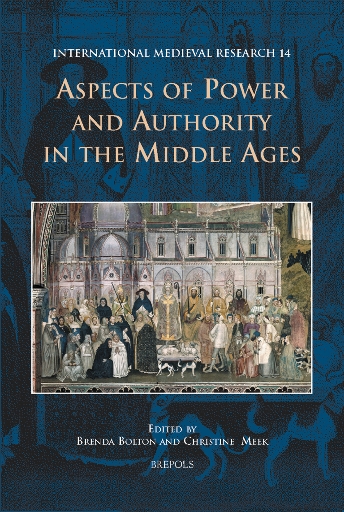
Aspects of Power and Authority in the Middle Ages
show More to view fulltext, buy and share links for:Aspects of Power and Authority in the Middle Ages show Less to hide fulltext, buy and share links for: Aspects of Power and Authority in the Middle AgesConcepts of power and authority and the relationship between them were fundamental to many aspects of medieval society. The essays in this collection present a series of case studies that range widely both chronologically and geographically, from Lombard Italy to early modern Iberia and from Anglo-Saxon, Norman and later medieval England to twelfth-century France and the lands beyond the Elbe in the conversion period. While some papers deal with traditional royal, princely and ecclesiastical authority, they do so in new ways. Others examine groups and aspects less obviously connected to power and authority, such as the networks of influence centring on royal women or powerful ecclesiastics, the power relationships revealed in Anglo-Saxon and Old-Norse literature or the influence that might be exercised by needy crusaders, by Jews with the ability to advance loans or by parish priests on the basis of their local connections. An important section discusses the power of the written word, whether papal bulls, collections of miracle stories or the documents produced in lawsuits. The papers in this volume demonstrate the variety and multiplicity of both power and authority and the many ways by which individuals exercised influence and exerted a claim to be heard and respected.
-
-
-
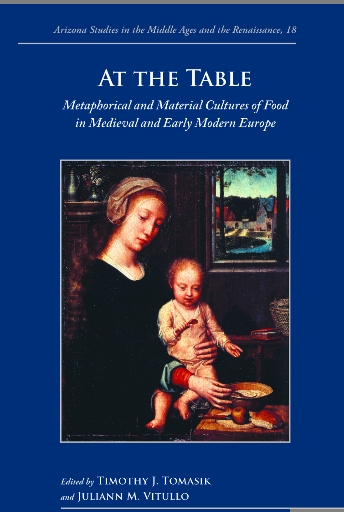
At the Table
show More to view fulltext, buy and share links for:At the Table show Less to hide fulltext, buy and share links for: At the TableThis volume surveys recent studies of the metaphorical and material facets of food in medieval and early modern Europe. Ranging from literary, historical, and political analyses to archaeological and botanical ones, this collection explores food as a nexus of pre-modern European culture. Food and feasting are understood not simply as the consumption of material goods but also as the figurative and symbolic representations of culture. To understand the myriad ways in which discourses about food and feasting are mobilized during this period is to better understand the fundamental role food and feasting played in the development of Europeans’ habitual patterns of behavior and of thought.
-
-
-
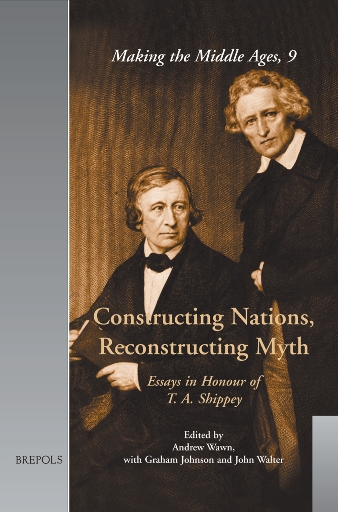
Constructing Nations, Reconstructing Myth
show More to view fulltext, buy and share links for:Constructing Nations, Reconstructing Myth show Less to hide fulltext, buy and share links for: Constructing Nations, Reconstructing MythThis collection of essays examines the ‘Grimmian Revolution’, the paradigm shift in the humanities that came with the publication of Jacob Grimm’s Deutsche Grammatik. In doing so, it honours T. A. Shippey, who has been a leading figure in reconsidering the contributions of the Old Philology and its impact on the humanities, particularly the rediscovery of the ancient languages and literatures of Northern Europe; the role this has played in the creation of national and regional identities; the attempts to extend the methods of comparative philology to comparative mythology; and the collection of folktales, folk-ballads, and the development of folkloristics. The sixteen essays in this collection focus on the impact made by nineteenth- and early-twentieth-century philology in the fields of medieval studies and language studies, and in the construction of Northern European national identities, mythologies, and folklore.
-
-
-
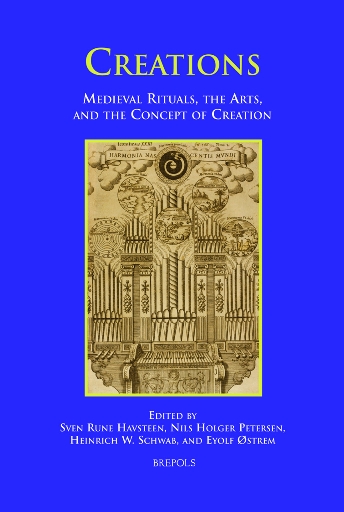
Creations
show More to view fulltext, buy and share links for:Creations show Less to hide fulltext, buy and share links for: CreationsThe meanings of the noun ‘creation’, and the verb ‘to create’, range from the traditional theological idea of God creating ex nihilo to a more recent sense of the process of artistic conception. This collection of thirteen essays, written by scholars of music, literature, the visual arts, and theology, explores the complicated relationship between medieval rituals and theology, and the development of an idea of human artistic creation, which came to the fore in the sixteenth century.
The volume concentrates on the period from the Carolingians to the Counter-Reformation but also includes some twentieth-century musicians. Each essay is dedicated to a particular topic concerned with ritual or artistic beginnings, inventions, harmony and disharmony, as well as representations or celebrations of creation. Central themes include the interplay of the ideas of God as creator, of God acting and recreating in medieval liturgy, of God as artist—the deus artifex of the Pythagorean cosmology, which was occasionally referred to as recently as the early nineteenth century—and, finally, of the homo creator, a concept in which man reflected (and eventually replaced) God in his artistic creativity.
This book therefore features new, significant, individual contributions from a range of scholarly disciplines, but, taken as a whole, it also constitutes a complex interdisciplinary study, with large-scale historical constructions.
-
-
-
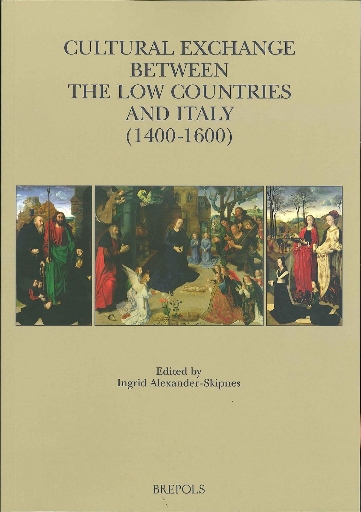
Cultural Exchange between the Low Countries and Italy (1400-1600)
show More to view fulltext, buy and share links for:Cultural Exchange between the Low Countries and Italy (1400-1600) show Less to hide fulltext, buy and share links for: Cultural Exchange between the Low Countries and Italy (1400-1600)
-
-
-
Early Medieval Palimpsests
show More to view fulltext, buy and share links for:Early Medieval Palimpsests show Less to hide fulltext, buy and share links for: Early Medieval PalimpsestsPalimpsests are texts from which the primary text has been effaced to make room for fresh writing. The practice was particularly important in the early Middle Ages, when numerous, often precious, books were subjected to this treatment. As a result, many ancient texts lay hidden in European libraries for centuries.
Ever since the first palimpsests were discovered in the seventeenth century, scholars have been fascinated by the possibility of discovering hitherto unknown texts. For a long time, the lower script of palimpsests could only be brought back to the light of day through the use of chemical reagents that proved very detrimental to the manuscripts. The great advance away from these destructive techniques came at the beginning of the twentieth century with the application of ultra-violet photography. Today, striking advances in this field are again being made with the development of digital imaging.
The contributions in this volume focus mainly on the cultural evidence offered by palimpsests from the early Middle Ages. Some contributors have examined particular manuscripts in great detail (the London palimpsest of Jerome’s Chronicle or the Munich palimpsest codex from Benediktbeuern); others have looked at specific types of texts that have suffered deletion in this way (liturgical palimpsests, Carolingian letters). The volume also contains a handlist of all known palimpsested manuscripts in Beneventan script.
-
-
-

Entre la ville, la noblesse et l’Etat: Philippe de Clèves (1456-1528), homme politique et bibliophile
show More to view fulltext, buy and share links for:Entre la ville, la noblesse et l’Etat: Philippe de Clèves (1456-1528), homme politique et bibliophile show Less to hide fulltext, buy and share links for: Entre la ville, la noblesse et l’Etat: Philippe de Clèves (1456-1528), homme politique et bibliophilePhilippe de Clèves (1456-1528) est un homme remarquable à plus d’un titre. Fils d’Adolphe, seigneur de Ravenstein, et de Béatrice de Coïmbre, Philippe jouit, à l’instar de bon nombre d’aristocrates à l’automne du Moyen Âge, d’un luxueux train de vie. Partisan de Maximilien d’Autriche dans sa lutte contre les cités du comté de Flandre jusqu’en 1488, il choisit alors de défendre le particularisme urbain contre l’autorité bourguignonne. Vaincu en 1492, il se tourne vers la cour du roi de France Charles VIII. Il parcourt l’Europe, gouverne Gênes pour finalement revenir aux Pays-Bas et demeurera fidèle à Charles Quint jusqu’à sa mort.
Les différentes contributions de ce volume entendent apporter une réponse à la question-clé des intérêts de Philippe durant cette période troublée: dans quelle mesure privilégie-t-il la relation avec le prince et avec les autres aristocrates ou entend-il plutôt assurer ses intérêts dans la ville? À partir d’une documentation largement inédite, l’attention est ainsi portée sur le rôle culturel, politique, social et militaire qu’a joué Philippe de Clèves dans les conflits entre la Ville et l’État. En outre, Philippe lui-même a rédigé L’instruction de toutes manieres de guerroyer. S’il est auteur, il est aussi collectionneur: plusieurs articles mettent également l’accent sur l’analyse du contenu de sa bibliothèque et sur la comparaison avec les librairies d’autres nobles et de certains fonctionnaires d’État.
Ce volume constitue la publication des Actes d’un colloque interdisciplinaire organisé à la Bibliothèque royale de Belgique dans le cadre du «Pôle d’Attraction Interuniversitaire» (La société urbaine dans les anciens Pays-Bas, bas Moyen Âge-XVIe siècle, projet V, n° 10), programme de recherche financé par la Politique scientifique fédérale belge.
-
-
-
Essays in Manuscript Geography
show More to view fulltext, buy and share links for:Essays in Manuscript Geography show Less to hide fulltext, buy and share links for: Essays in Manuscript GeographyThe medieval English West Midlands has long been associated with the production of vernacular texts, in Old and Middle English, and with the making of several famous manuscripts. The aim of this volume is to re-think assumptions about medieval literature and the region in the light of new research in medieval book history. A series of specially commissioned essays in ‘manuscript geography’ examines the making and use of texts and books in relation to cultural networks in the region and beyond. Included are case studies of manuscripts of Worcester and the Worcester diocese from the eleventh to the thirteenth centuries; investigations of manuscript production in fourteenth-century Shropshire and its wider regional links; and essays on textual cultures in Warwickshire from the activities of the aristocrats and gentry of the fifteenth and sixteenth centuries to the projects of later antiquarians. Essays in the final section of the volume reflect on the possibilities of large-scale, corpus-based research on medieval manuscript books. Collectively the essays identify and explore some of the investments of traditional regionalist accounts of vernacular literary culture and model new theoretical and methodological approaches.
-
-
-
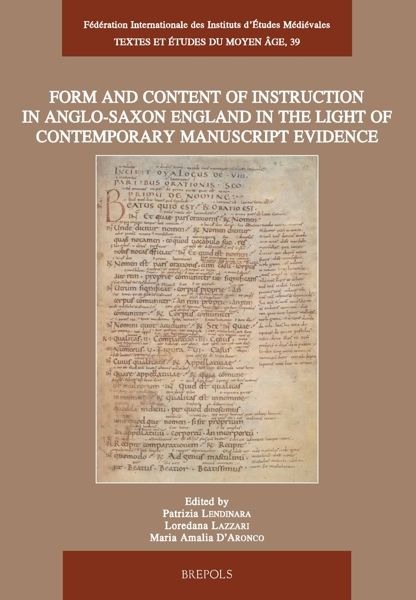
Form and content of instruction in Anglo-Saxon England in the light of contemporary manuscript evidence
show More to view fulltext, buy and share links for:Form and content of instruction in Anglo-Saxon England in the light of contemporary manuscript evidence show Less to hide fulltext, buy and share links for: Form and content of instruction in Anglo-Saxon England in the light of contemporary manuscript evidenceThe essays collected in this volume focus on a prominent aspect of Anglo-Saxon culture: educational texts and the Insular manuscripts which have preserved them.
The English imported manuscripts and texts from the Continent, whilst a series of foreign masters, from Theodore of Tarsus to Abbo of Fleury, brought with them knowledge of works which were being studied in Continental schools. Although monastic education played a leading role for the entire Anglo-Saxon period, it was in the second half of the tenth and early eleventh centuries that it reached its zenith, with its renewed importance and the presence of energetic masters such as Æthelwold and Ælfric. The indebtedness to Continental programs of study is evident at each step, beginning with the Disticha Catonis. Nevertheless, a number of texts initially designed for a Latin-speaking milieu appear to have been abandoned (for instance in the field of grammar) in favour of new teaching tools.
Beside texts which were part of the standard curriculum, Anglo-Saxon manuscripts provide abundant evidence of other learning and teaching instruments, in particular those for a specialized class of laymen, the Old English læce, the healer or physician. Medicine occupies a relevant place in the book production of late Anglo-Saxon England and, in this field too, knowledge from very far afield was preserved and reshaped.
All these essays, many by leading scholars in the various fields, explore these issues by analysing the actual manuscripts, their layout and contents. They show how miscellaneous collections of treatises in medieval codices had an internal logic, and highlight how crucial manuscripts are to the study of medieval culture.
-
-
-
Frères et soeurs : les liens adelphiques dans l’Occident antique et médiéval
show More to view fulltext, buy and share links for:Frères et soeurs : les liens adelphiques dans l’Occident antique et médiéval show Less to hide fulltext, buy and share links for: Frères et soeurs : les liens adelphiques dans l’Occident antique et médiévalComment définir les liens adelphiques? À quelles réalités biologiques, sociales, politiques, renvoient-ils dans l’Occident antique et médiéval?
Les textes rassemblés dans ce volume tentent d’éclairer les liens entre frères et soeurs en se fondant sur des approches linguistiques, historiques, juridiques et littéraires.
Ils abordent des aspects aussi divers et complexes que le rôle du frère aîné, le choix du nom, le lignage, les pratiques successorales, les liens du sang, la défense de l’honneur familial et la solidarité, les affinités, mais aussi les antagonismes, le fratricide et la vengeance.
L’exploration de cette problématique est inévitablement pluridisciplinaire car toute réflexion sur les liens adelphiques doit interroger aussi bien l’histoire, le droit, que les textes littéraires.
-
-
-

La Sainte-Chapelle de Paris. Royaume de France ou Jérusalem céleste?
show More to view fulltext, buy and share links for:La Sainte-Chapelle de Paris. Royaume de France ou Jérusalem céleste? show Less to hide fulltext, buy and share links for: La Sainte-Chapelle de Paris. Royaume de France ou Jérusalem céleste?La Sainte-Chapelle est un chef-d’œuvre hors du commun, l’un des monuments du XIIIe siècle les plus appréciés du grand public. Emblème du gothique à son apogée, elle est aussi une œuvre majeure dont on connaît exceptionnellement bien le contexte historique et politique de sa création et la personnalité de ses commanditaires, le roi Louis IX et sa mère, Blanche de Castille. Négligée par les historiens de l’art dès les années 60 du siècle dernier, elle connaît heureusement un regain d’intérêt depuis quelques années.
Ce volume rassemble les communications d’un colloque international réuni pour faire la synthèse des acquis les plus récents concernant cet exceptionnel monument. Les contributeurs y traitent de divers aspects de la Sainte-Chapelle: restaurations, architecture, décor sculpté, vitraux, fonction, signification et mise en scène des reliques, liturgie et héraldique, personnalité et préoccupations artistiques, politiques et religieuses du commanditaire royal, à la veille de son départ pour la croisade. Il en résulte une image fascinante et très complète de ce chef-d’œuvre unique qu’est la chapelle palatine de saint Louis.
-
-
-
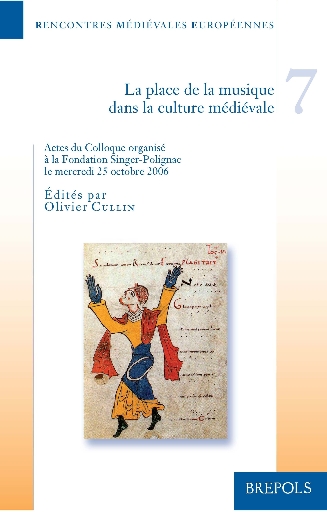
La place de la musique dans la culture médiévale
show More to view fulltext, buy and share links for:La place de la musique dans la culture médiévale show Less to hide fulltext, buy and share links for: La place de la musique dans la culture médiévaleAu Moyen Âge, la musique est l’un des sept arts libéraux et, à ce titre, elle joue un rôle prépondérant dans la vie intellectuelle et sociale. Avec un héritage théorique et mythologique gréco-romain qu’elle saura reprendre à son compte, la période médiévale est, pour cet art, tout sauf une période obscure. La musique est le chant de l’âme et du corps, le chant de la terre et du ciel quotidiennement pratiqué et éprouvé. Elle est l’un des grands principes de l’organisation du monde et l’un des plus puissants moyens d’accès à la compréhension de sa création et à la contemplation de sa beauté. La musique s’incarne aussi dans la réalité sociale et politique dont elle scande l’ordre comme le désordre.
L’ouvrage conjugue la diversité et la richesse des approches de cette journée d’études en mêlant des regards croisés sur le sujet: la musique et la philosophie, la liturgie ou la mythologie; la musique et la rhétorique, les enseignements médiévaux, les arts de la mémoire; la musique et son expression sociale…
Le volume défend autant qu’il explique la place singulière exercée par l’art de la musique durant ces siècles médiévaux, riche creuset dans lequel s’est écrite une page fondamentale et originale de l’histoire culturelle occidentale.
-
-
-

Learning and Understanding in the Old Norse World
show More to view fulltext, buy and share links for:Learning and Understanding in the Old Norse World show Less to hide fulltext, buy and share links for: Learning and Understanding in the Old Norse WorldThis volume presents twenty essays by leading scholars of Old Norse which bring into focus the nature of learned traditions — both oral and written — in medieval Scandinavia and the interpretation and re-interpretation of them over time. Theoretical frameworks for understanding Old Norse literature is the initial topic of the collection, which then moves on to present recent work on Old Norse myth and society; current perspectives on oral traditions in performance and text; and reflections on medieval ideas about language, both vernacular and Latin. The collection is rounded off by a section on prolonged traditions — the transformation of local and imported traditions into new literary forms. Individual essays in the volume offer significant primary research as well as reconsiderations of key issues in scholarship, their subjects ranging widely, both conceptually and chronologically, around the twin themes of learning and understanding. Like the research of the volume’s honorand, Margaret Clunies Ross, Learning and Understanding in the Old Norse World exemplifies the diversity and vigour of current research in the field of Old Norse and draws together philological, literary, historical and anthropological perspectives on the subject.
-
-
-

Les élites et leurs espaces
show More to view fulltext, buy and share links for:Les élites et leurs espaces show Less to hide fulltext, buy and share links for: Les élites et leurs espacesVenant à la suite du volume sur «les élites au haut Moyen Âge: crises et renouvellements», cet ouvrage analyse le rapport des élites à la distance et à l’espace. Laissant de côté les concepts de noblesse ou d’aristocratie, on adopte ici celui d’élite, emprunté à la sociologie, pour faire porter l’étude sur tous ceux qui, d’une manière ou d’une autre, exercent un pouvoir social lié à l’excellence, que ce soit celle de la naissance et du sang, ou celle de la capacité, dans telle ou telle activité, à se distinguer et à en tirer prestige, richesse ou honneur. Historiens des textes et archéologues croisent les approches et examinent la relation qu’entretiennent les élites avec les notions d’espace, de territoire et de distance — une relation changeante selon le contexte politique et économique, et qui vaut comme critère de hiérarchisation sociale. L’espace ici étudié peut être lâche ou structuré, fini ou ouvert. On le voit être transformé en territoire, à l’initiative de personnes et de groupes. En même temps, les auteurs prennent en compte l’idée de distance: les élites la maîtrisent, elles contrôlent, modèlent, fondent des zones d’influence ou des territoires. L’étude du rapport des diverses élites à la distance, à l’espace et aux lieux de pouvoir permet ainsi de renouveler profondément l’approche du phénomène élitaire en privilégiant la pratique par rapport aux critères théoriques et juridiques de la distinction. La présente enquête est conduite sur la longue durée, depuis la fin du monde antique jusqu’au XIe siècle, et couvre une bonne partie de l’Europe (Allemagne, Angleterre, Espagne, France, Italie).
-
-
-

Léon IX et son temps
show More to view fulltext, buy and share links for:Léon IX et son temps show Less to hide fulltext, buy and share links for: Léon IX et son tempsLe pontificat de Léon IX (1049-1054) marque un tournant dans l’histoire de l’Eglise. Energique et déterminé, Léon IX voyage au sud comme au nord des Alpes, tient de nombreux conciles, fait sentir même aux évêques le poids de l’autorité romaine, tente de mener une politique cohérente face aux Normands et aux Byzantins, réforme la vieille chancellerie pontificale… Il lance ainsi, dans le respect de l’autorité impériale, la réforme de l’Eglise qui deviendra ensuite la réforme grégorienne.
Saisissant le prétexte du millénaire de sa naissance, un colloque réuni à Strasbourg en juin 2002 a fait le point sur les origines, la personnalité, l’action et l’entourage de ce pape, ainsi que sur les sources, narratives, diplomatiques, épistolaires, nécrologiques, archéologiques et autres, de l’histoire de son pontificat.
-
-
-
Making and breaking the rules: succession in medieval Europe, c. 1000-c.1600. Établir et abolir les normes: la succession dans l’Europe médiévale, vers 1000-vers 1600
show More to view fulltext, buy and share links for:Making and breaking the rules: succession in medieval Europe, c. 1000-c.1600. Établir et abolir les normes: la succession dans l’Europe médiévale, vers 1000-vers 1600 show Less to hide fulltext, buy and share links for: Making and breaking the rules: succession in medieval Europe, c. 1000-c.1600. Établir et abolir les normes: la succession dans l’Europe médiévale, vers 1000-vers 1600Les stratégies familiales au Moyen Âge recourent à un vaste éventail de dispositifs destinés à assurer la survie de la famille et du pouvoir qu’elle gère parfois. Mariages, alliances, processus d’adoption même permettent de conserver et d’étendre l’identité familiale, que ce soit sous la forme de la lignée ou de la parenté large; mais ce sont sans doute les stratégies adoptées au moment des successions qui sont les plus cruciales pour la perpétuation des familles. Les études réunies ici tentent de confronter et de comparer les systèmes de succession en vigueur dans les différentes régions d’Occident, de la Russie à l’Irlande, de la Scandinavie à la péninsule Ibérique. Dans le cas des successions princières, elles démontrent que l’étude du principe électoral permet de mieux comprendre, a contrario, ce qui fait la force du sentiment dynastique, jamais absent. Et la comparaison avec d’autres domaines où jouent les processus de succession, qu’il s’agisse de l’Église ou de l’office, vient alimenter des interrogations nouvelles sur les formes du désir de pérennité.
-
-
-

Manuscripts and Monastic Culture
show More to view fulltext, buy and share links for:Manuscripts and Monastic Culture show Less to hide fulltext, buy and share links for: Manuscripts and Monastic CultureEach of the studies in this volume draws upon a manuscript, or a group of manuscripts, that shed light on the practice of monastic life during this period of reform. Many, but not all, of the papers focus on the monastery of Admont in central Austria. Admont was one of the most important spiritual, cultural, and intellectual centres in the high Middle Ages, and its magnificent library still houses an extensive collection of manuscripts - a rich resource both for the history of the monastery and for the broader history of medieval religious life. The book brings together the work of an international group of scholars whose work touches on various aspects of twelfth-century Admont, and the broader movement for reform and renewal in Germany and Austria.
With the publication of Charles Homer Haskin’s important work, The Renaissance of the Twelfth Century (1933), came a new way of looking at the civilization of the high Middle Ages. Scholars have since investigated many aspects of this revival: the rise of the universities, the development of canon law, the emergence (or re-emergence) of a heightened sense of human individuality, and the revival of religious fervour that has been labelled a reformation before the Reformation. Much of this scholarly work has focused on northern-central Italy, France, and England. Germany, however, has been little studied in this context, in part because the nature and trajectory of the reform there differed from that seen elsewhere in Europe. The essays in the book both explore connections between Germanic lands and the wider western European context, and consider the unique spiritual and intellectual climate of Germany’s monasteries.
-
-
-
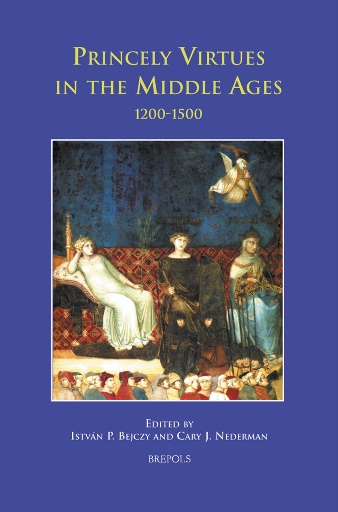
Princely Virtues in the Middle Ages
show More to view fulltext, buy and share links for:Princely Virtues in the Middle Ages show Less to hide fulltext, buy and share links for: Princely Virtues in the Middle AgesThe contributors to this book examine the diverse roles played by moral virtues in the political writing of the Later Middle Ages. Medieval political thought has a long tradition of scholarship, and its ethical dimension has always received sustained attention. This volume specifically concentrates on the meaning and function of virtues in a political context, a theme which has thus far been neglected. The authors deal with Latin texts (occasionally in combination with vernacular ones) from the thirteenth to fifteenth centuries that define, legitimize, or criticize secular rule by using catalogues of virtues, originating from ancient philosophy as well as Christian moral theology. The contributions discuss various aspects related to this theme, such as the relation between the virtues of rulers and general moral precepts; the tension between secular or philosophical perspectives on virtue and Christian moral thought; the use of moral virtues for political ends; the balance between praise of the prince’s virtues and criticism of his vices; and so forth. The medieval texts under discussion are of French, German, English, Italian, and Spanish origin, and vary from educational treatises and historiography to moral theology and political philosophy.
-