Brepols Online Books Medieval Miscellanea Original Archive v2016 - bobar16mimeo

Collection Contents
41 - 60 of 254 results
-
-
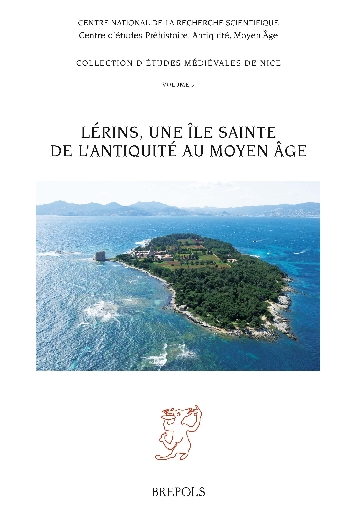
Lérins, une île sainte de l’Antiquité au Moyen Âge
show More to view fulltext, buy and share links for:Lérins, une île sainte de l’Antiquité au Moyen Âge show Less to hide fulltext, buy and share links for: Lérins, une île sainte de l’Antiquité au Moyen ÂgeDans les années 400-410, un groupe d’ascètes menés par Honorat s’installe sur la plus petite des deux îles de Lérins, au large de Cannes, donnant ainsi naissance à l’un des premiers établissements religieux d’Occident. Ce «désert» monastique devint très tôt un pôle d’attraction sans équivalent sur les plans spirituel, intellectuel et social, ainsi qu’un lieu d’essaimage, fournissant personnel, structures d’autorité et système de valeurs à la société de l’Antiquité tardive. Au Moyen Âge, les moines lériniens bâtirent, à partir de leur île, une puissante Église seigneuriale commandant un vaste réseau de prieurés et de dépendances, engagée au service de la papauté et dans la lutte contre les ennemis de la foi, tels que les Sarrasins. L’histoire de Lérins est bien celle d’une Église dominant la société de son temps.
Les écrits composés entre le v e siècle et l’époque moderne - qui nous permettent et nous imposent en même temps d’envisager cette histoire dans la longue durée - attestent la manière dont les religieux ont progressivement assimilé leur établissement à une «île sainte», puis à une «île sacrée», identifiée à l’Ecclesia dans son ensemble. L’élaboration d’une ecclésiologie originale, à laquelle sont consacrés plusieurs chapitres de ce livre, s’est accompagnée de l’aménagement sur l’île d’une singulière topographie, juxtaposant un ensemble claustral, auquel est venu s’adjoindre une tour fortifiée, et une série de lieux de culte secondaires ou chapelles bornant l’espace insulaire: les auteurs du livre s’efforcent aussi de comprendre l’organisation et le sens de cet espace sacralisé très particulier, dont les moines ont œuvré, au fil des temps, à construire et reconstruire la mémoire.
Les différents chapitres de cet ouvrage, fruit d’une collaboration entre antiquisants et médiévistes, historiens et archéologues, sont issus d’un Colloque international organisé par le Centre d’études Préhistoire Antiquité Moyen Âge, de l’Université de Nice - Sophia Antipolis et du CNRS, du 21 au 23 juillet 2006, ainsi que de travaux entrepris à nouveaux frais à la suite du Colloque par une équipe de médiévistes.
-
-
-
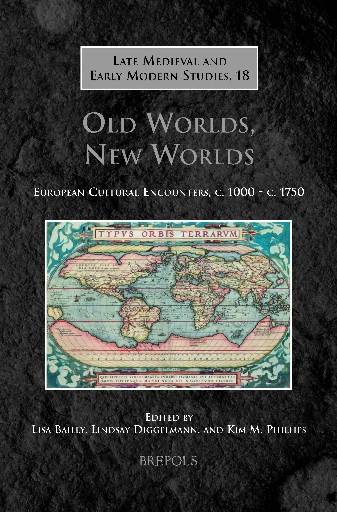
Old Worlds, New Worlds
show More to view fulltext, buy and share links for:Old Worlds, New Worlds show Less to hide fulltext, buy and share links for: Old Worlds, New WorldsPre-modern European history is replete with moments of encounter. At the end of arduous sea and land journeys, and en route, Europeans met people who challenged their assumptions and certainties about the world. Some sought riches, others allies; some looked for Christian converts and some aimed for conquest. Others experienced the forced cultural encounter of exile. Many travelled only in imagination, forming ideas which have become foundational to modern mentalities: race, ethnicity, nation, and the nature of humanity. The consequences were profound: both productive and destructive. At the beginning of the third millennium CE we occupy a world shaped by those centuries of travel and encounter. This collection examines key themes and moments in European cultural expansion. Unlike many studies it spans both the medieval and early modern periods, challenging the stereotype of the post-Columbus ‘age of discovery’. There is room too for examining cross-cultural relationships within Europe and regions closely linked to it, to show that curiosity, conflict, and transformation could result from such meetings as they did in more far-flung realms. Several essays deal with authors, events and ideas which will be unfamiliar to most readers but which deserve greater attention in the history of encounter and exploration.
-
-
-

Oligarchy and Patronage in Late Medieval Spanish Urban Society
show More to view fulltext, buy and share links for:Oligarchy and Patronage in Late Medieval Spanish Urban Society show Less to hide fulltext, buy and share links for: Oligarchy and Patronage in Late Medieval Spanish Urban SocietyHistorians have considered medieval oligarchic groups as part of a hierarchical social structure in urban societies. Frequently the interpretation of oligarchy as an isolated faction makes it difficult to understand its capacity in processes of incorporation and integration. M. Asenjo-González’s study of different cities in Northern Castile - Segovia, Soria, Valladolid and Toledo — attempts to identify bonding processes and the relationships among individuals or groups. In the city of Cuenca, J. A. Jara-Fuente stresses the importance of mechanisms for the attribution of social spaces of projection (related to individuals, lineages or collectivities), because it is through the analysis of the social expectations and of the degree of satisfaction reached in that process that other patterns of relationship come to light. Y. Guerrero-Navarrete deals with the connections between financial groups and the oligarchic policy of the elite in the case of Burgos. In Granada, A. Galán-Sánchez analyzes the Islamic elites’ behaviour, considering their economic and political interests, related to the goodwill of the Christian conquerors, and, their functions as representatives of the second-class citizens who were the moriscos. F. Sabaté focuses his research on the social consequences of the merchant oligarchy investments in the urban surroundings that contributed to establishing a flow of capital between the city and the region in Catalonia. E. Ramírez-Vaquero analyzes aspects of great relevance such as the relationship that oligarchies had with other systems linked to the noble and court spheres in the cities of Navarra. Finally Marc Boone offers an historiographic reflection on Iberian urban elites and analyzes some comparative perspectives about oligarchy and patronage in the Late Middle Ages.
-
-
-

Priscien
show More to view fulltext, buy and share links for:Priscien show Less to hide fulltext, buy and share links for: PriscienChassé d’Afrique par les invasions vandales et installé à Constantinople vers le début du VIe siècle, Priscien a engagé une refonte de la grammaire antique en faisant confluer ses principaux courants, la tradition grammaticale romaine et les apports grecs issus de la philologie alexandrine, auxquels il a intégré des recherches menées dans d’autres domaines de l’analyse de la parole, en rhétorique et en philosophie.
La création de la première grammaire moderne est ainsi d’abord une synthèse, qui correspond dans la partie orientale de l’Empire aux espoirs qu’au même moment, à Rome, Boèce et son cercle plaçaient dans l’hellénisme pour renouveler la vie intellectuelle d’une partie occidentale tombée aux mains des Barbares.
Auteur à multiples dimensions, chez qui se croisent les spécificités et les ambiguïtés de l’Antiquité tardive, Priscien a été le passeur par qui l’époque médiévale a eu connaissance des éléments les plus complexes de la description linguistique antique. Son influence a été immense durant tout le Moyen Âge et ses échos sont perceptibles jusque dans la tradition classique.
Malgré cela, aucune traduction dans une langue moderne n’a encore été faite des principaux textes de Priscien, et la période actuelle commence seulement à mesurer l’importance et l’originalité de cet auteur.
Le présent volume est la première mise au point d’ensemble et dresse un état des recherches à l’issue du colloque international Priscien (ENS Lettres et Sciences Humaines, Lyon, 10 - 14 octobre 2006). Ses 40 articles présentent les points de vue transversaux d’antiquisants, de linguistes, d’historiens et de médiévistes. Réparties en six sections, les contributions traitent successivement de la position historique de Priscien et de la transmission de ses œuvres, des sources et du contenu de son texte majeur, les Institutions Grammaticales, de ses scripta minora et de la réception de sa doctrine du Haut Moyen Âge à la Renaissance.
L’ouvrage comporte une bibliographie globale et plusieurs index (auteurs anciens et modernes, manuscrits, passages cités, concepts et termes).
-
-
-
Recherches sur Dietrich de Freiberg
show More to view fulltext, buy and share links for:Recherches sur Dietrich de Freiberg show Less to hide fulltext, buy and share links for: Recherches sur Dietrich de FreibergDietrich de Freiberg a peu à peu trouvé sa place dans l’historiographie philosophique du Moyen Âge. Dans l’histoire de sa découverte et de sa promotion sur les devants de la scène scientifique, un rôle essentiel revient à Kurt Flasch, à qui rend hommage ce volume recueillant les contributions prononcées à l’occasion de son soixante-quinzième anniversaire. Elles tentent un bilan des recherches récentes sur le dominicain allemand et attestent l’appartenance de Dietrich à l’histoire de l’aristotélisme médiéval, nullement invalidée par le statut de maître en théologie à Paris (en 1296/7), ni par le fait que le dominicain n’ait pas laissé de commentaire des œuvres du Stagirite.
-
-
-
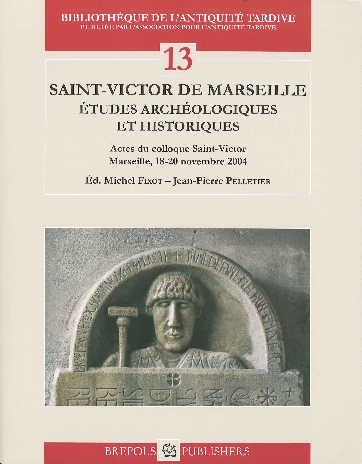
Saint-Victor de Marseille. Études archéologiques et historiques
show More to view fulltext, buy and share links for:Saint-Victor de Marseille. Études archéologiques et historiques show Less to hide fulltext, buy and share links for: Saint-Victor de Marseille. Études archéologiques et historiques[À l’origine de l’étude d’un monument qui reste emblématique de Marseille se présenta l’opportunité de programmes de restauration et de fouille. Un premier volume a répondu à la nécessité de rendre publics les résultats. La conjonction récente avec un moment historiographique paradoxalement sensible à l’histoire religieuse, en particulier à celle du monachisme, fut l’occasion de réunir des chercheurs, scrutateurs de sources diverses, afin de réaliser la confrontation si souvent invoquée de l’archéologie et de l’histoire. Ce fut l’objet du colloque réuni en novembre 2004 à Marseille, dans les locaux de l’ancien Alcazar transformé en bibliothèque. On se plaira à rappeler que ce fut la première grande manifestation scientifique qu’abrita le bâtiment qui venait d’être inauguré.
Pour paraphraser une formule restée célèbre dans l’esprit des médiévistes, existerait-t-il un Saint-Victor des archéologues et un Saint-Victor des historiens? C’est au lecteur de se forger sa propre idée. Sans doute l’écart existe-t-il, et, avant même d’aborder la phase interprétative des recherches, permet-il aussi de mesurer les lacunes de chacune des documentations disponibles. Au-delà du constat, les participants ont eu quand même conscience d’œuvrer pour une même histoire.
,At the origin of the study of a monument which remains very emblematic of Marseille, there was a programme of restoration and excavations. The outcome of the work was made public in a first volume. The recent conjunction with a trend in historiography surprisingly aware of religious history, in particular the history of monachism, enabled us to bring together scholars dealing with various sources in order to achieve the often called on conjunction between archaeology and history. That was the point of the conference held in November 2004 in Marseille. The venue was the old Alcazar music hall theatre transformed into the municipal library. It is gratifying to think that this was the first scientific seminar to be held in the new library, which had just been opened.
Paraphrasing a famous expression among medievalists: are there two Saint-Victor, one for archaeologists one for historians. It is up to the reader to make up his own mind. There is undoubtedly a discrepancy which even before adressing the interpretative conclusions of the research underlines the shortcomings of the respective documentation avalaible. Given this realization, the scholars present intimately felt they were writing the same history.
]
-
-
-

Sapientia et eloquentia
show More to view fulltext, buy and share links for:Sapientia et eloquentia show Less to hide fulltext, buy and share links for: Sapientia et eloquentiaThis book thrusts the reader into the intellectual turmoil of medieval Europe. In interrelated studies of largely unexplored material dating from the ninth through to the fourteenth centuries, the contributors explore changes in functions and forms of liturgical poetry and music, and of biblical interpretation.
Although the twelfth century constitutes the main focus, the phenomena dealt with here had roots in earlier times and remained in circulation in later centuries. The cultural heritage of the Carolingian intellectuals tied to the palace school of Charles the Bald is examined in a liturgical context. Forms and ideas from this period were reused and transformed in the twelfth century, as represented here by sequences, tropes, Abelard’s poetry, the Gloss to Lamentations, and ritual representations or ‘liturgical drama’. The two final chapters treat fourteenth-century uses and understandings of Boethius’s De institutione musica and the new genre of sequence commentaries, both dealing with later medieval views on music theory and liturgical poetry from an earlier period, thus connecting the end of the book to its beginning. The sections are interspersed with philosophical reflections on overriding themes of the contributions. The volume concludes with an anthology of poetic texts in Latin with English translations and musical transcriptions.
-
-
-
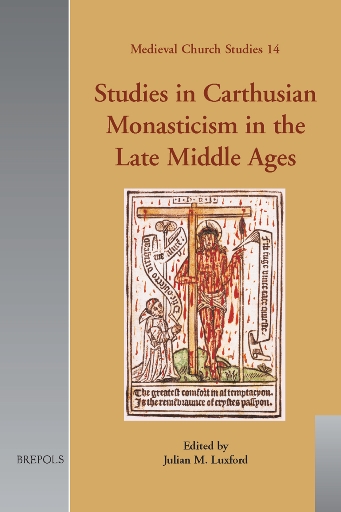
Studies in Carthusian Monasticism in the Late Middle Ages
show More to view fulltext, buy and share links for:Studies in Carthusian Monasticism in the Late Middle Ages show Less to hide fulltext, buy and share links for: Studies in Carthusian Monasticism in the Late Middle AgesThis volume focuses on aspects of Carthusian history and culture of the later Middle Ages, a period of growth and vitality within the order. There is a primary but not exclusive focus on the English Province, which to date has received at best unbalanced attention. While the fundamental ambitions and ideals of Carthusianism formulated, articulated, and lived by the disciples of St Bruno between the late eleventh and the thirteenth centuries changed very little, the fourteenth to sixteenth centuries witnessed developments stimulated by and often commensurate with the progress of external culture. In such areas as devotional practice, literature, art and architecture, patronage, and monastic-lay relations generally, the houses of the order grew increasingly sophisticated: in some cultural spheres Carthusians were in the vanguard. The late Middle Ages thus offer rich opportunities for assessment of how a religious organization defined and justified by essentially reactionary conventions responded to constant forinsec evolution.
The volume’s approach is multi-disciplinary, involving both senior and younger Carthusian scholars in investigation of the main facets of Carthusian life for which significant data survives. This permits a thorough analysis of the order’s character, one that reflects concern with synoptic understanding of medieval Carthusianism rather than partial assessment through a specifically devotional, literary, or more narrowly historical approach. Subject areas covered include the historical growth of individual Charterhouses, patronage of Carthusians by secular agents, Carthusian architecture and manuscript decoration, devotional practice, and textual culture.
-
-
-
The Word in Medieval Logic, Theology and Psychology
show More to view fulltext, buy and share links for:The Word in Medieval Logic, Theology and Psychology show Less to hide fulltext, buy and share links for: The Word in Medieval Logic, Theology and PsychologyThe holding of the 2005 annual colloquium of the SIEPM in Kyoto, Japan, presented the opportunity to explore the very foundations of communication: the word in all its aspects. Whether mental concepts, as Aristotle had claimed, were the same for all people, whether from the East or the West; how these mental concepts were transformed into words; how words affected the concepts (e.g. in regard to the colour spectrum); how angels communicated with one another, and whether any words were appropriate for talking about God; whether words for things arise merely from convention, or have an essential relationship to what they describe; what exactly do the words for individuals, species and genera describe; why words can have powerful effects; what is the relationship between the inner word and the spoken word. The essays in this volume explore these questions largely from the texts of medieval Western philosophers and theologians from Boethius to Meister Eckhart, but some Hebrew and Arabic texts are also taken into consideration. The contexts range from the lively debates in the Parisian schools of the early twelfth century, through the subtle arguments of thirteenth and fourteenth century scholars, to mystical writings of the fifteenth century. Running as a thread through the essays are the translations and commentaries of Boethius on the Vetus logica of Aristotle, and the divine word of the Bible. The combination of contributions of Japanese scholars with both younger and more established scholars from the Western tradition ensures a rich and varied approach to this subject.
-
-
-
The development of leasehold in northwestern Europe, c. 1200 – 1600
show More to view fulltext, buy and share links for:The development of leasehold in northwestern Europe, c. 1200 – 1600 show Less to hide fulltext, buy and share links for: The development of leasehold in northwestern Europe, c. 1200 – 1600In the twelfth to sixteenth centuries, the exploitation of landownership underwent drastic changes in various parts of Northwestern Europe. In these changes, the emergence of the lease plays a pivotal role. At the end of the Middle Ages, in a number of areas within the North Sea area, the greater part of available land was held at lease for relatively short terms. The competitive and contractual nature of such leasing has caused many to associate it with the emergence of capitalism in the countryside, seeing its rise as a key element in the transformation of the rural economy and society in the last millennium. In view of this, it is surprising that the emergence of leasing has received little systematic attention, particularly where its roots, its early development, its exact arrangements and the social and economic context of its emergence are concerned, let alone the regional and chronological differences in these elements. This volume aims to make a first step in exploring these issues.
-
-
-
Une conquête des savoirs
show More to view fulltext, buy and share links for:Une conquête des savoirs show Less to hide fulltext, buy and share links for: Une conquête des savoirsLes nouveautés culturelles qui se répandent en Europe latine aux xii e et xiii e siècles sont les expressions les plus hautes d’une longue période de croissance. Bien que déjà largement documentée, cette expansion pluriséculaire mérite d’être reprise et précisée.
Un cercle vertueux s’est enclenché aux alentours de l’an mil dans l’Europe latine, sans qu’il y ait simultanéité de dates et de rythmes sur tout le territoire. Pour être multiples, les composantes de cet essor se réduisent à un même thème: ce sont autant de triomphes de l’homme européen sur son environnement et sur lui-même: amélioration de l’outillage et des techniques agricoles, poussée démographique, défrichements, nouveaux sites de peuplement, renouveau urbain, renforcement de l’artisanat, essor de l’économie monétaire, développement et diffusion de l’écrit, promotion des langues vernaculaires.
Véhicule déterminant du nouveau savoir, les traductions surviennent dans un monde latin à l’essor multiforme. Elles l’accompagnent et le transfigurent. Elles en décuplent les possibilités. Elles expriment un engouement dévorant pour l’étude, dont en retour elles accroissent l’intensité et rehaussent le niveau. Les clercs sont aspirés par cette spirale, dont le terme marque la fin du Moyen Âge. Les acquis des siècles précédents servent aux hommes du xv e à renouer directement avec l’hellénisme et avec le classicisme latin, tout en franchissant les océans d’une terre maintenant centrée sur le soleil.
La polysémie du mot «monde» rend compte de la totalité des nouveautés qui, apparues au cours du xii e siècle de Europe latine, transforment en quelques cent ans le continent: le xii e siècle latin s’est transfiguré en véritable Nouveau Monde.
-
-
-
774, ipotesi su una transizione
show More to view fulltext, buy and share links for:774, ipotesi su una transizione show Less to hide fulltext, buy and share links for: 774, ipotesi su una transizioneIn questo volume sono editi gli atti del I seminario organizzatonel 2006 dal Centro interuniversitario per la storia e l’archeologia dell’alto medioevo (SAAME). Al centro del seminario è stato un tema di grande importanza per storia italiana: la conquista franca del regno longobardo e le sue conseguenze in tutti i campi, dai mutamenti politici - indagati soprattutto dal punto di vista della loro rappresentazione - ai mutamenti nell’insediamento rurale e urbano (dalle campagne toscane a capitali come Roma e Ravenna), a quelli nelle attività artistiche (la costruzione di edifici di prestigio) e culturali (epigrafia, documenti, codici, produzione normativa), nella circolazione monetaria (le zecche, i mancosi) e nei flussi commerciali (con in primo piano l’Adriatico). Inoltre si è tentato di inserire la ‘transizione’ italiana, ossia il passaggio della penisola sotto la dominazione carolingia, nell’ambito di un quadro europeo, prendendo in considerazione, con alcuni affondi tematici, la Turingia, la Baviera, l’Austrasia e infine la Spagna, dove è avvenuta un’altra fondamentale transizione, quella tra Visigoti e Musulmani.
Il titolo del libro, che fa riferimento ad una data precisa fornita dalla storia politica, l’anno 774, può apparire paradossale per presentare i risultati di un seminario nel corso del quale sono state interrogate allo stesso modo fonti scritte e fonti archeologiche, e va inteso in senso soprattutto simbolico, come un’ovvia allusione ad un altro anno cardine, il 751, anch’esso oggetto di indagini recenti. Ma al tempo stesso tale riferimento è utile per ribadire l’assoluta necessità di coordinare insieme, ai fini della ricostruzione del passato, i tempi e i risultati della storia politica (in questo caso il passaggio dai Longobardi ai Carolingi), dell’archeologia, della numismatica, della storia della documentazione scritta, della storia dell’arte e di tutte le altre storie.
-
-
-
Abbon, un abbé de l’an Mil
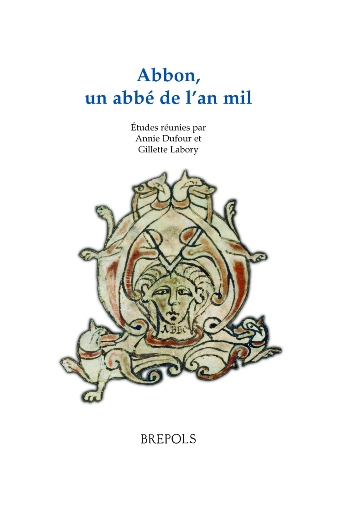
show More to view fulltext, buy and share links for:Abbon, un abbé de l’an Mil show Less to hide fulltext, buy and share links for: Abbon, un abbé de l’an MilBien que l’œuvre littéraire et scientifique d’Abbon de Fleury (v. 950-1004) ait été aussi importante que celle de son célèbre contemporain Gerbert (devenu le pape Sylvestre II), l’abbé du monastère fleurisien restait cependant mal connu. Le colloque organisé en 2004 pour célébrer le millénaire de sa mort a voulu donner un souffle nouveau aux études abboniennes. Les contributions, qui s’articulent autour de deux thèmes principaux, vie monastique, religion et culture, abordent la plupart des domaines dans lesquels s’est exercée la compétence d’Abbon: astronomie, comput, musique, droit canon, hagiographie, histoire… Sont également traitées des questions touchant à l’ecclésiologie et à la réforme monastique ou concernant le monastère lui-même et son temporel ou un autre monastère orléanais, Saint-Mesmin de Micy. De ces «éclairages entrecroisés» ressort un portrait renouvelé de ce grand abbé, à la fois homme de science et chercheur d’unité, unité de l’Église, unité de son monastère et de l’ordre bénédictin.
-
-
-
Broken Lines
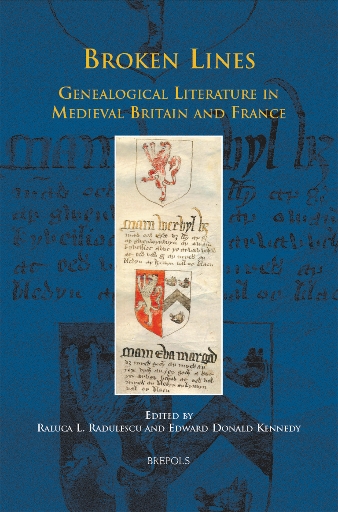
show More to view fulltext, buy and share links for:Broken Lines show Less to hide fulltext, buy and share links for: Broken LinesThe essays in this important and fascinating collection explore the genealogical literature of late-medieval Britain and France in relation to issues of identity, the transmission of power, and cultural, socio-political, and economic developments. By analyzing the mechanics of cultural and political inheritance and the processes of shaping a sense of identity and descent, the essays in this volume direct the reader towards a complex understanding of genealogical literature and its relationships with other genres, one which will further debate and research in these areas. The present collection presents an interdisciplinary approach to the genealogical literature of the late-medieval period, and brings together specialists in the fields of history, cultural history and literature to raise questions of gender, genre, and theoretical approaches. Broken Lines is also the first book-length study of genealogical literature to date, an exciting intervention into this emerging field of interest.
-
-
-
Classica et Beneventana
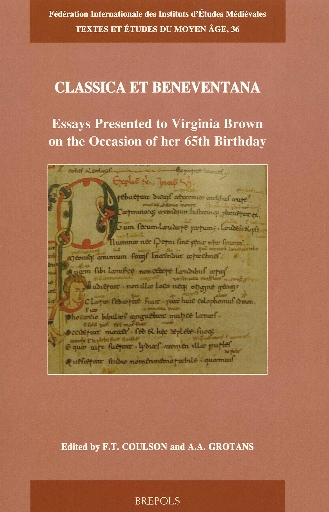
show More to view fulltext, buy and share links for:Classica et Beneventana show Less to hide fulltext, buy and share links for: Classica et BeneventanaThe Festschrift volume Classica et Beneventana, presented to Virginia Brown on the occasion of her 65th birthday, brings together eighteen insightful new essays by leading scholars devoted to the fields of classical reception and Latin palaeography. The authors investigate a wide-range of topics such as the development and application of the Beneventan script, comparative codicology, use of early liturgical manuscripts, medieval artes and biblical texts and their readers, and the reception and dissemination of classical texts during the Italian Renaissance.
Since 1970, Virginia Brown has been a Senior Research Fellow at the Pontifical Institute of Mediaeval Studies. She is recognized as one of the world’s leading authorities in classical reception and Latin palaeography. Her numerous publications on the Beneventan script have dramatically altered our knowledge of the dissemination of this southern Italian book hand from 800 to 1600. Her editorial work for the Catalogus translationum et commentariorum, as a member of the Editorial Board and since 1986 as Editor-in-Chief, has resulted in several learned volumes tracing the fortuna and study of classical authors from antiquity to the year 1600. As editor of Mediaeval Studies from 1975 to 1988, she single-handedly produced tomes noted for their scholarly rigor and acumen. This collection of essays serves as fitting tribute to a scholar who, via her scholarly research and editorial work, has done so much to advance the fields of palaeography, codicology, and the history of classical scholarship.
-
-
-
Constructing the Medieval Sermon
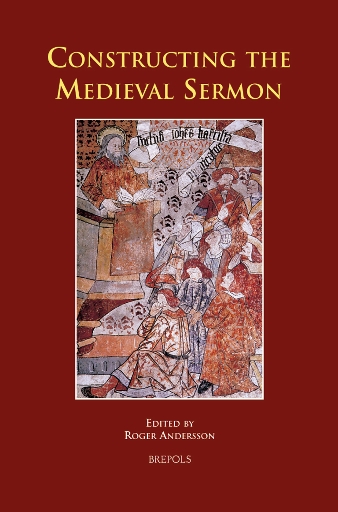
show More to view fulltext, buy and share links for:Constructing the Medieval Sermon show Less to hide fulltext, buy and share links for: Constructing the Medieval SermonIn considering the construction of medieval sermons, the term ‘construction’ has many meanings. Those studied here range from questions about sermon composition with the help of artes praedicandi or model collections to a more abstract investigation of the mental construction of the concepts of sermon and preacher. Sermons from a range of European countries, written both in Latin and vernaculars, are subjected to a broad variety of analyses. The approach demonstrates the vitality of this sub-discipline. Most of the essays are more occupied with literary and philological problems than with the religious content of the sermons. While many focus on vernacular sermons, the Latin cultural and literary background is always considered and shows how vernacular preaching was in part based on a more learned Latin culture. The collection testifies both to the increasing esteem of the study of vernacular sermons, and to a revival in the study of all those things contained in a preacher’s ‘workshop’, ranging from rhetorical invention, medieval library holdings and study-aids, through to factors that are crucial for the successful delivery of the sermon, such as the choice of language, mnemonic devices and addressing the audience. The interdisciplinary approach remains ever-present, not only in the diversity of the academic disciplines represented, but also within individual essays. The volume is based on a conference held in Stockholm, 7-9 October 2004.
-