Brepols Online Books Medieval Miscellanea Original Archive v2016 - bobar16mimeo

Collection Contents
151 - 200 of 254 results
-
-
Guerre, pouvoirs et idéologies dans l’Espagne chrétienne aux alentours de l’an mil
show More to view fulltext, buy and share links for:Guerre, pouvoirs et idéologies dans l’Espagne chrétienne aux alentours de l’an mil show Less to hide fulltext, buy and share links for: Guerre, pouvoirs et idéologies dans l’Espagne chrétienne aux alentours de l’an milDepuis l’invasion arabo-berbère de la Péninsule ibérique en 711, les sociétés hispaniques chrétiennes sont très affectées par la guerre. Aux alentours de l’an mil, cette guerre prend une nouvelle dimension. Après une période de conflits internes et de défaites, culminant lors des fameux raids d’al-Mansûr, les principautés chrétiennes prennent l’offensive.
A cet égard, l’an mil constitue bien un tournant dans l’histoire de l’Espagne chrétienne. Vers le milieu du onzième siècle, la Reconquista est en marche, tandis que quatre forces politiques s’imposent: les royaumes de León, de Pampelune et d’Aragon, et les comtés catalans. La multiplication des conflits influe très fortement sur l’organisation des pouvoirs civils, et implique des enjeux fondamentaux dans la genèse des Espagnes chrétiennes médiévales, qui connaissent alors de profondes mutations culturelles, juridiques et idéologiques.
Les 26, 27 et 28 septembre 2002, plusieurs historiens et historiens de l’art venus de France, d’Espagne et d’Allemagne se sont retrouvés au Centre d’Etudes Supérieures de Civilisation Médiévale de Poitiers et à Angoulême pour travailler sur ces thèmes. Ils ont suivi trois axes de recherche, qui structurent les actes de ce colloque: la rencontre des mondes chrétien et musulman, la guerre comme enjeu de pouvoir et la dimension religieuse des idéologies.
-
-
-
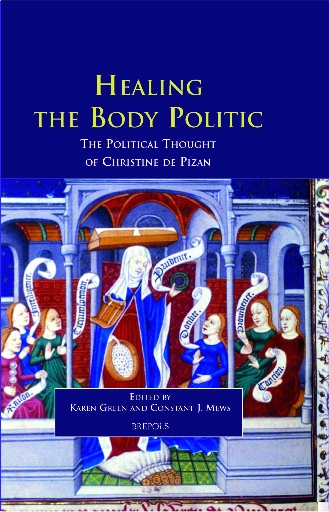
Healing the Body Politic
show More to view fulltext, buy and share links for:Healing the Body Politic show Less to hide fulltext, buy and share links for: Healing the Body PoliticChristine de Pizan (1364-1431) has been recognized as a poet, early humanist and feminist precursor but rarely as political theorist whose works were intended to have a direct impact on the tumultuous politics of her time. The essays in this collection focus on Christine as a political writer and provide an important resource for those wishing to understand her political thought. They locate her political writing in the late medieval tradition, discussing her indebtedness to Aristotle, Aquinas and Augustine as well as her transformations of their thought. They also illuminate Christine’s ‘political epistemology’: her understanding of political wisdom as a part of theology, the knowledge of God. New light is thrown on the circumstances which prompted Christine to write on political issues and on her attitude to Isabeau of Bavaria. These essays show that Christine’s originality consisted in her capacity to modify and feminize the tradition of Christian Aristotelianism through the use of elements of Christian imagery, in particular Mariology, in order to construct an image of the virtuous and prudent monarch which had lost the explicitly manly and warlike character of the Aristotelian phronimos. This reconfigured image of the monarch lent itself to the extension which she developed in her more feminist works, which demonstrated the prudence of women and their capacity, in times of need, to function as authoritative political figures.
-
-
-
Household, Women, and Christianities
show More to view fulltext, buy and share links for:Household, Women, and Christianities show Less to hide fulltext, buy and share links for: Household, Women, and ChristianitiesFrom its earliest beginnings in the homes of its members, the church has been the ‘house’ of God, and the episcopal and monastic institutions in which many of God’s professed servants and officials dwell have been seen as religious ‘houses’. The church’s history is accordingly the history of an institution largely conceived of as a household. In recent years, secular life and lifestyles in late antiquity and the Middle Ages have been illuminated through renewed attention to the economic and social history of households, while scholarship on women has produced studies of the lives and the devotional reading of laywomen and women religious. This volume is a pioneering collection that unites study of the household with women’s religious practices as a focus of enquiry. It moves beyond consideration of the church’s roles in women’s history to the impact of women’s householding on the history of the church.
-
-
-
Imagining the Book
show More to view fulltext, buy and share links for:Imagining the Book show Less to hide fulltext, buy and share links for: Imagining the BookImagining the Book offers a snapshot of current research in English manuscript study in the pre-modern period on the inter-related topics of patrons and collectors, compilers, editors and readers, and identities beyond the book. This volume responds to the recent development and institutionalization of ‘History of the Book’ within the wider discipline. Scholars working in the pre-printing era with the material vestiges of a predominantly manuscript culture are currently establishing their own models of production and reception. Research in this area is now an accepted part of twenty-first century medieval studies. Within such a context, it is frequently observed that scribal culture found imaginative ways to deal with the technological watersheds represented by the transition from memory to written record, roll to codex, or script to print. In such an ‘eventful’ environment, texts and books not infrequently slip through the semi-permeable boundaries laboured over by previous generations of medievalists, boundaries that demarcate orality and literacy; ‘literary’ and ‘historical’; ‘religious’ and ‘secular’; pre- and post-Conquest compositions, or ‘medieval’ and ‘Renaissance’ attitudes and writings. Once texts are regarded as offering indices of community- or self-definition, or models of piety and good behaviour (and the codices holding them statements of prestige and influence), the book historian is left to contemplate the real or imagined importance and status of books and writing within the larger socio-political, often local, milieux in which they were once produced and read.
-
-
-
In principio erat verbum
show More to view fulltext, buy and share links for:In principio erat verbum show Less to hide fulltext, buy and share links for: In principio erat verbumPaul Tombeur a, pendant les nombreuses années de son enseignement à l’Université Catholique de Louvain, à Louvain-la-Neuve, été un professeur extraordinaire, passionné, exigeant, stimulant, curieux…
Plusieurs des médiévistes qu’il a formés se sont réunis pour lui rendre hommage. De manière très diverse, mais toujours à partir de textes latins, puisque la diversité chronologique et thématique du latin est très chère à Paul Tombeur. Avec Augustin et Grégoire, Odon de Cluny, Hugues de Saint-Victor, Etienne Langton, Thomas d’Aquin…, mais aussi Gautier de Thérouanne, Honorius Augustodunensis, les commentaires liturgiques du XIIe s., les chartes françaises ou flamandes, c’est bien un latin très divers qui est ici mis à l’honneur. Et qui l’est de manière très diverse, puisque les contributions portent sur la théologie, la philosophie, l’hagiographie, la liturgie, la langue, le droit, la diplomatique…
Un autre point commun entre les auteurs de ces Mélanges est que, comme Paul Tombeur, ils ont mis au cœur de leur recherche et de leur réflexion le texte, et plus encore le mot, qu’ils étudient le plus souvent à l’aide des bases de données informatisées (Cetedoc Library of Christian Latin Texts, Thesaurus Formarum…), dont ils montrent à quel point elles peuvent renouveler les études médiévales.
-
-
-
Les relations culturelles entre chrétiens et musulmans au Moyen Age
show More to view fulltext, buy and share links for:Les relations culturelles entre chrétiens et musulmans au Moyen Age show Less to hide fulltext, buy and share links for: Les relations culturelles entre chrétiens et musulmans au Moyen AgeLe réveil est brutal. L’Europe somnolait sur son passé et sur ce qu’elle croyait acquis à tout jamais. Voilà que lui revient en boomerang une affaire qu’elle croyait avoir réglée une fois pour toutes, depuis les temps, ô combien lointains! de la bataille de Poitiers et ceux, plus récents, de la bataille de Lépante à laquelle elle associait toujours le nom de Cervantès.
L’Islam est de nouveau présent, non plus du fait de la conquête militaire mais de l’arrivée par vagues successives d’une population musulmane qui s’installe. Notre société, jusqu’à maintenant, n’avait pas pris tellement en compte cette situation.
Les problèmes sont là et se feront chaque année, plus compliqués, plus ardus à résoudre.
Au durcissement de la foi de certaines couches de la population musulmane répond une douce tiédeur de nos croyances chrétiennes ancestrales que nous sommes même parfois honteux de reconnaître.
Que faire, sinon reprendre notre histoire, étudier les relations culturelles qui se sont établies entre chrétiens et musulmans dès le Moyen Âge.
Notre propos aujourd’hui est de revenir aux sources des religions chrétienne et musulmane et de reprendre les discussions théologiques et philosophiques qui ont eu lieu dès le Moyen Âge.
Quels sont les points où il y a divergence fondamentale entre chrétiens et musulmans?
-
-
-
Multicultural Europe and Cultural Exchange
show More to view fulltext, buy and share links for:Multicultural Europe and Cultural Exchange show Less to hide fulltext, buy and share links for: Multicultural Europe and Cultural ExchangeContemporary criticism focuses on contested issues at the borders and in the interstices of cultures. Medieval and Early Modern European culture, previously conceived as monolithic, is now being reconceived as heterogeneous, a site of tensions, contest, accommodation, and subversion. The essays in this volume describe a Europe that is multicultural in fact, and trace the exchanges between cultural groups, subcultures and dominant cultures, and between individuals and the cultures that they inhabit.
The critical works in this volume are drawn from a variety of disciplines: art history, literary studies, history and historiography, and cultural studies. A number are interdisciplinary, examining topics of cultural studies as diverse as fashion, rhetorical self-fashioning, and the history of architecture, all in the context of their surrounding contexts. A special strength of this volume is the visual impact of its three illustrated articles. These essays will appeal to all who see the importance of reconceiving European history in terms of contemporary multicultural perspectives, as well as to those who are specially interested in medieval architecture, the history of fashion, French and English Renaissance literature, Hebraic studies, and medieval and Renaissance Mediterranean history.
-
-
-
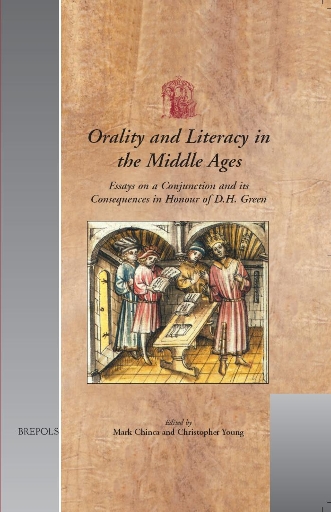
Orality and Literacy in the Middle Ages
show More to view fulltext, buy and share links for:Orality and Literacy in the Middle Ages show Less to hide fulltext, buy and share links for: Orality and Literacy in the Middle Ages“The most important part of the title of this book is the word ‘and’.” These words form the memorable conclusion to D.H. Green’s study Medieval Listening and Reading, they encapsulate how, in the Middle Ages, orality and literacy are not to be considered as two separate and largely unrelated cultures or modes of textual transmission, but as elements in a mutual interplay and interpenetration. In this volume, scholars from Britain, Germany and North America follow Green’s insistence on the conjunction of medieval orality and literacy, and show how this approach can open up new areas for investigation as well as help to reformulate old problems. The languages and literatures covered include English, Latin, French, Occitan and German, and the essays span the whole of the period from the early Middle Ages through to the fifteenth century.
-
-
-
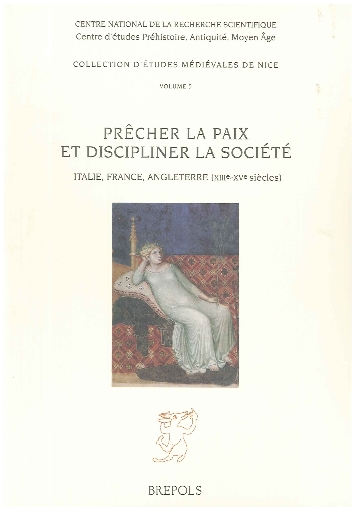
Prêcher la paix et discipliner la société
show More to view fulltext, buy and share links for:Prêcher la paix et discipliner la société show Less to hide fulltext, buy and share links for: Prêcher la paix et discipliner la sociétéLa paix donnée par le Christ aux fidèles selon le verset de Jean (14, 27) — «Je vous laisse la paix, je vous donne ma paix» — fut envisagée, au Moyen Âge, en fonction de la capacité qu’avaient les hommes de l’établir au sein de la société et de la sauvegarder. La paix était étroitement liée à une théologie de la domination, renvoyant à Dieu tout en servant de fondement à divers modèles d’autorité et d’obéissance.
C’est de cette paix prêchée pour discipliner et ordonner la société qu’il est surtout question dans ce livre, qui s’ouvre par une étude sur le sens et les usages des concepts de paix et de guerre entre l’Antiquité classique et l’Empire chrétien. La période envisagée ensuite — xiii e-xv e siècles — est celle du renforcement, en Europe occidentale, des institutions urbaines, de la monarchie et de la papauté.
Les études réunies ici ne se limitent pas aux productions savantes; elles tentent aussi de comprendre les relations entre idéologie et pratiques sociales, entre propagande et réception, entre discours et mécanismes de discipline sociale, entre prédication et mouvements collectifs, en observant comment les éléments majeurs énoncés dans les traités se sont glissés dans la parole publique.
À une époque où l’on assiste à l’essor de toutes sortes de prises de parole et à un certain impérialisme de la prédication, le discours sur la paix pose la question des modalités de la rencontre des champs ecclésiastique et laïque dans ce genre de discours: quant au statut des personnes qui prennent la parole (clercs ou laïcs), aux lieux (l’église, la place publique, le conseil urbain, le parlement), aux formes (le sermon ou la harangue), à la langue (latin ou vulgaire), ou encore aux sources (références aux Anciens et à l’Écriture).
-
-
-
Ramon Llull und Nikolaus von Kues: Eine Begegnung im Zeichen der Toleranz - Raimondo Lullo e Niccolò Cusano: Un incontro nel segno della tolleranza
show More to view fulltext, buy and share links for:Ramon Llull und Nikolaus von Kues: Eine Begegnung im Zeichen der Toleranz - Raimondo Lullo e Niccolò Cusano: Un incontro nel segno della tolleranza show Less to hide fulltext, buy and share links for: Ramon Llull und Nikolaus von Kues: Eine Begegnung im Zeichen der Toleranz - Raimondo Lullo e Niccolò Cusano: Un incontro nel segno della tolleranza[Il presente volume raccoglie i contributi d’un Congresso Internazionale su Raimondo Lullo e Niccolò Cusano, svoltosi dal 25 al 27 novembre 2004 a Bressanone e Bolzano (Alto Adige/Sudtirolo).
Gli articoli, quattordici in tutto, indagano, sotto il profilo storico e sistematico, il perdurevole influsso esercitato dallo studioso maiorchino Raimondo Lullo sui diversi ambiti del pensiero del vescovo di Bressanone, nella cui biblioteca a Kues nessun altro autore è rappresentato con tale frequenza come Lullo. In particolare viene dato ampio spazio all’analisi critica dei modelli di dialogo interreligioso sviluppati da entrambi i pensatori.
,Der vorliegende Band versammelt die Beiträge eines Internationalen Kongresses zu Ramon Llull und Nikolaus von Kues, der vom 25.-27. November 2004 in Brixen und Bozen (Südtirol) stattfand.
Die insgesamt vierzehn Beiträge untersuchen den nachhaltigen Einfluß des mallorquinischen Gelehrten auf den Brixner Bischof — in dessen Kueser Bibliothek kein anderer Autor so häufig vertreten ist wie Lullus — in historischer und systematischer Absicht für die verschiedenen Bereiche des cusanischen Denkens. Ein besonderer Schwerpunkt liegt dabei auf der kritischen Würdigung der Modelle, die beide Denker für das Gespräch zwischen den Religionen entwickeln.
]
-
-
-
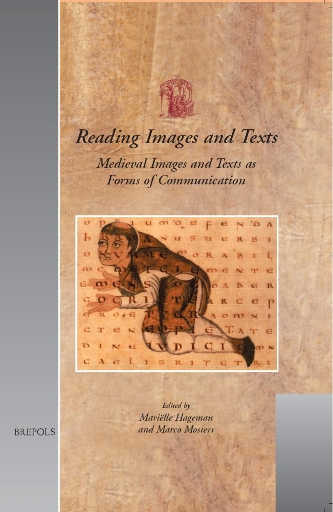
Reading Images and Texts
show More to view fulltext, buy and share links for:Reading Images and Texts show Less to hide fulltext, buy and share links for: Reading Images and TextsRelations between images and texts have benefited from an increase in scholarly attention. In medieval studies, art historians, historians, codicologists, philologists and others have applied their methods to the study of illuminated manuscripts and other works of art. These studies have shifted from a concern about the contents of the messages contained in the artefacts (e.g. in iconography) to an interest in the ways in which they were communicated to their intended audiences. The perception of texts and images, their reception by contemporaries and by later generations have become topics in their own right. According to some, medieval images may be ‘read’. According to others, the perception of images is fundamentally different from that of texts. The analysis of individual manuscripts and works of art remains the basis for any consideration of their transmission and uses. The interactions between non-verbal and verbal forms of communication, more in particular the relations between visual symbols other than writing and the recording of speech in writing, are important for the evaluation of both images and texts.
-
-
-
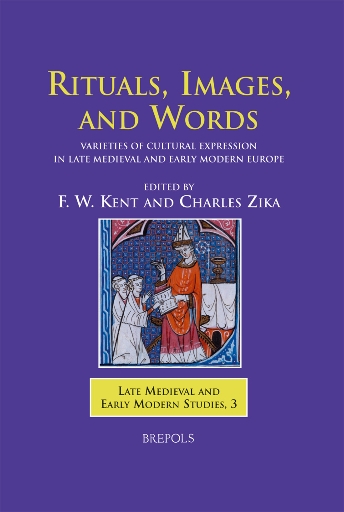
Rituals, Images, and Words
show More to view fulltext, buy and share links for:Rituals, Images, and Words show Less to hide fulltext, buy and share links for: Rituals, Images, and WordsThis collection of essays by Australian scholars offers a wealth of contemporary perspectives on cultural communication amongst men and women in late medieval and early modern Europe. Essays dealing with Florence and Venice, with Rome, Lucca, Ferrara, and Bologna, as well as with Germany, England, and Lorraine, draw attention to the array of cultural expressions which competed for space and influence across European societies of the period.
These rich studies demonstrate the vitality of cultural production during a period of rapid and often violent transition. Variously focused on formal religious rites, on painting, sculpture, and woodcuts, on sermons, poetry, and letters, the contributors pursue cultural meaning as a matter of social identity and social context - as a performance that can be shown to affirm and also exclude particular topical values. Rituals, Images, and Words highlights the complex and subtle power of rhetorical forms in the history and historiography of late medieval and early modern Europe.
-
-
-
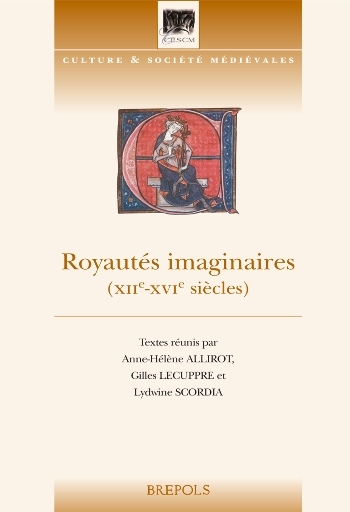
Royautés imaginaires
show More to view fulltext, buy and share links for:Royautés imaginaires show Less to hide fulltext, buy and share links for: Royautés imaginairesL’imaginaire ne se réduit pas au chimérique, au non-être. Depuis l’Antiquité, artistes, poètes et philosophes pressentent qu’il procède du désir et appartient en premier lieu au registre de l’individuel: forces pulsionnelles, messages de soi à soi, le rêve et bientôt la création n’ont pas attendu le discours de la psychanalyse ou des diverses sciences de la culture pour forger leurs mondes autour de la réalité partagée. Les sociétés à leur tour se sont lancées par cette voie dans la quête de leur identité et ont assigné à leurs mythes le soin d’exprimer leur structure. Pour autant, le lecteur s’apercevra au fil des douze communications assemblées ci-après que les royautés évoquées ressortissent rarement du pur imaginaire et conservent jalousement un lien organique avec leur référent concret. Il conviendrait davantage de parler de la royauté comme objet d’imagination, en ce qu’elle représente le point de fixation suprême du désir.
-
-
-
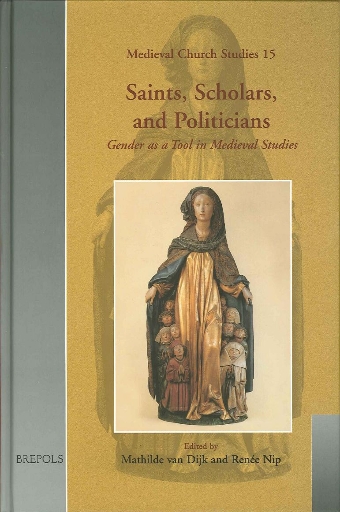
Saints, Scholars, and Politicians
show More to view fulltext, buy and share links for:Saints, Scholars, and Politicians show Less to hide fulltext, buy and share links for: Saints, Scholars, and PoliticiansOver the past eighteen years, gender has become a major analytical tool in medieval studies. The purpose of this volume is to evaluate its use and to search for ways in which to improve and enhance its value. The authors address the question of how gender relates to other tools of medieval research. Several articles criticize the way in which an exclusive focus on gender tends to obscure the impact of other factors, for instance class, politics, economy, or the genre in which a source is written. Other articles address ‘wrong’ ways of using gender, for instance monolithic or anachronistic views of what constitutes differences between men and women. The intention is that this selection of case studies further establishes and enhances the indispensability of gender as an analytical tool within medieval studies.
The volume has been produced in recognition of the work of the Groningen medievalist, Anneke B. Mulder-Bakker, on the occasion of her sixty-fifth birthday. She is the person primarily responsible for introducing to the Netherlands gender as a legitimate and useful tool in medieval studies. The contributors are medievalists from a range of countries and different backgrounds. They were selected in order to test Dr Mulder-Bakker’s ideas on methodology and interdisciplinarity through a series of case-studies.
-
-
-
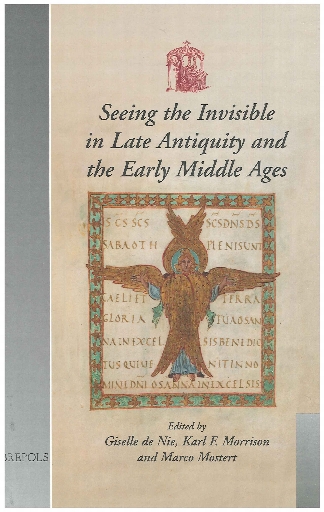
Seeing the Invisible in Late Antiquity and the Early Middle Ages
show More to view fulltext, buy and share links for:Seeing the Invisible in Late Antiquity and the Early Middle Ages show Less to hide fulltext, buy and share links for: Seeing the Invisible in Late Antiquity and the Early Middle AgesLimiting itself to the vital centuries when the late Roman West reshaped itself into a first “Europe”, the conference on which the volume is based explored the dominant understanding of human nature in that era: that human existence was both body (in the visible world of material things) and soul (in the invisible world of spirit). This was a legacy of pre-Christian elements handed down from Greek philosophy and the Hebrew Scriptures. Assimilating it to indigenous cultures in the Roman West, many alien to the ancient Mediterranean world, precipitated sea-changes in the conception of human psychology. Ensuing frictions sparked extraordinary expressions of creativity in words and visual images. It also created dangerously subversive disequilibria in the collective mentality within élites and between them and majority cultures. The papers in this volume investigate numerous configurations of a new culture taking shape in that volatile environment. They contribute to continuing debates about the cognitive co-ordination of words and pictorial images, and to cross-disciplinary dialogues in such disparate fields as art history, religious literature, mysticism, and cultural anthropology.
-
-
-
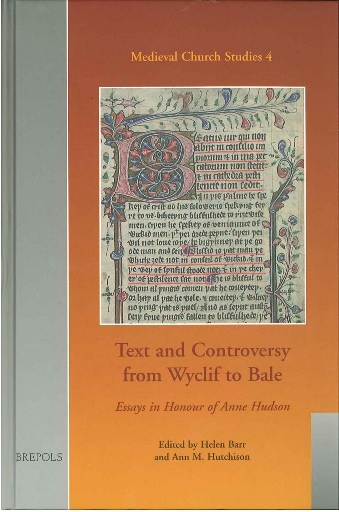
Text and Controversy from Wyclif to Bale
show More to view fulltext, buy and share links for:Text and Controversy from Wyclif to Bale show Less to hide fulltext, buy and share links for: Text and Controversy from Wyclif to BaleText and Controversy from Wyclif to Bale reflects and develops Anne Hudson’s pioneering work in textual criticism and religious controversy from the late medieval period to the Reformation. Written by newly emergent as well as internationally recognised scholars, the volume explores the wide spectrum of religious thought and practices between c. 1360 and c. 1560. Many essays, following the methodology of Anne Hudson’s scholarship, engage in the close study of manuscripts and archival holdings, disclosing new material and offering significant re-evaluation of documentary evidence and neglected texts. At a time of urgent calls for the reform of the Church, both in Britain and in mainland Europe, the voices of heresy can not always be distinguished from those of orthodox critics. Anne Hudson’s coinage of the term ‘grey area’ to describe the indeterminate boundary between radical orthodoxy and heterodoxy provides the lead for investigations into theological debate, devotional habits, and censorship. The volume significantly redefines our understanding of texts, history, and controversies from Wyclif to Bale.
-
-
-
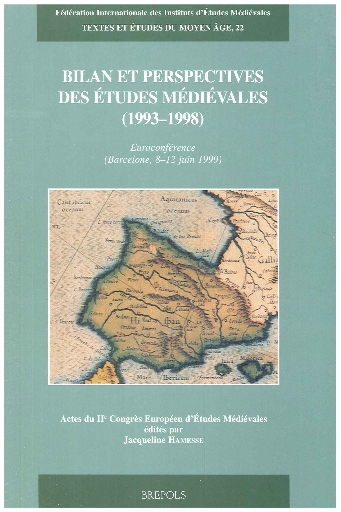
Bilan et perspectives des études médiévales (1993-1998)
show More to view fulltext, buy and share links for:Bilan et perspectives des études médiévales (1993-1998) show Less to hide fulltext, buy and share links for: Bilan et perspectives des études médiévales (1993-1998)Le bilan des études médiévales en Europe dressé lors du Ier Congrès européen d’Etudes médiévales organisé pour la première fois à Spolète en mai 1993 n’avait pas pu couvrir tous les domaines de notre discipline. Aussi le IIème Congrès a-t-il continué ce bilan en s’attachant par priorité à traiter des sujets peu ou insuffisamment couverts en 1993. Ce fut le cas de l’histoire politique, de l’archéologie médiévale, de l’histoire économique et sociale, de l’histoire religieuse, de la spiritualité et de l’hagiographie, de la philologie et de la littérature latines du moyen âge, de l’histoire de l’art, de l’étude des manuscrits, de la philosophie et de la théologie, de l’histoire des sciences, de la musique et de la liturgie, des études byzantines ainsi que du passage du moyen âge à la Renaissance.
Les bilans contenus dans cet ouvrage sont l’œuvre des meilleurs spécialistes en la matière. Ils permettent de voir les progrès réalisés de 1993 à 1998 ainsi que les lacunes qui existent encore dans certaines disciplines. Ils inciteront surtout de jeunes chercheurs à entreprendre des études dans des domaines encore mal connus.
-
-
-
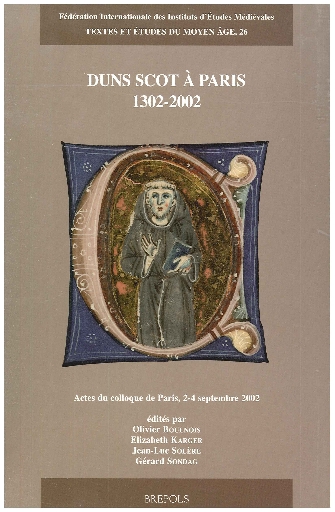
Duns Scot à Paris, 1302-2002
show More to view fulltext, buy and share links for:Duns Scot à Paris, 1302-2002 show Less to hide fulltext, buy and share links for: Duns Scot à Paris, 1302-2002Le colloque «Duns Scot à Paris, 1302-2002» (2-4 septembre 2002) a commémoré le sept centième anniversaire de l’arrivée, à l’Université de Paris, de Jean Duns Scot, l’une des rares dates connues dans la vie du plus grand philosophe et théologien du tournant des XIIIe et XIVe siècles. Il a permis de faire le point des dernières découvertes historiques et philologiques, et de donner un état des recherches scotistes en cours, qui ont connu un essor rapide et même inattendu ces dernières années. Après une introduction de caractère historique (‘Paris, 1302’), l’on trouvera dans ce volume une succession d’études portant sur la logique, l’épistémologie et la sémantique (2e partie), la métaphysique (3e partie), l’éthique et la psychologie (4e partie), la théologie (5e partie). La sixième partie enfin (‘Paris 2002’) compare les contributions de Duns Scot aux réflexions contemporaines (sur le temps, autrui, le langage). Cet volume est un instantané des travaux les plus récents: à la fois un bilan des connaissances sur la fin du XIIIe siècle, une série d’interprétations originales et une somme d’analyses philosophiques.
-
-
-
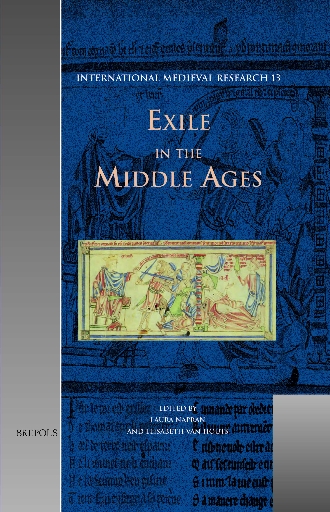
Exile in the Middle Ages
show More to view fulltext, buy and share links for:Exile in the Middle Ages show Less to hide fulltext, buy and share links for: Exile in the Middle AgesExile in the Middle Ages took many different forms. As a literary theme it has received much scholarly attention in the Latin, Greek and vernacular traditions. The historical and legal phenomenon of exile is relatively unexplored territory. In the secular world, it usually meant banishment of a person by a higher authority for political reasons, resulting in the exile leaving home for a shorter or longer period. Sometimes an exile did not wait to be expelled but left of his or her own accord. Leaving home to go on pilgrimage, or, in the case of women to marry, could be experienced as a form of exile. In the ecclesiastical sphere, two forms of exile stand out. Monasticism was often seen as a form of spiritual (permanent) exile from the secular world. Excommunication was a punishment exercised by the Church authorities in order to eject persons (often only temporarily) from the community of Christians. Banishment as a form of social punishment is therefore the central theme of this volume on Exile in the Middle Ages. The book covers the period of the central Middle Ages from ca. 900 to ca. 1300 in Western Europe, though some chapters have a wider remit. The genesis of the volume was a series of presentations delivered at the Leeds International Medieval Congress in 2002, which was devoted to the theme of Exile.
-
-
-
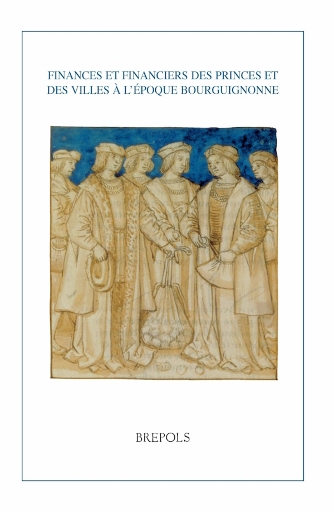
Finances et financiers des princes et des villes à l’époque bourguignonne
show More to view fulltext, buy and share links for:Finances et financiers des princes et des villes à l’époque bourguignonne show Less to hide fulltext, buy and share links for: Finances et financiers des princes et des villes à l’époque bourguignonneGérer les finances des princes et des villes est devenu à la fin du moyen âge l’affaire de professionnels de l’argent et de ses techniques. Ces hommes dont les employeurs requièrent compétence et loyauté appartiennent au monde en pleine ascension des officiers, des «fonctionnaires». Les nécessités de la guerre et de la paix, les coûts des armées et de la diplomatie, l’entretien et le fonctionnement des rouages du gouvernement et de l’administration, les aléas et les pressions de la situation économique, tout cela donne un sens à leur travail et requiert leur vigilante attention.
Accroître des moyens matériels, par des expédients ou des réformes durables, rendre plus performants des outils de gestion, voilà des objectifs qui peuplent ces pages, à travers plus d’un siècle et demi du passé des anciens Pays-Bas. Les études publiées regorgent ainsi d’apports nouveaux pour l’histoire de l’impôt, de l’emprunt, des rentes, du crédit et du commerce de l’argent. Elles éclairent aussi une face essentielle des relations entre gouvernants et gouvernés, dictées par des recettes et dépenses mais en même temps orientées par ceux qui y pourvoient et en font carrière.
-
-
-
Functions and Decorations: Art and Ritual at the Vatican Palace in the Middle Ages and the Renaissance
show More to view fulltext, buy and share links for:Functions and Decorations: Art and Ritual at the Vatican Palace in the Middle Ages and the Renaissance show Less to hide fulltext, buy and share links for: Functions and Decorations: Art and Ritual at the Vatican Palace in the Middle Ages and the Renaissance
-
-
-
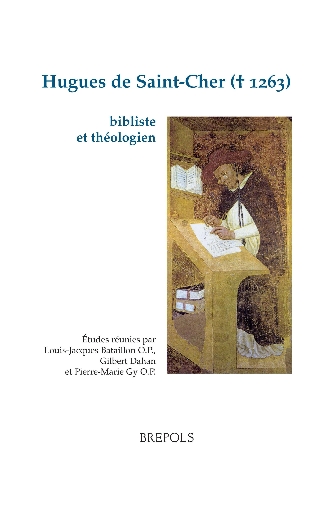
Hugues de Saint-Cher († 1263), bibliste et théologien
show More to view fulltext, buy and share links for:Hugues de Saint-Cher († 1263), bibliste et théologien show Less to hide fulltext, buy and share links for: Hugues de Saint-Cher († 1263), bibliste et théologienSi l’action du cardinal Hugues de Saint-Cher († 1263) a parfois suscité l’intérêt des historiens, il s’agit ici du premier ouvrage concernant l’œuvre de cet auteur, dont la place est pourtant capitale dans l’évolution de la pensée en Occident chrétien au xiii e siècle. Ce maître dominicain de la deuxième génération assimile le brillant héritage du xii e siècle et prépare l’essor qui va suivre dans le domaine des études bibliques et de la théologie, avec le développement de l’enseignement universitaire. Les différents aspects de son œuvre sont examinés dans ce volume, qui réunit les spécialistes de l’histoire intellectuelle du xiii e siècle. Le commentaire biblique de Hugues, ou Postille, imprimé jusqu’au xviii e siècle, a connu une fortune étonnante; il est, tout comme les concordances et le correctoire biblique diffusés sous son nom, le résultat d’un travail collectif, dirigé par le maître lors de son séjour parisien au couvent de Saint-Jacques. L’œuvre théologique, comportant le premier véritable commentaire des Sentences et de nombreuses quaestiones, aborde les problèmes de fond de la pensée chrétienne comme des aspects plus pratiques. Le point est fait également sur ses sermons, moins connus mais dont le rôle a été important. Ainsi, cet ouvrage, issu d’un colloque international tenu à Paris en mars 2000, apporte-t-il une contribution majeure à l’histoire de la pensée dans la première moitié du xiii e siècle.
-
-
-
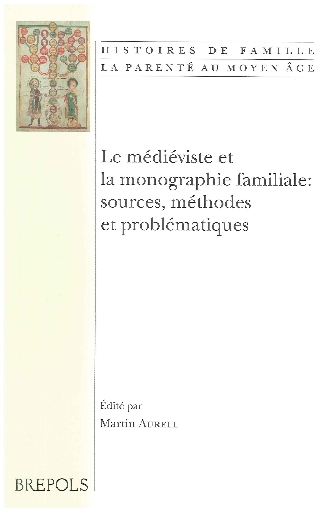
Le médiéviste et la monographie familiale: sources, méthodes et problématiques
show More to view fulltext, buy and share links for:Le médiéviste et la monographie familiale: sources, méthodes et problématiques show Less to hide fulltext, buy and share links for: Le médiéviste et la monographie familiale: sources, méthodes et problématiquesLongtemps cantonnée à un cercle restreint de savants soldés par des mécènes en mal de reconnaissance sociale ou en quête d’exemption fiscale, puis rejetée par les courants historiographiques les plus novateurs du XXe siècle, la monographie familiale connaît de nos jours un regain de faveur parmi les médiévistes. L’irruption de la prosopographie en histoire sociale et le prestige retrouvé de la micro-histoire sont pour beaucoup dans cette évolution, favorable à l’éclosion d’études qui retracent le devenir d’un groupe familial déterminé. De nouvelles problématiques accompagnent ce changement épistémologique. En effet, l’arbre généalogique ne saurait plus cacher la forêt de l’histoire totale de la famille, conçue souvent comme le plus déterminant des éléments de tout système social. C’est à partir de sources diplomatiques, mais aussi d’écrits de nature généalogique, que le groupe de parenté et ses relations sont habituellement appréhendés par les chercheurs. L’étude de cette documentation exige des techniques érudites particulières, dont l’usage quotidien fait rarement l’objet d’une réflexion de méthode. Cette approche, en même temps concrète et abstraite, du métier de l’historien est au cœur de cet ouvrage.
-
-
-
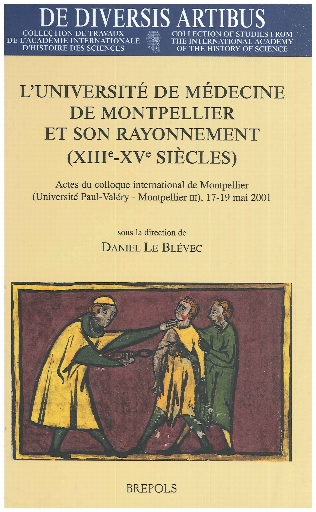
L’Université de Médecine de Montpellier et son rayonnement (XIIIe-XVe siècles)
show More to view fulltext, buy and share links for:L’Université de Médecine de Montpellier et son rayonnement (XIIIe-XVe siècles) show Less to hide fulltext, buy and share links for: L’Université de Médecine de Montpellier et son rayonnement (XIIIe-XVe siècles)Fréquenté par des étudiants venus de tous les pays, recrutant des maîtres eux-mêmes d’origines diverses, le studium de Montpellier s’est imposé dès le xiii e siècle comme l’un des grands centres européens des études médicales, formant des praticiens compétents, assurés, après y avoir conquis leurs grades, d’accomplir des carrières brillantes, du moins pour la plupart d’entre eux, fondées sur le prestige intellectuel, la considération sociale et l’aisance financière.
Dès le xiii e siècle, l’Université de médecine a été dotée de statuts. Elle a pu dès lors développer la formation des futurs praticiens sur des bases institutionnelles solides, attirant vers elle des professeurs renommés, tels Bernard de Gordon, Gérard de Solo, Arnaud de Villeneuve, Guy de Chauliac, Jean de Tournemire.
L’élaboration du savoir médical, outre le recours classique aux auctoritates antiques et arabes, s’est également souciée d’intégrer, à Montpellier, l’apport des disciplines voisines, telles la chirurgie et l’astrologie. Parmi les pathologies, les maladies de l’œil et la lèpre ont fait l’objet d’une attention particulière, tandis que les thérapeutiques, mettant en œuvre notamment les régimes de santé et intégrant la médecine montpelliéraine dans le cadre des pratiques universelles, ont pu harmonieusement combiner l’expérience et la réflexion savante. Forte de sa renommée et du rayonnement de son enseignement, la médecine montpelliéraine a ainsi construit une pensée dont les manuscrits conservés témoignent de la diffusion et illustrent l’influence que Montpellier, en ce domaine comme en d’autres, a exercée en Europe à la fin du Moyen Age.
-
-
-
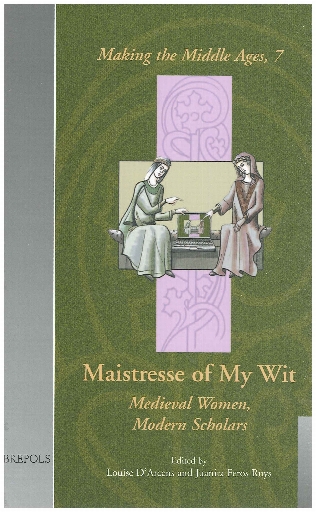
Maistresse of My Wit
show More to view fulltext, buy and share links for:Maistresse of My Wit show Less to hide fulltext, buy and share links for: Maistresse of My WitThis volume explores the reciprocal relationships that can develop between medieval women writers and the modern scholars who study them. Taking up the call to ‘research the researcher’, the authors indicate not only what they bring to their study from their own personal experience, but how their methodologies and ways of thinking about and dealing with the past have been influenced by the medieval women they study. Medieval women writers discussed include those writing in the vernacular such as Christine de Pizan and Margaret Paston, those writing in Latin such as Hildegard of Bingen, Heloise, and Birgitta of Sweden, and the works transcribed from women mystics such as Margery Kempe, Hadewijch, and Julian of Norwich. Attention is also given to medieval women as the readers, consumers and patrons of written works. Issues considered in this volume include the place of ethics, interestedness and social justice in contemporary medieval studies, questions of alterity, empathy, essentialism and appropriation in dealing with figures of the medieval past, the permeable boundaries between academic medieval studies and popular medievalism, questions of situatedness and academic voice, and the relationship between feminism and medieval studies. Linked to these issues is the interrelation between medieval women and medieval men in the production and consumption of written works both for and about women and the implications of this for both female and male readers of those works today. Overarching all these questions is that of the intellectual and methodological heritage - sometimes ambiguous, perhaps even problematic - that medieval women continue to offer us.
-
-
-
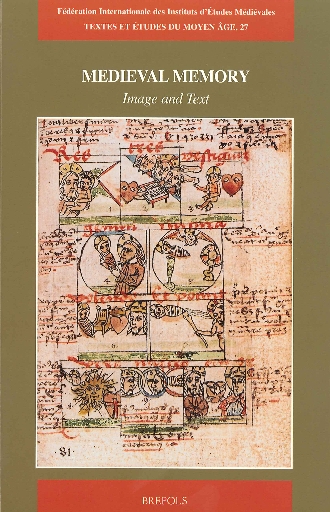
Medieval Memory. Image and Text
show More to view fulltext, buy and share links for:Medieval Memory. Image and Text show Less to hide fulltext, buy and share links for: Medieval Memory. Image and TextScholars of medieval literary and cultural history have grown more aware of the crucial role of memory in the production, reception and functioning of texts and manuscripts. We owe this to the pioneering studies of Frances Yates and, more recently, Mary Carruthers and Susan Hagen.
Historical linguists for their part try to describe the linguistic means by which listeners and readers are enabled to store the information flow in their memories.
The relationship between medieval texts and memory is at the centre of this book. Seven historians of literature, three linguists and one art historian have contributed eleven essays, subsumed under three sections. The first section, ‘Memory Texts’, discusses genres that belong to medieval mnemonics. In the second and most extensive section, ‘Memory Aspects in Texts’, the focus is on literature and, more particularly, on how attention for mnemonics can enhance our insight into the form, composition and functioning of literary texts and manuscripts. Mental and visual images play a central role here. ‘Text Memory’, the final section, analyses medieval (French) literary discourse as a fabric of reference chains, in which different grammatical markers generate and organise mental representations in the memory.
-
-
-
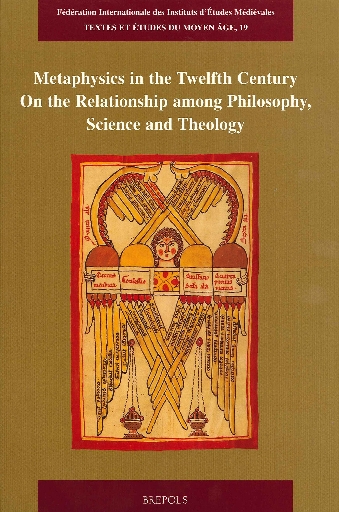
Metaphysics in the Twelfth Century
show More to view fulltext, buy and share links for:Metaphysics in the Twelfth Century show Less to hide fulltext, buy and share links for: Metaphysics in the Twelfth CenturyAlthough metaphysics as a discipline can hardly be separated from Aristotle and his works, the questions it raises were certainly known to authors even before the reception of Aristotle in the thirteenth century. Even without the explicit use of this term the twelfth century manifested a strong interest in metaphysical questions under the guise of “natural philosophy” or “divine science”, leading M.-D. Chenu to coin the expression of a twelfth century “éveil métaphysique”. In their commentaries on Boethius and under the influence of Neoplatonism, twelfth century authors not only anticipate essential elements of thirteenth century metaphysics, they also make an original contribution to the history of metaphysics by attempting to integrate the theory of first principles, philosophical theology and ontology. This volume presents and examines the contributions of the twelfth century to metaphysics made by selected Jewish, Christian and Muslim authors of the Iberian Peninsula and Francia.
-
-
-
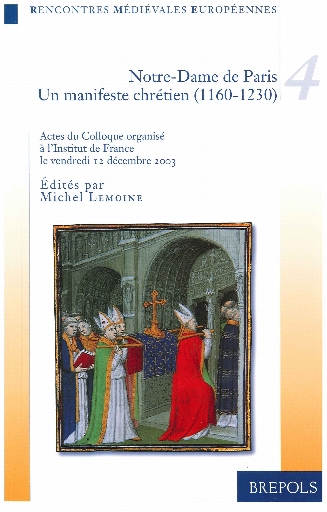
Notre-Dame de Paris. Un manifeste chrétien, 1160-1230
show More to view fulltext, buy and share links for:Notre-Dame de Paris. Un manifeste chrétien, 1160-1230 show Less to hide fulltext, buy and share links for: Notre-Dame de Paris. Un manifeste chrétien, 1160-1230Les précédents colloques des Rencontres médiévales européennes ont renouvelé notre connaissance des origines de l’architecture gothique en mettant en évidence les liens qui existent entre le propos de Suger, tel qu’il a pris corps à Saint-Denis, et les nouveaux courants spirituels du xii e siècle. Les études réunies dans le présent volume prolongent cette enquête. Elles rappellent en particulier le rôle important joué par l’évêque de Paris, Maurice de Sully. Proche des Victorins, attentif aux directives réformatrices de la papauté, il fonde sa pastorale sur un renouveau liturgique dont l’exigence théologique n’est jamais exclue. C’est à lui, par exemple, que l’on doit la pratique de l’ostension de l’hostie. On trouvera ici le portrait de cet évêque exceptionnel ainsi que l’analyse de son grand dessein: la reconstruction de la cathédrale Notre-Dame de Paris. Cette entreprise fut accompagnée d’une renaissance artistique perceptible notamment dans le domaine musical. En arrière-plan, on retrouve l’abbaye de Saint-Victor, dont on a tenté d’évaluer l’influence dans la vie spirituelle du temps. L’œuvre de Godefroid, auteur d’un Microcosme, illustre bien ce milieu si original. Notre époque traversée de révolutions et d’incertitudes peut encore tirer des leçons du manifeste que fut en son temps Notre-Dame de Paris.
-
-
-
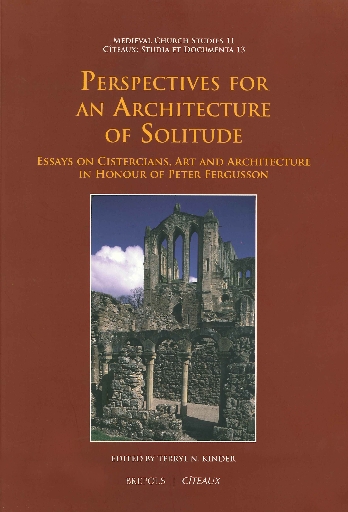
Perspectives for an Architecture of Solitude
show More to view fulltext, buy and share links for:Perspectives for an Architecture of Solitude show Less to hide fulltext, buy and share links for: Perspectives for an Architecture of SolitudeWhat was it that gave medieval art and architecture its form and style? What is it that attracts people to medieval art and architecture, especially that of the Cistercians? What shaped medieval buildings and determined their embellishments - and what now determines the way we look at them?
Some of the most intriguing questions in monastic and ecclesiastical architecture and archaeology are discussed in this tribute to Peter Fergusson and his lifetime of scholarship as an historian of medieval art and architecture, especially of the Cistercians.
These thirty-four essays range from a discussion of the earliest Christian legislation on art (fourth century) to an account of a garden project of 1811 designed to efface all previous monastic habitation. Between these chronological signposts are studies on the design, siting, building, and archaeology of churches, infirmaries, abbots’ lodgings, gatehouses, private chambers, grange chapels, and the life lived within and around them. Geographically, the papers range from the British Isles through Spain, France, Flanders, and Germany to the centre of the medieval world: Jerusalem.
They treat of the complexities of building and re-building; of architectural and artistic adaptations to place, period, and political upheaval; of the interrelationship of text and structure; and of the form, iconography, and influence of some of the great churches and cathedrals of the Middle Ages. This is a wide-ranging and authoritative collection of studies which is essential reading for any historian of medieval art and architecture.
-
-
-
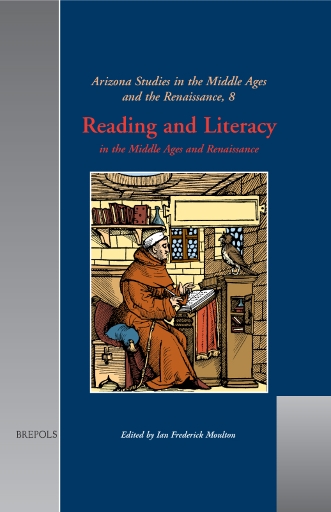
Reading and Literacy
show More to view fulltext, buy and share links for:Reading and Literacy show Less to hide fulltext, buy and share links for: Reading and LiteracyIt is not surprising that the development of the internet and related electronic technologies has coincided with an academic interest in the history of reading. Using and transmitting texts in new ways, scholars have become increasingly aware of the precise ways in which manuscripts and printed books transmitted texts to early modern readers. This volume collects nine essays on reading and literacy in Europe from the fourteenth to the seventeenth centuries. Topics include: the function of marginalia in vernacular medieval manuscripts; the trope of reading in the fourteenth century; the definition of literacy in early modern England; marginalia and reading practices in early modern Italy; revision of medieval texts in the Renaissance; the prevalence of translated French poetry in sixteenth-century England; the use of poems as props in the plays of Shakespeare; the private reading of the playscripts of masques; and early-modern women’s reading practices. These essays demonstrate the energy and excitement of the rapidly developing field of the history of reading. They will appeal to those interested in European cultural history, the transition from manuscript to print culture, the history of literacy, and the history of the book.
-
-
-
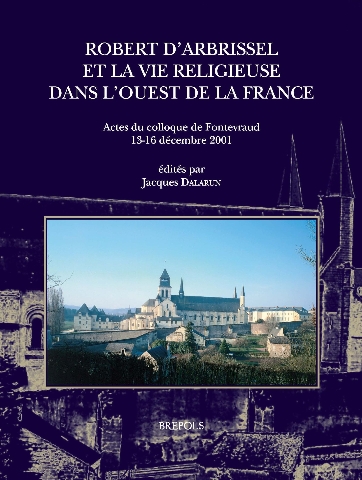
Robert d’Arbrissel et la vie religieuse dans l’Ouest de la France
show More to view fulltext, buy and share links for:Robert d’Arbrissel et la vie religieuse dans l’Ouest de la France show Less to hide fulltext, buy and share links for: Robert d’Arbrissel et la vie religieuse dans l’Ouest de la FranceFontevraud: 1101-2001. Fontevraud: à la fois monastère et congrégation, communauté mixte où, par la singulière volonté du fondateur, les hommes en ce temps féodal étaient soumis au pouvoir des femmes. Célébrer le neuvième centenaire de la fondation de Robert d’Arbrissel s’imposait; ce qui fut fait du 13 au 16 décembre 2001, dans l’enceinte même de la somptueuse abbaye ligérienne.
Le présent volume témoigne de ces denses journées d’étude; il intègre aussi des contributions supplémentaires, pour gagner encore en richesse et en cohérence. Volontairement déroutant, il nous entraîne d’abord bien loin du Val de Loire, dans les solitudes boisées des Apennins, où le ressourcement monastique surgi du haut Moyen Âge inaugure ce Moyen Âge que nous disons central. Les organisateurs scientifiques de la rencontre n’ont en effet pas souhaité la focaliser d’emblée sur l’originalité de Fontevraud et les étranges comportements de son fondateur. Ils ont au contraire voulu donner à lire l’accident de 1101 dans le vaste élan qui ouvre une ère nouvelle pour la Chrétienté et pour notre monde en ce qu’il en procède: cette réforme de l’Église qu’on dit «grégorienne», qui repense en fait toute l’architecture ecclésiale et sociale, des plus hauts aux plus infimes pouvoirs, des institutions aux individus et du sacré au profane.
-
-
-
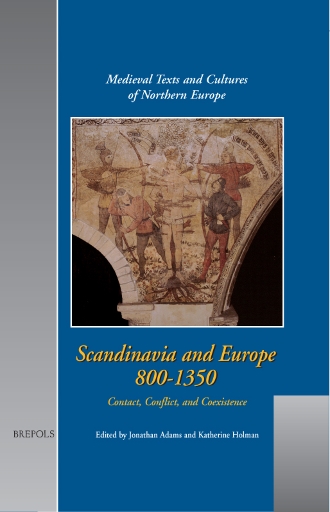
Scandinavia and Europe 800-1350
show More to view fulltext, buy and share links for:Scandinavia and Europe 800-1350 show Less to hide fulltext, buy and share links for: Scandinavia and Europe 800-1350This volume examines the various forms of contact between Scandinavia and the rest of Europe from 800 to 1350. It consists of twenty-five papers from international scholars specialising in archaeology, onomastics, literature, art history, epigraphy, religious history and linguistics. The volume is innovative in three respects: (i) in transcending conventional historical boundaries, by bringing together work on both the viking and medieval periods; (ii) by examining the ways in which mainland Europe influenced Scandinavia (e.g. kingship, law and social organization; and classical and continental literary traditions); and (iii) by synthesising all the material for an English-language readership for the first time. The broader timespan of investigation illustrates the changing nature of contact and the gradual integration of Scandinavia into European society: by 1350 Scandinavia was no longer a heathen outpost on the periphery of the known world, but an integral part of Western Christendom. The cultural impact of mainland Europe on Scandinavia, frequently mediated through religious channels, although less dramatic, is shown to have had a more significant long-term impact than the earlier viking raids. The volume is structured around the following sections: Historical and Archaeological Evidence for [Scandinavian] Contact with the British Isles; Evidence for the Linguistic Impact of Scandinavian Settlement; Evidence for the Impact of Christianity on Scandinavia; and Textual Evidence for Contact, Conflict, and Coexistence.
-
-
-

Seeing and Knowing
show More to view fulltext, buy and share links for:Seeing and Knowing show Less to hide fulltext, buy and share links for: Seeing and KnowingThe transmission of knowledge in clerical and academic settings of the later Middle Ages has been relatively well studied by traditional scholarship. But successes achieved in other subject-areas by the application of a set of methodologies grouped under the rubric of ‘gender studies’ may offer insights into medieval education. This approach invites a re-examination in gender-political terms of the definition of knowledge by clerical elites and the concomitant rejection from the category of ‘knowledge’ of many varieties of knowledge which did not coincide with their template. The ten articles of this volume focus both on the perennial valorization of the content and methods of clerical/academic education, on the limitation of venues for its transmission to sites from which women were categorically excluded, and, in terms of media for the transmission of knowledge, on the attendant restriction of the techniques and media considered valid for the storage, retrieval, and communication of knowledge to those that were current in these privileged sites.
The volume addresses the following issues: what varieties of knowledge were available to communities of women? What kinds of knowledge originated in or became characteristic of women’s communities? What techniques did women develop to preserve and transmit their knowledge? In what ways and with what success was women’s knowledge valorized, both by authors from within these communities and by ‘authoritative’ figures from outside? Under what circumstances could women become authoritative originators of and transmitters of knowledge?
-
-
-
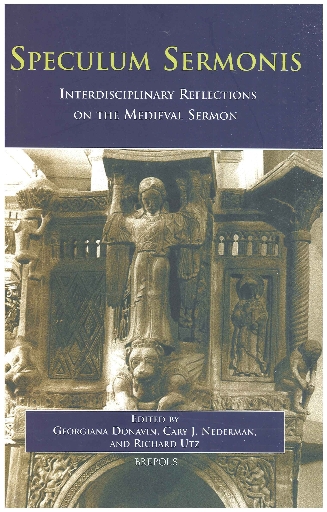
Speculum Sermonis
show More to view fulltext, buy and share links for:Speculum Sermonis show Less to hide fulltext, buy and share links for: Speculum SermonisThe medieval sermon provides the focus for the first volume of Disputatio because it often expresses the concerns of various intellectual milieux, such as the university, Church or court, and attempts to convey those concerns to other parts of medieval society.
Speculum Sermonis is an anthology of essays about medieval sermons in the Christian East and West. It aims to reveal precisely how sermons inform different disciplines (for instance, social and Church history, literature, musicology) and how the methodologies of different disciplines inform sermons. Sermons can, for instance, provide evidence for a reconstruction of medieval liturgy; reciprocally, the field of liturgiology investigates sermons as one aspect of Church performance. The volume’s title image of the mirror and the reference to medieval specula convey the idea of multiple reflections: the sermons’ on culture and the disciplines’ on sermons. Because the contributors to Speculum Sermonis come from a variety of fields, the essays here collectively provide a rich historical and contemporary academic context for reading the medieval sermon.
In addition to essays from across the fields, a number of which establish conclusions transcending disciplinary boundaries, Speculum Sermonis includes an introduction defending interdisciplinary study of sermons and an authoritative bibliography covering both primary and secondary resources for medieval sermons. A unique feature of the volume is the inclusion of response papers to the essays in each of the sections, in the spirit of the book series title Disputatio.
-
-
-

The Appearances of Medieval Rituals
show More to view fulltext, buy and share links for:The Appearances of Medieval Rituals show Less to hide fulltext, buy and share links for: The Appearances of Medieval RitualsAppearances can be deceptive; and medieval ritual practices are in this respect no exception. They perform stability through the codification of repetitive modes of behaviour and simultaneously admit flexibility in their integration of newer forms of representation. They mask the historical contingencies of their own creation and construct alternative narratives of authority and continuity. They do not simply appear; their appearance reflects the mutual interplay of construction and modification.
This collection of eleven essays-which chronologically spans the period from the Carolingians to the Catholic Reform movement of the later sixteenth century-explores this double-edged potential in the appearance of medieval ritual practices; and, in this case, chiefly church rituals. It comprises a series of individual studies by scholars of literature, theology, music, and the visual arts. Each study examines a particular moment of change or transformation in ritual practices, illuminating, thereby, processes of ritualization. In this way, the book both provides an impulse to the recent renewal of methodological interest in ritual studies and presents individual contributions to specific scholarly discourses within this broad area.
-
-
-
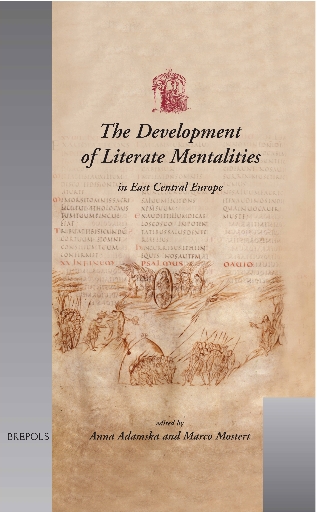
The Development of Literate Mentalities in East Central Europe
show More to view fulltext, buy and share links for:The Development of Literate Mentalities in East Central Europe show Less to hide fulltext, buy and share links for: The Development of Literate Mentalities in East Central EuropeCompared with most of mainland Europe north of the Alps, the introduction of writing in East Central Europe (Bohemia, Poland and Hungary) took place with a considerable delay. Much is known about East Central European uses of writing, although only a fragment of this knowledge is known outside the region. Gathered by historians, palaeographers and codicologists, diplomatists, art historians, literary historians and others, this knowledge has hardly ever been studied in the light of recent discussions on medieval literacy and communication. Work done in the Czech, Polish and Hungarian traditions of scholarship has never been subjected to a comparative analysis. Furthermore, the question of the relation between writing and other forms of communication in the region remains largely unexplored. The volume serves a double purpose. For the first time, a collection of contributions on medieval literacy in East Central Europe is put before the forum of international scholarship. It is also hoped to further discussions of modes of communication, literate behaviour and mentalities among scholars working in the region.
-
-
-
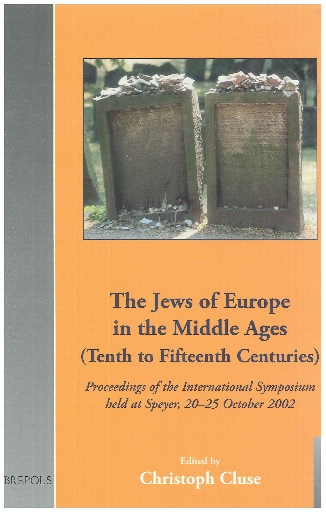
The Jews of Europe in the Middle Ages (Tenth to Fifteenth Centuries)
show More to view fulltext, buy and share links for:The Jews of Europe in the Middle Ages (Tenth to Fifteenth Centuries) show Less to hide fulltext, buy and share links for: The Jews of Europe in the Middle Ages (Tenth to Fifteenth Centuries)The Jews of Europe in the Middle Ages presents the proceedings of an international symposium held at Speyer (Germany) in October, 2002. The collection aims at a comprehensive (and comprehensible) overview describing the variety of historical experience for European Jewries from c. 1000 to c. 1500. Leading European historians firmly based in regional, archival research have here been brought together with a number of Israeli and American scholars who concentrate on legal and constitutional aspects of the Jewish community. Historians working on medieval Mediterranean Jewries (Sicily, Spain, Provence, etc.) and those studying the northern communities (England, Northern France, and Ashkenaz) present their findings in a single, one-language collection. Regional overviews are supplemented by studies on cultural, economic, social, and linguistic aspects as well as by portraits of individual (northern) Jewish communities. The collection highlights the similarities and differences among the various European Jewish cultures, demonstrating that these cultures were no less European than they were Jewish. At the same time, the Jewish heritage has deeply influenced medieval and modern European majority cultures. This cultural symbiosis was epitomized in the European Jewish community (kahal, aljama).
-
-
-
The Voice of Silence
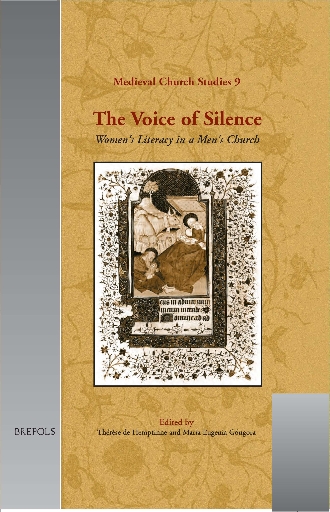
show More to view fulltext, buy and share links for:The Voice of Silence show Less to hide fulltext, buy and share links for: The Voice of SilenceThis book aims to collect and present the results of research done within the context of the project ‘The voice of silence / La voz del silencio: An interdisciplinary research project about literate women and women authors in the West-European late Middle Ages from a gender perspective (11th to 15th centuries)’. The project was a bilateral research project, with participants of the University of Chile in Santiago on the one hand and the Universities of Gent and Antwerpen on the other. Medieval scholars, literary historians and literary theorists joined forces. The angle from which the material was being studied, however, was always the same: gender being the central issue. The project focused on women as participants in late medieval society and culture of the Rhineland and the Low Countries. Indeed, all the researchers involved acquired their expertise in this field and/or the field of women’s literacy.
Several members of this Flemish-Chilean project have contributed an essay to this book, but supplemented by guest authors. The guests are internationally renowned scholars reflecting an expertise in gender studies or in an aspect not covered by the team members of the project. Their contributions complete the research results of the project.
The story told in this book is focused on literate women and gender. In the course of the twelfth and thirteenth centuries, the voices of women authors, many of them religious and mystics, resounded in a literate society dominated by clerics. Hildegard of Bingen and Hadewijch, two of the most famous representatives of this ‘female voice’ are highlighted in Part I. These women were the forerunners of a new reading culture among (semi-)religious and even lay women in which the use of the vernacular was a decisive factor (Part II). Yet, from the thirteenth century onwards, and with increasing intensity towards the end of the Middle Ages, men once more tried to get a grip on women’s reading and writing. Aspects of these attemps are illustrated in part III.
-
-
-
Wulfstan, Archbishop of York
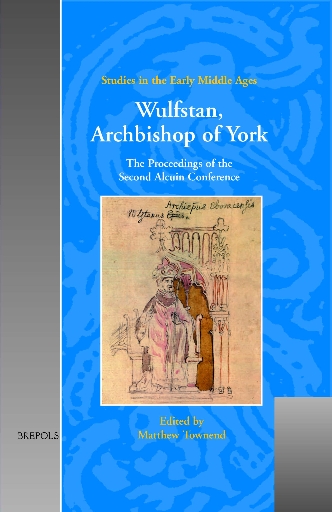
show More to view fulltext, buy and share links for:Wulfstan, Archbishop of York show Less to hide fulltext, buy and share links for: Wulfstan, Archbishop of YorkMost famous for his harrowing ‘Sermon of the Wolf to the English’, Archbishop Wulfstan II of York (1002-23) has emerged in recent decades as one of the most important and influential figures in the late Anglo-Saxon church and state. This volume, which arises from a conference held in 2002 to mark the millennial anniversary of Wulfstan’s appointment as archbishop, is the first collection of essays to be devoted to this crucial figure. Its twenty contributors address the whole range of Wulfstan’s activities and writings, and supply not only an up-to-date survey of Wulfstan studies but also many new directions, discoveries, and insights. The studies within this volume variously explore Wulfstan’s preaching and law-making; his position in the late Anglo-Saxon church; the places and contexts in which he lived and worked; and, more generally, his learning, concerns, and ideas. The contributors, drawn from a variety of disciplines, bring together literary, historical, and art historical approaches to the study of Wulfstan, and a recurrent focus is on the extant manuscripts associated with him. Altogether, therefore, this volume provides a thorough and wide-ranging exploration of the life, works, and contexts of one of the most important of all Anglo-Saxons.
-
-
-
Au-delà de l’écrit. Les hommes et leurs vécus matériels au Moyen Âge à la lumière des sciences et des techniques
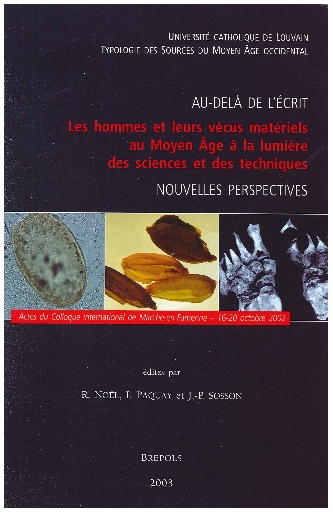
show More to view fulltext, buy and share links for:Au-delà de l’écrit. Les hommes et leurs vécus matériels au Moyen Âge à la lumière des sciences et des techniques show Less to hide fulltext, buy and share links for: Au-delà de l’écrit. Les hommes et leurs vécus matériels au Moyen Âge à la lumière des sciences et des techniques«L’histoire se fait avec des documents. Quand il y en a. Mais elle peut se faire, elle doit se faire avec tout ce que l’ingéniosité de l’historien peut lui permettre d’utiliser…» (L. Febvre). Ces propos, les médiévistes les ont faits leurs. Sciences naturelles et de la terre, méthodes de détection et d’enregistrement des traces de l’activité des hommes ont permis des avancées spectaculaires. Toujours plus sûres d’elles-mêmes, elles ouvrent sans cesse des perspectives au vrai vertigineuses.
La Typologie des sources du Moyen Âge occidental s’est résolument inscrite dans ce mouvement. Elle voudrait aujourd’hui faire le point, encourager aussi l’ouverture de nouveaux chantiers. Selon ses perspectives. Et en retenant deux approches complémentaires: théorique et pratique. La première mettra en valeur les développements récents et les perspectives nouvelles qu’offrent potentiellement sciences et techniques pour l’étude des communautés humaines dans leurs «vécus» matériels. La seconde privilégiera des cas particuliers illustrant concrètement les apports et les limites que la critique et la typologie des sources imposent à celles-là.
-
-
-
Contact, Continuity, and Collapse
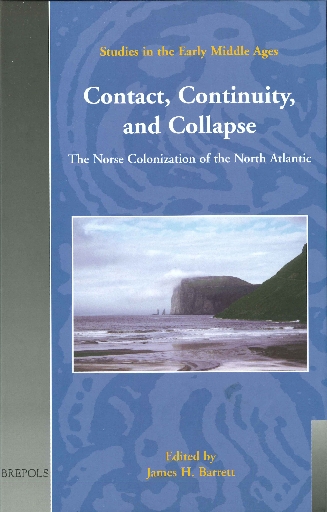
show More to view fulltext, buy and share links for:Contact, Continuity, and Collapse show Less to hide fulltext, buy and share links for: Contact, Continuity, and CollapseThis volume explores the Viking Age colonization and exploration of the North Atlantic, from Arctic Norway to Vinland in eastern North America. Its contributors, predominately archaeologists by training, bring new evidence and an interdisciplinary perspective to a subject often dominated by sources of variable historicity. They explore the creation and transformation of ethnicity in new lands - some occupied, others empty. They also address the historiography of Norse Landnám, unravelling the processes by which scholarly interpretations of the Viking Age have been created. The result illuminates the consequences of migration in the early Middle Ages and the interplay of local and large-scale socio-economic processes. In concluding, the volume assesses the relationship between Norse expansion and later European ‘rediscovery’ of the New World.
-
-
-

Court Culture in the Early Middle Ages
show More to view fulltext, buy and share links for:Court Culture in the Early Middle Ages show Less to hide fulltext, buy and share links for: Court Culture in the Early Middle AgesThe role of the court in early medieval polities has long been recognised as an essential force in the running of the kingdom. The court was not only an organ of central government but a sociological community with its own ideology and culture, and a place where royal power was both displayed and negotiated. The studies within this volume reflect the diversity of modern court studies, considering the court as a social body and considering its educative and ideological activities. The contributors to this volume bring together historical, archaeological, art historical and literary approaches to the topic as they consider aspects of court life in England, Francia, Rome and Byzantium from the eighth to the tenth centuries. The volume therefore looks at court life in the round, emphasizes and invites connections between early medieval courts, and opens new perspectives for the understanding of early medieval courts.
-
-
-
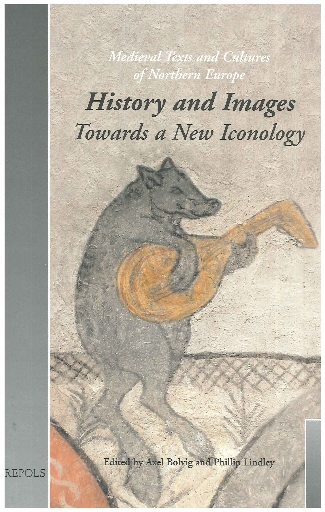
History and Images
show More to view fulltext, buy and share links for:History and Images show Less to hide fulltext, buy and share links for: History and ImagesThis versatile collection of essays sets out to underline the new visual agenda in today’s research into history and the history of art. The impact of alternative imagery, of image databases and of computer-generated material has effectively revealed a separate resource-category, offering further definitions of meaning and information and requiring new methodologies of interpretation. The volume’s subtitle, ‘Towards a New Iconology’, makes the point that our conventional approaches towards the image may no longer be adequate. Its nineteen contributions all represent a moving-away from the tradition passed down ever since Gregory the Great famously pronounced images to be the Bible of the illiterate. On the contrary, the authors of this volume demonstrate that images constitute another world altogether, with its own ideology and store of information, and with its own emotional charge and seductive qualities. History and Images contains articles by eminent scholars from Austria, Denmark, Finland, France, Germany, the Netherlands, Norway, Sweden, Switzerland, the UK and USA.
-
-
-
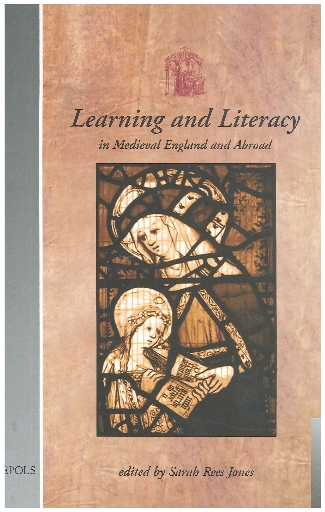
Learning and Literacy in Medieval England and Abroad
show More to view fulltext, buy and share links for:Learning and Literacy in Medieval England and Abroad show Less to hide fulltext, buy and share links for: Learning and Literacy in Medieval England and AbroadHow did people know what they knew, and learn what they learnt? As Derek Pearsall’s introduction makes clear this is the primary focus of the collection of essays published in celebration of the thirtieth anniversary of the foundation of the Centre for Medieval Studies at the University of York.
The learning materials included range from grammar books to mystery plays, and from court records to monastic chronicles, as well as liturgical and devotional texts. But the essays are not only concerned with texts alone, but with the broader and often fluid social environments in which learning took place. Many of the papers therefore question the validity of some distinctions habitually used in the discussion of medieval culture, such as the opposition between orality and literacy, between Latin and the vernacular or between secular and religious.
-
-
-
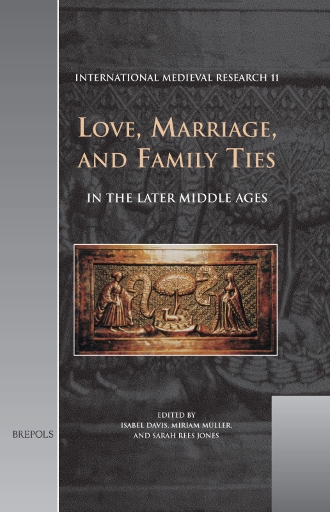
Love, Marriage, and Family Ties in the Later Middle Ages
show More to view fulltext, buy and share links for:Love, Marriage, and Family Ties in the Later Middle Ages show Less to hide fulltext, buy and share links for: Love, Marriage, and Family Ties in the Later Middle AgesThis volume addresses the current fashion for research on the family and domesticity in the past. It draws together work from various disciplines - historical, art-historical, and literary - with their very different source materials and from a broad geographical area, including some countries - such as Croatia and Poland - which are not usually considered in standard textbooks on the medieval family. This volume considers the various affective relationships within and around the family and the manner in which those relationships were regulated and ritualized in more public arenas. Despite their disparate approaches and geographical spread, these essays share many thematic concerns; the ideologies which structured gender roles, inheritance rights, incest law and the ethics of domestic violence, for example, are all considered here. This collection originates from the Leeds IMC in 2001 when the special strand was entitled ‘Domus and Familia’ and attracted huge participation. This book aims to reflect that richness and variety whilst contributing to an expanding area of historical enquiry.
-
-
-
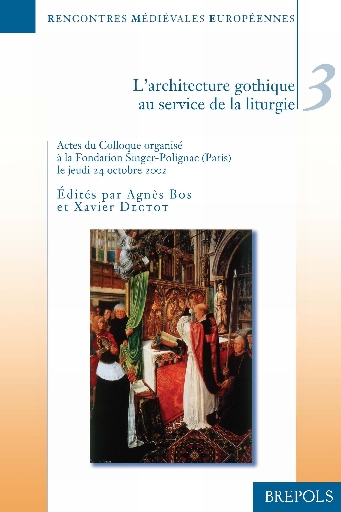
L’architecture gothique au service de la liturgie
show More to view fulltext, buy and share links for:L’architecture gothique au service de la liturgie show Less to hide fulltext, buy and share links for: L’architecture gothique au service de la liturgieContrairement à ce que l’on a longtemps cru, l’architecture gothique ne naît pas simplement d’une évolution des formes et des techniques de construction. Bien au contraire, celles-ci ne sont que le moyen par lequel une génération nouvelle, dont Suger, abbé et maître d’œuvre de Saint-Denis, est le chef de file, adapte les lieux de culte à ses nouvelles exigences. Un premier colloque, tenu en 2000 à la fondation Singer-Polignac, avait permis de dessiner l’ambiance intellectuelle dans laquelle était né l’art nouveau: l’humanisme de l’école de Saint-Victor. À côté de ce renouveau intellectuel, il fallait également prendre en compte l’importance des transformations liturgiques qui se nouent au xii e siècle et qui jouent un rôle fondamental dans le renouveau inauguré par Saint-Denis. C’est la tâche dont se sont chargés sept historiens de l’art, de la littérature, de la musique, de la liturgie et des idées. Le rôle de Rome et des voyages italiens de l’abbé Suger apparaît prépondérant. L’architecture nouvelle adapte les édifices français aux exigences liturgiques créées par la réforme romaine, au lendemain de la querelle des investitures. Plus qu’un simple problème esthétique, et par-delà ses implications théologiques et philosophiques, le gothique est un art profondément ancré dans son époque et qui cherche à répondre aux problèmes nouveaux et aux nouveaux besoins fonctionnels qui s’affirment alors.
-
-
-
Political Assemblies in the Earlier Middle Ages
show More to view fulltext, buy and share links for:Political Assemblies in the Earlier Middle Ages show Less to hide fulltext, buy and share links for: Political Assemblies in the Earlier Middle AgesAssembly is a central feature of the European political process between the demise of the Roman Empire and the rise of the bureaucratic state in the twelfth and thirteenth centuries. Historians have often neglected the crucial rule of political assemblies in their own right, concentrating instead on exceptional or extraordinary attention-catching events which occurred at assemblies. Earlier generations of scholars tried to discern in such assemblies the forerunners of later medieval parliaments and other forms of representative government. By contrast, the contributors to this volume present medieval assemblies in their own terms.
Were political assemblies in the earlier Middle Ages convened to confirm decisions already taken elsewhere or were they genuinely deliberative? How, if at all, did political assemblies create consensus? At what level(s) of the political and administrative hierarchy were assemblies held, who attended such gatherings, how were they conducted, and where were they held? The main focus is on assemblies of emperors, kings, and princes, and on those of townsfolk, though some more local assemblies are also discussed. The over-arching thematic structure relates to the purposes of assemblies and how they worked, their practical and ritual or symbolic aspects, and the degree to which they were stage-managed, and by whom. The contributors bring archaeological, as well as historical, evidence to bear and present a range of geographical, political and historiographical approaches and traditions.
-
-
-
Recent Developments in the Technical Examination of Early Netherlandish Painting: Methodology, Limitations and Perspectives
show More to view fulltext, buy and share links for:Recent Developments in the Technical Examination of Early Netherlandish Painting: Methodology, Limitations and Perspectives show Less to hide fulltext, buy and share links for: Recent Developments in the Technical Examination of Early Netherlandish Painting: Methodology, Limitations and Perspectives
-