Brepols Online Books Other Miscellanea Archive v2016 - bobar16miot

Collection Contents
98 results
-
-
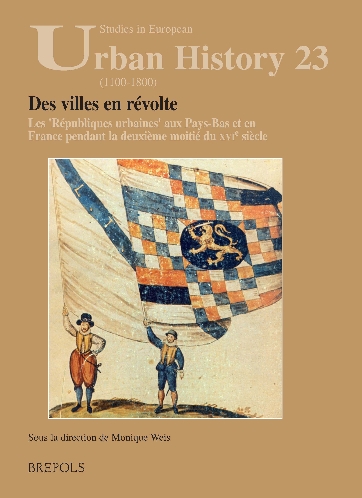
Des villes en révolte
show More to view fulltext, buy and share links for:Des villes en révolte show Less to hide fulltext, buy and share links for: Des villes en révolteEntre 1577 et 1585, plusieurs villes de Flandre et du Brabant s’instituent en des régimes insurrectionnels que les historiens désignent par le terme de ‘Républiques calvinistes’. Les anciens magistrats sont écartés des rouages du pouvoir, au profit de nouveaux conseils épris d’autonomie urbaine et proches des milieux réformés. Ces structures originales se figent peu à peu en de véritables bastions calvinistes, allant jusqu’à interdire l’exercice du culte catholique. Les assises politiques et religieuses des villes en question s’en trouvent bouleversées. Les répercussions sur la vie socio-économique et sur la production culturelle sont elles aussi multiples et profondes. La parenthèse des Républiques calvinistes se ferme en 1584/85 avec la reconquête par Alexandre Farnèse de ces avant-postes de la résistance au roi d’Espagne.
Cet ouvrage comble une lacune importante dans la recherche historique. Il met en évidence les liens étroits entre revendications religieuses, enjeux politiques et tensions sociales qui caractérisent les troubles du 16e siècle. Il replace aussi les Républiques calvinistes de Flandre et du Brabant dans une longue tradition de révoltes urbaines et d’idées républicaines. Enfin, il étend l’analyse au contexte européen plus large, en établissant des corrélations avec la France des Guerres de religion.
Monique Weis est chercheure qualifiée du Fonds national de la Recherche scientifique auprès de l’Université Libre de Bruxelles. Ses recherches et son enseignement portent sur l’histoire religieuse et l'histoire des idées en Europe du 16e au 18e siècles.
-
-
-
Fußnoten zu Augustinus: Gesammelte Schriften Wilhelm Geerlings
show More to view fulltext, buy and share links for:Fußnoten zu Augustinus: Gesammelte Schriften Wilhelm Geerlings show Less to hide fulltext, buy and share links for: Fußnoten zu Augustinus: Gesammelte Schriften Wilhelm Geerlings“The English mathematician and philosopher A. N. Whitehead described the Western tradition as follows: ‘The safest general characterization of the European philosophical tradition is that it consists of a series of footnotes to Plato.’ By way of analogy, one could state without difficulty: The history of theology in the West consists of a series of footnotes to Augustine.”
This is how Wilhelm Geerlings describes the significance of Augustine in his pithy and short book on the theologian. Just as Whitehead’s statement was not meant to diminish the achievement of later philosophers, but rather aimed at underlining the fundamental significance of Plato, Geerlings did not intend to minimize the significance of post-Augustinian theology.
Likewise, the title given to the collection of the most important articles of Wilhelm Geerlings (1941-2008), Footnotes to Augustine, is not meant to lessen the author’s contribution. It rather highlights the crucial significance of Augustine for the thought and scholarship of the theologian and historian Wilhelm Geerlings. To the general public, he is mainly known as the founder and editor of the Fontes Christiani, a series of new bilingual editions of ancient and medieval Christian sources, which, by the time of his death, comprised one hundred volumes. Furthermore, he was one of two editors of the “Lexikon der antiken christlichen Literatur”.
Georg Röwekamp, Dr. phil., is the manager and theological director of Biblische Reisen GmbH, Stuttgart.
-
-
-
La rhétorique de la prière dans l'Antiquité grecque
show More to view fulltext, buy and share links for:La rhétorique de la prière dans l'Antiquité grecque show Less to hide fulltext, buy and share links for: La rhétorique de la prière dans l'Antiquité grecqueThis volume presents a collection of papers given at the 16th Conference of the International Society for the History of Rhetoric (Strasbourg, 24-28 July 2007), two sessions of which were dedicated to Ancient Greek prayer. As a discourse addressed to the divinity, prayer raises the question of approaching gods whose presence and action cannot be guaranteed. Such a situation implies the use of oratorical strategies, as in the supplication addressed to a human being. The specifically rhetorical approach of the prayer constitutes a field which as yet has not been widely researched. These contributions form a coherent collection which testifies to the fecundity of this approach. The large palette of authors discussed in this volume range from Homer to the Church Fathers, via the tragic authors, the historians, without forgetting poets of Hellenistic and Roman times.
Johann Goeken, specialist of Greek language and literature, is associate professor at the University of Strasbourg.
-
-
-
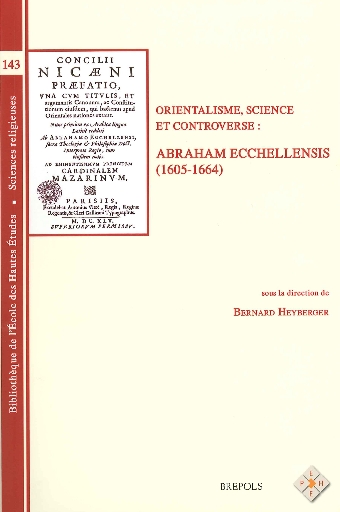
Orientalisme, science et controverse : Abraham Ecchellensis (1605-1664)
show More to view fulltext, buy and share links for:Orientalisme, science et controverse : Abraham Ecchellensis (1605-1664) show Less to hide fulltext, buy and share links for: Orientalisme, science et controverse : Abraham Ecchellensis (1605-1664)Abraham Ecchellensis (Ibrahîm Al-Hâqilânî) est sans doute le plus représentatif des chrétiens orientaux qui contribuèrent à la formation de l’orientalisme européen au xvii e siècle. Après une première éducation dans un couvent libanais, il arriva au collège maronite de Rome en 1620, où il fut très jeune reconnu pour ses talents dans l’enseignement de l’arabe et du syriaque, et dans l’expertise des questions orientales. Ses études achevées, il mena quelques aventures militaires et commerciales au service de l’emir libanais Fakhraddîn et de la croisade, en se plongeant brièvement dans les trafics méditerranéens liés à la course et au rachat des captifs. Il tenta aussi d’ouvrir un collège au Liban.
Mais c’est surtout par une carrière d’érudit qu’il se fit connaître. Ce volume s’attache moins à la biographie d’Abraham; Ecchellensis qu’à la place qu’il occupa dans la République des Lettres du xvii e siècle, entre Pise, Rome et Paris (où il enseigna au Collège Royal). Il sut bénéficier d’un réseau de protecteurs, qui estimaient sa capacité à cataloguer et publier des manuscrits, enseigner les langues, ou servir d’expert et d’interprète : Les Médicis, les Barberini, Richelieu, Mazarin et le chancelier Séguier veillèrent successivement sur sa carrière. Il fut l’ami et le collaborateur de savants de son temps, comme Jean Morin, Marin Mersenne, Lucas Holsten ou Athanase Kircher.
Il contribua aux grands chantiers intellectuels du xvii e siècle, comme la bible polyglotte de Paris et la bible arabe de Rome. Il composa des outils pour l’apprentissage de l’arabe et du syriaque. Mais il fut surtout un traducteur d’ouvrages en langues orientales. Chez lui, la controverse et l’apologétique ne se distinguaient guère de l’érudition, et il entendait mettre sa science au service de la foi catholique, contre les protestants. Mais ses origines orientales et arabophones l’amenèrent aussi à défendre la dignité des Orientaux et à valoriser leur culture face aux milieux savants européens. Il contribua à l’élaboration du « récit national » maronite et libanais. Il voulut faire connaître la « sagesse arabe » et l’intégrer dans la science européenne, en la distinguant de l’islam, qu’il ne pouvait accepter. Il collabora avec le professeur «galiléen» de Pise Giovanni Alfonso Borelli, pour traduire à partir de manuscrits arabes le traité d’Apollonius de Perga sur le Coniques.
Ses travaux érudits furent utilisés dans les controverses théologiques du second xvii e siècle. Mais, au début du xviii e siècle, la connaissance des langues orientales était suffisamment avancée en Europe pour qu’on pût se passer des « médiateurs » issus du Collège de Rome.
Bernard Heyberger, directeur d’études à l’École Pratique des Hautes Études, est professeur à l’université François-Rabelais de Tours et membre de l’Institut Universitaire de France. Ses travaux portent sur le christianisme de langue arabe et sur les relations entre le christianisme et l’islam. Il a notamment publié Les chrétiens du Proche-Orient au temps de la Réforme catholique (1994) et Hindiyya, mystique et criminelle (2001).
-
-
-
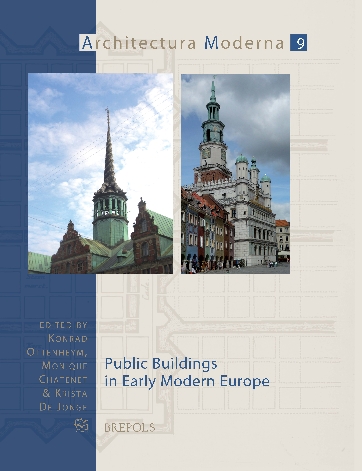
Public Buildings in Early Modern Europe
show More to view fulltext, buy and share links for:Public Buildings in Early Modern Europe show Less to hide fulltext, buy and share links for: Public Buildings in Early Modern EuropeIn the early modern European city, public buildings were the main pillars of the political, mercantile and social infrastructure. In a first attempt to create a preliminary overview of current knowledge in various European countries, the IIIe and Ve Rencontres d’Architecture Européenne, held in 2006 and 2008 at Utrecht University, The Netherlands, in cooperation with the Centre André Chastel, Paris, were dedicated to this subject. In these two meetings, architectural historians from all over Europe discussed the results of their research on the development of various types of public building in the various European regions between the late fifteenth and mid-eighteenth century. This publication brings together most of the contributions to these two conferences, subdivided into three categories:
buildings erected for government and justice
buildings serving mercantile functions
buildings for education, health and social care.
Konrad Ottenheym is professor of Architectural History at Utrecht University.
Monique Chatenet is senior researcher at the Centre André Chastel/Sorbonne Paris-IV, Paris.
Krista De Jonge is professor of Architectural History at the Catholic University Leuven.
-
-
-
Quintilien ancien et moderne
show More to view fulltext, buy and share links for:Quintilien ancien et moderne show Less to hide fulltext, buy and share links for: Quintilien ancien et moderneQuintilien (Ier s.) a souvent souffert d’être comparé à l’un de ses grands modèles, Cicéron. On ne voit fréquemment dans l’Institution oratoire qu’une pâle reprise des réflexions et des préceptes du grand philosophe et orateur de la République romaine. Pourtant, le bienveillant maître de rhétorique, dont l’èthos de père, de professeur et de citoyen a souvent séduit la postérité plus que celui de Cicéron (dont la correspondance privée avait déçu maints humanistes), a exercé à sa manière une influence très importante et trop sous-estimée dans de très nombreux domaines de notre culture : rhétorique, poétique, pédagogie, morale, histoire de l’art, théâtre … C’est ce rayonnement fécond à travers les âges que les auteurs du présent volume ont tâché de faire ressortir. La première partie de l’ouvrage, consacrée à l’Antiquité, fait le point sur les dettes de Quintilien lui-même à l’égard de ses prédécesseurs grecs, de Cicéron, et sur certains aspects fondamentaux de sa doctrine qui seront retenus en priorité : la nécessité pour l’orateur d’être un vir bonus (conviction héritée et réinterprétée par Pline le Jeune, par exemple), l’extrême pragmatisme de sa méthode d’enseignement et l’importance, pour lui, des liens entre écriture et vision. La seconde partie du volume, qui s’étend au Moyen Âge (XIIe siècle) et à la Renaissance, aborde la manière dont le rhéteur a été considéré par Jean de Salisbury et Alain de Lille (XIIe s.), puis par Pétrarque, puis a influencé les pédagogues du Quattrocento, le « grammaticus » Lorenzo Valla, a intéressé l’important imprimeur parisien Josse Bade qui l’a édité en France, a servi de modèle aux arts poétiques latins de la Renaissance, avant d’être condamné pour sa théorie des affects par Pierre de la Ramée et réinterprété au début du XVIIe s. par Pierre de Deimier pour une redéfinition « moderne » de l’inventio. La dernière partie du volume étudie la présence de Quintilien à l’Âge classique, son impact sur la définition du « classicisme » et de la clarté, sur la construction du discours, comme sur l’expression des passions en peinture, ainsi que sa récupération par les rhétoriques post-tridentines.
les auteurs / Giovanni Baffetti, Emmanuel Bury, Gualtiero Calboli, Jean Ceard, Maria Silvana Celentano, Pierre Chiron, Sophie Conte, Perrine Galand, Christophe Gutbub, Francis Goyet, Fernand Hallyn, Laure Hermand-Schebat, Volker Kapp, Jean Lecointe, Virginie Leroux, Carlos Lévy, Ida Gilda Mastrorosa, Gabriella Moretti, John Nassichuk, Mariangela Regoliosi, Alexander Roose, Florent Rouillé, Marc van der Poel, Wim Verbaal.
-
-
-
Architecturer l'invisible
show More to view fulltext, buy and share links for:Architecturer l'invisible show Less to hide fulltext, buy and share links for: Architecturer l'invisibleDes ethnologues, des hellénistes, un assyriologue, une médiéviste, conscients du risque d'ethnocentrisme que fait peser l'utilisation de la catégorie de la «présence» dans le champ du religieux, ont cependant placé cette abstraction au centre de leurs travaux : ils ont fait de la «présence» un dénominateur commun dans un large spectre de catégories comparatives que l'on a coutume d'étudier séparément, comme la divination, le sacrifice, la possession. La simple approche concrète de ce que l'on pourrait appeler «autel» dans les cultures particulières, a démontré que cet artefact rituel pouvait se réaliser indépendamment de toute procédure spécifique d'aménagement ou de construction, mais plus directement dans la gestuelle de présentation de l'offrande, animée ou inanimée ; et l'instance pouvait elle-même se réaliser sous la forme d'un autel. Simultanément, des corrélations nouvelles, rarement repérées, ont pu émerger entre des composantes du rite, faisant apparaître ici, une articulation étroite entre parole, écriture et ligature, là la récurrence de «bouches» pour faire taire, ingérer, proférer, révéler, maudire, ailleurs encore la grammaire complexe et les gestes à suivre pour les formes variées du dépôt. Les contributions se distribuent entre trois verbes d'action : ouvrir, parce que toute instauration et toute «reprise» d'un culte requièrent l'invention et la mise en place d'un commencement; œuvrer, parce que le rite fait feu de tout bois dans les manipulations qui, par métaphore ou par métonymie, construisent des lieux de mise en présence des acteurs et des instances ; écrire, parce qu'en toute performance rituelle, y compris dans les sociétés réputées sans écriture, surgissent un temps d'inscription et un temps de déchiffrement du signe, sur un support rendu efficace tant par ses qualités propres que par cette inscription même.
Michel Cartry, ethnologue de l'Afrique Noire (École Pratique des Hautes Études), Jean-Louis Durand, helléniste et anthropologue (CNRS, Centre Louis Gernet), Renée Koch Piettre, helléniste et comparatiste (École Pratique des Hautes Études), animent ensemble à Paris un groupe de travail sur les pratiques des polythéismes, en s'inspirant des travaux de Marcel Detienne. Leurs travaux croisés ont exploré les aires sacrificielles, avant de s'orienter vers la question de la «présence» des puissances de l'au-delà.
-
-
-
Art Auctions and Dealers
show More to view fulltext, buy and share links for:Art Auctions and Dealers show Less to hide fulltext, buy and share links for: Art Auctions and DealersThis collection of essays presents a status quaestionis concerning the dissemination of Flemish and Dutch art during the period 1500-1800, and highlights the role art auctions and dealers have played in this process. Auctions emerged as the primary channel for art sales at the end of the seventeenth century in the Low Countries and started a trent whereby countless local art collections were broken up and sold to the highest bidder. Especially (old master) paintings exchanged hands in great numbers at these public sales, and the finest pieces frequently ended up in foreign holdings.
The activities of the professional art dealer form the focus of several essays. These intermediaries played an instrumental role in the commercialization and expansion of the art trade in early modern Europe. They had a profound impact on the history of collecting as they mediated and even influenced taste. Naturally, the role of art dealers changed over time. Therefore, the historians, art historians and economists who contributed to this volume have approached this phenomenon in an interdisciplinary fashion in order to properly understand how art markets functioned. In doing so, these essays explore the various ways in which art dealers helped shape markets for art, and how they facilitated the increasing volume of exports of Netherlandish art from the sixteenth century onwards.
Hans Vlieghe is professor emeritus at the University of Leuven. He has published extensively on Flemish art of the 17th century, especially on Rubens and his circle.
Filip Vermeylen is assistant professor of Cultural Economics at the Erasmus University in Rotterdam. His current research focuses on the history of art markets.
Dries Lyna works at the Center for Urban History (University of Antwerp), where he is currently preparing a Ph.D. thesis on art auctions in eighteenth-century Antwerp and Brussels.
-
-
-
Art, Architecture and Religion Along the Silk Roads
show More to view fulltext, buy and share links for:Art, Architecture and Religion Along the Silk Roads show Less to hide fulltext, buy and share links for: Art, Architecture and Religion Along the Silk RoadsArt, Architecture and Religion Along the Silk Roads will be volume 12 in the Silk Road Studies series. It has been produced by the Ancient History Documentary Research Centre at Macquarie University, Australia and edited by Ken Parry, Senior Research Fellow, Department of Ancient History, Macquarie University. It consists of selected papers from the 2004 conference of the Australasian Society for Inner Asian Studies. The volume contains 14 articles of 350 pages with 40 illustrations and covers topics relating to Ancient Chorasmia, Sogdia and China, Buddhist and Manichaean art, Middle Iranian manuscripts and Buddhist manuscripts from Afghanistan, Nestorian Christianity and contemporary Islam, Silk Road clowns and headcoverings of Central Asia. The collection highlights the range and depth of Australasian scholarship on Inner Asia and demonstrates that there are still many unexplored aspects of Silk Road Studies.
-
-
-

Credit and the rural economy in North-western Europe, c. 1200-c. 1850
show More to view fulltext, buy and share links for:Credit and the rural economy in North-western Europe, c. 1200-c. 1850 show Less to hide fulltext, buy and share links for: Credit and the rural economy in North-western Europe, c. 1200-c. 1850This book retraces the nature and role of credit in the pre-industrial European countryside. As part of an ongoing examination of credit and its provision in European past societies, the nine papers collected in this volume offer further insight into the ways in which credit was provided and managed, as well as the opportunities which credit may or may not have presented in effecting economic and social change between c. 1200 and c. 1850. In these respects, the papers in this volume add to a developing investigation of the history of credit and of indebtedness in northern Europe, which also coincides with a continued interest in the structures of credit evident in studies of southern European societies. The present volume also, for a broad North Sea region, develops a concentration upon the economic and social history of credit from the late medieval period to the early nineteenth century. The themes here are deliberately focused on the nature of credit, its form and structure, as well as upon the economic and social impact of credit and the changing availability of the same.
Phillipp Schofield is Professor of Medieval History at Aberystwyth University. He has published extensively on the social, economic and demographic history of late medieval peasant society in England.
Thijs Lambrecht is postdoctoral researcher with the Research Foundation Flanders and the Department of Early Modern History at Ghent University. His research focuses on rural markets in the Southern Netherlands during the early modern period.
-
-
-
Exploring the food chain. Food production and food processing in Western Europe, 1850-1990
show More to view fulltext, buy and share links for:Exploring the food chain. Food production and food processing in Western Europe, 1850-1990 show Less to hide fulltext, buy and share links for: Exploring the food chain. Food production and food processing in Western Europe, 1850-1990Until the late 19th century the food industry was restricted to a few activities, usually based on small scale industries. The links between agriculture and food processing were very tight. Due to increased purchasing power, population growth and urbanisation, the demand for food grew substantially. This was not only the case for basis products as corn and potatoes, but also and especially for more expensive, quality products as meat, fish and dairy produce. These developments generated, together with the essential technological innovations, the creation and development of modern food processing in specialized shops and factories. In only a few decades these industries transformed from an important complement to the primary agricultural production on the farms to a much comprising industrial business. At the end of the 20th century food processing has evolved into a modern, high-tech industry, dominated by a few large enterprises, offering a wide range of products. This volume aims to turn the spotlight on this often neglected but important link in the food chain.
-
-
-
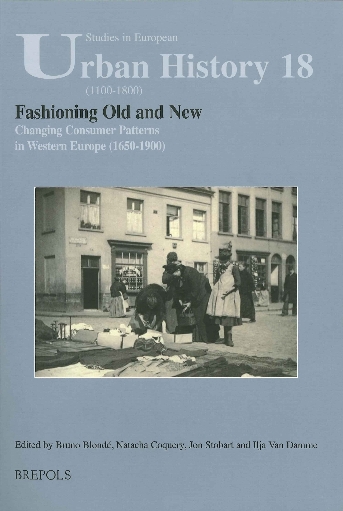
Fashioning Old and New. Changing Consumer Patterns in Europe (1650-1900)
show More to view fulltext, buy and share links for:Fashioning Old and New. Changing Consumer Patterns in Europe (1650-1900) show Less to hide fulltext, buy and share links for: Fashioning Old and New. Changing Consumer Patterns in Europe (1650-1900)A continuing ‘cry for the new’, it is said, drives present-day consumerism. People are producing and buying new goods in ever-larger quantities. However, in the past, consumer choices for new products were paralleled and even overlapped by structurally embedded practices such as re-use, recycling and resale. Unfortunately far too little is known about these important practices. The ‘birth of a consumer society’ was grounded not only in the appearance of new products and new industries; a similar drive manifested itself in the handling, buying and selling of ‘second-hand’.
In this book then the editors confront and integrate historical research on the world of the new and the old. Papers focus on the relationship between material culture and novelty, fashion and innovation on the one hand; and/or patina, second-hand and re-cycling on the other. Differences existed in the use of old and new products according to time, place, social and gender groups. By paying close attention to this historical diversity, this book explores the changing meanings and motivations of consumption. The geographical coverage will be an urban one. The studied time frame will be ‘the long eighteenth-century’ (from circa 1650 until 1900). It was only then that rapid fashion changes, new imports and spreading industrialization changed the existing material culture dramatically. However, comparisons crossing time and place do place sweeping ‘modern’ assumptions in perspective. After all: who can decipher how the concepts old and new are changing today, with the current popularity of more responsible (social and ecological) forms of consumption and recycling, and with vintage-clothing and antique furniture back en vogue?
Bruno Blondé is Research Professor at the Center for Urban History (University of Antwerp). His research interest includes urban networks, transport history and the history of consumption.
Natacha Coquery is appointed Professor at the University of Nantes. She has written extensively on the shopping and consumer habits of the French elites.
Jon Stobart is appointed professor at the University of Northampton. He has worked on urban networks and consumption in spatial perspective.
Ilja Van Damme is Postdoctoral Fellow of the Fund for Scientific Research. He has written a PhD on the interrelationships between consumer changes and retail evolutions.
-
-
-
Le shīʿisme imāmite Quarante ans après
show More to view fulltext, buy and share links for:Le shīʿisme imāmite Quarante ans après show Less to hide fulltext, buy and share links for: Le shīʿisme imāmite Quarante ans aprèsAu printemps 1968, lorsque la France et bon nombre d’endroits dans le monde étaient secoués par des mouvements de protestations socio- politiques importants, quelques grands savants se réunissaient à la vieille et prestigieuse université de Strasbourg et allaient déclencher un véritable tournant dans les études islamologiques en Occident. En eff et, pour la première fois, des chercheurs d’envergure mondiale se rencontraient dans un colloque exclusivement consacré au shī'isme imāmite. Les conférences et les discussions aboutirent à la publication d’un excellent recueil d’articles : Le shî 'isme imâmite : Colloque de Strasbourg (6-9 mai 1968), Presses Universitaires de France, Paris 1970.
Si nous avons souhaité associer le 40e anniversaire de cet événement à l’hommage que nous voulions rendre à Etan Kohlberg, c’est pour souligner le rôle majeur de ce dernier dans l’enrichissement et l’approfondissement des études consacrées au shī'isme imāmite. En eff et, l’ampleur de ses connaissances, la rigueur radicale de son érudition et ses grandes qualités humaines ont été des facteurs décisifs dans la diff usion des études shī'ites et leur transmission à travers la formation de générations entières de chercheurs.
Ainsi, ce volume d’hommage se veut un témoignage de l’essor grandissant des études shī'ites imāmites et de la dette indéniable de celles-ci aux savants réunis, il y a quarante ans, à Strasbourg, ainsi qu’à l’œuvre immense d’Etan Kohlberg.
-
-
-

Les cérémoniaux catholiques en France à l’époque moderne
show More to view fulltext, buy and share links for:Les cérémoniaux catholiques en France à l’époque moderne show Less to hide fulltext, buy and share links for: Les cérémoniaux catholiques en France à l’époque moderneOuvrage post-tridentin par excellence, le Caeremoniale episcoporum publié par Clément VIII en 1600 a engendré une importante production de cérémoniaux à usage romain, diocésain et monastique, qui s’est développée durant l’époque moderne et au-delà. Cette littérature encore non explorée systématiquement jusqu’à présent constitue une source de premier ordre pour l’histoire du culte catholique, l’histoire des pratiques et normes culturelles et, plus généralement, pour examiner l’ensemble des rapports entre Église et société. Traitant du déroulement extérieur de la liturgie, le cérémonial est censé décrire, régenter et fixer les usages d’une assemblée religieuse plus ou moins vaste ; il permet d’observer la diversité ou la régularité des pratiques, de même que les enjeux identitaires, hiérarchiques ou politiques qui se dessinent en arrière-plan. Objet riche et complexe, il offre une multitude de niveaux de lecture qui en font une source exemplaire, tant pour l’étude des diverses réalités sonores et visuelles mises en œuvre dans les sanctuaires, que pour l’approche des systèmes de représentation d’Ancien Régime. Par son caractère interdisciplinaire (sont rassemblées ici les contributions d’historiens, d’historiens du livre, de musicologues et de liturgistes), par l’expérimentation des approches et des méthodes qu’il propose, le présent ouvrage collectif ambitionne de constituer à la fois un premier bilan à partir du corpus des cérémoniaux publiés en France entre 1600 et 1800 et une introduction aux études historiques des sources liturgiques en France et en Europe.
Ouvrage dirigé par : Cécile Davy-Rigaux, chargée de recherche au CNRS à l’Institut de recherche sur le patrimoine musical en France (Centre National de la Recherche Scientifique / Bibliothèque nationale de France / Ministère de la Culture); Bernard Dompnier, professeur d’histoire moderne (Université de Clermont-Ferrand) et membre senior de l’Institut universitaire de France; Daniel-Odon Hurel, directeur de recherche au CNRS, directeur du Centre Européen de Recherches sur les Congrégations et les Ordres Religieux (CERCOR-CNRS-UMR 8584).
-
-
-
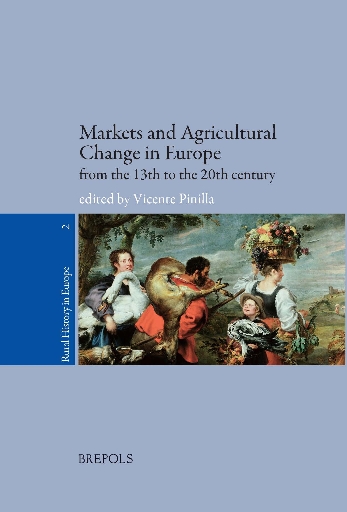
Markets and Agricultural Change in Europe from the 13th to the 20th century
show More to view fulltext, buy and share links for:Markets and Agricultural Change in Europe from the 13th to the 20th century show Less to hide fulltext, buy and share links for: Markets and Agricultural Change in Europe from the 13th to the 20th centuryThe main target of this book is to explore how the involvement of rural populations and communities in different kinds of markets (mainly for agricultural commodities) has influenced the management of rural land in Europe. Most of the papers focus on precisely what were the forces driving agricultural change in rural Europe. Although the importance of these changes were very different from the Middle Ages until the present days, a common approach that emerged was to stress the importance of urban and external markets in order to give incentives to changes in the management of rural land. The transition of agriculture and its producers, respectively, into a highly market-integrated sector and strongly market-oriented peasants formed the driving force and prima causa of European agricultural revolutions during early modern times. Expansion of market allowed for an intense process of specialization, with clear competitive advantages with respect to earlier land uses.
Vicente Pinilla, professor of Economic History at the University of Zaragoza, has published widely in the field of economic history, notably of nineteenth- and twentieth -century Spanish agriculture and international trade in agricultural products.
-
-
-
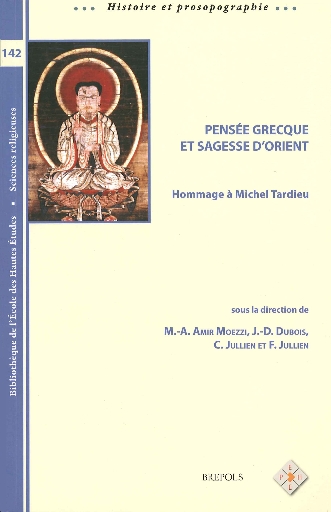
Pensée grecque et sagesse d'Orient
show More to view fulltext, buy and share links for:Pensée grecque et sagesse d'Orient show Less to hide fulltext, buy and share links for: Pensée grecque et sagesse d'OrientÀ l’occasion du 70e anniversaire de Michel Tardieu, un certain nombre d’amis et de collègues ont voulu manifester un hommage particulier à celui qui fut un maître, un ami, un professeur estimé. Cet anniversaire correspond aussi à son départ à la retraite du Collège de France. La diversité des contributions de ce volume illustre le genre de domaines qu’il s’est plu à fréquenter, tout autour du Bassin méditerranéen et dans les contrées plus lointaines de l’Orient et de l’Extrême-Orient.
Ce volume d’hommage à Michel Tardieu s’adresse aux spécialistes de l’Antiquité et du Proche-Orient ancien, aux historiens des religions ; il intéressera les historiens de la philosophie, les spécialistes des papyri magiques, des mouvements gnostiques, du manichéisme, de l’islam, du monde iranien, de l’Asie centrale, des christianismes orientaux.
Philosophe et historien des religions, Michel Tardieu entra comme chercheur au CNRS en 1972. Il occupa la direction d’études « Gnose et manichéisme » à la Section des Sciences religieuses de l’Ecole pratique des hautes études, de 1976 à 1990, et la chaire « Histoire des syncrétismes de la fin de l’Antiquité » au Collège de France, de 1990 à 2008.
-
-
-
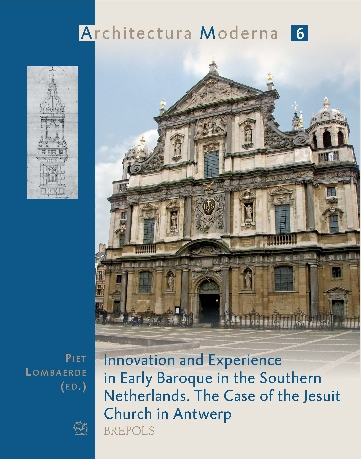
Innovation and Experience in Early Baroque in the Southern Netherlands. The Case of the Jesuit Church in Antwerp
show More to view fulltext, buy and share links for:Innovation and Experience in Early Baroque in the Southern Netherlands. The Case of the Jesuit Church in Antwerp show Less to hide fulltext, buy and share links for: Innovation and Experience in Early Baroque in the Southern Netherlands. The Case of the Jesuit Church in AntwerpDuring the sixteenth century Antwerp was at the forefront of the Renaissance north of the Alps. Not only a new architectural style flourished in the Antwerp metropolis, but at the end of the sixteenth century sciences such as mathematics, optics, geometry and perspective became more and more important. They helped to redefine architecture and the other fine arts on a more scientific base. Their introduction in the arts at the beginning of the seventeenth century lead to new experiences, applications and even innovations in architecture. The Jesuit Order played a very crucial rule in this process. The realization of their new church in the centre of the city of Antwerp became one of the first attempts to bring together the applications of all those new ideas in one total project. Paintings by Peter Paul Rubens and sculptures by Hieronymus Duquenoy, Artus Quellinus etc. were participating in one of the first Early Baroque architectural realizations in the Low Countries. The Jesuit Church of Antwerp, currently the St Carolus Borromeus Church, was designed by François d'Aguilón, a scientist and architect of the Jesuit Order. His publication Opticorum Libri sex on optics and on the reflection of light was edited by the Officina Plantiniana in 1613, the same year he started his project for the church. This scientific and theoretical work helps us to understand the new experiences with light and space he experimented with.
It is the aim of this publication to bring together researchers to confront the results of their studies about the interpretation of the façade of this Counter-Reformation church, the phenomenon of diffuse light created by reflection and refraction on marble statues, pillars and multiple ornaments, the combination of linear and parallel perspective applications, the sacral and social use of space, the signification of the façade and towers as parts of a perspective scene in the city landscape. Special attention is also devoted to the School of Mathematics, installed in Antwerp by the Jesuits at that time.
The central question will be whether we can conclude that at the beginning of the seventeenth century the innovative sense of creating a new architecture, so typical for the sixteenth century in Antwerp, still persisted in this city during the early seventeenth century, and even lead to a new interpretation of architectural space in European context.
-
-
-
L'étiologie dans la pensée antique
show More to view fulltext, buy and share links for:L'étiologie dans la pensée antique show Less to hide fulltext, buy and share links for: L'étiologie dans la pensée antiqueWhat did etiology mean to the ancients? A search for causes, an explanation, a history of origins. Greek and Roman authors thus created many sorts of narrations to explain the original meaning and value of various objects, be they institutions, rites, customs, monuments, toponyms, or even arts, such as that of rhetoric. Until now however, modern scholars have concentrated upon etiology in religion and poetry. An up-to-date synthesis of its role and function in ancient thought is lacking.
The present volume assembles the viewpoints of specialists of different genres and fields; it is meant to nourish debate by complementary contributions. Although etiology in religion and poetry maintains pride of place, it is also considered in new areas: historiography, the origin of names and the origins of rhetoric, praise, chorography and sophistic.
Over and above the diversity of the specific themes, there is convergence of method: precise source criticism, and attention to the political, intellectual, religious, and social contexts. The twenty-two studies which make up this volume throw light upon the complexity of the mechanisms of etiology and its essential role in ancient thought.
This volume results from a colloquium organized by the Center for the Analysis of the Religious Rhetorics of Antiquity (CARRA) of the University of Strasbourg, in collaboration with the Center for Ancient Studies of Laval University - Québec.
-
-
-
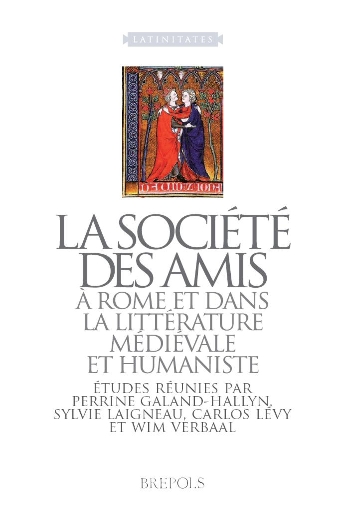
La société des amis à Rome et dans la littérature médiévale et humaniste
show More to view fulltext, buy and share links for:La société des amis à Rome et dans la littérature médiévale et humaniste show Less to hide fulltext, buy and share links for: La société des amis à Rome et dans la littérature médiévale et humanisteLe présent volume propose une réflexion diachronique et pluridisciplinaire sur la notion fondamentale d’amitié, amicitia, telle qu’elle a été théorisée et mise en pratique par les Romains, puis par leurs héritiers, au gré de l’évolution des mentalités et des institutions. Le livre que Cicéron a consacré à ce thème si important dans le fonctionnement de la société romaine, le Laelius ou De amicitia (44 av. J.-C.), fait d’abord l’objet d’études croisées, qui cherchent à définir sa structure et son aspect prescriptif, les référents d’autorité puisés dans la tradition romaine sur lesquels il s’appuie, les exemples qu’il invoque et aussi son lien avec les discours de Cicéron lui-même ou bien la manière dont un poète contemporain d’avant-garde comme Catulle a pu le lire. Une seconde partie étudie le rôle de l’« amitié » dans les codes sociaux et politiques qui régnaient à l’époque de Cicéron, puis dans l’Antiquité tardive, avant d’observer l’évolution de ces codes chez les humanistes. Une troisième partie envisage au contraire l’amicitia le cadre de la sphère privée, chez Catulle et les Élégiaques durant la République romaine et le début de l’Empire, puis à la Renaissance, entre de grands humanistes comme Politien, Budé, Lascaris, Macrin, Du Bellay et à travers le genre spécifique des Alba amicorum. La quatrième et dernière partie porte sur l’échange épistolaire conçu comme miroir de l’amitié, depuis Pline le Jeune jusqu’à l’humaniste Busbecq, en passant par Alcuin, Bernard de Clairvaux et Buchanan.
Les auteurs / Marie-Françoise André, Dominique Arrighi, Jacques-Emmanuel Bernard, Christiane Cosme, Marie-Dominique Couzinet, Blandine Cuny Le Callet, Marielle de Franchis, Évrard Delbey, Annie Dubourdieu, Carine Ferradou, Jean-Claude Julhe, Suzanne Laburthe-Guillet, Walther Ludwig, Frédéric Nau, François Prost, Luigi-Alberto Sanchi, Émilie Séris, Joëlle Soler, Ginette Vagenheim, Wim Verbaal, Étienne Wolff, Vincent Zarini
-
-
-
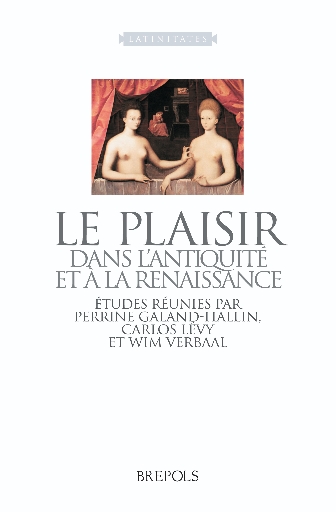
Le plaisir dans l'Antiquité et à la Renaissance
show More to view fulltext, buy and share links for:Le plaisir dans l'Antiquité et à la Renaissance show Less to hide fulltext, buy and share links for: Le plaisir dans l'Antiquité et à la RenaissanceCe premier volume de la collection Latinitates a pour but de confronter la pensée antique et celle des humanistes autour de la notion de « plaisir », la voluptas telle qu'elle apparaît dans des textes de nature différente, philosophique, historique, poétique ou romanesque. La première partie de l'ouvrage est consacrée aux lieux que les Romains ont conçus comme aptes à abriter leurs plaisirs: forêt, théâtre, Rome, villégiatures, bains, et à la manière dont les hommes de la Renaissance ont envisagé ces lieux. La seconde partie envisage la représentation antique et humaniste de la jouissance sensuelle autour de thèmes variés: la chevelure féminine, la douceur de vivre dans la Naples féconde, associée à une réflexion sur les âges de la vie, la difficulté de vivre la voluptas amoureuse. La partie trois examine la façon dont les Anciens ont cherché à réguler le plaisir et ses risques en les soumettant à des censures d'ordre divers: évocation du mos maiorum chez Catulle et Tite-Live, cadre de la militia chez Lucrèce, Cicéron et Sénèque, réflexion sur le lien entre plaisir et pouvoir impérial chez Suétone. La quatrième partie est organisée autour du De senectute de Cicéron et analyse le lien apparemment paradoxal entre plaisir et vieillesse: le philosophe redéfinit le rapport entre les âges de la vie et la jouissance, donnant de Caton, « homme de loisir et de plaisir », une image inhabituelle, réintégrant la voluptas dans les valeurs du mos maiorum; Martial, plus tard, pour réfléchir à son tour sur le plaisir et ses excès, inversera à nouveau cette image; Pétrarque, enfin, fera du Caton cicéronien, christianisé à la lumière d'Augustin, un exemplum glorifiant sa propre autobiographie.
Les auteurs / Jean-Michel Agasse, Hélène Casanova Robin, Régine Chambert, Isabelle Cogitore, Anca Dan, Marielle de Franchis, Anne Dubourdieu, Luc Duret, Perrine Galland-Hallyn, Laure Hermand-Schebat, Jean-Claude Julhe, Carlos Lévy, Ermanno Malaspina, Liza Méry, John Nassichuk, Frédéric Nau, Anne Raffarin-Dupuis, François Prost, Gilles Sauron, Émilie Séris, Wim Verbaal.
-
-
-
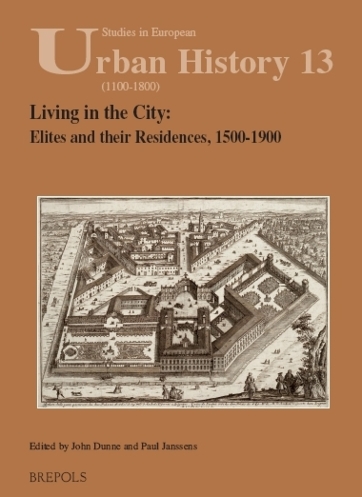
Living in the City: Elites and their Residences, 1500-1900
show More to view fulltext, buy and share links for:Living in the City: Elites and their Residences, 1500-1900 show Less to hide fulltext, buy and share links for: Living in the City: Elites and their Residences, 1500-1900The country house, château or rural palazzo set in extensive grounds may have been the ultimate badge of social pre-eminence but invariably their owners spent much of the year in the city. To this extent urban living was common to all elites worthy of the name, whatever their origin or source of wealth or power. Needless to say, though, how different elite groups experienced town life varied greatly. Focussing on the most basic aspect of urban living, this collection is concerned with the study of the places and types of residence of urban elites.
Recently a number of historians have begun to explore the residential choices made by elites in the urban context, both as an important constituent of lifestyle and as a marker of elite identity and difference. However, whereas these studies have tended to focus on one particular elite group, a single place or one type of urban residence - such as aristocratic hotels - the current volume is original in exploring the patterns and logic of residential choices made by different elite groups in a variety of urban settings, in Britain, France and Italy, from the sixteenth to the nineteenth century.
Each of the book’s nine substantive chapters is written in either English or French (with an abstract in the other language) by a leading specialist either on elites or in the field of urban history. The volume arises out of two meetings of the specialists concerned, which gives it a degree of coherence rarely achieved in collections of this sort. A substantial essay by the editors points to similarities and contrasts between the specific cases and identifies key issues requiring further research.
John Dunne is Director of Research in Humanities at the University of Greenwich. His research interests include French elites c.1780-1820 and Napoleonic government.
Paul Janssens is Professor of Early Modern History in Brussels and chairman of the Belgian 'Conseil de Noblesse'. He has written extensively on the history of the Belgian nobility.
-
-
-
Rhétorique et littérature en Europe de la fin du Moyen Âge au XVIIe siècle
show More to view fulltext, buy and share links for:Rhétorique et littérature en Europe de la fin du Moyen Âge au XVIIe siècle show Less to hide fulltext, buy and share links for: Rhétorique et littérature en Europe de la fin du Moyen Âge au XVIIe siècleDuring the Renaissance and at the beginning of the early modern times, with the origin of philology and the advent of a new knowledge linked to the development of print and the discovery of the New World, the art of dialectic, in the traditional Aristotelian sense, changes and finds new applications.
The creation of a public arena for discussions is linked to the development of the rhetorical resources as an appropriation of a history and a language inside a specific community of some authors with their own cultural and social characteristics. Meanwhile they don’t stop to insert their own works in the continuity or in the remains of the Antiquity.Because of the great events shaping the whole European history from the end of the Middle Ages until the 17th century, rhetoric is not separated from religion: every rhetorical practice is based upon the representation of the truth, the evaluation of the principles and the profession of faith.
Dominique de Courcelles is a research director at the French Center for scientific research (CNRS), UMR 5037 CERPHI
-
-
-
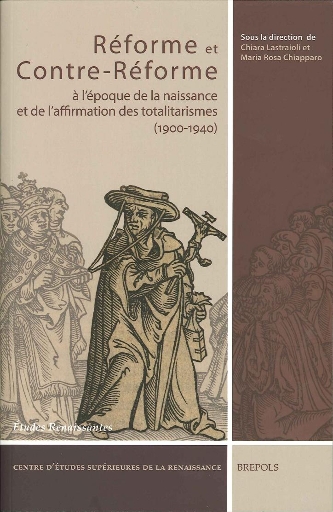
Réforme et Contre-Réforme
show More to view fulltext, buy and share links for:Réforme et Contre-Réforme show Less to hide fulltext, buy and share links for: Réforme et Contre-RéformeLa parution de L'éthique protestante et l'esprit du capitalisme (1904-1905) de Max Weber marque un moment essentiel dans la recrudescence du débat sur la Réforme et la Contre-Réforme au début du xxe siècle. En Italie, en Allemagne, en France - comme ailleurs en Europe -, l'identité confessionnelle devient l'un des caractères constitutifs de l'idéologie nationale et/ou nationaliste, ainsi qu'un élément fort de la réflexion sur le concept de modernité. De même, des phénomènes de résistance à la formation et à l'établissement des totalitarismes émergent au sein de certains groupes d'intellectuels qui rejettent l'appropriation du discours religieux par les futurs idéologues du régime. On assiste alors à un foisonnement d'études concernant l'histoire des églises et des confessions, s'interrogeant sur le développement social et étatique des nations. Les échos des ces débats auront des retombées majeures dans l'affrontement idéologique entre Europe du Nord et Europe du Sud, civilisation germanique et civilisation méditerranéenne à l'aube du dernier grand conflit mondial.
Cet ouvrage ne prétend pas apporter un regard exhaustif sur toutes les conséquences que les discussion autour de la Réforme et la Contre-Réforme ont produites dans les années 1900-1940, mais fait état des premières réflexions menées par des spécialistes de différentes disciplines sur un sujet encore peu exploré et pourtant fondamental pour l'interprétation de l'une des périodes les plus cruciales du siècle dernier.
-
-
-
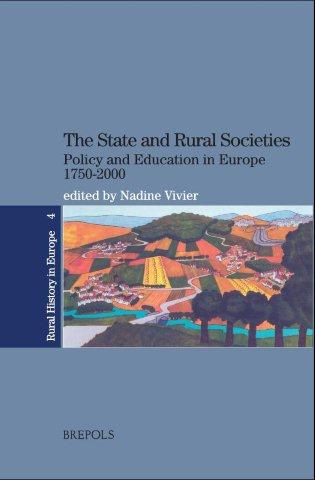
The State and Rural Societies
show More to view fulltext, buy and share links for:The State and Rural Societies show Less to hide fulltext, buy and share links for: The State and Rural SocietiesRural societies are conventionally thought to be bound by tradition and resistant to change. But from the 18th century onwards many countries began to see the countryside as the basis of national prosperity, with a healthy and increasing population, and rising agricultural output fostering general economic growth. It became an objective of the State to encourage the trend, but also to exert social control on this major part of the population in order to civilize the rude peasantry and acquire their electoral support.
This book deals with the various aspects of rural life in which the State intervened: economic matters, such as property rights and market regulations; social questions, from moral concerns to demographic policy; and the key issue of rural education.
From Sweden to the Iberian Peninsula, the United Kingdom to Hungary, and from the eighteenth century to the twentieth, using both broad surveys and in-depth studies, with an extensive introduction written from a comparative perspective, an international group of historians (brought together by the COST network A35) for the first time examine the rural concerns of the state, both economic and social, in a comparative European context.
Nadine Vivier is professor of social and economic history at the University of Maine (France). She has worked extensively on rural societies from 1750 to 2000 in France and in Europe.
-
-
-
A Platonic Pythagoras. Platonism and Pythagoreanism in the Imperial Age
show More to view fulltext, buy and share links for:A Platonic Pythagoras. Platonism and Pythagoreanism in the Imperial Age show Less to hide fulltext, buy and share links for: A Platonic Pythagoras. Platonism and Pythagoreanism in the Imperial AgeCarlos Lévy, La question de la dyade chez Philon d’Alexandrie - Francesca Calabi, Filone di Alessandria e Ecfanto. Un confronto possible - Daniel Babut, L’unité de l’Académie selon Plutarque. Notes en marge d’un débat ancien et toujours actuel - Pierluigi Donini, Tra Academia e pitagorismo. Il platonismo nel De genio Socratis di Plutarco - Christoph Helmig, The Relationship Between Forms and Numbers in Nicomachus’ Introduction to Arithmetic - Dominic O’Meara, Hearing the Harmony of the Spheres in Late Antiquity - Elena Gritti, Insegnamento pitagorico e metodo dialettico in Proclo - Alessandro Linguiti, Prospettiva pitagorica e prospettiva platonica nella filosofia della natura di Proclo - Carlos Steel, Proclus on Divine Figures. An Essay on Pythagorean-Platonic Theology
-
-
-
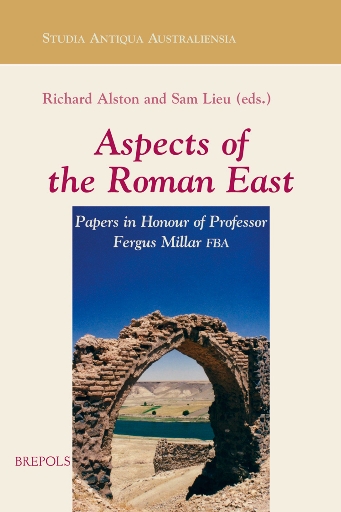
Aspects of the Roman East. Volume I
show More to view fulltext, buy and share links for:Aspects of the Roman East. Volume I show Less to hide fulltext, buy and share links for: Aspects of the Roman East. Volume IThis is the first of two volumes of papers by scholars actively engaged in the study of the Roman East in honour of Professor Fergus Millar FBA, formerly Camden Professor of Ancient History at the University of Oxford and the leading scholar of Roman History of his generation. The first volume mainly from contributors based in the Northern Hemisphere contains studies on the Roman Near East, Egypt and early Byzantium. A second volume containing papers by scholars mainly based in the Southern Hemisphere is in preparation.
-
-
-
Autour d'un petit livre. Alfred Loisy, cent ans après
show More to view fulltext, buy and share links for:Autour d'un petit livre. Alfred Loisy, cent ans après show Less to hide fulltext, buy and share links for: Autour d'un petit livre. Alfred Loisy, cent ans aprèsLe centenaire de la mise à l’Index du livre le plus célèbre d’Alfred Loisy, L’Évangile et l’Église, a entraîné en France un certain nombre de commémorations. Le colloque réuni au Collège de France et à la Sorbonne les 23 et 24 mai 2003 a voulu mesurer, en reprenant un titre de l’auteur, quelles ondes s’étaient propagées «autour d’un petit livre», et dire comment l’actualité de Loisy tient moins à la nouveauté de son exégèse qu’au mouvement spéculatif, toujours vivant, qui est issu de la prise en compte de l’histoire par la théologie chrétienne.
La visée de ce colloque fut d’abord de replacer Loisy en son temps, ce qui impliquait de situer ses prises de position par rapport à l’évolution de l’herméneutique protestante au XIXe siècle (F. Laplanche), à la philosophie de l’action développée par Blondel dans le climat du néo-kantisme français (R. Ciappa), aux normes de l’orthodoxie catholique régissant l’exégèse de la Bible (F. Beretta et C. Arnold).
Après avoir consacré plusieurs années à l’histoire des religions, Loisy revient à l’exégèse du Nouveau Testament et à l’histoire des origines chrétiennes. Plusieurs communications se sont proposé de condenser le bilan de cet apport, en examinant quelques thèmes majeurs de l’oeuvre de Loisy : son étude du sacrifice, le rite religieux par excellence (R.Koch-Piettre) ; sa vision de l’histoire d’Israël et du milieu juif au temps de Jésus (A. Sérandour et A. Lemaire); enfin, sa conception de la naissance du christianisme (F. Amsler et S. Mimouni).
Replacer Loisy en son temps, c’était aussi porter attention à ses contemporains. Le colloque a évoqué un certain nombre de personnages liés à Loisy et la réception de son oeuvre hors de France : Georges Goyau (J.Grondeux), Mgr Lacroix (Ch. Sorrel), Mgr Mignot (L.-P. Sardella), Guillaume Pouget (E.Antonello), Ernesto Buonaiuti (R. Cerrato), Franz Cumont (C. Bonnet), Maude Petre (I. Biagioli), l’Allemagne (O.Weiss), l’Espagne (A.Botti).
Marquée par son temps, l’oeuvre de Loisy en dépasse pourtant les limites et l’onde de choc qu’elle a produite voici un siècle est venue jusqu’à nous. L’exploration de cette question a été conduite par P. Colin, P. Gibert, B. Montagnes, Ch.Theobald. L’ouverture (É. Goichot) et les conclusions (É. Poulat) s’offrent comme un “panoramique” sur le “cas Loisy”.
-
-
-
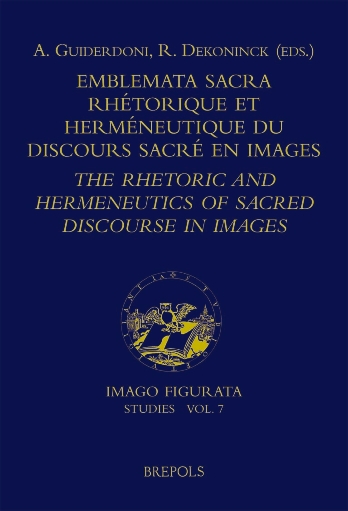
Emblemata sacra
show More to view fulltext, buy and share links for:Emblemata sacra show Less to hide fulltext, buy and share links for: Emblemata sacraThe present volume of essays, Emblemata Sacra. The Rhetoric and Hermeneutics of Illustrated Sacred Discourse, follows a conference that took place in January 2005 in Leuven and Louvain-la-Neuve, thanks to the close collaboration between the Katholieke Universiteit Leuven (Literature Department) and the Université Catholique de Louvain (the research group ‘Figures et formes de la spiritualité dans la littérature et les expressions artistiques’).The 38 essays have been organised in seven sections. The first section (‘Historical and methodological issues’) presents methodological bases for the study of emblematics and spiritual images, as well as the elements necessary for the Christian contextualisation of the corpus. The second section (‘Exegesis of the Scriptures and the Creation’), complementary to the first section, is devoted to exegetical processes developed in different contexts and seeks to emphasise the correspondence between the exegesis of Sacred Scripture and the exegesis of the Creation, which are the two central symbolisms in Christianity. The third section (‘The image in absentia’) focuses on the most critical aspect of the encounter between the Word and the Image, in the form of a paradoxical iconoclastic image, already mentioned in the first section. The fourth section (‘Rhetoric and poetics of the image’) exposes the mutual exchanges between the word of the images and the images of the word. The last three sections all deal with the uses of figures in determined contexts. Thus, the fifth section (‘The image performance’) explores staged, incarnated, and exhibited figures, while the sixth section (‘Circulation of images among different faiths’) gathers studies about different confessional contexts in which spiritual images are used to support and feed the polemics, and the seventh section (‘The efficient image’) opens up the chronology toward the 19th century and then to our own time.
-
-
-
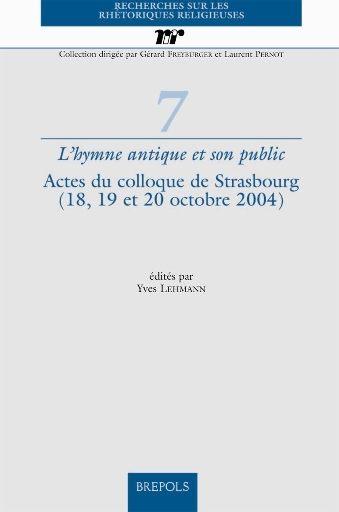
L'hymne antique et son public
show More to view fulltext, buy and share links for:L'hymne antique et son public show Less to hide fulltext, buy and share links for: L'hymne antique et son publicThe scholarly contributions which form volume 7 analyse principally the sociological aspects of the hymn in antiquity, inasmuch as this ultimate form of praise, which partakes more of a social rite than a literary genre, represents, form its origins to the Christian era, a collective celebration of people and objects by communities or groups which are both religious and civic. While there exist many studies of the place of the hymn in ancient literature, no synthetic work had yet chosen to unite - from a comparative and critical stance - all of antiquity in its component parts of Egypt, the Orient, Greece, Rome and Byzantium. What is more, the colloquium dealt also with the survival of ancient hymnic forms into the Renaissance and the 17th century. It was indeed proper to highlight the continuity, over and against the divide between Christianity and paganism, of a poetical-encomiastic tradition glorifying superior beings.
The result of a colloquium organized by the Universities of Strasbourg and Naples, The Ancient Hymn and its Audience is an ordered approach originating from a varied investigation of the permanence of a phenomenon into modern times.
-
-
-
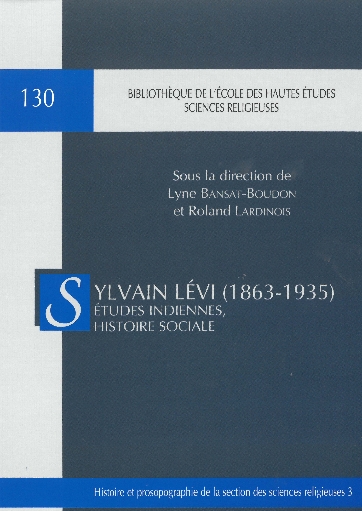
Sylvain Lévi (1863-1935). Études indiennes, histoire sociale
show More to view fulltext, buy and share links for:Sylvain Lévi (1863-1935). Études indiennes, histoire sociale show Less to hide fulltext, buy and share links for: Sylvain Lévi (1863-1935). Études indiennes, histoire socialeUn colloque international consacré à Sylvain Lévi s'est tenu à Paris, du 8 au 10 octobre 2003, sous l'égide de l'École Pratique des Hautes Études et de la Maison des Sciences de l'Homme. Le présent volume en constitue les Actes.
Directeur d'études à l'École Pratique des Hautes Études (de 1886 à 1935, à la IVe et à la Ve section) et professeur de langue et littérature sanskrites au Collège de France de 1894 à 1935, Sylvain Lévi (1863-1935) fut une haute figure de l'indianisme français, à une époque où la philologie sanskrite en était la discipline reine. Multipliant apprentissages et domaines de recherche afin d'appréhender de toutes parts la pensée indienne, il construisit une œuvre considérable, au rayonnement international. De même fut-il bâtisseur institutionnel, posant aussi bien les fondements de l'enseignement indianiste français que ceux de l'Institut de civilisation indienne, créé en 1927. Parallèlement, dans les années 1880, Sylvain Lévi rejoignit l'Alliance israélite universelle. Élu à sa présidence en 1920, il assuma cette fonction jusqu'à sa mort, en octobre 1935. Le nom de Sylvain Lévi est connu. Paradoxalement, pourtant, l'homme et l'œuvre sont aujourd'hui frappés d'un relatif oubli. Pour tenter d'y remédier, il était nécessaire d'adopter le double point de vue des études indiennes et de l'histoire sociale, tant il est vrai qu'en Sylvain Lévi se conjoignent exemplairement le savant adonné à sa recherche et l'intellectuel engagé, l'un et l'autre animés du même idéal d'humanisme et d'aspiration à l'universel.
Ainsi a-t-on relu l'œuvre indianiste et orientaliste de Sylvain Lévi, en s'efforçant d'en saisir la diversité (théâtre, littérature, études védiques, histoire des religions, bouddhisme, philologie, philosophie, histoire), et pris la mesure de son rayonnement international (Russie, Inde, Japon). On a également examiné la place qu'il occupa dans le monde intellectuel de la fin du XIXe siècle et du début du XXe, selon deux axes thématiques : les approches disciplinaires de l'orientalisme dans l'espace francophone à l'époque de Sylvain Lévi (philologie, histoire, anthropologie, sociologie); Sylvain Lévi et les milieux juifs en France, de l'Affaire Dreyfus à la Seconde Guerre mondiale.
Au terme de l'enquête, on se prend à penser qu'elle pourrait être l'effet différé de l'énergie militante que Sylvain Lévi a continûment insufflée dans ses travaux et dans sa vie. Comme on voit la roue du potier tournoyer quelque temps encore, après que la main a cessé d'en soutenir le mouvement.
-
-
-
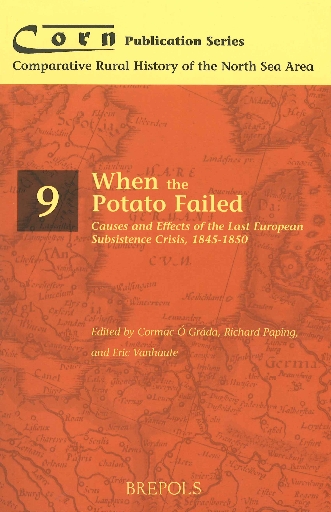
When the Potato Failed. Causes and Effects of the Last European Subsistence Crisis, 1845-1850
show More to view fulltext, buy and share links for:When the Potato Failed. Causes and Effects of the Last European Subsistence Crisis, 1845-1850 show Less to hide fulltext, buy and share links for: When the Potato Failed. Causes and Effects of the Last European Subsistence Crisis, 1845-1850The decade that gave rise to the term ‘the Hungry Forties’ in Europe is often regarded, and rightly so, as one of deprivation, unrest, and revolution. Two events, the Great Irish Famine and the various political events of ‘1848’, stand out. This book is the first to discuss the subsistence crisis of the 1840s in a truly comparative way. This subsistence crisis may be divided into two rather distinct elements. On the one hand, the failure of the potato caused by the new, unfamiliar fungus, phytophthera infestans, which first struck Europe in mid-1845, resulted in a catastrophe in Ireland that killed about one million people, and radically transformed its landscape and economy. Poor potato crops in 1845 and in the following years also resulted in significant excess mortality elsewhere in Europe. On the other hand, this period, and 1846 in particular, was also one of poor wheat and rye harvests throughout much of Europe. Failure of the grain harvest alone rarely resulted in a subsistence crisis, but the combination of poor potato and grain harvests in a single place was a lethal one. Connections between the local and the global, between the economic and the political, and between the rural and the industrial, make the crisis of the late 1840s a multi-layered one.
This book offers a comparative perspective on the causes and the effects of what is sometimes considered as the ‘last’ European subsistence crisis. It begins with an extensive introduction that treats the topic in comparative perspective. The subsistence crisis had its most catastrophic impact in Ireland, and three chapters in the current volume are concerned mainly with that country. A fourth chapter uses price data to shed comparative perspective on the crisis, while the remaining nine chapters are case studies covering countries ranging from Sweden to Spain and from Scotland to Prussia. Throughout, the contributors focus on a range of common themes, such as the extent of harvest deficits, the functioning of food markets, fertility and mortality, and public action at local and national levels.
Cormac Ó Gráda is professor of economics at University College, Dublin. He has worked extensively on the history of famines in Ireland and worldwide.
Richard Paping teaches economic and social history and economics at University of Groningen. He has done extensive research on developments in standard-of-living, economy and demography in the Netherlands.
Eric Vanhaute is professor social and economic history and world history at Ghent University. He has mainly published on the history of the rural society and of labour markets in Flanders and outside.
Table of contents:
Eric Vanhaute, Richard Paping and Cormac Ó Gráda, The European Subsistence Crisis of 1845-1850: a Comparative Perspective
PART I - The Irish Famine in an International Perspective
Cormac Ó Gráda, Ireland’s Great Famine. An overview - Mary E. Daly, Something Old and Something New. Recent Research on the Great Irish Famine - Peter M. Solar, The Crisis of the Late 1840s. What Can Be Learned From Prices? - Peter Gray, The European Food Crisis and the Relief of Irish Famine, 1845-1850
PART II - A Potato Famine Outside Ireland?
Tom M. Devine, Why the Highlands Did Not Starve. Ireland and Highland Scotland During the Potato Famine - Eric Vanhaute, “So Worthy an Example to Ireland”. The Subsistence and Industrial Crisis of 1845-1850 in Flanders - Richard Paping and Vincent Tassenaar, The Consequences of the Potato Disease in the Netherlands 1845-1860: a Regional Approach - Hans H. Bass, The Crisis in Prussia - Gunter Mahlerwein, The Consequences of the Potato Blight in South Germany - Nadine Vivier, The Crisis in France. A Memorable Crisis But Not a Potato Crisis - Jean Michel Chevet and Cormac Ó Gráda, Crisis: What Crisis? Prices and Mortality in Mid-Nineteenth Century France - Pedro Díaz Marín, Subsistence Crisis and Popular Protest in Spain. The Motines of 1847- Ingrid Henriksen, A Disaster Seen From the Periphery. The Case of Denmark - Carl-Johan Gadd, On the Edge of a Crisis: Sweden in the 1840s
-
-
-
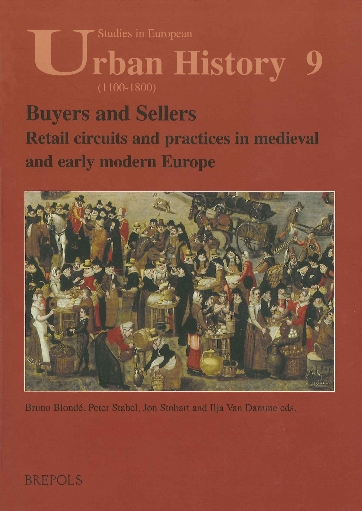
Buyers and Sellers
show More to view fulltext, buy and share links for:Buyers and Sellers show Less to hide fulltext, buy and share links for: Buyers and SellersConsumption is now a critical issue in late medieval and early modern historical and cultural studies. While we know increasingly about regulatory systems, we know much less about the daily practice of buying and selling. This book brings together contributions from urban historians, social historians and art historians to explore the issues of exchange, shopping behavior, social interactions, gender and physical space. Contributions deal with Italy, the Low Countries and England.In the articles in this volume lines of continuity between the medieval and early modern period have been stressed. In addition, some critical questions have been raised. Were markets necessarily less "modern" compared to "fixed shops"? How did changing consumers and consumer patterns interact with the retailer? The essays published here also emphasize the need to study different commercial circuits in their context. These circuits often overlapped and could not artificially be isolated from one another.
-
-
-
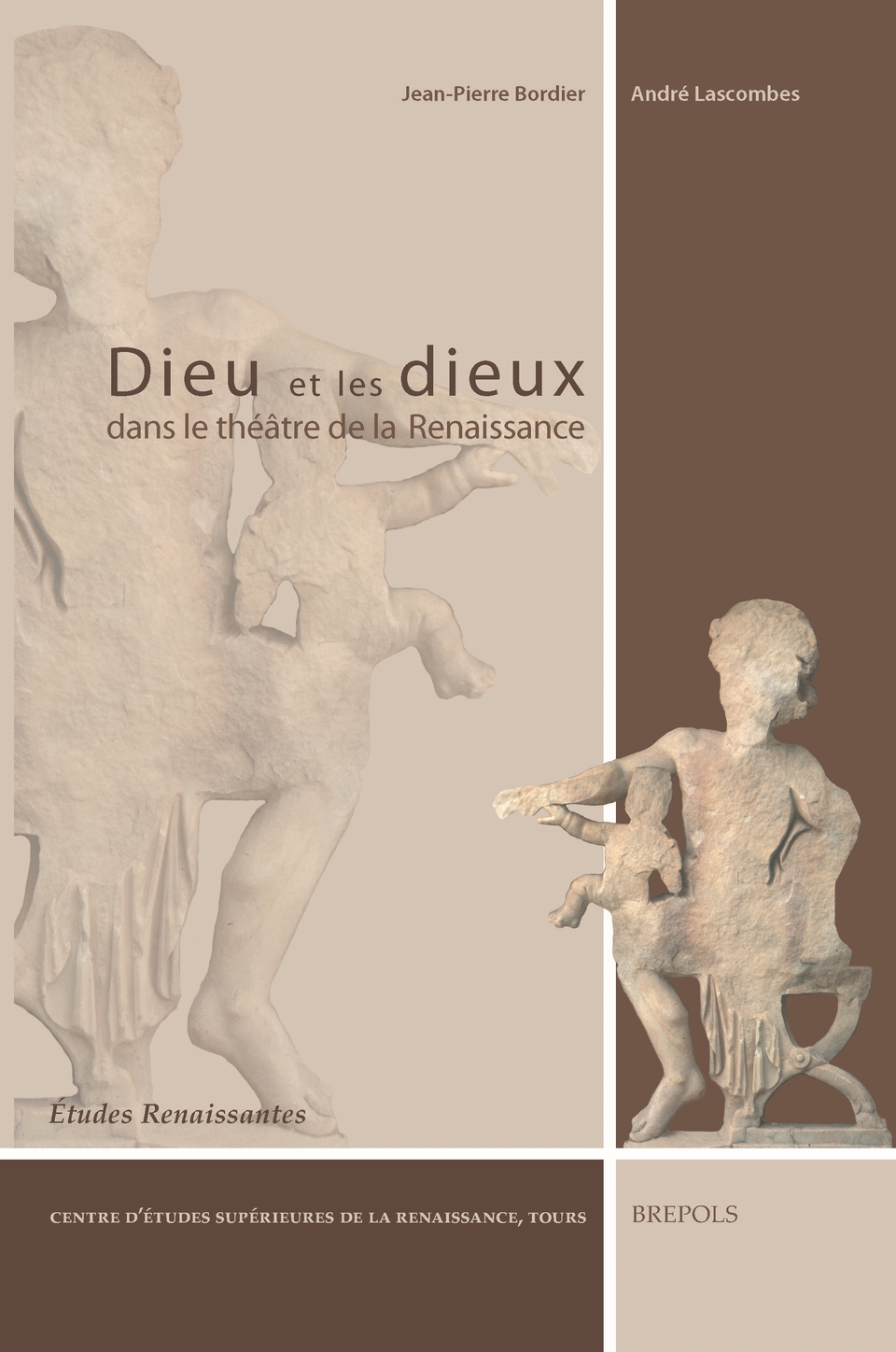
Dieu et les dieux dans le théâtre de la Renaissance
show More to view fulltext, buy and share links for:Dieu et les dieux dans le théâtre de la Renaissance show Less to hide fulltext, buy and share links for: Dieu et les dieux dans le théâtre de la RenaissanceDu mystère et de la moralité à la tragédie et à l’auto en passant par la sacra rappresentazione et le spectacle de cour, le théâtre de la Renaissance subit une mutation profonde que la figuration et le rôle de la divinité font apparaître avec une évidence particulière. Les auteurs de mystères n’éprouvent aucun scrupule à confier à des acteurs le rôle de Dieu, non seulement celui du Christ mais encore celui du Père ou même du Dieu-Trinité. Informée par la réflexion théologique sur l’image, la figuration théâtrale de Dieu en fait ressortir les lignes de force. Elle rencontre la tradition iconographique sans se confondre avec elle, si bien que la question ancienne de l’influence réciproque entre théâtre et arts plastiques s’en trouve dépassée. Dans la tragédie, le rôle de Dieu, de sa mémoire et de sa colère, mais aussi de son amour rédempteur, pèse sur les hommes, leurs actes et leur destin, mais comme personnage Dieu lui-même s’absente de la scène. Les dieux ne le remplacent pas. Ni destinateurs, ni metteurs en scène, ils signifient autre chose qu’eux-mêmes. Ils servent les desseins religieux et politiques des dramaturges, se plient à leurs préoccupations civiques, astrologiques et scientifiques, morales et philosophiques. Les trente-quatre communications rassemblées dans ce volume, précédées d’un essai de F. Boespflug, s’intéressent aussi bien aux modalités techniques de la représentation scénique du divin qu’à ses enjeux littéraires, spirituels et sociaux. Elles touchent toutes les aires linguistiques de l’Europe occidentale, du Portugal à l’Allemagne, de l’Angleterre à l’Italie sans oublier les tragédies latines. Rappelant que le théâtre est à la fois une entreprise artistique et un moyen de communicaiton de masse, elles permettent de cerner les identités locales et les déchirements confessionnels ou nationaux dans l’unité contestée de l’Europe. Elles renouvellent la dialectique de la continuité et de la rupture que l’historiographie de la Renaissance ne cesse de remodeler.
Le Centre d’Études Supérieures de la Renaissance, créé à Tours en 1956, est un laboratoire de recherche (UMR 6576 du CNRS, Université François-Rabelais de Tours) qui propose des publications concernant la période allant des débuts de l’humanisme jusqu’au milieu du xviie siècle européen. Ses équipes et ses axes de recherche témoignent d’une dimension interdisciplinaire dont cette collection est le reflet : histoire, histoire de l’art (peinture, architecture, iconographie), histoire du livre, langues et littératures européennes, philosophie, musicologie, histoire des idées, des sciences et des techniques.
La collection « Études Renaissantes » offre des monographies et des recueils collectifs destinés à approfondir la réflexion sur les mutations, les enrichissements et les crises caractéristiques de l’époque. Elle a pour ambition d’éclairer les grands courants intellectuels, techniques et artistiques qui inscrivent cette période de la civilisation européenne dans un cadre mondial.
-
-
-
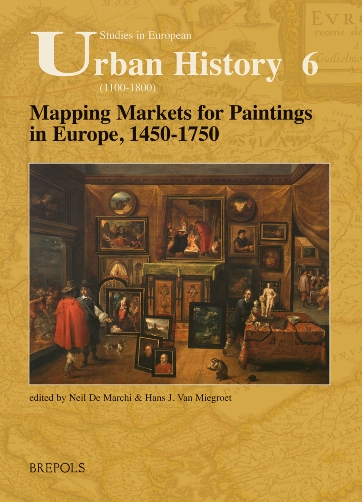
Mapping Markets for Paintings in Europe, 1450-1750
show More to view fulltext, buy and share links for:Mapping Markets for Paintings in Europe, 1450-1750 show Less to hide fulltext, buy and share links for: Mapping Markets for Paintings in Europe, 1450-1750Over the course of the fifteenth century easel paintings edged out tapestries, frescoes and wood inlay pictures on the walls of private dwellings. Millions of such paintings were produced in the period 1450-1800, in all shapes and sizes, and across the whole range of prices. Who bought them? How were they distributed? What place did they occupy among other "luxury" possessions? Such questions seem to require that visual culture be treated as an integral part of family spending and commercial pursuits. This volume is the outcome of a four-year collaboration between art historians, economists, social historians and museum professionals from the US, Australia and Europe; its aim was to map the new ground identified by these and related questions, in local contexts, but with comparative and longitudinal concerns constantly in mind. The result is an entirely new matrix of the business and artistic interactions through which visual cultures in early modern Europe were formed. The editors, Neil De Marchi and Hans J. Van Miegroet, an economist and an art historian, have collaborated across their disciplines for ten years. Here they have interspersed participants' essays with brief connecting observations, to produce a text that respects disciplinary expertise while making connections across locations and across time. Much has been written about European paintings; but how markets in paintings emerged, who they served, what roles and institutions were developed that enabled them to function effectively, and how exchange affected visual preferences, have not been studied in such a deliberately wide-angled, comparative way. Mapping Markets is not only a book about paintings, but a compendium of cross-disciplinary methods and insights. It charts the state of research in this trans-disciplinary field, identifies gaps, and poses questions for scholars and students wishing to pursue further the issues raised here.
-
-
-
Pierre Geoltrain, ou Comment "faire l'histoire" des religions ?
show More to view fulltext, buy and share links for:Pierre Geoltrain, ou Comment "faire l'histoire" des religions ? show Less to hide fulltext, buy and share links for: Pierre Geoltrain, ou Comment "faire l'histoire" des religions ?Le volume est dédié à la mémoire de Pierre Geoltrain, fondateur de la chaire des «origines du christianisme» à la Section des sciences religieuses de l'École Pratique des Hautes Études. La première partie offre un choix d'articles de l'historien illustrant la polymathie et le caractère pionnier de ses recherches, ainsi qu'une épistémologie dont la démarche sceptique n'interdit pas l'assurance sur les faits fondamentaux: concernant les origines du christianisme, sa constitution comme dissidence herméneutique du judaïsme scripturaire. Un essai d'un des éditeurs explicite les principes ayant guidé la pratique scientifique de l'historien. Principalement consacrées, bien sûr, au premier christianisme, les contributions de collègues et de disciples réunies dans la seconde partie prolongent les chantiers et spéculations scientifiques de Pierre Geoltrain. Un intermède littéraire répond aux échappées qui, dans ses séminaires, manifestaient son intérêt sensible mais distancié pour la fable. Les contributions de la dernière partie font écho au dialogue que l'historien entretenait avec d'autres disciplines: philosophie, théologie et anthropologie. En guise de postface, Pierre Legendre lui dédie ses réflexions anthropologiques sur la Bible comme «emblème monothéiste».
Ont contribué à cet hommage collectif : Olivier Abel (Faculté de théologie protestante de Paris), Serge Bardet (Université d'Evry), Marianne Carbonnier-Burckhardt (Faculté de théologie protestante de Paris), Luigi Cirillo (Institut universitaire oriental de Naples), Corina Combet Galland (Faculté de théologie protestante de Paris), Jean-Daniel Dubois (École Pratique des Hautes Études), Pierre Gisel (Université de Lausanne), Pierre Legendre (École Pratique des Hautes Études), Simon C. Mimouni (École Pratique des Hautes Études), Jean-Noël Pérès (Faculté de théologie protestante de Paris), Pierluigi Piovanelli (Université d'Ottawa), Stéphane Ruspoli (Atlanta), John Scheid (Collège de France), Matthieu Smyth (Université de Lausanne), Françoise Smyth-Florentin (Faculté de Théologie protestante de Paris), Isabelle Ullern-Weité (Centre d'Études des Religions du Livre), Sarah Vajda (écrivain, Paris), Liliane Vana (École Pratique des Hautes Études).
-
-
-

Rural history in the North Sea area. An overview of recent research (Middle Ages - beginning twentieth century)
show More to view fulltext, buy and share links for:Rural history in the North Sea area. An overview of recent research (Middle Ages - beginning twentieth century) show Less to hide fulltext, buy and share links for: Rural history in the North Sea area. An overview of recent research (Middle Ages - beginning twentieth century)This volume describes the outlines of the 'state of the art' in the field of rural history for countries such as England, the Netherlands, Belgium, Germany and Northern France. The contributing authors, all outstanding specialists in the field, present an overview of the most important publications regarding the areas covered. They also point to the most important research topics as well as indicating the most important lacunae in the field of rural history during the last decades. The original texts of this book formed the basis of the international research group CORN, which studies the economic development of the Northern European countryside in a comparative way. The regional monographs are preceded by a short methodological introduction concerning the comparative methods used by this network as well as the possible pitfalls and problems.
-
-
-
Antiquité tardive et humanisme: de Tertullien à Beatus Rhenanus
show More to view fulltext, buy and share links for:Antiquité tardive et humanisme: de Tertullien à Beatus Rhenanus show Less to hide fulltext, buy and share links for: Antiquité tardive et humanisme: de Tertullien à Beatus RhenanusAu total, 29 études rédigées par des philologues de réputation internationale, précédées d'un avant-propos et d'une introduction et suivies d'un index général ainsi que d'une table des matières, 550 p. Les contributions scientifiques des divers coauteurs ressortissent aux deux domaines de spécialité du dédicataire : d'une part les littératures antiques du IIIe au VIe siècles, de l'autre le mouvement intellectuel et spirituel de la Renaissance. Mais, outre les articles afférents à ces deux axes de recherche privilégiés, les miscellanées en l'honneur de F. Heim accueillent aussi des essais transversaux sur la réception des auteurs tardifs - tant chrétiens que païens - par les humanistes européens des XVe, XVIe et XVIIe siècles.
-
-
-
From Palmyra to Zayton: Epigraphy and Iconography
show More to view fulltext, buy and share links for:From Palmyra to Zayton: Epigraphy and Iconography show Less to hide fulltext, buy and share links for: From Palmyra to Zayton: Epigraphy and IconographyThis volume highlights research by Australian scholars on two major Silk Road cities: Palmyra in Syria - long regarded as the finest example of a "Caravan City" - and Quanzhou (Zayton) in South China which was the destination of the main Maritime Silk Road between Medieval China and the Middle East. The volume exhibits for the first time in a western language publication and in full colour the unique iconography of the Nestorian Christian community in South China under Mongol rule. This material is virtually unknown to western scholars and will be of major importance to the study of the eastward diffusion of Christianity and of East-West contact in the period of Marco Polo. The volume also contains one of the largest collections of Palmyrene inscriptions (Aramaic, Greek, Latin and Hebrew) in English translations with accompanying original texts and detailed analytical indices. The selection focuses on politics and trade but also gives representative texts of almost all genres of Palmyrene inscriptions. The volume should prove indispensable to scholars of East-West contacts and of Roman History given the role played by Palmyra under Zenobia in the Crisis of the Third Century.
-
-
-
Hans Vredeman De Vries And The Artes Mechanicae Revisited
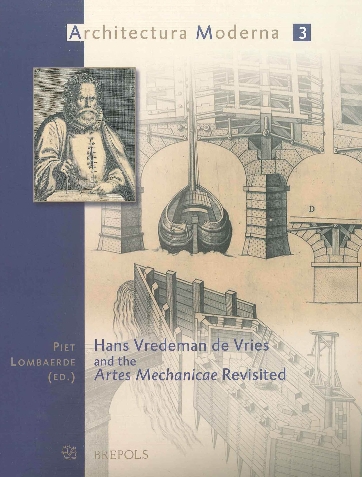
show More to view fulltext, buy and share links for:Hans Vredeman De Vries And The Artes Mechanicae Revisited show Less to hide fulltext, buy and share links for: Hans Vredeman De Vries And The Artes Mechanicae RevisitedIn this publication, attention is devoted to the technical aspects in the work of Hans Vredeman de Vries. Throughout his long career, he has perfected his skills as a painter, architect, fortification engineer and hydraulic engineer. Those technical aspects are considered not so much as discrete characteristics, but rather as a particular way in which this late sixteenth- century artist from the Low Countries typically dealt with a number of disciplines of the technical and applied arts. Indeed, from a predominantly traditional approach to his work, too much emphasis has until now been placed on his highly personal contribution to the dissemination of ornamental elements, whereby typical Renaissance characteristics, such as technical innovation and engineering, are relegated to the background.
During Hans Vredeman de Vries's lifetime, attempts began to be made to define the arts and the sciences. Defining the demarcation criteria of the sciences would continue to gain in importance especially at the beginning of the seventeenth century. With his work, Vredeman de Vries raised Architectura together with all its technical acquisitions to the level of both the Artes and the Scienciae. Attempts were even made to establish some kind of hierarchy. Yet the artist never strictly separated fine and applied arts, nor did he explicitly distinguish between theory and practice. It was the intention of Vredeman de Vries to aim towards an equilibrium between the sciences and the arts. A team of thirteen distinguished art and architectural historians from North America, Germany, the Netherlands and Belgium focus upon Vredeman de Vries's diverse manifestations of knowledge: urbanism, fortification works, hydraulics, interior decoration, architecture (its practical and technical aspects), inlay work and furniture, tapestry and the use of scientific instruments. One author points out that the similarity between such 'technical' practices and the structure of, for example, sixteenth-century rhetorical practices, forces us to consider Vredeman de Vries not simply as an architect, an engineer, or a designer, but above all as an experimenter in multiple disciplines and various fields.
-
-
-
Henry Corbin. Philosophies et sagesses des religions du Livre
show More to view fulltext, buy and share links for:Henry Corbin. Philosophies et sagesses des religions du Livre show Less to hide fulltext, buy and share links for: Henry Corbin. Philosophies et sagesses des religions du LivreLe présent volume regroupe les communications données lors du colloque tenu en Sorbonne les 6-8 novembre 2003 à l'occasion du centenaire de la naissance de Henry Corbin. Il s'agissait à cette occasion de rendre hommage à ce grand penseur non pas par une suite stérile d'éloges, mais en poursuivant les lignes de réflexions sur la philosophie et les religions qu'il avait si généreusement ouvertes. Une grande partie de l'oeuvre de Corbin a concerné la pensée islamique classique. Tout naturellement, plusieurs intervenants ont donc approfondi ou précisé certaines voies par lui tracées: son approche du chiisme duodécimain (Mohammad Ali Amir-Moezzi), de l'ismaélisme (Daniel de Smet, Guy Monnot), de la mystique persane (Paul Ballanfat, Charles-Henri de Fouchécour), du soufisme d'Ibn 'Arabî (Michel Chodkiewicz). Toutefois, la réflexion sur des points de religions non musulmanes, également stimulés par Henry Corbin, a trouvé sa place ici: la christologie ancienne (Simon Mimouni; Gerard Wiegers), la spiritualité du judaïsme (Paul Fenton, Maria Subtelny). Enfin, c'est la pensée philosophique tout court qui s'est trouvé fécondée par les apports de Corbin. C'est ce qu'illustrent les réflexions de Christian Jambet sur l'histoire, de Jean-Michel Hirt sur la psychanalyse, de Hermann Landolt sur l'avicennisme, de Jean-François Marquet sur "la science de l'unique", de James Morris sur la transmission de la science des religions, de Jean-Louis Vieillard-Baron sur l'hégélianisme.
Ce colloque ne constituait qu'un premier pas dans l'approfondissement de cette véritable " quête philosophique " à laquelle invitait l'oeuvre de Henry Corbin. D'autres manifestations scientifiques ont eu lieu dans le même esprit en Europe, au Proche Orient. Elles unissent beaucoup de ceux qui, à la suite de Corbin, voient dans la philosophie un engagement de tout le regard sur l'être.
Mohammad Ali AMIR-MOEZZI est directeur d'études à la Section des Sciences religieuses de l'École Pratique des Hautes Études, où il est titulaire de la chaire "Exégèse et théologie de l'Islam chiite". Il est l'auteur de plusieurs ouvrages, et a notamment coordonné Le voyage initiatique en terre d'Islam. Ascensions célestes et itinéraires spirituels, paru en 1997 dans la collection de la Bibliothèque de l'Ecole Pratique des Hautes Etudes.
Christian JAMBET, professeur en khâgne au Lycée Jules Ferry, est l'auteur de nombreux ouvrages sur la philosophie ( La logique des Orientaux - Henry Corbin et la science des formes, 1983), et en particulier sur la philosophie islamique. Il a coordonné le volume Henry Corbin publié en 1981 (L'Herne) ainsi que de nombreux textes posthumes de Henry Corbin.
Pierre LORY est directeur d'études à la Section des Sciences religieuses de l'École Pratique des Hautes Études (chaire "Mystique musulmane"). Il a publié plusieurs ouvrages sur la mystique et l'ésotérisme en Islam, notamment Alchimie et mystique en terre d'Islam, et édité le recueil de textes de Henry Corbin L'alchimie comme art hiératique(1987).
-
-
-
L'écriture du croyant
show More to view fulltext, buy and share links for:L'écriture du croyant show Less to hide fulltext, buy and share links for: L'écriture du croyantL'individu tient une place privilégiée dans l'historiographie actuelle. Ce sont ses rapports avec la religion qui constituent l'objet des communications publiées dans ce recueil. Correspondances, journaux intimes, notes prises à l'issue de sermons ou à l'occasion de lectures furent mis à profit pour tenter de saisir comment la religion était vécue, au jour le jour, par les fidèles, catholiques ou protestants. Leur plume prend trois chemins, a-priori séparés mais qui, tous, aboutissent à une expression, plus ou moins explicite, de leur foi. Les correspondances sont riches d'enseignements, échanges de nouvelles, interrogations sur les grands choix d'une vie ou manifestation d'une inquiétude face à la mort, elles traduisent le souci de partager les doutes ou les certitudes, appel au correspondant pour l'entraîner dans la sphère du personnel et de l'intime. Mais l'écriture du croyant se glisse dans des recoins encore plus cachés. Bien sûr, ce sont les testaments mais aussi des notes relevant de l'immédiat, phrases jetées sur le papier pour conjurer le destin, aider la mémoire ou la prière. Les récits de vie sont plus amples, justification de comportements et d'itinéraires. On écrit pour expliquer une conversion, présenter un voyage, retracer une expérience lors d'une tourmente, pour louer un «maître» ou, tout simplement, pour tenter de résumer une vie. Le croyant se penche alors sur son existence pour y découvrir une direction, une progression vers un approfondissement de sa foi. La collecte de ces témoignages est pour nous, historiens du XXIe siècle, au-delà des hommes étudiés, un moyen d'approcher de ce que fut le religieux au début des Temps Modernes.
-
-
-
La cuisine et l'autel
show More to view fulltext, buy and share links for:La cuisine et l'autel show Less to hide fulltext, buy and share links for: La cuisine et l'autelEn 1979, La cuisine du sacrifice en pays grec renouvelait la question du sacrifice en l'introduisant dans le registre de l'alimentation carnée. En 2005, La cuisine et l'autelpropose une démarche comparative entre sociétés en contact. L'ouvrage étend les recherches sur le sacrifice à d'autres cultures de la Méditerranée ancienne, explore les évolutions jusqu'aux premiers siècles du christianisme, et revisite certaines oppositions admises entre sacrifice sanglant et offrande végétale, entre sociétés polythéistes et sociétés monothéistes. Le sacrifice est-il introuvable en Égypte ancienne ? Quelle définition tirer de ses formes et de ses noms multiples en Grèce ou dans le judaïsme ? À Rome comme ailleurs, est-ce bien une "destruction" sacrificielle qu'il faut articuler avec le partage et la convivialité ? Comment dénier la violence du geste sacrificiel et la voracité des dieux ? Quand et selon quelles étapes l'empire romain a-t-il progressivement interdit les sacrifices, et qu'est-il resté de ces rites dans le néoplatonisme, quelle distorsion ont-ils subi avec le christianisme ? Ce sont quelques-unes des questions que ce livre examine dans le détail des cérémonies sacrificielles et de leurs transformations, passant de l'hommage à l'aumône, de la flamme des autels à l'étal des bouchers, de la place que le rite aménage aux dieux à l'élimination rituelle des déchets consacrés.
L'ouvrage est présenté par Stella Georgoudi (EPHE, chaire "Institutions religieuses des cités grecques"), Renée Koch Piettre (EPHE, chaire "Historiographie et épistémologie des sciences des religions") et Francis Schmidt (EPHE, chaire "Histoire du judaïsme à l'époque hellénistique et romaine"). Tous trois enseignent à l'École Pratique des Hautes Études et animent ensemble un séminaire de recherches comparées sur les sociétés et les religions de la Méditerranée ancienne.
-
-
-
Land, Shops and Kitchens: Technology and the Food Chain in Twentieth-Century Europe
show More to view fulltext, buy and share links for:Land, Shops and Kitchens: Technology and the Food Chain in Twentieth-Century Europe show Less to hide fulltext, buy and share links for: Land, Shops and Kitchens: Technology and the Food Chain in Twentieth-Century EuropeThe book discusses the concept of the food chain from a new perspective, emphasising the historical dimension and conflicts. The inclusion of technology, as a core element, is an original approach to food studies. Thus, technology is related to agricultural production, packaging, transport and storing, wholesale and retailing, catering, and cooking. Also, the so-called middle field, such as political interference, farmers' education and scientific concerns, is addressed. This book pays attention to the history of agriculture, including such varied themes as water supply, fertilisers, land use, greenhouses, and EU policy. It tackles the history of shopping, cooking, health concerns, and fast food eating-places. Technology is not taken for granted, but seen as a field of conflict (action, reaction, and negotiation, perhaps best cast with the opposition fast food versus slow food). The concept of the food chain necessitates to consider all these elements as a whole, and to present them in one, integrated volume.
-
-
-
Nommer les dieux
show More to view fulltext, buy and share links for:Nommer les dieux show Less to hide fulltext, buy and share links for: Nommer les dieuxAdvances in the modern interpretation of myth and in the history of ancient religion in general have radically modified our ways of studying the names and the naming of the gods. Two avenues of research notably are current today : the relationship between the narration of the myth and the name (all « speaking » names tell a story) and the necessity for the faithful to identify, to distinguish and to name the divine, in polytheisms naturally, but also in monotheisms. Can the name of a god be only a label? Calling (for help), singing (in praise), invoking (with others), calling to witness (as a guarantee), all involve this important act of identification, a recognition, in the heart of a process which seems more complex than it appeared to be at first glance.
The fact that this identification is made in common (and in community) draws attention to another methodological requirement. Beyond the signified « divine entity » lie the language act and its context, which are part of the naming : this means that its linguistic and social aspects must be taken into consideration.
By its treatment of the Greek and Roman religions, but also, in the interest of a comparatist point of view, the Egyptian religion (under the pharaohs and the Ptolemies), Oscan-speakers, Judaism and Christianism, by its treatment of texts, literary and other, in prose and in poetry, papyri, inscriptions, vascular graffiti, the present book opens new perspectives through the meeting of rhetoric and religion.
The result of two colloquia organised by the Universities of Rennes, of Strasbourg, and of Naples, Naming the Gods is a book which has been carefully constructed and thought out through time ; it promises to be a landmark.
-
-
-
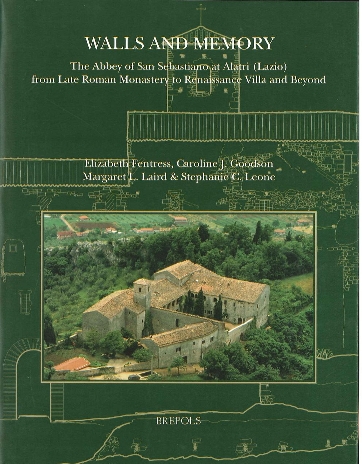
Walls and Memory: The Abbey of San Sebastiano at Alatri (Lazio), from Late Roman Monastery to Renaissance Villa and Beyond
show More to view fulltext, buy and share links for:Walls and Memory: The Abbey of San Sebastiano at Alatri (Lazio), from Late Roman Monastery to Renaissance Villa and Beyond show Less to hide fulltext, buy and share links for: Walls and Memory: The Abbey of San Sebastiano at Alatri (Lazio), from Late Roman Monastery to Renaissance Villa and BeyondThe abbey of San Sebastiano, which lies not far from the town of Alatri in Southern Lazio, preserves within its walls almost fifteen hundred years of history. This history is unusually bound to a number of important figures, from Saint Benedict to Pope Nicholas V and his circle of humanists. For the past four years a small team has been investigating the extant structures of the abbey, analyzing the stratigraphy of the standing walls and tracing the various building phases. The study has produced some startling discoveries: the plan and preserved walls of one of the oldest monasteries in Europe, and one of the earliest Renaissance villas. The book gives an account of the architecture and the history of the building, showing how each phase relates to the last both structurally and thematically.
The project was initiated at the American Academy in Rome, where Elizabeth Fentress was Andrew Mellon Professor, and Caroline Goodson, Margaret L. Laird and Stephanie C. Leone were Fellows. Margaret Laird and Stephanie Leone are now assistant professors at the University of Washington, Seattle and at Boston College. Other contributors include Caroline Bruzelius, Professor of the History of Art at Duke University, Antonio Manfredi, Vatican Library, Serena Romano, Professor of the History of Art at the University of Lausanne, Marco Rossi, director of the Museum of Alatri, and Ingrid Rowland, Andrew Mellon Professor at the American Academy in Rome.
-
-
-
La question de l'athéisme au 17e siecle
show More to view fulltext, buy and share links for:La question de l'athéisme au 17e siecle show Less to hide fulltext, buy and share links for: La question de l'athéisme au 17e siecleLe dix-septième siècle souffre de sa majesté: tout en lui semble grand, en particulier le savoir et la pensée dominés par les imposants systèmes philosophiques et théologiques. Pourtant, ce siècle n’est pas moins riche que le précédent en minores inventifs, en expériences de pensée ponctuelles mais fécondes, qui structurent, en tous domaines, le savoir et la paideia des hommes de façon non moins solide et durable que les grandes constructions théoriques auxquelles nous sommes habituellement renvoyés. Les Styles du savoir visent à corriger cet effet de mirement qui affecte la compréhension de ce siècle, en insistant sur un certain nombre des notions et de textes oubliés, négligés, méconnus qui s’avèrent pourtant fondamentaux pour la constitution des savoirs et des institutions à l’âge classique. En republiant des textes aujourd’hui inaccessibles et en proposant aux lecteurs des essais peu soucieux des frontières tracées par les interprétations dominantes, cette collection se propose ainsi de dessiner les contours d’un « autre » dix-septième siècle.
-
-
-
Landholding and Land Transfer in the North Sea Area (Late Middle Ages - 19th Century)
show More to view fulltext, buy and share links for:Landholding and Land Transfer in the North Sea Area (Late Middle Ages - 19th Century) show Less to hide fulltext, buy and share links for: Landholding and Land Transfer in the North Sea Area (Late Middle Ages - 19th Century)For a better understanding of medieval and early modern rural society, in which land was the principal source of income and investment, as well as a most prestigious object of possession and a solid base of power, historical questions on landholding and land transfers are highly relevant. This volume aims to clarify some long-standing issues concerning the large variety of land tenure and non-familial transfers of land in the North Sea area by treating them from a regional - if possible comparative - perspective and by linking them to such structural features of preindustrial rural society as shifts in land to labour ratio's; social property relations; commercialisation and the rise of land, leasehold, and credit markets; the growth of state intervention and the institutional innovation that followed in its wake; the sustained prevalence of local or regional customary law; and the effects of social and cultural values on the demand for land. From viewing the later medieval and early modern period as a whole, one has to conclude that the mobility of agricultural land markedly increased. This was due first and foremost to the establishment of clear-cut private property rights, to the expansion of land and credit markets, and to the spread of short-term leasing. Differences in the pace of capitalist development as well as of state formation were mainly responsible for outspoken regional differences.
-
-
-
Le protestantisme évangélique, un christianisme de conversion
show More to view fulltext, buy and share links for:Le protestantisme évangélique, un christianisme de conversion show Less to hide fulltext, buy and share links for: Le protestantisme évangélique, un christianisme de conversion« Tu peux naître de nouveau ». Cette profession de foi chantée résonne dans des milliers de temples et assemblées évangéliques, du Brésil à la Russie, des États-Unis à la Corée du Sud. Inspirée d’un passage biblique de l’Évangile de Jean, elle synthétise une culture protestante spécifique, centralisée sur la conversion, le biblicisme, le choix personnel, l’engagement dans des groupements volontaires caractérisés par un ethos intramondain. À l’heure où la religion privilégie les modes du pèlerin et du converti, les quelque 200 millions de protestants évangéliques - au moins le double si l’on intègre la nébuleuse pentecôtiste/charismatique - attirent l’attention. Mais on les connaît mal. Seule une approche collective, croisée, internationale peut tenter d’apporter l’éclairage attendu. Tel est l’objet de ce volume. Il est le fruit d’un colloque international organisé du 14 au 16 mars 2002 par le Groupe de Sociologie des Religions et de laLaïcité, en partenariat avec le Centre National de la Recherche Scientifique et la Section des sciences religieuses de l’École Pratiquedes Hautes Études (Sorbonne).
L’enjeu de la conversion en milieu protestant évangélique, entre « ruptures et filiations », a fourni la problématique centrale. Par définition, la conversion introduit une certaine rupture. La validation du croire passerait beaucoup moins par « la lignée croyante » (Danièle Hervieu-Léger) que par « l’inscription dans un milieu croyant » (Jean-Paul Willaime), au prix d’un arrachement aux identités traditionnelles. Mais cette euphémisation de l’héritage n’élimine pas la question des continuités. Les ruptures augurées, en principe, par la conversion, semblent bien s’accompagner de diverses filiations combinées avec de nouveaux types de liens - transnationaux, associatifs et militants -, qui interrogent les sociétés sécularisées.
Autour de cette problématique, trois orientations ont été privilégiées : le souci d’un état de la question, d’où l’imposante bibliographie de 955 titres centralisée en fin de volume, la priorité donnée à l’axe transatlantique, et une approche du phénomène évangélique dans toute sa diversité (des mennonites à l’Église Universelle du Royaume de Dieu). Sur cette base, les quatre chapitres renvoient aux thématiques principales du colloque : à une mise en perspective historique (1) succède l’analyse des dynamiques transnationales (2), de l’enjeu social de la conversion (3) et du rapport ambigu de ce protestantisme à la sécularisation (4).
Sous la direction de Sébastien Fath, ce volume rassemble les contributions des dix-sept auteurs suivants : Laurent Amiotte Suchet, Nancy Ammerman (États-Unis), Paulo Barrera (Brésil), Jean Baubérot, David Bebbington (Grande Bretagne), Lucia Bergamasco, Neal Blough, Steve Bruce (Grande Bretagne), Sébastien Fath, Paul Freston (Brésil), Jean-Claude Girondin, Danièle Hervieu-Léger, Mark Noll (États-Unis), Sylvie Pédron-Colombani, Fabienne Randaxhe, Leonildo Silveira-Campos (Brésil), Jean-Paul Willaime.
-
-
-
À la recherche des villes saintes
show More to view fulltext, buy and share links for:À la recherche des villes saintes show Less to hide fulltext, buy and share links for: À la recherche des villes saintesEn un temps où la sainteté traditionnellement attribuée à certaines villes continue plus que jamais d’être alléguée par les guerriers de tout bord, les sciences des religions ne peuvent éluder les questions qu’elle soulève. Le colloque d’où ce livre est issu se proposait de confronter les analyses de situations particulières, menées selon les méthodes de l’histoire, de la philologie, de l’ethnologie et de l’anthropologie, en élargissant l’examen à d’autres cultures que celles des religions dites du Livre, sans négliger celles-ci. Les auteurs des études réunies ici sont à la recherche de concepts opératoires, à distance du discours de la dévotion. Ils sont aussi à la recherche des formes infiniment variées de la sanctification des villes à des époques différentes, sous le regard, proche ou lointain, des habitants et des exilés, sous l’emprise, conquérante ou déçue, des pouvoirs qui s’érigent sur la sacralité des lieux et des communautés qui préservent ou s’inventent des identités en pérennisant des héritages ou en se les appropriant. Ils offrent des exemples bons à penser au lecteur qui est à la recherche, au moyen de la comparaison, tant des traits communs que des divergences. Un tel voyageur passe sept fois par Jérusalem et perçoit les métamorphoses de sa sainteté, telle qu’elle est codifiée à l’ère hellénistique (A. van der Kooij) et institutionnalisée en diaspora dans le monde gréco-romain (J. Tromp) ; telle qu’elle est menacée de mort au moment de la ruine du temple (S. Mimouni, M.-J. Pierre) ; rêvée et remodelée, à la fois évanescente et tangible, dans l’exil médiéval (J.-C. Attias) ; confortée pour les chrétiens du XVIe siècle par ce qui leur paraît l’humiliation de la ville, ses blessures devenant les stigmates de sa gloire (M.-C. Gomez-Géraud) ; jumelée avec La Mecque par la réflexion cosmogonique et eschatologique des mystiques musulmans (P. Lory). Le cas de La Mecque et de Médine aide à construire une typologie moderne (G. A. Wiegers) et à penser le rapport entre ville sainte et territoire sacré (H. Benkheira). La vénération pour Axoum dans l’Éthiopie chrétienne fait converger motivations religieuses et politiques (G. Lusini). À Rome, l’hagiographie martyriale part à la conquête du bastion polythéiste (P. Boulhol). D’autres rivalités se dessinent dans la mythologie des peuples du Mexique ancien qui ont tiré leur prestige de Cholula (M. Graulich). L’Inde, c’est à la fois le tout autre et le même : la sainteté des villes y est placée sous le signe de la fluidité (M.-L. Reiniche). Partout se vérifie et s’annihile le lamento paradoxal de Baudelaire : « La forme d’une ville change plus vite, hélas ! que le cœur d’un mortel ».
Directeur d’études à la Section des sciences religieuses de l’École pratique des hautes études où il est titulaire de la chaire « Patristique et histoire des dogmes », Alain Le Boulluec consacre ses recherches aux doctrines des Pères grecs des premiers siècles et à leur exégèse de la Septante. Auteur d'un ouvrage en deux volumes sur la notion d'hérésie (Paris, 1985), il publie les oeuvres de Clément d'Alexandrie dans la collection « Sources chrétiennes » (Stromates V et VII, en 1981 et 1997) et collabore à l'entreprise « La Bible d'Alexandrie » (t. 2, Exode, en 1989, avec P. Sandevoir), tout en étudiant la littérature apocryphe chrétienne (écrits pseudo-clémentins).
-
-
-
Laïcités-démocraties. Des relations ambiguës
show More to view fulltext, buy and share links for:Laïcités-démocraties. Des relations ambiguës show Less to hide fulltext, buy and share links for: Laïcités-démocraties. Des relations ambiguësComment concevoir les relations laïcité-démocratie alors que se transforment les espaces politiques et religieux au gré de logiques de globalisation, de modernisation et d'échanges transnationaux ? Telle est la perspective explorée lors du colloque "Laïcités, religions et démocraties" organisé par le Groupe de Sociologie des Religions et de la Laïcité (CNRS-EPHE). On a souhaité retracer, par le présent ouvrage, ces rencontres qui ont privilégié la possibilité de comparaisons par la présentation de terrains contrastés, européens et extra-européens.
Les contrastes mis en lumière font valoir des "modèles-types" d'évolution des rapports Eglises-Etats dans la société tels que la laïcisation ou la sécularisation, dont seraient respectivement emblématiques la France et le Danemark, des "particularités nationales" à l'image d'un "pacte laïque" français, d'une cohabitation confessionnelle à l'allemande, ou encore d'un Etat juif en Israël, "d'altérités historiques" telles que l'émergence possible d'une "laïcité musulmane" en terre d'Islam ou, en Russie, la durable pensée des alternatives politiques en des termes manichéens et religieux entravant la constitution du politique en une sphère autonome.
Divers sont les chemins que peuvent emprunter les modèles de relations Eglises/Etats, la place et le rôle de la religion dans la société, le statut des groupes religieux et des croyants dans leur rapport à la citoyenneté. Confronter sur ces thèmes les expériences nationales de différents pays conduit à constater l'absence de modèles universalisables, tant au plan empirique qu'interprétatif. Plus de démocratie ne veut pas forcément dire plus de laïcité et, a contrario, plus de laïcité n'est pas la garantie d'une plus grande démocratie. Certaines sociétés se coulent dans un lent processus de sécularisation sans heurts politiques frontaux alors que d'autres privilégient les différents modèles étatiques plus autoritaires et volontaristes de laïcisation. L'image souvent fantasmée d'une laïcité moderne idéal-typique et universelle, consacrant la définitive et stricte séparation entre sphère religieuse privée et sphère politique publique, ne résiste donc pas à l'étude des cas particuliers.
-
-
-
Les communautés religieuses dans le monde gréco-romain. Essais de définition
show More to view fulltext, buy and share links for:Les communautés religieuses dans le monde gréco-romain. Essais de définition show Less to hide fulltext, buy and share links for: Les communautés religieuses dans le monde gréco-romain. Essais de définitionLe monde antique classique, "polythéiste" et "monothéiste", était organisé sur une base communautaire. La cité romaine des Quirites n'est-elle pas la communauté des citoyens / co-uirites ? Les groupements pouvaient prendre des formes diverses, ainsi que l'indique la diversité des vocables employés pour les désigner. Dans ce contexte, les communautés "religieuses" présentaient-elles une spécificité? Supporté par le Centre d'études des religions du Livre (Unité mixte de recherche EPHE-CNRS), un groupe de chercheurs a posé la question de la définition de ces communautés, restée encore ambiguë. Nourrie par la réflexion collective, l'introduction s'attache à dresser un panorama des éléments - considérés comme des 'marqueurs' - sur lesquels se fonderait cette spécificité. Le premier volet : "Enquête d'une définition" illustre le débat scientifique ; en parcourant la variété des cultures du monde romain, les contributions mettent en lumière la difficulté à découvrir cette spécificité, tant dans le vocabulaire que dans les structures d'organisation. Le second volet : "Quelques tests sur les 'marqueurs' d'une communauté religieuse" met à l'épreuve cet essai de définition en examinant diverses communautés (juives, chrétiennes et manichéennes).
Directrice d'études à la Section des sciences religieuses de l'École Pratique des Hautes Études (chaire "Religions de Rome et du monde romain"), Nicole Belayche étudie les religiosités et rituels païens dans le monde romain pour éclairer les relations entre les cultures religieuses, polythéistes et monothéistes, dans la partie orientale de l'Empire. Elle a notamment publié Iudaea-Palaestina. The Pagan Cults in Roman Palestine (Second to Fourth Century), Tübingen, 2001 (Religion der Römischen Provinzen 1).
Directeur d'études à la Section des sciences religieuses de l'École Pratique des Hautes Études où il est titulaire de la chaire "Origines du christianisme", Simon Claude Mimouni étudie depuis plusieurs années l'histoire de la formation du mouvement des disciples de Jésus dans et hors du judaïsme au I er et au II e siècles. Il est depuis plusieurs années directeur de la Revue des études juives fondée en 1880 ainsi que de la "Collection de la revue des études juives".
-
-
-
Les mutations contemporaines du religieux
show More to view fulltext, buy and share links for:Les mutations contemporaines du religieux show Less to hide fulltext, buy and share links for: Les mutations contemporaines du religieuxLe rôle d'acteur social du religieux avait été considérablement affaibli au lendemain de la Seconde guerre mondiale, sans avoir totalement disparu. Pour bien des raisons, il réapparaît dans la dernière décennie du vingtième siècle et au début de ce troisième millénaire. Il convenait de dresser un état des lieux, essentiellement en Europe. Il appartenait à Philippe Portier, Bérengère Massignon et Micheline Milot de présenter le statut du "fait religieux" - et l'identité laïque - en France, dans les institutions européennes et au Canada (Québec). Le paysage religieux a ensuite été exploré par des études précises et pertinentes : le catholicisme par la recomposition des sociabilités paroissiales (Olivier Bobineau), le protestantisme par la vitalité des églises évangéliques (Sébastien Fath), l'islam par le rapport du fondamentalisme à la loi islamique (Mohammed Hocine Benkheira), l'hindouisme par son expansion missionnaire en Europe (Véronique Altglas), le bouddhisme par l'exemple du mouvement Soka Gakkaï (Louis Hourmant).
Le tableau des mutations religieuses contemporaines qui se dégage des contributions ici rassemblées présente quatre traits essentiels: 1) les mutations du religieux, liées aux mutations du politique, entraînent des recompositions de la laïcité elle-même; 2) les traditions religieuses, loin de se réduire à des oppositions frontales avec la modernité, évoluent et se transforment au contact même de cette modernité; 3) la mondialisation a des effets non négligeables dans le domaine religieux ; 4) un trait marquant du religieux en ultramodernité réside dans son individualisation croissante.
Ce volume rassemble les contributions présentées à un colloque organisé à la Fondation Singer-Polignac par Jean-Robert Armogathe et Jean-Paul Willaime, Directeurs d'études à l’École Pratique des Hautes Etudes (Sciences religieuses), Sorbonne.
-
-
-
Multicultural science in the Ottoman empire
show More to view fulltext, buy and share links for:Multicultural science in the Ottoman empire show Less to hide fulltext, buy and share links for: Multicultural science in the Ottoman empireThis book contains research papers related to the scientific activities in the Ottoman Empire which comprise various scientific traditions, including the Islamic tradition inherited by the Ottoman Turks and carried on by the Arabs, who were part of the Empire and then joined by European peoples, such as the Bosnians and Albanians newly converted to Islam ; as well as the tradition of different Christian peoples living in Anatolia and the Balkans, (e.g. the Greek Colleges where “ new ” science was taught), and the contributions of native Jewish scholars as well as those who emigrated from Andalusia. The Ottoman world had the necessary grounds for the interaction of all these different traditions. The Ottoman Empire held vast lands in Europe and, as a result of the contact with European science from the very early ages, the new scientific European tradition spread in the Ottoman lands for the first time outside its own cultural environment where it originated.
The Ottoman Empire gave rise to 29 national states in Europe, the Middle East and North Africa. The Ottomans both depended on the previously established Turkish-Islamic scientific tradition and at the same time engaged in attempts to transfer the new technologies and sciences that developed in the Western world. The new European science and technology was also adopted very early by the followers of the Enlightenment and later by those of Nationalism among the non muslim populations of the Empire, and of course by the national states originated from this Empire.
All these aspects about the nature of science in the Ottoman Empire and the complex network of scientific and educational relations of the various populations in this Empire and the national states which followed, as well as the relations between the science of these populations and these new states and Europe, have been discussed in these papers almost for the first time.
-
-
-
Mundus Emblematicus
show More to view fulltext, buy and share links for:Mundus Emblematicus show Less to hide fulltext, buy and share links for: Mundus EmblematicusThe thirteen articles in this volume deal with the Neo-Latin emblem book after the birth of the genre with Andrea Alciato’s Emblematum libellus (1531). While the interest in emblematics has grown considerably during the last decades, the seminal Neo-Latin production has received relatively little attention. In Mundus Emblematicus an international team of experts in the field makes this part of the emblem tradition accessible to a broad scholarly audience. The articles cover a variety of emblem books published at the time, ranging from influential humanist collections (for instance those by Achille Bocchi, Hadrianus Junius, or Joachim Camerarius) to alchemist (Michael Maier) or religious emblems (such as the books of the Calvinist Théodere de Bèze, or the Jesuit Herman Hugo). In each paper subjects dealt with include the historical context of the work and its makers, the relation between word and image, the structure of the collection as a whole, and the emblematic game (intertextuality in word and image). Moreover, several articles explore the interaction between the emblem and connected literary phenomena, like the commonplace-book, the fable or the use of commentaries. All papers are in English and all examples from Latin texts are translated.
Together, these articles show the variety within the Neo-Latin emblem production, thus challenging traditional approaches of the emblem. As such Mundus Emblematicus contributes towards a more comprehensive view of the forms and functions of the genre as a whole
-
-
-
Alchemy, Chemistry and Pharmacy
show More to view fulltext, buy and share links for:Alchemy, Chemistry and Pharmacy show Less to hide fulltext, buy and share links for: Alchemy, Chemistry and PharmacyThis volume consists of two parts. The first deals with alchemy and prelavoisian chemistry with papers on Democritus, Christine of Pizan, van Helmont, de Clave, Matte La Faveur, Marie Meurdrac and Galvani. The second part includes papers on chemistry in the 20th century in its political, academic and industrial context.
-
-
-
Apocryphité. Histoire d'un concept transversal aux religions du Livre
show More to view fulltext, buy and share links for:Apocryphité. Histoire d'un concept transversal aux religions du Livre show Less to hide fulltext, buy and share links for: Apocryphité. Histoire d'un concept transversal aux religions du LivreAu point de départ, le concept d’apocryphité suppose le concept de canonicité. C’est donc d’abord la constitution d’un corpus d’écrits dits canonisés qui génère ensuite de diverses manières une littérature définie comme apocryphe. Le concept d’apocryphité repose donc apparemment sur une simple équation - il est le produit d’un autre concept, celui de la canonicité. Même s’il convient de ne pas généraliser à tous les cas un tel paramètre, c’est, semble-t-il, une évidence. Ce phénomène a touché l’ensemble des religions dites du Livre au sens actuel de l’expression qui est bien large, mais aussi les religions grecques et romaines de l’Antiquité dans lesquelles la constitution de corpus a entraîné la formation d’une frange apocryphe. En la matière, ce qui se passe dans le christianisme provient évidemment du judaïsme, mais se déroule aussi, sous des formes plus ou moins similaires, dans le mazdéisme et le manichéisme.
Cet ouvrage, qui est le fruit d’un projet collectif du Centre d’études des religions du Livre (Unité mixte de recherche EPHE-CNRS), concerne non seulement les antiquisants et les médiévistes, mais aussi les modernistes. C’est aux XVIe et XVIIe siècles, en effet, que certains corpus d’apocryphes chrétiens, non des moindres, ont pris forme.
-
-
-
Biological and Medical Sciences
show More to view fulltext, buy and share links for:Biological and Medical Sciences show Less to hide fulltext, buy and share links for: Biological and Medical SciencesThis volume begins with an essential and unpublished text of the late Mirko D. Grmek (1924-2000) on rising diseases. A set of 34 papers deals with the most diverse aspects of biological and medical sciences : biology in the classical age, natural history and world exploration, pathologies, medicine, hygiene, physiology, biochemistry and biotechnologies.
-
-
-
Engineering and Engineers
show More to view fulltext, buy and share links for:Engineering and Engineers show Less to hide fulltext, buy and share links for: Engineering and EngineersThis volume is devoted to the history of engineers from the 16th to the 20th century. It begins with two general papers, the first one by M. Duffy on the nature of engineering, the other by E. Knob loch on engineers of the Renaissance and their illustrated manuscripts. The other papers deal with the training of engineers, their methods, and role in the international technological transfers as well as the biography of some famous engineers.
-
-
-
History of Modern Physics
show More to view fulltext, buy and share links for:History of Modern Physics show Less to hide fulltext, buy and share links for: History of Modern PhysicsAddressing modern physics in its largest perspective, the present volume, which includes 34 contributions, begins with a reappraisal of classical science. However, the stress is placed on the contemporary period with sections devoted to thermodynamics and mechanics, the centenary of the electron, Einstein, the quantum theory and particle physics.
-
-
-
Institutions and Societies for Teaching, Research and Popularisation
show More to view fulltext, buy and share links for:Institutions and Societies for Teaching, Research and Popularisation show Less to hide fulltext, buy and share links for: Institutions and Societies for Teaching, Research and PopularisationThis volume is devoted to scientific institutions from the 17th to the 20th century. It consists of three parts: the first deals with teaching and research institutions (universities, technical schools, foundations); the second is about scholarly societies (academies, amateur societies, industrial societies); the last deals with scientific popularisation initiatives, notably those of newspapers. Several papers concern the role of women in scientific communities.
-
-
-
Materials: Research, Development and Applications
show More to view fulltext, buy and share links for:Materials: Research, Development and Applications show Less to hide fulltext, buy and share links for: Materials: Research, Development and ApplicationsThe theme of materials in the history of technology has never been as well researched as other more popular areas like energy, production technology or transport and communication. The present collection of papers originating from the symposium on "Materials: Science, Technology and Early Applications" in conjunction with the xx th International History of Science Congress in Liège, 1997, make a contribution to remedying this unsatisfactory situation. They concentrate on the 19th and 20th centuries and range from research on the metallurgy of zinc in the late 18th and early 19th century to the prospects of ceramic materials to ameliorate contemporary environmental problems.
-
-
-
Nomads, Traders and Holy Men Along China's Silk Road
show More to view fulltext, buy and share links for:Nomads, Traders and Holy Men Along China's Silk Road show Less to hide fulltext, buy and share links for: Nomads, Traders and Holy Men Along China's Silk RoadThis collection of papers formed part of the symposium, “Nomads, Traders and Holy Men Along China’s Silk Road”, held at the Asia Society in New York on November 9-10, 2001. Although the Silk Road has inspired several important museum exhibitions, none had focused on the Hexi Corridor nor attempted to analyze the complexity of the cross-cultural relationships within China’s borders. Nor had any exhibition focused on the nearly four hundred years of political disunity, nomadic incursions and social upheaval, brought about by the collapse of the great Han dynasty (206 B.C.E.-220 C.E.), that then, after a series of short-lived dynasties, culminated in the reunification of China under the Tang empire (618-906).
-
-
-
Science and Technology in the Islamic World
show More to view fulltext, buy and share links for:Science and Technology in the Islamic World show Less to hide fulltext, buy and share links for: Science and Technology in the Islamic WorldThis volume provides a comprehensive overview of current researches on science in the Muslim-Arab world. The papers deal with the religious and institutional context, mathematics, optics, astronomy, mechanics, natural philosophy, and pharmacology.
The present volume also includes a general author index of the 21 volumes that make up the proceedings of the xxth International Congress of History of Science.
-
-
-
Science, Philosophy and Music
show More to view fulltext, buy and share links for:Science, Philosophy and Music show Less to hide fulltext, buy and share links for: Science, Philosophy and MusicThis volume illustrates the old and fruitful dialogue between historians of science and philosophers, as well as new collaborations with artists. It includes two symposia. The first one is on the history of scientific models, the seond is on science and music. It also contains papers on the philosophy of mathematics, physics, technology and politics, but also on Aristotle, Lucretius, Bacon, Le Bon, Spengler, Reichenbach, and Kuhn.
-
-
-
Scientific Instruments and Museums
show More to view fulltext, buy and share links for:Scientific Instruments and Museums show Less to hide fulltext, buy and share links for: Scientific Instruments and MuseumsThe present volume is organised around two symposia of the XXth International Congress of History of Science, respectively devoted to the history of sundials and to the national inventories of scientific instruments. Separate studies on outstanding instruments, instrument-makers, as well as unknown museums and collections in Spain, Italy, Estonia, and Latin-America were also included.
-
-
-
Studies in History of Mathematics Dedicated to A.P. Youschkevitch
show More to view fulltext, buy and share links for:Studies in History of Mathematics Dedicated to A.P. Youschkevitch show Less to hide fulltext, buy and share links for: Studies in History of Mathematics Dedicated to A.P. YouschkevitchIn the framework of the 20th International Congress of History of Science (Liège 1997), a symposium was devoted to the historical work of Adolph P. Youschkevitch (1906-1993). The present volume includes the papers read during the symposium as well as contributions on current issues in the history of mathematics : mathematics as a cultural strength, mathematics from antiquity to the classical period, probability theory and its applications, mathematics in the 19th and 20th centuries.
-
-
-
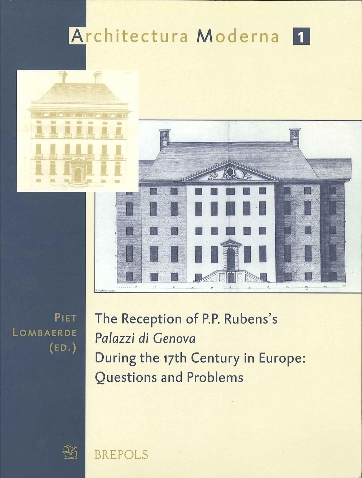
The Reception of P.P. Rubens's 'Palazzi di Genova' during the 17th Century in Europe: Questions and Problems
show More to view fulltext, buy and share links for:The Reception of P.P. Rubens's 'Palazzi di Genova' during the 17th Century in Europe: Questions and Problems show Less to hide fulltext, buy and share links for: The Reception of P.P. Rubens's 'Palazzi di Genova' during the 17th Century in Europe: Questions and ProblemsRubens' book 'Palazzi di Genova' was well diffused in European countries as England, the Netherlands, France, Germany and Italy thanks to the numerous contacts the famous painter and diplomat maintained in humanistic, artistic and political circles. From 1622 on this book, containing two volumes, was edited at several times during the 17th and 18th Century. But the direct influences of the numerous façades, plans, cross-sections, staircases and building details on modern architecture look rather limited, especially in his own country. In this study, several scholars in architectural history analyse how the examples of Genoese palazzi and churches as presented by Rubens were accepted in different European countries. Much attention is given to the question if these examples inspired a new architectural typology, in which the inner court of the houses was substituted by a 'salone in mezzo'. An attempt is made to situate Rubens' book among the late 16th and early 17th Century treatises and model books. The way in which Rubens presented the new Genoese architecture of villa's, palaces and churches and the introduction he wrote as a 'painter-architect' to this book were so modern at that time, that the reception of this prestigious edition in folio had more to do with changes in considering architectural theory and practice as with the propagation of a late renaissance style influenced by Antique examples.
-
-
-
The management of common land in north west Europe, c. 1500-1850
show More to view fulltext, buy and share links for:The management of common land in north west Europe, c. 1500-1850 show Less to hide fulltext, buy and share links for: The management of common land in north west Europe, c. 1500-1850Until the 19th century very large areas of Western Europe were subject to some degree to common rights, where individual users collectively managed resources such as pasture and wood which were central to the agrarian economy. Much scholarship has focused on the dissolution of these rights and the effects of the enclosure of common land on society and agricultural productivity. In contrast, this volume seeks to assess in a comparative framework the long-term management of the common lands and the relative success of strategies in providing the resources sought by the rural population. Chapters covering northern and southern England, France, the Netherlands, Flanders, Sweden and northern and southern Germany examine the institutional and legal framework of commoning, the resources available and their value, the sustainability of practices, and policies of inclusion and exclusion among the group of commoners. Building on the theoretical insights of recent works on commonly managed resources, this volume, the result of an international collaboration in the CORN network, provides a series of detailed historical studies and is the first major work to address this central aspect of the agrarian economy in a comparative European context.
-
-
-
Beatus Rhenanus (1485-1547), lecteur et éditeur des textes anciens
show More to view fulltext, buy and share links for:Beatus Rhenanus (1485-1547), lecteur et éditeur des textes anciens show Less to hide fulltext, buy and share links for: Beatus Rhenanus (1485-1547), lecteur et éditeur des textes anciensLe but du colloque était de décrire, d'analyser et d'évaluer la contribution éditoriale et exégétique de Rhenanus. Les 23 études ont été disposées de manière chronologique pour faciliter l'analyse de son évolution philologique, question qui a été au centre des débats. Les conférenciers ont bénéficié d'une documentation de choix, car ils ont le plus souvent travaillé sur les textes personnels de Rhenanus provenant de sa bibliothèque conservée à Sélestat.
Les Actes intéresseront quatre domaines de recherches : l'étude de la transmission des textes des auteurs grecs et latins, leur critique textuelle et exégétique, les techniques éditoriales au XVI siècle et la nature de l'humanisme.
-
-
-
Emblems from Alciato to the Tattoo
show More to view fulltext, buy and share links for:Emblems from Alciato to the Tattoo show Less to hide fulltext, buy and share links for: Emblems from Alciato to the TattooThis collection of essays reflects the various manifestations of the emblem in cultural forms ranging from the first appearance of printed books in the sixteenth century to very recent visual equivalents in modern advertising and tattoos. The essays are revised versions of papers presented at the Fourth International Conference held at Leuven in 1996. The table of contents provides an overview of the variety of topics and approaches represented in the volume.
-
-
-
Les Publications de l'Académie Royale des Sciences de Paris (1666-1793)
show More to view fulltext, buy and share links for:Les Publications de l'Académie Royale des Sciences de Paris (1666-1793) show Less to hide fulltext, buy and share links for: Les Publications de l'Académie Royale des Sciences de Paris (1666-1793)De sa fondation en 1666 à sa suppression en 1793, l'Académie Royale des Sciences de Paris fut le siège d'une intense activité éditoriale. Ses publications constituent une mine inépuisable d'informations, non seulement pour les historiens des sciences, mais pour quiconque s'intéresse à l'histoire, à la culture et à la société de l'Age Classique. En même temps, cette masse documentaire décourage souvent le chercheur par son abondance et ses problèmes bibliographiques spéciaux.
Le présent ouvrage se veut un outil de travail. Il comprend deux volumes. Le premier contient la description bibliographique des ouvrages publiés par l'Académie Royale et le détail de leur contenu d'après les exemplaires originaux. Le second comprend des études quantitatives, ainsi que les index des auteurs des publications, des personnages cités dans les titres et des sujets traités.
-
-
-
Medieval and Classical Traditions and the Renaissance of Physico-Mathematical Sciences in the 16th Century
show More to view fulltext, buy and share links for:Medieval and Classical Traditions and the Renaissance of Physico-Mathematical Sciences in the 16th Century show Less to hide fulltext, buy and share links for: Medieval and Classical Traditions and the Renaissance of Physico-Mathematical Sciences in the 16th CenturyCe volume est une contribution à l'histoire de la transition entre la science médiévale et la science moderne, en ce qui concerne les mathématiques et la science du mouvement. Le processus de cette transformation a été relativement peu étudié: les études historiques se sont concentrées de façon dominante sur la description de la phase finale de ce processus; le travail historique a établi une description très documentée et structurée de la situation de la philosophie naturelle à l'aube de la science classique. Au cours des dernières décennies des travaux sur des auteurs et des oeuvres du XVIe siècle peu étudié font cependant apparaître que cette description est altérée structurellement par des interprétations anachroniques de certains concepts qui y occupent manifestement une place centrale. Les études présentées dans ce volume sont un reflet des travaux effectués récemment dans ce sens sur deux aspects singuliers d'un tel programme: l'oeuvre scientifique de MAurolico d'une part, et l'émergence de la science galiléenne du mouvement d'autre part.
-
-
-
Optics and Astronomy
show More to view fulltext, buy and share links for:Optics and Astronomy show Less to hide fulltext, buy and share links for: Optics and AstronomyL'ouvrage qui paraît sous le titre " Optics and Astronomy " groupe un ensemble de communications présentées lors du XXe congrès international d'histoire des sciences. Toutes relèvent de ces domaines intimement liés au cours du temps. Qu'aurait été l'évolution de l'astronomie sans le développement de l'optique ? Quant à ce dernier domaine il a trouvé un terrain de prédilection dans les applications qu'en ont fait les astronomes. Dans l'antiquité, d'Euclide fonde en géomètre une optique qui trouve un premier aboutissement chez Ptolémée. La grande école arabe prend le relais en renouvelant la théorie de la lumière et de la vision. Le premier XVIIe siècle européen invente la lunette, analyse ses implications optiques et construit des instruments qui modifient l'idée même qu'on se faisait des choses et des cieux. Mécanique céleste s'appliquant principalement au système solaire, marginalisation d'une tradition astrologique pourtant rémanente, création de modèles, analyse de données..., tout concourt à former les esprits - au siècle des Lumières notamment - à la compréhension du Monde que viennent renforcer les découvertes de l'astrométrie et de l'astrophysique. L'unité du volume, confortée par la variété des sujets traités, doit permettre au lecteur qui n'a pu se rendre à Liège en 1997, d'apprécier l'influence réciproque précoce des deux domaines de la recherche qu'il couvre.
-
-
-
Science and Technology in East Asia. The Legacy of Joseph Needham
show More to view fulltext, buy and share links for:Science and Technology in East Asia. The Legacy of Joseph Needham show Less to hide fulltext, buy and share links for: Science and Technology in East Asia. The Legacy of Joseph NeedhamThe xx th International Congress of History of Science (Liège, July 1997) was the first to be held after Joseph Needham (1900-1995) passed away. During the Congress the symposium entitled “Global history of science” was dedicated to this scholar usually recognised as the founder of the study of East Asian science. The symposium aimed at highlighting the significance of his research, which has influenced historians of science in their study of all civilisations. The papers presented there and included in this volume focus on various historiographical and methodological issues raised by Needham’s work and on questions which he has opened to investigation. These issues and questions are relevant not only to the history of East Asian science and technology, but also to the history of science at large, once one envisions it in a global perspective. This volume is rounded off by four further papers that are representative of current research in the history of East Asian science.
-
-
-
Emblematik und Kunst der Jesuiten in Bayern: Einfluss und Wirkung
show More to view fulltext, buy and share links for:Emblematik und Kunst der Jesuiten in Bayern: Einfluss und Wirkung show Less to hide fulltext, buy and share links for: Emblematik und Kunst der Jesuiten in Bayern: Einfluss und WirkungVom 5. - 5. Juli 1998 fand an der Hochschule für Philosophie in München ein internationales Symposion zum Thema "Jesuitische Emblematik in Bayern: Einfluss und Wirkung" statt, das sich mit der wissenschaftlichen Erforschung der Entstehungs-, Entwicklungs- und Verbreitungsgeschichte des Symbols auseinandersetzte.
Die vorliegende publikation beschränkt sich bewusst nur auf die "bayerischen" Beiträge des Symposions, erweitert durch ergänzende Studien zum Thema Emblematik und Kunst der Jesuiten in Bayern, wie der Vorstellung der Frontispize der Werke des grossen Naturwissenschaftlers Christoph Scheiner, Aspekte zu Georg Stengels Ova paschalia, Betrachtung der Jesuitenkirche Franz Xaver in Luzern oder der neuen Interpretationen eines Kupferstiches der Heiligen Familie vor der St. Michaelskirche München. Vorangestellt ist dem Band ein Abriss über Gründer, Leitmotiv, Signet und Satzungen der Gesellschaft Jesu und das neue Logo des Ordens in Zentral-europa. Einführung in die Thematik Rita Haub und Richard Müller SJ "Jesuiten" Alois Schmid; Templum aulicum. Das Jesuitenkolleg St.Michael zu München als Herrschaftskirche im frühneuzeitlichen Bayern Emblembücher Peter M. Daly; A Survey of Emblematic Publications of the Jesuits of the Upper German Province to the Year 1800 Rita Haub; Bey was erkennet man einen Catholischen Christen? Illustrationen im Bilderkatechismus des Petrus Canisius James Latham SJ; Text and Image in Jeremias Drexel's Orbis Phaëthon G. Richard Dimler SJ; Octiduum S. Francisco Borgiae (1671) : The Munich Jesuits Celebrate the Canonization of Francis Borgia Franz Daxecker; Frontspize in den Werken P. Christoph Scheiners SJ Helmut Zäh; Die Welt im Ei : Georg Stengels Ova paschalia Elisabeth Klecker; Regiae virtutis et felicitatis XII symbola (Dillingen 1636). Panegyrik und Paränese in einem Emblembuch für Ferdinand III Paul Richard Blum; Die Versuchung der Philosophie durch graphische Schemata : Berthold Hauser und die Arbor Porphyriana Angewandte Emblematik Bernhard Paal SJ; Die Heilige Familie vor der St. Michaelskirche in München. Ein theologisches und ikonographisches Programm-Bild Joseph Imorde; Gebaute Emblematik. Die Jesuitenkirche Franz Xaver in Luzern Sabine Mödersheim; Matthäus Rader und das allegorische Programm im Augsburger Rathaussaal. Einfluss und Wirkung jesuitischer Emblematik Alan Young; Protestant Meditation and Two 1647 English Translations of Jeremias Drexel's Zodiacus christianus Paul Begheyn SJ; The Emblem Books of Jeremias Drexel in the Low Countries
-
-
-
L'Orient dans l'histoire religieuse de l'Europe
show More to view fulltext, buy and share links for:L'Orient dans l'histoire religieuse de l'Europe show Less to hide fulltext, buy and share links for: L'Orient dans l'histoire religieuse de l'EuropeCet ouvrage constitue les Actes du quatrième colloque, co-organisé par la Section des Sciences Religieuses de l'École Pratique des Hautes Études et l'Université Hébraïque de Jérusalem, qui eut lieu à Paris, les 1er et 2 février 1999. Son objet était moins d'étudier l'influence qu'ont pu exercer les grandes religions de l'Orient sur celles de l'Europe que de retrouver, de décrire et d'analyser la construction, historiographique, spirituelle ou bien imaginaire, de quelques «origines orientales». Des mouvements de retour au sources, réelles ou mythiques, traversent les diverses religions de l'Europe, du Moyen Âge à nos jours, constituant souvent l'élément dynamique de leur évolution tandis que paradoxalement ils suscitent et alimentent aussi les fondamentalismes: croisades et mythes de croisades, pèlerinages, travaux d'historiens et d'érudits, éditions de textes, constitutions des formes de critiques, expériences mystiques. À travers les différentes études de ce recueil, on se demandera ainsi quelle est la part des réalités historiques, des constructions historiographiques, des recherches scientifiques, des illusions ou encore des quêtes spirituelles dans la constitution des «Orients» comme référents des grands courants religieux de l'Europe.
Mohammed Ali Amir-Moezzi est Directeur d'Études à la Section des Sciences Religieuses de l'EPHE, où il est titulaire de la chaire «Exégèse et théologie de l'Islam Chiite». Parmi ses travaux, son ouvrage Le voyage initiatique en terre d'islam. Ascensions célestes et itinéraires spirituels a paru, en 1997, dans la collection de la Bibliothèque de l'École des Hautes Études.
John Scheid est Directeur d'Études à la Section des Sciences Religieuses de l'EPHE où il est titulaire de la chaire «Religions de Rome». Son dernier ouvrage codirigé avec Valérie Huet, Autour de la colonne Aurélienne. Geste et image sur la colonne de Marc Aurèle à Rome, est paru, en 2000, dans la collection de la Bibliothèque de l'École des Hautes Études.
-
-
-
Realms of the Silk Roads: Ancient and Modern
show More to view fulltext, buy and share links for:Realms of the Silk Roads: Ancient and Modern show Less to hide fulltext, buy and share links for: Realms of the Silk Roads: Ancient and ModernRealms of the Silk Roads Part 1: New Sources on Inner Asian History N. Sims-Williams, Some Reflections on Zoroastrianism in Sogdiana and Bactria; G. Mikkelsen, Traité/Sermon on the Light-Nous in Chinese and its Parallels in the Parthian, Sogdian and Old Turkish; A.V.G. Betts & V.N. Yagodin, Hunting Traps on the Ustiurt Plateau, Uzbekistan. Part 2: Long Distance Contacts S. Lieu, Byzantium, Persia and China: Interstate Relations on the Eve of the Islamic Conquest; D. Christian, Silk Roads or Steppe Roads ? The Silk Roads in World History; M. Underdown, The Northern Silk Road: Ties between Turfan and Korea. Part 3: Political Life C. Benjamin, The Yuezhi and their Neighbours: Evidence for the Yuezhi in the Chinese Sources c. 220 - c. 25 BCE; K. Nourzhanov, Politics of National Reconciliation in Tajikistan: From Peace Talks to (Partial) Political Settlements; S. Akbarzadeh, Islam and Regional Stability in Central Asia; C. Mackerras, Relations Between the Uygur State and China's Tang Dynasty, 744-840. Part 4: Perspectives G. Watson, Prestigious Peregrinations : British Travellers in Central Asia c. 1830-1914; F. Patrikeeff, The Geopolitics of Myth: Interwar Northeast Asia and Images of an Inner Asian Empire; D. Thwaites, The Road to Urumqui: Zunun Kadir's Lost World; F. Patrikeeff & J. Perkins, National and Imperial Identity: A Triptych of Baltic Germans in Inner Asia. Part 5: Teaching Inner Asian History R. Fletcher & E. Hetherington, The China TimeMap Project: China and the Silk Roads; M. With, Creating Responsible Educational Images of Judaic / Christian / Islamic Relations.
-
-
-
René Taton. Etudes d'histoire des sciences
show More to view fulltext, buy and share links for:René Taton. Etudes d'histoire des sciences show Less to hide fulltext, buy and share links for: René Taton. Etudes d'histoire des sciencesPour taus les historiens des sciences, René Taton (né en 1915) est un des pères fondateurs de leur discipline. Si son nom demeure attaché à l' Histoire générale des sciences, il est l'auteur de bien d'autres travaux sur l'histoire des sciences exactes et des milieux scientifiques. Dans son séminaire, déjà légendaire, du Centre Alexandre Koyré, il a forme des générations de chercheurs, aujourd'hui actifs dans le monde entier. Pour son quatre-vingt-cinquième anniversaire, ses élèves et ses amis lui offrent un recueil de ses articles choisis par lui-même.
-
-
-
Révolution scientifique et libertinage
show More to view fulltext, buy and share links for:Révolution scientifique et libertinage show Less to hide fulltext, buy and share links for: Révolution scientifique et libertinagePeut-on mettre en relation - et de quelle façon ? - l'émergence et le déploiement de la science moderne, au xvii e siècle, avec ceux du "libertinage" ou "libertinisme" pendant la même période ? C'est à cette question complexe et quelque peu redoutable, car elle concerne les origines de notre modernité, que se sont efforcés de répondre treize historiens des idées scientifiques, philosophiques ou littéraires. Il n'était pas à l'ordre du jour - il parut même présomptueux ou prématuré - d'affronter le problème dans son abstraite généralité : il s'agissait bien plutôt de mettre en lumière, aussi précisément et concrètement que possible, le cheminement intellectuel de certains hommes de science, de certains libertins avérés, ou la fortune d'une idée apparemment "transversale". Ce recueil permet le repérage des nombreuses voies de rencontre qui parfois favorisèrent le dialogue entre hommes de science et esprits "déniaisés" au xvii e siècle, mais aussi des obstacles qui parfois l'empêchèrent. Il fait peut-être entrevoir la lente émergence d'un régime univoque de la "raison", à mesure que le siècle avance. Enfin, sa polyphonie interdisciplinaire apporte un éclairage varié sur certaines théories et notions philosophiques, comme l'atomisme et l'infini, qui jouent un rôle capital au xvii e siècle.
Auteurs : Armand Beaulieu, Michel Blay, François de Graux, Antonella Del Prete, Dominique Descotes, Vincent Jullien, Didier Kahn, Alain Mothu, Alain Niderst, Isabelle Pantin, Richard H. Popkin, Giovanni Ruocco, Bertram E. Schwarzbach, Ann Thomson.
-
-
-
Science, Technology and Industry in the Ottoman World
show More to view fulltext, buy and share links for:Science, Technology and Industry in the Ottoman World show Less to hide fulltext, buy and share links for: Science, Technology and Industry in the Ottoman WorldThis volume gathers together the papers of the Symposium on Science, Technology and Industry in the Ottoman World which was organized within the XXth International Congress of History of Science held in Liège in July 1997. This symposium was the first to focus exclusively on the Ottoman World within the congresses convened by the International Union for the History and Philosophy of Science (IUHPS).
Scholarly interest in the scientific activities caried out in various geographical areas of the Ottoman Empire between the 14th and 20th century yielded a growing number of studies in recent years. The initial findings of these studies led scholars to question the view that Islamic science went into a decline after the 12th century, and to argue that Ottoman science constituted a new episode in Islamic science.
The present volume begins with a survey on the Ottomans' transition from the Islamic to the European scientific tradition. This survey is followed by research papers dealing with: the introduction of modern science and technology to Turkey in the 18th and 19th centuries as regards the military technical training, the first railway line in Asiatic Turkey and the teaching of modern botany; the introduction of modern medicine and Darwinism in Egypt; Bonaparte's expedition to Egypt from the viewpoint of history of science and technology; and the mathematical activities in the Maghreb in both pre-Ottoman and Ottoman periods.
-
-
-
Technology and Engineering
show More to view fulltext, buy and share links for:Technology and Engineering show Less to hide fulltext, buy and share links for: Technology and EngineeringToo often technology is seen as inferior to science, as a simple practical application of a self-sufficient "pure" knowledge. Such a dichotomy is for sure an illusion. The contributions met in this volume, reflecting the richness and the density of the session Science, Technology and Industry during the XXth International Congress of History of Science in Liège in 1997, show all technology as nothing less than the bridge between science on one side, society and economy on the other side. And this bridge is not a one-way road but a place of interactions between the theoretical and the applied, between the knowledge and the know-how. A special section of this book demonstrates that this equal footing dialogue has been particularly intense as far as the military technical development is concerned, and that for many centuries.
This collection does not bring a synthesis or a state of the art, but some rich material able to stimulate the debates, still active since the 1970s, in the social studies of science and technology. Most of the papers integrate and try to touch the complexity of the processes at work when a discovery, an invention, has to be adapted, or when the social and economic structures solicit from science a solution to very peculiar problems. The diversity of topics, approaches, even the variety of the vocabulary used by the authors to describe apparently similar patterns, reflect the dynamic of a research flow but also, probably, the necessity to elaborate new analytical frames, new synthetic schemes.
-
-
-
Between the Natural and the Artificial. Dyestuffs and Medicines
show More to view fulltext, buy and share links for:Between the Natural and the Artificial. Dyestuffs and Medicines show Less to hide fulltext, buy and share links for: Between the Natural and the Artificial. Dyestuffs and MedicinesThis thematic volume consists of a selection of papers from the XXth International Congress of History of Science, which was held in Liège in 1997. Two separated symposia were concerned with the study of historical connections between such different scientific fields as chemistry, botany, pharmacy, medicine and their technical aspects. Natural products from plants and animals, and their artificial equivalents, which were especially studied and used for dyeing and for medicinal purposes, were discussed in both meetings. The various contributions of the present volume deal with many of these products in several countries (in Europe, Asia, Africa and America) from the medieval period to the XIXth century. The first part treats of some historical aspects of chemical and pharmaceutical questions related to selected dyestuffs. The second part deals with pharmaceutical products for medicinal and biological purposes. These studies should contribute to foster new interdisciplinary research in this field, which is bound to develop at the international level.
-
-
-
Contextualizing the Renaissance. Returns to History
show More to view fulltext, buy and share links for:Contextualizing the Renaissance. Returns to History show Less to hide fulltext, buy and share links for: Contextualizing the Renaissance. Returns to HistoryThe twenty-eighth annual conference of CEMERS, held on 21-22 October 1994 at Binghamton University, featured thirty-three panel sessions and approximately 150 presentations. The ten essays in this volume consist of the five plenary speakers - leaders in their field - and five panel essays, each of which was reviewed for this volume. The volume comprises a body of work organised around a governing theme - modes of historicisation. Each of the essays demonstrates the practice of, or a commentary upon, a distinctive historicized criticism. By 'historicized' as contrasted with 'historical' criticism, it is meant that these essays problematicize, stretch or reconceive traditional historical practices. Challenging the notion that the production of paintings, dramatic texts or even conduct books can be read against a stable historical ground, they show that paintings, works of literature, and treatises not only participate in history but are exemplars of textual instability. The very content of these texts can be shown, in various editions, to change over time - and yet each bears a single, determinate title. In such ways the contributions gathered here all show that they have been affected by 'the new history'.
-
-
-
Fundamental Changes in Cellular Biology in the 20th Century. Biology of Development, Chemistry and Physics in the Life Sciences
show More to view fulltext, buy and share links for:Fundamental Changes in Cellular Biology in the 20th Century. Biology of Development, Chemistry and Physics in the Life Sciences show Less to hide fulltext, buy and share links for: Fundamental Changes in Cellular Biology in the 20th Century. Biology of Development, Chemistry and Physics in the Life SciencesThis volume presents a collection of selected papers worked out for the XXth International Congress of History of Science held in July 1997 in Liège The first part analyzes interrelations between the exact sciences, chemistry and physics on the one hand, and life sciences on the other hand. It is well known that in many fields of biological sciences, mainly in those working with experimental methods, chemical and physical knowledge was integrated but the historic development of that interrelation is not yet known and cannot be explained enough in all details until the present day. By searching for the events in the past, historians of science find out that introducing physical and chemical methods and knowledge into life sciences was not a simple but very complex historical process. The second part was constructed during the centenary of E.B. Wilson's pioneering book The Cell in Development and Inheritance (1896), with an eye on this tradition of biological research. Wilson attempted to integrate cytology, embryology, and the chromosome theory of inheritance into a common cellular framework. It was only in the late 1970s that the synthesis now called cell biology, developmental biology and developmental genetics came into existence. The work carried out in Zürich under E. Hadorn's supervision was brought to light. Concepts and paths of research were defined, for example: homeosis, physiological genetics, 'body plans' allometry, homologies of process, evolution as 'bricolage' and finally a critical essay on different perspectives on development.
-
-
-
Land Productivity and Agro-systems in the North Sea Area (Middle Ages - 20th Century). Elements for Comparison
show More to view fulltext, buy and share links for:Land Productivity and Agro-systems in the North Sea Area (Middle Ages - 20th Century). Elements for Comparison show Less to hide fulltext, buy and share links for: Land Productivity and Agro-systems in the North Sea Area (Middle Ages - 20th Century). Elements for ComparisonThis book deals with land productivity. Agriculture took the largest share of GNP before the mid-19th century and so economic growth must focus on agricultural transformations and measurements of agricultural productivity and its determinants. The 1963 study by B.H. Slicher van Bath on yield ratios across Europe was epoch-making. But more recent studies point to the necessity of placing and analysing land productivity more clearly within agricultural, ecological and socio-economic contexts. This publication, made by the CORN research team, reflects the new developments and findings in this field, for the North Sea area from the Middle Ages to the 20th century. The book consists of three sections: the first contains national longterm overviews for each of the North Sea countries; the second part presents several case studies which examine the relationship between land productivity and agro-systems; and the last part consists of general comparative studies. The publication thus hopes to advance our understanding of developments in land productivity and to build the material for further research.
-
-
-
Le charbon de terre en Europe occidentale avant l'usage du coke
show More to view fulltext, buy and share links for:Le charbon de terre en Europe occidentale avant l'usage du coke show Less to hide fulltext, buy and share links for: Le charbon de terre en Europe occidentale avant l'usage du cokeTout au long du xix e siècle et pendant une partie du xx e siècle, la houille a été la plus importante source d'énergie utilisée dans le monde, elle a joué un rôle de premier plan dans l'avènement de la société industrielle. Cette victoire du charbon a débuté en Europe, d'abord en Grande-Bretagne, puis sur le continent. Une telle mutation a été préparée par l'expérience accumulée depuis des siècles. Ce sont les aspects essentiels de cette histoire plus ancienne (extraction du combustible minéral, commerce, usages) que les auteurs du présent ouvrage ont choisi de présenter lors d'un symposium du xx e Congrès international d'Histoire des Sciences tenu à Liège en 1997. Le champ chronologique dans lequel s'inscrit cette réflexion débute avec les premières utilisations du charbon de terre à l'époque romaine et s'étend jusqu'au moment où les hommes ont utilisé de manière systématique le coke en métallurgie. Des périodes aux caractères bien définis scandent ce temps. De l'époque romaine à la fin du xii e siècle, toute trace d'utilisation de la houille disparaît en Europe. En 1195 à Liège, les Annales de Renier de Saint Jacques révèlent l'emploi médiéval de la houille mais rapidement les sources signalent une exploitation anglaise d'importance. Cependant, l'usage de la houille demeure longtemps limité et très inégal selon les régions. Ce n'est qu'au xvii e siècle en Angleterre, quelques décennies plus tard sur le continent, que la production s'accroît. Le grand essor houiller du xix e siècle s'inscrit donc dans un long processus qui débute bien avant l'ère industrielle.
-
-
-
Les Positivismes. Philosophie, Sociologie, Histoire, Sciences
show More to view fulltext, buy and share links for:Les Positivismes. Philosophie, Sociologie, Histoire, Sciences show Less to hide fulltext, buy and share links for: Les Positivismes. Philosophie, Sociologie, Histoire, SciencesLe terme "positivisme" répond traditionnellement à la définition suivante: un système philosophique qui récuse les a priori métaphysiques et voit dans l'observation des faits positifs et dans l'expérience l'unique fondement de la connaissance. Mais cette définition est-elle suffisante? N'y a-t-il alors qu'un seul "positivisme", et s'agit-il d'un mode de pensé révolu, sans influence sur notre temps, ou au contraire d'un ou de plusieurs modes de pensée qui gardent leur actualité?
Les études rassemblées dans ce volume abordent différentes facettes, non plus du positivisme mais bien des positivismes. Traité par des philosophes, des historiens, des sociologues, ce thème s'épanouit en questions multiples. La pensée comtienne y est réexaminée sous l'angle du système philosophique proprement dit, de son actualité et de ses archaïsmes. L'on y examine les glissements de sens du mot positivisme, sa présence - parfois implicite - au sein de notre pensée actuelle, les différentes "écoles positivistes", comme le positivisme logique, ou encore l'influence exercée par les positivismes sur d'autres disciplines, histoire, sociologie, sciences exactes...
-
-
-
Marriage and Rural Economy. Western Europe since 1400
show More to view fulltext, buy and share links for:Marriage and Rural Economy. Western Europe since 1400 show Less to hide fulltext, buy and share links for: Marriage and Rural Economy. Western Europe since 1400The history of marriage in Western Europe, because of its peculiarities when viewed in a global setting, compels attention. This volume examines rural marriage patterns in the long run, relating these to changing economic conditions in the North Sea area, from c. 1400 to the present. More than thirty years after Hajnal's path-breaking publication it presents a state of the art as regards the study of the European Marriage Pattern in Ireland, Scotland, England, Belgium, the Netherlands, Germany and Scandinavia. By examining different forms of rural economy such as peasant farming, capitalist farming, prot-industry and other systems of production with differing implications for marriage and family formation, demographic and economic mechanisms emerge more clearly. Turning from description to explanation, a complex of interacting factors which regulate the formation of new households is identified and new directions into the research of this phenomenon are promoted. This volume comprises 11 article-chapters and introduction and conclusion and is the result of international collaboration from members of the CORN network. It is a work of richness, subtlety and historical depth, which makes essential reading for those interested in the evolution of marriage patterns, in the distant past and in more recent times.
-
-
-
Science, Technology and Political Change
show More to view fulltext, buy and share links for:Science, Technology and Political Change show Less to hide fulltext, buy and share links for: Science, Technology and Political ChangeThis is the first of a series of thematic volumes consisting of a selection of papers from the 20th International Congress of History of Science, which was held in Liège in 1997, and organised by the International Union of History and Philosophy of Science (IUHPS), an organisation linked to UNESCO through the International Council for Science (ICSU).
The present volume deals with the relationship between science, technology and politics in the 20th century, with a special emphasis on some areas of the world that recently underwent serious political change including the German Democratic Republic and other countries from the former "Eastern bloc" such as Hungary, Ukraine, the Baltic countries, Russia, and countries in Central Asia. Individual contributions from Japan, Algeria and Portugal have also been included, since they should help initiate a transnational reflection on the subject.
-
-
-
The Spread of the Scientific Revolution in the European Periphery, Latin America and East Asia
show More to view fulltext, buy and share links for:The Spread of the Scientific Revolution in the European Periphery, Latin America and East Asia show Less to hide fulltext, buy and share links for: The Spread of the Scientific Revolution in the European Periphery, Latin America and East AsiaThis volume includes papers presented during a symposium on the spreading of the scientific revolution outside Western European countries, which was held during the XXth International Congress of History of Science in Liège in 1997.
The contributions aim to answer some recent historiographical questions such as the modalities of the spreading of science in different countries, the reception of the new science by different cultures, the kind of changes this reception set in motion, the periodisation in adopting the new scientific knowledge, the structures set up for this adoption.
Three geographical areas are presented here: the European countries in the border of the "scientific center", Latin America countries and East Asian regions.
The volume constitutes the first attempt at making a synthesis at an international level on the important question of the spreading of the "new science" throughout the world.
-
-
-
Worlds of the Silk Roads: Ancient and Modern
show More to view fulltext, buy and share links for:Worlds of the Silk Roads: Ancient and Modern show Less to hide fulltext, buy and share links for: Worlds of the Silk Roads: Ancient and ModernDefinitions of Inner Asia vary greatly. Inner Asia includes those lands that have linked the major agrarian civilisations of Eurasia, from China to India to the Mediterranean and Europe, since the late Neolithic period. In the 19th century, it became customary to refer to the trade routes between these regions as the 'Silk Roads'. But silk was just one of the goods exchanged through Inner Asia. religions, diseases, coins, cuisines, artistic fashions, political titles, all travelled the Silk Roads, as did Buddhism, Christianity, Manichaeism and Islam. Seen in this way, Inner Asia appears as the central knot in the vast tapestry of Eurasian history. To take Inner Asian history seriously is to see the underlying unity of Eurasian history. S.N.C. Lieu, From Iran to South China: The Eastward Passage of Manichaeism, L. Cansdale, Jews on the Silk Roads, C. Benjamin, An Introduction to Kushan Research, D. Christian, State Formation in the Inner Eurasian Steppes, S. Helms, Ancient Chorasmia: The Northern Edge of Central Asia from the 6th Century B.C. to the mid-4th Century A.D., H. Hendrischke, Chinese Concerns with Central Asia, C. Mackerras, Some observations on Xinjiang in the 1990s, W. Maley, The Dynamics of Regime Transition in Afghanistan, K. Nourzhanov, Traditional Kinship Structures in Contemporary Tajik Poilitics, S. Akbarzadeh, Reformism in the Bukharan Khanate, G. Lafitte, Re-orienting Mongolia, F. Patrikeef, Baron Ungern and the Eurasian Empire, R. Pitty, Russia and Eurasia in International Relations, A. Van Tongerloo, Turkestan: a Treasury of Civilisations, G. Watson, Central Asia as Hunting Ground: Sporting Images of Central Asia, T. Matthew Ciolek, 'Digital Caravanserais': Essential Online Resources for Inner Asian Studies.
-