Brepols Online Books Other Miscellanea Archive v2016 - bobar16miot

Collection Contents
21 - 40 of 98 results
-
-
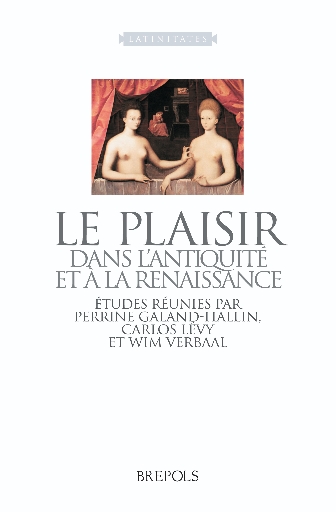
Le plaisir dans l'Antiquité et à la Renaissance
show More to view fulltext, buy and share links for:Le plaisir dans l'Antiquité et à la Renaissance show Less to hide fulltext, buy and share links for: Le plaisir dans l'Antiquité et à la RenaissanceCe premier volume de la collection Latinitates a pour but de confronter la pensée antique et celle des humanistes autour de la notion de « plaisir », la voluptas telle qu'elle apparaît dans des textes de nature différente, philosophique, historique, poétique ou romanesque. La première partie de l'ouvrage est consacrée aux lieux que les Romains ont conçus comme aptes à abriter leurs plaisirs: forêt, théâtre, Rome, villégiatures, bains, et à la manière dont les hommes de la Renaissance ont envisagé ces lieux. La seconde partie envisage la représentation antique et humaniste de la jouissance sensuelle autour de thèmes variés: la chevelure féminine, la douceur de vivre dans la Naples féconde, associée à une réflexion sur les âges de la vie, la difficulté de vivre la voluptas amoureuse. La partie trois examine la façon dont les Anciens ont cherché à réguler le plaisir et ses risques en les soumettant à des censures d'ordre divers: évocation du mos maiorum chez Catulle et Tite-Live, cadre de la militia chez Lucrèce, Cicéron et Sénèque, réflexion sur le lien entre plaisir et pouvoir impérial chez Suétone. La quatrième partie est organisée autour du De senectute de Cicéron et analyse le lien apparemment paradoxal entre plaisir et vieillesse: le philosophe redéfinit le rapport entre les âges de la vie et la jouissance, donnant de Caton, « homme de loisir et de plaisir », une image inhabituelle, réintégrant la voluptas dans les valeurs du mos maiorum; Martial, plus tard, pour réfléchir à son tour sur le plaisir et ses excès, inversera à nouveau cette image; Pétrarque, enfin, fera du Caton cicéronien, christianisé à la lumière d'Augustin, un exemplum glorifiant sa propre autobiographie.
Les auteurs / Jean-Michel Agasse, Hélène Casanova Robin, Régine Chambert, Isabelle Cogitore, Anca Dan, Marielle de Franchis, Anne Dubourdieu, Luc Duret, Perrine Galland-Hallyn, Laure Hermand-Schebat, Jean-Claude Julhe, Carlos Lévy, Ermanno Malaspina, Liza Méry, John Nassichuk, Frédéric Nau, Anne Raffarin-Dupuis, François Prost, Gilles Sauron, Émilie Séris, Wim Verbaal.
-
-
-
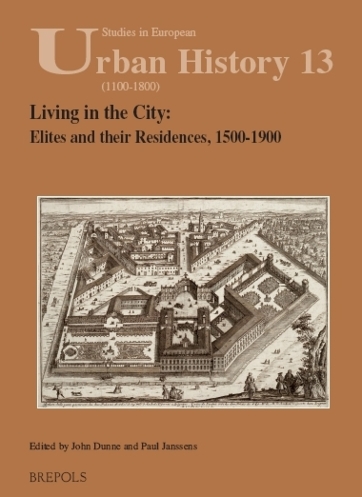
Living in the City: Elites and their Residences, 1500-1900
show More to view fulltext, buy and share links for:Living in the City: Elites and their Residences, 1500-1900 show Less to hide fulltext, buy and share links for: Living in the City: Elites and their Residences, 1500-1900The country house, château or rural palazzo set in extensive grounds may have been the ultimate badge of social pre-eminence but invariably their owners spent much of the year in the city. To this extent urban living was common to all elites worthy of the name, whatever their origin or source of wealth or power. Needless to say, though, how different elite groups experienced town life varied greatly. Focussing on the most basic aspect of urban living, this collection is concerned with the study of the places and types of residence of urban elites.
Recently a number of historians have begun to explore the residential choices made by elites in the urban context, both as an important constituent of lifestyle and as a marker of elite identity and difference. However, whereas these studies have tended to focus on one particular elite group, a single place or one type of urban residence - such as aristocratic hotels - the current volume is original in exploring the patterns and logic of residential choices made by different elite groups in a variety of urban settings, in Britain, France and Italy, from the sixteenth to the nineteenth century.
Each of the book’s nine substantive chapters is written in either English or French (with an abstract in the other language) by a leading specialist either on elites or in the field of urban history. The volume arises out of two meetings of the specialists concerned, which gives it a degree of coherence rarely achieved in collections of this sort. A substantial essay by the editors points to similarities and contrasts between the specific cases and identifies key issues requiring further research.
John Dunne is Director of Research in Humanities at the University of Greenwich. His research interests include French elites c.1780-1820 and Napoleonic government.
Paul Janssens is Professor of Early Modern History in Brussels and chairman of the Belgian 'Conseil de Noblesse'. He has written extensively on the history of the Belgian nobility.
-
-
-
Rhétorique et littérature en Europe de la fin du Moyen Âge au XVIIe siècle
show More to view fulltext, buy and share links for:Rhétorique et littérature en Europe de la fin du Moyen Âge au XVIIe siècle show Less to hide fulltext, buy and share links for: Rhétorique et littérature en Europe de la fin du Moyen Âge au XVIIe siècleDuring the Renaissance and at the beginning of the early modern times, with the origin of philology and the advent of a new knowledge linked to the development of print and the discovery of the New World, the art of dialectic, in the traditional Aristotelian sense, changes and finds new applications.
The creation of a public arena for discussions is linked to the development of the rhetorical resources as an appropriation of a history and a language inside a specific community of some authors with their own cultural and social characteristics. Meanwhile they don’t stop to insert their own works in the continuity or in the remains of the Antiquity.Because of the great events shaping the whole European history from the end of the Middle Ages until the 17th century, rhetoric is not separated from religion: every rhetorical practice is based upon the representation of the truth, the evaluation of the principles and the profession of faith.
Dominique de Courcelles is a research director at the French Center for scientific research (CNRS), UMR 5037 CERPHI
-
-
-
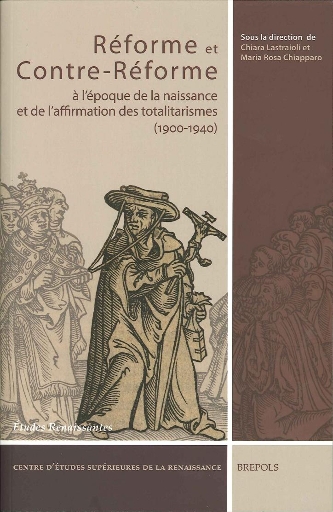
Réforme et Contre-Réforme
show More to view fulltext, buy and share links for:Réforme et Contre-Réforme show Less to hide fulltext, buy and share links for: Réforme et Contre-RéformeLa parution de L'éthique protestante et l'esprit du capitalisme (1904-1905) de Max Weber marque un moment essentiel dans la recrudescence du débat sur la Réforme et la Contre-Réforme au début du xxe siècle. En Italie, en Allemagne, en France - comme ailleurs en Europe -, l'identité confessionnelle devient l'un des caractères constitutifs de l'idéologie nationale et/ou nationaliste, ainsi qu'un élément fort de la réflexion sur le concept de modernité. De même, des phénomènes de résistance à la formation et à l'établissement des totalitarismes émergent au sein de certains groupes d'intellectuels qui rejettent l'appropriation du discours religieux par les futurs idéologues du régime. On assiste alors à un foisonnement d'études concernant l'histoire des églises et des confessions, s'interrogeant sur le développement social et étatique des nations. Les échos des ces débats auront des retombées majeures dans l'affrontement idéologique entre Europe du Nord et Europe du Sud, civilisation germanique et civilisation méditerranéenne à l'aube du dernier grand conflit mondial.
Cet ouvrage ne prétend pas apporter un regard exhaustif sur toutes les conséquences que les discussion autour de la Réforme et la Contre-Réforme ont produites dans les années 1900-1940, mais fait état des premières réflexions menées par des spécialistes de différentes disciplines sur un sujet encore peu exploré et pourtant fondamental pour l'interprétation de l'une des périodes les plus cruciales du siècle dernier.
-
-
-
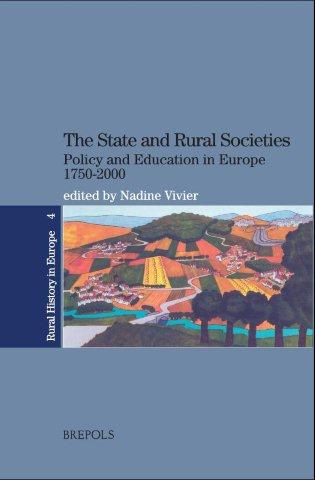
The State and Rural Societies
show More to view fulltext, buy and share links for:The State and Rural Societies show Less to hide fulltext, buy and share links for: The State and Rural SocietiesRural societies are conventionally thought to be bound by tradition and resistant to change. But from the 18th century onwards many countries began to see the countryside as the basis of national prosperity, with a healthy and increasing population, and rising agricultural output fostering general economic growth. It became an objective of the State to encourage the trend, but also to exert social control on this major part of the population in order to civilize the rude peasantry and acquire their electoral support.
This book deals with the various aspects of rural life in which the State intervened: economic matters, such as property rights and market regulations; social questions, from moral concerns to demographic policy; and the key issue of rural education.
From Sweden to the Iberian Peninsula, the United Kingdom to Hungary, and from the eighteenth century to the twentieth, using both broad surveys and in-depth studies, with an extensive introduction written from a comparative perspective, an international group of historians (brought together by the COST network A35) for the first time examine the rural concerns of the state, both economic and social, in a comparative European context.
Nadine Vivier is professor of social and economic history at the University of Maine (France). She has worked extensively on rural societies from 1750 to 2000 in France and in Europe.
-
-
-
A Platonic Pythagoras. Platonism and Pythagoreanism in the Imperial Age
show More to view fulltext, buy and share links for:A Platonic Pythagoras. Platonism and Pythagoreanism in the Imperial Age show Less to hide fulltext, buy and share links for: A Platonic Pythagoras. Platonism and Pythagoreanism in the Imperial AgeCarlos Lévy, La question de la dyade chez Philon d’Alexandrie - Francesca Calabi, Filone di Alessandria e Ecfanto. Un confronto possible - Daniel Babut, L’unité de l’Académie selon Plutarque. Notes en marge d’un débat ancien et toujours actuel - Pierluigi Donini, Tra Academia e pitagorismo. Il platonismo nel De genio Socratis di Plutarco - Christoph Helmig, The Relationship Between Forms and Numbers in Nicomachus’ Introduction to Arithmetic - Dominic O’Meara, Hearing the Harmony of the Spheres in Late Antiquity - Elena Gritti, Insegnamento pitagorico e metodo dialettico in Proclo - Alessandro Linguiti, Prospettiva pitagorica e prospettiva platonica nella filosofia della natura di Proclo - Carlos Steel, Proclus on Divine Figures. An Essay on Pythagorean-Platonic Theology
-
-
-
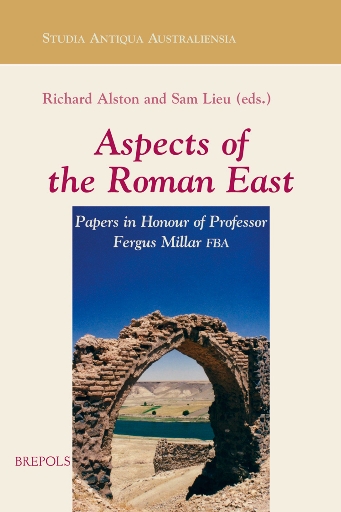
Aspects of the Roman East. Volume I
show More to view fulltext, buy and share links for:Aspects of the Roman East. Volume I show Less to hide fulltext, buy and share links for: Aspects of the Roman East. Volume IThis is the first of two volumes of papers by scholars actively engaged in the study of the Roman East in honour of Professor Fergus Millar FBA, formerly Camden Professor of Ancient History at the University of Oxford and the leading scholar of Roman History of his generation. The first volume mainly from contributors based in the Northern Hemisphere contains studies on the Roman Near East, Egypt and early Byzantium. A second volume containing papers by scholars mainly based in the Southern Hemisphere is in preparation.
-
-
-
Autour d'un petit livre. Alfred Loisy, cent ans après
show More to view fulltext, buy and share links for:Autour d'un petit livre. Alfred Loisy, cent ans après show Less to hide fulltext, buy and share links for: Autour d'un petit livre. Alfred Loisy, cent ans aprèsLe centenaire de la mise à l’Index du livre le plus célèbre d’Alfred Loisy, L’Évangile et l’Église, a entraîné en France un certain nombre de commémorations. Le colloque réuni au Collège de France et à la Sorbonne les 23 et 24 mai 2003 a voulu mesurer, en reprenant un titre de l’auteur, quelles ondes s’étaient propagées «autour d’un petit livre», et dire comment l’actualité de Loisy tient moins à la nouveauté de son exégèse qu’au mouvement spéculatif, toujours vivant, qui est issu de la prise en compte de l’histoire par la théologie chrétienne.
La visée de ce colloque fut d’abord de replacer Loisy en son temps, ce qui impliquait de situer ses prises de position par rapport à l’évolution de l’herméneutique protestante au XIXe siècle (F. Laplanche), à la philosophie de l’action développée par Blondel dans le climat du néo-kantisme français (R. Ciappa), aux normes de l’orthodoxie catholique régissant l’exégèse de la Bible (F. Beretta et C. Arnold).
Après avoir consacré plusieurs années à l’histoire des religions, Loisy revient à l’exégèse du Nouveau Testament et à l’histoire des origines chrétiennes. Plusieurs communications se sont proposé de condenser le bilan de cet apport, en examinant quelques thèmes majeurs de l’oeuvre de Loisy : son étude du sacrifice, le rite religieux par excellence (R.Koch-Piettre) ; sa vision de l’histoire d’Israël et du milieu juif au temps de Jésus (A. Sérandour et A. Lemaire); enfin, sa conception de la naissance du christianisme (F. Amsler et S. Mimouni).
Replacer Loisy en son temps, c’était aussi porter attention à ses contemporains. Le colloque a évoqué un certain nombre de personnages liés à Loisy et la réception de son oeuvre hors de France : Georges Goyau (J.Grondeux), Mgr Lacroix (Ch. Sorrel), Mgr Mignot (L.-P. Sardella), Guillaume Pouget (E.Antonello), Ernesto Buonaiuti (R. Cerrato), Franz Cumont (C. Bonnet), Maude Petre (I. Biagioli), l’Allemagne (O.Weiss), l’Espagne (A.Botti).
Marquée par son temps, l’oeuvre de Loisy en dépasse pourtant les limites et l’onde de choc qu’elle a produite voici un siècle est venue jusqu’à nous. L’exploration de cette question a été conduite par P. Colin, P. Gibert, B. Montagnes, Ch.Theobald. L’ouverture (É. Goichot) et les conclusions (É. Poulat) s’offrent comme un “panoramique” sur le “cas Loisy”.
-
-
-
Emblemata sacra
show More to view fulltext, buy and share links for:Emblemata sacra show Less to hide fulltext, buy and share links for: Emblemata sacraThe present volume of essays, Emblemata Sacra. The Rhetoric and Hermeneutics of Illustrated Sacred Discourse, follows a conference that took place in January 2005 in Leuven and Louvain-la-Neuve, thanks to the close collaboration between the Katholieke Universiteit Leuven (Literature Department) and the Université Catholique de Louvain (the research group ‘Figures et formes de la spiritualité dans la littérature et les expressions artistiques’).The 38 essays have been organised in seven sections. The first section (‘Historical and methodological issues’) presents methodological bases for the study of emblematics and spiritual images, as well as the elements necessary for the Christian contextualisation of the corpus. The second section (‘Exegesis of the Scriptures and the Creation’), complementary to the first section, is devoted to exegetical processes developed in different contexts and seeks to emphasise the correspondence between the exegesis of Sacred Scripture and the exegesis of the Creation, which are the two central symbolisms in Christianity. The third section (‘The image in absentia’) focuses on the most critical aspect of the encounter between the Word and the Image, in the form of a paradoxical iconoclastic image, already mentioned in the first section. The fourth section (‘Rhetoric and poetics of the image’) exposes the mutual exchanges between the word of the images and the images of the word. The last three sections all deal with the uses of figures in determined contexts. Thus, the fifth section (‘The image performance’) explores staged, incarnated, and exhibited figures, while the sixth section (‘Circulation of images among different faiths’) gathers studies about different confessional contexts in which spiritual images are used to support and feed the polemics, and the seventh section (‘The efficient image’) opens up the chronology toward the 19th century and then to our own time.
-
-
-
L'hymne antique et son public
show More to view fulltext, buy and share links for:L'hymne antique et son public show Less to hide fulltext, buy and share links for: L'hymne antique et son publicThe scholarly contributions which form volume 7 analyse principally the sociological aspects of the hymn in antiquity, inasmuch as this ultimate form of praise, which partakes more of a social rite than a literary genre, represents, form its origins to the Christian era, a collective celebration of people and objects by communities or groups which are both religious and civic. While there exist many studies of the place of the hymn in ancient literature, no synthetic work had yet chosen to unite - from a comparative and critical stance - all of antiquity in its component parts of Egypt, the Orient, Greece, Rome and Byzantium. What is more, the colloquium dealt also with the survival of ancient hymnic forms into the Renaissance and the 17th century. It was indeed proper to highlight the continuity, over and against the divide between Christianity and paganism, of a poetical-encomiastic tradition glorifying superior beings.
The result of a colloquium organized by the Universities of Strasbourg and Naples, The Ancient Hymn and its Audience is an ordered approach originating from a varied investigation of the permanence of a phenomenon into modern times.
-
-
-
Sylvain Lévi (1863-1935). Études indiennes, histoire sociale
show More to view fulltext, buy and share links for:Sylvain Lévi (1863-1935). Études indiennes, histoire sociale show Less to hide fulltext, buy and share links for: Sylvain Lévi (1863-1935). Études indiennes, histoire socialeUn colloque international consacré à Sylvain Lévi s'est tenu à Paris, du 8 au 10 octobre 2003, sous l'égide de l'École Pratique des Hautes Études et de la Maison des Sciences de l'Homme. Le présent volume en constitue les Actes.
Directeur d'études à l'École Pratique des Hautes Études (de 1886 à 1935, à la IVe et à la Ve section) et professeur de langue et littérature sanskrites au Collège de France de 1894 à 1935, Sylvain Lévi (1863-1935) fut une haute figure de l'indianisme français, à une époque où la philologie sanskrite en était la discipline reine. Multipliant apprentissages et domaines de recherche afin d'appréhender de toutes parts la pensée indienne, il construisit une œuvre considérable, au rayonnement international. De même fut-il bâtisseur institutionnel, posant aussi bien les fondements de l'enseignement indianiste français que ceux de l'Institut de civilisation indienne, créé en 1927. Parallèlement, dans les années 1880, Sylvain Lévi rejoignit l'Alliance israélite universelle. Élu à sa présidence en 1920, il assuma cette fonction jusqu'à sa mort, en octobre 1935. Le nom de Sylvain Lévi est connu. Paradoxalement, pourtant, l'homme et l'œuvre sont aujourd'hui frappés d'un relatif oubli. Pour tenter d'y remédier, il était nécessaire d'adopter le double point de vue des études indiennes et de l'histoire sociale, tant il est vrai qu'en Sylvain Lévi se conjoignent exemplairement le savant adonné à sa recherche et l'intellectuel engagé, l'un et l'autre animés du même idéal d'humanisme et d'aspiration à l'universel.
Ainsi a-t-on relu l'œuvre indianiste et orientaliste de Sylvain Lévi, en s'efforçant d'en saisir la diversité (théâtre, littérature, études védiques, histoire des religions, bouddhisme, philologie, philosophie, histoire), et pris la mesure de son rayonnement international (Russie, Inde, Japon). On a également examiné la place qu'il occupa dans le monde intellectuel de la fin du XIXe siècle et du début du XXe, selon deux axes thématiques : les approches disciplinaires de l'orientalisme dans l'espace francophone à l'époque de Sylvain Lévi (philologie, histoire, anthropologie, sociologie); Sylvain Lévi et les milieux juifs en France, de l'Affaire Dreyfus à la Seconde Guerre mondiale.
Au terme de l'enquête, on se prend à penser qu'elle pourrait être l'effet différé de l'énergie militante que Sylvain Lévi a continûment insufflée dans ses travaux et dans sa vie. Comme on voit la roue du potier tournoyer quelque temps encore, après que la main a cessé d'en soutenir le mouvement.
-
-
-
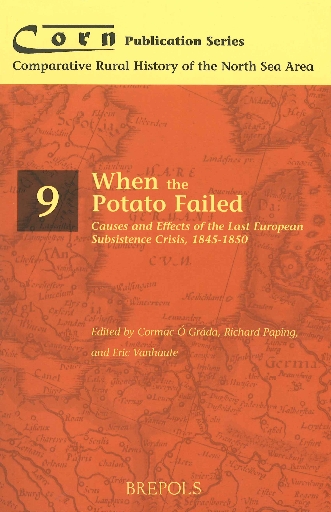
When the Potato Failed. Causes and Effects of the Last European Subsistence Crisis, 1845-1850
show More to view fulltext, buy and share links for:When the Potato Failed. Causes and Effects of the Last European Subsistence Crisis, 1845-1850 show Less to hide fulltext, buy and share links for: When the Potato Failed. Causes and Effects of the Last European Subsistence Crisis, 1845-1850The decade that gave rise to the term ‘the Hungry Forties’ in Europe is often regarded, and rightly so, as one of deprivation, unrest, and revolution. Two events, the Great Irish Famine and the various political events of ‘1848’, stand out. This book is the first to discuss the subsistence crisis of the 1840s in a truly comparative way. This subsistence crisis may be divided into two rather distinct elements. On the one hand, the failure of the potato caused by the new, unfamiliar fungus, phytophthera infestans, which first struck Europe in mid-1845, resulted in a catastrophe in Ireland that killed about one million people, and radically transformed its landscape and economy. Poor potato crops in 1845 and in the following years also resulted in significant excess mortality elsewhere in Europe. On the other hand, this period, and 1846 in particular, was also one of poor wheat and rye harvests throughout much of Europe. Failure of the grain harvest alone rarely resulted in a subsistence crisis, but the combination of poor potato and grain harvests in a single place was a lethal one. Connections between the local and the global, between the economic and the political, and between the rural and the industrial, make the crisis of the late 1840s a multi-layered one.
This book offers a comparative perspective on the causes and the effects of what is sometimes considered as the ‘last’ European subsistence crisis. It begins with an extensive introduction that treats the topic in comparative perspective. The subsistence crisis had its most catastrophic impact in Ireland, and three chapters in the current volume are concerned mainly with that country. A fourth chapter uses price data to shed comparative perspective on the crisis, while the remaining nine chapters are case studies covering countries ranging from Sweden to Spain and from Scotland to Prussia. Throughout, the contributors focus on a range of common themes, such as the extent of harvest deficits, the functioning of food markets, fertility and mortality, and public action at local and national levels.
Cormac Ó Gráda is professor of economics at University College, Dublin. He has worked extensively on the history of famines in Ireland and worldwide.
Richard Paping teaches economic and social history and economics at University of Groningen. He has done extensive research on developments in standard-of-living, economy and demography in the Netherlands.
Eric Vanhaute is professor social and economic history and world history at Ghent University. He has mainly published on the history of the rural society and of labour markets in Flanders and outside.
Table of contents:
Eric Vanhaute, Richard Paping and Cormac Ó Gráda, The European Subsistence Crisis of 1845-1850: a Comparative Perspective
PART I - The Irish Famine in an International Perspective
Cormac Ó Gráda, Ireland’s Great Famine. An overview - Mary E. Daly, Something Old and Something New. Recent Research on the Great Irish Famine - Peter M. Solar, The Crisis of the Late 1840s. What Can Be Learned From Prices? - Peter Gray, The European Food Crisis and the Relief of Irish Famine, 1845-1850
PART II - A Potato Famine Outside Ireland?
Tom M. Devine, Why the Highlands Did Not Starve. Ireland and Highland Scotland During the Potato Famine - Eric Vanhaute, “So Worthy an Example to Ireland”. The Subsistence and Industrial Crisis of 1845-1850 in Flanders - Richard Paping and Vincent Tassenaar, The Consequences of the Potato Disease in the Netherlands 1845-1860: a Regional Approach - Hans H. Bass, The Crisis in Prussia - Gunter Mahlerwein, The Consequences of the Potato Blight in South Germany - Nadine Vivier, The Crisis in France. A Memorable Crisis But Not a Potato Crisis - Jean Michel Chevet and Cormac Ó Gráda, Crisis: What Crisis? Prices and Mortality in Mid-Nineteenth Century France - Pedro Díaz Marín, Subsistence Crisis and Popular Protest in Spain. The Motines of 1847- Ingrid Henriksen, A Disaster Seen From the Periphery. The Case of Denmark - Carl-Johan Gadd, On the Edge of a Crisis: Sweden in the 1840s
-
-
-
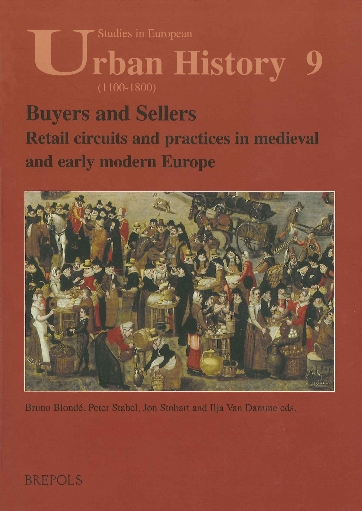
Buyers and Sellers
show More to view fulltext, buy and share links for:Buyers and Sellers show Less to hide fulltext, buy and share links for: Buyers and SellersConsumption is now a critical issue in late medieval and early modern historical and cultural studies. While we know increasingly about regulatory systems, we know much less about the daily practice of buying and selling. This book brings together contributions from urban historians, social historians and art historians to explore the issues of exchange, shopping behavior, social interactions, gender and physical space. Contributions deal with Italy, the Low Countries and England.In the articles in this volume lines of continuity between the medieval and early modern period have been stressed. In addition, some critical questions have been raised. Were markets necessarily less "modern" compared to "fixed shops"? How did changing consumers and consumer patterns interact with the retailer? The essays published here also emphasize the need to study different commercial circuits in their context. These circuits often overlapped and could not artificially be isolated from one another.
-
-
-
Dieu et les dieux dans le théâtre de la Renaissance
show More to view fulltext, buy and share links for:Dieu et les dieux dans le théâtre de la Renaissance show Less to hide fulltext, buy and share links for: Dieu et les dieux dans le théâtre de la RenaissanceDu mystère et de la moralité à la tragédie et à l’auto en passant par la sacra rappresentazione et le spectacle de cour, le théâtre de la Renaissance subit une mutation profonde que la figuration et le rôle de la divinité font apparaître avec une évidence particulière. Les auteurs de mystères n’éprouvent aucun scrupule à confier à des acteurs le rôle de Dieu, non seulement celui du Christ mais encore celui du Père ou même du Dieu-Trinité. Informée par la réflexion théologique sur l’image, la figuration théâtrale de Dieu en fait ressortir les lignes de force. Elle rencontre la tradition iconographique sans se confondre avec elle, si bien que la question ancienne de l’influence réciproque entre théâtre et arts plastiques s’en trouve dépassée. Dans la tragédie, le rôle de Dieu, de sa mémoire et de sa colère, mais aussi de son amour rédempteur, pèse sur les hommes, leurs actes et leur destin, mais comme personnage Dieu lui-même s’absente de la scène. Les dieux ne le remplacent pas. Ni destinateurs, ni metteurs en scène, ils signifient autre chose qu’eux-mêmes. Ils servent les desseins religieux et politiques des dramaturges, se plient à leurs préoccupations civiques, astrologiques et scientifiques, morales et philosophiques. Les trente-quatre communications rassemblées dans ce volume, précédées d’un essai de F. Boespflug, s’intéressent aussi bien aux modalités techniques de la représentation scénique du divin qu’à ses enjeux littéraires, spirituels et sociaux. Elles touchent toutes les aires linguistiques de l’Europe occidentale, du Portugal à l’Allemagne, de l’Angleterre à l’Italie sans oublier les tragédies latines. Rappelant que le théâtre est à la fois une entreprise artistique et un moyen de communicaiton de masse, elles permettent de cerner les identités locales et les déchirements confessionnels ou nationaux dans l’unité contestée de l’Europe. Elles renouvellent la dialectique de la continuité et de la rupture que l’historiographie de la Renaissance ne cesse de remodeler.
Le Centre d’Études Supérieures de la Renaissance, créé à Tours en 1956, est un laboratoire de recherche (UMR 6576 du CNRS, Université François-Rabelais de Tours) qui propose des publications concernant la période allant des débuts de l’humanisme jusqu’au milieu du xviie siècle européen. Ses équipes et ses axes de recherche témoignent d’une dimension interdisciplinaire dont cette collection est le reflet : histoire, histoire de l’art (peinture, architecture, iconographie), histoire du livre, langues et littératures européennes, philosophie, musicologie, histoire des idées, des sciences et des techniques.
La collection « Études Renaissantes » offre des monographies et des recueils collectifs destinés à approfondir la réflexion sur les mutations, les enrichissements et les crises caractéristiques de l’époque. Elle a pour ambition d’éclairer les grands courants intellectuels, techniques et artistiques qui inscrivent cette période de la civilisation européenne dans un cadre mondial.
-
-
-
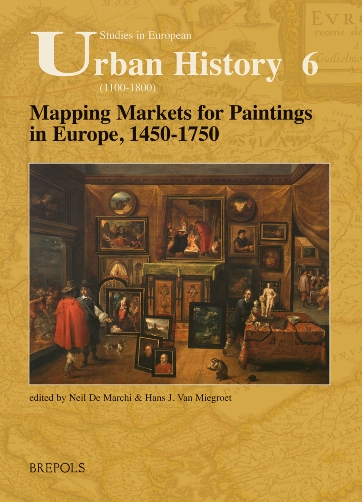
Mapping Markets for Paintings in Europe, 1450-1750
show More to view fulltext, buy and share links for:Mapping Markets for Paintings in Europe, 1450-1750 show Less to hide fulltext, buy and share links for: Mapping Markets for Paintings in Europe, 1450-1750Over the course of the fifteenth century easel paintings edged out tapestries, frescoes and wood inlay pictures on the walls of private dwellings. Millions of such paintings were produced in the period 1450-1800, in all shapes and sizes, and across the whole range of prices. Who bought them? How were they distributed? What place did they occupy among other "luxury" possessions? Such questions seem to require that visual culture be treated as an integral part of family spending and commercial pursuits. This volume is the outcome of a four-year collaboration between art historians, economists, social historians and museum professionals from the US, Australia and Europe; its aim was to map the new ground identified by these and related questions, in local contexts, but with comparative and longitudinal concerns constantly in mind. The result is an entirely new matrix of the business and artistic interactions through which visual cultures in early modern Europe were formed. The editors, Neil De Marchi and Hans J. Van Miegroet, an economist and an art historian, have collaborated across their disciplines for ten years. Here they have interspersed participants' essays with brief connecting observations, to produce a text that respects disciplinary expertise while making connections across locations and across time. Much has been written about European paintings; but how markets in paintings emerged, who they served, what roles and institutions were developed that enabled them to function effectively, and how exchange affected visual preferences, have not been studied in such a deliberately wide-angled, comparative way. Mapping Markets is not only a book about paintings, but a compendium of cross-disciplinary methods and insights. It charts the state of research in this trans-disciplinary field, identifies gaps, and poses questions for scholars and students wishing to pursue further the issues raised here.
-
-
-
Pierre Geoltrain, ou Comment "faire l'histoire" des religions ?
show More to view fulltext, buy and share links for:Pierre Geoltrain, ou Comment "faire l'histoire" des religions ? show Less to hide fulltext, buy and share links for: Pierre Geoltrain, ou Comment "faire l'histoire" des religions ?Le volume est dédié à la mémoire de Pierre Geoltrain, fondateur de la chaire des «origines du christianisme» à la Section des sciences religieuses de l'École Pratique des Hautes Études. La première partie offre un choix d'articles de l'historien illustrant la polymathie et le caractère pionnier de ses recherches, ainsi qu'une épistémologie dont la démarche sceptique n'interdit pas l'assurance sur les faits fondamentaux: concernant les origines du christianisme, sa constitution comme dissidence herméneutique du judaïsme scripturaire. Un essai d'un des éditeurs explicite les principes ayant guidé la pratique scientifique de l'historien. Principalement consacrées, bien sûr, au premier christianisme, les contributions de collègues et de disciples réunies dans la seconde partie prolongent les chantiers et spéculations scientifiques de Pierre Geoltrain. Un intermède littéraire répond aux échappées qui, dans ses séminaires, manifestaient son intérêt sensible mais distancié pour la fable. Les contributions de la dernière partie font écho au dialogue que l'historien entretenait avec d'autres disciplines: philosophie, théologie et anthropologie. En guise de postface, Pierre Legendre lui dédie ses réflexions anthropologiques sur la Bible comme «emblème monothéiste».
Ont contribué à cet hommage collectif : Olivier Abel (Faculté de théologie protestante de Paris), Serge Bardet (Université d'Evry), Marianne Carbonnier-Burckhardt (Faculté de théologie protestante de Paris), Luigi Cirillo (Institut universitaire oriental de Naples), Corina Combet Galland (Faculté de théologie protestante de Paris), Jean-Daniel Dubois (École Pratique des Hautes Études), Pierre Gisel (Université de Lausanne), Pierre Legendre (École Pratique des Hautes Études), Simon C. Mimouni (École Pratique des Hautes Études), Jean-Noël Pérès (Faculté de théologie protestante de Paris), Pierluigi Piovanelli (Université d'Ottawa), Stéphane Ruspoli (Atlanta), John Scheid (Collège de France), Matthieu Smyth (Université de Lausanne), Françoise Smyth-Florentin (Faculté de Théologie protestante de Paris), Isabelle Ullern-Weité (Centre d'Études des Religions du Livre), Sarah Vajda (écrivain, Paris), Liliane Vana (École Pratique des Hautes Études).
-
-
-

Rural history in the North Sea area. An overview of recent research (Middle Ages - beginning twentieth century)
show More to view fulltext, buy and share links for:Rural history in the North Sea area. An overview of recent research (Middle Ages - beginning twentieth century) show Less to hide fulltext, buy and share links for: Rural history in the North Sea area. An overview of recent research (Middle Ages - beginning twentieth century)This volume describes the outlines of the 'state of the art' in the field of rural history for countries such as England, the Netherlands, Belgium, Germany and Northern France. The contributing authors, all outstanding specialists in the field, present an overview of the most important publications regarding the areas covered. They also point to the most important research topics as well as indicating the most important lacunae in the field of rural history during the last decades. The original texts of this book formed the basis of the international research group CORN, which studies the economic development of the Northern European countryside in a comparative way. The regional monographs are preceded by a short methodological introduction concerning the comparative methods used by this network as well as the possible pitfalls and problems.
-
-
-
Antiquité tardive et humanisme: de Tertullien à Beatus Rhenanus
show More to view fulltext, buy and share links for:Antiquité tardive et humanisme: de Tertullien à Beatus Rhenanus show Less to hide fulltext, buy and share links for: Antiquité tardive et humanisme: de Tertullien à Beatus RhenanusAu total, 29 études rédigées par des philologues de réputation internationale, précédées d'un avant-propos et d'une introduction et suivies d'un index général ainsi que d'une table des matières, 550 p. Les contributions scientifiques des divers coauteurs ressortissent aux deux domaines de spécialité du dédicataire : d'une part les littératures antiques du IIIe au VIe siècles, de l'autre le mouvement intellectuel et spirituel de la Renaissance. Mais, outre les articles afférents à ces deux axes de recherche privilégiés, les miscellanées en l'honneur de F. Heim accueillent aussi des essais transversaux sur la réception des auteurs tardifs - tant chrétiens que païens - par les humanistes européens des XVe, XVIe et XVIIe siècles.
-
-
-
From Palmyra to Zayton: Epigraphy and Iconography
show More to view fulltext, buy and share links for:From Palmyra to Zayton: Epigraphy and Iconography show Less to hide fulltext, buy and share links for: From Palmyra to Zayton: Epigraphy and IconographyThis volume highlights research by Australian scholars on two major Silk Road cities: Palmyra in Syria - long regarded as the finest example of a "Caravan City" - and Quanzhou (Zayton) in South China which was the destination of the main Maritime Silk Road between Medieval China and the Middle East. The volume exhibits for the first time in a western language publication and in full colour the unique iconography of the Nestorian Christian community in South China under Mongol rule. This material is virtually unknown to western scholars and will be of major importance to the study of the eastward diffusion of Christianity and of East-West contact in the period of Marco Polo. The volume also contains one of the largest collections of Palmyrene inscriptions (Aramaic, Greek, Latin and Hebrew) in English translations with accompanying original texts and detailed analytical indices. The selection focuses on politics and trade but also gives representative texts of almost all genres of Palmyrene inscriptions. The volume should prove indispensable to scholars of East-West contacts and of Roman History given the role played by Palmyra under Zenobia in the Crisis of the Third Century.
-