Brepols Online Books Other Miscellanea Archive v2016 - bobar16miot

Collection Contents
51 - 98 of 98 results
-
-
À la recherche des villes saintes
show More to view fulltext, buy and share links for:À la recherche des villes saintes show Less to hide fulltext, buy and share links for: À la recherche des villes saintesEn un temps où la sainteté traditionnellement attribuée à certaines villes continue plus que jamais d’être alléguée par les guerriers de tout bord, les sciences des religions ne peuvent éluder les questions qu’elle soulève. Le colloque d’où ce livre est issu se proposait de confronter les analyses de situations particulières, menées selon les méthodes de l’histoire, de la philologie, de l’ethnologie et de l’anthropologie, en élargissant l’examen à d’autres cultures que celles des religions dites du Livre, sans négliger celles-ci. Les auteurs des études réunies ici sont à la recherche de concepts opératoires, à distance du discours de la dévotion. Ils sont aussi à la recherche des formes infiniment variées de la sanctification des villes à des époques différentes, sous le regard, proche ou lointain, des habitants et des exilés, sous l’emprise, conquérante ou déçue, des pouvoirs qui s’érigent sur la sacralité des lieux et des communautés qui préservent ou s’inventent des identités en pérennisant des héritages ou en se les appropriant. Ils offrent des exemples bons à penser au lecteur qui est à la recherche, au moyen de la comparaison, tant des traits communs que des divergences. Un tel voyageur passe sept fois par Jérusalem et perçoit les métamorphoses de sa sainteté, telle qu’elle est codifiée à l’ère hellénistique (A. van der Kooij) et institutionnalisée en diaspora dans le monde gréco-romain (J. Tromp) ; telle qu’elle est menacée de mort au moment de la ruine du temple (S. Mimouni, M.-J. Pierre) ; rêvée et remodelée, à la fois évanescente et tangible, dans l’exil médiéval (J.-C. Attias) ; confortée pour les chrétiens du XVIe siècle par ce qui leur paraît l’humiliation de la ville, ses blessures devenant les stigmates de sa gloire (M.-C. Gomez-Géraud) ; jumelée avec La Mecque par la réflexion cosmogonique et eschatologique des mystiques musulmans (P. Lory). Le cas de La Mecque et de Médine aide à construire une typologie moderne (G. A. Wiegers) et à penser le rapport entre ville sainte et territoire sacré (H. Benkheira). La vénération pour Axoum dans l’Éthiopie chrétienne fait converger motivations religieuses et politiques (G. Lusini). À Rome, l’hagiographie martyriale part à la conquête du bastion polythéiste (P. Boulhol). D’autres rivalités se dessinent dans la mythologie des peuples du Mexique ancien qui ont tiré leur prestige de Cholula (M. Graulich). L’Inde, c’est à la fois le tout autre et le même : la sainteté des villes y est placée sous le signe de la fluidité (M.-L. Reiniche). Partout se vérifie et s’annihile le lamento paradoxal de Baudelaire : « La forme d’une ville change plus vite, hélas ! que le cœur d’un mortel ».
Directeur d’études à la Section des sciences religieuses de l’École pratique des hautes études où il est titulaire de la chaire « Patristique et histoire des dogmes », Alain Le Boulluec consacre ses recherches aux doctrines des Pères grecs des premiers siècles et à leur exégèse de la Septante. Auteur d'un ouvrage en deux volumes sur la notion d'hérésie (Paris, 1985), il publie les oeuvres de Clément d'Alexandrie dans la collection « Sources chrétiennes » (Stromates V et VII, en 1981 et 1997) et collabore à l'entreprise « La Bible d'Alexandrie » (t. 2, Exode, en 1989, avec P. Sandevoir), tout en étudiant la littérature apocryphe chrétienne (écrits pseudo-clémentins).
-
-
-
Laïcités-démocraties. Des relations ambiguës
show More to view fulltext, buy and share links for:Laïcités-démocraties. Des relations ambiguës show Less to hide fulltext, buy and share links for: Laïcités-démocraties. Des relations ambiguësComment concevoir les relations laïcité-démocratie alors que se transforment les espaces politiques et religieux au gré de logiques de globalisation, de modernisation et d'échanges transnationaux ? Telle est la perspective explorée lors du colloque "Laïcités, religions et démocraties" organisé par le Groupe de Sociologie des Religions et de la Laïcité (CNRS-EPHE). On a souhaité retracer, par le présent ouvrage, ces rencontres qui ont privilégié la possibilité de comparaisons par la présentation de terrains contrastés, européens et extra-européens.
Les contrastes mis en lumière font valoir des "modèles-types" d'évolution des rapports Eglises-Etats dans la société tels que la laïcisation ou la sécularisation, dont seraient respectivement emblématiques la France et le Danemark, des "particularités nationales" à l'image d'un "pacte laïque" français, d'une cohabitation confessionnelle à l'allemande, ou encore d'un Etat juif en Israël, "d'altérités historiques" telles que l'émergence possible d'une "laïcité musulmane" en terre d'Islam ou, en Russie, la durable pensée des alternatives politiques en des termes manichéens et religieux entravant la constitution du politique en une sphère autonome.
Divers sont les chemins que peuvent emprunter les modèles de relations Eglises/Etats, la place et le rôle de la religion dans la société, le statut des groupes religieux et des croyants dans leur rapport à la citoyenneté. Confronter sur ces thèmes les expériences nationales de différents pays conduit à constater l'absence de modèles universalisables, tant au plan empirique qu'interprétatif. Plus de démocratie ne veut pas forcément dire plus de laïcité et, a contrario, plus de laïcité n'est pas la garantie d'une plus grande démocratie. Certaines sociétés se coulent dans un lent processus de sécularisation sans heurts politiques frontaux alors que d'autres privilégient les différents modèles étatiques plus autoritaires et volontaristes de laïcisation. L'image souvent fantasmée d'une laïcité moderne idéal-typique et universelle, consacrant la définitive et stricte séparation entre sphère religieuse privée et sphère politique publique, ne résiste donc pas à l'étude des cas particuliers.
-
-
-
Les communautés religieuses dans le monde gréco-romain. Essais de définition
show More to view fulltext, buy and share links for:Les communautés religieuses dans le monde gréco-romain. Essais de définition show Less to hide fulltext, buy and share links for: Les communautés religieuses dans le monde gréco-romain. Essais de définitionLe monde antique classique, "polythéiste" et "monothéiste", était organisé sur une base communautaire. La cité romaine des Quirites n'est-elle pas la communauté des citoyens / co-uirites ? Les groupements pouvaient prendre des formes diverses, ainsi que l'indique la diversité des vocables employés pour les désigner. Dans ce contexte, les communautés "religieuses" présentaient-elles une spécificité? Supporté par le Centre d'études des religions du Livre (Unité mixte de recherche EPHE-CNRS), un groupe de chercheurs a posé la question de la définition de ces communautés, restée encore ambiguë. Nourrie par la réflexion collective, l'introduction s'attache à dresser un panorama des éléments - considérés comme des 'marqueurs' - sur lesquels se fonderait cette spécificité. Le premier volet : "Enquête d'une définition" illustre le débat scientifique ; en parcourant la variété des cultures du monde romain, les contributions mettent en lumière la difficulté à découvrir cette spécificité, tant dans le vocabulaire que dans les structures d'organisation. Le second volet : "Quelques tests sur les 'marqueurs' d'une communauté religieuse" met à l'épreuve cet essai de définition en examinant diverses communautés (juives, chrétiennes et manichéennes).
Directrice d'études à la Section des sciences religieuses de l'École Pratique des Hautes Études (chaire "Religions de Rome et du monde romain"), Nicole Belayche étudie les religiosités et rituels païens dans le monde romain pour éclairer les relations entre les cultures religieuses, polythéistes et monothéistes, dans la partie orientale de l'Empire. Elle a notamment publié Iudaea-Palaestina. The Pagan Cults in Roman Palestine (Second to Fourth Century), Tübingen, 2001 (Religion der Römischen Provinzen 1).
Directeur d'études à la Section des sciences religieuses de l'École Pratique des Hautes Études où il est titulaire de la chaire "Origines du christianisme", Simon Claude Mimouni étudie depuis plusieurs années l'histoire de la formation du mouvement des disciples de Jésus dans et hors du judaïsme au I er et au II e siècles. Il est depuis plusieurs années directeur de la Revue des études juives fondée en 1880 ainsi que de la "Collection de la revue des études juives".
-
-
-
Les mutations contemporaines du religieux
show More to view fulltext, buy and share links for:Les mutations contemporaines du religieux show Less to hide fulltext, buy and share links for: Les mutations contemporaines du religieuxLe rôle d'acteur social du religieux avait été considérablement affaibli au lendemain de la Seconde guerre mondiale, sans avoir totalement disparu. Pour bien des raisons, il réapparaît dans la dernière décennie du vingtième siècle et au début de ce troisième millénaire. Il convenait de dresser un état des lieux, essentiellement en Europe. Il appartenait à Philippe Portier, Bérengère Massignon et Micheline Milot de présenter le statut du "fait religieux" - et l'identité laïque - en France, dans les institutions européennes et au Canada (Québec). Le paysage religieux a ensuite été exploré par des études précises et pertinentes : le catholicisme par la recomposition des sociabilités paroissiales (Olivier Bobineau), le protestantisme par la vitalité des églises évangéliques (Sébastien Fath), l'islam par le rapport du fondamentalisme à la loi islamique (Mohammed Hocine Benkheira), l'hindouisme par son expansion missionnaire en Europe (Véronique Altglas), le bouddhisme par l'exemple du mouvement Soka Gakkaï (Louis Hourmant).
Le tableau des mutations religieuses contemporaines qui se dégage des contributions ici rassemblées présente quatre traits essentiels: 1) les mutations du religieux, liées aux mutations du politique, entraînent des recompositions de la laïcité elle-même; 2) les traditions religieuses, loin de se réduire à des oppositions frontales avec la modernité, évoluent et se transforment au contact même de cette modernité; 3) la mondialisation a des effets non négligeables dans le domaine religieux ; 4) un trait marquant du religieux en ultramodernité réside dans son individualisation croissante.
Ce volume rassemble les contributions présentées à un colloque organisé à la Fondation Singer-Polignac par Jean-Robert Armogathe et Jean-Paul Willaime, Directeurs d'études à l’École Pratique des Hautes Etudes (Sciences religieuses), Sorbonne.
-
-
-
Multicultural science in the Ottoman empire
show More to view fulltext, buy and share links for:Multicultural science in the Ottoman empire show Less to hide fulltext, buy and share links for: Multicultural science in the Ottoman empireThis book contains research papers related to the scientific activities in the Ottoman Empire which comprise various scientific traditions, including the Islamic tradition inherited by the Ottoman Turks and carried on by the Arabs, who were part of the Empire and then joined by European peoples, such as the Bosnians and Albanians newly converted to Islam ; as well as the tradition of different Christian peoples living in Anatolia and the Balkans, (e.g. the Greek Colleges where “ new ” science was taught), and the contributions of native Jewish scholars as well as those who emigrated from Andalusia. The Ottoman world had the necessary grounds for the interaction of all these different traditions. The Ottoman Empire held vast lands in Europe and, as a result of the contact with European science from the very early ages, the new scientific European tradition spread in the Ottoman lands for the first time outside its own cultural environment where it originated.
The Ottoman Empire gave rise to 29 national states in Europe, the Middle East and North Africa. The Ottomans both depended on the previously established Turkish-Islamic scientific tradition and at the same time engaged in attempts to transfer the new technologies and sciences that developed in the Western world. The new European science and technology was also adopted very early by the followers of the Enlightenment and later by those of Nationalism among the non muslim populations of the Empire, and of course by the national states originated from this Empire.
All these aspects about the nature of science in the Ottoman Empire and the complex network of scientific and educational relations of the various populations in this Empire and the national states which followed, as well as the relations between the science of these populations and these new states and Europe, have been discussed in these papers almost for the first time.
-
-
-
Mundus Emblematicus
show More to view fulltext, buy and share links for:Mundus Emblematicus show Less to hide fulltext, buy and share links for: Mundus EmblematicusThe thirteen articles in this volume deal with the Neo-Latin emblem book after the birth of the genre with Andrea Alciato’s Emblematum libellus (1531). While the interest in emblematics has grown considerably during the last decades, the seminal Neo-Latin production has received relatively little attention. In Mundus Emblematicus an international team of experts in the field makes this part of the emblem tradition accessible to a broad scholarly audience. The articles cover a variety of emblem books published at the time, ranging from influential humanist collections (for instance those by Achille Bocchi, Hadrianus Junius, or Joachim Camerarius) to alchemist (Michael Maier) or religious emblems (such as the books of the Calvinist Théodere de Bèze, or the Jesuit Herman Hugo). In each paper subjects dealt with include the historical context of the work and its makers, the relation between word and image, the structure of the collection as a whole, and the emblematic game (intertextuality in word and image). Moreover, several articles explore the interaction between the emblem and connected literary phenomena, like the commonplace-book, the fable or the use of commentaries. All papers are in English and all examples from Latin texts are translated.
Together, these articles show the variety within the Neo-Latin emblem production, thus challenging traditional approaches of the emblem. As such Mundus Emblematicus contributes towards a more comprehensive view of the forms and functions of the genre as a whole
-
-
-
Alchemy, Chemistry and Pharmacy
show More to view fulltext, buy and share links for:Alchemy, Chemistry and Pharmacy show Less to hide fulltext, buy and share links for: Alchemy, Chemistry and PharmacyThis volume consists of two parts. The first deals with alchemy and prelavoisian chemistry with papers on Democritus, Christine of Pizan, van Helmont, de Clave, Matte La Faveur, Marie Meurdrac and Galvani. The second part includes papers on chemistry in the 20th century in its political, academic and industrial context.
-
-
-
Apocryphité. Histoire d'un concept transversal aux religions du Livre
show More to view fulltext, buy and share links for:Apocryphité. Histoire d'un concept transversal aux religions du Livre show Less to hide fulltext, buy and share links for: Apocryphité. Histoire d'un concept transversal aux religions du LivreAu point de départ, le concept d’apocryphité suppose le concept de canonicité. C’est donc d’abord la constitution d’un corpus d’écrits dits canonisés qui génère ensuite de diverses manières une littérature définie comme apocryphe. Le concept d’apocryphité repose donc apparemment sur une simple équation - il est le produit d’un autre concept, celui de la canonicité. Même s’il convient de ne pas généraliser à tous les cas un tel paramètre, c’est, semble-t-il, une évidence. Ce phénomène a touché l’ensemble des religions dites du Livre au sens actuel de l’expression qui est bien large, mais aussi les religions grecques et romaines de l’Antiquité dans lesquelles la constitution de corpus a entraîné la formation d’une frange apocryphe. En la matière, ce qui se passe dans le christianisme provient évidemment du judaïsme, mais se déroule aussi, sous des formes plus ou moins similaires, dans le mazdéisme et le manichéisme.
Cet ouvrage, qui est le fruit d’un projet collectif du Centre d’études des religions du Livre (Unité mixte de recherche EPHE-CNRS), concerne non seulement les antiquisants et les médiévistes, mais aussi les modernistes. C’est aux XVIe et XVIIe siècles, en effet, que certains corpus d’apocryphes chrétiens, non des moindres, ont pris forme.
-
-
-
Biological and Medical Sciences
show More to view fulltext, buy and share links for:Biological and Medical Sciences show Less to hide fulltext, buy and share links for: Biological and Medical SciencesThis volume begins with an essential and unpublished text of the late Mirko D. Grmek (1924-2000) on rising diseases. A set of 34 papers deals with the most diverse aspects of biological and medical sciences : biology in the classical age, natural history and world exploration, pathologies, medicine, hygiene, physiology, biochemistry and biotechnologies.
-
-
-
Engineering and Engineers
show More to view fulltext, buy and share links for:Engineering and Engineers show Less to hide fulltext, buy and share links for: Engineering and EngineersThis volume is devoted to the history of engineers from the 16th to the 20th century. It begins with two general papers, the first one by M. Duffy on the nature of engineering, the other by E. Knob loch on engineers of the Renaissance and their illustrated manuscripts. The other papers deal with the training of engineers, their methods, and role in the international technological transfers as well as the biography of some famous engineers.
-
-
-
History of Modern Physics
show More to view fulltext, buy and share links for:History of Modern Physics show Less to hide fulltext, buy and share links for: History of Modern PhysicsAddressing modern physics in its largest perspective, the present volume, which includes 34 contributions, begins with a reappraisal of classical science. However, the stress is placed on the contemporary period with sections devoted to thermodynamics and mechanics, the centenary of the electron, Einstein, the quantum theory and particle physics.
-
-
-
Institutions and Societies for Teaching, Research and Popularisation
show More to view fulltext, buy and share links for:Institutions and Societies for Teaching, Research and Popularisation show Less to hide fulltext, buy and share links for: Institutions and Societies for Teaching, Research and PopularisationThis volume is devoted to scientific institutions from the 17th to the 20th century. It consists of three parts: the first deals with teaching and research institutions (universities, technical schools, foundations); the second is about scholarly societies (academies, amateur societies, industrial societies); the last deals with scientific popularisation initiatives, notably those of newspapers. Several papers concern the role of women in scientific communities.
-
-
-
Materials: Research, Development and Applications
show More to view fulltext, buy and share links for:Materials: Research, Development and Applications show Less to hide fulltext, buy and share links for: Materials: Research, Development and ApplicationsThe theme of materials in the history of technology has never been as well researched as other more popular areas like energy, production technology or transport and communication. The present collection of papers originating from the symposium on "Materials: Science, Technology and Early Applications" in conjunction with the xx th International History of Science Congress in Liège, 1997, make a contribution to remedying this unsatisfactory situation. They concentrate on the 19th and 20th centuries and range from research on the metallurgy of zinc in the late 18th and early 19th century to the prospects of ceramic materials to ameliorate contemporary environmental problems.
-
-
-
Nomads, Traders and Holy Men Along China's Silk Road
show More to view fulltext, buy and share links for:Nomads, Traders and Holy Men Along China's Silk Road show Less to hide fulltext, buy and share links for: Nomads, Traders and Holy Men Along China's Silk RoadThis collection of papers formed part of the symposium, “Nomads, Traders and Holy Men Along China’s Silk Road”, held at the Asia Society in New York on November 9-10, 2001. Although the Silk Road has inspired several important museum exhibitions, none had focused on the Hexi Corridor nor attempted to analyze the complexity of the cross-cultural relationships within China’s borders. Nor had any exhibition focused on the nearly four hundred years of political disunity, nomadic incursions and social upheaval, brought about by the collapse of the great Han dynasty (206 B.C.E.-220 C.E.), that then, after a series of short-lived dynasties, culminated in the reunification of China under the Tang empire (618-906).
-
-
-
Science and Technology in the Islamic World
show More to view fulltext, buy and share links for:Science and Technology in the Islamic World show Less to hide fulltext, buy and share links for: Science and Technology in the Islamic WorldThis volume provides a comprehensive overview of current researches on science in the Muslim-Arab world. The papers deal with the religious and institutional context, mathematics, optics, astronomy, mechanics, natural philosophy, and pharmacology.
The present volume also includes a general author index of the 21 volumes that make up the proceedings of the xxth International Congress of History of Science.
-
-
-
Science, Philosophy and Music
show More to view fulltext, buy and share links for:Science, Philosophy and Music show Less to hide fulltext, buy and share links for: Science, Philosophy and MusicThis volume illustrates the old and fruitful dialogue between historians of science and philosophers, as well as new collaborations with artists. It includes two symposia. The first one is on the history of scientific models, the seond is on science and music. It also contains papers on the philosophy of mathematics, physics, technology and politics, but also on Aristotle, Lucretius, Bacon, Le Bon, Spengler, Reichenbach, and Kuhn.
-
-
-
Scientific Instruments and Museums
show More to view fulltext, buy and share links for:Scientific Instruments and Museums show Less to hide fulltext, buy and share links for: Scientific Instruments and MuseumsThe present volume is organised around two symposia of the XXth International Congress of History of Science, respectively devoted to the history of sundials and to the national inventories of scientific instruments. Separate studies on outstanding instruments, instrument-makers, as well as unknown museums and collections in Spain, Italy, Estonia, and Latin-America were also included.
-
-
-
Studies in History of Mathematics Dedicated to A.P. Youschkevitch
show More to view fulltext, buy and share links for:Studies in History of Mathematics Dedicated to A.P. Youschkevitch show Less to hide fulltext, buy and share links for: Studies in History of Mathematics Dedicated to A.P. YouschkevitchIn the framework of the 20th International Congress of History of Science (Liège 1997), a symposium was devoted to the historical work of Adolph P. Youschkevitch (1906-1993). The present volume includes the papers read during the symposium as well as contributions on current issues in the history of mathematics : mathematics as a cultural strength, mathematics from antiquity to the classical period, probability theory and its applications, mathematics in the 19th and 20th centuries.
-
-
-
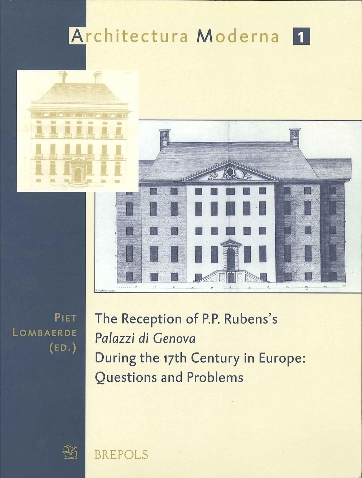
The Reception of P.P. Rubens's 'Palazzi di Genova' during the 17th Century in Europe: Questions and Problems
show More to view fulltext, buy and share links for:The Reception of P.P. Rubens's 'Palazzi di Genova' during the 17th Century in Europe: Questions and Problems show Less to hide fulltext, buy and share links for: The Reception of P.P. Rubens's 'Palazzi di Genova' during the 17th Century in Europe: Questions and ProblemsRubens' book 'Palazzi di Genova' was well diffused in European countries as England, the Netherlands, France, Germany and Italy thanks to the numerous contacts the famous painter and diplomat maintained in humanistic, artistic and political circles. From 1622 on this book, containing two volumes, was edited at several times during the 17th and 18th Century. But the direct influences of the numerous façades, plans, cross-sections, staircases and building details on modern architecture look rather limited, especially in his own country. In this study, several scholars in architectural history analyse how the examples of Genoese palazzi and churches as presented by Rubens were accepted in different European countries. Much attention is given to the question if these examples inspired a new architectural typology, in which the inner court of the houses was substituted by a 'salone in mezzo'. An attempt is made to situate Rubens' book among the late 16th and early 17th Century treatises and model books. The way in which Rubens presented the new Genoese architecture of villa's, palaces and churches and the introduction he wrote as a 'painter-architect' to this book were so modern at that time, that the reception of this prestigious edition in folio had more to do with changes in considering architectural theory and practice as with the propagation of a late renaissance style influenced by Antique examples.
-
-
-
The management of common land in north west Europe, c. 1500-1850
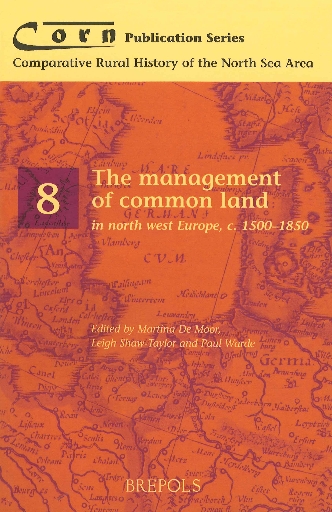
show More to view fulltext, buy and share links for:The management of common land in north west Europe, c. 1500-1850 show Less to hide fulltext, buy and share links for: The management of common land in north west Europe, c. 1500-1850Until the 19th century very large areas of Western Europe were subject to some degree to common rights, where individual users collectively managed resources such as pasture and wood which were central to the agrarian economy. Much scholarship has focused on the dissolution of these rights and the effects of the enclosure of common land on society and agricultural productivity. In contrast, this volume seeks to assess in a comparative framework the long-term management of the common lands and the relative success of strategies in providing the resources sought by the rural population. Chapters covering northern and southern England, France, the Netherlands, Flanders, Sweden and northern and southern Germany examine the institutional and legal framework of commoning, the resources available and their value, the sustainability of practices, and policies of inclusion and exclusion among the group of commoners. Building on the theoretical insights of recent works on commonly managed resources, this volume, the result of an international collaboration in the CORN network, provides a series of detailed historical studies and is the first major work to address this central aspect of the agrarian economy in a comparative European context.
-
-
-
Beatus Rhenanus (1485-1547), lecteur et éditeur des textes anciens
show More to view fulltext, buy and share links for:Beatus Rhenanus (1485-1547), lecteur et éditeur des textes anciens show Less to hide fulltext, buy and share links for: Beatus Rhenanus (1485-1547), lecteur et éditeur des textes anciensLe but du colloque était de décrire, d'analyser et d'évaluer la contribution éditoriale et exégétique de Rhenanus. Les 23 études ont été disposées de manière chronologique pour faciliter l'analyse de son évolution philologique, question qui a été au centre des débats. Les conférenciers ont bénéficié d'une documentation de choix, car ils ont le plus souvent travaillé sur les textes personnels de Rhenanus provenant de sa bibliothèque conservée à Sélestat.
Les Actes intéresseront quatre domaines de recherches : l'étude de la transmission des textes des auteurs grecs et latins, leur critique textuelle et exégétique, les techniques éditoriales au XVI siècle et la nature de l'humanisme.
-
-
-
Emblems from Alciato to the Tattoo
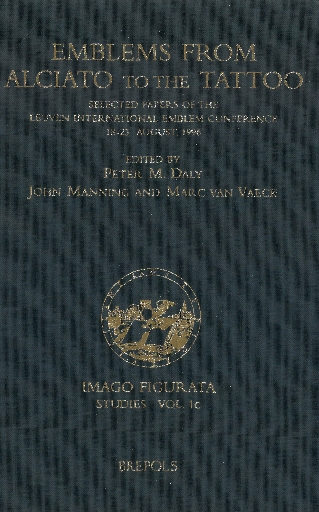
show More to view fulltext, buy and share links for:Emblems from Alciato to the Tattoo show Less to hide fulltext, buy and share links for: Emblems from Alciato to the TattooThis collection of essays reflects the various manifestations of the emblem in cultural forms ranging from the first appearance of printed books in the sixteenth century to very recent visual equivalents in modern advertising and tattoos. The essays are revised versions of papers presented at the Fourth International Conference held at Leuven in 1996. The table of contents provides an overview of the variety of topics and approaches represented in the volume.
-
-
-
Les Publications de l'Académie Royale des Sciences de Paris (1666-1793)
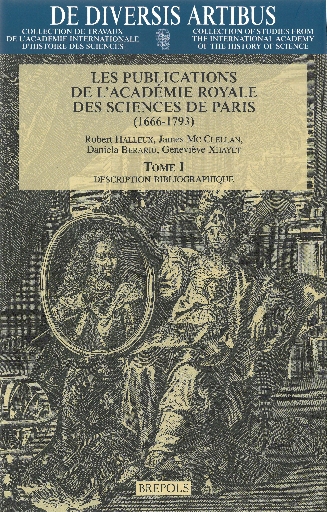
show More to view fulltext, buy and share links for:Les Publications de l'Académie Royale des Sciences de Paris (1666-1793) show Less to hide fulltext, buy and share links for: Les Publications de l'Académie Royale des Sciences de Paris (1666-1793)De sa fondation en 1666 à sa suppression en 1793, l'Académie Royale des Sciences de Paris fut le siège d'une intense activité éditoriale. Ses publications constituent une mine inépuisable d'informations, non seulement pour les historiens des sciences, mais pour quiconque s'intéresse à l'histoire, à la culture et à la société de l'Age Classique. En même temps, cette masse documentaire décourage souvent le chercheur par son abondance et ses problèmes bibliographiques spéciaux.
Le présent ouvrage se veut un outil de travail. Il comprend deux volumes. Le premier contient la description bibliographique des ouvrages publiés par l'Académie Royale et le détail de leur contenu d'après les exemplaires originaux. Le second comprend des études quantitatives, ainsi que les index des auteurs des publications, des personnages cités dans les titres et des sujets traités.
-
-
-
Medieval and Classical Traditions and the Renaissance of Physico-Mathematical Sciences in the 16th Century
show More to view fulltext, buy and share links for:Medieval and Classical Traditions and the Renaissance of Physico-Mathematical Sciences in the 16th Century show Less to hide fulltext, buy and share links for: Medieval and Classical Traditions and the Renaissance of Physico-Mathematical Sciences in the 16th CenturyCe volume est une contribution à l'histoire de la transition entre la science médiévale et la science moderne, en ce qui concerne les mathématiques et la science du mouvement. Le processus de cette transformation a été relativement peu étudié: les études historiques se sont concentrées de façon dominante sur la description de la phase finale de ce processus; le travail historique a établi une description très documentée et structurée de la situation de la philosophie naturelle à l'aube de la science classique. Au cours des dernières décennies des travaux sur des auteurs et des oeuvres du XVIe siècle peu étudié font cependant apparaître que cette description est altérée structurellement par des interprétations anachroniques de certains concepts qui y occupent manifestement une place centrale. Les études présentées dans ce volume sont un reflet des travaux effectués récemment dans ce sens sur deux aspects singuliers d'un tel programme: l'oeuvre scientifique de MAurolico d'une part, et l'émergence de la science galiléenne du mouvement d'autre part.
-
-
-
Optics and Astronomy
show More to view fulltext, buy and share links for:Optics and Astronomy show Less to hide fulltext, buy and share links for: Optics and AstronomyL'ouvrage qui paraît sous le titre " Optics and Astronomy " groupe un ensemble de communications présentées lors du XXe congrès international d'histoire des sciences. Toutes relèvent de ces domaines intimement liés au cours du temps. Qu'aurait été l'évolution de l'astronomie sans le développement de l'optique ? Quant à ce dernier domaine il a trouvé un terrain de prédilection dans les applications qu'en ont fait les astronomes. Dans l'antiquité, d'Euclide fonde en géomètre une optique qui trouve un premier aboutissement chez Ptolémée. La grande école arabe prend le relais en renouvelant la théorie de la lumière et de la vision. Le premier XVIIe siècle européen invente la lunette, analyse ses implications optiques et construit des instruments qui modifient l'idée même qu'on se faisait des choses et des cieux. Mécanique céleste s'appliquant principalement au système solaire, marginalisation d'une tradition astrologique pourtant rémanente, création de modèles, analyse de données..., tout concourt à former les esprits - au siècle des Lumières notamment - à la compréhension du Monde que viennent renforcer les découvertes de l'astrométrie et de l'astrophysique. L'unité du volume, confortée par la variété des sujets traités, doit permettre au lecteur qui n'a pu se rendre à Liège en 1997, d'apprécier l'influence réciproque précoce des deux domaines de la recherche qu'il couvre.
-
-
-
Science and Technology in East Asia. The Legacy of Joseph Needham
show More to view fulltext, buy and share links for:Science and Technology in East Asia. The Legacy of Joseph Needham show Less to hide fulltext, buy and share links for: Science and Technology in East Asia. The Legacy of Joseph NeedhamThe xx th International Congress of History of Science (Liège, July 1997) was the first to be held after Joseph Needham (1900-1995) passed away. During the Congress the symposium entitled “Global history of science” was dedicated to this scholar usually recognised as the founder of the study of East Asian science. The symposium aimed at highlighting the significance of his research, which has influenced historians of science in their study of all civilisations. The papers presented there and included in this volume focus on various historiographical and methodological issues raised by Needham’s work and on questions which he has opened to investigation. These issues and questions are relevant not only to the history of East Asian science and technology, but also to the history of science at large, once one envisions it in a global perspective. This volume is rounded off by four further papers that are representative of current research in the history of East Asian science.
-
-
-
Emblematik und Kunst der Jesuiten in Bayern: Einfluss und Wirkung
show More to view fulltext, buy and share links for:Emblematik und Kunst der Jesuiten in Bayern: Einfluss und Wirkung show Less to hide fulltext, buy and share links for: Emblematik und Kunst der Jesuiten in Bayern: Einfluss und WirkungVom 5. - 5. Juli 1998 fand an der Hochschule für Philosophie in München ein internationales Symposion zum Thema "Jesuitische Emblematik in Bayern: Einfluss und Wirkung" statt, das sich mit der wissenschaftlichen Erforschung der Entstehungs-, Entwicklungs- und Verbreitungsgeschichte des Symbols auseinandersetzte.
Die vorliegende publikation beschränkt sich bewusst nur auf die "bayerischen" Beiträge des Symposions, erweitert durch ergänzende Studien zum Thema Emblematik und Kunst der Jesuiten in Bayern, wie der Vorstellung der Frontispize der Werke des grossen Naturwissenschaftlers Christoph Scheiner, Aspekte zu Georg Stengels Ova paschalia, Betrachtung der Jesuitenkirche Franz Xaver in Luzern oder der neuen Interpretationen eines Kupferstiches der Heiligen Familie vor der St. Michaelskirche München. Vorangestellt ist dem Band ein Abriss über Gründer, Leitmotiv, Signet und Satzungen der Gesellschaft Jesu und das neue Logo des Ordens in Zentral-europa. Einführung in die Thematik Rita Haub und Richard Müller SJ "Jesuiten" Alois Schmid; Templum aulicum. Das Jesuitenkolleg St.Michael zu München als Herrschaftskirche im frühneuzeitlichen Bayern Emblembücher Peter M. Daly; A Survey of Emblematic Publications of the Jesuits of the Upper German Province to the Year 1800 Rita Haub; Bey was erkennet man einen Catholischen Christen? Illustrationen im Bilderkatechismus des Petrus Canisius James Latham SJ; Text and Image in Jeremias Drexel's Orbis Phaëthon G. Richard Dimler SJ; Octiduum S. Francisco Borgiae (1671) : The Munich Jesuits Celebrate the Canonization of Francis Borgia Franz Daxecker; Frontspize in den Werken P. Christoph Scheiners SJ Helmut Zäh; Die Welt im Ei : Georg Stengels Ova paschalia Elisabeth Klecker; Regiae virtutis et felicitatis XII symbola (Dillingen 1636). Panegyrik und Paränese in einem Emblembuch für Ferdinand III Paul Richard Blum; Die Versuchung der Philosophie durch graphische Schemata : Berthold Hauser und die Arbor Porphyriana Angewandte Emblematik Bernhard Paal SJ; Die Heilige Familie vor der St. Michaelskirche in München. Ein theologisches und ikonographisches Programm-Bild Joseph Imorde; Gebaute Emblematik. Die Jesuitenkirche Franz Xaver in Luzern Sabine Mödersheim; Matthäus Rader und das allegorische Programm im Augsburger Rathaussaal. Einfluss und Wirkung jesuitischer Emblematik Alan Young; Protestant Meditation and Two 1647 English Translations of Jeremias Drexel's Zodiacus christianus Paul Begheyn SJ; The Emblem Books of Jeremias Drexel in the Low Countries
-
-
-
L'Orient dans l'histoire religieuse de l'Europe
show More to view fulltext, buy and share links for:L'Orient dans l'histoire religieuse de l'Europe show Less to hide fulltext, buy and share links for: L'Orient dans l'histoire religieuse de l'EuropeCet ouvrage constitue les Actes du quatrième colloque, co-organisé par la Section des Sciences Religieuses de l'École Pratique des Hautes Études et l'Université Hébraïque de Jérusalem, qui eut lieu à Paris, les 1er et 2 février 1999. Son objet était moins d'étudier l'influence qu'ont pu exercer les grandes religions de l'Orient sur celles de l'Europe que de retrouver, de décrire et d'analyser la construction, historiographique, spirituelle ou bien imaginaire, de quelques «origines orientales». Des mouvements de retour au sources, réelles ou mythiques, traversent les diverses religions de l'Europe, du Moyen Âge à nos jours, constituant souvent l'élément dynamique de leur évolution tandis que paradoxalement ils suscitent et alimentent aussi les fondamentalismes: croisades et mythes de croisades, pèlerinages, travaux d'historiens et d'érudits, éditions de textes, constitutions des formes de critiques, expériences mystiques. À travers les différentes études de ce recueil, on se demandera ainsi quelle est la part des réalités historiques, des constructions historiographiques, des recherches scientifiques, des illusions ou encore des quêtes spirituelles dans la constitution des «Orients» comme référents des grands courants religieux de l'Europe.
Mohammed Ali Amir-Moezzi est Directeur d'Études à la Section des Sciences Religieuses de l'EPHE, où il est titulaire de la chaire «Exégèse et théologie de l'Islam Chiite». Parmi ses travaux, son ouvrage Le voyage initiatique en terre d'islam. Ascensions célestes et itinéraires spirituels a paru, en 1997, dans la collection de la Bibliothèque de l'École des Hautes Études.
John Scheid est Directeur d'Études à la Section des Sciences Religieuses de l'EPHE où il est titulaire de la chaire «Religions de Rome». Son dernier ouvrage codirigé avec Valérie Huet, Autour de la colonne Aurélienne. Geste et image sur la colonne de Marc Aurèle à Rome, est paru, en 2000, dans la collection de la Bibliothèque de l'École des Hautes Études.
-
-
-
Realms of the Silk Roads: Ancient and Modern
show More to view fulltext, buy and share links for:Realms of the Silk Roads: Ancient and Modern show Less to hide fulltext, buy and share links for: Realms of the Silk Roads: Ancient and ModernRealms of the Silk Roads Part 1: New Sources on Inner Asian History N. Sims-Williams, Some Reflections on Zoroastrianism in Sogdiana and Bactria; G. Mikkelsen, Traité/Sermon on the Light-Nous in Chinese and its Parallels in the Parthian, Sogdian and Old Turkish; A.V.G. Betts & V.N. Yagodin, Hunting Traps on the Ustiurt Plateau, Uzbekistan. Part 2: Long Distance Contacts S. Lieu, Byzantium, Persia and China: Interstate Relations on the Eve of the Islamic Conquest; D. Christian, Silk Roads or Steppe Roads ? The Silk Roads in World History; M. Underdown, The Northern Silk Road: Ties between Turfan and Korea. Part 3: Political Life C. Benjamin, The Yuezhi and their Neighbours: Evidence for the Yuezhi in the Chinese Sources c. 220 - c. 25 BCE; K. Nourzhanov, Politics of National Reconciliation in Tajikistan: From Peace Talks to (Partial) Political Settlements; S. Akbarzadeh, Islam and Regional Stability in Central Asia; C. Mackerras, Relations Between the Uygur State and China's Tang Dynasty, 744-840. Part 4: Perspectives G. Watson, Prestigious Peregrinations : British Travellers in Central Asia c. 1830-1914; F. Patrikeeff, The Geopolitics of Myth: Interwar Northeast Asia and Images of an Inner Asian Empire; D. Thwaites, The Road to Urumqui: Zunun Kadir's Lost World; F. Patrikeeff & J. Perkins, National and Imperial Identity: A Triptych of Baltic Germans in Inner Asia. Part 5: Teaching Inner Asian History R. Fletcher & E. Hetherington, The China TimeMap Project: China and the Silk Roads; M. With, Creating Responsible Educational Images of Judaic / Christian / Islamic Relations.
-
-
-
René Taton. Etudes d'histoire des sciences
show More to view fulltext, buy and share links for:René Taton. Etudes d'histoire des sciences show Less to hide fulltext, buy and share links for: René Taton. Etudes d'histoire des sciencesPour taus les historiens des sciences, René Taton (né en 1915) est un des pères fondateurs de leur discipline. Si son nom demeure attaché à l' Histoire générale des sciences, il est l'auteur de bien d'autres travaux sur l'histoire des sciences exactes et des milieux scientifiques. Dans son séminaire, déjà légendaire, du Centre Alexandre Koyré, il a forme des générations de chercheurs, aujourd'hui actifs dans le monde entier. Pour son quatre-vingt-cinquième anniversaire, ses élèves et ses amis lui offrent un recueil de ses articles choisis par lui-même.
-
-
-
Révolution scientifique et libertinage
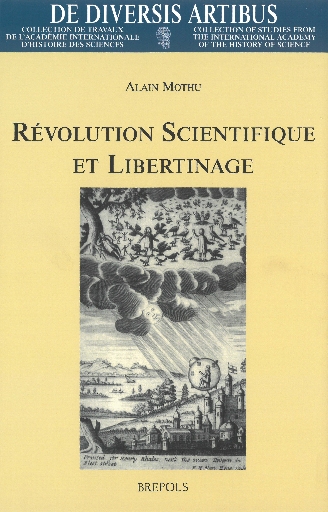
show More to view fulltext, buy and share links for:Révolution scientifique et libertinage show Less to hide fulltext, buy and share links for: Révolution scientifique et libertinagePeut-on mettre en relation - et de quelle façon ? - l'émergence et le déploiement de la science moderne, au xvii e siècle, avec ceux du "libertinage" ou "libertinisme" pendant la même période ? C'est à cette question complexe et quelque peu redoutable, car elle concerne les origines de notre modernité, que se sont efforcés de répondre treize historiens des idées scientifiques, philosophiques ou littéraires. Il n'était pas à l'ordre du jour - il parut même présomptueux ou prématuré - d'affronter le problème dans son abstraite généralité : il s'agissait bien plutôt de mettre en lumière, aussi précisément et concrètement que possible, le cheminement intellectuel de certains hommes de science, de certains libertins avérés, ou la fortune d'une idée apparemment "transversale". Ce recueil permet le repérage des nombreuses voies de rencontre qui parfois favorisèrent le dialogue entre hommes de science et esprits "déniaisés" au xvii e siècle, mais aussi des obstacles qui parfois l'empêchèrent. Il fait peut-être entrevoir la lente émergence d'un régime univoque de la "raison", à mesure que le siècle avance. Enfin, sa polyphonie interdisciplinaire apporte un éclairage varié sur certaines théories et notions philosophiques, comme l'atomisme et l'infini, qui jouent un rôle capital au xvii e siècle.
Auteurs : Armand Beaulieu, Michel Blay, François de Graux, Antonella Del Prete, Dominique Descotes, Vincent Jullien, Didier Kahn, Alain Mothu, Alain Niderst, Isabelle Pantin, Richard H. Popkin, Giovanni Ruocco, Bertram E. Schwarzbach, Ann Thomson.
-
-
-
Science, Technology and Industry in the Ottoman World
show More to view fulltext, buy and share links for:Science, Technology and Industry in the Ottoman World show Less to hide fulltext, buy and share links for: Science, Technology and Industry in the Ottoman WorldThis volume gathers together the papers of the Symposium on Science, Technology and Industry in the Ottoman World which was organized within the XXth International Congress of History of Science held in Liège in July 1997. This symposium was the first to focus exclusively on the Ottoman World within the congresses convened by the International Union for the History and Philosophy of Science (IUHPS).
Scholarly interest in the scientific activities caried out in various geographical areas of the Ottoman Empire between the 14th and 20th century yielded a growing number of studies in recent years. The initial findings of these studies led scholars to question the view that Islamic science went into a decline after the 12th century, and to argue that Ottoman science constituted a new episode in Islamic science.
The present volume begins with a survey on the Ottomans' transition from the Islamic to the European scientific tradition. This survey is followed by research papers dealing with: the introduction of modern science and technology to Turkey in the 18th and 19th centuries as regards the military technical training, the first railway line in Asiatic Turkey and the teaching of modern botany; the introduction of modern medicine and Darwinism in Egypt; Bonaparte's expedition to Egypt from the viewpoint of history of science and technology; and the mathematical activities in the Maghreb in both pre-Ottoman and Ottoman periods.
-
-
-
Technology and Engineering
show More to view fulltext, buy and share links for:Technology and Engineering show Less to hide fulltext, buy and share links for: Technology and EngineeringToo often technology is seen as inferior to science, as a simple practical application of a self-sufficient "pure" knowledge. Such a dichotomy is for sure an illusion. The contributions met in this volume, reflecting the richness and the density of the session Science, Technology and Industry during the XXth International Congress of History of Science in Liège in 1997, show all technology as nothing less than the bridge between science on one side, society and economy on the other side. And this bridge is not a one-way road but a place of interactions between the theoretical and the applied, between the knowledge and the know-how. A special section of this book demonstrates that this equal footing dialogue has been particularly intense as far as the military technical development is concerned, and that for many centuries.
This collection does not bring a synthesis or a state of the art, but some rich material able to stimulate the debates, still active since the 1970s, in the social studies of science and technology. Most of the papers integrate and try to touch the complexity of the processes at work when a discovery, an invention, has to be adapted, or when the social and economic structures solicit from science a solution to very peculiar problems. The diversity of topics, approaches, even the variety of the vocabulary used by the authors to describe apparently similar patterns, reflect the dynamic of a research flow but also, probably, the necessity to elaborate new analytical frames, new synthetic schemes.
-
-
-
Between the Natural and the Artificial. Dyestuffs and Medicines
show More to view fulltext, buy and share links for:Between the Natural and the Artificial. Dyestuffs and Medicines show Less to hide fulltext, buy and share links for: Between the Natural and the Artificial. Dyestuffs and MedicinesThis thematic volume consists of a selection of papers from the XXth International Congress of History of Science, which was held in Liège in 1997. Two separated symposia were concerned with the study of historical connections between such different scientific fields as chemistry, botany, pharmacy, medicine and their technical aspects. Natural products from plants and animals, and their artificial equivalents, which were especially studied and used for dyeing and for medicinal purposes, were discussed in both meetings. The various contributions of the present volume deal with many of these products in several countries (in Europe, Asia, Africa and America) from the medieval period to the XIXth century. The first part treats of some historical aspects of chemical and pharmaceutical questions related to selected dyestuffs. The second part deals with pharmaceutical products for medicinal and biological purposes. These studies should contribute to foster new interdisciplinary research in this field, which is bound to develop at the international level.
-
-
-
Contextualizing the Renaissance. Returns to History
show More to view fulltext, buy and share links for:Contextualizing the Renaissance. Returns to History show Less to hide fulltext, buy and share links for: Contextualizing the Renaissance. Returns to HistoryThe twenty-eighth annual conference of CEMERS, held on 21-22 October 1994 at Binghamton University, featured thirty-three panel sessions and approximately 150 presentations. The ten essays in this volume consist of the five plenary speakers - leaders in their field - and five panel essays, each of which was reviewed for this volume. The volume comprises a body of work organised around a governing theme - modes of historicisation. Each of the essays demonstrates the practice of, or a commentary upon, a distinctive historicized criticism. By 'historicized' as contrasted with 'historical' criticism, it is meant that these essays problematicize, stretch or reconceive traditional historical practices. Challenging the notion that the production of paintings, dramatic texts or even conduct books can be read against a stable historical ground, they show that paintings, works of literature, and treatises not only participate in history but are exemplars of textual instability. The very content of these texts can be shown, in various editions, to change over time - and yet each bears a single, determinate title. In such ways the contributions gathered here all show that they have been affected by 'the new history'.
-
-
-
Fundamental Changes in Cellular Biology in the 20th Century. Biology of Development, Chemistry and Physics in the Life Sciences
show More to view fulltext, buy and share links for:Fundamental Changes in Cellular Biology in the 20th Century. Biology of Development, Chemistry and Physics in the Life Sciences show Less to hide fulltext, buy and share links for: Fundamental Changes in Cellular Biology in the 20th Century. Biology of Development, Chemistry and Physics in the Life SciencesThis volume presents a collection of selected papers worked out for the XXth International Congress of History of Science held in July 1997 in Liège The first part analyzes interrelations between the exact sciences, chemistry and physics on the one hand, and life sciences on the other hand. It is well known that in many fields of biological sciences, mainly in those working with experimental methods, chemical and physical knowledge was integrated but the historic development of that interrelation is not yet known and cannot be explained enough in all details until the present day. By searching for the events in the past, historians of science find out that introducing physical and chemical methods and knowledge into life sciences was not a simple but very complex historical process. The second part was constructed during the centenary of E.B. Wilson's pioneering book The Cell in Development and Inheritance (1896), with an eye on this tradition of biological research. Wilson attempted to integrate cytology, embryology, and the chromosome theory of inheritance into a common cellular framework. It was only in the late 1970s that the synthesis now called cell biology, developmental biology and developmental genetics came into existence. The work carried out in Zürich under E. Hadorn's supervision was brought to light. Concepts and paths of research were defined, for example: homeosis, physiological genetics, 'body plans' allometry, homologies of process, evolution as 'bricolage' and finally a critical essay on different perspectives on development.
-
-
-
Land Productivity and Agro-systems in the North Sea Area (Middle Ages - 20th Century). Elements for Comparison
show More to view fulltext, buy and share links for:Land Productivity and Agro-systems in the North Sea Area (Middle Ages - 20th Century). Elements for Comparison show Less to hide fulltext, buy and share links for: Land Productivity and Agro-systems in the North Sea Area (Middle Ages - 20th Century). Elements for ComparisonThis book deals with land productivity. Agriculture took the largest share of GNP before the mid-19th century and so economic growth must focus on agricultural transformations and measurements of agricultural productivity and its determinants. The 1963 study by B.H. Slicher van Bath on yield ratios across Europe was epoch-making. But more recent studies point to the necessity of placing and analysing land productivity more clearly within agricultural, ecological and socio-economic contexts. This publication, made by the CORN research team, reflects the new developments and findings in this field, for the North Sea area from the Middle Ages to the 20th century. The book consists of three sections: the first contains national longterm overviews for each of the North Sea countries; the second part presents several case studies which examine the relationship between land productivity and agro-systems; and the last part consists of general comparative studies. The publication thus hopes to advance our understanding of developments in land productivity and to build the material for further research.
-
-
-
Le charbon de terre en Europe occidentale avant l'usage du coke
show More to view fulltext, buy and share links for:Le charbon de terre en Europe occidentale avant l'usage du coke show Less to hide fulltext, buy and share links for: Le charbon de terre en Europe occidentale avant l'usage du cokeTout au long du xix e siècle et pendant une partie du xx e siècle, la houille a été la plus importante source d'énergie utilisée dans le monde, elle a joué un rôle de premier plan dans l'avènement de la société industrielle. Cette victoire du charbon a débuté en Europe, d'abord en Grande-Bretagne, puis sur le continent. Une telle mutation a été préparée par l'expérience accumulée depuis des siècles. Ce sont les aspects essentiels de cette histoire plus ancienne (extraction du combustible minéral, commerce, usages) que les auteurs du présent ouvrage ont choisi de présenter lors d'un symposium du xx e Congrès international d'Histoire des Sciences tenu à Liège en 1997. Le champ chronologique dans lequel s'inscrit cette réflexion débute avec les premières utilisations du charbon de terre à l'époque romaine et s'étend jusqu'au moment où les hommes ont utilisé de manière systématique le coke en métallurgie. Des périodes aux caractères bien définis scandent ce temps. De l'époque romaine à la fin du xii e siècle, toute trace d'utilisation de la houille disparaît en Europe. En 1195 à Liège, les Annales de Renier de Saint Jacques révèlent l'emploi médiéval de la houille mais rapidement les sources signalent une exploitation anglaise d'importance. Cependant, l'usage de la houille demeure longtemps limité et très inégal selon les régions. Ce n'est qu'au xvii e siècle en Angleterre, quelques décennies plus tard sur le continent, que la production s'accroît. Le grand essor houiller du xix e siècle s'inscrit donc dans un long processus qui débute bien avant l'ère industrielle.
-
-
-
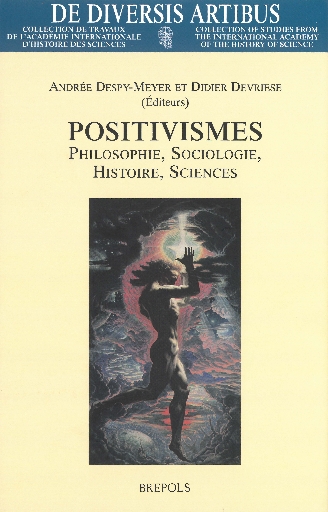
Les Positivismes. Philosophie, Sociologie, Histoire, Sciences
show More to view fulltext, buy and share links for:Les Positivismes. Philosophie, Sociologie, Histoire, Sciences show Less to hide fulltext, buy and share links for: Les Positivismes. Philosophie, Sociologie, Histoire, SciencesLe terme "positivisme" répond traditionnellement à la définition suivante: un système philosophique qui récuse les a priori métaphysiques et voit dans l'observation des faits positifs et dans l'expérience l'unique fondement de la connaissance. Mais cette définition est-elle suffisante? N'y a-t-il alors qu'un seul "positivisme", et s'agit-il d'un mode de pensé révolu, sans influence sur notre temps, ou au contraire d'un ou de plusieurs modes de pensée qui gardent leur actualité?
Les études rassemblées dans ce volume abordent différentes facettes, non plus du positivisme mais bien des positivismes. Traité par des philosophes, des historiens, des sociologues, ce thème s'épanouit en questions multiples. La pensée comtienne y est réexaminée sous l'angle du système philosophique proprement dit, de son actualité et de ses archaïsmes. L'on y examine les glissements de sens du mot positivisme, sa présence - parfois implicite - au sein de notre pensée actuelle, les différentes "écoles positivistes", comme le positivisme logique, ou encore l'influence exercée par les positivismes sur d'autres disciplines, histoire, sociologie, sciences exactes...
-
-
-
Marriage and Rural Economy. Western Europe since 1400
show More to view fulltext, buy and share links for:Marriage and Rural Economy. Western Europe since 1400 show Less to hide fulltext, buy and share links for: Marriage and Rural Economy. Western Europe since 1400The history of marriage in Western Europe, because of its peculiarities when viewed in a global setting, compels attention. This volume examines rural marriage patterns in the long run, relating these to changing economic conditions in the North Sea area, from c. 1400 to the present. More than thirty years after Hajnal's path-breaking publication it presents a state of the art as regards the study of the European Marriage Pattern in Ireland, Scotland, England, Belgium, the Netherlands, Germany and Scandinavia. By examining different forms of rural economy such as peasant farming, capitalist farming, prot-industry and other systems of production with differing implications for marriage and family formation, demographic and economic mechanisms emerge more clearly. Turning from description to explanation, a complex of interacting factors which regulate the formation of new households is identified and new directions into the research of this phenomenon are promoted. This volume comprises 11 article-chapters and introduction and conclusion and is the result of international collaboration from members of the CORN network. It is a work of richness, subtlety and historical depth, which makes essential reading for those interested in the evolution of marriage patterns, in the distant past and in more recent times.
-
-
-
Science, Technology and Political Change
show More to view fulltext, buy and share links for:Science, Technology and Political Change show Less to hide fulltext, buy and share links for: Science, Technology and Political ChangeThis is the first of a series of thematic volumes consisting of a selection of papers from the 20th International Congress of History of Science, which was held in Liège in 1997, and organised by the International Union of History and Philosophy of Science (IUHPS), an organisation linked to UNESCO through the International Council for Science (ICSU).
The present volume deals with the relationship between science, technology and politics in the 20th century, with a special emphasis on some areas of the world that recently underwent serious political change including the German Democratic Republic and other countries from the former "Eastern bloc" such as Hungary, Ukraine, the Baltic countries, Russia, and countries in Central Asia. Individual contributions from Japan, Algeria and Portugal have also been included, since they should help initiate a transnational reflection on the subject.
-
-
-
The Spread of the Scientific Revolution in the European Periphery, Latin America and East Asia
show More to view fulltext, buy and share links for:The Spread of the Scientific Revolution in the European Periphery, Latin America and East Asia show Less to hide fulltext, buy and share links for: The Spread of the Scientific Revolution in the European Periphery, Latin America and East AsiaThis volume includes papers presented during a symposium on the spreading of the scientific revolution outside Western European countries, which was held during the XXth International Congress of History of Science in Liège in 1997.
The contributions aim to answer some recent historiographical questions such as the modalities of the spreading of science in different countries, the reception of the new science by different cultures, the kind of changes this reception set in motion, the periodisation in adopting the new scientific knowledge, the structures set up for this adoption.
Three geographical areas are presented here: the European countries in the border of the "scientific center", Latin America countries and East Asian regions.
The volume constitutes the first attempt at making a synthesis at an international level on the important question of the spreading of the "new science" throughout the world.
-
-
-
Worlds of the Silk Roads: Ancient and Modern
show More to view fulltext, buy and share links for:Worlds of the Silk Roads: Ancient and Modern show Less to hide fulltext, buy and share links for: Worlds of the Silk Roads: Ancient and ModernDefinitions of Inner Asia vary greatly. Inner Asia includes those lands that have linked the major agrarian civilisations of Eurasia, from China to India to the Mediterranean and Europe, since the late Neolithic period. In the 19th century, it became customary to refer to the trade routes between these regions as the 'Silk Roads'. But silk was just one of the goods exchanged through Inner Asia. religions, diseases, coins, cuisines, artistic fashions, political titles, all travelled the Silk Roads, as did Buddhism, Christianity, Manichaeism and Islam. Seen in this way, Inner Asia appears as the central knot in the vast tapestry of Eurasian history. To take Inner Asian history seriously is to see the underlying unity of Eurasian history. S.N.C. Lieu, From Iran to South China: The Eastward Passage of Manichaeism, L. Cansdale, Jews on the Silk Roads, C. Benjamin, An Introduction to Kushan Research, D. Christian, State Formation in the Inner Eurasian Steppes, S. Helms, Ancient Chorasmia: The Northern Edge of Central Asia from the 6th Century B.C. to the mid-4th Century A.D., H. Hendrischke, Chinese Concerns with Central Asia, C. Mackerras, Some observations on Xinjiang in the 1990s, W. Maley, The Dynamics of Regime Transition in Afghanistan, K. Nourzhanov, Traditional Kinship Structures in Contemporary Tajik Poilitics, S. Akbarzadeh, Reformism in the Bukharan Khanate, G. Lafitte, Re-orienting Mongolia, F. Patrikeef, Baron Ungern and the Eurasian Empire, R. Pitty, Russia and Eurasia in International Relations, A. Van Tongerloo, Turkestan: a Treasury of Civilisations, G. Watson, Central Asia as Hunting Ground: Sporting Images of Central Asia, T. Matthew Ciolek, 'Digital Caravanserais': Essential Online Resources for Inner Asian Studies.
-