


Brepols Online Books Medieval Monographs Archive v2016 - bobar16mome

Collection Contents
8 results
-
-
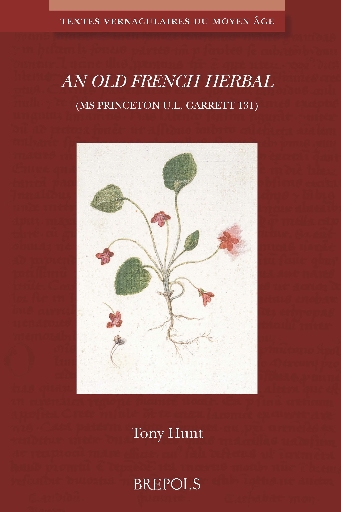
An Old French Herbal (Ms Princeton U.L. Garrett 131)
show More to view fulltext, buy and share links for:An Old French Herbal (Ms Princeton U.L. Garrett 131) show Less to hide fulltext, buy and share links for: An Old French Herbal (Ms Princeton U.L. Garrett 131)The earliest Old French herbal in verse, here edited for the first time, is a surprisingly comprehensive work (3188 octosyllables), based on an eleventh-century Latin treatise 'De viribus herbarum' attributed to a certain 'Macer'. It occupies a significant place in the development of herbals and is an interesting witness to writing in Western France in the thirteenth century and to the unusual syntax and concentrated style of its author. Some one hundred and twenty-five plants are described together with their medicinal uses, which cover a remarkable range of ailments. For ease of recognition the sections of text which do not seem to be based on the received text of 'Macer' are printed in italics. Quotations from the principal source and from parallels are given in the notes. This work will be of great value to all those interested in Old French, in medieval translation, the vernacular transmission of learning, and the history of medicine.
-
-
-
Old English Heroic Poems and the Social Life of Texts
show More to view fulltext, buy and share links for:Old English Heroic Poems and the Social Life of Texts show Less to hide fulltext, buy and share links for: Old English Heroic Poems and the Social Life of TextsOld English Heroic Poems and the Social Life of Texts develops the theme that all stories- all 'beautiful lies', if one considers them as such- have a potentially myth-like function as they enter and re-enter the stream of human consciousness. In particular, the volume assesses the place of heroic poetry (including Beowulf, Widsith, and The Battle of Maldon) in the evolving society of Anglo-Saxon England during the tenth-century period of nation-building. Poetry, Niles argues, was a great collective medium through which the Anglo-Saxons conceived of their changing social world and made mental adjustments to it. Old English 'heroic geography' is examined as an aspect of the mentality of that era. So too is the idea of the oral poet (or bard) as a means by which the people of this time continued to conceive of themselves, in defiance of reality, as members of a tribe-like community knit by close personal bonds. The volume is rounded off by the identification of Bede's story of the poet Cædmon as the earliest known example of a modern folktale type, and by a spirited defense of Seamus Heaney's recent verse translation of Beowulf.
-
-
-
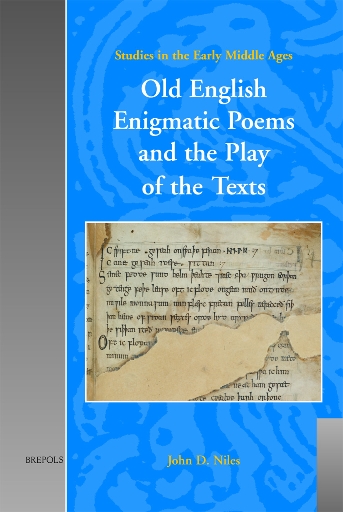
Old English Enigmatic Poems and the Play of the Texts
show More to view fulltext, buy and share links for:Old English Enigmatic Poems and the Play of the Texts show Less to hide fulltext, buy and share links for: Old English Enigmatic Poems and the Play of the TextsThis book consists of a close study of a number of verse texts chiefly drawn from the Exeter Book of Old English poetry. All of these texts are enigmatic. Some are outright riddles, while others (such as the elegies) are riddle-like in their manner of simultaneously giving and withholding information. The author approaches these poems as microcosms of the art of Old English poetry in general, which (particularly in its more lyrical forms) relies on its audience’s ability to decipher metaphorical language and to fill out details that remain unexpressed. The chief claim advanced is that Old English poetry is a good deal more playful than is often acknowledged, so that the art of interpreting it can require a kind of ‘game strategy’ whereby riddling authors match their wits against adventurous readers. Innovative readings of a number of poems are offered, while the whole collection of Exeter Book riddles is given a set of answers posed in the language of the riddler. The literary use of runes in The Rune Poem, The Husband’s Message, and Cynewulf ’s runic signatures comes under close scrutiny, and the thesis is advanced that Anglo-Saxon runes (particularly those that lacked stable conventional names) were sometimes used as initialisms. The book combines the methods of rigorous philology and imaginative literary analysis
-
-
-
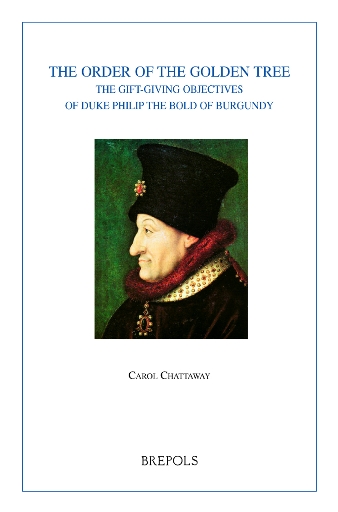
The Order of the Golden Tree
show More to view fulltext, buy and share links for:The Order of the Golden Tree show Less to hide fulltext, buy and share links for: The Order of the Golden TreeThis book explores the policy objectives underlying the gift of this Order, to sixty men, on January 1 1403. Drawing primarily on Philip’s household accounts, it undertakes complementary iconographical and prosopographical analyses (of the Order insignia’s form, materials, design and motto; and of distinguishing common features among its recipients), refined by reference to his policy concerns around the occasion of its bestowal, to test seven hypotheses. The evidence from the analyses enables six of these (that it was purely decorative; a courtly conceit; crusade-related; a military chivalric order; a livery badge; or a military alliance) progressively to be discarded, pointing strongly to the seventh, that the Order was a specific policy alliance, designed in fashionable form, to obscure its politically sensitive purpose. The nature of that purpose then permits a revision of Philip’s role in history, particularly in relation to the creation of an independent Burgundian state, and the use of a co-ordinated propaganda campaign of slogan, badge, and supporting literature, to legitimise and popularise his plans. The analytical approach also offers insights into the significance of decorative, material gift-giving; the identification of networks; Christine de Pisan’s earlier political writings, and the origins of the Order of the Golden Fleece.
Carol Chattaway is Honorary Research Assistant at the Royal College of Art and University College, London University. She researches on the political significance of material objects at the Burgundian Court, in the later middle ages.
-
-
-
Opere diffuse per exemplar e pecia
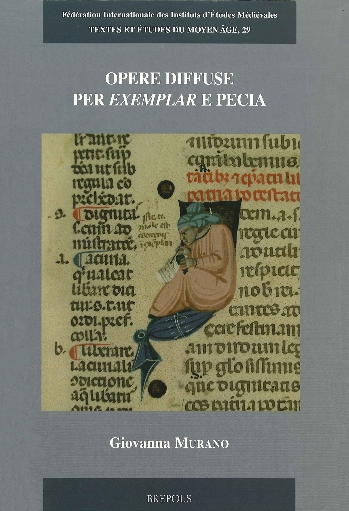
show More to view fulltext, buy and share links for:Opere diffuse per exemplar e pecia show Less to hide fulltext, buy and share links for: Opere diffuse per exemplar e peciaA partir des premières décennies du 13e siècle, la transmission de la science et de la connaissance dans une Europe unifiée par la langue, la religion et le droit, se prévaut d'un nouveau système de production du livre. Le manuscrit réalisé à l'aide de l'exemplar et de la pecia n'est plus seulement un objet de luxe, mais devient aussi un instrument pour la diffusion de la Bible, des Pères de l'Eglise, d'Aristote, des ouvrages arabes, en un mot de tous les textes qui nourrissent la scolastique, grâce à un nouveau système révolutionnaire qui leur assure une diffusion plus grande. A cette production, viennent s'ajouter les fruits même de la scolastique, à savoir les summae, les quodlibeta, les quaestiones et les commentaires.
Ce volume recense pour la première fois toutes les listes de taxation et des exemplaria découverts jusqu'à nos jours, depuis ceux connus depuis longtemps, provenant des universités de Paris, Bologne, Padoue etc., jusqu'aux moins connus conservés actuellement à Uppsala, Dubrovnik, Olomouc, Autun, Montpellier, Greiswald etc. Les sources documentaires rassemblées attestent la diffusion par exemplar et pecia de plus de 600 oeuvres.
La seconde partie du livre contient la description de 900 oeuvres extraites des sources documentaires ou attestées dans des manuscrits portant des indications de pecia et exemplaria. Il s'agit non seulement de textes en usage dans les facultés de théologie, de philosophie, de médecine et de droit, mais aussi des oeuvres qui ne faisaient pas partie du curriculum normal des études, à savoir la Legenda de Jacques de Voragine, les epistolae de Pierre de la Vigne, des summae confessorum, des summae sermonum et des encyclopédies. Ce corpus comprend la description de plus de 2800 manuscrits à pièces et exemplaria - 1800 provenant d'un index inédit du fichier de Destrez -. Transportés dans les lieux d'origine des étudiants, pour la plupart clercs, formatés dans les universités italiennes et françaises, les manuscrits actuellement conservés dans toutes les régions d'Europe (de l'Espagne à la Finlande, de l'Angleterre à la Pologne), constituent le témoignage matériel et culturel le plus concret de l'extraordinaire vitalité intellectuelle des 13e et 14e siècles. Cet ouvrage constitue donc un instrument de travail irremplaçable et de première main, non seulement pour les spécialistes des manuscrits, mais aussi pour tous les médiévistes
-
-
-
Oeuvres érotiques
show More to view fulltext, buy and share links for:Oeuvres érotiques show Less to hide fulltext, buy and share links for: Oeuvres érotiquesIl valait la peine, au moment où l'on redécouvre la richesse littéraire d'Eneas Silvius Piccolomini (Pie II), de publier un choix significatif de sa production érotique. Présentés chronologiquement, les textes contenus dans ce volume mettent en lumière l'évolution de sa conception de l'amour au cours de sa vie laïque. À la suite de la Cinthia, dont les plus anciens poèmes datent des années d'étude d'Eneas à Sienne, figurent quatre lettres: la première fournit un modèle de lettre d'amour (1443); la deuxième renferme l'Historia de duobus amantibus (1444); la troisième précédait une copie de la nouvelle destinée au chancelier impérial Gaspard Schlick (1444); la dernière enfin, datée de 1446, diffusée sous le titre de De remedio amoris, témoigne de la conversion spirituelle et morale d'Eneas, quelques mois avant son ordination comme sous-diacre. Le texte latin de l'Historia, qui repose sur une nouvelle transcription du manuscrit Prague, Státni Knihovna, XXIII F 112, est présenté en regard de la traduction qu'en donna Octovien de Saint-Gelais vers 1488. Œuvre de jeunesse d'un des plus grands poètes français de la fin du XVe siècle, cette savante traduction est le miroir vernaculaire et courtois du texte de l'humaniste italien.
-
-
-
The Old Norse Poetic Translations of Thomas Percy
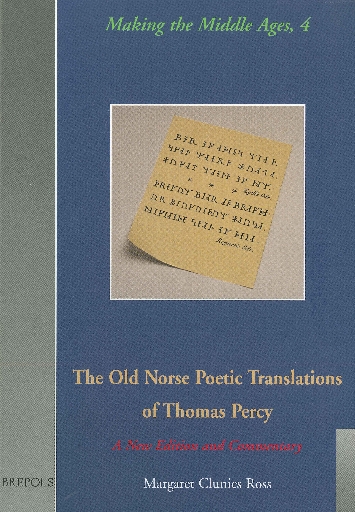
show More to view fulltext, buy and share links for:The Old Norse Poetic Translations of Thomas Percy show Less to hide fulltext, buy and share links for: The Old Norse Poetic Translations of Thomas PercyThomas Percy was the first serious translator of Old Norse-Icelandic poetry into English. He published his Five Pieces of Runic Poetry in London in 1763 and in 1770 published his translation of Mallet's very influential work on early Scandinavian literature and culture as Northern Antiquities (with extensive annotations and additions by Percy himself). In publishing Five Pieces, Percy was influenced by the success of Macpherson's first volume of Ossian poetry (1760) and his own wide-ranging interest in ancient, especially 'gothic' poetry. Five Pieces had a mixed reception and was never republished as a separate work, but reappeared as an appendix to the second edn. of Northern Antiquities. Nevertheless, it was a seminal work in the history of reception and understanding of Old Norse poetry in Britain and it also has more general significance in our understanding of the development of the discipline of Old Norse-Icelandic studies. This work makes available to the modern scholarly community the work of one of the pioneers of the discipline and produces in easily accessible format a text that is currently only available as a rare book. The study comprises a facsimile of the 1763 edition, with facing-page notes to allow the modern reader to situate Percy's work in its intellectual context, together with an introduction on Percy himself, his work on Old Norse-Icelandic studies, and the contemporary context of the reception of Old Norse poetry in Britain (and to some extent in the rest of Europe). In addition, this study publishes eight other poetic translations (one from Old English and the others from Old Icelandic) that Percy completed about the same time as the translations now in Five Pieces of Runic Poetry, but did not then publish, due to the restrictions of contemporary tolerance for demanding or difficult 'ancient' poetry. This publication reveals his full range as a translator for the first time.
-
-
-
Oeuvres, 1
show More to view fulltext, buy and share links for:Oeuvres, 1 show Less to hide fulltext, buy and share links for: Oeuvres, 1De Bonaventure à Gerson, Hugues de Saint-Victor († 1141) fut l'un des auteurs les plus transcrits, influents et goûtés. Sans doute parce que ce «second Augustin», philosophe, théologien, mystique et pédagogue, toucha de son génie jusqu'aux artes liberales, à la géographie et à l'histoire. Quatre chefs d'œuvre ouvrent la première édition et traduction française de son œuvre. Dans l'opuscule De la formation des novices, art de vivre et de savoir-vivre, une éthique exigeante guide la maîtrise du geste et de la discipline de la parole. De la puissance de la prière analyse les formes du discours adressé à Dieu en usant des préceptes de la rhétorique classique et cherche à concilier sincérité du sentiment personnel et psalmodie liturgique. Au siècle des délicatesses de l'amour courtois et de la redécouverte de la personne, Hugues s'est complu à composer une hymne à l'amour (La louange de la charité) et à mettre en scène les intermittences du cœur dans un monologue à deux personnages: lui-même et son âme; et ce sont Les arrhes de l'âme, une des perles de la littérature spirituelle du douzième siècle.
-