Brepols Online Books Medieval Monographs Archive v2016 - bobar16mome

Collection Contents
17 results
-
-
Per verba magistri
show More to view fulltext, buy and share links for:Per verba magistri show Less to hide fulltext, buy and share links for: Per verba magistriLoué par ses contemporains et critiqué par le seul Pierre Abélard, Anselme de Laon († 1117) constitue l’une des figures majeures de la « Renaissance du xiie siècle ». Anselme n’est pas seulement l’auteur probable de gloses et de commentaires bibliques, il est aussi le rédacteur de sentences théologiques à la diffusion manuscrite non négligeable. Afin de comprendre cette figure magistrale, il convient de restituer la carrière d’Anselme, de suivre la transmission de ses sentences théologiques et d’étudier la constitution des recueils rattachés à son enseignement. Il devient alors possible de montrer la manière dont un maître aussi prestigieux a fait école, de son vivant et jusque dans les dernières décennies duXIIe siècle.
Cédric Giraud, ancien élève de l’École nationale des chartes et agrégé d’histoire, est maître de conférences à l’université de Nancy 2 (ERL 7229 de Médiévistique). Ses recherches portent sur l’histoire culturelle du Moyen Âge central et la philologie médiolatine.
-
-
-
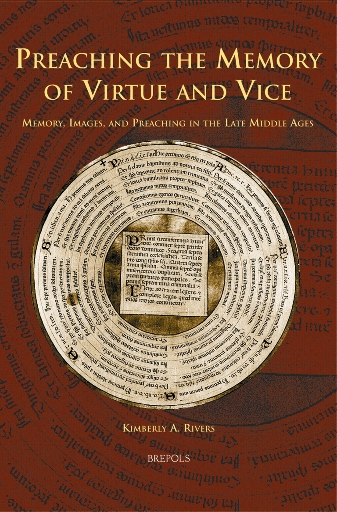
Preaching the Memory of Virtue and Vice
show More to view fulltext, buy and share links for:Preaching the Memory of Virtue and Vice show Less to hide fulltext, buy and share links for: Preaching the Memory of Virtue and ViceThis volume explores the integral role of memory and mnemonic techniques in medieval preaching from the thirteenth to the early fifteenth century. It argues that the mendicant orders inherited from the early Middle Ages both the simple mnemonic techniques of rhetorical practice and a tradition of monastic meditation founded on memory images. In the thirteenth century Dominican and Franciscan writers drew on these basic techniques even as they re-evaluated the ancient mnemonic system of the Rhetorica ad Herennium (first century BC). The increasing emphasis that intellectuals placed upon cognitive science, ethics, and on distinctions between rhetoric and logic created a climate that welcomed an image-based memory system designed for orators. The book also explores the Franciscan contribution to mnemonics, which has been almost entirely neglected by scholars. As the Franciscans came to value imaginative meditation as part of their own spiritual lives, their habit of meditating on mental images of the virtues and vices eventually spilled out into their sermons. As the new orators of the period, Franciscans and Dominicans each inserted mnemonic images into their sermons as a way to aid the recall of both preachers and listeners. The products of such mnemonic practices in medieval sermons, which included elaborate descriptions of buildings, schematic renderings of the number seven, and verbal images of the virtues and vices, were then allegorised in moral terms and circulated on the continent in exempla collections. This book argues that verbal images and complicated schema functioned as ‘ordering devices’ for those preaching and listening to sermons, whilst also provoking an affective response that enhanced listeners’ devotional and penitential experiences.
-
-
-
Pragmatic Literacy and the Medieval Use of the Vernacular
show More to view fulltext, buy and share links for:Pragmatic Literacy and the Medieval Use of the Vernacular show Less to hide fulltext, buy and share links for: Pragmatic Literacy and the Medieval Use of the VernacularBetween 1150 and 1400 Sweden was transformed from a society which was predominantly reliant on oral communication into a society which increasingly deployed writing. Latin, the traditional language of government and records, was gradually replaced by vernacular Swedish. The watershed moment in this process was the drafting of national and town laws in the 1350s, an event which established Swedish as the language of the judiciary and judicial records. From this period written documentation was gradually integrated into legal procedure.
Pragmatic Literacy argues that the Crown, the expanding bureaucracy, the editing of the laws in Swedish, and the laws’ demands for written documentation in everyday transactions were the main driving forces behind the development in medieval Sweden of lay literacy for practical purposes. The book demonstrates how the early use of writing by the royal administration and the writing of provincial laws in Swedish created “centres of literacy” from which literate ways of thinking and acting spread both geographically and socially. It further illustrates how literacy moved beyond the confines of the clerical elite, by exploring how different members of the laity adopted pragmatic literacy for private purposes. Pragmatic Literacy thus traces the history of pragmatic literacy in Sweden through the lens of the judicial and administrative archive.
Inger Larsson is professor of Swedish Language at the Department of Scandinavian Languages, Stockholm University.
-
-
-
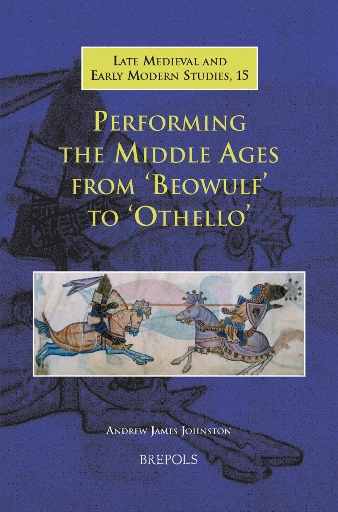
Performing the Middle Ages from 'Beowulf' to 'Othello'
show More to view fulltext, buy and share links for:Performing the Middle Ages from 'Beowulf' to 'Othello' show Less to hide fulltext, buy and share links for: Performing the Middle Ages from 'Beowulf' to 'Othello'Performing the Middle Ages from ‘Beowulf’ to ‘Othello’ traces the dialogic nature of the relationship between the Middle Ages and modernity. Arguing that modern beliefs in the alterity of the Middle Ages stem from the Middle Ages’ own processes of self-representation, Johnston explores varieties of nostalgia through a wide selection of texts. This volume spans an extensive chronological period with a view to demonstrating how our notions of the medieval have been crucially informed by the past itself. The study is focused on works which stage that popular literary archetype - the nostalgic figure of the aristocratic warrior - and argues that it is this image that provides a structural model for so many modern perspectives on the Middle Ages. And yet, in the Middle Ages this model was being deconstructed as it was also being generated. By moving from the self-consciously archaic heroism of Beowulf to the scathing comment on chivalric narrative presented in Chaucer’s ‘Knight’s Tale’, Johnston’s analysis offers an intriguing insight into the way medieval texts engage in a continual aesthetic and ideological critique of their own cultural moment. Using Sir Gawain and the Green Knight and the Alliterative Morte Arthure as examples of an incisive critique of the cult of subjectivity and of a highly self-conscious desire for tradition, Johnston extends his analysis to the early seventeenth century, and explores the ways in which Shakespeare’s Othello brilliantly deconstructs the very concept of ‘Renaissance Man’. With its interest in issues of subjectivity, textual performance, and the ideological self-awareness of medieval culture, Performing the Middle Ages provides a scholarly and compelling investigation into the Middle Ages’ ability both to understand itself and to shape (post)modern notions of the medieval.
-
-
-
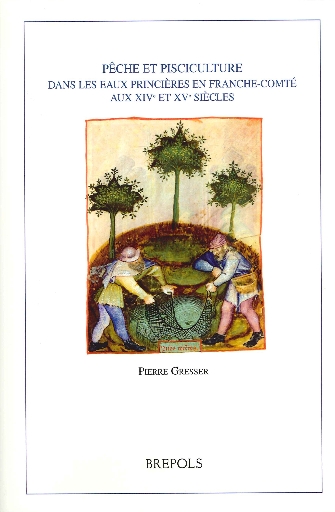
Pêche et pisciculture dans les eaux princières en Franche-Comté aux XIVe et XVe siècles
show More to view fulltext, buy and share links for:Pêche et pisciculture dans les eaux princières en Franche-Comté aux XIVe et XVe siècles show Less to hide fulltext, buy and share links for: Pêche et pisciculture dans les eaux princières en Franche-Comté aux XIVe et XVe sièclesParmi tous les éléments qui composaient le domaine des comtes de Bourgogne au bas Moyen Âge, les eaux vives et les étangs formaient un ensemble non négligeable, le poisson d’eau douce étant particulièrement recherché. C’est pour mieux mettre en valeur cette partie spécifique de ses propriétés en Franche-Comté que le duc-comte Eudes IV (1330-1349) créa un office nouveau : la gruerie, chargée d’administrer et de gérer les eaux et forêts domaniales.
La comptabilité de l’institution révèle que les rivières ne furent pas toutes prises en charge par le gruyer, d’où l’examen des comptes des autres officiers domaniaux. Dans tous les cas, les eaux vives donnèrent lieu à des amodiations, dont seuls les amodiataires et les revenus sont connus. Le recours aux chartes de franchises permet de mieux percevoir les rapports entre les sujets du prince et le milieu aquatique.
Des étangs les textes décrivent avec précision la structure, la pêche et la vente du poisson. Parmi les réserves piscicoles, il y avait des plans d’eau destinés à la reproduction, d’où le titre de pisciculture utilisé dans le titre de ce livre.
L’ouvrage se termine par une analyse des « mesus » (délits) perpétrés dans les eaux comtales, curieusement inclus dans le poste des « amendes des bois banaux ».
Au total cette étude forme le second volet d’un triptyque consacré aux eaux et forêts princières dans le comté de Bourgogne aux XIVe et XVe siècles. Elle fait suite logiquement à la description de l’office de gruerie en montrant son application aux eaux courantes et " stagnantes " (les étangs), c’est-à-dire deux milieux halieutiques très différents puisque le premier, à l’état naturel, s’oppose aux réserves piscicoles construites par les hommes.
-
-
-
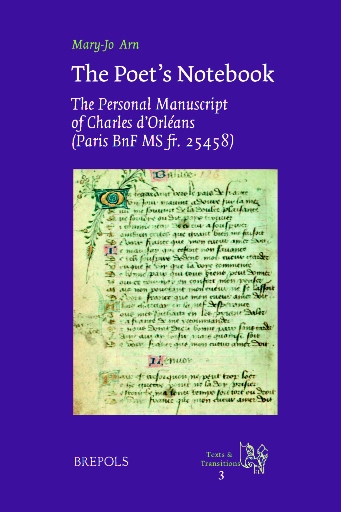
The Poet's Notebook
show More to view fulltext, buy and share links for:The Poet's Notebook show Less to hide fulltext, buy and share links for: The Poet's NotebookThis study of Charles d'Orléans's personal manuscript of his poetry - the first in nearly a century - paves the way not only for a new edition of the duke's œuvre (by Mary-Jo Arn, John Fox, and R. Barton Palmer) but for a new view of it. Following the first complete modern description of the manuscript, this study reconstructs the history of the manuscript, copying layer by copying layer. Codicological observations supplemented with palaeographical, historical, art-historical, and textual information reveal the approximate sequence of the manuscript’s composition, which in turn allows a re-dating of the manuscript and some of the poems in it. Charles saw lyric form differently than did his predecessors and contemporaries, a view made manifest in the poet’s own numbering of his poems. He mixed his complaintes with ballades and his rondels with chansons, each pair of forms in a numbered series, but never presenting the longer alongside the shorter forms. The analysis of the manuscript’s construction corrects the current physical disorder of the later chansons and rondels, as well as that of the ‘En la forest de longue actente’ series (including the lyric omitted from the standard edition) and re-evaluates the handful of English poems in the manuscript. In the end, we come to understand the relationship between the visual ‘messiness’ of the manuscript and the poet’s strong concept of lyric order. The technical aspects of the study are clarified by many tables and fascimile pages; the interactive cd contains an index of first lines that can be sorted in various ways to reveal a variety of kinds of manuscript relationships.
-
-
-
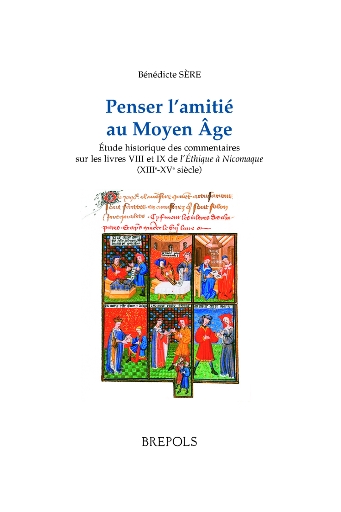
Penser l'amitié au Moyen Age
show More to view fulltext, buy and share links for:Penser l'amitié au Moyen Age show Less to hide fulltext, buy and share links for: Penser l'amitié au Moyen AgeSans conteste, l’amitié innerve le monde médiéval. Le vocable sature les textes tant pratiques que théoriques. Il concerne toute la société, l’élite, les milieux princiers et la noblesse autant que les humbles et le monde ordinaire. Au regard de l’insistance des sources médiévales à dire l’amitié dans sa factualité et sa réalité, il s’avère nécessaire de s’interroger sur la pensée de l’amitié au Moyen Âge. A-t-on pensé l’amitié au Moyen Âge? Plus exactement posé: quels sont les cadres intellectuels, institutionnels et structurels qui poussent les hommes des XIIIe-XVe siècles à penser l’amitié; quelles sont les conditions historiques et les événements culturels qui façonnent les contours d’une telle conceptualisation?
Les médiévaux puisent à la source aristotélicienne un matériau exceptionnellement dense: la philia de l’Éthique à Nicomaque est par excellence le lien social qui unit les citoyens. Penser l’amitié au Moyen Âge à partir de l’auctoritas aristotélicienne, c’était, en quelque sorte, nommer l’expérience proprement médiévale de l’amitié elle-même, définie par la précellence de son acception sociale.
Bénédicte Sère, est agrégée d’histoire et docteur de l’Université de Paris-I Panthéon Sorbonne.
-
-
-
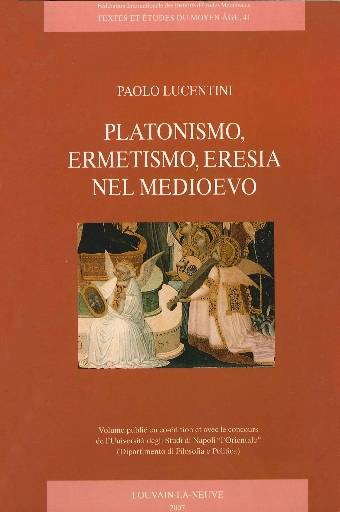
Platonismo, ermetismo, eresia nel medioevo
show More to view fulltext, buy and share links for:Platonismo, ermetismo, eresia nel medioevo show Less to hide fulltext, buy and share links for: Platonismo, ermetismo, eresia nel medioevoLes travaux de Paolo Lucentini ont changé de manière décisive notre approche de l’histoire de la philosophie médiévale. Initiateur de l’Hermes Latinus, il a publié plusieurs éditions et articles ayant trait à ce sujet. Ces publications ont changé fondamentalement notre conception de la « synthèse scolastique », en vigueur jusqu’aux années quatre-vingt. Les éditions de textes inédits qu’il a réalisées permettent de retrouver l’importance de sources encore mal connues et donc peu étudiées.
Comme la plupart de ses articles sont dispersés dans des revues et des ouvrages d’accès parfois difficile, ses collègues et ses élèves de l’Université de Naples, l’ « Orientale », ont souhaité lui rendre hommage en les réunissant en un volume. L’ouvrage rendra bien des services aux chercheurs qui souhaitent étudier de plus près l’hermétisme du Liber Alcidi, de l’Asclepius ou du Liber XXIV philosophorum. L’ensemble de ses articles constitue aussi une initiation privilégiée aux pratiques complexes de l’astrologie et de l’alchimie. Ils ouvrent la voie à des pratiques mystérieuses qui ont influencé profondément la pensée de nombreux auteurs médiévaux.
La table des matières illustre la richesse du contenu de ce livre : de la tradition ériugénienne à Honorius Augustodunensis, de la réception et de l’analyse de l’Asclepius au XIIe siècle, de l’influence du Liber XXIV philosophorum sur la Divine Comédie de Dante jusqu’aux hérésies provoquées par l’interprétation de ces textes chez certains auteurs, tous les articles permettront de mieux comprendre pourquoi l’hermétisme a profondément modifié notre conception de la pensée scolastique.
-
-
-
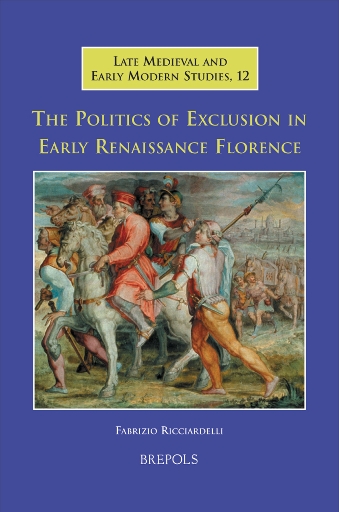
The Politics of Exclusion in Early Renaissance Florence
show More to view fulltext, buy and share links for:The Politics of Exclusion in Early Renaissance Florence show Less to hide fulltext, buy and share links for: The Politics of Exclusion in Early Renaissance FlorenceNo previous work has examined political exclusion in Early Renaissance Florence or its significance for the transition from Florentine popular government to oligarchy. Between the fourteenth and the first half of the fifteenth century, political exclusion became a normal feature of political life, regardless of the type of political regime; it was an essential instrument by which new governments consolidated their control over the city and the countryside in one of the largest and most powerful cities of Early Renaissance Europe. Exclusion from the Republic of Florence–separation from friends and family, business and property, coupled with the degradation of public humiliation–engendered a new outlook on life. In Early Renaissance Florence, excluded citizens across social classes became common outlaws, no different for common criminals prosecuted for heresy, blasphemy, gambling, or sexual deviance. By investigating these practices and attitudes of Early Renaissance Florence, this book shows the dark side of Renaissance republicanism: its fear of political dissent in any form and its means to crush it at all costs. This study of the other side of Renaissance republicanism presents a new and crucial chapter in Renaissance history.
-
-
-
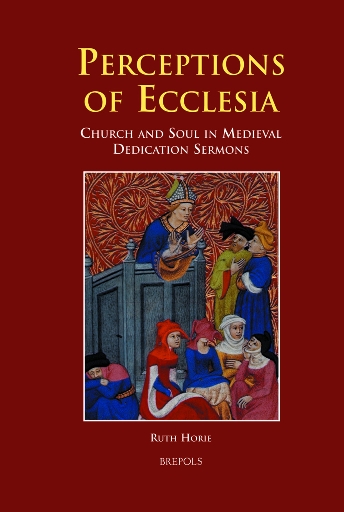
Perceptions of Ecclesia
show More to view fulltext, buy and share links for:Perceptions of Ecclesia show Less to hide fulltext, buy and share links for: Perceptions of EcclesiaThe medieval laity’s understanding of the church and their own role within it was largely shaped by preaching. How did preachers actually define the word 'church', and what was the essence of their ecclesiological teachings? Sermons for the dedication of a church reveal that the term
ecclesia had numerous connotations. Three key ideas recur with particular frequency: the material church, the Christian community, and the church of the soul. The physical church building held an important place in medieval society as a tangible connecting link between ordinary people on the one hand and saints, angels and the divine presence on the other. Yet perhaps more significantly, it stood as a symbol for the human soul. Preachers treat the dedication of the physical church as an elaborate metaphor for the spiritual consecration of the soul. The prominent interest in the concept of the soul as church, which is reflected in sermons, suggests a much more individual, less community-oriented focus in medieval spirituality than has been generally assumed.
-
-
-
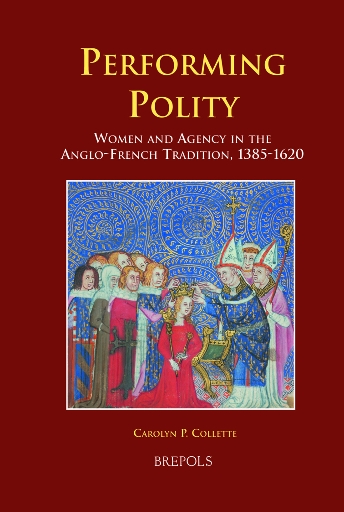
Performing Polity
show More to view fulltext, buy and share links for:Performing Polity show Less to hide fulltext, buy and share links for: Performing PolityReading a variety of texts centred in the power and agency of women during the period 1385 to 1620, this book examines changing ideals of gender within the context of changing ideologies of governance and polity. Together the essays that comprise this book lay out three lines of thinking about women and polity: that the ideology of late medieval gender roles articulated in Anglo-French texts of the late fourteenth and early fifteenth centuries outlined important roles for women’s voice and agency in supporting the larger polity as well as the smaller household; that the acceptance and the value of those roles diminished as models of polity in both Church and State in England changed in the early modern period; that to see this change merely in terms of change in expectations of gender roles is to miss the vital link between the status of women and the political construction of individual relationship to authority. Woman is the site on which society delineates the degree of freedom and independence it will tolerate in the political subject. The attention directed to women’s roles in the plethora of woman-centred stories, courtesy books, prayer books, sermons and tracts in the period 1385-1620 is an index to shifting alignments of power that replaced medieval models of partnership and co-operation with models of obedience.
-
-
-
Pierre de Blois
show More to view fulltext, buy and share links for:Pierre de Blois show Less to hide fulltext, buy and share links for: Pierre de BloisL'essor des villes au XIIe siècle s'accompagne de l'apparition d'un nouveau groupe social, les intellectuels. Ces magistri qui écrivent, enseignent et se déplacent à travers l'Europe naissante commencent de peupler, à partir du règne d'Henri II Plantagenêt, les cours des puissants à la recherche d'un personnel qualifié pour structurer une administration en gestation, ce qui offre aux ambitieux l'occasion de faire carrière, même s'ils sont d'origine modeste.
Pierre de Blois, issu de la petite noblesse bretonne, appartient à ce groupe émergeant. Maître ès arts et poète célèbre, il se laisse emporter par la perspective d'un rôle de premier plan et se retrouve d'abord à la cour royale de Palerme, précepteur du jeune Guillaume II et garde des sceaux. Revenu en France après l'échec politique de l'équipe qu'il avait suivie en Sicile, il est appelé par Henri II en Angleterre. Cependant, au sortir d'une grave maladie, rongé de remords, il quitte ses fonctions auprès du roi pour offrir ses services aux deux successeurs de Thomas Becket à Cantorbéry.
Véritable cas d'espèce, Pierre de Blois n'a pas voulu profiter des avantages que lui réservait sa position privilégiée pour rejoindre le cercle dirigeant de son temps. Pris dans un conflit devenu pour lui presqu'existentiel au fil des ans, il condamne finalement, au nom de sa déontologie, son ambition de vouloir jouer un rôle prééminent: diacre, il ne doit pas s'engager dans les affaires du monde. La peur des compromis, voire des compromissions, l'a donc fait renoncer au but ultime de nombreux magistri, l'épiscopat, et à l'exercice d'un pouvoir spirituel et temporel. S'il s'est contenté du rang d'archidiacre, il ne s'est pas lassé d'encourager les décideurs de l'époque à résoudre son propre problème: accorder action publique et préceptes chrétiens.
-
-
-
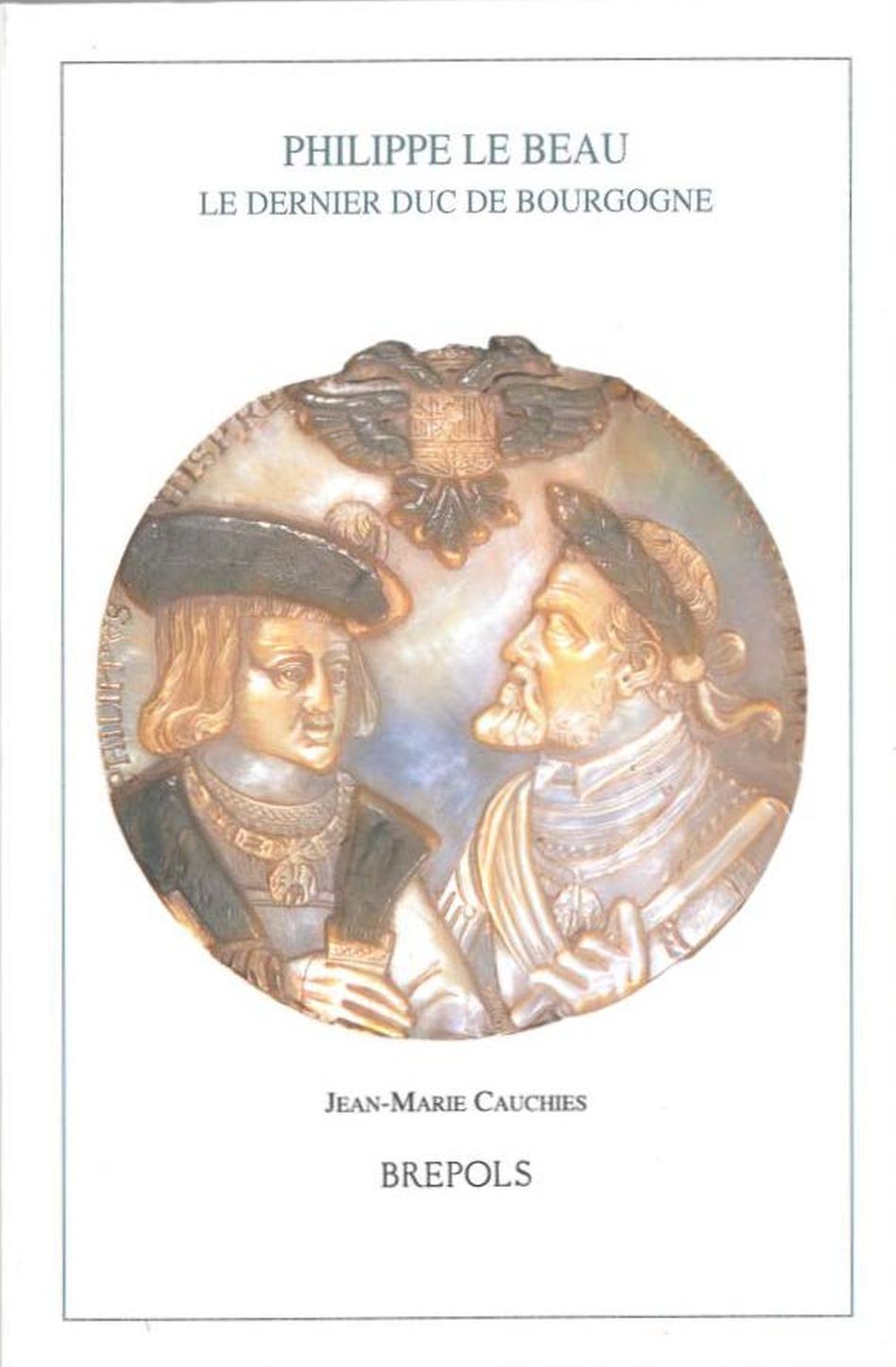
Philippe le Beau. Le dernier duc de Bourgogne
show More to view fulltext, buy and share links for:Philippe le Beau. Le dernier duc de Bourgogne show Less to hide fulltext, buy and share links for: Philippe le Beau. Le dernier duc de BourgognePhilippe de Habsbourg-Bourgogne, dit le Beau, archiduc d'Autriche, prince "naturel" dans les Pays-Bas, éphémère roi de Castille, fait trop souvent d' " oublié de l'Histoire ". Mort jeune encore, en pleine ascension politique, " victime " de la notoriété de ses parents, Maximilien et Marie, et davantage encore de son fils aîné Charles Quint, éclipsé dans la mémoire par son épouse Jeanne, dite la Folle, il trouve mal sa place dans l'historiographie, aux confins du moyen âge et de la Renaissance, de la féodalité des grands princes et du temps d'expansion de l' " Etat moderne " en occident. Né à Bruges en 1478, mort à Burgos en 1506, il est pourtant un maillon essentiel. Sa biographie morale et politique entraîne le lecteur à la découverte du pouvoir et de ses instruments, de la diplomatie et de ses intrigues, de Malines à Madrid, de Windsor à Innsbruck. Européen par la force des choses, Philippe le Beau, très entouré de " ministres " aux vues ambitieuses et divergentes, n'est pas encore le dépositaire d'une aspiration à la monarchie universelle vers laquelle tendra son successeur. Il demeure avant tout un duc de Bourgogne, l'héritier et le continuateur d'une lignée. Les choix politiques qu'il assume à ce titre, face à son père l'empereur élu du Saint Empire, à ses beaux-parents les Rois catholiques, au roi de France, ont pu faire de lui un " enfant terrible " de la politique internationale.
-
-
-
Picatrix
show More to view fulltext, buy and share links for:Picatrix show Less to hide fulltext, buy and share links for: PicatrixTémoignage des contacts de culture dans l'Espagne d' Alphonse le Savant, le Picatrix se présente comme une traduction d'un originai arabe (le Ghâyat AlHakîm), auquelle ou les t raducteurs ont beaucoup retranché ou ajouté.
L'ouvrage expose les connaissances de toute nature indispensables à qui veut agir sur le m onde et l es hommes : fabrication des talismans, exploitation de tous les règnes - minéral, animai et végétal - , prières aux planètes, données astrologiques, physiques et philosophiques. La pratique magique s'inscrit ainsi dans un cadre philosophico-religieux très particulier où l'hermétisme et le néoplatonisme sont associés à l'orthodoxie religieuse. Le Picatrix illustre parfaitement l'idée selon laquelle la magie n'est pas seulement un reflet de la science, mais se présente aussi comme un système complet, une méthode de pensée, de croyance et de savoir. Il a exercé une profonde et durable influence au Moyen Age et à la Renaissance.
-
-
-
Petit manuel pour le dévot moderne. Tractatulus devotus
show More to view fulltext, buy and share links for:Petit manuel pour le dévot moderne. Tractatulus devotus show Less to hide fulltext, buy and share links for: Petit manuel pour le dévot moderne. Tractatulus devotusLe mouvement spirituel du XIVe siècle connu sous le nom de Devotio moderna, a reçu outre l'impulsion de Gérard Grote († 1384) son organisation et son soutien de Florent Radewijns, qui à côté de Gérard Zerbolt et à une place que son zèle de disciple privilégié ne déclarerait pas mineure, doit être considéré comme un cofondateur. Rédacteur d'un rapiarium, anthologie spirituelle à usage personnel ou communautaire des Frères de la Vie commune, Florent a mis en œuvre le matériau ainsi rassemblé, dans un ouvrage où paraît le génie didactique de la Devotio moderna, aiguisé par ses premières tâches pédagogiques: le Tractatulus devotus est un véritable Petit manuel pour le dévot moderne, d'une tonalité plus souriante que les écrits plus élaborés de son secrétaire, Gérard Zerbolt.
La découverte du rapiarium comme source première du Petit manuel a permis d'en restituer le texte dans les meilleures conditions, malgré la disparition en mai 1940 de l'unique manuscrit d'une œuvre à circulation interne, représentant une forme de «littérature domestique».
Avec le précédent volume sur Gérard Grote, paru dans la même collection, c'est la seconde personnalité de la Devotio moderna qui est maintenant mise en lumière. L'Introduction de Thom Mertens reconstitue ce milieu où s'unissent activité de prière, activité pédagogique et activité littéraire, où la lecture est source de l'écriture.
-
-
-
Prier au moyen âge
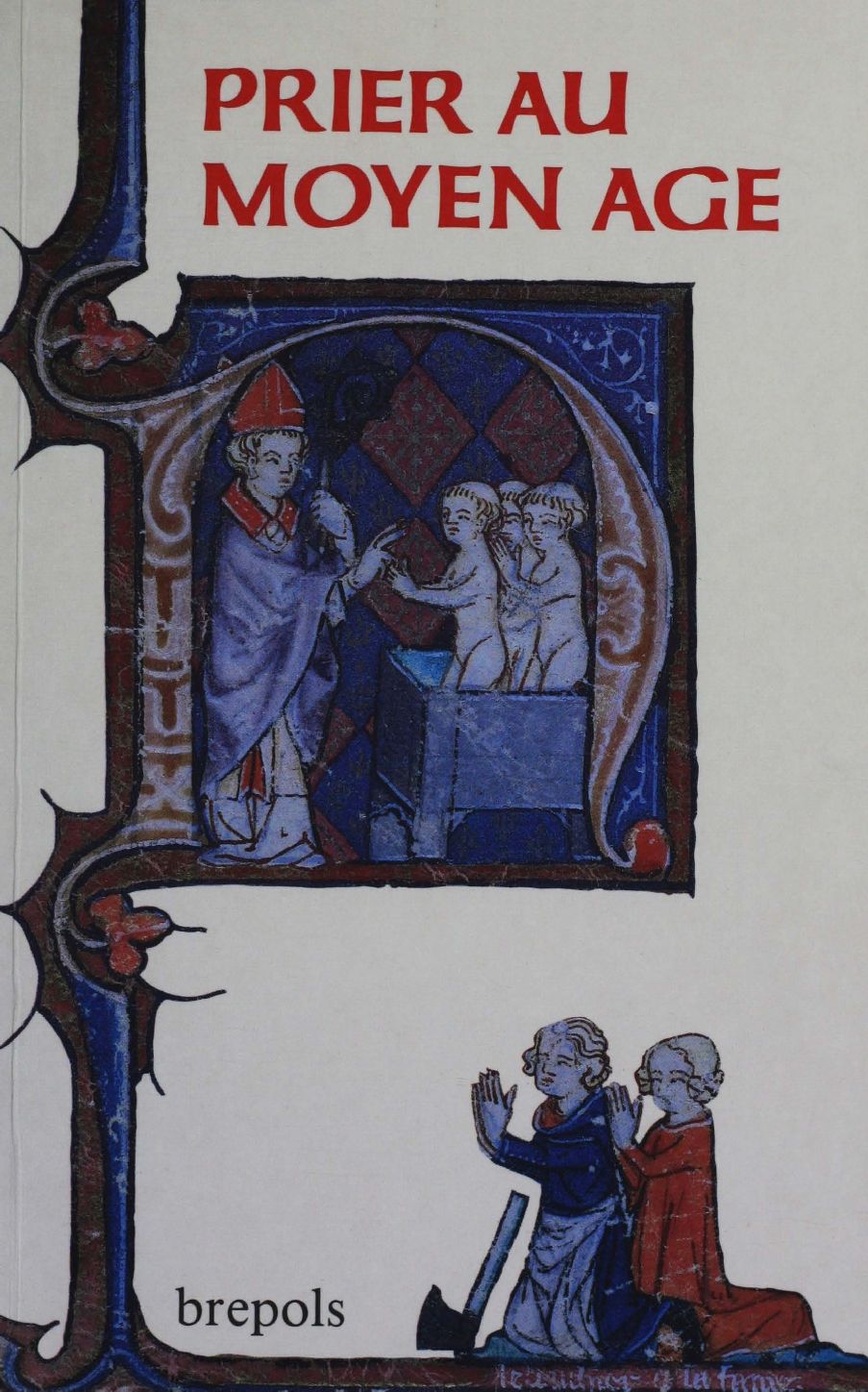
show More to view fulltext, buy and share links for:Prier au moyen âge show Less to hide fulltext, buy and share links for: Prier au moyen âgeLa prière est au Moyen Age une pratique fondamentale. Quels en sont les mots, les gestes et les modèles? Comment religieux et laïcs priaient-ils? Hommes ou femmes? Princes ou "simples gens"? Bref, comment la prière était-elle dite, vécue et pensée? Pour répondre à ces questions, des spécialistes de la pensée religieuse médiévale ont interrogé des textes dont ils proposent ici la traduction (pour l'essentiel inédite) et le commentaire. De Florus de Lyon à Abélard, de Césaire d'Arles à Vincent Ferrier, des prières des moines à celles des Cathares, de la prière talisman aux patenôtres glosées, le lecteur se voit convié à goûter toute la richesse d'une prière aux formes multiples et aux aspects parfois inattendus.
-