Brepols Online Books Medieval Monographs Archive v2016 - bobar16mome

Collection Contents
18 results
-
-

Saint-Bénigne de Dijon en l'an mil, 'totius Galliae basilicis mirabilior'
show More to view fulltext, buy and share links for:Saint-Bénigne de Dijon en l'an mil, 'totius Galliae basilicis mirabilior' show Less to hide fulltext, buy and share links for: Saint-Bénigne de Dijon en l'an mil, 'totius Galliae basilicis mirabilior'Dans son histoire du monde, écrite vers 1030, Raoul Glaber dépeint l’église préromane de Saint Bénigne de Dijon comme “plus admirable que les basiliques de toute la Gaule” (totius Galliae basilicis mirabiliorem). Commencée autour de 1001 et consacrée en 1016 (l’église) et 1018 (la rotonde), cette abbatiale bénédictine, dont seule la crypte de la rotonde subsiste, relevait des traditions architecturales romaine, carolingienne et ottonienne. Elle fut construite à un moment-clé de l’histoire politique de la France et de la Bourgogne et peut être interprétée en fonction de l’idéologie de ses bâtisseurs, l’abbé Guillaume et l’évêque Brun de Langres. Il faut également la lire comme un cadre exceptionnellement bien conçu pour la dévotion monastique et la liturgie de Cluny telle qu’interprétée par Guillaume. Cet ouvrage se veut une interprétation visuelle, politique, liturgique et théologique de cette église étonnante de l’an mil.
Carolyn Marino Malone est professeur dans le département d’Histoire de l’art, University of Southern California, Los Angeles (USA). Elle est spécialiste d’architecture romane française et gothique anglaise. Son dernier livre s’intitule Façade as Spectacle: Ritual and Ideology at Wells Cathedral, Studies in Medieval and Reformation Traditions, vol. 102 (Leiden-Boston, 2004).
-
-
-
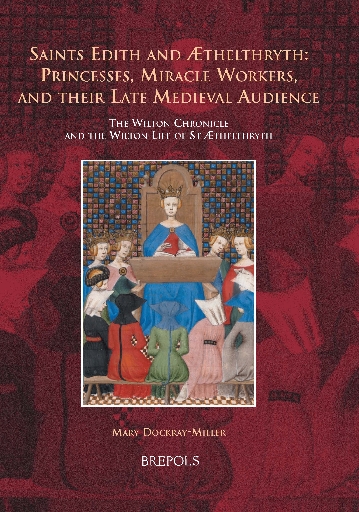
Saints Edith and Æthelthryth: Princesses, Miracle Workers, and their Late Medieval Audience
show More to view fulltext, buy and share links for:Saints Edith and Æthelthryth: Princesses, Miracle Workers, and their Late Medieval Audience show Less to hide fulltext, buy and share links for: Saints Edith and Æthelthryth: Princesses, Miracle Workers, and their Late Medieval AudienceSaints Edith and Æthelthryth: Princesses, Miracle Workers, and their Late Medieval Audience narrates the lives of two Anglo-Saxon princesses who were venerated as saints long after their deaths. St Edith, the daughter of King Edgar, was renowned as a patron of the arts and the church during her lifetime; her posthumous miracles included protection of Wilton Abbey and the English royal family. St Æthelthryth, who retained her virginity through not one but two royal marriages, also worked numerous miracles at her tomb at the Abbey of Ely. The poems, composed at Wilton Abbey in the early fifteenth century, allow us to see how late medieval religious women practised their devotion to early medieval women saints. The Middle English verse texts are presented here in the original and in translation with explanatory notes and glossary. A thorough introduction provides extensive contextualization and analysis of the two poems as well as description of the manuscript and its language and prosody. These primary source texts are important contributions to the study of English history, language, literature, religion, and women's studies.
-
-
-
Saints ermites en Limousin au XIIe siècle
show More to view fulltext, buy and share links for:Saints ermites en Limousin au XIIe siècle show Less to hide fulltext, buy and share links for: Saints ermites en Limousin au XIIe siècleLes biographies de saints ermites sont souvent négligées car ces textes comportent des longueurs qui lassent, voire des futilités qui irritent: autant de raisons qui en écartent le lecteur qui se dit sérieux. L’école positiviste qui voulut, avec raison souvent, réagir contre cette littérature trop facilement apologiste l'écarta parce qu'elle la croyait inutile et même dangereuse. Les érudits de cette école -souvent des clercs- qui, malgré tout, s'y intéressèrent, n'en retinrent que les cadres institutionnels et une échelle chronologique, résultats aussi indispensables qu'insuffisants puisqu'ils en négligeaient l'apport psychologique. Il est donc indispensable de relire ces œuvres hagiographiques afin de ne négliger aucun de leurs aspects.
Vécurent, à la fin du XIe et au début du XIIe siècle en terre limousine, quatre ermites dont la biographie de bon aloi fut écrite à la génération qui suivit leur mort. Ces documents permettent de connaître à la fois l'originalité de chacun d'eux et de préciser les traits communs de ce vaste mouvement.
Le premier arrivé fut Etienne de Muret dont les idéaux érémitiques sont de toute évidence à situer dans la mouvance de saint Nil de Rossano dont il connut les disciples lors d'un séjour qu'il fit en Calabre. C'est après une halte dans l'entourage de Milon, archevêque de Bénévent, et un court passage à la Curie romaine que ce fils du vicomte de Thiers en Auvergne s'installa vers 1076-1078 à Muret où il mourut en 1124. Il est le fondateur de l’Ordre de Grandmont.
Un peu plus tard, le Normand Gaucher choisit la solitude des environs d'Aureil près de Limoges. Il s’était placé très tôt sous la houlette bienveillante des chanoines de la cathédrale et fit par la suite une sorte de stage dans la congrégation des chanoines de Saint-Ruf, près d'Avignon. Il mourut en 1125.
Dans les mêmes années, un limousin "creusois" nommé Geoffroy, après des études à Tours, puis sans doute à Chartres, interrompit une carrière enseignante à Limoges pour se fixer au Chalard, sur les bords de l'Isle. Geoffroy mourut en 1140.
L'installation à Obazine du "corrézien" Etienne date des environs de 1120. A la différence des trois premiers, il n'avait pas reçu une instruction autre que celle exigée alors pour un prêtre de paroisse qu'il fut en ses débuts. Il fut ensuite apprenti-ermite, prit conseil de l’évêque de Clermont, un ancien abbé de La Chaise-Dieu et partit aussi consulter le prieur de La Chartreuse qui lui suggéra de s'affilier à l'Ordre de Cîteaux, ce qu'il fit en 1147. Il mourut en 1159.
-
-
-
A Supplement to Morton W. Bloomfield et al., 'Incipits of Latin Works on the Virtues and Vices, 1100-1500 A.D.'
show More to view fulltext, buy and share links for:A Supplement to Morton W. Bloomfield et al., 'Incipits of Latin Works on the Virtues and Vices, 1100-1500 A.D.' show Less to hide fulltext, buy and share links for: A Supplement to Morton W. Bloomfield et al., 'Incipits of Latin Works on the Virtues and Vices, 1100-1500 A.D.'This volume advances the utility of Morton W. Bloomfield et al., Incipits of Latin Works on the Virtues and Vices, 1100-1500 A.D. (1979) by correcting, supplementing, adding to, or deleting information in this commonly-used reference guide to medieval Latin manuscripts of an ethical or pastoral character. Careful attention is paid to updating the identification of texts and their authorship and references to critical editions of works on the vices and virtues. Many new manuscript witnesses and over 500 new texts are added to those found in the earlier catalogue and a number of short texts on vices and virtues are edited here for the first time.
Richard Newhauser, Arizona State University-Tempe, is the author of Sin: Essays on the Moral Tradition in the Western Middle Ages (2007) and editor of The Seven Deadly Sins: From Communities to Individuals (2005) and In the Garden of Evil: The Vices and Culture in the Middle Ages (2005).
István Bejczy is the author of The Cardinal Virtues in the Middle Ages: A Study in Western Moral Thought from the Fourth to the Fourteenth Centuries (forthcoming) and editor of several volumes of articles on medieval virtue ethics.
-
-
-
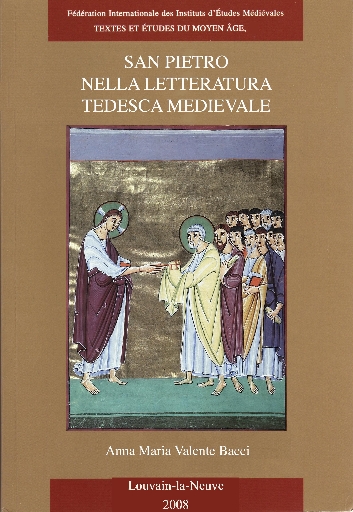
San Pietro nella letteratura tedesca medievale
show More to view fulltext, buy and share links for:San Pietro nella letteratura tedesca medievale show Less to hide fulltext, buy and share links for: San Pietro nella letteratura tedesca medievaleNella letteratura tedesca medievale la figura di Pietro assume un ruolo primario per tutto il medioevo fin dalle origini. Gli stretti rapporti che univano la Chiesa tedesca a Roma ed ai suoi pontefici, il riconoscimento del primato petrino e papale avevano portato a considerare il patrocinio di san Pietro superiore a quello di qualsiasi altro santo, all’affermazione ed espansione del culto dell’apostolo, alla sua celebrazione in una molteplicità di testi di vario genere. Questa monografia si propone di ricostruire l’immagine di Pietro attraverso l’analisi di testimonianze letterarie in volgare “tedesco”, composte nell’arco di tempo compreso tra i secoli IX-XIV. Nei testi della fase più antica, il tentativo di conciliare i due sistemi di valori, cristiano e germanico, indusse a connotare le prerogative con elementi che descrivono il rapporto fra Gesù e i discepoli secondo i termini della Gefolgschaft germanica. Nei testi del periodo medio si mettono in rilievo la funzione ecclesiale e la trasmissione del potere di legare e sciogliere da Pietro al papa, ai vescovi ed ai sacerdoti tutti. Permane la tendenza a giustificare i rinnegamenti di Pietro, 'necessari' er mostrare il legame inscindibile tra perdono e pentimento, per dare speranza all’uomo circa l’incommensurabilità della misericordia divina. Si affianca, inoltre, la figura del discepolo con quelle dell’apostolo, del taumaturgo e del martire. Il libro fornisce un contributo essenziale alla ricostruzione delle modalità con cui la complessa figura di san Pietro venne recepita in area tedesca, mettendo così in luce aspetti della sua personalità finora trascurati.
Anna Maria Valente Bacci, professore di Filologia germanica presso l’Università degli Studi della Tuscia (Viterbo), ha svolto la sua attività scientifica e didattica anche presso le Università di Roma La Sapienza e Roma Tre. Ha concentrato i suoi studi soprattutto sulla letteratura omiletica e leggendaria di area inglese e tedesca. Sullo stesso argomento ha scritto un contributo su La figura di san Pietro nelle prediche tedesche medievali, curando anche la pubblicazione degli Atti del Convegno su La figura di san Pietro nelle fonti del Medioevo (Textes et Études du Moyen Âge 17, Louvain-la-Neuve, 2001)
-
-
-
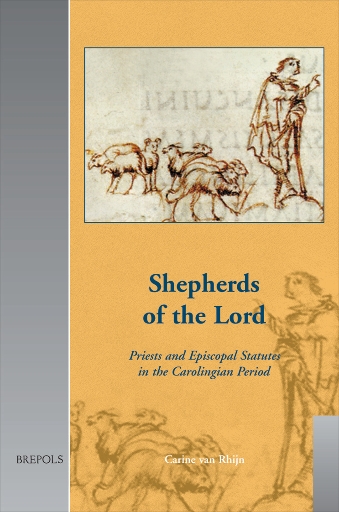
Shepherds of the Lord
show More to view fulltext, buy and share links for:Shepherds of the Lord show Less to hide fulltext, buy and share links for: Shepherds of the LordThis book is the first study of the rural priesthood, its significance, and the statutes written for them in the time of the Carolingians. It seeks to trace and explain the rise and emergence in the Carolingian period of both local priests and episcopal statutes that aimed at steering their behaviour. It was in the context of Carolingian ideals of reform, formulated in court-centred circles from the late eighth century onwards, that local priests increasingly came to be seen as those that held the key to turning the local Frankish population into ideal Christians by their word and living example. First of all, however, these educators needed to be educated themselves, hence the emergence of the Episcopal statutes, a new tool to direct the local diocesan clergy into becoming the ideal 'Shepherds of the Lord' that they needed to be. Smooth as this process of empire-wide reform theoretically was, however, obstacles lurked, both from a top-down (episcopal) and a grass-roots (local) perspective on the status, role, and function of priests. Nevertheless, the ninth century saw the emergence of the priesthood and the development of their role as an important group that connected bishops with the lay inhabitants of their dioceses and, from a higher-up perspective, those who opened up the vast Carolingian country-side to the implementation of the ideal society in the minds of contemporary reformers.
-
-
-
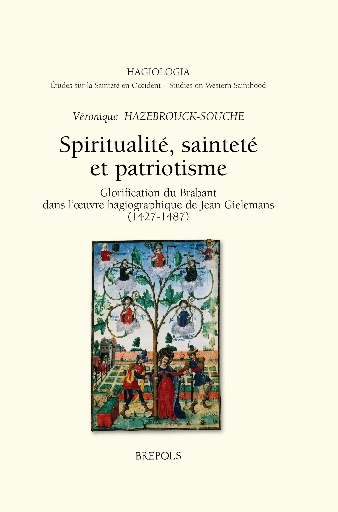
Spiritualité, sainteté et patriotisme
show More to view fulltext, buy and share links for:Spiritualité, sainteté et patriotisme show Less to hide fulltext, buy and share links for: Spiritualité, sainteté et patriotismeL’hagiographie a souvent été décriée jusqu’au vingtième siècle. C’est ainsi que la plus vaste compilation hagiographique du Moyen Age occidental était restée dans l’oubli presque total. à travers quatre volumineux manuscrits en latin (Sanctilogium, Agyologus Brabantinorum, Novale Sanctorum et Hystoriologus Brabantinorum), Jean Gielemans (1427-1487), chanoine régulier de saint Augustin à Rouge-Cloître en Brabant, avait pourtant réalisé entre 1471 et 1487 une véritable encyclopédie hagiographique, et plus encore, laissé un trésor inestimable pour l’histoire religieuse, culturelle et politique.
Issu d’une thèse de doctorat, ce livre met en évidence un genre patriotique inédit où l’hagiographe exalte le Brabant à travers une histoire sacrée tout en reflétant deux idéaux de sainteté, masculine et féminine, entre mystique et Dévotion moderne.
Véronique Hazebrouck-Souche, docteur en histoire médiévale, a enseigné principalement à l’université de Paris X et participé à des projets de recherche en France, Belgique, Italie, Angleterre, Allemagne et aux Pays-Bas.
-
-
-
Scribes, souscripteurs et témoins dans les actes privés en France (VIIe - début du XIIe siècle)
show More to view fulltext, buy and share links for:Scribes, souscripteurs et témoins dans les actes privés en France (VIIe - début du XIIe siècle) show Less to hide fulltext, buy and share links for: Scribes, souscripteurs et témoins dans les actes privés en France (VIIe - début du XIIe siècle)Les souscriptions sont un des éléments les plus importants des actes du Haut Moyen Age. Il s'agit en effet du principal, voire même souvent de l'unique moyen de validation. L'étude des souscriptions permet de passer en revue la vocabulaire de la souscription, les signes graphiques mis en oeuvre (entre autres la croix, le monogramme, le chrisme...). Elle offre aussi l'occasion de mieux comprendre comment se déroulait l'élaboration, la souscription et la promulgation d'un acte, quelle était la part d'autographie dans ces souscriptions, quels étaient les scribes qui écrivaient ces actes. Elle remet donc en perspective la place de l'écrit dans la société médiévale.
-
-
-
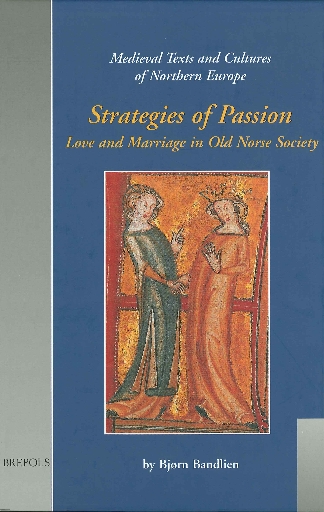
Strategies of Passion
show More to view fulltext, buy and share links for:Strategies of Passion show Less to hide fulltext, buy and share links for: Strategies of PassionThis book is concerned with the social and gendered meanings of love in medieval Norway and Iceland. In the Viking Age, to love would most often imply a submissive social position, while being loved by a woman could elevate a man above the status of her family. Women were supposed to love upwards in the social hierarchy, but could also use their desire to negotiate the social position of men. A close reading of the skaldic poetry shows the dilemma men faced when longing for women’s love and approval. These ideas of love relations shaped Norse interpretations of courtly love and marriage formation by consent in the twelfth and thirteenth centuries. However, new ideas of sexuality, gender and society affected the understanding of love and marital affection in the later Middle Ages. Men became the loving subject, but in a way that did not challenge the social order. For women, ideal love was attached to humility and submission to parents and husband. But even though the new ideology of love and marriage to some extent neutralized the tensions between consent and parental control, the sources show that both men and women could use the new conceptions of love to serve their own marital and social strategies.
-
-
-
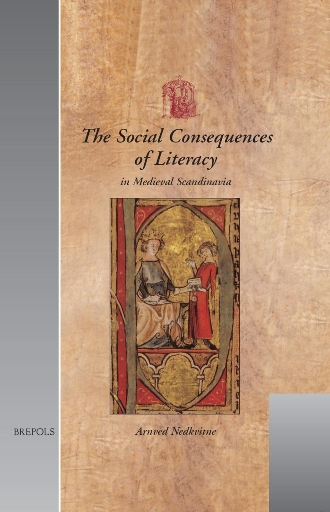
The Social Consequences of Literacy in Medieval Scandinavia
show More to view fulltext, buy and share links for:The Social Consequences of Literacy in Medieval Scandinavia show Less to hide fulltext, buy and share links for: The Social Consequences of Literacy in Medieval ScandinaviaBetween 1000 and 1536 Scandinavia was transformed from a conglomerate of largely pre-state societies to societies with state governments. The state increasingly monopolised ‘legitimate’ violence. Church and state used literacy to strengthen social control in central and important areas: jurisdiction, religion and accounting. Written laws made social norms more precise and easier to change, a necessity in an increasingly complex society. The basic social transformations of the period cannot be attributed to increasing literacy alone, but the written word rendered them more peaceful and gradual, and strengthened social conformity and cohesion. Writing in Roman letters was introduced late to Scandinavia (ca. 1000 ad); consequently the transition from orality to literacy is better documented than in many other European societies. The rich saga literature from the twelfth and thirteenth centuries emerged at the time that administrative literacy was introduced. Until the fourteenth century, literacy was mainly promoted by church and state in their efforts to pacify and control society. Then the literate elites grew, encompassing ever larger groups of officials, clerks, merchants and artisans, many of whom were now educated in town schools. The resulting elite culture prepared the ground for the development of a proto-national identity.
-
-
-
Send me God
show More to view fulltext, buy and share links for:Send me God show Less to hide fulltext, buy and share links for: Send me GodIn the early thirteenth century the diocese of Liège witnessed an extraordinary religious revival, known to us largely through the abundant corpus of saints' lives from that region. Cistercian monks, nuns, beguines, and recluses formed close-knit networks of spiritual friendship that easily crossed the boundaries of gender, religious status, and even language. Holy women such as Mary of Oignies and Christina the Astonishing were held up by their biographers as models of orthodoxy and miraculous powers. Less familiar but no less fascinating are the male saints of the region. In this volume Martinus Cawley, ocso, has translated a trilogy of Cistercian lives composed by the same hagiographer, Goswin, who was a monk and cantor at the celebrated abbey of Villers in Brabant. Although all three of these saints were connected with the same order, their versions of holiness represent a study in contrasts, from the compassionate nun Ida of Nivelles, remarkable for her eucharistic raptures, to the fiercely ascetic lay brother Arnulf, to the gentle monk Abundus, renowned for his deep liturgical and Marian piety. The title Send Me God derives from a revealing catch-phrase that devout men and women used to request prayers from their spiritual friends.
-
-
-
A Sociophilological Study of Late Latin
show More to view fulltext, buy and share links for:A Sociophilological Study of Late Latin show Less to hide fulltext, buy and share links for: A Sociophilological Study of Late LatinSociophilology combines traditional detailed philological expertise with the broader insights of modern sociolinguistics. Late Latin is the native language, both spoken and written, of the former Roman Empire in the Early Middle Ages, sometimes also regarded as being 'Early Romance'. By the thirteenth century Late Latin had split conceptually, from being a single complex living language, into several different living Romance languages, as well as the 'dead' language we now call 'Medieval Latin'. The complex aspects of these developments have been central to Roger Wright's research for many years; this sociophilological study of Late Latin places many texts, authors, scribes and linguistic developments in a coherent historical, intellectual and educational context. The book is presented in six sections, with four chapters in each: Late Latin, Medieval Latin and Romance; Texts and Language in Late Antiquity; The Ninth Century; Italy and Spain in the Tenth and Eleventh Centuries; Twelfth- and Thirteenth-Century Spain; Sociophilology and Historical Linguistics; followed by a Conclusion, a lengthy bibliography, and an index. The whole presents a vitally important intrinsic component of a thousand years of European cultural history, seen from unusually wide historical and linguistic perspectives.
-
-
-
St Anselm and the Handmaidens of God
show More to view fulltext, buy and share links for:St Anselm and the Handmaidens of God show Less to hide fulltext, buy and share links for: St Anselm and the Handmaidens of GodAs abbot of Bec and archbishop of Canterbury, the renowned theologian St. Anselm spent most of his career working ‘in the world’, primarily with laypersons, not in the cloister. His correspondence contains surprisingly many letters to laywomen, only a few perfunctory letters to nuns and abbesses. Anselm wrote to all estates of noble laywomen: young girls, mothers, mature wives or widows, countesses and queens. Vaughn argues that Anselm collected and edited his own letters, which addressed real women and situations, but also represented particular ideals of women, marriage, parents and children, students and teachers; that the correspondence, an artful construct, was almost an autobiography, teaching by word, deed, and his own example; and a lens through which to discern Anselm’s views of men and women in Anselm’s ideal society. Anselm accords women surprising equality and power, seeing queens as equal to both kings and archbishops, all three primarily as nurturers and teachers, and ideal married couples writ large - social views modelled on past ideals (primarily St. Gregory), but ironically leaping toward new Twelfth Century attitudes of introspection, self-analysis, individualism, and logic and reason in theology, social issues, politics and law. Mothers and teachers emerge as the ultimate Handmaidens of God.
-
-
-
Salimbene de Adam, un chroniqueur franciscain
show More to view fulltext, buy and share links for:Salimbene de Adam, un chroniqueur franciscain show Less to hide fulltext, buy and share links for: Salimbene de Adam, un chroniqueur franciscainÀ la fin des années 1280, Salimbene de Adam, enfant de Parme et franciscain de la province de Bologne, compose une Chronique, dernière et seule conservée de ses oeuvres. Le projet, plutôt banal, est métamorphosé par la volonté de transmettre toute l'expérience d'une vie. L'auditoire restreint, qui contient en germe une faible diffusion, autorise une liberté de ton et une pratique débridée des digressions, qui font de l'oeuvre un prodigieux réservoir de choses vues. Prédicateur, Salimbene a le sens du récit et du détail croqué sur le vif. Jadis marqué par le joachimisme, il traque les signes, consigne et commente les prophéties. Ce qu'il a vu d'espoirs et de déchirements dans l'ordre franciscain, où il a vécu un demi-siècle, de drames et d'ambitions dans la vie communale, dont il connait les ressorts et les protagonistes, de dévotions et de curiosités dans les villes et les campagnes qu'il a parcourues, il veut le transmettre. Hommes et miracles, sanctuaires et prêches, chants et bons mots, joutes oratoires et travaux publics, guerres et éclipses sont évoquées avec l'art du conteur et la science du clerc, nourri de grammaire et d'Écriture: histoires vraies, histoires vues, histoires édifiantes, insérées au fil des années et le plus souvent dans la trame de démonstrations savantes, donnent ainsi naissance à une oeuvre foisonnante et inclassable, qui tient du recueil d'autorités et du répertoire d'histoires exemplaires, du martyrologe et du traité théologico-moral, de la chronique urbaine et du recueil de mirabilia. Salimbene arrive à s'y perdre et les seuls fils que l'on suive de bout en bout sont l'apologie de l'ordre franciscain et les préceptes éthiques. Sa mauvaise foi éclate quand il veut noircir les adversaires et concurrents de l'Ordre, ses préjugés aristocratiques affleurent partout. Sententieux dans ses portraits et partial dans ses préférences, toujours curieux et passionné, il livre sans détour, mais non sans apprêt, un témoignage profondément humain.
-
-
-
Studies on Texts of Early Irish Latin Gospels (A.D. 600-1200)
show More to view fulltext, buy and share links for:Studies on Texts of Early Irish Latin Gospels (A.D. 600-1200) show Less to hide fulltext, buy and share links for: Studies on Texts of Early Irish Latin Gospels (A.D. 600-1200)The interest of the Latin texts of the Gospels from Ireland lies in the light they may shed on the transmission of the Gospel texts in a particular area of the Latin Church. The essays published in this book will give an idea of the extent of the material to be studied, as well as an indication of its importance.
-
-
-
Some 14th Century Tracts on the Probationes terminorum (Martin of Alnwick O.F.M., Richard Billingham, Edward Upton and others)
show More to view fulltext, buy and share links for:Some 14th Century Tracts on the Probationes terminorum (Martin of Alnwick O.F.M., Richard Billingham, Edward Upton and others) show Less to hide fulltext, buy and share links for: Some 14th Century Tracts on the Probationes terminorum (Martin of Alnwick O.F.M., Richard Billingham, Edward Upton and others)
-