


Brepols Online Books Medieval Monographs Archive v2016 - bobar16mome

Collection Contents
1 - 20 of 273 results
-
-

Anonymi Artium Magistri Questiones super Librum Ethicorum Aristotelis (Paris, BnF, lat. 14698)
show More to view fulltext, buy and share links for:Anonymi Artium Magistri Questiones super Librum Ethicorum Aristotelis (Paris, BnF, lat. 14698) show Less to hide fulltext, buy and share links for: Anonymi Artium Magistri Questiones super Librum Ethicorum Aristotelis (Paris, BnF, lat. 14698)Les années qui précédèrent et suivirent la condamnation du 7 mars 1277 furent parmi les plus difficiles dans l’histoire de l’Université de Paris. Parmi les témoins des événements qui ont bouleversé à cette époque la Faculté des Arts, une place privilégiée doit être accordée à un fragment d’une reportatio anonyme d’un cours sur l’Éthique à Nicomaque, contenu dans le manuscrit Paris, BnF, lat. 14698. L’auteur de ce texte - un maître de philosophie écrivant très probablement au début des années 1280 - recherche un difficile équilibre entre le devoir d’expliquer la philosophie d’Aristote et la contrainte de ne pas contredire les dogmes de la foi chrétienne. Ce volume offre une édition intégrale du texte, précédée d’une introduction où sont abordés à la fois les problèmes que pose l’édition scientifique d’une reportatio (sa structure, son rapport avec le déroulement du cours oral, les critères spécifiques requis pour l’établissement du texte d’une reportatio) et les enjeux historiques liés à ce texte (sa datation et son rapport avec la condamnation de mars 1277, l’utilisation de la Summa theologiae de Thomas d’Aquin, et l’hypothèse de l’identification de l’auteur avec le maître parisien Jacques de Douai).
-
-
-
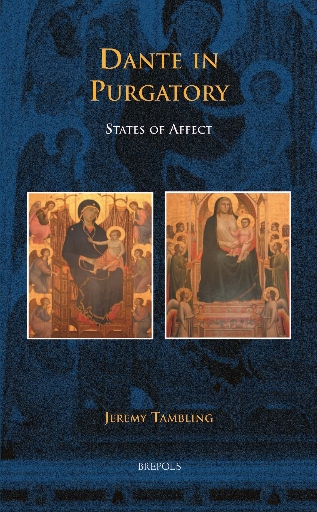
Dante in Purgatory
show More to view fulltext, buy and share links for:Dante in Purgatory show Less to hide fulltext, buy and share links for: Dante in PurgatoryThis volume provides an advanced survey of Dante studies and offers a new, detailed, and accessible reading of his Purgatorio, making this very rich text freshly available to an English-speaking readership. Through analysis of a variety of emotional states across Dante’s three major works - the Purgatorio, Inferno, and Paradiso, and in his minor works, such as the Rime and the Convivio - Dante in Purgatory: States of Affect contends that emotions are historically constructed at different moments. The book also demonstrates that while Dante presents some emotions as defined and distinct, he depicts others as blends of several states of feeling, as emotions which are in process or metamorphosis. In particular, the author examines the seven cardinal vices (‘seven deadly sins’) amid a wider discussion of states of affect. He argues that the emotional states associated with these vices are different from contemporary conceptions of affective states. He compels us to acknowledge that there is a history of both the emotional states themselves and the methods with which we describe them. Above all, his study shows that there is a history of emotions which is part of the history of a European acquisition of a subjective sense of the self. To historicize emotion thus requires that the ‘human’ becomes increasingly defined, as the subject is ascribed further interior qualities which must be named. Dante in Purgatory is thus relevant not only to readers of Dante, but also to any reader interested in thinking about emotion and affectual states and how these can be described, and how they can be conceptualized.
-
-
-
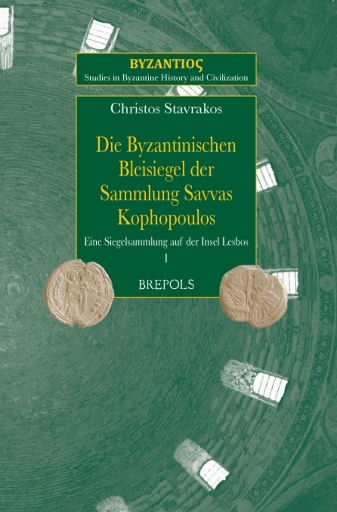
Die byzantinischen Bleisiegel der Sammlung Savvas Kophopoulos
show More to view fulltext, buy and share links for:Die byzantinischen Bleisiegel der Sammlung Savvas Kophopoulos show Less to hide fulltext, buy and share links for: Die byzantinischen Bleisiegel der Sammlung Savvas KophopoulosWeltweit gibt es außer der bereits zum größten Teil publizierten Sammlung von George Zacos wenige Privatsammlungen byzantinischer Bleisiegel. Die Privatsammlung des auf der Insel Lesbos (Griechenland) ansässigen Arztes Savvas Kophopoulos scheint die größte in Griechenland und eine der bedeutendsten Privatsammlungen dieser Art weltweit zu sein.
Hier wird der erste Teil dieser byzantinischer Bleisiegel nach all den modernen Standards und neuesten Entwicklungen der byzantinischen Sigillographie publiziert. Es handelt sich um 120 Stück, die meisten unpubliziert, die hier zum Ersten Mal der Wissenschaft präsentiert werden. Chronologisch lassen sich diese Siegel vom 7. bis ins 17. Jh. datieren. Es sind Bleibullen, deren Aussteller Mitglieder der byzantinischen Aristokratie, Staats- und Kirchenfunktionäre waren sowie anonyme Siegel mit Monogrammen oder Heiligendarstellungen.
In vielen Fällen werden durch die hier publizierten Siegel Namen, die bis jetzt nicht belegt waren, sowohl unbekannte Verwaltungseinheiten des Byzantinischen Reiches als auch ikonographische Besonderheiten, die in der Sigillographie zum ersten Mal angetroffen werden, bezeugt.
Es ist ein Buch, was nicht nur für die Byzantinisten, Archäologen und Mediävisten sondern auch für Kunsthistoriker interessant wäre.
Christos Stavrakos ist Assistant Professor für Byzantinische Geschichte im Institut für Geschichte und Archäologie der Universität Ioannina (Griechenland).
-
-
-
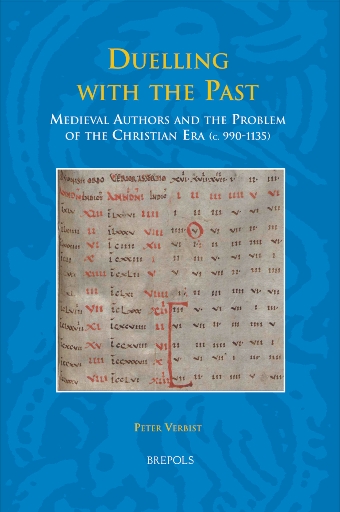
Duelling with the Past
show More to view fulltext, buy and share links for:Duelling with the Past show Less to hide fulltext, buy and share links for: Duelling with the PastThis volume discusses the controversy surrounding the dating of the Christian Era in the Middle Ages and its effect on the ‘emergence’ of the individual in medieval society. It focuses on eight medieval authors (Heriger of Lobbes, Abbo of Fleury, Marianus Scottus, Gerland the Computist, Hezelo of Cluny, an anonymous author in Limoges, Sigebert of Gembloux, and Heimo of Bamberg), all of whom attempted to correct the date of Christ’s incarnation according to the Easter tables of the Scythian monk Dionysius Exiguus (c. 540). As this volume argues, these authors entered into a duel with the past, attempting to reassign the year of Christ’s birth and in the process negotiating contradictory authoritative traditions. On a superficial level these scholars appeared to be unsuccessful in their attempts to reconstruct history, as none of their proposed corrections replaced the existing (erroneous) Christian era that had been established in the Latin West. On a practical level, however, this defeat can be counterbalanced by the conclusion that the corrections provided by these authors acted as an important step in the increasing movement of medieval authors towards intellectual autonomy. In Duelling with the Past, Verbist’s analysis explores the links between computistical sources and the ‘emergence’ of the individual in the Middle Ages.
-
-
-
Johannes Buridanus: Summulae: De syllogismis
show More to view fulltext, buy and share links for:Johannes Buridanus: Summulae: De syllogismis show Less to hide fulltext, buy and share links for: Johannes Buridanus: Summulae: De syllogismisDe syllogismis is the fifth treatise of John Buridan’s Summulae dialecticae, a textbook he wrote for his logic course in the Faculty of Arts at the University of Paris. De syllogismis contains material related to Aristotle’s Analytica Priora and Boethius’s De hypotheticis syllogismis. The textbook discusses inferences involving not only propositions de inesse, but also propositions featuring oblique, reduplicative and infinite terms. Buridan displays a keen interest in modal inferences and inferences involving propositional attitudes. Buridan’s De syllogismis continues along the lines of his nominalist conception of the relations between mind, language and reality.
-
-
-

Laus angelica
show More to view fulltext, buy and share links for:Laus angelica show Less to hide fulltext, buy and share links for: Laus angelicaThe liturgical celebration of the Mass, a multifarious spiritual, artistic, and intellectual manifestation, had a central position in the cultural life of medieval Europe. The ‘Gregorian Chants’, mostly words from passages of the Old Testament, were reinterpreted and ornamented by means of new lyrics, and became the basis for new literary and musical genres, such as tropes, sequences, and other new lyrics. In spite of all the unifying efforts made by the Carolingian reformers, a rich variety in practice came to characterize the performance of the Mass in the ninth through the twelfth centuries. Extensive repertories of new texts and melodies were spread in manuscripts all over Europe. Until now this fascinating material has been the preserve of a small circle of specialists in musicology and philology. With this volume, the author introduces and analyses these hidden treasures to make them available to a wider public. It is directed to those with an interest in the philosophy, theology, and history of medieval Latin literature, and in the expressions of spiritual, poetic, and musical creativity of the European Middle Ages.
-
-
-
Law and Practice in the Age of Reform
show More to view fulltext, buy and share links for:Law and Practice in the Age of Reform show Less to hide fulltext, buy and share links for: Law and Practice in the Age of ReformIn reconstructing Hugh of Die’s legatine and conciliar activity, this book offers intriguing new arguments about the many relevant and often confused issues surrounding eleventh-century legates, councils, and the law - three inextricable components of church reform and administration. Hugh’s efforts in promulgating and disseminating reform in France in the 1070s, 1080s, and 1090s were shaped significantly by his council activity. The manner in which he conducted this business sheds light on every aspect of his work, revealing not only his personal interpretation and application of the law, but also his vigour in suppressing clerical marriage, the selling of church offices, lay investiture, and the gravity with which he conducted his duties as legate. New light is cast on Hugh’s personality and achievements by looking at the nature and influence of his legatine and legal activity in France, qualities that can only be appreciated in light of the ferment of activity during Gregory VII’s pontificate. The dialectical relationship between reform and law in eleventh-century France is a recurring theme throughout this investigation, illustrating in more demonstrable terms the flow of ecclesiastical business between the papal court in Rome and France and vice versa.
-
-
-
Le travail intellectuel à la Faculté des arts de Paris: textes et maîtres (ca. 1200-1500)
show More to view fulltext, buy and share links for:Le travail intellectuel à la Faculté des arts de Paris: textes et maîtres (ca. 1200-1500) show Less to hide fulltext, buy and share links for: Le travail intellectuel à la Faculté des arts de Paris: textes et maîtres (ca. 1200-1500)Le huitième fascicule du répertoire des maîtres ès arts parisiens, de leurs oeuvres et de leurs lectures comprend ceux dont le nom commence par la lettre R. Il est un peu plus gros encore que le précédent, avec la lettre P, et il est probable que le dernier fascicule de la série, qui sera consacré aux maîtres dont le nom commence par la lettre S, T, U ou V, sera plus important encore.Les principes du répertoire ont été expliqués dans les fascicules précédents. Un réseau international de spécialistes, dont les conseils et les critiques sont indispensables, continue de soutenir les travaux. Ce huitième fascicule comprend des personnages plus ou moins célèbres comme Raymondus Lulllus, Robertus Grosseteste, Robertus Kilwardby, Roger Bacon, mais aussi une série de maîtres plus modestes comme les divers maîtres appelés simplement Robertus ou Robertus Anglicus. D’autres personnages, bien connus dans le contexte de l’Université de Paris, mais qui n’ont pas laissé des œuvres relatives à l’enseignement à la Faculté des arts, notamment Richard de Fournival et Robert de Sorbon, sont traités dans l'introduction, qui contient, comme d’habitude, une liste de maîtres qui ont été exclus, parce qu'aucun lien entre leurs oeuvres et la Faculté des arts de Paris n'a pu être établi.
-
-
-
Les chartes de l'abbaye cistercienne de Vaucelles au XIIe siècle
show More to view fulltext, buy and share links for:Les chartes de l'abbaye cistercienne de Vaucelles au XIIe siècle show Less to hide fulltext, buy and share links for: Les chartes de l'abbaye cistercienne de Vaucelles au XIIe siècleL’abbaye de Vaucelles, près de Cambrai, était une des plus grandes abbayes cisterciennes, comptant parfois des centaines de moines et convers. L’édition des chartes de l’abbaye pour le XIIe siècle (176 chartes, dont 125 inédites) permet de voir la croissance de l’abbaye, l’extension de son domaine, l’établissement d’un réseau de relations sociales (comtes de Flandre, de Hainaut, de Vermandois, de Soissons…, duc de Lotharingie, évêques de Cambrai et de Noyon…), la mise en place d’une politique d’exemptions de péages. Dynamique, l’abbaye commence aussi progressivement à écrire elle-même les chartes qu’elle reçoit, et développe un archivage systématique.
-
-
-
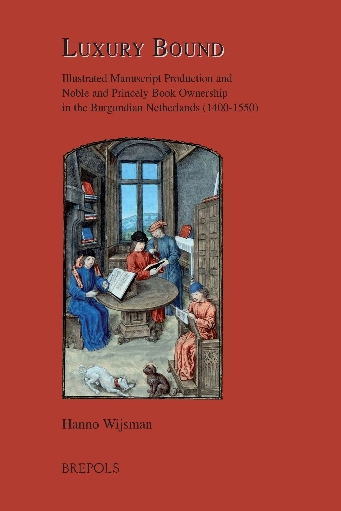
Luxury Bound
show More to view fulltext, buy and share links for:Luxury Bound show Less to hide fulltext, buy and share links for: Luxury BoundThis interdisciplinary study presents a two-part survey of the production and ownership of luxury manuscripts in the late-medieval Netherlands.
Part I analyses a corpus of 3,700 illustrated manuscripts produced between 1400 and 1550 in the Low Countries. The result is a cornucopia of information about many aspects of manuscript production: chronological, geographical and gender distribution, the genres of texts, the languages used, the dimensions of books, the number of illustrations, and the relationship between the making of hand-written and printed books.
Part II examines the libraries of the pre-eminent owners of illustrated manuscripts in the Netherlands: the ducal family and the noble elite. The great bibliophile Philip the Good set an example of book collecting that was emulated by the nobles of the court, creating a typical ‘Burgundian’ fashion in book ownership by which a small elite demonstrated a well defined group identity.
Part III draws together these various lines to offer conclusions about the book market and fashions in book ownership. Luxury Bound charts this new vogue in books and reading, an important aspect of cultural change in the late-medieval Low Countries.
-
-
-
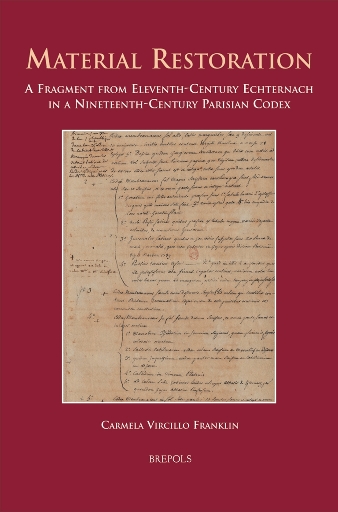
Material Restoration
show More to view fulltext, buy and share links for:Material Restoration show Less to hide fulltext, buy and share links for: Material RestorationMaterial Restoration follows the journey of a parchment bifolium, which was first used in the binding of a manuscript produced in Echternach around the year 1000, and then removed from its original container-codex after it was appropriated by the French during the Napoleonic wars. By tracing the creation, interpretations, and migratory life of the parchment until its eventual incorporation within a nineteenth-century codex, this analysis presents the bifolium as an illustration of ‘new philology’, and as an essential material and cultural element of the different codices that contained it. Material Restoration also analyses the texts inscribed on the bifolium, which include a charter, two poems, and verbal and musical glosses. By considering these texts within the context of the networks that produced and used them, the book offers an intriguing insight into the monastic and literary communities of eleventh-century Echternach. Material Restoration is a riveting and satisfying scholarly detective story that combines both erudition and new discoveries, and adheres to the standards of both classical and new philology.
-
-
-
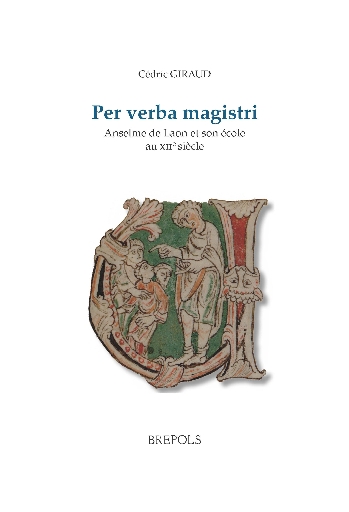
Per verba magistri
show More to view fulltext, buy and share links for:Per verba magistri show Less to hide fulltext, buy and share links for: Per verba magistriLoué par ses contemporains et critiqué par le seul Pierre Abélard, Anselme de Laon († 1117) constitue l’une des figures majeures de la « Renaissance du xiie siècle ». Anselme n’est pas seulement l’auteur probable de gloses et de commentaires bibliques, il est aussi le rédacteur de sentences théologiques à la diffusion manuscrite non négligeable. Afin de comprendre cette figure magistrale, il convient de restituer la carrière d’Anselme, de suivre la transmission de ses sentences théologiques et d’étudier la constitution des recueils rattachés à son enseignement. Il devient alors possible de montrer la manière dont un maître aussi prestigieux a fait école, de son vivant et jusque dans les dernières décennies duXIIe siècle.
Cédric Giraud, ancien élève de l’École nationale des chartes et agrégé d’histoire, est maître de conférences à l’université de Nancy 2 (ERL 7229 de Médiévistique). Ses recherches portent sur l’histoire culturelle du Moyen Âge central et la philologie médiolatine.
-
-
-
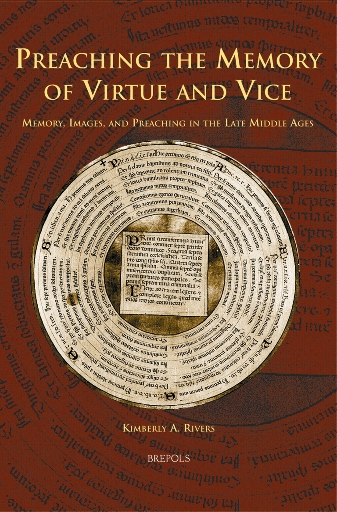
Preaching the Memory of Virtue and Vice
show More to view fulltext, buy and share links for:Preaching the Memory of Virtue and Vice show Less to hide fulltext, buy and share links for: Preaching the Memory of Virtue and ViceThis volume explores the integral role of memory and mnemonic techniques in medieval preaching from the thirteenth to the early fifteenth century. It argues that the mendicant orders inherited from the early Middle Ages both the simple mnemonic techniques of rhetorical practice and a tradition of monastic meditation founded on memory images. In the thirteenth century Dominican and Franciscan writers drew on these basic techniques even as they re-evaluated the ancient mnemonic system of the Rhetorica ad Herennium (first century BC). The increasing emphasis that intellectuals placed upon cognitive science, ethics, and on distinctions between rhetoric and logic created a climate that welcomed an image-based memory system designed for orators. The book also explores the Franciscan contribution to mnemonics, which has been almost entirely neglected by scholars. As the Franciscans came to value imaginative meditation as part of their own spiritual lives, their habit of meditating on mental images of the virtues and vices eventually spilled out into their sermons. As the new orators of the period, Franciscans and Dominicans each inserted mnemonic images into their sermons as a way to aid the recall of both preachers and listeners. The products of such mnemonic practices in medieval sermons, which included elaborate descriptions of buildings, schematic renderings of the number seven, and verbal images of the virtues and vices, were then allegorised in moral terms and circulated on the continent in exempla collections. This book argues that verbal images and complicated schema functioned as ‘ordering devices’ for those preaching and listening to sermons, whilst also provoking an affective response that enhanced listeners’ devotional and penitential experiences.
-
-
-

The "Costuma d’Agen"
show More to view fulltext, buy and share links for:The "Costuma d’Agen" show Less to hide fulltext, buy and share links for: The "Costuma d’Agen"The Costuma d’Agen (customary laws of the Agenais, in south-west France) compiled in Occitan at various times in the thirteenth century and preserved in the Livre Juratoire, or swearing copy (Bibliothèque municipale d’Agen, MS 42), is here transcribed with an English translation on facing pages. An introduction and an index are included. Appendices provide the text of five chapters “missing” from this manuscript, along with several pertinent charters from Agen and a fuller description of the Livre juratoire by Professor M. Alison Stones, University of Pittsburgh. The manuscript contains many colored illustrations and capitals.
The Costuma emphasizes the power of the local city council, which often seems to override that of the local count. The laws or customs written in the book deal with many topics including jurisdiction, citizenship and military duties, crime, property, civil and criminal procedure, the local wine and salt trades, and local feudal law.
F. R. P. (Ron) Akehurst (B.A. Oxford, 1962, Ph.D. Colorado, 1967, in French; J.D., Minnesota, 1986). A professor of French at Minnesota since 1968. He has published translations of two other medieval French customaries.
-
-
-
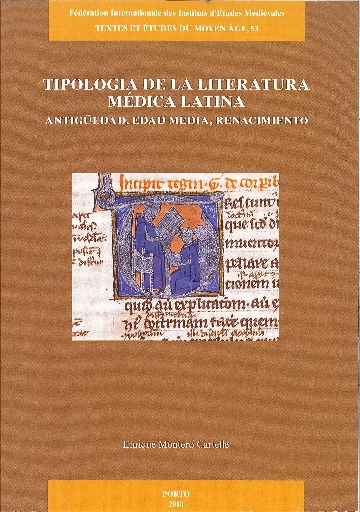
Tipologia de la literatura médica latina. Antigüedad, edad media, renacimiento
show More to view fulltext, buy and share links for:Tipologia de la literatura médica latina. Antigüedad, edad media, renacimiento show Less to hide fulltext, buy and share links for: Tipologia de la literatura médica latina. Antigüedad, edad media, renacimientoEl interés por las formas literarias de la literatura médica ha ido creciendo progresivamente ya que atiende cada vez más a las formas de la literatura médica características de las distintas épocas, compartidas en su mayoría con otras ramas de la ciencia como la filosofía, la teología o el derecho. Pero faltaba una visión de conjunto de estos textos médicos desde el punto de vista literario. La tipología de esos tratados es un indicio revelador de su origen, finalidad, cultura del autor y demanda social. Este estudio pretende mostrar un panorama general de las formas literarias de los estudios médicos y sus medios de expresión. El estudio del comportamiento de los escritores médicos ante el hecho de escribir proporciona una dimensión, como complemento, de gran relieve para los estudios estrictamente doctrinales. El escritor es un hombre de su tiempo y, como tal, refleja sus usos y modos.
Enraízados en la tradición de la Antigüedad y siguiendo una distribución armónica de la medicina diaetetica, pharmaceutica y chirurgia, los géneros literarios de la literatura médica medieval, por influjo de la filosofía y teología escolásticas, conocieron una riqueza asombrosa de formas literarias, como summae, specula, compendia, practica, concordantiae, synonyma, disputationes, problemata, accessus, tacuina, secreta, consilia, etc., que afectaron también a la tipología de su lengua. El Renacimiento fue otra época de renovación en la que continúan algunos géneros de corte tradicional, otros decaen o se transforman, mientras que toman cuerpo otras actividades más filológicas a veces que doctrinales, como las ediciones o los comentarios críticos. Cada época revela los problemas con los que se enfrentaron los escritores médicos al intentar forjar unas formas literarias y una terminología basadas en unos conocimientos médicos -en muchos casos expresados originariamente en otra lengua- y darles la forma literaria que consideraban más apropiada para publicar sus logros.
Un estudio como éste puede ser útil para todos aquellos que desde el campo de la Filología, la Historia en general o de la Historia de la Ciencia y de la Medicina o de la cultura en particular, deseen adentrarse en la literatura médica.
-
-
-

Trinity and Creation
show More to view fulltext, buy and share links for:Trinity and Creation show Less to hide fulltext, buy and share links for: Trinity and CreationThe Trinity and Creation are central themes in the theology of the Augustinian Canons of the Abbey of St Victor during its time of greatest flourishing in the twelfth century. In this volume, three of the most important Victorine theological works are introduced and completely translated into English for the first time: On the Three Days, by Hugh of St. Victor (d. 1141), a lyrical yet philosophical study of how the power, wisdom, and goodness of God can be known from the things God has made; Hugh’s Sentences on Divinity, lecture notes which show how the divine ideas (“primordial causes”) serve God in creation; and On the Trinity, by Richard of St. Victor (d. 1173), one of the enduring classics of Christian theology, which analyzes the Trinity in terms of love. Also included are two of Adam of St. Victor’s sequences in praise of the Trinity.
This volume is edited by Boyd Taylor Coolman (PhD, Notre Dame University; Theology Dept. Boston College), author of The Theology of Hugh of St. Victor: An Interpretation (2010), and Dale M. Coulter (DPhil, Oxford; School of Divinity, Regent University), author of Per Visibilia ad Invisibilia: Theological Method in Richard of St. Victor (d. 1173) (2006).
-
-
-
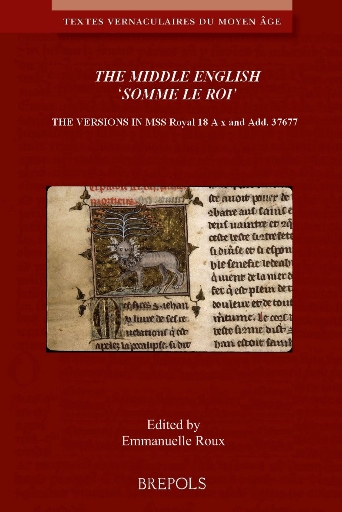
Two Middle English Translations of Friar Laurent's 'Somme le roi': critical edition
show More to view fulltext, buy and share links for:Two Middle English Translations of Friar Laurent's 'Somme le roi': critical edition show Less to hide fulltext, buy and share links for: Two Middle English Translations of Friar Laurent's 'Somme le roi': critical editionThis is the first volume of a two-volume project whose aim is to publish all the known Middle English manuscript translations of the French Somme le roi, a thirteenth-century manual of religious instruction offering teaching on the Decalogue, the seven deadly sins and their remedies, compiled by the Dominican friar Laurent of Orleans. The project extends and deepens our knowledge of the influence of this popular French text, known today only from the versions entitled The Ayenbite of Inwit and The Book of Vices and Virtues, published in 1866 and 1942, respectively.
This volume presents the versions extant in BL MSS Royal 18. A. x and Add. 37677; the second will cover the versions in Cambridge, Corpus Christi College, MS 494, Oxford, Bodleian Library, MS Ashmole 1286, and Oxford, Bodleian Library, MS e Musaeo 23. The texts of both volumes have been prepared with the help of the recently-published edition of the French text (2008), a circumstance from which the earlier English editions were unable to benefit. It is likely that the versions edited here for the first time will make a considerable contribution to our understanding of the processes of textual transmission and to that of translation itself in English literary circles of the fifteenth century.
-
-
-
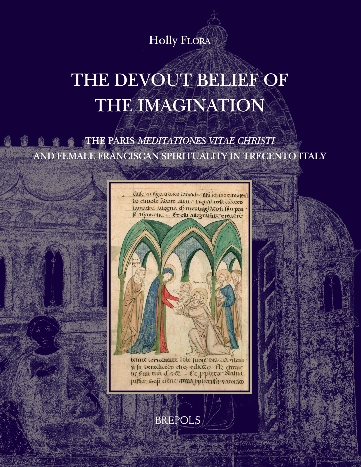
'The Devout Belief of the Imagination'
show More to view fulltext, buy and share links for:'The Devout Belief of the Imagination' show Less to hide fulltext, buy and share links for: 'The Devout Belief of the Imagination'This volume examines the late medieval devotional text Meditationes Vitae Christi through an analysis of its most important manuscript, known by its present location and catalogue number as Paris Bibliothèque Nationale Ms. ital. 115. As Flora argues, Ms. ital. 115, the oldest and most extensively illustrated copy of the Meditationes, was originally made in or near Pisa c. 1350 and tailored very specifically for a group of Franciscan nuns. Flora suggests the manuscript’s probable uses in practices of performative devotion and affective response, and the relationship between its imagery and other works of art made for religious women, shedding new light on the history of female monasticism in medieval Italy.
Holly Flora is Assistant Professor of Art History at Tulane University, and is the author of Cimabue and Early Italian Devotional Painting (The Frick Collection, 2006) as well as studies on illustrated manuscripts and devotional art in late medieval Italy.
-
-
-
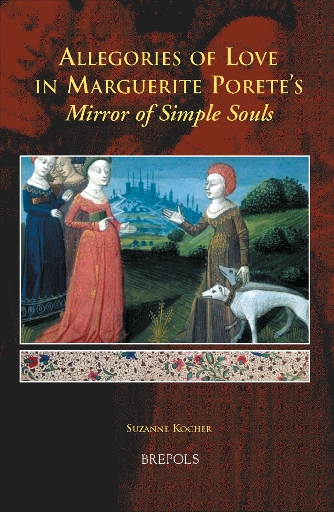
Allegories of Love in Marguerite Porete's 'Mirror of Simple Souls'
show More to view fulltext, buy and share links for:Allegories of Love in Marguerite Porete's 'Mirror of Simple Souls' show Less to hide fulltext, buy and share links for: Allegories of Love in Marguerite Porete's 'Mirror of Simple Souls'Marguerite Porete’s Mirror of Simple Souls, dating probably to the 1290s, is the oldest known mystical work written in French, and the only surviving medieval text by a woman writer executed as a heretic. This volume analyses its use of interconnected allegories that describe the soul’s approach toward God in terms of human social relationships. These include romantic love between lovers in same-sex and mixed-sex pairs, relations among people of differing social rank such as servants and nobles, and rich and poor engaged in economic transactions such as taxation and gift-giving. Gender, rank, and exchange serve as remarkably versatile allegories for spiritual states. Porete uses comparison as an organizing principle that underlies her supple and creative use of allegory, personification, parables, metaphors, similes, proverbs, and glosses. The theologian invites her audience to cross boundaries among literal and figurative registers of meaning, in ways that are emblematic of the soul’s ultimate leap toward the divine. Porete’s social allegories, the author contends, can provide us with valuable evidence of a medieval thinker’s conceptions of God, gender, language, and human capacity for change.
-
-
-
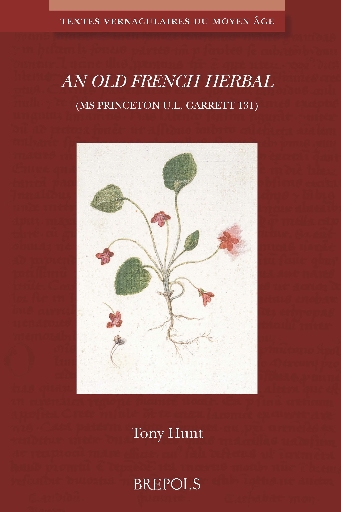
An Old French Herbal (Ms Princeton U.L. Garrett 131)
show More to view fulltext, buy and share links for:An Old French Herbal (Ms Princeton U.L. Garrett 131) show Less to hide fulltext, buy and share links for: An Old French Herbal (Ms Princeton U.L. Garrett 131)The earliest Old French herbal in verse, here edited for the first time, is a surprisingly comprehensive work (3188 octosyllables), based on an eleventh-century Latin treatise 'De viribus herbarum' attributed to a certain 'Macer'. It occupies a significant place in the development of herbals and is an interesting witness to writing in Western France in the thirteenth century and to the unusual syntax and concentrated style of its author. Some one hundred and twenty-five plants are described together with their medicinal uses, which cover a remarkable range of ailments. For ease of recognition the sections of text which do not seem to be based on the received text of 'Macer' are printed in italics. Quotations from the principal source and from parallels are given in the notes. This work will be of great value to all those interested in Old French, in medieval translation, the vernacular transmission of learning, and the history of medicine.
-