


Brepols Online Books Medieval Monographs Archive v2016 - bobar16mome

Collection Contents
1 - 100 of 273 results
-
-

Anonymi Artium Magistri Questiones super Librum Ethicorum Aristotelis (Paris, BnF, lat. 14698)
show More to view fulltext, buy and share links for:Anonymi Artium Magistri Questiones super Librum Ethicorum Aristotelis (Paris, BnF, lat. 14698) show Less to hide fulltext, buy and share links for: Anonymi Artium Magistri Questiones super Librum Ethicorum Aristotelis (Paris, BnF, lat. 14698)Les années qui précédèrent et suivirent la condamnation du 7 mars 1277 furent parmi les plus difficiles dans l’histoire de l’Université de Paris. Parmi les témoins des événements qui ont bouleversé à cette époque la Faculté des Arts, une place privilégiée doit être accordée à un fragment d’une reportatio anonyme d’un cours sur l’Éthique à Nicomaque, contenu dans le manuscrit Paris, BnF, lat. 14698. L’auteur de ce texte - un maître de philosophie écrivant très probablement au début des années 1280 - recherche un difficile équilibre entre le devoir d’expliquer la philosophie d’Aristote et la contrainte de ne pas contredire les dogmes de la foi chrétienne. Ce volume offre une édition intégrale du texte, précédée d’une introduction où sont abordés à la fois les problèmes que pose l’édition scientifique d’une reportatio (sa structure, son rapport avec le déroulement du cours oral, les critères spécifiques requis pour l’établissement du texte d’une reportatio) et les enjeux historiques liés à ce texte (sa datation et son rapport avec la condamnation de mars 1277, l’utilisation de la Summa theologiae de Thomas d’Aquin, et l’hypothèse de l’identification de l’auteur avec le maître parisien Jacques de Douai).
-
-
-
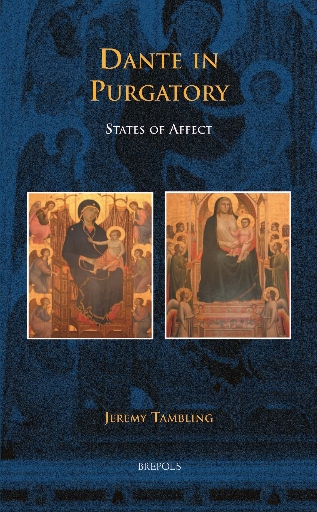
Dante in Purgatory
show More to view fulltext, buy and share links for:Dante in Purgatory show Less to hide fulltext, buy and share links for: Dante in PurgatoryThis volume provides an advanced survey of Dante studies and offers a new, detailed, and accessible reading of his Purgatorio, making this very rich text freshly available to an English-speaking readership. Through analysis of a variety of emotional states across Dante’s three major works - the Purgatorio, Inferno, and Paradiso, and in his minor works, such as the Rime and the Convivio - Dante in Purgatory: States of Affect contends that emotions are historically constructed at different moments. The book also demonstrates that while Dante presents some emotions as defined and distinct, he depicts others as blends of several states of feeling, as emotions which are in process or metamorphosis. In particular, the author examines the seven cardinal vices (‘seven deadly sins’) amid a wider discussion of states of affect. He argues that the emotional states associated with these vices are different from contemporary conceptions of affective states. He compels us to acknowledge that there is a history of both the emotional states themselves and the methods with which we describe them. Above all, his study shows that there is a history of emotions which is part of the history of a European acquisition of a subjective sense of the self. To historicize emotion thus requires that the ‘human’ becomes increasingly defined, as the subject is ascribed further interior qualities which must be named. Dante in Purgatory is thus relevant not only to readers of Dante, but also to any reader interested in thinking about emotion and affectual states and how these can be described, and how they can be conceptualized.
-
-
-
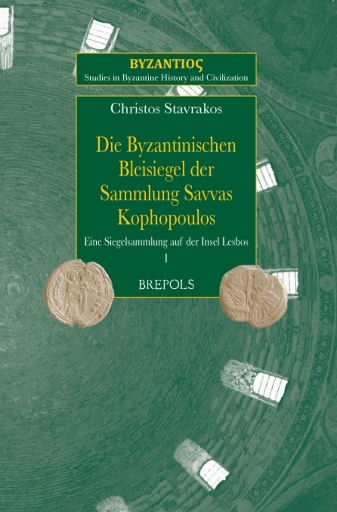
Die byzantinischen Bleisiegel der Sammlung Savvas Kophopoulos
show More to view fulltext, buy and share links for:Die byzantinischen Bleisiegel der Sammlung Savvas Kophopoulos show Less to hide fulltext, buy and share links for: Die byzantinischen Bleisiegel der Sammlung Savvas KophopoulosWeltweit gibt es außer der bereits zum größten Teil publizierten Sammlung von George Zacos wenige Privatsammlungen byzantinischer Bleisiegel. Die Privatsammlung des auf der Insel Lesbos (Griechenland) ansässigen Arztes Savvas Kophopoulos scheint die größte in Griechenland und eine der bedeutendsten Privatsammlungen dieser Art weltweit zu sein.
Hier wird der erste Teil dieser byzantinischer Bleisiegel nach all den modernen Standards und neuesten Entwicklungen der byzantinischen Sigillographie publiziert. Es handelt sich um 120 Stück, die meisten unpubliziert, die hier zum Ersten Mal der Wissenschaft präsentiert werden. Chronologisch lassen sich diese Siegel vom 7. bis ins 17. Jh. datieren. Es sind Bleibullen, deren Aussteller Mitglieder der byzantinischen Aristokratie, Staats- und Kirchenfunktionäre waren sowie anonyme Siegel mit Monogrammen oder Heiligendarstellungen.
In vielen Fällen werden durch die hier publizierten Siegel Namen, die bis jetzt nicht belegt waren, sowohl unbekannte Verwaltungseinheiten des Byzantinischen Reiches als auch ikonographische Besonderheiten, die in der Sigillographie zum ersten Mal angetroffen werden, bezeugt.
Es ist ein Buch, was nicht nur für die Byzantinisten, Archäologen und Mediävisten sondern auch für Kunsthistoriker interessant wäre.
Christos Stavrakos ist Assistant Professor für Byzantinische Geschichte im Institut für Geschichte und Archäologie der Universität Ioannina (Griechenland).
-
-
-
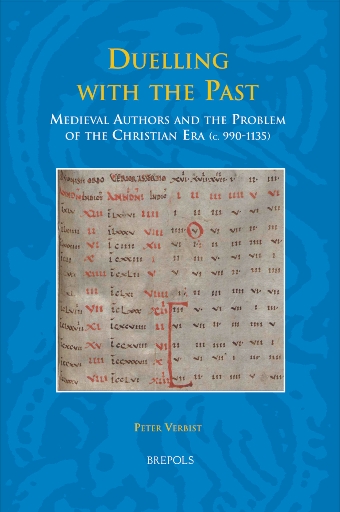
Duelling with the Past
show More to view fulltext, buy and share links for:Duelling with the Past show Less to hide fulltext, buy and share links for: Duelling with the PastThis volume discusses the controversy surrounding the dating of the Christian Era in the Middle Ages and its effect on the ‘emergence’ of the individual in medieval society. It focuses on eight medieval authors (Heriger of Lobbes, Abbo of Fleury, Marianus Scottus, Gerland the Computist, Hezelo of Cluny, an anonymous author in Limoges, Sigebert of Gembloux, and Heimo of Bamberg), all of whom attempted to correct the date of Christ’s incarnation according to the Easter tables of the Scythian monk Dionysius Exiguus (c. 540). As this volume argues, these authors entered into a duel with the past, attempting to reassign the year of Christ’s birth and in the process negotiating contradictory authoritative traditions. On a superficial level these scholars appeared to be unsuccessful in their attempts to reconstruct history, as none of their proposed corrections replaced the existing (erroneous) Christian era that had been established in the Latin West. On a practical level, however, this defeat can be counterbalanced by the conclusion that the corrections provided by these authors acted as an important step in the increasing movement of medieval authors towards intellectual autonomy. In Duelling with the Past, Verbist’s analysis explores the links between computistical sources and the ‘emergence’ of the individual in the Middle Ages.
-
-
-
Johannes Buridanus: Summulae: De syllogismis
show More to view fulltext, buy and share links for:Johannes Buridanus: Summulae: De syllogismis show Less to hide fulltext, buy and share links for: Johannes Buridanus: Summulae: De syllogismisDe syllogismis is the fifth treatise of John Buridan’s Summulae dialecticae, a textbook he wrote for his logic course in the Faculty of Arts at the University of Paris. De syllogismis contains material related to Aristotle’s Analytica Priora and Boethius’s De hypotheticis syllogismis. The textbook discusses inferences involving not only propositions de inesse, but also propositions featuring oblique, reduplicative and infinite terms. Buridan displays a keen interest in modal inferences and inferences involving propositional attitudes. Buridan’s De syllogismis continues along the lines of his nominalist conception of the relations between mind, language and reality.
-
-
-

Laus angelica
show More to view fulltext, buy and share links for:Laus angelica show Less to hide fulltext, buy and share links for: Laus angelicaThe liturgical celebration of the Mass, a multifarious spiritual, artistic, and intellectual manifestation, had a central position in the cultural life of medieval Europe. The ‘Gregorian Chants’, mostly words from passages of the Old Testament, were reinterpreted and ornamented by means of new lyrics, and became the basis for new literary and musical genres, such as tropes, sequences, and other new lyrics. In spite of all the unifying efforts made by the Carolingian reformers, a rich variety in practice came to characterize the performance of the Mass in the ninth through the twelfth centuries. Extensive repertories of new texts and melodies were spread in manuscripts all over Europe. Until now this fascinating material has been the preserve of a small circle of specialists in musicology and philology. With this volume, the author introduces and analyses these hidden treasures to make them available to a wider public. It is directed to those with an interest in the philosophy, theology, and history of medieval Latin literature, and in the expressions of spiritual, poetic, and musical creativity of the European Middle Ages.
-
-
-
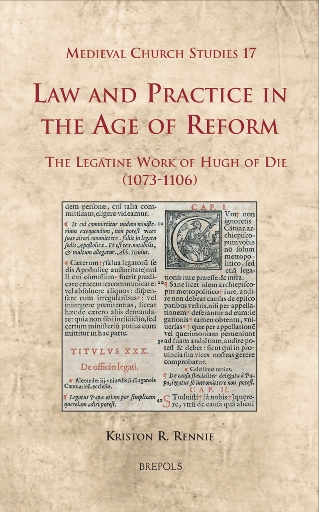
Law and Practice in the Age of Reform
show More to view fulltext, buy and share links for:Law and Practice in the Age of Reform show Less to hide fulltext, buy and share links for: Law and Practice in the Age of ReformIn reconstructing Hugh of Die’s legatine and conciliar activity, this book offers intriguing new arguments about the many relevant and often confused issues surrounding eleventh-century legates, councils, and the law - three inextricable components of church reform and administration. Hugh’s efforts in promulgating and disseminating reform in France in the 1070s, 1080s, and 1090s were shaped significantly by his council activity. The manner in which he conducted this business sheds light on every aspect of his work, revealing not only his personal interpretation and application of the law, but also his vigour in suppressing clerical marriage, the selling of church offices, lay investiture, and the gravity with which he conducted his duties as legate. New light is cast on Hugh’s personality and achievements by looking at the nature and influence of his legatine and legal activity in France, qualities that can only be appreciated in light of the ferment of activity during Gregory VII’s pontificate. The dialectical relationship between reform and law in eleventh-century France is a recurring theme throughout this investigation, illustrating in more demonstrable terms the flow of ecclesiastical business between the papal court in Rome and France and vice versa.
-
-
-
Le travail intellectuel à la Faculté des arts de Paris: textes et maîtres (ca. 1200-1500)
show More to view fulltext, buy and share links for:Le travail intellectuel à la Faculté des arts de Paris: textes et maîtres (ca. 1200-1500) show Less to hide fulltext, buy and share links for: Le travail intellectuel à la Faculté des arts de Paris: textes et maîtres (ca. 1200-1500)Le huitième fascicule du répertoire des maîtres ès arts parisiens, de leurs oeuvres et de leurs lectures comprend ceux dont le nom commence par la lettre R. Il est un peu plus gros encore que le précédent, avec la lettre P, et il est probable que le dernier fascicule de la série, qui sera consacré aux maîtres dont le nom commence par la lettre S, T, U ou V, sera plus important encore.Les principes du répertoire ont été expliqués dans les fascicules précédents. Un réseau international de spécialistes, dont les conseils et les critiques sont indispensables, continue de soutenir les travaux. Ce huitième fascicule comprend des personnages plus ou moins célèbres comme Raymondus Lulllus, Robertus Grosseteste, Robertus Kilwardby, Roger Bacon, mais aussi une série de maîtres plus modestes comme les divers maîtres appelés simplement Robertus ou Robertus Anglicus. D’autres personnages, bien connus dans le contexte de l’Université de Paris, mais qui n’ont pas laissé des œuvres relatives à l’enseignement à la Faculté des arts, notamment Richard de Fournival et Robert de Sorbon, sont traités dans l'introduction, qui contient, comme d’habitude, une liste de maîtres qui ont été exclus, parce qu'aucun lien entre leurs oeuvres et la Faculté des arts de Paris n'a pu être établi.
-
-
-
Les chartes de l'abbaye cistercienne de Vaucelles au XIIe siècle
show More to view fulltext, buy and share links for:Les chartes de l'abbaye cistercienne de Vaucelles au XIIe siècle show Less to hide fulltext, buy and share links for: Les chartes de l'abbaye cistercienne de Vaucelles au XIIe siècleL’abbaye de Vaucelles, près de Cambrai, était une des plus grandes abbayes cisterciennes, comptant parfois des centaines de moines et convers. L’édition des chartes de l’abbaye pour le XIIe siècle (176 chartes, dont 125 inédites) permet de voir la croissance de l’abbaye, l’extension de son domaine, l’établissement d’un réseau de relations sociales (comtes de Flandre, de Hainaut, de Vermandois, de Soissons…, duc de Lotharingie, évêques de Cambrai et de Noyon…), la mise en place d’une politique d’exemptions de péages. Dynamique, l’abbaye commence aussi progressivement à écrire elle-même les chartes qu’elle reçoit, et développe un archivage systématique.
-
-
-
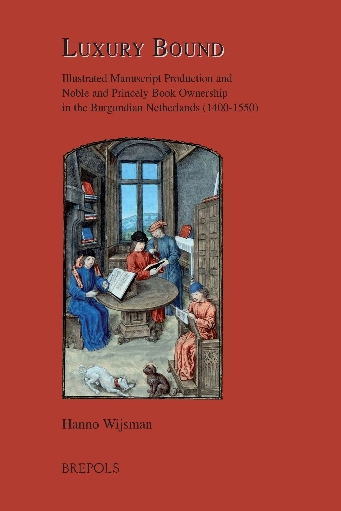
Luxury Bound
show More to view fulltext, buy and share links for:Luxury Bound show Less to hide fulltext, buy and share links for: Luxury BoundThis interdisciplinary study presents a two-part survey of the production and ownership of luxury manuscripts in the late-medieval Netherlands.
Part I analyses a corpus of 3,700 illustrated manuscripts produced between 1400 and 1550 in the Low Countries. The result is a cornucopia of information about many aspects of manuscript production: chronological, geographical and gender distribution, the genres of texts, the languages used, the dimensions of books, the number of illustrations, and the relationship between the making of hand-written and printed books.
Part II examines the libraries of the pre-eminent owners of illustrated manuscripts in the Netherlands: the ducal family and the noble elite. The great bibliophile Philip the Good set an example of book collecting that was emulated by the nobles of the court, creating a typical ‘Burgundian’ fashion in book ownership by which a small elite demonstrated a well defined group identity.
Part III draws together these various lines to offer conclusions about the book market and fashions in book ownership. Luxury Bound charts this new vogue in books and reading, an important aspect of cultural change in the late-medieval Low Countries.
-
-
-
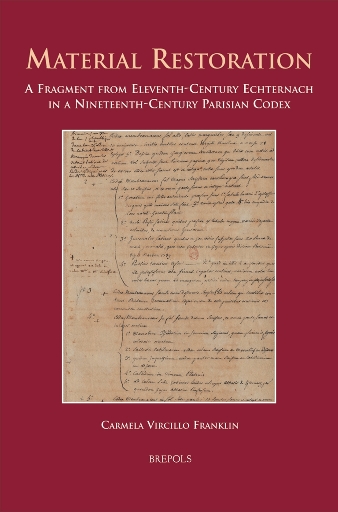
Material Restoration
show More to view fulltext, buy and share links for:Material Restoration show Less to hide fulltext, buy and share links for: Material RestorationMaterial Restoration follows the journey of a parchment bifolium, which was first used in the binding of a manuscript produced in Echternach around the year 1000, and then removed from its original container-codex after it was appropriated by the French during the Napoleonic wars. By tracing the creation, interpretations, and migratory life of the parchment until its eventual incorporation within a nineteenth-century codex, this analysis presents the bifolium as an illustration of ‘new philology’, and as an essential material and cultural element of the different codices that contained it. Material Restoration also analyses the texts inscribed on the bifolium, which include a charter, two poems, and verbal and musical glosses. By considering these texts within the context of the networks that produced and used them, the book offers an intriguing insight into the monastic and literary communities of eleventh-century Echternach. Material Restoration is a riveting and satisfying scholarly detective story that combines both erudition and new discoveries, and adheres to the standards of both classical and new philology.
-
-
-
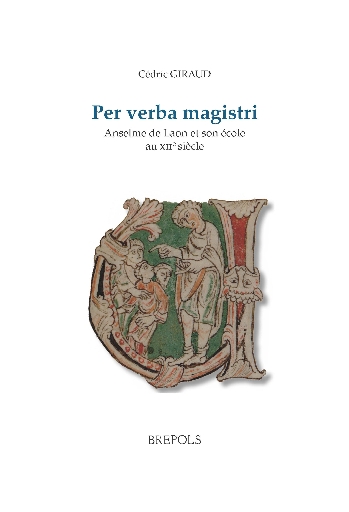
Per verba magistri
show More to view fulltext, buy and share links for:Per verba magistri show Less to hide fulltext, buy and share links for: Per verba magistriLoué par ses contemporains et critiqué par le seul Pierre Abélard, Anselme de Laon († 1117) constitue l’une des figures majeures de la « Renaissance du xiie siècle ». Anselme n’est pas seulement l’auteur probable de gloses et de commentaires bibliques, il est aussi le rédacteur de sentences théologiques à la diffusion manuscrite non négligeable. Afin de comprendre cette figure magistrale, il convient de restituer la carrière d’Anselme, de suivre la transmission de ses sentences théologiques et d’étudier la constitution des recueils rattachés à son enseignement. Il devient alors possible de montrer la manière dont un maître aussi prestigieux a fait école, de son vivant et jusque dans les dernières décennies duXIIe siècle.
Cédric Giraud, ancien élève de l’École nationale des chartes et agrégé d’histoire, est maître de conférences à l’université de Nancy 2 (ERL 7229 de Médiévistique). Ses recherches portent sur l’histoire culturelle du Moyen Âge central et la philologie médiolatine.
-
-
-
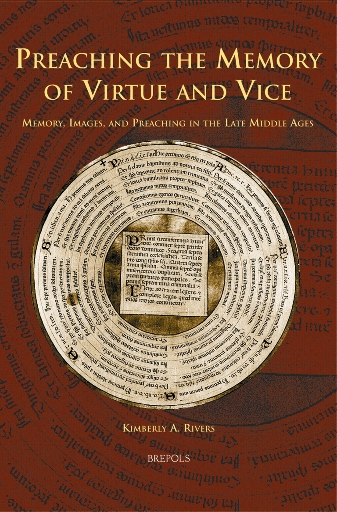
Preaching the Memory of Virtue and Vice
show More to view fulltext, buy and share links for:Preaching the Memory of Virtue and Vice show Less to hide fulltext, buy and share links for: Preaching the Memory of Virtue and ViceThis volume explores the integral role of memory and mnemonic techniques in medieval preaching from the thirteenth to the early fifteenth century. It argues that the mendicant orders inherited from the early Middle Ages both the simple mnemonic techniques of rhetorical practice and a tradition of monastic meditation founded on memory images. In the thirteenth century Dominican and Franciscan writers drew on these basic techniques even as they re-evaluated the ancient mnemonic system of the Rhetorica ad Herennium (first century BC). The increasing emphasis that intellectuals placed upon cognitive science, ethics, and on distinctions between rhetoric and logic created a climate that welcomed an image-based memory system designed for orators. The book also explores the Franciscan contribution to mnemonics, which has been almost entirely neglected by scholars. As the Franciscans came to value imaginative meditation as part of their own spiritual lives, their habit of meditating on mental images of the virtues and vices eventually spilled out into their sermons. As the new orators of the period, Franciscans and Dominicans each inserted mnemonic images into their sermons as a way to aid the recall of both preachers and listeners. The products of such mnemonic practices in medieval sermons, which included elaborate descriptions of buildings, schematic renderings of the number seven, and verbal images of the virtues and vices, were then allegorised in moral terms and circulated on the continent in exempla collections. This book argues that verbal images and complicated schema functioned as ‘ordering devices’ for those preaching and listening to sermons, whilst also provoking an affective response that enhanced listeners’ devotional and penitential experiences.
-
-
-

The "Costuma d’Agen"
show More to view fulltext, buy and share links for:The "Costuma d’Agen" show Less to hide fulltext, buy and share links for: The "Costuma d’Agen"The Costuma d’Agen (customary laws of the Agenais, in south-west France) compiled in Occitan at various times in the thirteenth century and preserved in the Livre Juratoire, or swearing copy (Bibliothèque municipale d’Agen, MS 42), is here transcribed with an English translation on facing pages. An introduction and an index are included. Appendices provide the text of five chapters “missing” from this manuscript, along with several pertinent charters from Agen and a fuller description of the Livre juratoire by Professor M. Alison Stones, University of Pittsburgh. The manuscript contains many colored illustrations and capitals.
The Costuma emphasizes the power of the local city council, which often seems to override that of the local count. The laws or customs written in the book deal with many topics including jurisdiction, citizenship and military duties, crime, property, civil and criminal procedure, the local wine and salt trades, and local feudal law.
F. R. P. (Ron) Akehurst (B.A. Oxford, 1962, Ph.D. Colorado, 1967, in French; J.D., Minnesota, 1986). A professor of French at Minnesota since 1968. He has published translations of two other medieval French customaries.
-
-
-
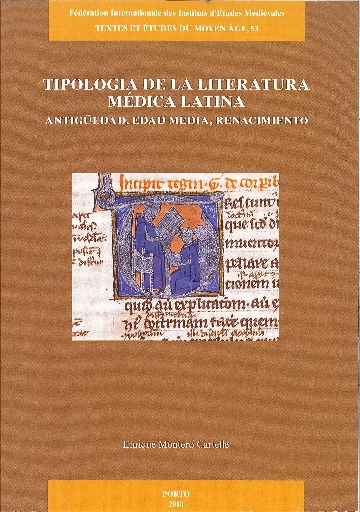
Tipologia de la literatura médica latina. Antigüedad, edad media, renacimiento
show More to view fulltext, buy and share links for:Tipologia de la literatura médica latina. Antigüedad, edad media, renacimiento show Less to hide fulltext, buy and share links for: Tipologia de la literatura médica latina. Antigüedad, edad media, renacimientoEl interés por las formas literarias de la literatura médica ha ido creciendo progresivamente ya que atiende cada vez más a las formas de la literatura médica características de las distintas épocas, compartidas en su mayoría con otras ramas de la ciencia como la filosofía, la teología o el derecho. Pero faltaba una visión de conjunto de estos textos médicos desde el punto de vista literario. La tipología de esos tratados es un indicio revelador de su origen, finalidad, cultura del autor y demanda social. Este estudio pretende mostrar un panorama general de las formas literarias de los estudios médicos y sus medios de expresión. El estudio del comportamiento de los escritores médicos ante el hecho de escribir proporciona una dimensión, como complemento, de gran relieve para los estudios estrictamente doctrinales. El escritor es un hombre de su tiempo y, como tal, refleja sus usos y modos.
Enraízados en la tradición de la Antigüedad y siguiendo una distribución armónica de la medicina diaetetica, pharmaceutica y chirurgia, los géneros literarios de la literatura médica medieval, por influjo de la filosofía y teología escolásticas, conocieron una riqueza asombrosa de formas literarias, como summae, specula, compendia, practica, concordantiae, synonyma, disputationes, problemata, accessus, tacuina, secreta, consilia, etc., que afectaron también a la tipología de su lengua. El Renacimiento fue otra época de renovación en la que continúan algunos géneros de corte tradicional, otros decaen o se transforman, mientras que toman cuerpo otras actividades más filológicas a veces que doctrinales, como las ediciones o los comentarios críticos. Cada época revela los problemas con los que se enfrentaron los escritores médicos al intentar forjar unas formas literarias y una terminología basadas en unos conocimientos médicos -en muchos casos expresados originariamente en otra lengua- y darles la forma literaria que consideraban más apropiada para publicar sus logros.
Un estudio como éste puede ser útil para todos aquellos que desde el campo de la Filología, la Historia en general o de la Historia de la Ciencia y de la Medicina o de la cultura en particular, deseen adentrarse en la literatura médica.
-
-
-

Trinity and Creation
show More to view fulltext, buy and share links for:Trinity and Creation show Less to hide fulltext, buy and share links for: Trinity and CreationThe Trinity and Creation are central themes in the theology of the Augustinian Canons of the Abbey of St Victor during its time of greatest flourishing in the twelfth century. In this volume, three of the most important Victorine theological works are introduced and completely translated into English for the first time: On the Three Days, by Hugh of St. Victor (d. 1141), a lyrical yet philosophical study of how the power, wisdom, and goodness of God can be known from the things God has made; Hugh’s Sentences on Divinity, lecture notes which show how the divine ideas (“primordial causes”) serve God in creation; and On the Trinity, by Richard of St. Victor (d. 1173), one of the enduring classics of Christian theology, which analyzes the Trinity in terms of love. Also included are two of Adam of St. Victor’s sequences in praise of the Trinity.
This volume is edited by Boyd Taylor Coolman (PhD, Notre Dame University; Theology Dept. Boston College), author of The Theology of Hugh of St. Victor: An Interpretation (2010), and Dale M. Coulter (DPhil, Oxford; School of Divinity, Regent University), author of Per Visibilia ad Invisibilia: Theological Method in Richard of St. Victor (d. 1173) (2006).
-
-
-
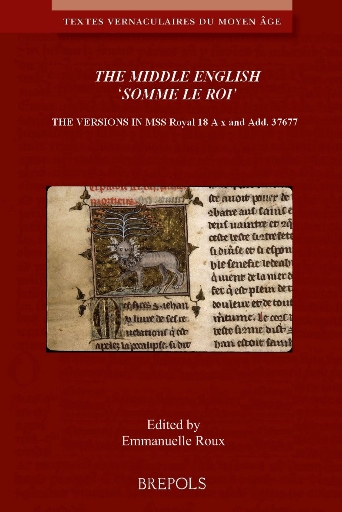
Two Middle English Translations of Friar Laurent's 'Somme le roi': critical edition
show More to view fulltext, buy and share links for:Two Middle English Translations of Friar Laurent's 'Somme le roi': critical edition show Less to hide fulltext, buy and share links for: Two Middle English Translations of Friar Laurent's 'Somme le roi': critical editionThis is the first volume of a two-volume project whose aim is to publish all the known Middle English manuscript translations of the French Somme le roi, a thirteenth-century manual of religious instruction offering teaching on the Decalogue, the seven deadly sins and their remedies, compiled by the Dominican friar Laurent of Orleans. The project extends and deepens our knowledge of the influence of this popular French text, known today only from the versions entitled The Ayenbite of Inwit and The Book of Vices and Virtues, published in 1866 and 1942, respectively.
This volume presents the versions extant in BL MSS Royal 18. A. x and Add. 37677; the second will cover the versions in Cambridge, Corpus Christi College, MS 494, Oxford, Bodleian Library, MS Ashmole 1286, and Oxford, Bodleian Library, MS e Musaeo 23. The texts of both volumes have been prepared with the help of the recently-published edition of the French text (2008), a circumstance from which the earlier English editions were unable to benefit. It is likely that the versions edited here for the first time will make a considerable contribution to our understanding of the processes of textual transmission and to that of translation itself in English literary circles of the fifteenth century.
-
-
-
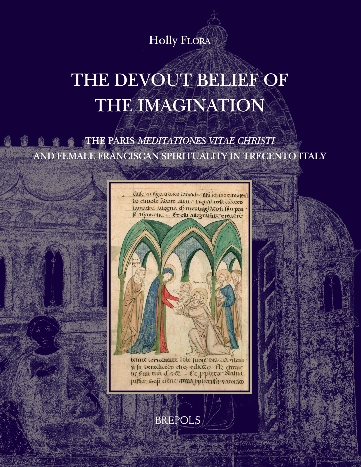
'The Devout Belief of the Imagination'
show More to view fulltext, buy and share links for:'The Devout Belief of the Imagination' show Less to hide fulltext, buy and share links for: 'The Devout Belief of the Imagination'This volume examines the late medieval devotional text Meditationes Vitae Christi through an analysis of its most important manuscript, known by its present location and catalogue number as Paris Bibliothèque Nationale Ms. ital. 115. As Flora argues, Ms. ital. 115, the oldest and most extensively illustrated copy of the Meditationes, was originally made in or near Pisa c. 1350 and tailored very specifically for a group of Franciscan nuns. Flora suggests the manuscript’s probable uses in practices of performative devotion and affective response, and the relationship between its imagery and other works of art made for religious women, shedding new light on the history of female monasticism in medieval Italy.
Holly Flora is Assistant Professor of Art History at Tulane University, and is the author of Cimabue and Early Italian Devotional Painting (The Frick Collection, 2006) as well as studies on illustrated manuscripts and devotional art in late medieval Italy.
-
-
-
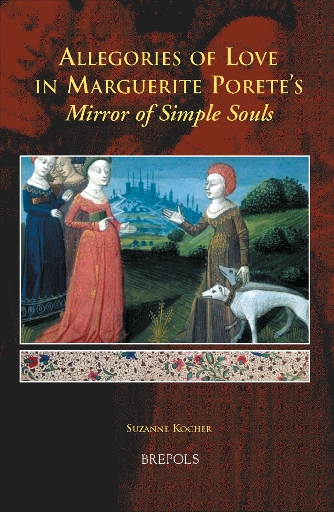
Allegories of Love in Marguerite Porete's 'Mirror of Simple Souls'
show More to view fulltext, buy and share links for:Allegories of Love in Marguerite Porete's 'Mirror of Simple Souls' show Less to hide fulltext, buy and share links for: Allegories of Love in Marguerite Porete's 'Mirror of Simple Souls'Marguerite Porete’s Mirror of Simple Souls, dating probably to the 1290s, is the oldest known mystical work written in French, and the only surviving medieval text by a woman writer executed as a heretic. This volume analyses its use of interconnected allegories that describe the soul’s approach toward God in terms of human social relationships. These include romantic love between lovers in same-sex and mixed-sex pairs, relations among people of differing social rank such as servants and nobles, and rich and poor engaged in economic transactions such as taxation and gift-giving. Gender, rank, and exchange serve as remarkably versatile allegories for spiritual states. Porete uses comparison as an organizing principle that underlies her supple and creative use of allegory, personification, parables, metaphors, similes, proverbs, and glosses. The theologian invites her audience to cross boundaries among literal and figurative registers of meaning, in ways that are emblematic of the soul’s ultimate leap toward the divine. Porete’s social allegories, the author contends, can provide us with valuable evidence of a medieval thinker’s conceptions of God, gender, language, and human capacity for change.
-
-
-
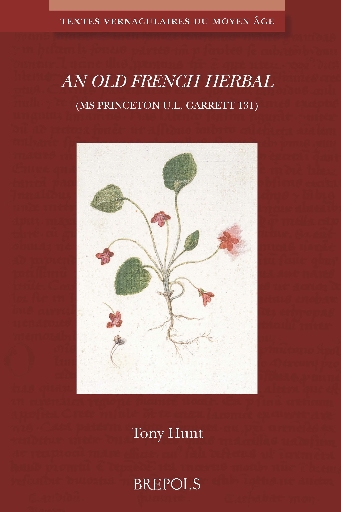
An Old French Herbal (Ms Princeton U.L. Garrett 131)
show More to view fulltext, buy and share links for:An Old French Herbal (Ms Princeton U.L. Garrett 131) show Less to hide fulltext, buy and share links for: An Old French Herbal (Ms Princeton U.L. Garrett 131)The earliest Old French herbal in verse, here edited for the first time, is a surprisingly comprehensive work (3188 octosyllables), based on an eleventh-century Latin treatise 'De viribus herbarum' attributed to a certain 'Macer'. It occupies a significant place in the development of herbals and is an interesting witness to writing in Western France in the thirteenth century and to the unusual syntax and concentrated style of its author. Some one hundred and twenty-five plants are described together with their medicinal uses, which cover a remarkable range of ailments. For ease of recognition the sections of text which do not seem to be based on the received text of 'Macer' are printed in italics. Quotations from the principal source and from parallels are given in the notes. This work will be of great value to all those interested in Old French, in medieval translation, the vernacular transmission of learning, and the history of medicine.
-
-
-

Anglo-Saxons in a Frankish World, 690-900
show More to view fulltext, buy and share links for:Anglo-Saxons in a Frankish World, 690-900 show Less to hide fulltext, buy and share links for: Anglo-Saxons in a Frankish World, 690-900The Anglo-Saxon mission to early medieval Germany and the Netherlands has long been seen as a major contribution to the foundation of Christian Europe. Encouraged by the activities of prominent Anglo-Saxons such as St Willibrord (d. 739) and St Boniface (d. 754), pious men and women left their homes in England to reform and reinvigorate the culture and politics of the Church in Northern Europe, while greatly expanding the frontiers of Christendom. Anglo-Saxons in a Frankish World, 690-900 provides the first major reassessment of the Anglo-Saxons' influence on the Frankish world for fifty years. It argues that, because figures like Boniface were so important to the cult of saints east of the Rhine, stories about them became central to the ways in which different groups responded to the rapidly changing landscape of Carolingian culture and politics. The study draws on letters, charters, and other evidence to recontextualize the numerous hagiographies written about the Anglo-Saxons on the European mainland, while providing fresh perspectives on attitudes to mission, monasticism, authority, and the secular world in East Frankish society.
-
-
-
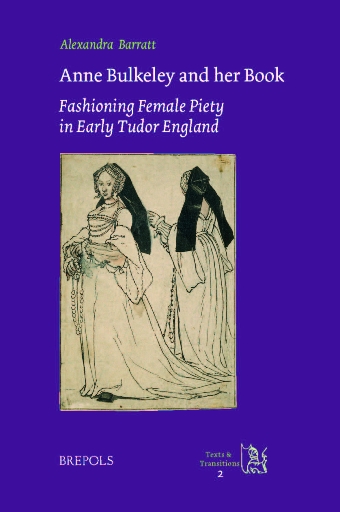
Anne Bulkeley and her Book
show More to view fulltext, buy and share links for:Anne Bulkeley and her Book show Less to hide fulltext, buy and share links for: Anne Bulkeley and her BookThis study is focused on bl ms Harley 494, a small manuscript book which can be dated between 1532 and 1535 and which has many of the features of a preces privatae volume, or private prayer book. It contains prayers in English and Latin but also a number of brief devotional treatises in English. ms Harley 494 possesses two more features of interest: it belonged to a Hampshire widow, Anne Bulkeley (and possibly later to her daughter Anne, a nun at Amesbury Priory); and it emerged from a Birgittine textual community. Barratt edits and annotates the complete manuscript to provide an accessible and informative edition of this little known manuscript. However, Anne Bulkeley and her Book is not a conventional edition of a late Middle English text. Rather, Barratt carefully contextualizes the manuscript within its historical background just before the Dissolution of the Monasteries, and meticulously investigates the varied, and often unusual, sources of many of the individual items in the book. In addition, the discussion encompasses several related manuscripts (principally Lambeth Palace ms 3600 and the so-called Burnet Psalter (Aberdeen University Library ms 25)). This broad focus enables the volume to examine not only the evolution of the manuscript as a whole, but also to answer wider questions of its owner’s identity, her family connections, and her (and her book’s) place in literary, cultural, and religious history.
-
-
-
Bernard le Clunisien
show More to view fulltext, buy and share links for:Bernard le Clunisien show Less to hide fulltext, buy and share links for: Bernard le ClunisienLa tendance dominante du christianisme durant des siècles n'a pas été l'affirmation d'une puissance travaillant à la transformation du monde et de l'histoire, mais plutôt la disposition à s'en écarter et à prendre ses distances, selon la doctrine du "mépris du monde" (contemptus mundi). C'était en tout cas l'orientation de la pensée monastique qui a traversé tout le Moyen Âge.
Vers la fin de la première moitié du XIIe siècle, un moine bénédictin de Cluny, que l'on a appelé Bernard de Morlaix ou de Morlas ou Bernard le Clunisien, et qui résidait au prieuré Saint-Denis de Nogent-le-Rotrou, a écrit lui aussi un De contemptu mundi. Cet immense poème en vers métriques, est, malgré son titre, beaucoup plus que l'expression habituelle du thème monastique de la vanité du monde. Il contient une représentation lumineuse du Ciel, Jérusalem céleste, Cité resplendissante où Dieu est tout en tous, et une vision des enfers, où les références à Virgile semblent annoncer la grande épopée dramatique et mystique de la Divine Comédie de Dante ; et c'est aussi une longue complainte et une impitoyable satire contre les désordres et les injustices de l'époque, satire n'épargnant ni les prêtres, ni les évêques, ni le pouvoir de Rome.
-
-
-
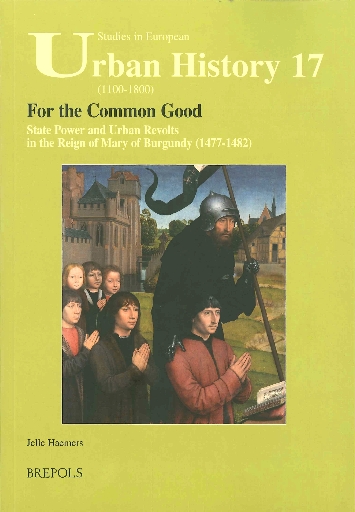
For the Common Good
show More to view fulltext, buy and share links for:For the Common Good show Less to hide fulltext, buy and share links for: For the Common GoodIn 1477, the Low Countries were in chaos. On 5 January Charles the Bold, Duke of Burgundy, was killed in the battle of Nancy. His political adversaries used this fortuitous opportunity to reverse his much-hated policies. The late duke’s confidents were executed, as nobles fled from court. The French king declared war on Charles’ heir, Mary of Burgundy, and the cities rose in rebellion against the duchy. United in their opposition to the ducal court, the Estates-General instituted a new state structure which severely reduced the power of the central state. The duchess’ new husband, Maximilian of Austria, was never able to dictate war policy nor appease the discontent of the populace, because his first priority was to strengthen the power of the Habsburg dynasty. In 1482, when Mary of Burgundy died after a tragic fall from her horse, revolt again spread across the county of Flanders. In this dramatic crisis that would last for a decade, central authority was again challenged by a political alternative, the Flemish regency council.
This book examines the people behind the revolt. From a murky background of conflicting loyalties, it identifies the principal allies of the Habsburg dynasty and key political adversaries of Maximilian in the Flemish cities. An in-depth analysis of their lives and their socio-economic and cultural backgrounds on the eve of the Flemish Revolt elucidates their reasons for rebelling or remaining loyal to court. By focusing on disloyal nobles at court and urban dissenters in the county of Flanders, this book goes beyond previous studies of the revolt and offers new insights into the social history of medieval politics. In the end, readers will discover whether the court, the nobility, and the urban rebels were really striving for the goal they claimed, the common good.
Jelle Haemers is a post-doctoral research fellow at Ghent University (IAP-project ‘City and Society in the Low Countries, 1100-1800’). His research interests focus mainly on urban history of the Late Middle Ages.
-
-
-
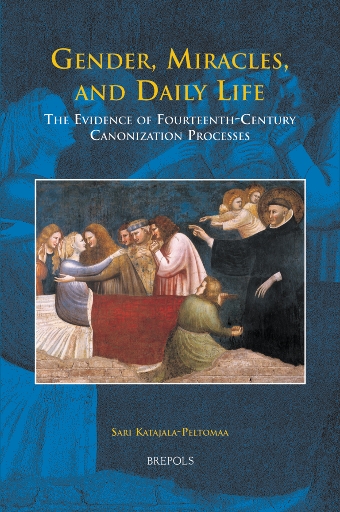
Gender, Miracles, and Daily Life
show More to view fulltext, buy and share links for:Gender, Miracles, and Daily Life show Less to hide fulltext, buy and share links for: Gender, Miracles, and Daily LifeInteraction with the saints was central to the everyday life of medieval Christians. The process of praying to a heavenly intercessor not only involved private devotion but was also intrinsically connected with society at large. It required the individual to communicate and negotiate both with the saint and within a group of devotees, thereby exposing social processes such as community dynamics and the construction of gender. Considering these issues and others, Gender, Miracles, and Daily Life focuses on the depositions of the canonization processes of Thomas Cantilupe (1307) and Nicholas of Tolentino (1325). It explores how ordinary laypeople understood the daily responsibilities that determined their relationship to the saints and articulates how their shared narratives contributed to the rituals which surrounded a miracle. This material has been little explored by scholars, yet offers a vivid and colourful insight into the world of men and women in the fourteenth century.
-
-
-
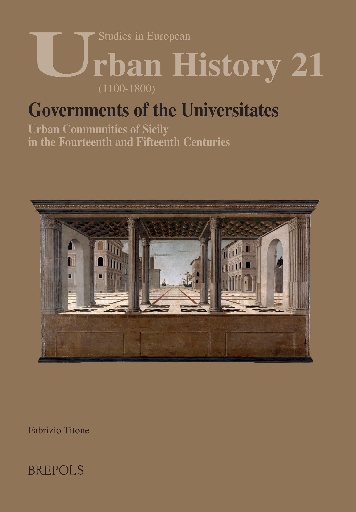
Governments of the Universitates: Urban Communities of Sicily in the Fourteenth and Fifteenth Centuries
show More to view fulltext, buy and share links for:Governments of the Universitates: Urban Communities of Sicily in the Fourteenth and Fifteenth Centuries show Less to hide fulltext, buy and share links for: Governments of the Universitates: Urban Communities of Sicily in the Fourteenth and Fifteenth CenturiesTitone refutes established historiographic interpretations in a long-term analysis of urban institutional and social transformations in Sicily during the Late Middle Ages and shows how distinct chronological divisions do not apply to these local governments characterized by both marked experimentation and striking continuity. The urban communities’ social and institutional deformities are brought to light along with the fact that intense communication among cities could produce common results. The pivotal role consistently played by the universitates in the affairs of the kingdom can be seen in the process of defining urban autonomy which often involved sovereign and community in interrelated decision making. Cities frequently oriented royal policy and this explains a unique feature of Sicilian pactism: a community might not implement a sovereign’s concession even though it ensued from municipal solicitations. The period of validity for a privilege when requested by only certain groups was linked to maintenance of the local status quo. Opposition from excluded parties and a shift in the balance of power originally underlying royal assent to a petition often meant the concession would not be put into without its being necessary to envolve the central government any further.
Fabrizio Titone is currently a post-doctoral Mellon Fellow at the Pontifical Institute of Mediaeval Studies in Toronto. His research interests focuses on the urban history of the Aragonese Crown.
-
-
-
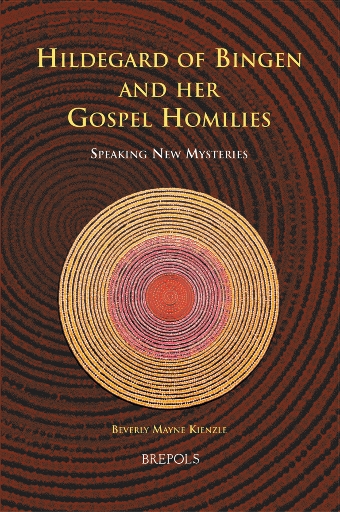
Hildegard of Bingen and her Gospel Homilies
show More to view fulltext, buy and share links for:Hildegard of Bingen and her Gospel Homilies show Less to hide fulltext, buy and share links for: Hildegard of Bingen and her Gospel HomiliesHildegard of Bingen (1098-1179), the only medieval woman known to have authored systematic works of exegesis, composed fifty-eight little-studied Expositiones euangeliorum, homilies on twenty-seven Gospel passages. Hildegard described her divine charge to restore the tottering faith of her era through the revelation of hidden mysteries in the Scriptures. She was to continue the exegetical tradition of the Fathers and to construct moral fortifications with the words of Scripture in order to defend her sisters against the forces of evil. Hildegard of Bingen and her Gospel Homilies constitutes the first in-depth study of Hildegard’s Expositiones and of her exegesis, preaching, and use of sources. It explores the Expositiones in the context of Hildegard’s intellectual and cultural milieu and underscores the central role of biblical interpretation in the seer’s works. Furthermore, this book re-examines Hildegard’s self-depiction in the context of monastic education for women, the magistra’s exchange with her mentors and friends, and her rich use of divine voice to empower her own expression. This is a new, exciting, and erudite study on one of the most influential female mystics.
-
-
-
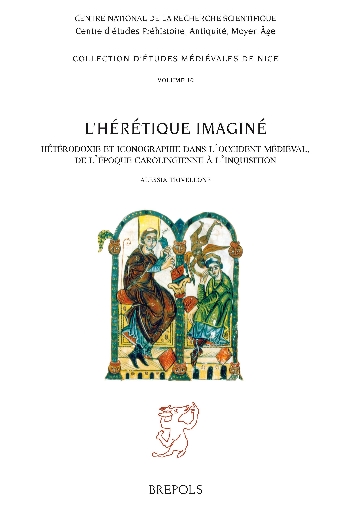
L'hérétique imaginé
show More to view fulltext, buy and share links for:L'hérétique imaginé show Less to hide fulltext, buy and share links for: L'hérétique imaginéL’hérésie médiévale est depuis quelques années au cœur d’un débat historiographique très vif. Toutefois, le thème n’avait jamais été abordé de manière systématique à partir des images. Le livre d’Alessia Trivellone vient combler cette lacune, en étudiant l’ensemble des représentations d’hérétiques dans l’Occident médiéval, tous supports confondus, depuis leur apparition au tournant des VIIIe et IXe siècles jusqu’au premier tiers du XIIIe siècle, à la veille de la création de l’Inquisition.
Grâce à la mise en place d’une méthodologie rigoureuse, l’imaginaire médiéval lié à l’hérésie est ainsi saisi à travers les représentations d’hérétiques élaborées au sein des milieux orthodoxes. L’analyse des images permet de suivre l’actualisation, opérée aux XIe et XIIe siècles, des définitions de l’hérésie fournies par les écrits des Pères, ainsi que l’apparition, entre la fin du XIIe et le début du XIIIe siècle, d’une idée abstraite d’hérésie, désormais conçue comme une épreuve nécessaire en vue du salut. Au cours du premier tiers du XIIIe siècle, un autre changement se dessine : la référence à l’Antiquité et le recours aux personnifications disparaissent de l’iconographie pour faire place à la représentation de groupes hérétiques contemporains, représentés en train d’accomplir les rites dont ils sont accusés ou de subir les châtiments auxquels ils ont été condamnés.
Ce livre propose donc une histoire de l’idée d’hérésie à travers le prisme des images, une histoire qui constitue l’arrière-plan idéologique de la lutte antihérétique au sein de la société occidentale.
L’auteur
Après des études d'histoire de l'art en Italie, à l’Université de Rome « La Sapienza », Alessia Trivellone a soutenu en 2005, au Centre d’Études Supérieures de Civilisation Médiévale - Université de Poitiers, une thèse de doctorat sur l'iconographie de l’hérétique. Actuellement chargée d'enseignement à l'Université de Nice et associée au CEPAM (Université de Nice / CNRS), elle mène une recherche post-doctorale, dans le domaine de l'iconographie médiévale, au sein de l'UMR 5594 (Université de Dijon / CNRS).
-
-
-
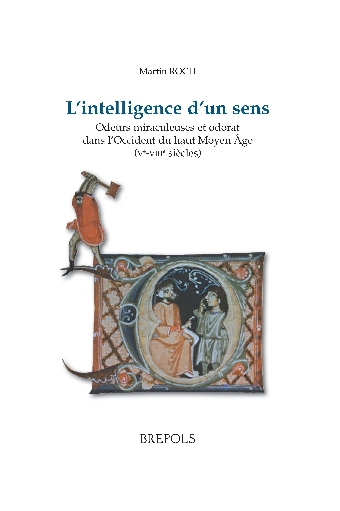
L'intelligence d'un sens.
show More to view fulltext, buy and share links for:L'intelligence d'un sens. show Less to hide fulltext, buy and share links for: L'intelligence d'un sens.Que peut-on vraiment lire dans les récits médiévaux relatant les émanations et les perceptions des ‘odeurs de sainteté’? Cette expression elle-même fut-elle jamais pleinement signifiante, non pas sublimée en une métaphore toute spirituelle, mais au contraire bien charnelle, et donc partie intégrante d’une culture?
Prenant pour point de départ les récits d’exhalaisons extraordinaires, cet ouvrage s’attache à reconstruire l’importance et la signification qu’ont pu revêtir odeurs et odorat en Europe occidentale, dans la culture et la pensée religieuses, voire même dans l’expérience des hommes et des femmes du haut Moyen Âge, période formatrice s’il en fut. S’appuyant sur un dépouillement systématique des récits hagiographiques, Martin Roch revalorise ces sources, souvent décriées, tout en les confrontant méticuleusement aux textes bibliques et patristiques, aux documents liturgiques, et même aux données archéologiques disponibles.
En déplaçant le point de vue de l’odeur miraculeuse à sa perception et aux récits qui en sont faits, l’auteur se tient fermement sur le terrain de l’histoire, de ses sources et de ses méthodes, sans se priver pour autant de dialoguer avec les autres sciences humaines, ou encore la médecine, ou la psychologie. Il démontre ainsi que, par delà les formules littéraires, les approches superficiellement rationalistes ou les effets de mode, les odeurs extraordinaires peuvent être reconnues comme un authentique objet d’histoire. Ce faisant, il parvient à mettre en évidence une réalité autrement plus riche et complexe que ce que l’on pouvait soupçonner.
Martin Roch est docteur en histoire médiévale de l’Université de Genève.
-
-
-
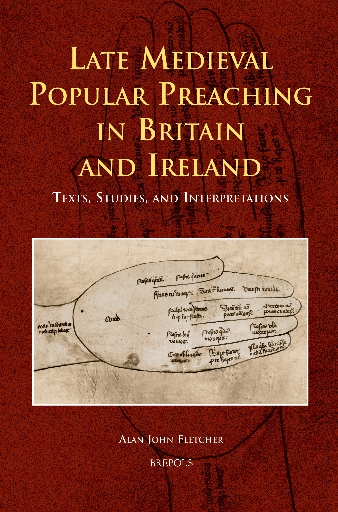
Late Medieval Popular Preaching in Britain and Ireland
show More to view fulltext, buy and share links for:Late Medieval Popular Preaching in Britain and Ireland show Less to hide fulltext, buy and share links for: Late Medieval Popular Preaching in Britain and IrelandSermons and preaching played a key role in forming the religious mentality and outlook of many late medieval men and women. Yet the practice of preaching depended on many variables: the nature and disposition of the audience, the competence of the preacher, and even the stylistic variations that different Orders developed to distinguish their preachers from others. This study and anthology of late medieval popular preaching intended for the laity explores aspects of this diversity by presenting examples of sermons from each of the major wings of the late medieval orthodox Church: the friars, the regulars, the canons regular, the secular canons, and the seculars. It also reveals the ways in which this diversity in forms of preaching finds its correlate in the codicological diversity that existed between sermon manuscripts themselves. Late Medieval Popular Preaching in Britain and Ireland demonstrates how formidable and culturally constitutive a force preaching was, and also examines some of the ways in which it impinged on the production of vernacular literature, ultimately revealing the powerful and wide-spread influence of sermon discourse on cultural production in greater British society.
-
-
-
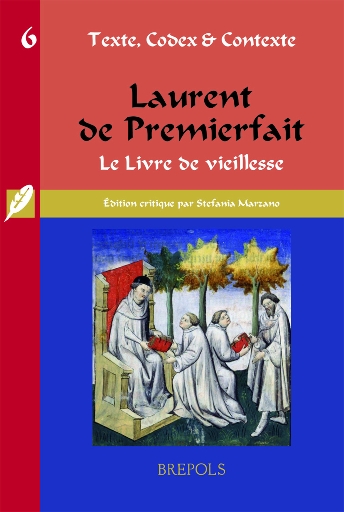
Laurent de Premierfait, "Livre de vieillesse"
show More to view fulltext, buy and share links for:Laurent de Premierfait, "Livre de vieillesse" show Less to hide fulltext, buy and share links for: Laurent de Premierfait, "Livre de vieillesse"Laurent de Premierfait (vers 1370-1418) a connu une brillante carrière de traducteur. De sa Champagne natale à la cour de Charles VI, cet érudit et fin latiniste fréquente les milieux humanistes de l’époque, participe à la vie littéraire de la cour avignonnaise, compose des vers latins qui font sa renommée. D’influents mécènes le protègent et lui commandent des traductions de Boccace (De casibus virorum illustrium, Decameron) et de Cicéron (De senectute, De amicitia). Ces traductions s’inscrivent dans le sillage d’une politique culturelle visant à rendre accessible à un public seigneurial des textes jugés utilitaires; or, se révélant de véritables « best-sellers », ces textes seront à plusieurs reprises révisés, cités, voire utilisés à des fins de propagande tout au long du XV e siècle. Le travail de Stefania Marzano rend accessible pour la première fois le Livre de vieillesse (1405). L’édition est établie sur la base du manuscrit BnF lat. 7789, exemplaire de présentation au duc de Bourbon, vraisemblablement autographe. Ce codex, qui présente une rare disposition bilingue comprenant à la fois l’original latin et le texte français, semble nous transmettre, et dans la forme et dans le fond, la théorie de la traduction d’un des intellectuels les plus connus de son époque.
Stefania Marzano, chercheur postdoctoral CRSH (Canada) - Université catholique de Louvain (Groupe de recherche sur le moyen français), est diplômée de l’Université McGill et s’intéresse à la réception européenne des « classiques » latins et italiens au XVe siècle. Sa thèse de l’Université de Toronto intitulée Édition Des cas des nobles hommes et femmes de Laurent de Premierfait (1400) est en cours de publication.
-
-
-
Les historiens et la question franque
show More to view fulltext, buy and share links for:Les historiens et la question franque show Less to hide fulltext, buy and share links for: Les historiens et la question franqueL’arrivée des Francs et l’établissement de leur pouvoir en Gaule à la fin du Ve siècle fut et demeure un moment mal connu de l’histoire européenne. Le manque de sources écrites eut pour corollaire un fort investissement idéologique pour les monarchies française et allemande, qui firent de cet épisode un véritable mythe d’origine. Le développement de la science historique puis l’invention de la nation démocratique, en sapant cette légende, engendrèrent une pluralité de postures historiographiques. Au XIXe siècle, la question franque devient un enjeu de mémoire primordial dans la stratégie de mise en discipline de la science historique à l’Université, et pour la structuration d’une communauté de spécialistes (historiens, médiévistes, puis haut-médiévistes). L’impact des conflits franco-allemands et la radicalisation des idéologies, nationaliste, marxiste ou national-socialiste, influencent les discours. Mais progressivement s’engage, dans la seconde moitié du XXe siècle, un mouvement de déconstruction nationaliste, stimulé par une dynamique européenne et pacifiste. La présentation de ces débats révèle un panorama original de l’érudition historienne française et allemande aux XIXe et XXe siècles. Elle montre la réalité d’une science en marche, tout en soulignant l’impact du présent sur celle-ci. Ce sont finalement le statut de toute vérité historique et le rapport de l’historien à l’État qui se trouvent ici questionnés.
-
-
-
Les tombeaux des familles royales de la péninsule ibérique au Moyen Age
show More to view fulltext, buy and share links for:Les tombeaux des familles royales de la péninsule ibérique au Moyen Age show Less to hide fulltext, buy and share links for: Les tombeaux des familles royales de la péninsule ibérique au Moyen AgeContrairement à ce que l'on pourrait attendre, il n'est, dans cet ouvrage, pas tant question des morts que des vivants, des survivants. Le rôle particulier joué par le souverain dans les institutions médiévales fait que sa mort échappe à la dimension intime, familial, pour devenir publique. Dès 1063, elle devient, avec Ferdinand Ier de León, l'objet d'une véritable mise en scène sur plusieurs jours, caractère qu'elle ne perd plus dès lors, du moins dans les textes, que ce soit pour glorifier le défunt (ainsi de Jacques Ier d'Aragon ou, surtout, de la mort chevaleresque entre toutes de son père Pierre II à la bataille de Muret) ou au contraire pour le décrier (ce que font les textes castillans évoquant la fuite éperdue de l'aragonais Alphonse le Batailleur). Pour les souverains, la mort est aussi une transformation du statut, un passage vers un autre état, celui à la fois de modèle pour ses successeurs et de fondement de la légitimité du royaume. L'élection de sépulture voit ainsi s'affronter deux logiques, celle, commune à l'ensemble de la noblesse des XIe, XIIe et XIIIe siècles, de la famille et de la piété personnelle d'une part, et celle de la légitimité dynastique et de l'affirmation territoriale de l'autre. Les royaumes de la péninsule ibérique, aux frontières perpétuellement mobiles entre le règne de Sanche le Grand et ceux de Ferdinand III en Castille et León et de Jacques Ier en Aragon, le reflètent pleinement, succession de fondation de lieux de sépultures royales et de transfert de celles-ci, où la présence du corps d'un souverain en un royaume est source de légitimité pour les souverains, mais aussi de préséance pour un souverain sur son voisin, et où, au contraire, un souverain ayant failli aux yeux de sa noblesse ou de son successeur peut, comme Sanche VII de Navarre, se voir exclu de la nécropole royale. La péninsule est, aux XIe et XIIe siècles, un lieu d'expérimentation tant pour l'organisation des sépultures, qui là encore voit s'affronter logique familiale et logique politique, que pour leur forme, renforcée par la réticence quasi généralisée des souverains (à l'exception de Ferdinand II et d'Alphonse IX de León) à la forme du gisant. Dans l'un et l'autre domaine, ces recherches hispaniques furent source d'inspiration au XIIIe siècle pour les dynasties capétienne et plantagenêt et pour la noblesse qui les entourait, notamment par le biais des mariages entre les grandes familles de l'un et de l'autre côté des Pyrénées, occasion, tout particulièrement à la fin du XIIe siècle et au début du XIIIe siècle, d'un resserrement des liens entre les dynasties de l'Europe occidentale. En cela, les monuments funéraires des rois de la péninsule ibérique qu'étudie cet ouvrage sont non seulement des oeuvres d'art d'une qualité parfois exceptionnelle, mais aussi des témoins privilégiés à la fois de la nature de la royauté dans la péninsule ibérique et de liens tissés entre ici-bas et au-delà bien plus complexe que ne le laissent apparaître les seuls textes théologiques.
-
-
-
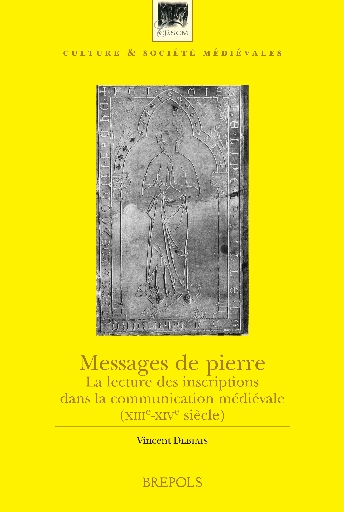
Messages de pierre
show More to view fulltext, buy and share links for:Messages de pierre show Less to hide fulltext, buy and share links for: Messages de pierreLa culture écrite médiévale se caractérise par la diversité et l’originalité de ses formes et de ses fonctions. Au sein de cet éventail très large des pratiques de l’écriture, les inscriptions tracées sur la pierre, le bois, le verre ou le métal dans le but de communiquer un message pour la plus longue durée occupent une place particulière bien qu’encore assez mal définie aujourd’hui. Née en France à la fin des années 1960, l’épigraphie médiévale s’est jusqu’à présent principalement attachée au texte de l’inscription et à son contenu, en étudiant la forme des lettres, les sources de la composition et les informations transmises par le document.
Si elles ont permis des avancées considérables dans la connaissance des formes de l’écriture épigraphique, ces études, en se concentrant sur le contenu du texte, ont isolé le document de sa fonction réelle dans la communication médiévale. Le public des inscriptions, la façon dont il appréhende, par les sens et par l’esprit, le texte vu dans le paysage graphique quotidien, et l’utilisation qu’il peut en faire échappent encore pour beaucoup à la connaissance du médiéviste. C’est en posant l’inscription au cœur du système culturel médiéval et en essayant de déterminer sa place effective dans la transmission des informations que ce livre entend discuter la réalité de la fonction publicitaire du texte épigraphique et déterminer les modalités de lecture, de compréhension et d’utilisation de l’écriture exposée. Au tournant des xiii e-xiv e siècles, alors que se met en place une nouvelle culture écrite, définie par une diffusion plus profonde du texte dans la société médiévale, l’inscription devient un élément incontournable dans la ville et y joue des rôles très différents (affichage des décisions, commémoration des événements, structuration des espaces, affirmation des autorités) qui constituent autant d’occasions pour le public d’exercer sa familiarité avec l’écriture et de s’affirmer en tant que lecteur potentiel.
Docteur en histoire médiévale, ingénieur de recherche au CNRS spécialisé en analyse des sources anciennes et membre du Centre d’études supérieures de civilisation médiévale de Poitiers, Vincent Debiais est l’auteur depuis 2005 du Corpus des inscriptions de la France médiévale et participe aux activités de recherche du CESCM sur la culture écrite au Moyen Âge.
-
-
-
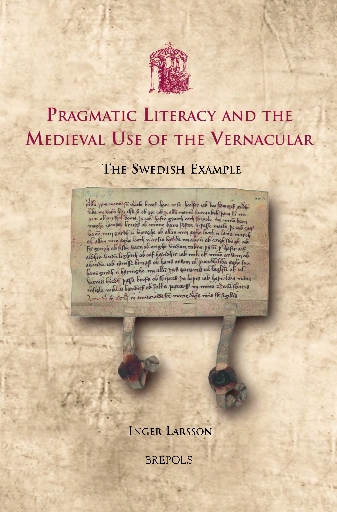
Pragmatic Literacy and the Medieval Use of the Vernacular
show More to view fulltext, buy and share links for:Pragmatic Literacy and the Medieval Use of the Vernacular show Less to hide fulltext, buy and share links for: Pragmatic Literacy and the Medieval Use of the VernacularBetween 1150 and 1400 Sweden was transformed from a society which was predominantly reliant on oral communication into a society which increasingly deployed writing. Latin, the traditional language of government and records, was gradually replaced by vernacular Swedish. The watershed moment in this process was the drafting of national and town laws in the 1350s, an event which established Swedish as the language of the judiciary and judicial records. From this period written documentation was gradually integrated into legal procedure.
Pragmatic Literacy argues that the Crown, the expanding bureaucracy, the editing of the laws in Swedish, and the laws’ demands for written documentation in everyday transactions were the main driving forces behind the development in medieval Sweden of lay literacy for practical purposes. The book demonstrates how the early use of writing by the royal administration and the writing of provincial laws in Swedish created “centres of literacy” from which literate ways of thinking and acting spread both geographically and socially. It further illustrates how literacy moved beyond the confines of the clerical elite, by exploring how different members of the laity adopted pragmatic literacy for private purposes. Pragmatic Literacy thus traces the history of pragmatic literacy in Sweden through the lens of the judicial and administrative archive.
Inger Larsson is professor of Swedish Language at the Department of Scandinavian Languages, Stockholm University.
-
-
-
Queritur utrum
show More to view fulltext, buy and share links for:Queritur utrum show Less to hide fulltext, buy and share links for: Queritur utrumCe volume présente le troisième volet d’une enquête sur la disputatio dans les universités médiévales. Le premier, paru en 1995, traitait la dispute à la Faculté des arts à Paris au XIIIe siècle ; dans le deuxième, paru en 2002, le champ géographique et chronologique était élargi aux facultés des arts en Europe occidentale jusqu’à la fin du moyen âge. Cette troisième partie propose une comparaison entre la disputatio dans les facultés des arts et celle pratiquée dans les autres facultés. Cette comparaison n’avait pas été faite lors de la publication du volume sur Les questions disputées et les questions quodlibétiques dans les Facultés de théologie, de droit et de médecine, paru en 1985 dans la collection Typologie des sources du Moyen Age occidental.
Comme dans les deux précédentes publications sur la disputatio, on trouvera ici la documentation nécessaire pour comprendre le caractère et le fonctionnement de cet outil intellectuel dans les diverses facultés des universités médiévales. Cette documentation est forcément limitée : le nombre de textes de questions disputées qui a été conservé est immense, seule une partie a été éditée et les manuscrits sont souvent difficiles à lire. Il a donc fallu faire un choix, guidé par les publications récentes et en espérant que les textes choisis sont représentatifs.
Comme dans le second livre de cette série (la disputatio dans les facultés des arts), le présent volume comprend en principe l’ensemble de la période médiévale, depuis l’apparition des questions disputées dans les diverses disciplines jusqu’au XVe siècle.
Une histoire plus générale, remontant plus haut dans le temps et se prolongeant plus tard, reste encore à faire. En attendant qu’il le soit, ce volume montre qu’avant la déchéance qu’elle a connue vers la fin du moyen âge, la disputatio, loin d’être une technique uniforme et figée, fut un formidable instrument de recherche et d’enseignement. C’est en grande partie grâce à elle que les intellectuels ont appris à analyser et à raisonner selon un modèle qui permettait de comprendre toutes les facettes d’un problème et d’aller toujours plus loin dans la recherche de la vérité.
-
-
-
Rois, reines et évêques. L'Allemagne aux Xe et XIe siècles
show More to view fulltext, buy and share links for:Rois, reines et évêques. L'Allemagne aux Xe et XIe siècles show Less to hide fulltext, buy and share links for: Rois, reines et évêques. L'Allemagne aux Xe et XIe sièclesL’Allemagne médiévale reste peu connue de nos jours. Pourtant, c’est une grande période de l’histoire germanique, marquée par la naissance de l’Empire, les particularités de l’Eglise impériale, la place des principautés au sein du royaume… La période ottonienne et salienne en particulier (Xe-XIe siècles) est un âge d’or pour le pouvoir des souverains et des évêques.
Le présent recueil propose d’introduire le lecteur dans la compréhension de cette époque en lui permettant de lire en traduction française (généralement pour la première fois) les Gestes des Saxons de Widukind de Corvey (livres 2 et 3), la plus ancienne vie de la reine Mathilde, la Chronique de Thietmar de Mersebourg (livres 3 et 4), la vie d’Henri II par Adalbold d’Utrecht, la vie de Conrad II par Wipo, les Gestes des évêques d’Eichstätt et une sélection de chartes germaniques de cette période.
-
-
-

Saint-Bénigne de Dijon en l'an mil, 'totius Galliae basilicis mirabilior'
show More to view fulltext, buy and share links for:Saint-Bénigne de Dijon en l'an mil, 'totius Galliae basilicis mirabilior' show Less to hide fulltext, buy and share links for: Saint-Bénigne de Dijon en l'an mil, 'totius Galliae basilicis mirabilior'Dans son histoire du monde, écrite vers 1030, Raoul Glaber dépeint l’église préromane de Saint Bénigne de Dijon comme “plus admirable que les basiliques de toute la Gaule” (totius Galliae basilicis mirabiliorem). Commencée autour de 1001 et consacrée en 1016 (l’église) et 1018 (la rotonde), cette abbatiale bénédictine, dont seule la crypte de la rotonde subsiste, relevait des traditions architecturales romaine, carolingienne et ottonienne. Elle fut construite à un moment-clé de l’histoire politique de la France et de la Bourgogne et peut être interprétée en fonction de l’idéologie de ses bâtisseurs, l’abbé Guillaume et l’évêque Brun de Langres. Il faut également la lire comme un cadre exceptionnellement bien conçu pour la dévotion monastique et la liturgie de Cluny telle qu’interprétée par Guillaume. Cet ouvrage se veut une interprétation visuelle, politique, liturgique et théologique de cette église étonnante de l’an mil.
Carolyn Marino Malone est professeur dans le département d’Histoire de l’art, University of Southern California, Los Angeles (USA). Elle est spécialiste d’architecture romane française et gothique anglaise. Son dernier livre s’intitule Façade as Spectacle: Ritual and Ideology at Wells Cathedral, Studies in Medieval and Reformation Traditions, vol. 102 (Leiden-Boston, 2004).
-
-
-
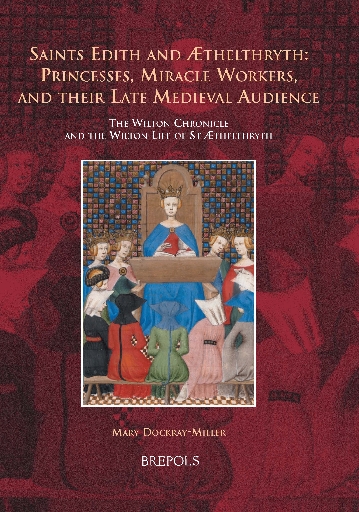
Saints Edith and Æthelthryth: Princesses, Miracle Workers, and their Late Medieval Audience
show More to view fulltext, buy and share links for:Saints Edith and Æthelthryth: Princesses, Miracle Workers, and their Late Medieval Audience show Less to hide fulltext, buy and share links for: Saints Edith and Æthelthryth: Princesses, Miracle Workers, and their Late Medieval AudienceSaints Edith and Æthelthryth: Princesses, Miracle Workers, and their Late Medieval Audience narrates the lives of two Anglo-Saxon princesses who were venerated as saints long after their deaths. St Edith, the daughter of King Edgar, was renowned as a patron of the arts and the church during her lifetime; her posthumous miracles included protection of Wilton Abbey and the English royal family. St Æthelthryth, who retained her virginity through not one but two royal marriages, also worked numerous miracles at her tomb at the Abbey of Ely. The poems, composed at Wilton Abbey in the early fifteenth century, allow us to see how late medieval religious women practised their devotion to early medieval women saints. The Middle English verse texts are presented here in the original and in translation with explanatory notes and glossary. A thorough introduction provides extensive contextualization and analysis of the two poems as well as description of the manuscript and its language and prosody. These primary source texts are important contributions to the study of English history, language, literature, religion, and women's studies.
-
-
-
Saints ermites en Limousin au XIIe siècle
show More to view fulltext, buy and share links for:Saints ermites en Limousin au XIIe siècle show Less to hide fulltext, buy and share links for: Saints ermites en Limousin au XIIe siècleLes biographies de saints ermites sont souvent négligées car ces textes comportent des longueurs qui lassent, voire des futilités qui irritent: autant de raisons qui en écartent le lecteur qui se dit sérieux. L’école positiviste qui voulut, avec raison souvent, réagir contre cette littérature trop facilement apologiste l'écarta parce qu'elle la croyait inutile et même dangereuse. Les érudits de cette école -souvent des clercs- qui, malgré tout, s'y intéressèrent, n'en retinrent que les cadres institutionnels et une échelle chronologique, résultats aussi indispensables qu'insuffisants puisqu'ils en négligeaient l'apport psychologique. Il est donc indispensable de relire ces œuvres hagiographiques afin de ne négliger aucun de leurs aspects.
Vécurent, à la fin du XIe et au début du XIIe siècle en terre limousine, quatre ermites dont la biographie de bon aloi fut écrite à la génération qui suivit leur mort. Ces documents permettent de connaître à la fois l'originalité de chacun d'eux et de préciser les traits communs de ce vaste mouvement.
Le premier arrivé fut Etienne de Muret dont les idéaux érémitiques sont de toute évidence à situer dans la mouvance de saint Nil de Rossano dont il connut les disciples lors d'un séjour qu'il fit en Calabre. C'est après une halte dans l'entourage de Milon, archevêque de Bénévent, et un court passage à la Curie romaine que ce fils du vicomte de Thiers en Auvergne s'installa vers 1076-1078 à Muret où il mourut en 1124. Il est le fondateur de l’Ordre de Grandmont.
Un peu plus tard, le Normand Gaucher choisit la solitude des environs d'Aureil près de Limoges. Il s’était placé très tôt sous la houlette bienveillante des chanoines de la cathédrale et fit par la suite une sorte de stage dans la congrégation des chanoines de Saint-Ruf, près d'Avignon. Il mourut en 1125.
Dans les mêmes années, un limousin "creusois" nommé Geoffroy, après des études à Tours, puis sans doute à Chartres, interrompit une carrière enseignante à Limoges pour se fixer au Chalard, sur les bords de l'Isle. Geoffroy mourut en 1140.
L'installation à Obazine du "corrézien" Etienne date des environs de 1120. A la différence des trois premiers, il n'avait pas reçu une instruction autre que celle exigée alors pour un prêtre de paroisse qu'il fut en ses débuts. Il fut ensuite apprenti-ermite, prit conseil de l’évêque de Clermont, un ancien abbé de La Chaise-Dieu et partit aussi consulter le prieur de La Chartreuse qui lui suggéra de s'affilier à l'Ordre de Cîteaux, ce qu'il fit en 1147. Il mourut en 1159.
-
-
-
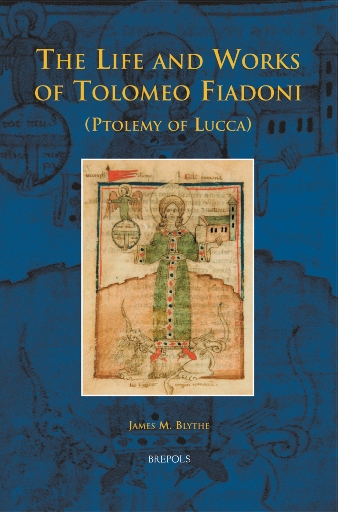
The Life and Works of Tolomeo Fiadoni (Ptolemy of Lucca)
show More to view fulltext, buy and share links for:The Life and Works of Tolomeo Fiadoni (Ptolemy of Lucca) show Less to hide fulltext, buy and share links for: The Life and Works of Tolomeo Fiadoni (Ptolemy of Lucca)Tolomeo Fiadoni (1236-1327) was one of the most remarkable of medieval writers. Living to almost one hundred years of age, Tolomeo bore witness to some of the most important events of the period. He studied and travelled with Thomas Aquinas and was elected Dominican prior in Lucca and Florence. He attended the saintly Pope Celestine V during Celestine’s doomed reign, lived at the papal court in Avignon, served in the households of two cardinals, and associated with the infamous Pope John XXII. At the age of eighty, Tolomeo was appointed bishop of Torcello in the Venetian Lagoon, where his superior, the Patriarch of Grado, subsequently excommunicated and jailed him.
Tolomeo is known today for his major contribution to republican political thought, most notably his continuation of Thomas Aquinas’s only political treatise. However, he also wrote treatises on imperial and ecclesiastical power, a commentary on the six days of creation, a massive Church history, and a European history from 1063 onward. Drawn from all known surviving sources, The Life and Works of Tolomeo Fiadoni is the first full-length study of Tolomeo’s life. It discusses each of his works, and addresses numerous problems of authorship and dating. Its companion volume, The Worldview and Thought of Tolomeo Fiadoni (Ptolemy of Lucca), provides an in-depth analysis of Tolomeo’s beliefs and thought.
-
-
-
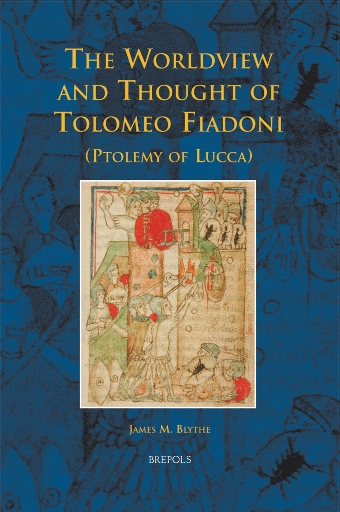
The Worldview and Thought of Tolomeo Fiadoni (Ptolemy of Lucca)
show More to view fulltext, buy and share links for:The Worldview and Thought of Tolomeo Fiadoni (Ptolemy of Lucca) show Less to hide fulltext, buy and share links for: The Worldview and Thought of Tolomeo Fiadoni (Ptolemy of Lucca)Tolomeo Fiadoni (1236-1327) was one of the most important political theorists and historians of the Middle Ages. He was central to developing a theory for the practices of Northern Italian republicanism and was hostile to kingship, portraying it as despotic and inappropriate for virtuous and freedom-loving people. He was the first writer to compare Aristotle’s examples of Greek mixed constitutions - Sparta, Crete, and Carthage - with the Roman Republic, the ancient Hebrew polity, the Church, and medieval communes, yet he remained a staunch defender of the absolute secular and spiritual monarchy of the pope.
Blythe explores various tensions in Tolomeo’s work that are often overlooked in scholarly treatments of him, and which derive from cultural preconceptions and the diverse influences on him: Aristotle, Augustine, apologists for papal power, his life in the Dominican Order, his educational experience with Thomas Aquinas, and his social position as a member of Northern Italy’s ruling class. These factors exerted contradictory influences on Tolomeo and led him to a sometimes unsuccessful intellectual struggle for consistency. This book is the first full-length study of Tolomeo’s thought and it gives full consideration not only to the political writings for which he is most known, but also to his historical and exegetical works. It is the companion to The Life and Works of Tolomeo Fiadoni (Ptolemy of Lucca).
-
-
-
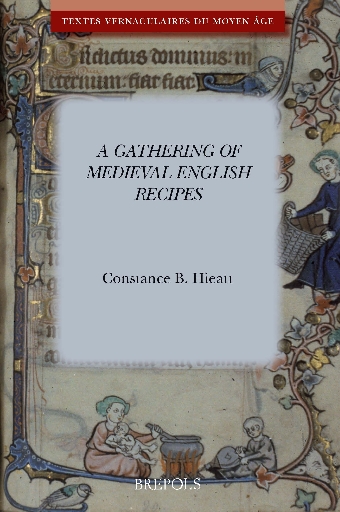
A Gathering of Medieval English Recipes
show More to view fulltext, buy and share links for:A Gathering of Medieval English Recipes show Less to hide fulltext, buy and share links for: A Gathering of Medieval English RecipesThis book is a collection of medieval English culinary recipes which have not been edited before. Some of them come from brief collections which have not been previously published, or are found in isolation or very small groups in manuscripts which do not contain such collections. Others come from collections which have been used, or viewed, primarily for collation, but which contain other recipes which had not yet been noted.
It was the author's object to gather together all the recipes which had not been edited and published, or are not currently being edited by others, to make the record of English recipes of this period as complete as possible. The volume concludes with a supplement to the recently published Concordance of English Recipes: Thirteenth Through Fifteenth Centuries, adding all the "new" recipes to that Concordance, except for a few which are so fragmentary as not to deserve listing.
-
-
-
A Supplement to Morton W. Bloomfield et al., 'Incipits of Latin Works on the Virtues and Vices, 1100-1500 A.D.'
show More to view fulltext, buy and share links for:A Supplement to Morton W. Bloomfield et al., 'Incipits of Latin Works on the Virtues and Vices, 1100-1500 A.D.' show Less to hide fulltext, buy and share links for: A Supplement to Morton W. Bloomfield et al., 'Incipits of Latin Works on the Virtues and Vices, 1100-1500 A.D.'This volume advances the utility of Morton W. Bloomfield et al., Incipits of Latin Works on the Virtues and Vices, 1100-1500 A.D. (1979) by correcting, supplementing, adding to, or deleting information in this commonly-used reference guide to medieval Latin manuscripts of an ethical or pastoral character. Careful attention is paid to updating the identification of texts and their authorship and references to critical editions of works on the vices and virtues. Many new manuscript witnesses and over 500 new texts are added to those found in the earlier catalogue and a number of short texts on vices and virtues are edited here for the first time.
Richard Newhauser, Arizona State University-Tempe, is the author of Sin: Essays on the Moral Tradition in the Western Middle Ages (2007) and editor of The Seven Deadly Sins: From Communities to Individuals (2005) and In the Garden of Evil: The Vices and Culture in the Middle Ages (2005).
István Bejczy is the author of The Cardinal Virtues in the Middle Ages: A Study in Western Moral Thought from the Fourth to the Fourteenth Centuries (forthcoming) and editor of several volumes of articles on medieval virtue ethics.
-
-
-
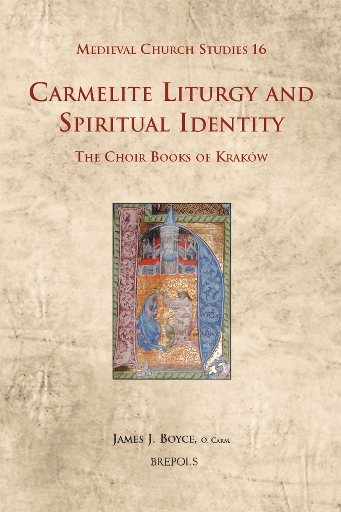
Carmelite Liturgy and Spiritual Identity
show More to view fulltext, buy and share links for:Carmelite Liturgy and Spiritual Identity show Less to hide fulltext, buy and share links for: Carmelite Liturgy and Spiritual IdentityThis book discusses the significance of the Carmelite liturgy as practised in the Kraków convent over a period of some four hundred years. Specifically, it examines the liturgical contents of five medieval Carmelite choir books from the Kraków convent and another choir book from this collection which is now in Wroclaw, and discusses their contents (especially their significant feasts), in terms of the Carmelite order's historical self-understanding and established liturgical tradition. Carmelite Liturgy and Spiritual Identity outlines the role of liturgy in the life of the Kraków convent and in relationship to the apostolic activity of these mendicant friars. It argues that the order's unique liturgical tradition, one which remained distinctive even after the Council of Trent, was crucial to their self-understanding. It also articulates how the liturgical practices of the Kraków Carmelites made a significant contribution to the spiritual life of the city and its people.
-
-
-
Construire une société seigneuriale
show More to view fulltext, buy and share links for:Construire une société seigneuriale show Less to hide fulltext, buy and share links for: Construire une société seigneurialeEntre la fin du IXe et le milieu du Xe siècle, de nouvelles formes de pouvoir émergent en Occident, au sein d’un monde encore carolingien : un bouleversement majeur qui marque la genèse de la société seigneuriale. C’est cette période charnière que permet d’appréhender la figure d’Odon, deuxième abbé de Cluny, grand aristocrate, réformateur acharné et intellectuel de haut niveau.
L’itinéraire d’Odon (né vers 879, mort en 942), acteur de premier plan et témoin privilégié de son temps, reflète en effet la profonde transformation des structures aristocratiques alors à l’œuvre, tandis que l’ecclésiologie originale élaborée par l’abbé réformateur, avec un bagage qui demeure celui du lettré carolingien, définit les conditions et les contours d’une société d’un type nouveau. L’objet de cet ouvrage est bien de cerner au plus près la recomposition des rapports de force et les ressorts idéologiques d’un monde où le champ des possibles est largement ouvert. À quelles stratégies, à la fois sociales et discursives, un puissant aristocrate entré au service de Dieu a-t-il recours pour fonder et asseoir son pouvoir ? À un moment où évoluent les cadres de la société et où se bâtissent de nouvelles légitimités, de quelle manière un réformateur justifie-t-il la domination des moines sur l’ensemble du corps social ? Il s’agit en d’autres termes d’analyser comment un abbé du Xe siècle construit, tant sur le plan des pratiques sociales que des représentations, une certaine société seigneuriale.
Isabelle Rosé, agrégée et docteur en histoire, a réalisé ce travail dans le cadre du Centre d’études Préhistoire, Antiquité, Moyen Âge, unité mixte de recherche de l’université de Nice-Sophia Antipolis et du CNRS. Elle est à présent maître de conférences à l’université de Haute-Bretagne - Rennes 2.
-
-
-

Doubt in an Age of Faith
show More to view fulltext, buy and share links for:Doubt in an Age of Faith show Less to hide fulltext, buy and share links for: Doubt in an Age of FaithDoubt in an Age of Faith presents the first systematic scholarly treatment of doubt and its cultural role in Latin Christendom during the long twelfth century (c. 1060-1220). Flanagan rejects the popular image of the credulous Middle Ages, showing the centrality of doubt to intellectual and religious discourses of the period. However this wide-ranging investigation is not confined to matters of faith or religious scepticism. Examining doubt as both a psychological and social phenomenon, Flanagan explores how medieval people experienced uncertainty, and the different ways in which they sought to resolve it. Both positive and negative aspects of doubt are discussed. Her proposal that the rejection of doubt as a tool of intellectual inquiry, coupled with the quest for ever-greater certainty contributed to the closing of minds that marked the thirteenth century, has obvious implications for our own times.
-
-
-
En la senda del 'Florilegium Gallicum'
show More to view fulltext, buy and share links for:En la senda del 'Florilegium Gallicum' show Less to hide fulltext, buy and share links for: En la senda del 'Florilegium Gallicum'Son numerosos los manuscritos conservados en la actualidad que contienen florilegios medievales de diversa naturaleza. Aquellos que reúnen extractos de autores clásicos revisten interés tanto para la edición crítica de las obras antiguas como desde el punto de vista de la tradición de dichas obras en la Edad Media. Estos florilegios constituyen un vínculo estrecho entre la Literatura Romana y la producción literaria medieval en tanto que son instrumentos de trabajo de los intelectuales en el Medievo.
En este volumen se realiza una introducción general a la cuestión de los florilegios medievales en tanto género y un acercamiento al uso que la Edad Media ha hecho de las auctoritates de la Literatura latina, prestando una atención especial al Florilegium Gallicum, que es, sin duda, uno de los más importantes florilegios de autores clásicos de la Edad Media, ya que reúne un notable conjunto de obras y autores de la Literatura latina, algunos de los cuales se conservan gracias a una transmisión manuscrita extremadamente reducida. El estudio de los florilegios medievales de poetas clásicos y concretamente el estudio del Florilegium Gallicum abre también un camino importante a las investigaciones dedicadas a la canción medieval ya sea de troveros o de goliardos, y es indispensable para comprender el sustrato clásico en el que se fundamenta la especulación de los grandes teóricos de la música, especialmente a partir del siglo XIII.
La naturaleza peculiar de los florilegios medievales plantea, además, interesantes cuestiones de crítica textual, que se discuten en este volumen, ofreciendo propuestas al respecto y un modelo de edición de este tipo de textos. A partir de los principios defendidos por la autora se realiza la edición de uno de los testimonios inéditos del Florilegium Gallicum: el manuscrito 150 conservado en el Archivo Capitular de Córdoba. El texto de este florilegio es también minuciosamente estudiado en lo que a su origen, datación, composición, estructura y utilización se refiere.
Beatriz Fernández de la Cuesta González es Doctora Europea en Filología Clásica por la Universidad Complutense de Madrid y ha publicado diversos trabajos sobre los florilegios latinos medievales y sobre el Florilegium Gallicum.
-
-
-
Faire le ciel sur la terre
show More to view fulltext, buy and share links for:Faire le ciel sur la terre show Less to hide fulltext, buy and share links for: Faire le ciel sur la terreFondée sur le décor peint remarquable et jusqu’ici méconnu de l’église Saint-Eutrope des Salles-Lavauguyon, la présente étude explore les fonctions des images hagiographiques monumentales des XI e-XII e siècles. L’élargissement du questionnement à d’autres édifices permet d’éclairer leur rôle et leur inscription dans l’espace culturel. Se concentrer sur un « lieu d’images » suppose de définir les cadres d’une réflexion méthodologique. Ce livre s’appuie sur une approche contextuelle des œuvres visuelles en changeant d’échelle au fur et à mesure de l’analyse. L’auteur met en lumière la singularité et l’inventivité des concepteurs de chaque image en la replaçant dans sa série, une série qui témoigne de la variété des occurrences du Haut Moyen Age au XII e siècle. Détailler chaque cycle narratif permet d’examiner la façon dont la matière hagiographique est traduite en images et d’observer la construction ou la reconstruction de la vita peinte, les rythmes et les temps du récit.
Chaque cycle hagiographique est étudié à l’aune des thèmes qui sous-tendent l’ensemble du décor. Se dessine ainsi l’acte de création qui a présidé à l’élaboration de celui du prieuré des Salles-Lavauguyon. Les intentions des commanditaires, des chanoines réguliers, se lisent entre les images qu’ils ont choisies et leur mise en œuvre. Une communauté canoniale qui se pense à travers son édifice et son décor et qui se positionne au sein de l’Eglise locale grâce aux images hagiographiques. Prendre pour objet ce prieuré et ses peintures invite à aborder la géographie canoniale du diocèse et son articulation avec les réseaux monastiques, la politique épiscopale, la réforme canoniale, l’instruction et la culture spirituelles mais aussi les enjeux de pouvoir, d’autorité et de territoire.
Le but de ce livre qui dépasse celui de la stricte monographie thématique est ainsi de contribuer à rendre compte de la richesse des mentalités médiévales.
Cécile Voyer a fait ses études au Centre d’Etudes Supérieures de Civilisation Médiévale de Poitiers. Elle est actuellement maître de conférences à l’Université Michel de Montaigne, Bordeaux 3.
-
-
-
Gouverner la ville au bas Moyen Âge
show More to view fulltext, buy and share links for:Gouverner la ville au bas Moyen Âge show Less to hide fulltext, buy and share links for: Gouverner la ville au bas Moyen ÂgeSa position au confluent de la Meuse et de la Sambre font de Namur un carrefour commercial et stratégique non négligeable. Cette situation n’échappe pas à Philippe le Bon lorsqu’il achète le comté de Namur en 1421 au dernier comte Jean III, affaibli par ses difficultés financières et dynastiques. L’exercice du pouvoir à la tête de cette ville moyenne à l’échelle des Pays-Bas bourguignons n’est donc pas sans intérêt pour certains Namurois, leurs familles et pour le prince.
Une fois l’organisation institutionnelle namuroise, sa mise en place progressive et ses pouvoirs examinés en profondeur, ce livre part à la rencontre des hommes qui composent l’échevinage, véritable clé de voûte du gouvernement urbain. Une vaste enquête prosopographique, basée sur un corpus de sources riche et varié, a permis de sortir de l’ombre ces marchands namurois qui comptent parmi les manans et habitans des plus riches de la ville et du comté. Elle éclaire les atouts dont ils disposent et les stratégies qu’ils mettent en place avec leurs familles pour assurer leur intégration et leur maintien au Cabaret. Une réalité transparaît presque à chaque page : la gestion de la ville de Namur est avant tout synonyme de collusion systématique des intérêts publics et privés. Cette domination des marchands et cette pratique du pouvoir n’ont jamais été contestée, ni par la communauté urbaine qu’ils représentent, ni par les artisans, grands absents de la scène politique namuroise, et encore moins par le prince.
Cet ouvrage, en plus d’éclairer les institutions, les hommes et leurs champs d’actions, met en évidence le jeu subtil qui unit les ducs de Bourgogne au patriciat namurois, “ancien et nouveau”, véritable réservoir fiscal pour des princes en mal d’argent. Plus largement, il montre la façon dont s’est effectuée l’intégration de la ville et du comté de Namur à l’Etat bourguignon : une intégration réussie, sans véritable opposition, avec peu d’investissements en hommes et en réformes institutionnelles, mais relativement fructueuse au regard de la taille de cette petite principauté à dominante rurale. La logique du profit guide à chaque instant les gouvernants namurois, qu’il s’agisse des échevins ou du prince.
Cet ouvrage a reçu le Prix Dexia d’histoire urbaine 2005.
Médiéviste, Isabelle Paquay consacre ses recherches et ses publications au pouvoir urbain et aux milieux dirigeants des villes du sud des Pays-Bas bourguignons. Elle est actuellement enseignante et chercheuse aux Facultés universitaires Notre-Dame de la Paix.
-
-
-
Heliand. L'évangile de la Mer du Nord
show More to view fulltext, buy and share links for:Heliand. L'évangile de la Mer du Nord show Less to hide fulltext, buy and share links for: Heliand. L'évangile de la Mer du NordCe poème germanique de près de 6000 vers a été composé entre 822 et 840, vraisemblablement vers 825, dans les premières années du règne de Louis le Pieux, par un érudit chrétien, sans doute compagnon du Frison Liudger. Ce dernier était le continuateur de l’œuvre, en pays frison et saxon, des évangélisateurs anglo-saxons du VIIIème siècle, dont Willehad, lequel avait succédé à Boniface, tué en 754 à Dokkum alors qu’il poursuivait l’évangélisation entreprise par Willibrord.
La langue utilisée, qualifiée de Vieux-Saxon par les spécialistes, était donc tout à fait familière à son auteur. Celui-ci, soucieux d’assurer le succès de l’Evangile dans les cœurs à la suite de la dure conquête par Charlemagne de la Frise Occidentale et du pays saxon, usa d’une langue connue des peuples riverains de la Mer du Nord au début du IXème siècle. Surtout, il apporta au texte de l’Evangile, basé sur des manuscrits et travaux provenant de Fulda, abbaye fondée par Boniface, des adaptations d’ordre sociologique propres à susciter l’adhésion des peuples rudes et fiers de ces contrées nordiques.
En ce sens, le Heliand n’est pas seulement une reprise de l’Evangile : il est aussi le document particulier par lequel les évangélisateurs des pays riverains de la Mer du Nord font entrer le lecteur dans la société des nouveaux convertis d’entre Weser, Ems et Lauwers, fraîchement vaincus et soumis par les Francs. La présente traduction, en prose, est accompagnée du texte germanique tel qu’édité à Halle en 1878 par Eduard Sievers, et de commentaires et annotations. Elle est précédée d’une introduction historique et d’un lexique de termes empruntés au Heliand et comparés à quatre langues germaniques proches, avec traduction en français.
-
-
-
Histoire orientale. Historia orientalis
show More to view fulltext, buy and share links for:Histoire orientale. Historia orientalis show Less to hide fulltext, buy and share links for: Histoire orientale. Historia orientalisSur les relations complexes et riches entre Occident et Orient, l’Historia orientalis fournit un témoignage de premier ordre. Composée entre 1216 et 1227 par Jacques de Vitry, alors évêque d’Acre, elle déploie une riche documentation sur l’histoire de Jérusalem et des Lieux saints jusqu’en 1215 et présente le regard privilégié d’une grande personnalité latine, à la fois homme d’Église, de lettres et d’action, sur les trois premières croisades, les établissements latins en Terre sainte, la fondation de l’islam, l’histoire des divers peuples et communautés religieuses d’Orient, la faune et les particularités naturelles des régions environnantes.
A mi-chemin entre l’histoire et le récit de voyage, l’ouvrage est tiraillé entre la formation augustinienne de son auteur et la découverte de mondes nouveaux, irréductibles aux schémas anciens. Dans le prolongement des Lettres, publiées dans la même collection, l’Historia orientalis de Jacques de Vitry attire l’attention par son ton pessimiste et désabusé : comme si le désordre des événements et la déception devant les revers obligeaient l’auteur à s’interroger sur le sens de l’histoire.
La présente édition s’appuie, à travers l’editio princeps de 1597, sur un manuscrit presque contemporain de l’auteur, confronté à dix des cent-vingt-quatre témoins conservés de cette œuvre à l’immense succès, mais devenue presque inaccessible.
-
-
-
I Porretani
show More to view fulltext, buy and share links for:I Porretani show Less to hide fulltext, buy and share links for: I PorretaniIl volume intende offrire uno sguardo d’insieme sui Porretani, protagonisti di una fase importante e ancora poco conosciuta della storia del pensiero medievale, attraverso un approfondimento progressivo che va dalla storia alle opere al pensiero. La ricostruzione di questo quadro storico prende le mosse nel primo capitolo dall’analisi della percezione, da parte degli storici della filosofia e della teologia, dell’esistenza, dei componenti e del valore della cosiddetta “scuola porretana”, categoria storiografica piuttosto problematica, cui è preferibile la dizione “Porretani”, capace di mettere in luce insieme la pluralità e il comune richiamo all’insegnamento di Gilberto di Poitiers (o Gilberto Porreta). Il secondo capitolo contiene l’esposizione delle tappe più importanti della storia stratificata di questo movimento filosofico e teologico, attraverso la ricognizione di testimonianze dirette e indirette della tradizione porretana nelle fonti coeve al caposcuola. Sono tratteggiate le figure degli allievi di Gilberto, dei divulgatori della sua opera, dei suoi sostenitori, dei suoi ammiratori. Il terzo capitolo del libro offre le informazioni essenziali relative alle opere riconducibili, in gradi e toni diversi, all’insegnamento di Gilberto, distinguendo la prima produzione logico-teologica ‘di scuola’ in senso stretto, l’insieme degli scritti di coloro che raccolgono e rielaborano l’eredità speculativa di Gilberto, i tenaci difensori dell’ortodossia gilbertina, attivi alla fine del secolo in ambienti spesso molto distanti da quelli del maestro. Sulla base di questi tre livelli di ricerca (la critica, la storia, le fonti) si sviluppa la seconda parte della ricerca, in cui si verifica la consistenza dottrinale della scuola, individuando alcuni percorsi speculativi e metodologici particolarmente significativi, funzionali all'elaborazione scolastica della scienza divina: il fondamento ontologico, il corpus delle teorie logico-grammaticali, la dottrina epistemologica, la definizione dei parametri del discorso teologico, la pianificazione della materia teologica. Chiude il lavoro un’ampia bibliografia delle fonti e della letteratura secondaria.
-
-
-
Il Mediterraneo del '300: Raimondo Lullo e Federico III d'Aragona, re di Sicilia. Omaggio a Fernando Dominguez Reboiras
show More to view fulltext, buy and share links for:Il Mediterraneo del '300: Raimondo Lullo e Federico III d'Aragona, re di Sicilia. Omaggio a Fernando Dominguez Reboiras show Less to hide fulltext, buy and share links for: Il Mediterraneo del '300: Raimondo Lullo e Federico III d'Aragona, re di Sicilia. Omaggio a Fernando Dominguez ReboirasThis volume brings together the contributions delivered at the International Seminar held in Palermo and Castelvetrano-Selinunte in Sicily on 17-19 November 2005. The Seminar was organized by the Officina di Studi Medievali in collaboration with the Dipartimento di Civiltà Euro-Mediterranee, the Dipartimento di Studi Storici e Artistici and the Dipartimento di Beni Culturali at the Facoltà di Lettere e Filosofia at the University of Palermo, under the patronage of the Region of Sicily and the Italian Ministero per i Beni e le Attività Culturali.
The contributions address four different themes: 1. Ramon Lull in Sicily at the time of Frederick III; 2. the Opera tuniciana et messanensia of Ramon Lull; 3. Sicily, the Mediterranean and Frederick III; 4. the Ars amativa boni by Ramon Lull. All the contributions - written in English, French, Italian and Spanish - are provided with an abstract in English.
The Seminar was organized in honour of Fernando Domínguez Reboiras who for many years has been the scientific co-ordinator and unceasing promoter of the critical edition of the Latin works of Ramon Lull (ROL) in the Corpus Christianorum, Continuatio Mediaevalis series. Alessandro Musco organized the Seminar and was responsible for the scholarly co-ordination of the present volume. Marta Romano supervised the editorial process and was responsible for the indexes.
-
-
-
Il metodo carolingio
show More to view fulltext, buy and share links for:Il metodo carolingio show Less to hide fulltext, buy and share links for: Il metodo carolingioLo stretto nodo che congiunge il progressivo formarsi dell’identità culturale all’evoluzione dinamica del sapere in età carolingia viene evidenzato in questo studio mediante una serrata analisi critica e storiografica delle diverse opere di argomento teologico scritte dai pensatori che furono più coinvolti nei dibattiti sull’ortodossia cristiana tra i primi anni di regno di Carlo Magno (dal 780 in poi) e la seconda metà del secolo IX. La lettura, il commento e l’esegesi dei testi che documentano tali discussioni consentono l’accesso più efficace e sostanziale all’evoluzione della teologia carolingia, che trovò proprio nel confronto con tesi ritenute eterodosse la spinta a chiarire i temi più delicati della dottrina cristiana. Da Beato di Libana, Alcuino e Rabano Mauro, fino a Ratramno di Corbie e Giovanni Scoto Eriugena, gli intellettuali carolingi si impegnarono nel comporre opere tendenzialmente ispirate dalla volontà di confutare argomentazioni estranee all’ortodossia e di specificare dottrine non ancora stabilmente definite. Il patrimonio patristico, la lettura assidua e consapevole delle Scritture e lo studio delle artes profane, tutti elementi che si ponevano alla base della loro formazione sapienziale, vennero così rielaborati in una comune identità teologica: in essa prese forma e concretezza la stessa ossatura culturale della nuova entità civile che con gli strumenti della politica, dell’azione militare e del controllo economico si andava creando e consolidando nell’Occidente latino in quegli stessi anni. Le fasi più intense del complesso quadro di dibattiti ricostruito nel presente volume evidenziano il duplice ruolo rivestito in età carolingia dalla discussione su temi teologici: funzionale a contenere e delimitare deviazioni dalla ortodossia di autori contemporanei, e, al contempo, utile ad una progressiva definizione della dottrina e dell’identità culturale del nuovo impero barbaro-cristiano.
-
-
-
Johannes Buridanus, Quaestiones topicorum
show More to view fulltext, buy and share links for:Johannes Buridanus, Quaestiones topicorum show Less to hide fulltext, buy and share links for: Johannes Buridanus, Quaestiones topicorumThis critical edition is the first edition of John Buridan’s commentary on Aristotle’s Topics. The work is preserved in one complete manuscript of good quality and in four abbreviated versions. Buridan composed the work at the University of Paris in the first half of the fourteenth century, and the work illustrates very well how the commentators of this period took a freer attitude to Aristotle than previously and were selective about the passages which they commented upon. In book II Buridan discussed a number of sophisms which are not found in his collection of sophisms. The commentary was quite influential in the fifteenth century, particularly on the teaching in the universities of Central and Eastern Europe.
-
-
-
L'abbaye féminine de Denain, des origines à la fin du XIIIe siècle
show More to view fulltext, buy and share links for:L'abbaye féminine de Denain, des origines à la fin du XIIIe siècle show Less to hide fulltext, buy and share links for: L'abbaye féminine de Denain, des origines à la fin du XIIIe siècleCloîtrées à l’abri de l’intrusion masculine, les femmes qui, au Moyen Age, se sont consacrées à la vie monastique ont trop largement échappé à la curiosité des historiens. Pourtant, les abbayes féminines ont elles aussi connu une histoire riche : de la fondation aux crises et aux réformes successives, elles ont dû, comme les monastères d’hommes, organiser la vie interne de la communauté, accomplir la liturgie, encourager la spiritualité, développer l’assise économique, assurer le quotidien, entretenir des relations fructueuses avec l’ordinaire et le souverain pontife ainsi qu’avec l’aristocratie locale… Jean-Pierre Gerzaguet, excellent connaisseur du monachisme entre Flandre et Hainaut, a reconstitué l’histoire de l’abbaye de Denain (département du Nord) des origines carolingiennes jusqu’à la fin du XIIIe siècle, et appuie cette étude par l’édition des quelque 100 chartes conservées pour cette époque.
-
-
-
L'espace rituel et le sacré dans le christianisme
show More to view fulltext, buy and share links for:L'espace rituel et le sacré dans le christianisme show Less to hide fulltext, buy and share links for: L'espace rituel et le sacré dans le christianismeAujourd'hui conservés dans des musées où ils ont acquis le statut d'œuvre d'art, les autels portatifs chrétiens ont joué un rôle majeur dans la définition de l'espace sacré dans l'Antiquité et au Moyen Âge. Les autels portatifs constituent un objet liturgique indispensable au dispositif liturgique nécessaire au déroulement de rites tels que la célébration de l'eucharistie dans le cadre de pèlerinages, sur le champ de bataille en temps de guerre ou bien encore nécessitée par des missions d'évangélisation. À côté de ces fonctions liturgiques, les autels portatifs ont permis tout au long de l'Antiquité et du Moyen Age une réflexion théologique approfondie sur l'espace sacré chrétien et la notion de «lieu rituel ». Plutôt qu'un ouvrage sur les objets eux-mêmes, ce livre propose une vaste exploration de l'espace sacré chrétien à partir du discours à la fois théologique, liturgique, exégétique et iconographique sur les autels portatifs.
Éric Palazzo, Professeur d'histoire de l'art du Moyen Age à l'université de Poitiers, ancien directeur du Centre d'études supérieures de civilisation médiévale (2000-2007) a publié de nombreux ouvrages et articles sur les relations entre art et liturgie au Moyen Age dont Histoire des livres liturgiques. Le Moyen Age, des origines au XIII e siècle, Paris, 1993; Les sacramentaires de Fulda. Etude sur l'iconographie et la liturgie à l'époque ottonienne, Münster, 1994; L'évêque et son image. L'illustration du pontifical au Moyen Age, Turnhout, 1999; Liturgie et société au Moyen Âge, Paris, 2000.
-
-
-
La 'Clavis compendii' de Jean de Garlande
show More to view fulltext, buy and share links for:La 'Clavis compendii' de Jean de Garlande show Less to hide fulltext, buy and share links for: La 'Clavis compendii' de Jean de GarlandeLa Clavis compendii, rédigée par Jean de Garlande au début des années 1230, est la seconde en date de ses trois grammaires versifiées. Composée, tout comme les deux autres, le Compendium grammatice et l’Ars lectoria Ecclesie, en hexamètres dactyliques, elle forme un ensemble complexe à plusieurs égards, qui justifie l’ajout à l’édition princeps du texte d’une traduction en regard. La forme métrique, que ne vient pas seconder un appareil de gloses aussi dense que dans les manuscrits de l’Ars lectoria Ecclesie, constitue le premier rempart à la compréhension directe du traité. Le collage de parties hétérogènes, de prime abord sans rapport entre elles, ajoute à ces difficultés d’accès. Il apparaît cependant que l’œuvre s’articule autour de trois grandes parties distinctes, au sein desquelles coexistent des chapitres fortement individualisés. Ce que l’on peut identifier comme le « premier livre » du traité y est consacré à la récapitulation de définitions et règles grammaticales simples, telles que les enseignent les grands manuels en vogue à l’époque de Jean de Garlande, et qui lui donnent l’occasion de critiquer et corriger les deux plus célèbres d’entre eux, le Doctrinale d’Alexandre de Villedieu et le Grecismus d’Evrard de Béthune. Notes et excursus divers, grammaticaux, mais aussi, à l’occasion, lexicographiques, ponctuent et complètent l’ensemble. Le second livre affiche un parti plus ambitieux, et constitue la partie la plus homogène de l’œuvre. Contrairement à la première, qui se contentait d’énoncer les règles « positives » de la grammaire, cette partie interroge les propriétés des parties du discours afin de mieux cerner les principes moteurs de la syntaxe, vue à travers le prisme de concepts physiques issus directement d’Aristote, et que Jean, parmi les premiers, applique à la construction. L’appareil métatextuel présent dans les manuscrits insiste sur le caractère spéculatif de cette partie, qui suit pour large part le cours des commentaires sur les livres XVII et XVIII (de constructione) des Institutions grammaticales de Priscien. Le livre III consiste quant à lui en trois grands ensembles lexicaux, le premier constitué d’explications de vocables, d’origine hébraïque pour la plupart, tirés de la Bible, le second de differentiae, le troisième de termes médicaux.
L’esprit digressif de l’auteur, qui vient souvent interrompre cette architecture générale, n’a d’égal que la variété des sources, grammaticales, sémantiques, lexicographiques et littéraires, dont il se sert pour rédiger son traité. De cette multiplicité des centres d’intérêt garlandiens émergent des réflexions et des concepts originaux, voire novateurs, et qui pour certains influenceront les théoriciens du langage de la génération suivante.
-
-
-
La Vida de Sant Honorat
show More to view fulltext, buy and share links for:La Vida de Sant Honorat show Less to hide fulltext, buy and share links for: La Vida de Sant HonoratVisitors to the Isle de Lérins, just off Cannes, can see not only the island but also what today is a Cistercian abbey founded about 410 A.D. by St. Honoratus (350-429), hermit, monk and bishop of Arles. Scarcely nothing has changed physically, and the wild unforgiving landscape of the place explains the nature of many of the events described in this verse text, especially the terrifying massacre of the community after the death of Honoratus, which contains horrifying details very rare in mediaeval narratives.
Given the importance of this story, based on nine manuscripts, it is astonishing that a complete edition has not appeared before this date. The late Ingegärd Suwe Ericsson, a Swedish scholar, had undertaken an edition of the first two books, approximately the first half of the work, for her doctorate, published in 1943, in a volume which is naturally difficult to find in libraries. Thereafter, she had hoped to create a complete edition, but, sadly, her profession as a teacher, the care she gave her husband and, in later years, her own ill-health prevented her from continuing the work. In 1988, she contacted Regina af Geijerstam, emeritus professor of Spanish, University of Stockholm, to ask if she would find an editor who would finish the work, for which Suwe Ericsson had a text of the last three books. In 1989, Peter Ricketts made the journey to Östersund, where Suwe Ericsson was living, and he decided to undertake the work himself. She died in 1991. In 2000, Cyril Hershon offered his support to bring the whole project to fruition, and the edition will shortly be ready to go to press.
Not only have Association Internationale d’Etudes Occitanes and Brepols given their approval for the publication of the second half of the work, dealing with the miracles performed by Honoratus after his death, but also for the addition of the work of Ingegärd Suwe Ericsson, to give the mediaeval Occitan work in its entirety in one volume.
Ingegard Suwe Ericsson’s 1943 edition has been respected, apart from the occasional correction to the text. Her introduction considers the manuscript tradition, the language of the scribe in a full linguistic analysis, with examples taken from the first 4127 lines, and only minor elements, such as a résumé in French of this part and a list of errors found in the venerable edition by Sardou have been omitted. Thereafter, there is a complete integration of the first and second parts: the text, accompanied by footnotes, followed by notes to the text, a selective glossary, a table of proper names, and an updated bibliography.
The whole is a text which repays reading and will fill a gap in the repertoire of important mediaeval texts.
Peter T. Ricketts is Emeritus Professor of Romance Philology of the University of London, and is now Honorary Professor in the Department of French, University of Birmingham.
Cyril P. Hershon is Honorary Senior Research Fellow of the University of the West of England.
-
-
-
Le 'questiones' di Radulfo Brito sull’ « Etica Nicomachea »
show More to view fulltext, buy and share links for:Le 'questiones' di Radulfo Brito sull’ « Etica Nicomachea » show Less to hide fulltext, buy and share links for: Le 'questiones' di Radulfo Brito sull’ « Etica Nicomachea »Radulfo Brito, oggi conosciuto e studiato principalmente per la sua produzione logica, è stato senza dubbio uno dei maestri in arti più influenti e fecondi tra la fine del XIII secolo e l'inizio del XIV. Commentatore di una parte notevole del corpus aristotelicum, i suoi scritti toccano tutti gli ambiti del sapere medievale. La maggior parte delle sue opere è, al giorno d'oggi, ancora inedita. Con il presente volume ci si propone di colmare in parte questa lacuna. Il commento di Radulfo all’Etica Nicomachea di Aristotele, scritto intorno al 1290, è un testo estremamente importante per la nostra conoscenza della produzione filosofica alla facoltà delle arti di Parigi e della ricezione della morale aristotelica nell’Occidente latino.
-
-
-
Lectura Erfordiensis in I-VI Metaphysicam, together with the 15th-century Abbreviatio Caminensis
show More to view fulltext, buy and share links for:Lectura Erfordiensis in I-VI Metaphysicam, together with the 15th-century Abbreviatio Caminensis show Less to hide fulltext, buy and share links for: Lectura Erfordiensis in I-VI Metaphysicam, together with the 15th-century Abbreviatio CaminensisThe aim of the present edition is to make two texts available which can throw some more light on the role of Aristotle's Metaphysics in 14th-15th academic teaching. One of them contains part of an early (hitherto unknown) version of John Buridan's Questions on Metaphysics, the other is a 15th century abbreviation of precisely this early version. Remarkably, both texts belong to the East European tradition of Buridan's works, which is the more interesting as they testify to the master's earlier activities as a Parisian teacher on the subject of metaphysics. In particular, they elucidate Buridan's ongoing semantic approach to matters of metaphysics and ontology as well as his attitude to Aristotle's authority.
L.M. de Rijk (1924) is emeritus professor of Ancient and Medieval Philosophy of Leiden University. He was a member of the Dutch Parliament (Senate 1956-1991) and is a member of the Royal Netherlands Academy of Sciences (KNAW}. He is the author of a large number of publications, particularly on ancient and medieval philosophy.
-
-
-
Les chartes des comtes de Saint-Pol (XIe-XIIIe siècles)
show More to view fulltext, buy and share links for:Les chartes des comtes de Saint-Pol (XIe-XIIIe siècles) show Less to hide fulltext, buy and share links for: Les chartes des comtes de Saint-Pol (XIe-XIIIe siècles)Le présent volume contient l’édition critique de 384 chartes promulguées par les comtes de Saint-Pol avant 1300. Il complète la thèse de doctorat consacrée par Jean-François Nieus au comté du même nom (Un pouvoir comtal entre Flandre et France. Saint-Pol, 1000-1300, Bruxelles, 2005). Le comté de Saint-Pol est une seigneurie de frontière apparue vers l’an mil aux confins de la Flandre, de l’Artois et de la Picardie. Au terme de son développement territorial, il s’étirait sur environ 80 kilomètres depuis la source de la Lys jusqu’au cours moyen de la Somme ; autour de son noyau primitif, le Ternois géographique, sont venues s’agréger les seigneuries artésiennes d’Aubigny-en-Artois et Bucquoy, ainsi que les châtellenies d’Encre (Albert) et Lucheux en Amiénois. Ses bâtisseurs - le lignage des Candavène, relayé après 1205 par les seigneurs champenois de Châtillon-sur-Marne - n’ont joué qu’un rôle discret sur la scène princière du nord de la France, mais sont néanmoins parvenus à construire une autorité régionale forte et durable. Les chartes comtales ici rassemblées témoignent de cet effort. Adressées à une centaine de destinataires différents, tant ecclésiastiques que laïques, elles montrent les comtes dans l’exercice de leurs fonctions de seigneurs féodaux, de grands propriétaires fonciers, de protecteurs des églises et des pauvres, de membres éminents de la classe aristocratique. Mais autant et plus encore que le pouvoir des comtes, c’est la société rurale que ceux-ci prétendent régir que le corpus édité révèle à l’historien, dans ses aspects les plus variés.
-
-
-
Macrina the Younger
show More to view fulltext, buy and share links for:Macrina the Younger show Less to hide fulltext, buy and share links for: Macrina the YoungerThis book presents St Macrina the Younger (c. 327-379), eldest sister of Ss Basil the Great and Gregory of Nyssa. All the sources of Macrina's life are gathered together, translated afresh into English, and provided with up-to-date introductions and notes. Documents include: Testimonies of St Basil, St Gregory Nazianzen's epigrams on Macrina and her siblings; Gregory of Nyssa's letter 19 which appears in English for the first time; The Life of Macrina, a jewel of fourth-century Christian biography; and the dialogue On the Soul and Resurrection in which Macrina appears as the Teacher expounding Christian doctrine with reasoned argument. The introduction shows how Macrina gradually changed the family household of Annisa into the proto-monastic community that became model of the monasticism that has come down under Basil's name. A specially commissioned icon, a map of Central Anatolia, and a report of the author's expeditions to ancient Pontus are included.
'In contrast with those works that seek to translate the ancient texts into colloquial English with a pedestrian tone, Silvas' translations have a grand and noble quality about them that is fully fitting Gregory's rhetoric and that conveys to the reader the seriousness of the lofty subject. Silvas does not "over translate"; her translation preserves those points of ambiguity in Nyssen's writing that should be resolved (if possible) not in the translation itself but in scholarly debate'.
Warren Smith, Duke University.
-
-
-
Performing the Middle Ages from 'Beowulf' to 'Othello'
show More to view fulltext, buy and share links for:Performing the Middle Ages from 'Beowulf' to 'Othello' show Less to hide fulltext, buy and share links for: Performing the Middle Ages from 'Beowulf' to 'Othello'Performing the Middle Ages from ‘Beowulf’ to ‘Othello’ traces the dialogic nature of the relationship between the Middle Ages and modernity. Arguing that modern beliefs in the alterity of the Middle Ages stem from the Middle Ages’ own processes of self-representation, Johnston explores varieties of nostalgia through a wide selection of texts. This volume spans an extensive chronological period with a view to demonstrating how our notions of the medieval have been crucially informed by the past itself. The study is focused on works which stage that popular literary archetype - the nostalgic figure of the aristocratic warrior - and argues that it is this image that provides a structural model for so many modern perspectives on the Middle Ages. And yet, in the Middle Ages this model was being deconstructed as it was also being generated. By moving from the self-consciously archaic heroism of Beowulf to the scathing comment on chivalric narrative presented in Chaucer’s ‘Knight’s Tale’, Johnston’s analysis offers an intriguing insight into the way medieval texts engage in a continual aesthetic and ideological critique of their own cultural moment. Using Sir Gawain and the Green Knight and the Alliterative Morte Arthure as examples of an incisive critique of the cult of subjectivity and of a highly self-conscious desire for tradition, Johnston extends his analysis to the early seventeenth century, and explores the ways in which Shakespeare’s Othello brilliantly deconstructs the very concept of ‘Renaissance Man’. With its interest in issues of subjectivity, textual performance, and the ideological self-awareness of medieval culture, Performing the Middle Ages provides a scholarly and compelling investigation into the Middle Ages’ ability both to understand itself and to shape (post)modern notions of the medieval.
-
-
-
Pêche et pisciculture dans les eaux princières en Franche-Comté aux XIVe et XVe siècles
show More to view fulltext, buy and share links for:Pêche et pisciculture dans les eaux princières en Franche-Comté aux XIVe et XVe siècles show Less to hide fulltext, buy and share links for: Pêche et pisciculture dans les eaux princières en Franche-Comté aux XIVe et XVe sièclesParmi tous les éléments qui composaient le domaine des comtes de Bourgogne au bas Moyen Âge, les eaux vives et les étangs formaient un ensemble non négligeable, le poisson d’eau douce étant particulièrement recherché. C’est pour mieux mettre en valeur cette partie spécifique de ses propriétés en Franche-Comté que le duc-comte Eudes IV (1330-1349) créa un office nouveau : la gruerie, chargée d’administrer et de gérer les eaux et forêts domaniales.
La comptabilité de l’institution révèle que les rivières ne furent pas toutes prises en charge par le gruyer, d’où l’examen des comptes des autres officiers domaniaux. Dans tous les cas, les eaux vives donnèrent lieu à des amodiations, dont seuls les amodiataires et les revenus sont connus. Le recours aux chartes de franchises permet de mieux percevoir les rapports entre les sujets du prince et le milieu aquatique.
Des étangs les textes décrivent avec précision la structure, la pêche et la vente du poisson. Parmi les réserves piscicoles, il y avait des plans d’eau destinés à la reproduction, d’où le titre de pisciculture utilisé dans le titre de ce livre.
L’ouvrage se termine par une analyse des « mesus » (délits) perpétrés dans les eaux comtales, curieusement inclus dans le poste des « amendes des bois banaux ».
Au total cette étude forme le second volet d’un triptyque consacré aux eaux et forêts princières dans le comté de Bourgogne aux XIVe et XVe siècles. Elle fait suite logiquement à la description de l’office de gruerie en montrant son application aux eaux courantes et " stagnantes " (les étangs), c’est-à-dire deux milieux halieutiques très différents puisque le premier, à l’état naturel, s’oppose aux réserves piscicoles construites par les hommes.
-
-
-
San Pietro nella letteratura tedesca medievale
show More to view fulltext, buy and share links for:San Pietro nella letteratura tedesca medievale show Less to hide fulltext, buy and share links for: San Pietro nella letteratura tedesca medievaleNella letteratura tedesca medievale la figura di Pietro assume un ruolo primario per tutto il medioevo fin dalle origini. Gli stretti rapporti che univano la Chiesa tedesca a Roma ed ai suoi pontefici, il riconoscimento del primato petrino e papale avevano portato a considerare il patrocinio di san Pietro superiore a quello di qualsiasi altro santo, all’affermazione ed espansione del culto dell’apostolo, alla sua celebrazione in una molteplicità di testi di vario genere. Questa monografia si propone di ricostruire l’immagine di Pietro attraverso l’analisi di testimonianze letterarie in volgare “tedesco”, composte nell’arco di tempo compreso tra i secoli IX-XIV. Nei testi della fase più antica, il tentativo di conciliare i due sistemi di valori, cristiano e germanico, indusse a connotare le prerogative con elementi che descrivono il rapporto fra Gesù e i discepoli secondo i termini della Gefolgschaft germanica. Nei testi del periodo medio si mettono in rilievo la funzione ecclesiale e la trasmissione del potere di legare e sciogliere da Pietro al papa, ai vescovi ed ai sacerdoti tutti. Permane la tendenza a giustificare i rinnegamenti di Pietro, 'necessari' er mostrare il legame inscindibile tra perdono e pentimento, per dare speranza all’uomo circa l’incommensurabilità della misericordia divina. Si affianca, inoltre, la figura del discepolo con quelle dell’apostolo, del taumaturgo e del martire. Il libro fornisce un contributo essenziale alla ricostruzione delle modalità con cui la complessa figura di san Pietro venne recepita in area tedesca, mettendo così in luce aspetti della sua personalità finora trascurati.
Anna Maria Valente Bacci, professore di Filologia germanica presso l’Università degli Studi della Tuscia (Viterbo), ha svolto la sua attività scientifica e didattica anche presso le Università di Roma La Sapienza e Roma Tre. Ha concentrato i suoi studi soprattutto sulla letteratura omiletica e leggendaria di area inglese e tedesca. Sullo stesso argomento ha scritto un contributo su La figura di san Pietro nelle prediche tedesche medievali, curando anche la pubblicazione degli Atti del Convegno su La figura di san Pietro nelle fonti del Medioevo (Textes et Études du Moyen Âge 17, Louvain-la-Neuve, 2001)
-
-
-
The Medieval Household: Daily Life in Castles and Farmsteads
show More to view fulltext, buy and share links for:The Medieval Household: Daily Life in Castles and Farmsteads show Less to hide fulltext, buy and share links for: The Medieval Household: Daily Life in Castles and FarmsteadsRecent archaeological excavations in Scandinavia provide us with a fascinating insight into the household and its function as a social focus for people of different medieval social estates. This book investigates four excavated Swedish sites - the castles of Saxholmen and Edsholm, and the rural settlements of Skramle and Skinnerud - in order to juxtapose the daily life of nobles and peasants. The author argues that the practices of everyday life revealed by these sites offer new insights into social traditions, mentalities, and cultural patterns. In particular, she asserts that notwithstanding the huge social gulf between the peasantry and the nobility in medieval Scandinavia, the two social groups shared some fundamental experiences which point to a common cultural milieu. In turn, the author uses daily life as a prism for addressing the formation of common European cultural traits during the medieval period by comparing these excavations with material from comparable sites in Central and Western Europe. By means of this comparison, the author questions the degree to which we may talk about a process of ‘Europeanization’ taking place in this era.
-
-
-
The Poet's Notebook
show More to view fulltext, buy and share links for:The Poet's Notebook show Less to hide fulltext, buy and share links for: The Poet's NotebookThis study of Charles d'Orléans's personal manuscript of his poetry - the first in nearly a century - paves the way not only for a new edition of the duke's œuvre (by Mary-Jo Arn, John Fox, and R. Barton Palmer) but for a new view of it. Following the first complete modern description of the manuscript, this study reconstructs the history of the manuscript, copying layer by copying layer. Codicological observations supplemented with palaeographical, historical, art-historical, and textual information reveal the approximate sequence of the manuscript’s composition, which in turn allows a re-dating of the manuscript and some of the poems in it. Charles saw lyric form differently than did his predecessors and contemporaries, a view made manifest in the poet’s own numbering of his poems. He mixed his complaintes with ballades and his rondels with chansons, each pair of forms in a numbered series, but never presenting the longer alongside the shorter forms. The analysis of the manuscript’s construction corrects the current physical disorder of the later chansons and rondels, as well as that of the ‘En la forest de longue actente’ series (including the lyric omitted from the standard edition) and re-evaluates the handful of English poems in the manuscript. In the end, we come to understand the relationship between the visual ‘messiness’ of the manuscript and the poet’s strong concept of lyric order. The technical aspects of the study are clarified by many tables and fascimile pages; the interactive cd contains an index of first lines that can be sorted in various ways to reveal a variety of kinds of manuscript relationships.
-
-
-
The Ways of Jewish Martyrdom
show More to view fulltext, buy and share links for:The Ways of Jewish Martyrdom show Less to hide fulltext, buy and share links for: The Ways of Jewish MartyrdomJewish martyrdom in the Middle Ages is a most intriguing social, cultural, and religious phenomenon. It was stimulated by ancient Jewish myths, and at the same time it was influenced by the Christian environment in which the Jews lived and operated. The result was a unique and unprecedented event in which the Jews did not simply refuse to convert to Christianity; they were ready to kill themselves and their children so they would not be forced to convert. The Ways of Jewish Martyrdom discusses the phenomenon of Jewish Martyrdom in medieval Germany, northern France, and England from the time of the First Crusade (1096) until the mid-fourteenth century (that is, the time of the ‘Black Death’), in light of modern research and with ample use of hitherto-neglected primary sources. In order to understand the unique phenomenon of Jewish martyrdom, the various Jewish and Christian antecedents that might have influenced the notion of Jewish martyrdom in the Middle Ages need analysis. The texts on which the analysis is based are various, ranging from chronicles through memorial books to liturgical materials and Piyyut. The last part of the book reviews the development of this phenomenon after the fourteenth century and delineates the essential changes and transformations therein at the dawn of the early modern period and beyond.
-
-
-
Thomas of Cantimpré: The Collected Saints' Lives
show More to view fulltext, buy and share links for:Thomas of Cantimpré: The Collected Saints' Lives show Less to hide fulltext, buy and share links for: Thomas of Cantimpré: The Collected Saints' LivesThe Dominican Thomas of Cantimpré (c. 1200-c. 1270) was a key figure in the 'evangelical awakening' of the thirteenth century. A prolific hagiographer, he lauded such diverse subjects as the abbot and apostolic preacher John of Cantimpré; the teenaged ascetic Margaret of Ypres, an urban recluse who died at twenty; Lutgard of Aywières, a Cistercian nun and mystic; and the theatrical, mentally troubled Christina 'the Astonishing' of Sint-Truiden. Thomas had few peers in portraying the ritual theatre of penance. He gives us such memorable scenes as a naked moneylender led out of a pit by a rope, a formerly rapacious prince kissing his peasants’ feet as he restores their stolen goods, St Christina leaping into fires and boiling cauldrons to save souls in purgatory, and the deceased Pope Innocent III in agony, begging St Lutgard for her prayers. In this volume readers will find all four lively and eventful lives between the same covers for the first time. The Life of Abbot John of Cantimpré has been newly translated by Barbara Newman, who has also supplied a new introduction. The other three Lives are revised reprints from Margot H. King's Peregrina Translations Series.
-
-
-
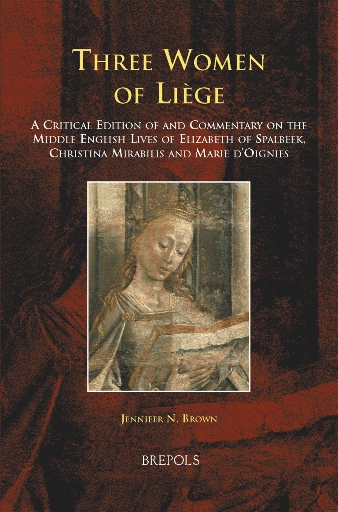
Three Women of Liège
show More to view fulltext, buy and share links for:Three Women of Liège show Less to hide fulltext, buy and share links for: Three Women of LiègeElizabeth of Spalbeek, Christina Mirabilis, and Marie d'Oignies were three of the famous late twelfth-/early thirteenth-century 'holy women' from the region of Brabant and Liège: their life stories (written in Latin by Philip of Clairvaux, Thomas of Cantimpré, and Jacques of Vitry) were read throughout later medieval Europe, and Margery Kempe modelled her Book, and her life, upon Marie’s. The Latin lives of these beguine saints were not well known in England, but they were translated into English in the fifteenth century, and survive in a single manuscript together in Oxford, Bodleian Library, Douce 114.
Three Women of Liège is the first critical edition of these Lives, which represent some of the only evidence of English interest in continental female mysticism. This edition includes an introduction that discusses the role of the manuscript in England and three essays that analyze the roles of these beguines in their Low Countries home of Liège along with the English reception of their lives. The edition itself is also extensively annotated and glossed, making it accessible to any scholar of English medieval literature.
-
-
-
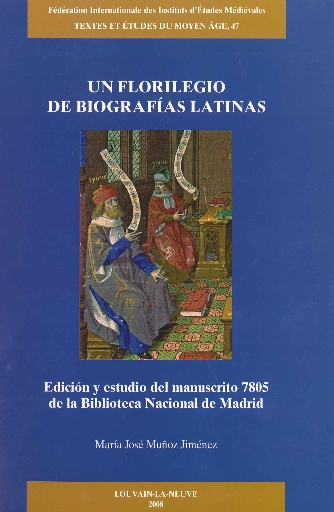
Un florilegio de biografías latinas
show More to view fulltext, buy and share links for:Un florilegio de biografías latinas show Less to hide fulltext, buy and share links for: Un florilegio de biografías latinasEl manuscrito 7805 de la Biblioteca Nacional de Madrid contiene un florilegio de biografías latinas que ofrece excerpta de Quinto Curcio, del De vita Caesarum de Suetonio, de la Historia Augusta y del Ab urbe condita de Tito Livio. Esta selección de obras de la Antigüedad se acompaña con extractos del De vita et moribus philosophorum erróneamente atribuido a Walter de Burley y de la versión latina realizada por A. Travesari del De vita philosophorum de Diógenes Laercio.
Varias razones aconsejan el estudio de este manuscrito: por una parte, es un autógrafo realizado por una mano hispana en el siglo XV del que no se conocen otras copias; por otra, presenta una producción de un género típicamente medieval como es el del florilegio, y, a la vez, acoge una semblanza de biografías, género recuperado en el Renacimiento. La obra contenida en el ms. 7805 se muestra, pues, como un producto propio de esa época tan discutida de ‘transición’ del Medievo al Renacimiento en la España cuatrocentista.
María José Muñoz Jiménez es Catedrática de Filología Latina en la Universidad Complutense de Madrid. Desde su Tesis Doctoral ha trabajado sobre los manuscritos latinos conservados en España. Es autora, además, de diversos trabajos de Literatura Latina y Tradición Clásica así como de Lexicografía Latina Medieval.
En la actualidad es directora de un Grupo de Investigación de la Universidad Complutense dedicado al estudio de los florilegios latinos conservados en las bibliotecas españolas.
-
-
-
Vera philosophia
show More to view fulltext, buy and share links for:Vera philosophia show Less to hide fulltext, buy and share links for: Vera philosophiaThis volume includes a collection of reworked articles which the author, during the last twenty years, dedicated to the origins and conditions constitutive of Christian philosophical-theological thought. From the earliest centuries of the Christian era, human reason was submitted to a particular formal conditioning, in so far as it was necessarily obliged to confront the contents of a divine revelation recognized as necessarily ‘true’. The medieval Latin scholar was induced by the social and cultural peculiarities of his time to confront a model of thought which imposes a decisive subordination of natural knowledge - demonstrated to be imperfect and inconclusive - to the certainties assured by the faith. The production of this model of philosophia, significantly different from the dominant paradigms in the classical period, rooted itself in the critical redimensioning of reason which Cicerointroduced into the West. Departing from the observation of the failure of the philosophical aspirations of antiquity, the Christian intellectuals effected an operative ‘overturning’ of the conditions of veridical knowledge.
The new wisdom was not entirely the result of religion interfering in the field of rational science, but it was shaped by a conscious ‘conversion’ of the philosophers and reached fulfillment under two principles: faith, which requires earthly knowledge in order to defend itself from misunderstandings and heresies; and reason, which allows itself to draw upon supernatural revelation for the possession of regulatory principles which guide it in the study of natural things.
This book investigates the development of this approach during the course of the centuries which in the West precede the rediscovery of Aristotelian epistemology: from Augustine to Boethius, from John Scottus Eriugena to Anselm of Aosta. It concludes by describing the return of this methodological approach, at the end of the Medieval Scholastic period, in the results of the anti-Aristotelian critique carried out by the men of the Renaissance through the recovery of a model of thought which had dominated in the Patristic and Early Medieval periods.
-
-
-
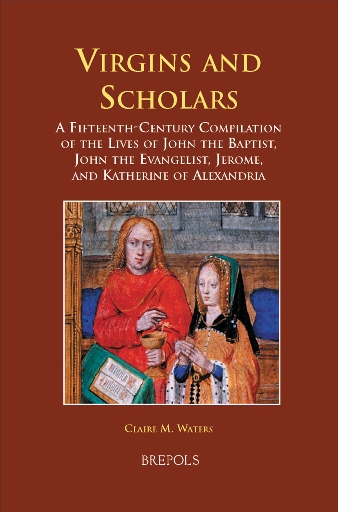
Virgins and Scholars
show More to view fulltext, buy and share links for:Virgins and Scholars show Less to hide fulltext, buy and share links for: Virgins and ScholarsThis collection of prose vitae of four virgins and scholars - Saints John the Baptist, John the Evangelist, Jerome, and Katherine of Alexandria - was almost certainly copied, and the texts very likely composed, at Syon Abbey or Sheen Charterhouse in the mid-fifteenth century. The lives cover a wide range of hagiographic modes, from hagiographic romance to affective, devotional appreciation to doctrinal treatise in narrative form. From the life of Jerome, composed by a monk for his aristocratic spiritual daughter, to the life of Katherine, reputedly translated for Henry V, to those of John the Baptist and John the Evangelist, which set their subjects in a recognizably Birgittine context, they show the interaction of men and women, lay and monastic, in the production of devotional literature. The diversity of their approaches and sources, moreover, shows the links between English dynastic politics and continental religious literature and spiritual traditions. As examples of translation practices, of monastic politics, and of religious instruction, these lives provide a window onto the devotional culture and literary worlds of fifteenth-century Europe.
-
-
-
Chanter en polyphonie à Notre-Dame de Paris aux 12e et 13e siècles
show More to view fulltext, buy and share links for:Chanter en polyphonie à Notre-Dame de Paris aux 12e et 13e siècles show Less to hide fulltext, buy and share links for: Chanter en polyphonie à Notre-Dame de Paris aux 12e et 13e sièclesLa polyphonie chantée au chœur de la cathédrale Notre-Dame de Paris à la fin du XIIe siècle a profondément marqué son temps et la virtuosité dont ont fait preuve les chanteurs dans le maniement de leur art, l’audace des scribes qui ont consigné l’organum dans une notation mesurée alors totalement inédite et l’intérêt que les intellectuels y ont porté, accordent à la polyphonie parisienne une place remarquable dans l’histoire de la musique occidentale.
Cet ouvrage explique comment les chantres de la nouvelle église de Paris ont réussi à exécuter ces majestueuses fresques qui enflammèrent l’imagination des médiévaux par leur étonnante splendeur et qui suscitent toujours autant d’enthousiasme de nos jours.
La musique médiévale entretient d’étroites relations avec les sciences du langage, puisant en elles les éléments de son développement technique et reposant sur une mémoire sans cesse exercée. Cette étude concerne l’ars musica dans ses relations avec les arts du trivium et la mémoire et veut ancrer les compositions dans le contexte intellectuel et éducatif qui a permis leur éclosion et leur développement. Elle montre ainsi comment les clercs de Notre-Dame ont utilisé des procédés rhétoriques d’ornementation afin d’élaborer un discours musical complexe et vise à comprendre dans quelles circonstances, comment et à quelles fins, les chantres ont composé une très haute manifestation de la Parole chantée.
-
-
-
Eclipse of Empire?
show More to view fulltext, buy and share links for:Eclipse of Empire? show Less to hide fulltext, buy and share links for: Eclipse of Empire?Through an innovative and wide-ranging exploration this book examines the reality behind the assumption that the idea of a universal ruler became increasingly irrelevant in late-medieval Europe. Focusing on France in the century before the outbreak of the Hundred Years War, it explores attitudes towards the contemporary institution of the western Empire, its rulers, and its place in the world. Historians have tended to assume that there was little place for a universal Empire and its would-be rulers in late-medieval thought. Pointing to the rapid decline in the fortunes of the Empire after the death of the Emperor Frederick II, the rediscovery of Aristotle’s Politics by western Europeans, and the growing confidence – and burgeoning bureaucracy – of the kings of France and England, it is often argued that the claims to universal domination of men like the Emperor Henry VII, or indeed of popes like Boniface VIII, were becoming increasingly anachronistic, not to say a little ridiculous. Perceptions of the Empire undoubtedly changed in this period. Yet, whether it was in the cloisters of Saint-Denis, the pamphlets of Pierre Dubois, or even the thought of Charles d’Anjou, the first Angevin king of Sicily, this book argues that the Empire and its ruler still had an important, indeed unique, role to play in a properly ordered Christian society.
Chris Jones grew up in the Middle East before reading history at Durham. He now lives in New Zealand where he holds a lectureship in History at the University of Canterbury, Christchurch.
-
-
-
From Ducatus to Regnum. Ruling Bavaria under the Merovingians and Early Carolingians
show More to view fulltext, buy and share links for:From Ducatus to Regnum. Ruling Bavaria under the Merovingians and Early Carolingians show Less to hide fulltext, buy and share links for: From Ducatus to Regnum. Ruling Bavaria under the Merovingians and Early CarolingiansBavaria was a very important country during the early Middle Ages. Its territory included much of the modern German state but also reached across the Alps into what are now Austria and northern Italy. Bavaria thus occupied a strategic position between the rival kingdoms of the Franks and the Langobards. It was ruled by powerful dukes who had close political and personal relations with the Frankish rulers but who also vigorously resisted attempts to limit their own sovereignty. Bavaria’s independence was ended in 788 by Charlemagne who deposed his cousin, Duke Tassilo. Charlemagne’s son, the Emperor Louis the Pious, then established Bavaria as the first monarchy east of the river Rhine for his own son, Ludwig the German. This is the first full study of the entire evolution of Bavarian rule from the mid-sixth century into the early ninth century. It explores the changing strategies adopted by its dukes and then its first king to establish their authority and maintain their autonomy in face of evolving challenges to their rule. An Epilogue continues the story into the early tenth century.
Carl I. Hammer graduated from Amherst College (B.A.) and the University of Toronto (Ph.D.) and also studied at the universities of Munich, Chicago and Oxford. After a career in international business with Westinghouse and Daimler-Benz, he is now retired. He has published two other scholarly books on early-medieval Bavaria and numerous articles in academic journals in N. America and Europe. He lives in Pittsburgh.
-
-
-
La Joute, et autres oeuvres poétiques de Luigi Pulci, augmentées de pièces composées dans le cercle de Laurent de Magnifique
show More to view fulltext, buy and share links for:La Joute, et autres oeuvres poétiques de Luigi Pulci, augmentées de pièces composées dans le cercle de Laurent de Magnifique show Less to hide fulltext, buy and share links for: La Joute, et autres oeuvres poétiques de Luigi Pulci, augmentées de pièces composées dans le cercle de Laurent de MagnifiqueNé à Florence dans une famille noble, mais désargentée, Luigi Pulci (1432-1484) eut la chance d’être introduit très jeune dans le cercle des Médicis. Devenu un des familiers de Laurent le Magnifique, il vécut la vie d’un courtisan, remplissant les missions variées qu’on lui confiait. Mais il était avant tout poète et exerça à ce titre un « véritable magistère », car la poésie a joué à Florence, dans une communauté violente et conflictuelle, un rôle si fondamental pour le maintien du lien social qu’il nous est maintenant difficile de l’imaginer. A côté du Morgante, chef-d’oeuvre incontesté du poème heroï-comique à l’italienne, Pulci a été aussi l’auteur d’une production poétique vaste et diversifiée. Pratiquant tous les genres et tous les tons, de l’élégie à la satire, du burlesque à l’aulique, d’une incroyable virtuosité verbale, il nous fait partager la vie compliquée de la cour médicéenne et les moeurs de la Florence convulsive de cette deuxième moitié du quattrocento. Son attachement à un aristotélisme teinté d’avvéroisme, son refus du mysticisme esthétisant de Marsile Ficin offrent un témoignage précieux et souvent troublant de la pensée intellectuelle et religieuse de son temps. Il nous émeut enfin par l’expression à la fois pathétique et narquoise de son angoisse devant le mal, la solitude, la mort.
-
-
-
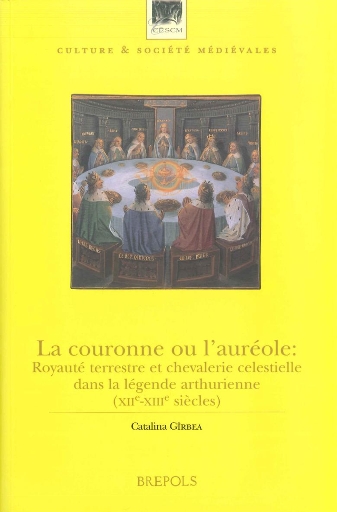
La couronne ou l'auréole
show More to view fulltext, buy and share links for:La couronne ou l'auréole show Less to hide fulltext, buy and share links for: La couronne ou l'auréoleLe roi Arthur et ses chevaliers fascinent les médiévaux. Ils connaissent un grand succès aux XII e et XIII e siècles, succès dont le secret réside dans la tension permanente qui s'établit entre deux systèmes de valeurs opposés: d'une part la royauté, centrée sur la Table Ronde, d'autre part la chevalerie celestielle, centrée sur le Graal, et qui met à l'honneur la vocation chevaleresque à la sainteté. Cette guerre des valeurs, chère à l'axiologie moderne, génère la complexité de la fiction arthurienne, et aussi celle des caractères qui y évoluent: les personnage qui ont enregistré le plus grand succès, précisément Lancelot ou Perceval, sont justement les indécis, systématiquement tiraillés entre les deux systèmes.
La royauté rend maîtrisable un expace saugrenu, peuplé de monstres et de fées. Le but est d'instaurer une sorte de pax arthuriana et de façonner le monde par la force des armes. À la violence environnante, la royauté riposte par la répression légitime. Sur ce canevas la chevalerie celestielle surgit comme valeur différente, mais aussi comme anomalie. Elle oppose la parole et la compréhension à la violence armée. Son émergence est une tentative d'aseptiser un monde qui tire son charme de son bellicisme et de son mystère.
C'est pourquoi le lecteur qui se penche sur les romans arthuriens se heurte continuellement à l'effondrement du sens dès qu'il essaie de leur donner une interprétation systématique. Cette incohérence est en grande partie le résultat du combat sourd des deux systèmes de valeurs concurrentiels, qui s'affrontent dans les profondeurs de la matière arthurienne comme les deux dragons sous la célèbre tour de Vertigier.
-
-
-
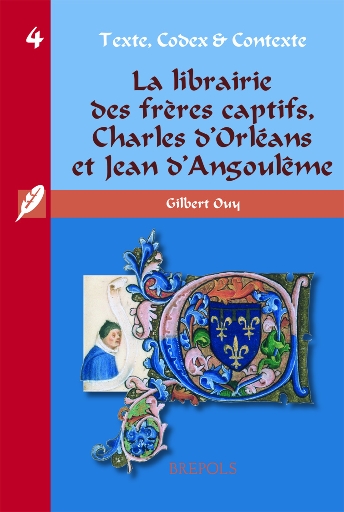
La librairie des frères captifs. Les manuscrits de Charles d'Orléans et Jean d'Angoulême
show More to view fulltext, buy and share links for:La librairie des frères captifs. Les manuscrits de Charles d'Orléans et Jean d'Angoulême show Less to hide fulltext, buy and share links for: La librairie des frères captifs. Les manuscrits de Charles d'Orléans et Jean d'AngoulêmeIl y a cinquante ans, jeune bibliothécaire au Cabinet des Manuscrits de la Bibliothèque nationale, l’auteur reconnut les mains de Charles d’Orléans et de son frère Jean d’Angoulême dans un carnet de notes figurant dans l’inventaire des livres rapportés d’Angleterre par Charles à sa libération en 1440. Contrairement à ce que l’on avait toujours affirmé, les deux captifs n’avaient donc pas vécu séparés pendant toute la durée de leur exil.
Ce petit volume contient l’autographe raturé d’un long poème mystique de Charles, inconnu jusqu’alors, le Canticum Amoris, ainsi que les brouillons ou les copies hâtives de nombreux textes de piété. Le tout fut retranscrit par d’excellents copistes de Londres dans l’un des plus beaux manuscrits enluminés rapportés par Charles en 1440.
Pierre Champion (1910) avait tenté de reconstituer la librairie de l’aîné et Gustave Dupont-Ferrier (1897) celle du cadet. Préférant traiter ensemble les deux fonds qui, réunis dès le début du XVI e siècle, formèrent le noyau originel de la Bibliothèque royale, l’auteur a retrouvé une bonne soixantaine de nouveaux manuscrits. Ces identifications, qui ont notamment permis la découverte d’œuvres perdues de Gerson, révèlent des aspects insoupçonnés de l’activité intellectuelle et de la spiritualité des princes captifs.
L’ouvrage, illustré de quelques reproductions de manuscrits, comprend, outre une introduction, l’édition des inventaires qui subsistent (Arch. Nat. K 500 n° 5 et 7, P 1403 n° 38 et 39), des notices sur chacun des manuscrits retrouvés (inventoriés ou non inventoriés), une table de concordances et des index. En appendice, on trouvera l’édition du Canticum Amoris : elle est précédée d’une brève présentation et accompagnée d’une réédition de la Carole en latin, seul poème latin longtemps connu de Charles d’Orléans, qu’il est intéressant de comparer à l’autre. On trouvera également une prière, que nous voyons littéralement composer sous nos yeux en étudiant toutes les ratures et additions du brouillon.
Gilbert OUY (1924-) est archiviste-paléographe, docteur ès-Lettres et directeur de recherche émérite au C.N.R.S. Conservateur au Cabinet des Manuscrits de la Bibliothèque nationale (1946-1959), puis chercheur au Centre national de la Recherche scientifique (1959-1992) où il a créé, et dirigé pendant dix-huit ans une équipe de recherche sur l'Humanisme français des XIV e et XV e siècles. Il a également enseigné la codicologie à l'École Pratique des Hautes Études.
-
-
-
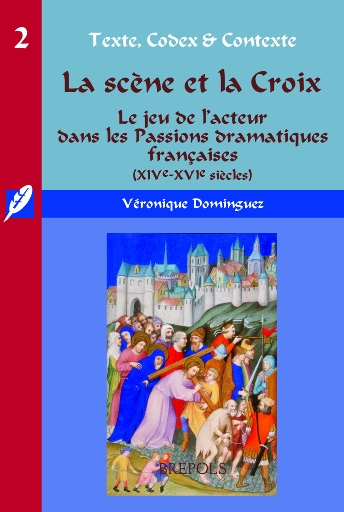
La scène et la Croix. Le jeu de l’acteur dans les Passions dramatiques françaises (XIVe-XVIe siècles)
show More to view fulltext, buy and share links for:La scène et la Croix. Le jeu de l’acteur dans les Passions dramatiques françaises (XIVe-XVIe siècles) show Less to hide fulltext, buy and share links for: La scène et la Croix. Le jeu de l’acteur dans les Passions dramatiques françaises (XIVe-XVIe siècles)Destinées à la lecture comme à la représentation, les Passions dramatiques françaises participent à la fois du spectacle et des théories du signe en vigueur à la fin du Moyen Age. Pour le spectateur chrétien, les corps des acteurs sont-ils des icônes désignant le divin, ou des idoles exerçant les séductions du sensible ? Parce qu’au plan historique Passions et prédication se répondent, le corps du Christ torturé y fonctionne comme signe de la Passion nécessaire à la Rédemption. Et entre scolastique thomiste et mimesis aristotélicienne, par similitude ou par opposition au Christ, le jeu des acteurs obéit à une typologie qui favorise la méditation de la ressemblance divine. Cependant, chaque corps se présente aussi comme un objet singulier, que le spectateur doit identifier avant d’en déchiffrer le sens. Son apparition se conforme alors à l’occamisme que reformule un Gerson, mais aussi à la définition néo-platonicienne de la mimesis, production consciente d’une réalité illusoire. Porté par le rythme du rondeau, du Planctus, l’acteur produit un jeu qui se sait dissemblable de son divin modèle, et suscite avant tout l’émotion. Les Passions offrent ainsi au débat qui opposait l’idole à l’icône une alternative où l’édification cohabite avec le plaisir du spectacle.
-
-
-
Le livre des papes
show More to view fulltext, buy and share links for:Le livre des papes show Less to hide fulltext, buy and share links for: Le livre des papesLe “Livre des papes” -Liber pontifica1is-, traduit ici pour la première fois en français, est la biographie des cinquante-neuf papes qui se sont succédés sur le siège romain de l’an 492 à 891.
Ce document, rédigé au plus haut lieu de la chrétienté par des auteurs qui servaient cette prestigieuse institution, est sans conteste une source majeure et unique pour l’histoire de l’Occident.
Jusqu’au milieu du VIIIe siècle, le siège apostolique est soumis au contrôle de l’empereur grec de Byzance, ce qui le mènera à intervenir dans les conflits théologico-politiques de l’Orient. Les invasions lombardes auront pour effet de remplacer cette tutelle séculaire par une autre, celle des Carolingiens avec pour conséquence la formation de ce que l’on appellera les Etats de l’Eglise. Le couronnement de Charlemagne en 800 en sera le logique aboutissement.
Le lecteur découvrira les deux préoccupations majeures de ces biographes proches du pontife. D’abord le souci constant d’embellir les églises romaines et d’accroître leurs trésors, souvent mis à contribution pour le rachat des prisonniers ou l’achat d’une paix.
L’autre grande affaire de ces temps lointains -mais n’en fut-il pas toujours ainsi- est l’élection du successeur du pape défunt, ce qui nous vaut l’histoire mouvementée et parfois pittoresque de ces joutes électorales.
Ajoutons que le Liber pontificalis apporte une contribution utile à la connaissance de la vie quotidienne de cette époque, à la fois éloignée et bien proche de nous.
-
-
-
Le retour au paradis
show More to view fulltext, buy and share links for:Le retour au paradis show Less to hide fulltext, buy and share links for: Le retour au paradisCette recherche veut répondre à deux questions: comment Tertullien conçoit-il la sainteté et la sanctification de l’homme, quel sens attribue-t-il dans ce contexte à l’ascèse sexuelle ?
Dans une première partie, le père De Brabander présente une analyse lexicographique du vocabulaire de la sainteté. Cette analyse met en lumière les différentes harmoniques que Tertullien fait vibrer et démontre sa continuité avec la tradition biblique. La deuxième partie explicite les fondements théologiques à l’origine de la pensée de Tertullien au sujet de l’ascèse sexuelle. Celle-ci ne se rend compréhensible que dans le contexte de l’ensemble de l’économie du salut. La sanctification de l’homme et son salut ultime sont conçus comme un retour à sa condition originelle, régénérée dans le baptême et rendue parfaite dans l’état eschatologique. L’ascèse sexuelle est présentée comme instrument de sanctification : elle est le moyen privilégié de conserver l’état de sainteté acquis par le baptême et de rejoindre l’état de la vie éternelle. La troisième partie offre une description phénoménologique des différentes formes d’ascèse sexuelle en tant qu’expression de sanctification à l’époque de Tertullien.
Après avoir terminé ses études de philosophie et de théologie au Centre d’Études Ecclésiastiques de Louvain, Kris De Brabander (1964) a obtenu une licence en théologie et sciences patristiques auprès de l’ Institutum Patristicum Augustinianum de Rome en 1992. Il a ensuite suivi les cours de l’Institut Monastique du Pontificium Athenaeum S. Anselmi où il a été reçu comme docteur en théologie grâce à la présente étude, en 2003. Il s’est engagé par la suite dans diverses initiatives de formation patristique. C’est ainsi qu’il enseigne la patristique à Agripo, l’institut de formation des abbayes prémontrées flamandes de Belgique. L’auteur est lui-même chanoine régulier de Prémontré, appartenant à l’abbaye de Tongerlo (Belgique).
-
-
-
Le travail intellectuel à la Faculté des arts de Paris: textes et maîtres (ca. 1200-1500)
show More to view fulltext, buy and share links for:Le travail intellectuel à la Faculté des arts de Paris: textes et maîtres (ca. 1200-1500) show Less to hide fulltext, buy and share links for: Le travail intellectuel à la Faculté des arts de Paris: textes et maîtres (ca. 1200-1500)Le répertoire continué par ce fascicule n'est pas à proprement parler une révision du livre de Glorieux sur les maîtres de la Faculté des arts au XIIIe siècle. D'une part, c'est un répertoire plus restreint: on ne retient que les auteurs et les textes qui ont un rapport direct avec l'enseignement à la Faculté des arts de Paris; de l'autre, il est plus large: on a fixé les limites chronologiques à 1200-1500 environ. Plus important, le but envisagé est de mettre au point un instrument pour les recherches concernant l'histoire intellectuelle de la Faculté des arts de Paris. Le répertoire ne sera donc pas consacré à la prosopographie des maîtres, mais à leur activité intellectuelle, c'est-à-dire leurs écrits et leurs lectures. En conséquence, il comprendra également des maîtres qui n'ont jamais enseigné à Paris, mais dont les oeuvres ont sûrement ou probablement été lues et commentées à la Faculté des arts de Paris. De même, en ce qui concerne les oeuvres anonymes, on retiendra d'une part celles qui ont été écrites à Paris, d'autre part celles qui ont été lues et utilisées dans l'enseignement parisien. Le répertoire veut donc répondre à deux types de questions: 1. quels étaient les maîtres de la Faculté des arts de Paris et quelles sont leurs oeuvres; 2. quels textes contemporains relevant des mêmes disciplines ont contribué à déterminer le climat de ce milieu intellectuel. Ces deux éléments sont intimement liés et se complètent, car, pour citer le père Gauthier, "les maîtres ès arts forment un milieu homogène, leur enseignement est l'enseignement d'une faculté plus que d'un homme".
-
-
-
Old English Heroic Poems and the Social Life of Texts
show More to view fulltext, buy and share links for:Old English Heroic Poems and the Social Life of Texts show Less to hide fulltext, buy and share links for: Old English Heroic Poems and the Social Life of TextsOld English Heroic Poems and the Social Life of Texts develops the theme that all stories- all 'beautiful lies', if one considers them as such- have a potentially myth-like function as they enter and re-enter the stream of human consciousness. In particular, the volume assesses the place of heroic poetry (including Beowulf, Widsith, and The Battle of Maldon) in the evolving society of Anglo-Saxon England during the tenth-century period of nation-building. Poetry, Niles argues, was a great collective medium through which the Anglo-Saxons conceived of their changing social world and made mental adjustments to it. Old English 'heroic geography' is examined as an aspect of the mentality of that era. So too is the idea of the oral poet (or bard) as a means by which the people of this time continued to conceive of themselves, in defiance of reality, as members of a tribe-like community knit by close personal bonds. The volume is rounded off by the identification of Bede's story of the poet Cædmon as the earliest known example of a modern folktale type, and by a spirited defense of Seamus Heaney's recent verse translation of Beowulf.
-
-
-
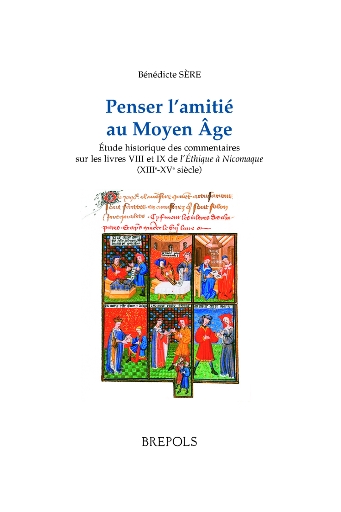
Penser l'amitié au Moyen Age
show More to view fulltext, buy and share links for:Penser l'amitié au Moyen Age show Less to hide fulltext, buy and share links for: Penser l'amitié au Moyen AgeSans conteste, l’amitié innerve le monde médiéval. Le vocable sature les textes tant pratiques que théoriques. Il concerne toute la société, l’élite, les milieux princiers et la noblesse autant que les humbles et le monde ordinaire. Au regard de l’insistance des sources médiévales à dire l’amitié dans sa factualité et sa réalité, il s’avère nécessaire de s’interroger sur la pensée de l’amitié au Moyen Âge. A-t-on pensé l’amitié au Moyen Âge? Plus exactement posé: quels sont les cadres intellectuels, institutionnels et structurels qui poussent les hommes des XIIIe-XVe siècles à penser l’amitié; quelles sont les conditions historiques et les événements culturels qui façonnent les contours d’une telle conceptualisation?
Les médiévaux puisent à la source aristotélicienne un matériau exceptionnellement dense: la philia de l’Éthique à Nicomaque est par excellence le lien social qui unit les citoyens. Penser l’amitié au Moyen Âge à partir de l’auctoritas aristotélicienne, c’était, en quelque sorte, nommer l’expérience proprement médiévale de l’amitié elle-même, définie par la précellence de son acception sociale.
Bénédicte Sère, est agrégée d’histoire et docteur de l’Université de Paris-I Panthéon Sorbonne.
-
-
-
Platonismo, ermetismo, eresia nel medioevo
show More to view fulltext, buy and share links for:Platonismo, ermetismo, eresia nel medioevo show Less to hide fulltext, buy and share links for: Platonismo, ermetismo, eresia nel medioevoLes travaux de Paolo Lucentini ont changé de manière décisive notre approche de l’histoire de la philosophie médiévale. Initiateur de l’Hermes Latinus, il a publié plusieurs éditions et articles ayant trait à ce sujet. Ces publications ont changé fondamentalement notre conception de la « synthèse scolastique », en vigueur jusqu’aux années quatre-vingt. Les éditions de textes inédits qu’il a réalisées permettent de retrouver l’importance de sources encore mal connues et donc peu étudiées.
Comme la plupart de ses articles sont dispersés dans des revues et des ouvrages d’accès parfois difficile, ses collègues et ses élèves de l’Université de Naples, l’ « Orientale », ont souhaité lui rendre hommage en les réunissant en un volume. L’ouvrage rendra bien des services aux chercheurs qui souhaitent étudier de plus près l’hermétisme du Liber Alcidi, de l’Asclepius ou du Liber XXIV philosophorum. L’ensemble de ses articles constitue aussi une initiation privilégiée aux pratiques complexes de l’astrologie et de l’alchimie. Ils ouvrent la voie à des pratiques mystérieuses qui ont influencé profondément la pensée de nombreux auteurs médiévaux.
La table des matières illustre la richesse du contenu de ce livre : de la tradition ériugénienne à Honorius Augustodunensis, de la réception et de l’analyse de l’Asclepius au XIIe siècle, de l’influence du Liber XXIV philosophorum sur la Divine Comédie de Dante jusqu’aux hérésies provoquées par l’interprétation de ces textes chez certains auteurs, tous les articles permettront de mieux comprendre pourquoi l’hermétisme a profondément modifié notre conception de la pensée scolastique.
-
-
-
Reformations
show More to view fulltext, buy and share links for:Reformations show Less to hide fulltext, buy and share links for: ReformationsThis volume discusses the key shift from manuscript to print culture in the history of books, taking The Canterbury Tales, The Book of Margery Kempe, and Piers Plowman as models of the way in which a medieval text's unique tradition influenced its transition from manuscript to print. The forces of the Reformation era did not produce the same effect across the varied textual legacy of the Middle Ages. Every text that made the transition from manuscript to print brought with it a set of concerns, a tendency to address a particular readership in particular ways, a physical presence developed in manuscript culture, all of which might shape the pathways by which a text might arrive in print, and what it might look like when it got there. This study follows The Canterbury Tales, The Book of Margery Kempe, and Piers Plowman from their circulation in manuscript to their presentation in print, in order to track how each of them survived the metamorphosis of the relationship between writers and readers as the new technology was introduced. Taken together, the three case studies demonstrate to scholars of any medieval literature the variety of possible impacts made when texts composed in manuscript culture were prepared for printing. The great force exerted by the technological and cultural developments of the English Reformation, not least the more centralized legislative regulation of the press, has long been central to the study of the history of books. This volume takes into account the ways in which individual textual traditions pushed back or accelerated the forces of early modern reform, producing their own plural reformations.
-
-
-
Shepherds of the Lord
show More to view fulltext, buy and share links for:Shepherds of the Lord show Less to hide fulltext, buy and share links for: Shepherds of the LordThis book is the first study of the rural priesthood, its significance, and the statutes written for them in the time of the Carolingians. It seeks to trace and explain the rise and emergence in the Carolingian period of both local priests and episcopal statutes that aimed at steering their behaviour. It was in the context of Carolingian ideals of reform, formulated in court-centred circles from the late eighth century onwards, that local priests increasingly came to be seen as those that held the key to turning the local Frankish population into ideal Christians by their word and living example. First of all, however, these educators needed to be educated themselves, hence the emergence of the Episcopal statutes, a new tool to direct the local diocesan clergy into becoming the ideal 'Shepherds of the Lord' that they needed to be. Smooth as this process of empire-wide reform theoretically was, however, obstacles lurked, both from a top-down (episcopal) and a grass-roots (local) perspective on the status, role, and function of priests. Nevertheless, the ninth century saw the emergence of the priesthood and the development of their role as an important group that connected bishops with the lay inhabitants of their dioceses and, from a higher-up perspective, those who opened up the vast Carolingian country-side to the implementation of the ideal society in the minds of contemporary reformers.
-
-
-
Spiritualité, sainteté et patriotisme
show More to view fulltext, buy and share links for:Spiritualité, sainteté et patriotisme show Less to hide fulltext, buy and share links for: Spiritualité, sainteté et patriotismeL’hagiographie a souvent été décriée jusqu’au vingtième siècle. C’est ainsi que la plus vaste compilation hagiographique du Moyen Age occidental était restée dans l’oubli presque total. à travers quatre volumineux manuscrits en latin (Sanctilogium, Agyologus Brabantinorum, Novale Sanctorum et Hystoriologus Brabantinorum), Jean Gielemans (1427-1487), chanoine régulier de saint Augustin à Rouge-Cloître en Brabant, avait pourtant réalisé entre 1471 et 1487 une véritable encyclopédie hagiographique, et plus encore, laissé un trésor inestimable pour l’histoire religieuse, culturelle et politique.
Issu d’une thèse de doctorat, ce livre met en évidence un genre patriotique inédit où l’hagiographe exalte le Brabant à travers une histoire sacrée tout en reflétant deux idéaux de sainteté, masculine et féminine, entre mystique et Dévotion moderne.
Véronique Hazebrouck-Souche, docteur en histoire médiévale, a enseigné principalement à l’université de Paris X et participé à des projets de recherche en France, Belgique, Italie, Angleterre, Allemagne et aux Pays-Bas.
-
-
-
Tendenda Vela
show More to view fulltext, buy and share links for:Tendenda Vela show Less to hide fulltext, buy and share links for: Tendenda VelaÉdouard Jeauneau a déjà publié deux recueils d'articles. Le premier, Lectio philosophorum (1973) était centré sur l'École de Chartres, le second, Études érigéniennes (1987, prix Victor Cousin 1990) sur Jean Scot Érigène. Ce troisième recueil, "Tendenda Vela", combine les deux thèmes.
Les travaux qui y sont rassemblés, et qui couvrent plus de vingt années de recherches, portent non seulement sur Jean Scot et sur les maîtres chartrains, mais sur leurs sources bibliques, patristiques et profanes. Parmi les sources patristiques, une place de choix est faite aux Pères grecs: Denys l'Aréopagite, Grégoire de Nysse, Maxime le Confesseur. Pour les sources profanes, l'accent est mis sur les textes philosophiques qu'on lisait dans le monde latin en la première moitié du XIIe siècle, notamment le Timée de Platon et la Consolation de Philosophie de Boèce.
Ce nouveau recueil ne se distingue pas seulement par la diversité des sujets traités, mais aussi par la variété de leur approche. Tantôt l'auteur dresse le bilan des recherches qu'il a menées sur les manuscrits en pays tchèque (Plato apud Bohemos) ou en Californie (Berkeley UCB Ms. 95), tantôt il approfondit les thèmes philosophiques (Translatio studii, Processio et Reditus, Cogito érigénien) et théologiques (le Filioque) qu'il a rencontrés au cours de ses excursions à travers le Moyen Âge, tantôt il propose une nouvelle interprétation de quelques œuvres d'art appartenant à cette période: De l'art comme mystagogie, Les sirènes dans le chœur des Vieillards. Un livre qui devrait intéresser les historiens de l'art, de la philosophie et de la théologie.
De 1958 à 1992, Édouard Jeauneau (° 1924) á été chercheur et depuis 1975 directeur de recherche de 1ère classe au Centre National de la Recherche Scientifique (Section Philosophie) à Paris. Depuis 1974 il est aussi fellow du Pontifical Institute of Mediaeval Studies (Toronto).
-
-
-
The Making of Poetry
show More to view fulltext, buy and share links for:The Making of Poetry show Less to hide fulltext, buy and share links for: The Making of PoetryIn this ground-breaking book, the author explores some late-medieval lyric anthologies. Taking a cue from the French sociologist, Pierre Bourdieu, she sets poetic creation in the context of an understanding of the structures of court society, and sketches the range of social, intellectual and aesthetic positions available to the poet and the patron. Her primary focus is on a series of manuscripts which, she argues, reveal much about the socioliterary dynamics of particular poems, and about the way in which they are vessels for the participation by individuals in a common culture of literary exchange: Charles d'Orléans's personal manuscript, bnf français 25458, in which, she argues, the poets leave implicit or explicit traces of their social interactions; his duchess Marie's album, Carpentras 375, which is interestingly different from the Duke's; bnf fr. 9223 and n.a.f. 15771, 'coterie' manuscripts which allow us to see how social milieu determines shared literary forms and conventions; Marguerite d'Autriche's Album poétique, Brussels br 10572, an anthology which is a cultural commodity allowing a princely court to recognise stylistic expertise and control of form. She finishes by examining the first great French poetic anthology, Antoine Vérard's Jardin de Plaisance (1501), which seeks to recreate, knowingly and imaginatively, via rubrics, illustrations, and choice of texts, the elite sociability for which the other anthologies are evidence.
-
-
-
The Politics of Exclusion in Early Renaissance Florence
show More to view fulltext, buy and share links for:The Politics of Exclusion in Early Renaissance Florence show Less to hide fulltext, buy and share links for: The Politics of Exclusion in Early Renaissance FlorenceNo previous work has examined political exclusion in Early Renaissance Florence or its significance for the transition from Florentine popular government to oligarchy. Between the fourteenth and the first half of the fifteenth century, political exclusion became a normal feature of political life, regardless of the type of political regime; it was an essential instrument by which new governments consolidated their control over the city and the countryside in one of the largest and most powerful cities of Early Renaissance Europe. Exclusion from the Republic of Florence–separation from friends and family, business and property, coupled with the degradation of public humiliation–engendered a new outlook on life. In Early Renaissance Florence, excluded citizens across social classes became common outlaws, no different for common criminals prosecuted for heresy, blasphemy, gambling, or sexual deviance. By investigating these practices and attitudes of Early Renaissance Florence, this book shows the dark side of Renaissance republicanism: its fear of political dissent in any form and its means to crush it at all costs. This study of the other side of Renaissance republicanism presents a new and crucial chapter in Renaissance history.
-
-
-
Translating the Sagas
show More to view fulltext, buy and share links for:Translating the Sagas show Less to hide fulltext, buy and share links for: Translating the SagasFew speakers of English have ever been able to read the Icelandic sagas in the original language, and published saga translations have played a major role in shaping attitudes towards Viking Age Scandinavia and the great literary achievements of medieval Iceland in the English-speaking world. This book is the first publication to provide an extended examination of the history and development of Icelandic saga translations into English from their beginnings in the eighteenth century to today. It explores reasons for undertaking saga translation, and the challenges confronting translators. Chapters are devoted to the pioneering saga translations, the later Victorian and Edwardian eras, the often-neglected period of the two World Wars and their aftermath, and the upsurge of saga translation in the second half of the twentieth century. The contributions of individual translators and teams are reviewed, from James Johnstone in the 1780s through major Victorians such as Samuel Laing, George Webbe Dasent, and William Morris, distinguished twentieth century figures such as Lee M. Hollander, Gwyn Jones, Magnus Magnusson and Hermann Pálsson, and George Johnston, and the great co-operative project which produced The Complete Sagas of Icelanders at the century’s end. The book concludes with saga translation facing interesting new possibilities and challenges, not least those generated by information technology.
-
-
-
Vie de saint Thibaut de Provins
show More to view fulltext, buy and share links for:Vie de saint Thibaut de Provins show Less to hide fulltext, buy and share links for: Vie de saint Thibaut de ProvinsComment l’histoire si édifiante d’un jeune chevalier champenois du 11ème siècle qui, pour le seul amour de Dieu, délaisse pouvoir, famille et richesses et devient successivement ermite itinérant, pèlerin, prêtre et saint a-t-elle pu être écartée des fameuses compilations de vies de saints en français de la fin du Moyen Age et ainsi finalement tomber dans l’oubli ?
Bien sûr, la Vie de saint Thibaut de Provins n’est pas de ces textes qui mettent en évidence une figure emblématique ou des règles fondatrices de la religion chrétienne ; mais elle est loin cependant d’être une simple légende locale, et son intérêt réside sans aucun doute autant dans le caractère exemplaire de la vie qui est montrée que dans la valeur plus littéraire du récit qui, par le jeu de l’intertextualité, semble progressivement superposer la vie (ou plutôt la mort) de saint Thibaut à celle du Christ.
Accompagnée d’une introduction, d’une traduction, d’un appareil critique, de notes, d’un index, d’un glossaire et, en annexe, des différentes versions connues de la Vie de saint Thibaut, la présente édition souhaite ainsi permettre l’accès tant aux spécialistes de l’édition critique qu’aux amateurs de récits hagiographiques ou plus généralement d’histoire religieuse d’un texte français du 13ème siècle jusqu’alors inédit, dont la brièveté rend l’originalité et l’intérêt littéraire d’autant plus saillants.
-
-
-
Vie de sainte Marie l'Egyptienne
show More to view fulltext, buy and share links for:Vie de sainte Marie l'Egyptienne show Less to hide fulltext, buy and share links for: Vie de sainte Marie l'EgyptienneHildebert de Lavardin, évêque du Mans (1096-1125), puis archevêque de Tours (1125-1133), l’auteur de la Vita beate Marie Egyptiace, dont nous donnons ici la première traduction française, fut l’une des figures littéraires les plus importantes du Moyen Age: pendant plusieurs générations ses vers furent lus avec plaisir dans toute l’Europe occidentale; ses lettres servirent de modèles dans les écoles cathédrales et monastiques, pour leur élégance et leur noble distinction, et ses traités de philosophie morale et de droit canonique devinrent des manuels universellement appréciés.
La légende de Marie l’Égyptienne, compte parmi les figures du Moyen Age les plus connues et les plus vénérées de celles qui illustrent l’influence salutaire de Notre-Dame sur les plus grands pécheurs; elle a contribué pour une part nullement négligeable au développement du culte marial qui prend son essor définitif en Occident partir de l’époque carolingienne. Marie l’Égyptienne n’est pas seulement l’héroïne d’une parabole « évangélique », mais le personnage-clé d’un drame de la plus brûlante actualité : non seulement elle incarne en sa personne l’aspiration du monde féminin à rejoindre le mouvement des nouveaux ermites de l’époque d’Hildebert, mais elle intervient, en sa qualité d’ermite, pour donner des conseils au monde monastique. Le texte prend place dans la grande discussion de l'époque d'Hildebert sur la hiérarchie des vocations monastiques et leurs mérites respectifs, et sur les origines érémitiques du monachisme chrétien.
-
-
-
'God Wants It!'
show More to view fulltext, buy and share links for:'God Wants It!' show Less to hide fulltext, buy and share links for: 'God Wants It!'During the first months of the First Crusade, groups of crusaders attacked the Jewish communities in the Rhineland, forcing them to choose between death and conversion. Many converted, but others chose to die as martyrs. Among these, some were killed by the crusaders, some killed themselves, each other, or even their own children in order to prevent forcible conversion. These events are described in a number of Latin accounts, but also in three Hebrew chronicles and in a number of Hebrew liturgical poems. These Hebrew chronicles introduce many new ideas connected to martyrdom which are not found in earlier Jewish martyr texts. They also differ considerably from contemporary texts on martyrdom, written by Jews living under Muslim rule.
The purpose of the present study is as follows: to outline the most salient features of this new ideology of martyrdom found in the Hebrew Crusade Chronicles and how it differs from earlier Jewish tradition; to try to trace the roots of these new ideas, both by showing how the Chroniclers develop earlier Jewish ideas and also how they borrow notions and concepts from their Christian surroundings; to show what rhetorical means the Chroniclers use in order to present these innovations as firmly anchored in tradition; to attempt to explain why this ideology develops at this particular time and place, and thereby contribute some further methodological reflections on the nature of religious change, especially in a situation of persecution and oppression; to challenge the old paradigm that the Ashkenazic Jewish communities lived in isolation from their non-Jewish surroundings, and to suggest that a serious study of any medieval Jewish text must take into consideration the culture and current notions of the non-Jewish community in which the text was composed.
-
-
-
Conversing with the Saints
show More to view fulltext, buy and share links for:Conversing with the Saints show Less to hide fulltext, buy and share links for: Conversing with the SaintsEarly medieval hagiographical texts abound with vivid descriptions of acts of communication. Such descriptions in the hagiography written in the diocese of Auxerre during the Merovingian period are studied here in an attempt to establish the status of the written word vis-à-vis other means of communication, such as the spoken word or rituals. For this purpose the dating of each source is reconsidered. The texts were written within the clerical community of Auxerre and most relate in some way to Germanus, the most renowned bishop of Auxerre (first half of the fifth century). Although the Vita Germani by Constantius was not written in Auxerre nor for an Auxerrois audience, it is included in the analysis, since it has exerted a profound influence on the later hagiographical narratives produced in the diocese. This study demonstrates that the authors of these texts were very much aware of the limitations of the written word as well as of the advantages and importance of non-written communication.
-
-
-
Copisti a Bologna (1265-1270)
show More to view fulltext, buy and share links for:Copisti a Bologna (1265-1270) show Less to hide fulltext, buy and share links for: Copisti a Bologna (1265-1270)The mystery of writing is that there is nothing mysterious about it. If Saramago is right, then it is obvious that palaeography has not yet found all the keys we need if we are to enter amongst the people who gave form to the thoughts and memories of the medieval world. In order to reveal their identity – the greatest mystery of all – it is sometimes necessary to pass over what has already been written, affirmed and maintained, and to return to the sources instead. The “Memoriali” conserved in the Archivio di Stato in Bologna reveal stories of men and women who created, with pen and quill veritable cathedrals of ink, indelible and sometimes of ineffable beauty. In this volume the names are collected, the commissions listed, where possible the careers and tribulations described of more than 270 copyists documented at Bologna between 1265 and 1270. In short, it is the documentary sources, not the works produced or such as have survived, on which the present book has been based.
-