


Brepols Online Books Medieval Monographs Archive v2016 - bobar16mome

Collection Contents
1 - 50 of 273 results
-
-

Anonymi Artium Magistri Questiones super Librum Ethicorum Aristotelis (Paris, BnF, lat. 14698)
show More to view fulltext, buy and share links for:Anonymi Artium Magistri Questiones super Librum Ethicorum Aristotelis (Paris, BnF, lat. 14698) show Less to hide fulltext, buy and share links for: Anonymi Artium Magistri Questiones super Librum Ethicorum Aristotelis (Paris, BnF, lat. 14698)Les années qui précédèrent et suivirent la condamnation du 7 mars 1277 furent parmi les plus difficiles dans l’histoire de l’Université de Paris. Parmi les témoins des événements qui ont bouleversé à cette époque la Faculté des Arts, une place privilégiée doit être accordée à un fragment d’une reportatio anonyme d’un cours sur l’Éthique à Nicomaque, contenu dans le manuscrit Paris, BnF, lat. 14698. L’auteur de ce texte - un maître de philosophie écrivant très probablement au début des années 1280 - recherche un difficile équilibre entre le devoir d’expliquer la philosophie d’Aristote et la contrainte de ne pas contredire les dogmes de la foi chrétienne. Ce volume offre une édition intégrale du texte, précédée d’une introduction où sont abordés à la fois les problèmes que pose l’édition scientifique d’une reportatio (sa structure, son rapport avec le déroulement du cours oral, les critères spécifiques requis pour l’établissement du texte d’une reportatio) et les enjeux historiques liés à ce texte (sa datation et son rapport avec la condamnation de mars 1277, l’utilisation de la Summa theologiae de Thomas d’Aquin, et l’hypothèse de l’identification de l’auteur avec le maître parisien Jacques de Douai).
-
-
-
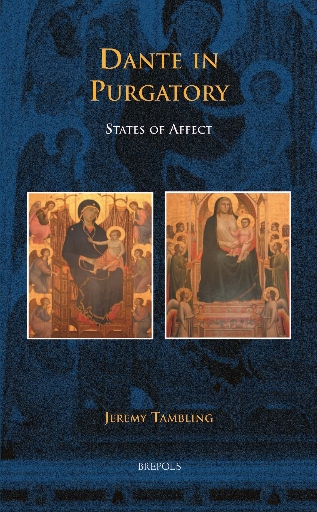
Dante in Purgatory
show More to view fulltext, buy and share links for:Dante in Purgatory show Less to hide fulltext, buy and share links for: Dante in PurgatoryThis volume provides an advanced survey of Dante studies and offers a new, detailed, and accessible reading of his Purgatorio, making this very rich text freshly available to an English-speaking readership. Through analysis of a variety of emotional states across Dante’s three major works - the Purgatorio, Inferno, and Paradiso, and in his minor works, such as the Rime and the Convivio - Dante in Purgatory: States of Affect contends that emotions are historically constructed at different moments. The book also demonstrates that while Dante presents some emotions as defined and distinct, he depicts others as blends of several states of feeling, as emotions which are in process or metamorphosis. In particular, the author examines the seven cardinal vices (‘seven deadly sins’) amid a wider discussion of states of affect. He argues that the emotional states associated with these vices are different from contemporary conceptions of affective states. He compels us to acknowledge that there is a history of both the emotional states themselves and the methods with which we describe them. Above all, his study shows that there is a history of emotions which is part of the history of a European acquisition of a subjective sense of the self. To historicize emotion thus requires that the ‘human’ becomes increasingly defined, as the subject is ascribed further interior qualities which must be named. Dante in Purgatory is thus relevant not only to readers of Dante, but also to any reader interested in thinking about emotion and affectual states and how these can be described, and how they can be conceptualized.
-
-
-
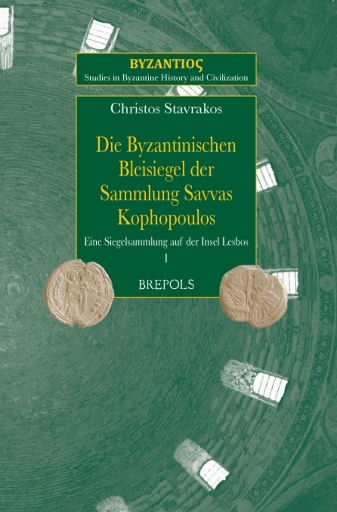
Die byzantinischen Bleisiegel der Sammlung Savvas Kophopoulos
show More to view fulltext, buy and share links for:Die byzantinischen Bleisiegel der Sammlung Savvas Kophopoulos show Less to hide fulltext, buy and share links for: Die byzantinischen Bleisiegel der Sammlung Savvas KophopoulosWeltweit gibt es außer der bereits zum größten Teil publizierten Sammlung von George Zacos wenige Privatsammlungen byzantinischer Bleisiegel. Die Privatsammlung des auf der Insel Lesbos (Griechenland) ansässigen Arztes Savvas Kophopoulos scheint die größte in Griechenland und eine der bedeutendsten Privatsammlungen dieser Art weltweit zu sein.
Hier wird der erste Teil dieser byzantinischer Bleisiegel nach all den modernen Standards und neuesten Entwicklungen der byzantinischen Sigillographie publiziert. Es handelt sich um 120 Stück, die meisten unpubliziert, die hier zum Ersten Mal der Wissenschaft präsentiert werden. Chronologisch lassen sich diese Siegel vom 7. bis ins 17. Jh. datieren. Es sind Bleibullen, deren Aussteller Mitglieder der byzantinischen Aristokratie, Staats- und Kirchenfunktionäre waren sowie anonyme Siegel mit Monogrammen oder Heiligendarstellungen.
In vielen Fällen werden durch die hier publizierten Siegel Namen, die bis jetzt nicht belegt waren, sowohl unbekannte Verwaltungseinheiten des Byzantinischen Reiches als auch ikonographische Besonderheiten, die in der Sigillographie zum ersten Mal angetroffen werden, bezeugt.
Es ist ein Buch, was nicht nur für die Byzantinisten, Archäologen und Mediävisten sondern auch für Kunsthistoriker interessant wäre.
Christos Stavrakos ist Assistant Professor für Byzantinische Geschichte im Institut für Geschichte und Archäologie der Universität Ioannina (Griechenland).
-
-
-
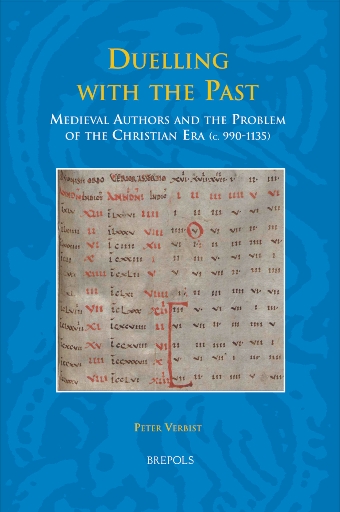
Duelling with the Past
show More to view fulltext, buy and share links for:Duelling with the Past show Less to hide fulltext, buy and share links for: Duelling with the PastThis volume discusses the controversy surrounding the dating of the Christian Era in the Middle Ages and its effect on the ‘emergence’ of the individual in medieval society. It focuses on eight medieval authors (Heriger of Lobbes, Abbo of Fleury, Marianus Scottus, Gerland the Computist, Hezelo of Cluny, an anonymous author in Limoges, Sigebert of Gembloux, and Heimo of Bamberg), all of whom attempted to correct the date of Christ’s incarnation according to the Easter tables of the Scythian monk Dionysius Exiguus (c. 540). As this volume argues, these authors entered into a duel with the past, attempting to reassign the year of Christ’s birth and in the process negotiating contradictory authoritative traditions. On a superficial level these scholars appeared to be unsuccessful in their attempts to reconstruct history, as none of their proposed corrections replaced the existing (erroneous) Christian era that had been established in the Latin West. On a practical level, however, this defeat can be counterbalanced by the conclusion that the corrections provided by these authors acted as an important step in the increasing movement of medieval authors towards intellectual autonomy. In Duelling with the Past, Verbist’s analysis explores the links between computistical sources and the ‘emergence’ of the individual in the Middle Ages.
-
-
-
Johannes Buridanus: Summulae: De syllogismis
show More to view fulltext, buy and share links for:Johannes Buridanus: Summulae: De syllogismis show Less to hide fulltext, buy and share links for: Johannes Buridanus: Summulae: De syllogismisDe syllogismis is the fifth treatise of John Buridan’s Summulae dialecticae, a textbook he wrote for his logic course in the Faculty of Arts at the University of Paris. De syllogismis contains material related to Aristotle’s Analytica Priora and Boethius’s De hypotheticis syllogismis. The textbook discusses inferences involving not only propositions de inesse, but also propositions featuring oblique, reduplicative and infinite terms. Buridan displays a keen interest in modal inferences and inferences involving propositional attitudes. Buridan’s De syllogismis continues along the lines of his nominalist conception of the relations between mind, language and reality.
-
-
-

Laus angelica
show More to view fulltext, buy and share links for:Laus angelica show Less to hide fulltext, buy and share links for: Laus angelicaThe liturgical celebration of the Mass, a multifarious spiritual, artistic, and intellectual manifestation, had a central position in the cultural life of medieval Europe. The ‘Gregorian Chants’, mostly words from passages of the Old Testament, were reinterpreted and ornamented by means of new lyrics, and became the basis for new literary and musical genres, such as tropes, sequences, and other new lyrics. In spite of all the unifying efforts made by the Carolingian reformers, a rich variety in practice came to characterize the performance of the Mass in the ninth through the twelfth centuries. Extensive repertories of new texts and melodies were spread in manuscripts all over Europe. Until now this fascinating material has been the preserve of a small circle of specialists in musicology and philology. With this volume, the author introduces and analyses these hidden treasures to make them available to a wider public. It is directed to those with an interest in the philosophy, theology, and history of medieval Latin literature, and in the expressions of spiritual, poetic, and musical creativity of the European Middle Ages.
-
-
-
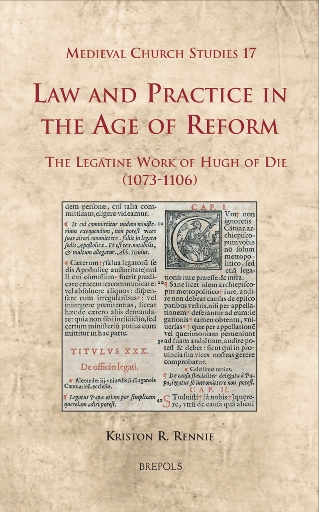
Law and Practice in the Age of Reform
show More to view fulltext, buy and share links for:Law and Practice in the Age of Reform show Less to hide fulltext, buy and share links for: Law and Practice in the Age of ReformIn reconstructing Hugh of Die’s legatine and conciliar activity, this book offers intriguing new arguments about the many relevant and often confused issues surrounding eleventh-century legates, councils, and the law - three inextricable components of church reform and administration. Hugh’s efforts in promulgating and disseminating reform in France in the 1070s, 1080s, and 1090s were shaped significantly by his council activity. The manner in which he conducted this business sheds light on every aspect of his work, revealing not only his personal interpretation and application of the law, but also his vigour in suppressing clerical marriage, the selling of church offices, lay investiture, and the gravity with which he conducted his duties as legate. New light is cast on Hugh’s personality and achievements by looking at the nature and influence of his legatine and legal activity in France, qualities that can only be appreciated in light of the ferment of activity during Gregory VII’s pontificate. The dialectical relationship between reform and law in eleventh-century France is a recurring theme throughout this investigation, illustrating in more demonstrable terms the flow of ecclesiastical business between the papal court in Rome and France and vice versa.
-
-
-
Le travail intellectuel à la Faculté des arts de Paris: textes et maîtres (ca. 1200-1500)
show More to view fulltext, buy and share links for:Le travail intellectuel à la Faculté des arts de Paris: textes et maîtres (ca. 1200-1500) show Less to hide fulltext, buy and share links for: Le travail intellectuel à la Faculté des arts de Paris: textes et maîtres (ca. 1200-1500)Le huitième fascicule du répertoire des maîtres ès arts parisiens, de leurs oeuvres et de leurs lectures comprend ceux dont le nom commence par la lettre R. Il est un peu plus gros encore que le précédent, avec la lettre P, et il est probable que le dernier fascicule de la série, qui sera consacré aux maîtres dont le nom commence par la lettre S, T, U ou V, sera plus important encore.Les principes du répertoire ont été expliqués dans les fascicules précédents. Un réseau international de spécialistes, dont les conseils et les critiques sont indispensables, continue de soutenir les travaux. Ce huitième fascicule comprend des personnages plus ou moins célèbres comme Raymondus Lulllus, Robertus Grosseteste, Robertus Kilwardby, Roger Bacon, mais aussi une série de maîtres plus modestes comme les divers maîtres appelés simplement Robertus ou Robertus Anglicus. D’autres personnages, bien connus dans le contexte de l’Université de Paris, mais qui n’ont pas laissé des œuvres relatives à l’enseignement à la Faculté des arts, notamment Richard de Fournival et Robert de Sorbon, sont traités dans l'introduction, qui contient, comme d’habitude, une liste de maîtres qui ont été exclus, parce qu'aucun lien entre leurs oeuvres et la Faculté des arts de Paris n'a pu être établi.
-
-
-
Les chartes de l'abbaye cistercienne de Vaucelles au XIIe siècle
show More to view fulltext, buy and share links for:Les chartes de l'abbaye cistercienne de Vaucelles au XIIe siècle show Less to hide fulltext, buy and share links for: Les chartes de l'abbaye cistercienne de Vaucelles au XIIe siècleL’abbaye de Vaucelles, près de Cambrai, était une des plus grandes abbayes cisterciennes, comptant parfois des centaines de moines et convers. L’édition des chartes de l’abbaye pour le XIIe siècle (176 chartes, dont 125 inédites) permet de voir la croissance de l’abbaye, l’extension de son domaine, l’établissement d’un réseau de relations sociales (comtes de Flandre, de Hainaut, de Vermandois, de Soissons…, duc de Lotharingie, évêques de Cambrai et de Noyon…), la mise en place d’une politique d’exemptions de péages. Dynamique, l’abbaye commence aussi progressivement à écrire elle-même les chartes qu’elle reçoit, et développe un archivage systématique.
-
-
-
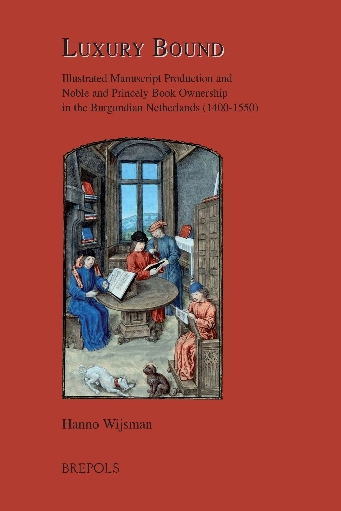
Luxury Bound
show More to view fulltext, buy and share links for:Luxury Bound show Less to hide fulltext, buy and share links for: Luxury BoundThis interdisciplinary study presents a two-part survey of the production and ownership of luxury manuscripts in the late-medieval Netherlands.
Part I analyses a corpus of 3,700 illustrated manuscripts produced between 1400 and 1550 in the Low Countries. The result is a cornucopia of information about many aspects of manuscript production: chronological, geographical and gender distribution, the genres of texts, the languages used, the dimensions of books, the number of illustrations, and the relationship between the making of hand-written and printed books.
Part II examines the libraries of the pre-eminent owners of illustrated manuscripts in the Netherlands: the ducal family and the noble elite. The great bibliophile Philip the Good set an example of book collecting that was emulated by the nobles of the court, creating a typical ‘Burgundian’ fashion in book ownership by which a small elite demonstrated a well defined group identity.
Part III draws together these various lines to offer conclusions about the book market and fashions in book ownership. Luxury Bound charts this new vogue in books and reading, an important aspect of cultural change in the late-medieval Low Countries.
-
-
-
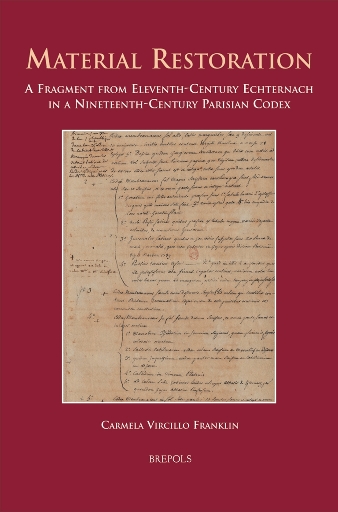
Material Restoration
show More to view fulltext, buy and share links for:Material Restoration show Less to hide fulltext, buy and share links for: Material RestorationMaterial Restoration follows the journey of a parchment bifolium, which was first used in the binding of a manuscript produced in Echternach around the year 1000, and then removed from its original container-codex after it was appropriated by the French during the Napoleonic wars. By tracing the creation, interpretations, and migratory life of the parchment until its eventual incorporation within a nineteenth-century codex, this analysis presents the bifolium as an illustration of ‘new philology’, and as an essential material and cultural element of the different codices that contained it. Material Restoration also analyses the texts inscribed on the bifolium, which include a charter, two poems, and verbal and musical glosses. By considering these texts within the context of the networks that produced and used them, the book offers an intriguing insight into the monastic and literary communities of eleventh-century Echternach. Material Restoration is a riveting and satisfying scholarly detective story that combines both erudition and new discoveries, and adheres to the standards of both classical and new philology.
-
-
-
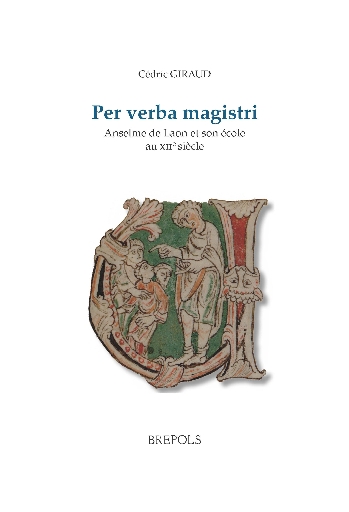
Per verba magistri
show More to view fulltext, buy and share links for:Per verba magistri show Less to hide fulltext, buy and share links for: Per verba magistriLoué par ses contemporains et critiqué par le seul Pierre Abélard, Anselme de Laon († 1117) constitue l’une des figures majeures de la « Renaissance du xiie siècle ». Anselme n’est pas seulement l’auteur probable de gloses et de commentaires bibliques, il est aussi le rédacteur de sentences théologiques à la diffusion manuscrite non négligeable. Afin de comprendre cette figure magistrale, il convient de restituer la carrière d’Anselme, de suivre la transmission de ses sentences théologiques et d’étudier la constitution des recueils rattachés à son enseignement. Il devient alors possible de montrer la manière dont un maître aussi prestigieux a fait école, de son vivant et jusque dans les dernières décennies duXIIe siècle.
Cédric Giraud, ancien élève de l’École nationale des chartes et agrégé d’histoire, est maître de conférences à l’université de Nancy 2 (ERL 7229 de Médiévistique). Ses recherches portent sur l’histoire culturelle du Moyen Âge central et la philologie médiolatine.
-
-
-
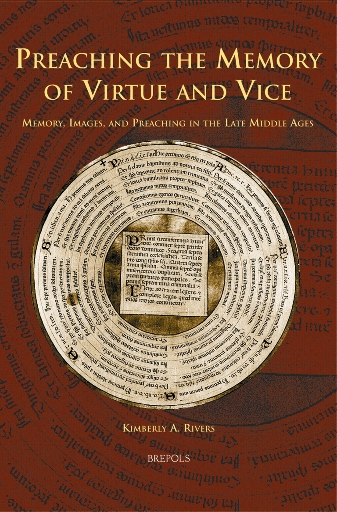
Preaching the Memory of Virtue and Vice
show More to view fulltext, buy and share links for:Preaching the Memory of Virtue and Vice show Less to hide fulltext, buy and share links for: Preaching the Memory of Virtue and ViceThis volume explores the integral role of memory and mnemonic techniques in medieval preaching from the thirteenth to the early fifteenth century. It argues that the mendicant orders inherited from the early Middle Ages both the simple mnemonic techniques of rhetorical practice and a tradition of monastic meditation founded on memory images. In the thirteenth century Dominican and Franciscan writers drew on these basic techniques even as they re-evaluated the ancient mnemonic system of the Rhetorica ad Herennium (first century BC). The increasing emphasis that intellectuals placed upon cognitive science, ethics, and on distinctions between rhetoric and logic created a climate that welcomed an image-based memory system designed for orators. The book also explores the Franciscan contribution to mnemonics, which has been almost entirely neglected by scholars. As the Franciscans came to value imaginative meditation as part of their own spiritual lives, their habit of meditating on mental images of the virtues and vices eventually spilled out into their sermons. As the new orators of the period, Franciscans and Dominicans each inserted mnemonic images into their sermons as a way to aid the recall of both preachers and listeners. The products of such mnemonic practices in medieval sermons, which included elaborate descriptions of buildings, schematic renderings of the number seven, and verbal images of the virtues and vices, were then allegorised in moral terms and circulated on the continent in exempla collections. This book argues that verbal images and complicated schema functioned as ‘ordering devices’ for those preaching and listening to sermons, whilst also provoking an affective response that enhanced listeners’ devotional and penitential experiences.
-
-
-

The "Costuma d’Agen"
show More to view fulltext, buy and share links for:The "Costuma d’Agen" show Less to hide fulltext, buy and share links for: The "Costuma d’Agen"The Costuma d’Agen (customary laws of the Agenais, in south-west France) compiled in Occitan at various times in the thirteenth century and preserved in the Livre Juratoire, or swearing copy (Bibliothèque municipale d’Agen, MS 42), is here transcribed with an English translation on facing pages. An introduction and an index are included. Appendices provide the text of five chapters “missing” from this manuscript, along with several pertinent charters from Agen and a fuller description of the Livre juratoire by Professor M. Alison Stones, University of Pittsburgh. The manuscript contains many colored illustrations and capitals.
The Costuma emphasizes the power of the local city council, which often seems to override that of the local count. The laws or customs written in the book deal with many topics including jurisdiction, citizenship and military duties, crime, property, civil and criminal procedure, the local wine and salt trades, and local feudal law.
F. R. P. (Ron) Akehurst (B.A. Oxford, 1962, Ph.D. Colorado, 1967, in French; J.D., Minnesota, 1986). A professor of French at Minnesota since 1968. He has published translations of two other medieval French customaries.
-
-
-
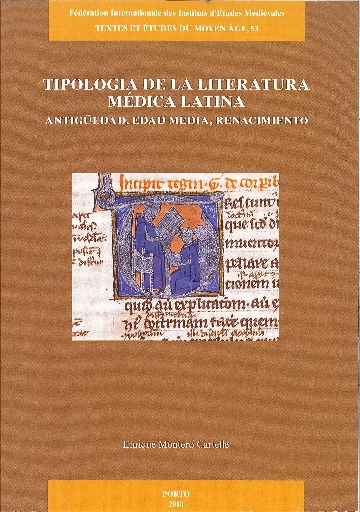
Tipologia de la literatura médica latina. Antigüedad, edad media, renacimiento
show More to view fulltext, buy and share links for:Tipologia de la literatura médica latina. Antigüedad, edad media, renacimiento show Less to hide fulltext, buy and share links for: Tipologia de la literatura médica latina. Antigüedad, edad media, renacimientoEl interés por las formas literarias de la literatura médica ha ido creciendo progresivamente ya que atiende cada vez más a las formas de la literatura médica características de las distintas épocas, compartidas en su mayoría con otras ramas de la ciencia como la filosofía, la teología o el derecho. Pero faltaba una visión de conjunto de estos textos médicos desde el punto de vista literario. La tipología de esos tratados es un indicio revelador de su origen, finalidad, cultura del autor y demanda social. Este estudio pretende mostrar un panorama general de las formas literarias de los estudios médicos y sus medios de expresión. El estudio del comportamiento de los escritores médicos ante el hecho de escribir proporciona una dimensión, como complemento, de gran relieve para los estudios estrictamente doctrinales. El escritor es un hombre de su tiempo y, como tal, refleja sus usos y modos.
Enraízados en la tradición de la Antigüedad y siguiendo una distribución armónica de la medicina diaetetica, pharmaceutica y chirurgia, los géneros literarios de la literatura médica medieval, por influjo de la filosofía y teología escolásticas, conocieron una riqueza asombrosa de formas literarias, como summae, specula, compendia, practica, concordantiae, synonyma, disputationes, problemata, accessus, tacuina, secreta, consilia, etc., que afectaron también a la tipología de su lengua. El Renacimiento fue otra época de renovación en la que continúan algunos géneros de corte tradicional, otros decaen o se transforman, mientras que toman cuerpo otras actividades más filológicas a veces que doctrinales, como las ediciones o los comentarios críticos. Cada época revela los problemas con los que se enfrentaron los escritores médicos al intentar forjar unas formas literarias y una terminología basadas en unos conocimientos médicos -en muchos casos expresados originariamente en otra lengua- y darles la forma literaria que consideraban más apropiada para publicar sus logros.
Un estudio como éste puede ser útil para todos aquellos que desde el campo de la Filología, la Historia en general o de la Historia de la Ciencia y de la Medicina o de la cultura en particular, deseen adentrarse en la literatura médica.
-
-
-

Trinity and Creation
show More to view fulltext, buy and share links for:Trinity and Creation show Less to hide fulltext, buy and share links for: Trinity and CreationThe Trinity and Creation are central themes in the theology of the Augustinian Canons of the Abbey of St Victor during its time of greatest flourishing in the twelfth century. In this volume, three of the most important Victorine theological works are introduced and completely translated into English for the first time: On the Three Days, by Hugh of St. Victor (d. 1141), a lyrical yet philosophical study of how the power, wisdom, and goodness of God can be known from the things God has made; Hugh’s Sentences on Divinity, lecture notes which show how the divine ideas (“primordial causes”) serve God in creation; and On the Trinity, by Richard of St. Victor (d. 1173), one of the enduring classics of Christian theology, which analyzes the Trinity in terms of love. Also included are two of Adam of St. Victor’s sequences in praise of the Trinity.
This volume is edited by Boyd Taylor Coolman (PhD, Notre Dame University; Theology Dept. Boston College), author of The Theology of Hugh of St. Victor: An Interpretation (2010), and Dale M. Coulter (DPhil, Oxford; School of Divinity, Regent University), author of Per Visibilia ad Invisibilia: Theological Method in Richard of St. Victor (d. 1173) (2006).
-
-
-
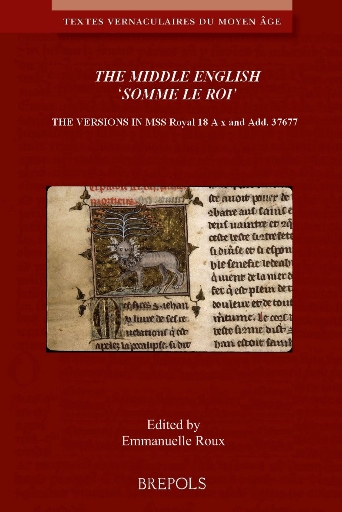
Two Middle English Translations of Friar Laurent's 'Somme le roi': critical edition
show More to view fulltext, buy and share links for:Two Middle English Translations of Friar Laurent's 'Somme le roi': critical edition show Less to hide fulltext, buy and share links for: Two Middle English Translations of Friar Laurent's 'Somme le roi': critical editionThis is the first volume of a two-volume project whose aim is to publish all the known Middle English manuscript translations of the French Somme le roi, a thirteenth-century manual of religious instruction offering teaching on the Decalogue, the seven deadly sins and their remedies, compiled by the Dominican friar Laurent of Orleans. The project extends and deepens our knowledge of the influence of this popular French text, known today only from the versions entitled The Ayenbite of Inwit and The Book of Vices and Virtues, published in 1866 and 1942, respectively.
This volume presents the versions extant in BL MSS Royal 18. A. x and Add. 37677; the second will cover the versions in Cambridge, Corpus Christi College, MS 494, Oxford, Bodleian Library, MS Ashmole 1286, and Oxford, Bodleian Library, MS e Musaeo 23. The texts of both volumes have been prepared with the help of the recently-published edition of the French text (2008), a circumstance from which the earlier English editions were unable to benefit. It is likely that the versions edited here for the first time will make a considerable contribution to our understanding of the processes of textual transmission and to that of translation itself in English literary circles of the fifteenth century.
-
-
-
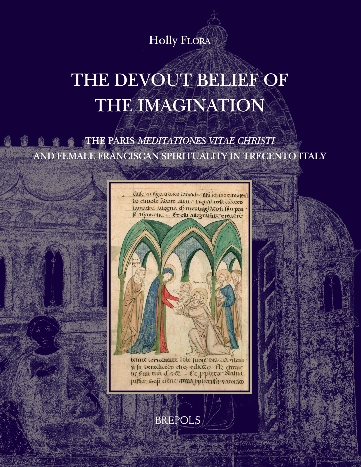
'The Devout Belief of the Imagination'
show More to view fulltext, buy and share links for:'The Devout Belief of the Imagination' show Less to hide fulltext, buy and share links for: 'The Devout Belief of the Imagination'This volume examines the late medieval devotional text Meditationes Vitae Christi through an analysis of its most important manuscript, known by its present location and catalogue number as Paris Bibliothèque Nationale Ms. ital. 115. As Flora argues, Ms. ital. 115, the oldest and most extensively illustrated copy of the Meditationes, was originally made in or near Pisa c. 1350 and tailored very specifically for a group of Franciscan nuns. Flora suggests the manuscript’s probable uses in practices of performative devotion and affective response, and the relationship between its imagery and other works of art made for religious women, shedding new light on the history of female monasticism in medieval Italy.
Holly Flora is Assistant Professor of Art History at Tulane University, and is the author of Cimabue and Early Italian Devotional Painting (The Frick Collection, 2006) as well as studies on illustrated manuscripts and devotional art in late medieval Italy.
-
-
-
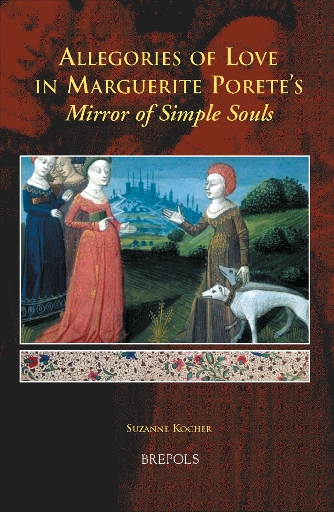
Allegories of Love in Marguerite Porete's 'Mirror of Simple Souls'
show More to view fulltext, buy and share links for:Allegories of Love in Marguerite Porete's 'Mirror of Simple Souls' show Less to hide fulltext, buy and share links for: Allegories of Love in Marguerite Porete's 'Mirror of Simple Souls'Marguerite Porete’s Mirror of Simple Souls, dating probably to the 1290s, is the oldest known mystical work written in French, and the only surviving medieval text by a woman writer executed as a heretic. This volume analyses its use of interconnected allegories that describe the soul’s approach toward God in terms of human social relationships. These include romantic love between lovers in same-sex and mixed-sex pairs, relations among people of differing social rank such as servants and nobles, and rich and poor engaged in economic transactions such as taxation and gift-giving. Gender, rank, and exchange serve as remarkably versatile allegories for spiritual states. Porete uses comparison as an organizing principle that underlies her supple and creative use of allegory, personification, parables, metaphors, similes, proverbs, and glosses. The theologian invites her audience to cross boundaries among literal and figurative registers of meaning, in ways that are emblematic of the soul’s ultimate leap toward the divine. Porete’s social allegories, the author contends, can provide us with valuable evidence of a medieval thinker’s conceptions of God, gender, language, and human capacity for change.
-
-
-
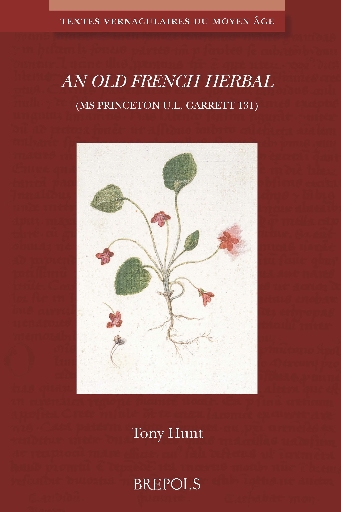
An Old French Herbal (Ms Princeton U.L. Garrett 131)
show More to view fulltext, buy and share links for:An Old French Herbal (Ms Princeton U.L. Garrett 131) show Less to hide fulltext, buy and share links for: An Old French Herbal (Ms Princeton U.L. Garrett 131)The earliest Old French herbal in verse, here edited for the first time, is a surprisingly comprehensive work (3188 octosyllables), based on an eleventh-century Latin treatise 'De viribus herbarum' attributed to a certain 'Macer'. It occupies a significant place in the development of herbals and is an interesting witness to writing in Western France in the thirteenth century and to the unusual syntax and concentrated style of its author. Some one hundred and twenty-five plants are described together with their medicinal uses, which cover a remarkable range of ailments. For ease of recognition the sections of text which do not seem to be based on the received text of 'Macer' are printed in italics. Quotations from the principal source and from parallels are given in the notes. This work will be of great value to all those interested in Old French, in medieval translation, the vernacular transmission of learning, and the history of medicine.
-
-
-

Anglo-Saxons in a Frankish World, 690-900
show More to view fulltext, buy and share links for:Anglo-Saxons in a Frankish World, 690-900 show Less to hide fulltext, buy and share links for: Anglo-Saxons in a Frankish World, 690-900The Anglo-Saxon mission to early medieval Germany and the Netherlands has long been seen as a major contribution to the foundation of Christian Europe. Encouraged by the activities of prominent Anglo-Saxons such as St Willibrord (d. 739) and St Boniface (d. 754), pious men and women left their homes in England to reform and reinvigorate the culture and politics of the Church in Northern Europe, while greatly expanding the frontiers of Christendom. Anglo-Saxons in a Frankish World, 690-900 provides the first major reassessment of the Anglo-Saxons' influence on the Frankish world for fifty years. It argues that, because figures like Boniface were so important to the cult of saints east of the Rhine, stories about them became central to the ways in which different groups responded to the rapidly changing landscape of Carolingian culture and politics. The study draws on letters, charters, and other evidence to recontextualize the numerous hagiographies written about the Anglo-Saxons on the European mainland, while providing fresh perspectives on attitudes to mission, monasticism, authority, and the secular world in East Frankish society.
-
-
-
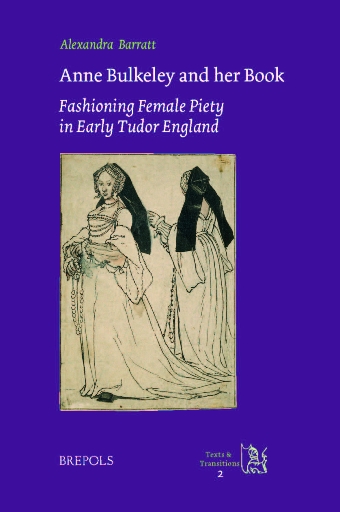
Anne Bulkeley and her Book
show More to view fulltext, buy and share links for:Anne Bulkeley and her Book show Less to hide fulltext, buy and share links for: Anne Bulkeley and her BookThis study is focused on bl ms Harley 494, a small manuscript book which can be dated between 1532 and 1535 and which has many of the features of a preces privatae volume, or private prayer book. It contains prayers in English and Latin but also a number of brief devotional treatises in English. ms Harley 494 possesses two more features of interest: it belonged to a Hampshire widow, Anne Bulkeley (and possibly later to her daughter Anne, a nun at Amesbury Priory); and it emerged from a Birgittine textual community. Barratt edits and annotates the complete manuscript to provide an accessible and informative edition of this little known manuscript. However, Anne Bulkeley and her Book is not a conventional edition of a late Middle English text. Rather, Barratt carefully contextualizes the manuscript within its historical background just before the Dissolution of the Monasteries, and meticulously investigates the varied, and often unusual, sources of many of the individual items in the book. In addition, the discussion encompasses several related manuscripts (principally Lambeth Palace ms 3600 and the so-called Burnet Psalter (Aberdeen University Library ms 25)). This broad focus enables the volume to examine not only the evolution of the manuscript as a whole, but also to answer wider questions of its owner’s identity, her family connections, and her (and her book’s) place in literary, cultural, and religious history.
-
-
-
Bernard le Clunisien
show More to view fulltext, buy and share links for:Bernard le Clunisien show Less to hide fulltext, buy and share links for: Bernard le ClunisienLa tendance dominante du christianisme durant des siècles n'a pas été l'affirmation d'une puissance travaillant à la transformation du monde et de l'histoire, mais plutôt la disposition à s'en écarter et à prendre ses distances, selon la doctrine du "mépris du monde" (contemptus mundi). C'était en tout cas l'orientation de la pensée monastique qui a traversé tout le Moyen Âge.
Vers la fin de la première moitié du XIIe siècle, un moine bénédictin de Cluny, que l'on a appelé Bernard de Morlaix ou de Morlas ou Bernard le Clunisien, et qui résidait au prieuré Saint-Denis de Nogent-le-Rotrou, a écrit lui aussi un De contemptu mundi. Cet immense poème en vers métriques, est, malgré son titre, beaucoup plus que l'expression habituelle du thème monastique de la vanité du monde. Il contient une représentation lumineuse du Ciel, Jérusalem céleste, Cité resplendissante où Dieu est tout en tous, et une vision des enfers, où les références à Virgile semblent annoncer la grande épopée dramatique et mystique de la Divine Comédie de Dante ; et c'est aussi une longue complainte et une impitoyable satire contre les désordres et les injustices de l'époque, satire n'épargnant ni les prêtres, ni les évêques, ni le pouvoir de Rome.
-
-
-
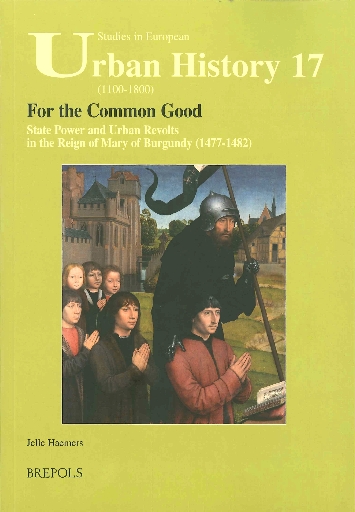
For the Common Good
show More to view fulltext, buy and share links for:For the Common Good show Less to hide fulltext, buy and share links for: For the Common GoodIn 1477, the Low Countries were in chaos. On 5 January Charles the Bold, Duke of Burgundy, was killed in the battle of Nancy. His political adversaries used this fortuitous opportunity to reverse his much-hated policies. The late duke’s confidents were executed, as nobles fled from court. The French king declared war on Charles’ heir, Mary of Burgundy, and the cities rose in rebellion against the duchy. United in their opposition to the ducal court, the Estates-General instituted a new state structure which severely reduced the power of the central state. The duchess’ new husband, Maximilian of Austria, was never able to dictate war policy nor appease the discontent of the populace, because his first priority was to strengthen the power of the Habsburg dynasty. In 1482, when Mary of Burgundy died after a tragic fall from her horse, revolt again spread across the county of Flanders. In this dramatic crisis that would last for a decade, central authority was again challenged by a political alternative, the Flemish regency council.
This book examines the people behind the revolt. From a murky background of conflicting loyalties, it identifies the principal allies of the Habsburg dynasty and key political adversaries of Maximilian in the Flemish cities. An in-depth analysis of their lives and their socio-economic and cultural backgrounds on the eve of the Flemish Revolt elucidates their reasons for rebelling or remaining loyal to court. By focusing on disloyal nobles at court and urban dissenters in the county of Flanders, this book goes beyond previous studies of the revolt and offers new insights into the social history of medieval politics. In the end, readers will discover whether the court, the nobility, and the urban rebels were really striving for the goal they claimed, the common good.
Jelle Haemers is a post-doctoral research fellow at Ghent University (IAP-project ‘City and Society in the Low Countries, 1100-1800’). His research interests focus mainly on urban history of the Late Middle Ages.
-
-
-
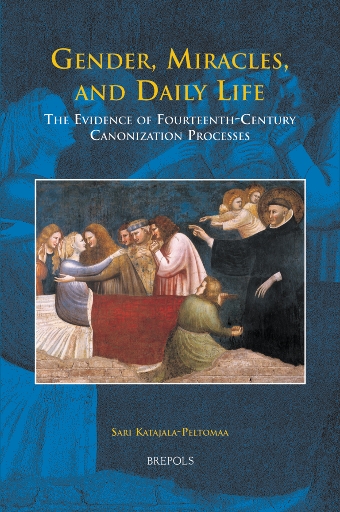
Gender, Miracles, and Daily Life
show More to view fulltext, buy and share links for:Gender, Miracles, and Daily Life show Less to hide fulltext, buy and share links for: Gender, Miracles, and Daily LifeInteraction with the saints was central to the everyday life of medieval Christians. The process of praying to a heavenly intercessor not only involved private devotion but was also intrinsically connected with society at large. It required the individual to communicate and negotiate both with the saint and within a group of devotees, thereby exposing social processes such as community dynamics and the construction of gender. Considering these issues and others, Gender, Miracles, and Daily Life focuses on the depositions of the canonization processes of Thomas Cantilupe (1307) and Nicholas of Tolentino (1325). It explores how ordinary laypeople understood the daily responsibilities that determined their relationship to the saints and articulates how their shared narratives contributed to the rituals which surrounded a miracle. This material has been little explored by scholars, yet offers a vivid and colourful insight into the world of men and women in the fourteenth century.
-
-
-
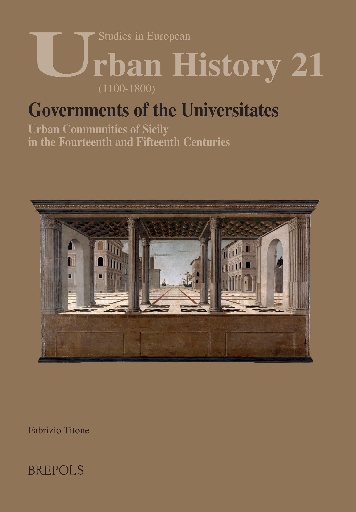
Governments of the Universitates: Urban Communities of Sicily in the Fourteenth and Fifteenth Centuries
show More to view fulltext, buy and share links for:Governments of the Universitates: Urban Communities of Sicily in the Fourteenth and Fifteenth Centuries show Less to hide fulltext, buy and share links for: Governments of the Universitates: Urban Communities of Sicily in the Fourteenth and Fifteenth CenturiesTitone refutes established historiographic interpretations in a long-term analysis of urban institutional and social transformations in Sicily during the Late Middle Ages and shows how distinct chronological divisions do not apply to these local governments characterized by both marked experimentation and striking continuity. The urban communities’ social and institutional deformities are brought to light along with the fact that intense communication among cities could produce common results. The pivotal role consistently played by the universitates in the affairs of the kingdom can be seen in the process of defining urban autonomy which often involved sovereign and community in interrelated decision making. Cities frequently oriented royal policy and this explains a unique feature of Sicilian pactism: a community might not implement a sovereign’s concession even though it ensued from municipal solicitations. The period of validity for a privilege when requested by only certain groups was linked to maintenance of the local status quo. Opposition from excluded parties and a shift in the balance of power originally underlying royal assent to a petition often meant the concession would not be put into without its being necessary to envolve the central government any further.
Fabrizio Titone is currently a post-doctoral Mellon Fellow at the Pontifical Institute of Mediaeval Studies in Toronto. His research interests focuses on the urban history of the Aragonese Crown.
-
-
-
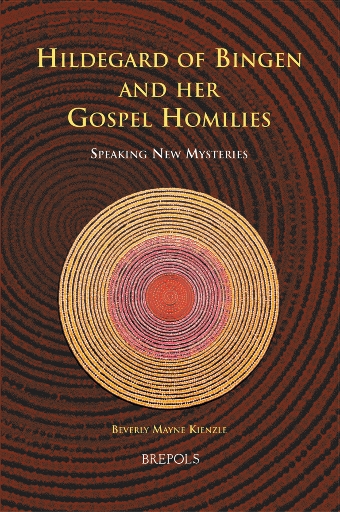
Hildegard of Bingen and her Gospel Homilies
show More to view fulltext, buy and share links for:Hildegard of Bingen and her Gospel Homilies show Less to hide fulltext, buy and share links for: Hildegard of Bingen and her Gospel HomiliesHildegard of Bingen (1098-1179), the only medieval woman known to have authored systematic works of exegesis, composed fifty-eight little-studied Expositiones euangeliorum, homilies on twenty-seven Gospel passages. Hildegard described her divine charge to restore the tottering faith of her era through the revelation of hidden mysteries in the Scriptures. She was to continue the exegetical tradition of the Fathers and to construct moral fortifications with the words of Scripture in order to defend her sisters against the forces of evil. Hildegard of Bingen and her Gospel Homilies constitutes the first in-depth study of Hildegard’s Expositiones and of her exegesis, preaching, and use of sources. It explores the Expositiones in the context of Hildegard’s intellectual and cultural milieu and underscores the central role of biblical interpretation in the seer’s works. Furthermore, this book re-examines Hildegard’s self-depiction in the context of monastic education for women, the magistra’s exchange with her mentors and friends, and her rich use of divine voice to empower her own expression. This is a new, exciting, and erudite study on one of the most influential female mystics.
-
-
-
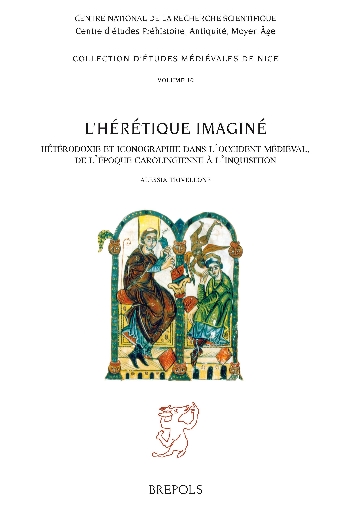
L'hérétique imaginé
show More to view fulltext, buy and share links for:L'hérétique imaginé show Less to hide fulltext, buy and share links for: L'hérétique imaginéL’hérésie médiévale est depuis quelques années au cœur d’un débat historiographique très vif. Toutefois, le thème n’avait jamais été abordé de manière systématique à partir des images. Le livre d’Alessia Trivellone vient combler cette lacune, en étudiant l’ensemble des représentations d’hérétiques dans l’Occident médiéval, tous supports confondus, depuis leur apparition au tournant des VIIIe et IXe siècles jusqu’au premier tiers du XIIIe siècle, à la veille de la création de l’Inquisition.
Grâce à la mise en place d’une méthodologie rigoureuse, l’imaginaire médiéval lié à l’hérésie est ainsi saisi à travers les représentations d’hérétiques élaborées au sein des milieux orthodoxes. L’analyse des images permet de suivre l’actualisation, opérée aux XIe et XIIe siècles, des définitions de l’hérésie fournies par les écrits des Pères, ainsi que l’apparition, entre la fin du XIIe et le début du XIIIe siècle, d’une idée abstraite d’hérésie, désormais conçue comme une épreuve nécessaire en vue du salut. Au cours du premier tiers du XIIIe siècle, un autre changement se dessine : la référence à l’Antiquité et le recours aux personnifications disparaissent de l’iconographie pour faire place à la représentation de groupes hérétiques contemporains, représentés en train d’accomplir les rites dont ils sont accusés ou de subir les châtiments auxquels ils ont été condamnés.
Ce livre propose donc une histoire de l’idée d’hérésie à travers le prisme des images, une histoire qui constitue l’arrière-plan idéologique de la lutte antihérétique au sein de la société occidentale.
L’auteur
Après des études d'histoire de l'art en Italie, à l’Université de Rome « La Sapienza », Alessia Trivellone a soutenu en 2005, au Centre d’Études Supérieures de Civilisation Médiévale - Université de Poitiers, une thèse de doctorat sur l'iconographie de l’hérétique. Actuellement chargée d'enseignement à l'Université de Nice et associée au CEPAM (Université de Nice / CNRS), elle mène une recherche post-doctorale, dans le domaine de l'iconographie médiévale, au sein de l'UMR 5594 (Université de Dijon / CNRS).
-
-
-
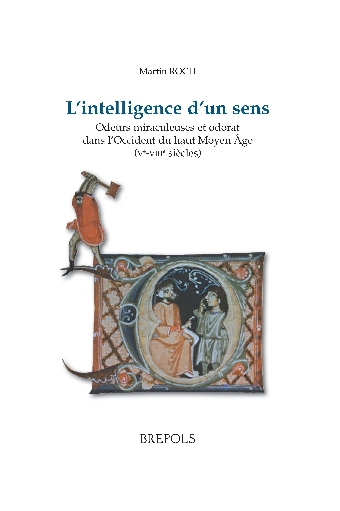
L'intelligence d'un sens.
show More to view fulltext, buy and share links for:L'intelligence d'un sens. show Less to hide fulltext, buy and share links for: L'intelligence d'un sens.Que peut-on vraiment lire dans les récits médiévaux relatant les émanations et les perceptions des ‘odeurs de sainteté’? Cette expression elle-même fut-elle jamais pleinement signifiante, non pas sublimée en une métaphore toute spirituelle, mais au contraire bien charnelle, et donc partie intégrante d’une culture?
Prenant pour point de départ les récits d’exhalaisons extraordinaires, cet ouvrage s’attache à reconstruire l’importance et la signification qu’ont pu revêtir odeurs et odorat en Europe occidentale, dans la culture et la pensée religieuses, voire même dans l’expérience des hommes et des femmes du haut Moyen Âge, période formatrice s’il en fut. S’appuyant sur un dépouillement systématique des récits hagiographiques, Martin Roch revalorise ces sources, souvent décriées, tout en les confrontant méticuleusement aux textes bibliques et patristiques, aux documents liturgiques, et même aux données archéologiques disponibles.
En déplaçant le point de vue de l’odeur miraculeuse à sa perception et aux récits qui en sont faits, l’auteur se tient fermement sur le terrain de l’histoire, de ses sources et de ses méthodes, sans se priver pour autant de dialoguer avec les autres sciences humaines, ou encore la médecine, ou la psychologie. Il démontre ainsi que, par delà les formules littéraires, les approches superficiellement rationalistes ou les effets de mode, les odeurs extraordinaires peuvent être reconnues comme un authentique objet d’histoire. Ce faisant, il parvient à mettre en évidence une réalité autrement plus riche et complexe que ce que l’on pouvait soupçonner.
Martin Roch est docteur en histoire médiévale de l’Université de Genève.
-
-
-
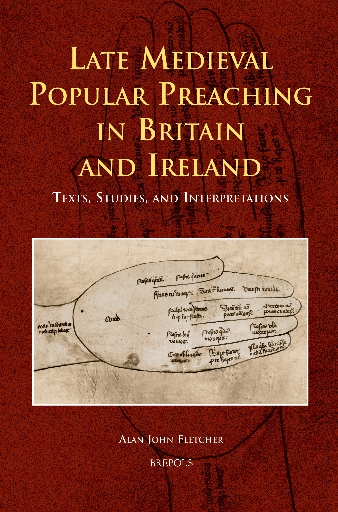
Late Medieval Popular Preaching in Britain and Ireland
show More to view fulltext, buy and share links for:Late Medieval Popular Preaching in Britain and Ireland show Less to hide fulltext, buy and share links for: Late Medieval Popular Preaching in Britain and IrelandSermons and preaching played a key role in forming the religious mentality and outlook of many late medieval men and women. Yet the practice of preaching depended on many variables: the nature and disposition of the audience, the competence of the preacher, and even the stylistic variations that different Orders developed to distinguish their preachers from others. This study and anthology of late medieval popular preaching intended for the laity explores aspects of this diversity by presenting examples of sermons from each of the major wings of the late medieval orthodox Church: the friars, the regulars, the canons regular, the secular canons, and the seculars. It also reveals the ways in which this diversity in forms of preaching finds its correlate in the codicological diversity that existed between sermon manuscripts themselves. Late Medieval Popular Preaching in Britain and Ireland demonstrates how formidable and culturally constitutive a force preaching was, and also examines some of the ways in which it impinged on the production of vernacular literature, ultimately revealing the powerful and wide-spread influence of sermon discourse on cultural production in greater British society.
-
-
-
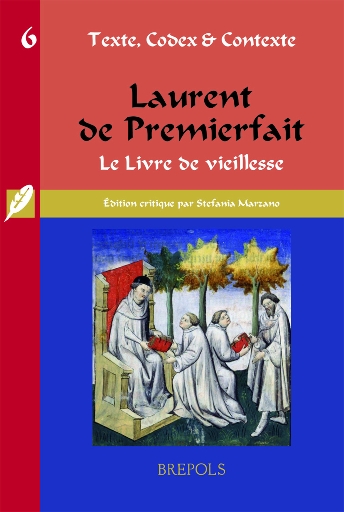
Laurent de Premierfait, "Livre de vieillesse"
show More to view fulltext, buy and share links for:Laurent de Premierfait, "Livre de vieillesse" show Less to hide fulltext, buy and share links for: Laurent de Premierfait, "Livre de vieillesse"Laurent de Premierfait (vers 1370-1418) a connu une brillante carrière de traducteur. De sa Champagne natale à la cour de Charles VI, cet érudit et fin latiniste fréquente les milieux humanistes de l’époque, participe à la vie littéraire de la cour avignonnaise, compose des vers latins qui font sa renommée. D’influents mécènes le protègent et lui commandent des traductions de Boccace (De casibus virorum illustrium, Decameron) et de Cicéron (De senectute, De amicitia). Ces traductions s’inscrivent dans le sillage d’une politique culturelle visant à rendre accessible à un public seigneurial des textes jugés utilitaires; or, se révélant de véritables « best-sellers », ces textes seront à plusieurs reprises révisés, cités, voire utilisés à des fins de propagande tout au long du XV e siècle. Le travail de Stefania Marzano rend accessible pour la première fois le Livre de vieillesse (1405). L’édition est établie sur la base du manuscrit BnF lat. 7789, exemplaire de présentation au duc de Bourbon, vraisemblablement autographe. Ce codex, qui présente une rare disposition bilingue comprenant à la fois l’original latin et le texte français, semble nous transmettre, et dans la forme et dans le fond, la théorie de la traduction d’un des intellectuels les plus connus de son époque.
Stefania Marzano, chercheur postdoctoral CRSH (Canada) - Université catholique de Louvain (Groupe de recherche sur le moyen français), est diplômée de l’Université McGill et s’intéresse à la réception européenne des « classiques » latins et italiens au XVe siècle. Sa thèse de l’Université de Toronto intitulée Édition Des cas des nobles hommes et femmes de Laurent de Premierfait (1400) est en cours de publication.
-
-
-
Les historiens et la question franque
show More to view fulltext, buy and share links for:Les historiens et la question franque show Less to hide fulltext, buy and share links for: Les historiens et la question franqueL’arrivée des Francs et l’établissement de leur pouvoir en Gaule à la fin du Ve siècle fut et demeure un moment mal connu de l’histoire européenne. Le manque de sources écrites eut pour corollaire un fort investissement idéologique pour les monarchies française et allemande, qui firent de cet épisode un véritable mythe d’origine. Le développement de la science historique puis l’invention de la nation démocratique, en sapant cette légende, engendrèrent une pluralité de postures historiographiques. Au XIXe siècle, la question franque devient un enjeu de mémoire primordial dans la stratégie de mise en discipline de la science historique à l’Université, et pour la structuration d’une communauté de spécialistes (historiens, médiévistes, puis haut-médiévistes). L’impact des conflits franco-allemands et la radicalisation des idéologies, nationaliste, marxiste ou national-socialiste, influencent les discours. Mais progressivement s’engage, dans la seconde moitié du XXe siècle, un mouvement de déconstruction nationaliste, stimulé par une dynamique européenne et pacifiste. La présentation de ces débats révèle un panorama original de l’érudition historienne française et allemande aux XIXe et XXe siècles. Elle montre la réalité d’une science en marche, tout en soulignant l’impact du présent sur celle-ci. Ce sont finalement le statut de toute vérité historique et le rapport de l’historien à l’État qui se trouvent ici questionnés.
-
-
-
Les tombeaux des familles royales de la péninsule ibérique au Moyen Age
show More to view fulltext, buy and share links for:Les tombeaux des familles royales de la péninsule ibérique au Moyen Age show Less to hide fulltext, buy and share links for: Les tombeaux des familles royales de la péninsule ibérique au Moyen AgeContrairement à ce que l'on pourrait attendre, il n'est, dans cet ouvrage, pas tant question des morts que des vivants, des survivants. Le rôle particulier joué par le souverain dans les institutions médiévales fait que sa mort échappe à la dimension intime, familial, pour devenir publique. Dès 1063, elle devient, avec Ferdinand Ier de León, l'objet d'une véritable mise en scène sur plusieurs jours, caractère qu'elle ne perd plus dès lors, du moins dans les textes, que ce soit pour glorifier le défunt (ainsi de Jacques Ier d'Aragon ou, surtout, de la mort chevaleresque entre toutes de son père Pierre II à la bataille de Muret) ou au contraire pour le décrier (ce que font les textes castillans évoquant la fuite éperdue de l'aragonais Alphonse le Batailleur). Pour les souverains, la mort est aussi une transformation du statut, un passage vers un autre état, celui à la fois de modèle pour ses successeurs et de fondement de la légitimité du royaume. L'élection de sépulture voit ainsi s'affronter deux logiques, celle, commune à l'ensemble de la noblesse des XIe, XIIe et XIIIe siècles, de la famille et de la piété personnelle d'une part, et celle de la légitimité dynastique et de l'affirmation territoriale de l'autre. Les royaumes de la péninsule ibérique, aux frontières perpétuellement mobiles entre le règne de Sanche le Grand et ceux de Ferdinand III en Castille et León et de Jacques Ier en Aragon, le reflètent pleinement, succession de fondation de lieux de sépultures royales et de transfert de celles-ci, où la présence du corps d'un souverain en un royaume est source de légitimité pour les souverains, mais aussi de préséance pour un souverain sur son voisin, et où, au contraire, un souverain ayant failli aux yeux de sa noblesse ou de son successeur peut, comme Sanche VII de Navarre, se voir exclu de la nécropole royale. La péninsule est, aux XIe et XIIe siècles, un lieu d'expérimentation tant pour l'organisation des sépultures, qui là encore voit s'affronter logique familiale et logique politique, que pour leur forme, renforcée par la réticence quasi généralisée des souverains (à l'exception de Ferdinand II et d'Alphonse IX de León) à la forme du gisant. Dans l'un et l'autre domaine, ces recherches hispaniques furent source d'inspiration au XIIIe siècle pour les dynasties capétienne et plantagenêt et pour la noblesse qui les entourait, notamment par le biais des mariages entre les grandes familles de l'un et de l'autre côté des Pyrénées, occasion, tout particulièrement à la fin du XIIe siècle et au début du XIIIe siècle, d'un resserrement des liens entre les dynasties de l'Europe occidentale. En cela, les monuments funéraires des rois de la péninsule ibérique qu'étudie cet ouvrage sont non seulement des oeuvres d'art d'une qualité parfois exceptionnelle, mais aussi des témoins privilégiés à la fois de la nature de la royauté dans la péninsule ibérique et de liens tissés entre ici-bas et au-delà bien plus complexe que ne le laissent apparaître les seuls textes théologiques.
-
-
-
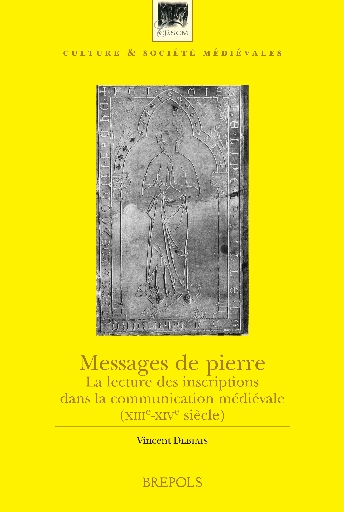
Messages de pierre
show More to view fulltext, buy and share links for:Messages de pierre show Less to hide fulltext, buy and share links for: Messages de pierreLa culture écrite médiévale se caractérise par la diversité et l’originalité de ses formes et de ses fonctions. Au sein de cet éventail très large des pratiques de l’écriture, les inscriptions tracées sur la pierre, le bois, le verre ou le métal dans le but de communiquer un message pour la plus longue durée occupent une place particulière bien qu’encore assez mal définie aujourd’hui. Née en France à la fin des années 1960, l’épigraphie médiévale s’est jusqu’à présent principalement attachée au texte de l’inscription et à son contenu, en étudiant la forme des lettres, les sources de la composition et les informations transmises par le document.
Si elles ont permis des avancées considérables dans la connaissance des formes de l’écriture épigraphique, ces études, en se concentrant sur le contenu du texte, ont isolé le document de sa fonction réelle dans la communication médiévale. Le public des inscriptions, la façon dont il appréhende, par les sens et par l’esprit, le texte vu dans le paysage graphique quotidien, et l’utilisation qu’il peut en faire échappent encore pour beaucoup à la connaissance du médiéviste. C’est en posant l’inscription au cœur du système culturel médiéval et en essayant de déterminer sa place effective dans la transmission des informations que ce livre entend discuter la réalité de la fonction publicitaire du texte épigraphique et déterminer les modalités de lecture, de compréhension et d’utilisation de l’écriture exposée. Au tournant des xiii e-xiv e siècles, alors que se met en place une nouvelle culture écrite, définie par une diffusion plus profonde du texte dans la société médiévale, l’inscription devient un élément incontournable dans la ville et y joue des rôles très différents (affichage des décisions, commémoration des événements, structuration des espaces, affirmation des autorités) qui constituent autant d’occasions pour le public d’exercer sa familiarité avec l’écriture et de s’affirmer en tant que lecteur potentiel.
Docteur en histoire médiévale, ingénieur de recherche au CNRS spécialisé en analyse des sources anciennes et membre du Centre d’études supérieures de civilisation médiévale de Poitiers, Vincent Debiais est l’auteur depuis 2005 du Corpus des inscriptions de la France médiévale et participe aux activités de recherche du CESCM sur la culture écrite au Moyen Âge.
-
-
-
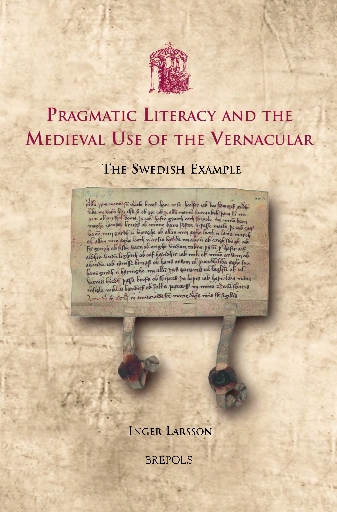
Pragmatic Literacy and the Medieval Use of the Vernacular
show More to view fulltext, buy and share links for:Pragmatic Literacy and the Medieval Use of the Vernacular show Less to hide fulltext, buy and share links for: Pragmatic Literacy and the Medieval Use of the VernacularBetween 1150 and 1400 Sweden was transformed from a society which was predominantly reliant on oral communication into a society which increasingly deployed writing. Latin, the traditional language of government and records, was gradually replaced by vernacular Swedish. The watershed moment in this process was the drafting of national and town laws in the 1350s, an event which established Swedish as the language of the judiciary and judicial records. From this period written documentation was gradually integrated into legal procedure.
Pragmatic Literacy argues that the Crown, the expanding bureaucracy, the editing of the laws in Swedish, and the laws’ demands for written documentation in everyday transactions were the main driving forces behind the development in medieval Sweden of lay literacy for practical purposes. The book demonstrates how the early use of writing by the royal administration and the writing of provincial laws in Swedish created “centres of literacy” from which literate ways of thinking and acting spread both geographically and socially. It further illustrates how literacy moved beyond the confines of the clerical elite, by exploring how different members of the laity adopted pragmatic literacy for private purposes. Pragmatic Literacy thus traces the history of pragmatic literacy in Sweden through the lens of the judicial and administrative archive.
Inger Larsson is professor of Swedish Language at the Department of Scandinavian Languages, Stockholm University.
-
-
-
Queritur utrum
show More to view fulltext, buy and share links for:Queritur utrum show Less to hide fulltext, buy and share links for: Queritur utrumCe volume présente le troisième volet d’une enquête sur la disputatio dans les universités médiévales. Le premier, paru en 1995, traitait la dispute à la Faculté des arts à Paris au XIIIe siècle ; dans le deuxième, paru en 2002, le champ géographique et chronologique était élargi aux facultés des arts en Europe occidentale jusqu’à la fin du moyen âge. Cette troisième partie propose une comparaison entre la disputatio dans les facultés des arts et celle pratiquée dans les autres facultés. Cette comparaison n’avait pas été faite lors de la publication du volume sur Les questions disputées et les questions quodlibétiques dans les Facultés de théologie, de droit et de médecine, paru en 1985 dans la collection Typologie des sources du Moyen Age occidental.
Comme dans les deux précédentes publications sur la disputatio, on trouvera ici la documentation nécessaire pour comprendre le caractère et le fonctionnement de cet outil intellectuel dans les diverses facultés des universités médiévales. Cette documentation est forcément limitée : le nombre de textes de questions disputées qui a été conservé est immense, seule une partie a été éditée et les manuscrits sont souvent difficiles à lire. Il a donc fallu faire un choix, guidé par les publications récentes et en espérant que les textes choisis sont représentatifs.
Comme dans le second livre de cette série (la disputatio dans les facultés des arts), le présent volume comprend en principe l’ensemble de la période médiévale, depuis l’apparition des questions disputées dans les diverses disciplines jusqu’au XVe siècle.
Une histoire plus générale, remontant plus haut dans le temps et se prolongeant plus tard, reste encore à faire. En attendant qu’il le soit, ce volume montre qu’avant la déchéance qu’elle a connue vers la fin du moyen âge, la disputatio, loin d’être une technique uniforme et figée, fut un formidable instrument de recherche et d’enseignement. C’est en grande partie grâce à elle que les intellectuels ont appris à analyser et à raisonner selon un modèle qui permettait de comprendre toutes les facettes d’un problème et d’aller toujours plus loin dans la recherche de la vérité.
-
-
-
Rois, reines et évêques. L'Allemagne aux Xe et XIe siècles
show More to view fulltext, buy and share links for:Rois, reines et évêques. L'Allemagne aux Xe et XIe siècles show Less to hide fulltext, buy and share links for: Rois, reines et évêques. L'Allemagne aux Xe et XIe sièclesL’Allemagne médiévale reste peu connue de nos jours. Pourtant, c’est une grande période de l’histoire germanique, marquée par la naissance de l’Empire, les particularités de l’Eglise impériale, la place des principautés au sein du royaume… La période ottonienne et salienne en particulier (Xe-XIe siècles) est un âge d’or pour le pouvoir des souverains et des évêques.
Le présent recueil propose d’introduire le lecteur dans la compréhension de cette époque en lui permettant de lire en traduction française (généralement pour la première fois) les Gestes des Saxons de Widukind de Corvey (livres 2 et 3), la plus ancienne vie de la reine Mathilde, la Chronique de Thietmar de Mersebourg (livres 3 et 4), la vie d’Henri II par Adalbold d’Utrecht, la vie de Conrad II par Wipo, les Gestes des évêques d’Eichstätt et une sélection de chartes germaniques de cette période.
-
-
-

Saint-Bénigne de Dijon en l'an mil, 'totius Galliae basilicis mirabilior'
show More to view fulltext, buy and share links for:Saint-Bénigne de Dijon en l'an mil, 'totius Galliae basilicis mirabilior' show Less to hide fulltext, buy and share links for: Saint-Bénigne de Dijon en l'an mil, 'totius Galliae basilicis mirabilior'Dans son histoire du monde, écrite vers 1030, Raoul Glaber dépeint l’église préromane de Saint Bénigne de Dijon comme “plus admirable que les basiliques de toute la Gaule” (totius Galliae basilicis mirabiliorem). Commencée autour de 1001 et consacrée en 1016 (l’église) et 1018 (la rotonde), cette abbatiale bénédictine, dont seule la crypte de la rotonde subsiste, relevait des traditions architecturales romaine, carolingienne et ottonienne. Elle fut construite à un moment-clé de l’histoire politique de la France et de la Bourgogne et peut être interprétée en fonction de l’idéologie de ses bâtisseurs, l’abbé Guillaume et l’évêque Brun de Langres. Il faut également la lire comme un cadre exceptionnellement bien conçu pour la dévotion monastique et la liturgie de Cluny telle qu’interprétée par Guillaume. Cet ouvrage se veut une interprétation visuelle, politique, liturgique et théologique de cette église étonnante de l’an mil.
Carolyn Marino Malone est professeur dans le département d’Histoire de l’art, University of Southern California, Los Angeles (USA). Elle est spécialiste d’architecture romane française et gothique anglaise. Son dernier livre s’intitule Façade as Spectacle: Ritual and Ideology at Wells Cathedral, Studies in Medieval and Reformation Traditions, vol. 102 (Leiden-Boston, 2004).
-
-
-
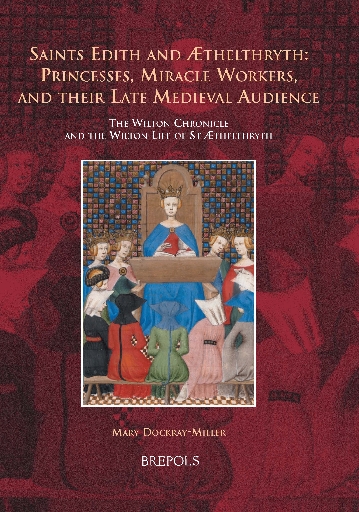
Saints Edith and Æthelthryth: Princesses, Miracle Workers, and their Late Medieval Audience
show More to view fulltext, buy and share links for:Saints Edith and Æthelthryth: Princesses, Miracle Workers, and their Late Medieval Audience show Less to hide fulltext, buy and share links for: Saints Edith and Æthelthryth: Princesses, Miracle Workers, and their Late Medieval AudienceSaints Edith and Æthelthryth: Princesses, Miracle Workers, and their Late Medieval Audience narrates the lives of two Anglo-Saxon princesses who were venerated as saints long after their deaths. St Edith, the daughter of King Edgar, was renowned as a patron of the arts and the church during her lifetime; her posthumous miracles included protection of Wilton Abbey and the English royal family. St Æthelthryth, who retained her virginity through not one but two royal marriages, also worked numerous miracles at her tomb at the Abbey of Ely. The poems, composed at Wilton Abbey in the early fifteenth century, allow us to see how late medieval religious women practised their devotion to early medieval women saints. The Middle English verse texts are presented here in the original and in translation with explanatory notes and glossary. A thorough introduction provides extensive contextualization and analysis of the two poems as well as description of the manuscript and its language and prosody. These primary source texts are important contributions to the study of English history, language, literature, religion, and women's studies.
-
-
-
Saints ermites en Limousin au XIIe siècle
show More to view fulltext, buy and share links for:Saints ermites en Limousin au XIIe siècle show Less to hide fulltext, buy and share links for: Saints ermites en Limousin au XIIe siècleLes biographies de saints ermites sont souvent négligées car ces textes comportent des longueurs qui lassent, voire des futilités qui irritent: autant de raisons qui en écartent le lecteur qui se dit sérieux. L’école positiviste qui voulut, avec raison souvent, réagir contre cette littérature trop facilement apologiste l'écarta parce qu'elle la croyait inutile et même dangereuse. Les érudits de cette école -souvent des clercs- qui, malgré tout, s'y intéressèrent, n'en retinrent que les cadres institutionnels et une échelle chronologique, résultats aussi indispensables qu'insuffisants puisqu'ils en négligeaient l'apport psychologique. Il est donc indispensable de relire ces œuvres hagiographiques afin de ne négliger aucun de leurs aspects.
Vécurent, à la fin du XIe et au début du XIIe siècle en terre limousine, quatre ermites dont la biographie de bon aloi fut écrite à la génération qui suivit leur mort. Ces documents permettent de connaître à la fois l'originalité de chacun d'eux et de préciser les traits communs de ce vaste mouvement.
Le premier arrivé fut Etienne de Muret dont les idéaux érémitiques sont de toute évidence à situer dans la mouvance de saint Nil de Rossano dont il connut les disciples lors d'un séjour qu'il fit en Calabre. C'est après une halte dans l'entourage de Milon, archevêque de Bénévent, et un court passage à la Curie romaine que ce fils du vicomte de Thiers en Auvergne s'installa vers 1076-1078 à Muret où il mourut en 1124. Il est le fondateur de l’Ordre de Grandmont.
Un peu plus tard, le Normand Gaucher choisit la solitude des environs d'Aureil près de Limoges. Il s’était placé très tôt sous la houlette bienveillante des chanoines de la cathédrale et fit par la suite une sorte de stage dans la congrégation des chanoines de Saint-Ruf, près d'Avignon. Il mourut en 1125.
Dans les mêmes années, un limousin "creusois" nommé Geoffroy, après des études à Tours, puis sans doute à Chartres, interrompit une carrière enseignante à Limoges pour se fixer au Chalard, sur les bords de l'Isle. Geoffroy mourut en 1140.
L'installation à Obazine du "corrézien" Etienne date des environs de 1120. A la différence des trois premiers, il n'avait pas reçu une instruction autre que celle exigée alors pour un prêtre de paroisse qu'il fut en ses débuts. Il fut ensuite apprenti-ermite, prit conseil de l’évêque de Clermont, un ancien abbé de La Chaise-Dieu et partit aussi consulter le prieur de La Chartreuse qui lui suggéra de s'affilier à l'Ordre de Cîteaux, ce qu'il fit en 1147. Il mourut en 1159.
-
-
-
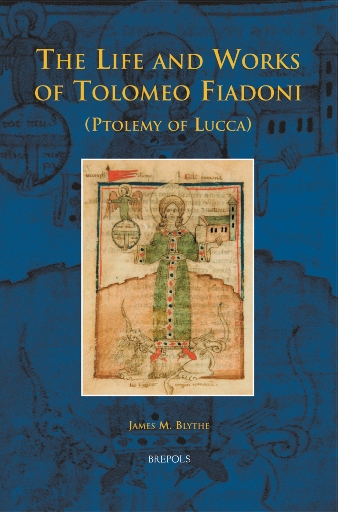
The Life and Works of Tolomeo Fiadoni (Ptolemy of Lucca)
show More to view fulltext, buy and share links for:The Life and Works of Tolomeo Fiadoni (Ptolemy of Lucca) show Less to hide fulltext, buy and share links for: The Life and Works of Tolomeo Fiadoni (Ptolemy of Lucca)Tolomeo Fiadoni (1236-1327) was one of the most remarkable of medieval writers. Living to almost one hundred years of age, Tolomeo bore witness to some of the most important events of the period. He studied and travelled with Thomas Aquinas and was elected Dominican prior in Lucca and Florence. He attended the saintly Pope Celestine V during Celestine’s doomed reign, lived at the papal court in Avignon, served in the households of two cardinals, and associated with the infamous Pope John XXII. At the age of eighty, Tolomeo was appointed bishop of Torcello in the Venetian Lagoon, where his superior, the Patriarch of Grado, subsequently excommunicated and jailed him.
Tolomeo is known today for his major contribution to republican political thought, most notably his continuation of Thomas Aquinas’s only political treatise. However, he also wrote treatises on imperial and ecclesiastical power, a commentary on the six days of creation, a massive Church history, and a European history from 1063 onward. Drawn from all known surviving sources, The Life and Works of Tolomeo Fiadoni is the first full-length study of Tolomeo’s life. It discusses each of his works, and addresses numerous problems of authorship and dating. Its companion volume, The Worldview and Thought of Tolomeo Fiadoni (Ptolemy of Lucca), provides an in-depth analysis of Tolomeo’s beliefs and thought.
-
-
-
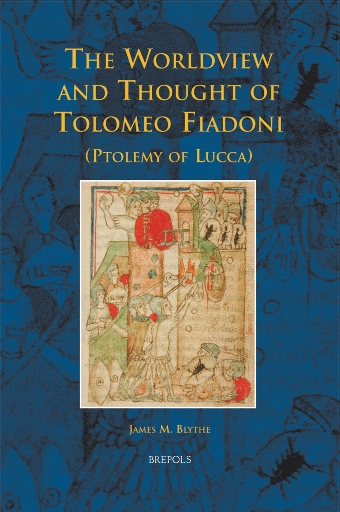
The Worldview and Thought of Tolomeo Fiadoni (Ptolemy of Lucca)
show More to view fulltext, buy and share links for:The Worldview and Thought of Tolomeo Fiadoni (Ptolemy of Lucca) show Less to hide fulltext, buy and share links for: The Worldview and Thought of Tolomeo Fiadoni (Ptolemy of Lucca)Tolomeo Fiadoni (1236-1327) was one of the most important political theorists and historians of the Middle Ages. He was central to developing a theory for the practices of Northern Italian republicanism and was hostile to kingship, portraying it as despotic and inappropriate for virtuous and freedom-loving people. He was the first writer to compare Aristotle’s examples of Greek mixed constitutions - Sparta, Crete, and Carthage - with the Roman Republic, the ancient Hebrew polity, the Church, and medieval communes, yet he remained a staunch defender of the absolute secular and spiritual monarchy of the pope.
Blythe explores various tensions in Tolomeo’s work that are often overlooked in scholarly treatments of him, and which derive from cultural preconceptions and the diverse influences on him: Aristotle, Augustine, apologists for papal power, his life in the Dominican Order, his educational experience with Thomas Aquinas, and his social position as a member of Northern Italy’s ruling class. These factors exerted contradictory influences on Tolomeo and led him to a sometimes unsuccessful intellectual struggle for consistency. This book is the first full-length study of Tolomeo’s thought and it gives full consideration not only to the political writings for which he is most known, but also to his historical and exegetical works. It is the companion to The Life and Works of Tolomeo Fiadoni (Ptolemy of Lucca).
-
-
-
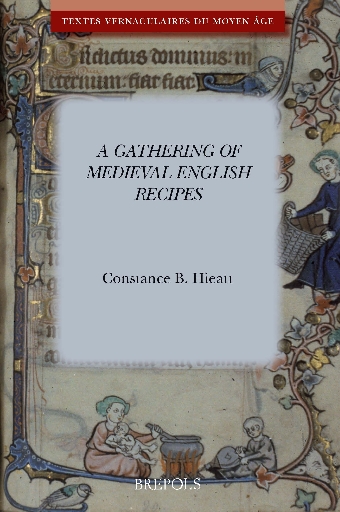
A Gathering of Medieval English Recipes
show More to view fulltext, buy and share links for:A Gathering of Medieval English Recipes show Less to hide fulltext, buy and share links for: A Gathering of Medieval English RecipesThis book is a collection of medieval English culinary recipes which have not been edited before. Some of them come from brief collections which have not been previously published, or are found in isolation or very small groups in manuscripts which do not contain such collections. Others come from collections which have been used, or viewed, primarily for collation, but which contain other recipes which had not yet been noted.
It was the author's object to gather together all the recipes which had not been edited and published, or are not currently being edited by others, to make the record of English recipes of this period as complete as possible. The volume concludes with a supplement to the recently published Concordance of English Recipes: Thirteenth Through Fifteenth Centuries, adding all the "new" recipes to that Concordance, except for a few which are so fragmentary as not to deserve listing.
-
-
-
A Supplement to Morton W. Bloomfield et al., 'Incipits of Latin Works on the Virtues and Vices, 1100-1500 A.D.'
show More to view fulltext, buy and share links for:A Supplement to Morton W. Bloomfield et al., 'Incipits of Latin Works on the Virtues and Vices, 1100-1500 A.D.' show Less to hide fulltext, buy and share links for: A Supplement to Morton W. Bloomfield et al., 'Incipits of Latin Works on the Virtues and Vices, 1100-1500 A.D.'This volume advances the utility of Morton W. Bloomfield et al., Incipits of Latin Works on the Virtues and Vices, 1100-1500 A.D. (1979) by correcting, supplementing, adding to, or deleting information in this commonly-used reference guide to medieval Latin manuscripts of an ethical or pastoral character. Careful attention is paid to updating the identification of texts and their authorship and references to critical editions of works on the vices and virtues. Many new manuscript witnesses and over 500 new texts are added to those found in the earlier catalogue and a number of short texts on vices and virtues are edited here for the first time.
Richard Newhauser, Arizona State University-Tempe, is the author of Sin: Essays on the Moral Tradition in the Western Middle Ages (2007) and editor of The Seven Deadly Sins: From Communities to Individuals (2005) and In the Garden of Evil: The Vices and Culture in the Middle Ages (2005).
István Bejczy is the author of The Cardinal Virtues in the Middle Ages: A Study in Western Moral Thought from the Fourth to the Fourteenth Centuries (forthcoming) and editor of several volumes of articles on medieval virtue ethics.
-
-
-
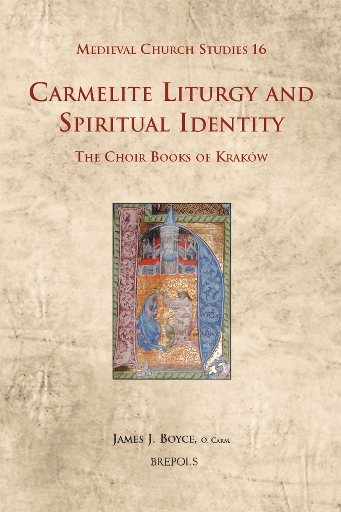
Carmelite Liturgy and Spiritual Identity
show More to view fulltext, buy and share links for:Carmelite Liturgy and Spiritual Identity show Less to hide fulltext, buy and share links for: Carmelite Liturgy and Spiritual IdentityThis book discusses the significance of the Carmelite liturgy as practised in the Kraków convent over a period of some four hundred years. Specifically, it examines the liturgical contents of five medieval Carmelite choir books from the Kraków convent and another choir book from this collection which is now in Wroclaw, and discusses their contents (especially their significant feasts), in terms of the Carmelite order's historical self-understanding and established liturgical tradition. Carmelite Liturgy and Spiritual Identity outlines the role of liturgy in the life of the Kraków convent and in relationship to the apostolic activity of these mendicant friars. It argues that the order's unique liturgical tradition, one which remained distinctive even after the Council of Trent, was crucial to their self-understanding. It also articulates how the liturgical practices of the Kraków Carmelites made a significant contribution to the spiritual life of the city and its people.
-
-
-
Construire une société seigneuriale
show More to view fulltext, buy and share links for:Construire une société seigneuriale show Less to hide fulltext, buy and share links for: Construire une société seigneurialeEntre la fin du IXe et le milieu du Xe siècle, de nouvelles formes de pouvoir émergent en Occident, au sein d’un monde encore carolingien : un bouleversement majeur qui marque la genèse de la société seigneuriale. C’est cette période charnière que permet d’appréhender la figure d’Odon, deuxième abbé de Cluny, grand aristocrate, réformateur acharné et intellectuel de haut niveau.
L’itinéraire d’Odon (né vers 879, mort en 942), acteur de premier plan et témoin privilégié de son temps, reflète en effet la profonde transformation des structures aristocratiques alors à l’œuvre, tandis que l’ecclésiologie originale élaborée par l’abbé réformateur, avec un bagage qui demeure celui du lettré carolingien, définit les conditions et les contours d’une société d’un type nouveau. L’objet de cet ouvrage est bien de cerner au plus près la recomposition des rapports de force et les ressorts idéologiques d’un monde où le champ des possibles est largement ouvert. À quelles stratégies, à la fois sociales et discursives, un puissant aristocrate entré au service de Dieu a-t-il recours pour fonder et asseoir son pouvoir ? À un moment où évoluent les cadres de la société et où se bâtissent de nouvelles légitimités, de quelle manière un réformateur justifie-t-il la domination des moines sur l’ensemble du corps social ? Il s’agit en d’autres termes d’analyser comment un abbé du Xe siècle construit, tant sur le plan des pratiques sociales que des représentations, une certaine société seigneuriale.
Isabelle Rosé, agrégée et docteur en histoire, a réalisé ce travail dans le cadre du Centre d’études Préhistoire, Antiquité, Moyen Âge, unité mixte de recherche de l’université de Nice-Sophia Antipolis et du CNRS. Elle est à présent maître de conférences à l’université de Haute-Bretagne - Rennes 2.
-
-
-

Doubt in an Age of Faith
show More to view fulltext, buy and share links for:Doubt in an Age of Faith show Less to hide fulltext, buy and share links for: Doubt in an Age of FaithDoubt in an Age of Faith presents the first systematic scholarly treatment of doubt and its cultural role in Latin Christendom during the long twelfth century (c. 1060-1220). Flanagan rejects the popular image of the credulous Middle Ages, showing the centrality of doubt to intellectual and religious discourses of the period. However this wide-ranging investigation is not confined to matters of faith or religious scepticism. Examining doubt as both a psychological and social phenomenon, Flanagan explores how medieval people experienced uncertainty, and the different ways in which they sought to resolve it. Both positive and negative aspects of doubt are discussed. Her proposal that the rejection of doubt as a tool of intellectual inquiry, coupled with the quest for ever-greater certainty contributed to the closing of minds that marked the thirteenth century, has obvious implications for our own times.
-
-
-
En la senda del 'Florilegium Gallicum'
show More to view fulltext, buy and share links for:En la senda del 'Florilegium Gallicum' show Less to hide fulltext, buy and share links for: En la senda del 'Florilegium Gallicum'Son numerosos los manuscritos conservados en la actualidad que contienen florilegios medievales de diversa naturaleza. Aquellos que reúnen extractos de autores clásicos revisten interés tanto para la edición crítica de las obras antiguas como desde el punto de vista de la tradición de dichas obras en la Edad Media. Estos florilegios constituyen un vínculo estrecho entre la Literatura Romana y la producción literaria medieval en tanto que son instrumentos de trabajo de los intelectuales en el Medievo.
En este volumen se realiza una introducción general a la cuestión de los florilegios medievales en tanto género y un acercamiento al uso que la Edad Media ha hecho de las auctoritates de la Literatura latina, prestando una atención especial al Florilegium Gallicum, que es, sin duda, uno de los más importantes florilegios de autores clásicos de la Edad Media, ya que reúne un notable conjunto de obras y autores de la Literatura latina, algunos de los cuales se conservan gracias a una transmisión manuscrita extremadamente reducida. El estudio de los florilegios medievales de poetas clásicos y concretamente el estudio del Florilegium Gallicum abre también un camino importante a las investigaciones dedicadas a la canción medieval ya sea de troveros o de goliardos, y es indispensable para comprender el sustrato clásico en el que se fundamenta la especulación de los grandes teóricos de la música, especialmente a partir del siglo XIII.
La naturaleza peculiar de los florilegios medievales plantea, además, interesantes cuestiones de crítica textual, que se discuten en este volumen, ofreciendo propuestas al respecto y un modelo de edición de este tipo de textos. A partir de los principios defendidos por la autora se realiza la edición de uno de los testimonios inéditos del Florilegium Gallicum: el manuscrito 150 conservado en el Archivo Capitular de Córdoba. El texto de este florilegio es también minuciosamente estudiado en lo que a su origen, datación, composición, estructura y utilización se refiere.
Beatriz Fernández de la Cuesta González es Doctora Europea en Filología Clásica por la Universidad Complutense de Madrid y ha publicado diversos trabajos sobre los florilegios latinos medievales y sobre el Florilegium Gallicum.
-
-
-
Faire le ciel sur la terre
show More to view fulltext, buy and share links for:Faire le ciel sur la terre show Less to hide fulltext, buy and share links for: Faire le ciel sur la terreFondée sur le décor peint remarquable et jusqu’ici méconnu de l’église Saint-Eutrope des Salles-Lavauguyon, la présente étude explore les fonctions des images hagiographiques monumentales des XI e-XII e siècles. L’élargissement du questionnement à d’autres édifices permet d’éclairer leur rôle et leur inscription dans l’espace culturel. Se concentrer sur un « lieu d’images » suppose de définir les cadres d’une réflexion méthodologique. Ce livre s’appuie sur une approche contextuelle des œuvres visuelles en changeant d’échelle au fur et à mesure de l’analyse. L’auteur met en lumière la singularité et l’inventivité des concepteurs de chaque image en la replaçant dans sa série, une série qui témoigne de la variété des occurrences du Haut Moyen Age au XII e siècle. Détailler chaque cycle narratif permet d’examiner la façon dont la matière hagiographique est traduite en images et d’observer la construction ou la reconstruction de la vita peinte, les rythmes et les temps du récit.
Chaque cycle hagiographique est étudié à l’aune des thèmes qui sous-tendent l’ensemble du décor. Se dessine ainsi l’acte de création qui a présidé à l’élaboration de celui du prieuré des Salles-Lavauguyon. Les intentions des commanditaires, des chanoines réguliers, se lisent entre les images qu’ils ont choisies et leur mise en œuvre. Une communauté canoniale qui se pense à travers son édifice et son décor et qui se positionne au sein de l’Eglise locale grâce aux images hagiographiques. Prendre pour objet ce prieuré et ses peintures invite à aborder la géographie canoniale du diocèse et son articulation avec les réseaux monastiques, la politique épiscopale, la réforme canoniale, l’instruction et la culture spirituelles mais aussi les enjeux de pouvoir, d’autorité et de territoire.
Le but de ce livre qui dépasse celui de la stricte monographie thématique est ainsi de contribuer à rendre compte de la richesse des mentalités médiévales.
Cécile Voyer a fait ses études au Centre d’Etudes Supérieures de Civilisation Médiévale de Poitiers. Elle est actuellement maître de conférences à l’Université Michel de Montaigne, Bordeaux 3.
-
-
-
Gouverner la ville au bas Moyen Âge
show More to view fulltext, buy and share links for:Gouverner la ville au bas Moyen Âge show Less to hide fulltext, buy and share links for: Gouverner la ville au bas Moyen ÂgeSa position au confluent de la Meuse et de la Sambre font de Namur un carrefour commercial et stratégique non négligeable. Cette situation n’échappe pas à Philippe le Bon lorsqu’il achète le comté de Namur en 1421 au dernier comte Jean III, affaibli par ses difficultés financières et dynastiques. L’exercice du pouvoir à la tête de cette ville moyenne à l’échelle des Pays-Bas bourguignons n’est donc pas sans intérêt pour certains Namurois, leurs familles et pour le prince.
Une fois l’organisation institutionnelle namuroise, sa mise en place progressive et ses pouvoirs examinés en profondeur, ce livre part à la rencontre des hommes qui composent l’échevinage, véritable clé de voûte du gouvernement urbain. Une vaste enquête prosopographique, basée sur un corpus de sources riche et varié, a permis de sortir de l’ombre ces marchands namurois qui comptent parmi les manans et habitans des plus riches de la ville et du comté. Elle éclaire les atouts dont ils disposent et les stratégies qu’ils mettent en place avec leurs familles pour assurer leur intégration et leur maintien au Cabaret. Une réalité transparaît presque à chaque page : la gestion de la ville de Namur est avant tout synonyme de collusion systématique des intérêts publics et privés. Cette domination des marchands et cette pratique du pouvoir n’ont jamais été contestée, ni par la communauté urbaine qu’ils représentent, ni par les artisans, grands absents de la scène politique namuroise, et encore moins par le prince.
Cet ouvrage, en plus d’éclairer les institutions, les hommes et leurs champs d’actions, met en évidence le jeu subtil qui unit les ducs de Bourgogne au patriciat namurois, “ancien et nouveau”, véritable réservoir fiscal pour des princes en mal d’argent. Plus largement, il montre la façon dont s’est effectuée l’intégration de la ville et du comté de Namur à l’Etat bourguignon : une intégration réussie, sans véritable opposition, avec peu d’investissements en hommes et en réformes institutionnelles, mais relativement fructueuse au regard de la taille de cette petite principauté à dominante rurale. La logique du profit guide à chaque instant les gouvernants namurois, qu’il s’agisse des échevins ou du prince.
Cet ouvrage a reçu le Prix Dexia d’histoire urbaine 2005.
Médiéviste, Isabelle Paquay consacre ses recherches et ses publications au pouvoir urbain et aux milieux dirigeants des villes du sud des Pays-Bas bourguignons. Elle est actuellement enseignante et chercheuse aux Facultés universitaires Notre-Dame de la Paix.
-