


Brepols Online Books Medieval Monographs Archive v2016 - bobar16mome

Collection Contents
61 - 80 of 273 results
-
-
Le 'questiones' di Radulfo Brito sull’ « Etica Nicomachea »
show More to view fulltext, buy and share links for:Le 'questiones' di Radulfo Brito sull’ « Etica Nicomachea » show Less to hide fulltext, buy and share links for: Le 'questiones' di Radulfo Brito sull’ « Etica Nicomachea »Radulfo Brito, oggi conosciuto e studiato principalmente per la sua produzione logica, è stato senza dubbio uno dei maestri in arti più influenti e fecondi tra la fine del XIII secolo e l'inizio del XIV. Commentatore di una parte notevole del corpus aristotelicum, i suoi scritti toccano tutti gli ambiti del sapere medievale. La maggior parte delle sue opere è, al giorno d'oggi, ancora inedita. Con il presente volume ci si propone di colmare in parte questa lacuna. Il commento di Radulfo all’Etica Nicomachea di Aristotele, scritto intorno al 1290, è un testo estremamente importante per la nostra conoscenza della produzione filosofica alla facoltà delle arti di Parigi e della ricezione della morale aristotelica nell’Occidente latino.
-
-
-
Lectura Erfordiensis in I-VI Metaphysicam, together with the 15th-century Abbreviatio Caminensis
show More to view fulltext, buy and share links for:Lectura Erfordiensis in I-VI Metaphysicam, together with the 15th-century Abbreviatio Caminensis show Less to hide fulltext, buy and share links for: Lectura Erfordiensis in I-VI Metaphysicam, together with the 15th-century Abbreviatio CaminensisThe aim of the present edition is to make two texts available which can throw some more light on the role of Aristotle's Metaphysics in 14th-15th academic teaching. One of them contains part of an early (hitherto unknown) version of John Buridan's Questions on Metaphysics, the other is a 15th century abbreviation of precisely this early version. Remarkably, both texts belong to the East European tradition of Buridan's works, which is the more interesting as they testify to the master's earlier activities as a Parisian teacher on the subject of metaphysics. In particular, they elucidate Buridan's ongoing semantic approach to matters of metaphysics and ontology as well as his attitude to Aristotle's authority.
L.M. de Rijk (1924) is emeritus professor of Ancient and Medieval Philosophy of Leiden University. He was a member of the Dutch Parliament (Senate 1956-1991) and is a member of the Royal Netherlands Academy of Sciences (KNAW}. He is the author of a large number of publications, particularly on ancient and medieval philosophy.
-
-
-
Les chartes des comtes de Saint-Pol (XIe-XIIIe siècles)
show More to view fulltext, buy and share links for:Les chartes des comtes de Saint-Pol (XIe-XIIIe siècles) show Less to hide fulltext, buy and share links for: Les chartes des comtes de Saint-Pol (XIe-XIIIe siècles)Le présent volume contient l’édition critique de 384 chartes promulguées par les comtes de Saint-Pol avant 1300. Il complète la thèse de doctorat consacrée par Jean-François Nieus au comté du même nom (Un pouvoir comtal entre Flandre et France. Saint-Pol, 1000-1300, Bruxelles, 2005). Le comté de Saint-Pol est une seigneurie de frontière apparue vers l’an mil aux confins de la Flandre, de l’Artois et de la Picardie. Au terme de son développement territorial, il s’étirait sur environ 80 kilomètres depuis la source de la Lys jusqu’au cours moyen de la Somme ; autour de son noyau primitif, le Ternois géographique, sont venues s’agréger les seigneuries artésiennes d’Aubigny-en-Artois et Bucquoy, ainsi que les châtellenies d’Encre (Albert) et Lucheux en Amiénois. Ses bâtisseurs - le lignage des Candavène, relayé après 1205 par les seigneurs champenois de Châtillon-sur-Marne - n’ont joué qu’un rôle discret sur la scène princière du nord de la France, mais sont néanmoins parvenus à construire une autorité régionale forte et durable. Les chartes comtales ici rassemblées témoignent de cet effort. Adressées à une centaine de destinataires différents, tant ecclésiastiques que laïques, elles montrent les comtes dans l’exercice de leurs fonctions de seigneurs féodaux, de grands propriétaires fonciers, de protecteurs des églises et des pauvres, de membres éminents de la classe aristocratique. Mais autant et plus encore que le pouvoir des comtes, c’est la société rurale que ceux-ci prétendent régir que le corpus édité révèle à l’historien, dans ses aspects les plus variés.
-
-
-
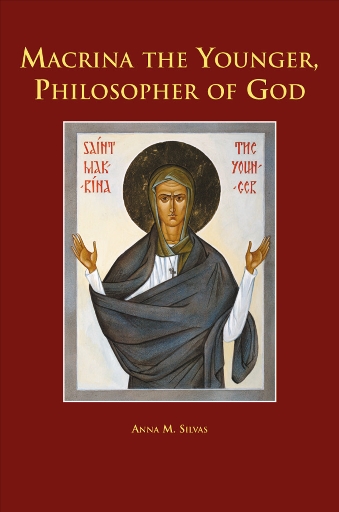
Macrina the Younger
show More to view fulltext, buy and share links for:Macrina the Younger show Less to hide fulltext, buy and share links for: Macrina the YoungerThis book presents St Macrina the Younger (c. 327-379), eldest sister of Ss Basil the Great and Gregory of Nyssa. All the sources of Macrina's life are gathered together, translated afresh into English, and provided with up-to-date introductions and notes. Documents include: Testimonies of St Basil, St Gregory Nazianzen's epigrams on Macrina and her siblings; Gregory of Nyssa's letter 19 which appears in English for the first time; The Life of Macrina, a jewel of fourth-century Christian biography; and the dialogue On the Soul and Resurrection in which Macrina appears as the Teacher expounding Christian doctrine with reasoned argument. The introduction shows how Macrina gradually changed the family household of Annisa into the proto-monastic community that became model of the monasticism that has come down under Basil's name. A specially commissioned icon, a map of Central Anatolia, and a report of the author's expeditions to ancient Pontus are included.
'In contrast with those works that seek to translate the ancient texts into colloquial English with a pedestrian tone, Silvas' translations have a grand and noble quality about them that is fully fitting Gregory's rhetoric and that conveys to the reader the seriousness of the lofty subject. Silvas does not "over translate"; her translation preserves those points of ambiguity in Nyssen's writing that should be resolved (if possible) not in the translation itself but in scholarly debate'.
Warren Smith, Duke University.
-
-
-
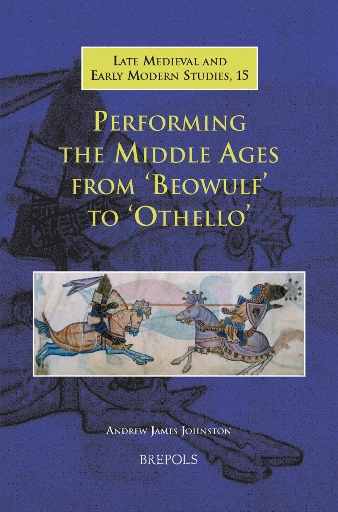
Performing the Middle Ages from 'Beowulf' to 'Othello'
show More to view fulltext, buy and share links for:Performing the Middle Ages from 'Beowulf' to 'Othello' show Less to hide fulltext, buy and share links for: Performing the Middle Ages from 'Beowulf' to 'Othello'Performing the Middle Ages from ‘Beowulf’ to ‘Othello’ traces the dialogic nature of the relationship between the Middle Ages and modernity. Arguing that modern beliefs in the alterity of the Middle Ages stem from the Middle Ages’ own processes of self-representation, Johnston explores varieties of nostalgia through a wide selection of texts. This volume spans an extensive chronological period with a view to demonstrating how our notions of the medieval have been crucially informed by the past itself. The study is focused on works which stage that popular literary archetype - the nostalgic figure of the aristocratic warrior - and argues that it is this image that provides a structural model for so many modern perspectives on the Middle Ages. And yet, in the Middle Ages this model was being deconstructed as it was also being generated. By moving from the self-consciously archaic heroism of Beowulf to the scathing comment on chivalric narrative presented in Chaucer’s ‘Knight’s Tale’, Johnston’s analysis offers an intriguing insight into the way medieval texts engage in a continual aesthetic and ideological critique of their own cultural moment. Using Sir Gawain and the Green Knight and the Alliterative Morte Arthure as examples of an incisive critique of the cult of subjectivity and of a highly self-conscious desire for tradition, Johnston extends his analysis to the early seventeenth century, and explores the ways in which Shakespeare’s Othello brilliantly deconstructs the very concept of ‘Renaissance Man’. With its interest in issues of subjectivity, textual performance, and the ideological self-awareness of medieval culture, Performing the Middle Ages provides a scholarly and compelling investigation into the Middle Ages’ ability both to understand itself and to shape (post)modern notions of the medieval.
-
-
-
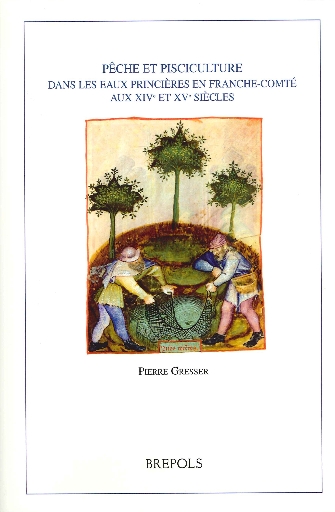
Pêche et pisciculture dans les eaux princières en Franche-Comté aux XIVe et XVe siècles
show More to view fulltext, buy and share links for:Pêche et pisciculture dans les eaux princières en Franche-Comté aux XIVe et XVe siècles show Less to hide fulltext, buy and share links for: Pêche et pisciculture dans les eaux princières en Franche-Comté aux XIVe et XVe sièclesParmi tous les éléments qui composaient le domaine des comtes de Bourgogne au bas Moyen Âge, les eaux vives et les étangs formaient un ensemble non négligeable, le poisson d’eau douce étant particulièrement recherché. C’est pour mieux mettre en valeur cette partie spécifique de ses propriétés en Franche-Comté que le duc-comte Eudes IV (1330-1349) créa un office nouveau : la gruerie, chargée d’administrer et de gérer les eaux et forêts domaniales.
La comptabilité de l’institution révèle que les rivières ne furent pas toutes prises en charge par le gruyer, d’où l’examen des comptes des autres officiers domaniaux. Dans tous les cas, les eaux vives donnèrent lieu à des amodiations, dont seuls les amodiataires et les revenus sont connus. Le recours aux chartes de franchises permet de mieux percevoir les rapports entre les sujets du prince et le milieu aquatique.
Des étangs les textes décrivent avec précision la structure, la pêche et la vente du poisson. Parmi les réserves piscicoles, il y avait des plans d’eau destinés à la reproduction, d’où le titre de pisciculture utilisé dans le titre de ce livre.
L’ouvrage se termine par une analyse des « mesus » (délits) perpétrés dans les eaux comtales, curieusement inclus dans le poste des « amendes des bois banaux ».
Au total cette étude forme le second volet d’un triptyque consacré aux eaux et forêts princières dans le comté de Bourgogne aux XIVe et XVe siècles. Elle fait suite logiquement à la description de l’office de gruerie en montrant son application aux eaux courantes et " stagnantes " (les étangs), c’est-à-dire deux milieux halieutiques très différents puisque le premier, à l’état naturel, s’oppose aux réserves piscicoles construites par les hommes.
-
-
-
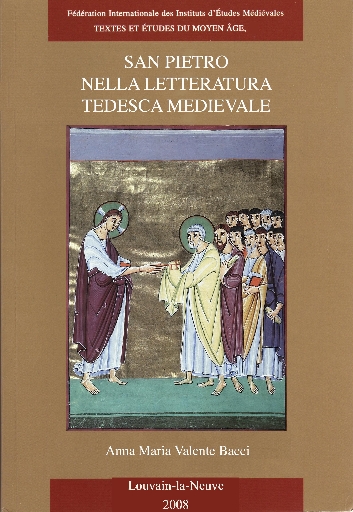
San Pietro nella letteratura tedesca medievale
show More to view fulltext, buy and share links for:San Pietro nella letteratura tedesca medievale show Less to hide fulltext, buy and share links for: San Pietro nella letteratura tedesca medievaleNella letteratura tedesca medievale la figura di Pietro assume un ruolo primario per tutto il medioevo fin dalle origini. Gli stretti rapporti che univano la Chiesa tedesca a Roma ed ai suoi pontefici, il riconoscimento del primato petrino e papale avevano portato a considerare il patrocinio di san Pietro superiore a quello di qualsiasi altro santo, all’affermazione ed espansione del culto dell’apostolo, alla sua celebrazione in una molteplicità di testi di vario genere. Questa monografia si propone di ricostruire l’immagine di Pietro attraverso l’analisi di testimonianze letterarie in volgare “tedesco”, composte nell’arco di tempo compreso tra i secoli IX-XIV. Nei testi della fase più antica, il tentativo di conciliare i due sistemi di valori, cristiano e germanico, indusse a connotare le prerogative con elementi che descrivono il rapporto fra Gesù e i discepoli secondo i termini della Gefolgschaft germanica. Nei testi del periodo medio si mettono in rilievo la funzione ecclesiale e la trasmissione del potere di legare e sciogliere da Pietro al papa, ai vescovi ed ai sacerdoti tutti. Permane la tendenza a giustificare i rinnegamenti di Pietro, 'necessari' er mostrare il legame inscindibile tra perdono e pentimento, per dare speranza all’uomo circa l’incommensurabilità della misericordia divina. Si affianca, inoltre, la figura del discepolo con quelle dell’apostolo, del taumaturgo e del martire. Il libro fornisce un contributo essenziale alla ricostruzione delle modalità con cui la complessa figura di san Pietro venne recepita in area tedesca, mettendo così in luce aspetti della sua personalità finora trascurati.
Anna Maria Valente Bacci, professore di Filologia germanica presso l’Università degli Studi della Tuscia (Viterbo), ha svolto la sua attività scientifica e didattica anche presso le Università di Roma La Sapienza e Roma Tre. Ha concentrato i suoi studi soprattutto sulla letteratura omiletica e leggendaria di area inglese e tedesca. Sullo stesso argomento ha scritto un contributo su La figura di san Pietro nelle prediche tedesche medievali, curando anche la pubblicazione degli Atti del Convegno su La figura di san Pietro nelle fonti del Medioevo (Textes et Études du Moyen Âge 17, Louvain-la-Neuve, 2001)
-
-
-
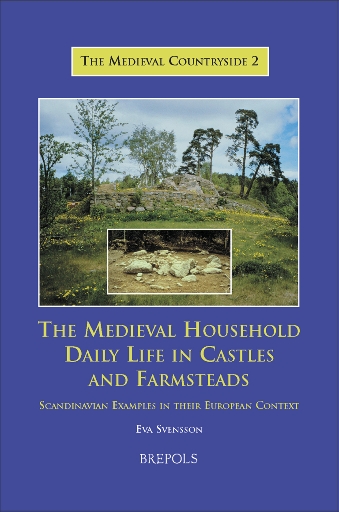
The Medieval Household: Daily Life in Castles and Farmsteads
show More to view fulltext, buy and share links for:The Medieval Household: Daily Life in Castles and Farmsteads show Less to hide fulltext, buy and share links for: The Medieval Household: Daily Life in Castles and FarmsteadsRecent archaeological excavations in Scandinavia provide us with a fascinating insight into the household and its function as a social focus for people of different medieval social estates. This book investigates four excavated Swedish sites - the castles of Saxholmen and Edsholm, and the rural settlements of Skramle and Skinnerud - in order to juxtapose the daily life of nobles and peasants. The author argues that the practices of everyday life revealed by these sites offer new insights into social traditions, mentalities, and cultural patterns. In particular, she asserts that notwithstanding the huge social gulf between the peasantry and the nobility in medieval Scandinavia, the two social groups shared some fundamental experiences which point to a common cultural milieu. In turn, the author uses daily life as a prism for addressing the formation of common European cultural traits during the medieval period by comparing these excavations with material from comparable sites in Central and Western Europe. By means of this comparison, the author questions the degree to which we may talk about a process of ‘Europeanization’ taking place in this era.
-
-
-
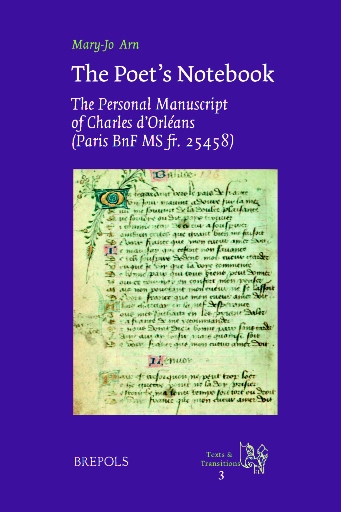
The Poet's Notebook
show More to view fulltext, buy and share links for:The Poet's Notebook show Less to hide fulltext, buy and share links for: The Poet's NotebookThis study of Charles d'Orléans's personal manuscript of his poetry - the first in nearly a century - paves the way not only for a new edition of the duke's œuvre (by Mary-Jo Arn, John Fox, and R. Barton Palmer) but for a new view of it. Following the first complete modern description of the manuscript, this study reconstructs the history of the manuscript, copying layer by copying layer. Codicological observations supplemented with palaeographical, historical, art-historical, and textual information reveal the approximate sequence of the manuscript’s composition, which in turn allows a re-dating of the manuscript and some of the poems in it. Charles saw lyric form differently than did his predecessors and contemporaries, a view made manifest in the poet’s own numbering of his poems. He mixed his complaintes with ballades and his rondels with chansons, each pair of forms in a numbered series, but never presenting the longer alongside the shorter forms. The analysis of the manuscript’s construction corrects the current physical disorder of the later chansons and rondels, as well as that of the ‘En la forest de longue actente’ series (including the lyric omitted from the standard edition) and re-evaluates the handful of English poems in the manuscript. In the end, we come to understand the relationship between the visual ‘messiness’ of the manuscript and the poet’s strong concept of lyric order. The technical aspects of the study are clarified by many tables and fascimile pages; the interactive cd contains an index of first lines that can be sorted in various ways to reveal a variety of kinds of manuscript relationships.
-
-
-
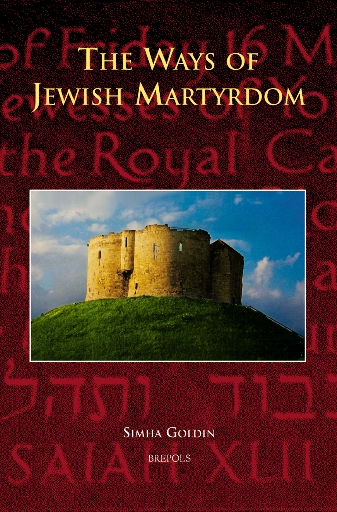
The Ways of Jewish Martyrdom
show More to view fulltext, buy and share links for:The Ways of Jewish Martyrdom show Less to hide fulltext, buy and share links for: The Ways of Jewish MartyrdomJewish martyrdom in the Middle Ages is a most intriguing social, cultural, and religious phenomenon. It was stimulated by ancient Jewish myths, and at the same time it was influenced by the Christian environment in which the Jews lived and operated. The result was a unique and unprecedented event in which the Jews did not simply refuse to convert to Christianity; they were ready to kill themselves and their children so they would not be forced to convert. The Ways of Jewish Martyrdom discusses the phenomenon of Jewish Martyrdom in medieval Germany, northern France, and England from the time of the First Crusade (1096) until the mid-fourteenth century (that is, the time of the ‘Black Death’), in light of modern research and with ample use of hitherto-neglected primary sources. In order to understand the unique phenomenon of Jewish martyrdom, the various Jewish and Christian antecedents that might have influenced the notion of Jewish martyrdom in the Middle Ages need analysis. The texts on which the analysis is based are various, ranging from chronicles through memorial books to liturgical materials and Piyyut. The last part of the book reviews the development of this phenomenon after the fourteenth century and delineates the essential changes and transformations therein at the dawn of the early modern period and beyond.
-
-
-
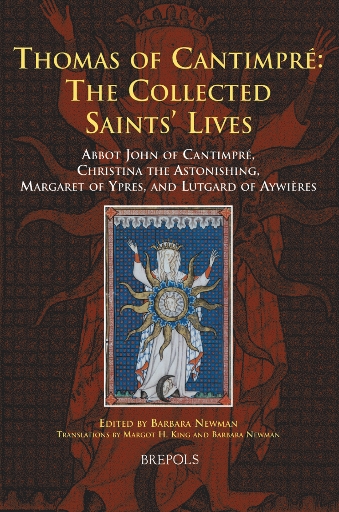
Thomas of Cantimpré: The Collected Saints' Lives
show More to view fulltext, buy and share links for:Thomas of Cantimpré: The Collected Saints' Lives show Less to hide fulltext, buy and share links for: Thomas of Cantimpré: The Collected Saints' LivesThe Dominican Thomas of Cantimpré (c. 1200-c. 1270) was a key figure in the 'evangelical awakening' of the thirteenth century. A prolific hagiographer, he lauded such diverse subjects as the abbot and apostolic preacher John of Cantimpré; the teenaged ascetic Margaret of Ypres, an urban recluse who died at twenty; Lutgard of Aywières, a Cistercian nun and mystic; and the theatrical, mentally troubled Christina 'the Astonishing' of Sint-Truiden. Thomas had few peers in portraying the ritual theatre of penance. He gives us such memorable scenes as a naked moneylender led out of a pit by a rope, a formerly rapacious prince kissing his peasants’ feet as he restores their stolen goods, St Christina leaping into fires and boiling cauldrons to save souls in purgatory, and the deceased Pope Innocent III in agony, begging St Lutgard for her prayers. In this volume readers will find all four lively and eventful lives between the same covers for the first time. The Life of Abbot John of Cantimpré has been newly translated by Barbara Newman, who has also supplied a new introduction. The other three Lives are revised reprints from Margot H. King's Peregrina Translations Series.
-
-
-
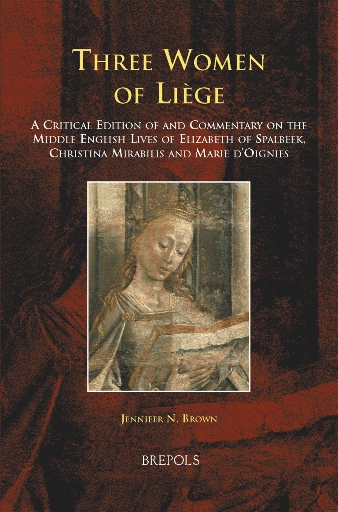
Three Women of Liège
show More to view fulltext, buy and share links for:Three Women of Liège show Less to hide fulltext, buy and share links for: Three Women of LiègeElizabeth of Spalbeek, Christina Mirabilis, and Marie d'Oignies were three of the famous late twelfth-/early thirteenth-century 'holy women' from the region of Brabant and Liège: their life stories (written in Latin by Philip of Clairvaux, Thomas of Cantimpré, and Jacques of Vitry) were read throughout later medieval Europe, and Margery Kempe modelled her Book, and her life, upon Marie’s. The Latin lives of these beguine saints were not well known in England, but they were translated into English in the fifteenth century, and survive in a single manuscript together in Oxford, Bodleian Library, Douce 114.
Three Women of Liège is the first critical edition of these Lives, which represent some of the only evidence of English interest in continental female mysticism. This edition includes an introduction that discusses the role of the manuscript in England and three essays that analyze the roles of these beguines in their Low Countries home of Liège along with the English reception of their lives. The edition itself is also extensively annotated and glossed, making it accessible to any scholar of English medieval literature.
-
-
-
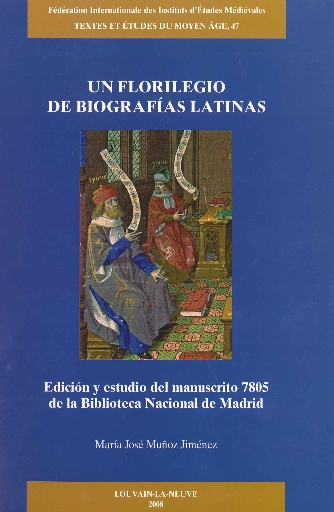
Un florilegio de biografías latinas
show More to view fulltext, buy and share links for:Un florilegio de biografías latinas show Less to hide fulltext, buy and share links for: Un florilegio de biografías latinasEl manuscrito 7805 de la Biblioteca Nacional de Madrid contiene un florilegio de biografías latinas que ofrece excerpta de Quinto Curcio, del De vita Caesarum de Suetonio, de la Historia Augusta y del Ab urbe condita de Tito Livio. Esta selección de obras de la Antigüedad se acompaña con extractos del De vita et moribus philosophorum erróneamente atribuido a Walter de Burley y de la versión latina realizada por A. Travesari del De vita philosophorum de Diógenes Laercio.
Varias razones aconsejan el estudio de este manuscrito: por una parte, es un autógrafo realizado por una mano hispana en el siglo XV del que no se conocen otras copias; por otra, presenta una producción de un género típicamente medieval como es el del florilegio, y, a la vez, acoge una semblanza de biografías, género recuperado en el Renacimiento. La obra contenida en el ms. 7805 se muestra, pues, como un producto propio de esa época tan discutida de ‘transición’ del Medievo al Renacimiento en la España cuatrocentista.
María José Muñoz Jiménez es Catedrática de Filología Latina en la Universidad Complutense de Madrid. Desde su Tesis Doctoral ha trabajado sobre los manuscritos latinos conservados en España. Es autora, además, de diversos trabajos de Literatura Latina y Tradición Clásica así como de Lexicografía Latina Medieval.
En la actualidad es directora de un Grupo de Investigación de la Universidad Complutense dedicado al estudio de los florilegios latinos conservados en las bibliotecas españolas.
-
-
-
Vera philosophia
show More to view fulltext, buy and share links for:Vera philosophia show Less to hide fulltext, buy and share links for: Vera philosophiaThis volume includes a collection of reworked articles which the author, during the last twenty years, dedicated to the origins and conditions constitutive of Christian philosophical-theological thought. From the earliest centuries of the Christian era, human reason was submitted to a particular formal conditioning, in so far as it was necessarily obliged to confront the contents of a divine revelation recognized as necessarily ‘true’. The medieval Latin scholar was induced by the social and cultural peculiarities of his time to confront a model of thought which imposes a decisive subordination of natural knowledge - demonstrated to be imperfect and inconclusive - to the certainties assured by the faith. The production of this model of philosophia, significantly different from the dominant paradigms in the classical period, rooted itself in the critical redimensioning of reason which Cicerointroduced into the West. Departing from the observation of the failure of the philosophical aspirations of antiquity, the Christian intellectuals effected an operative ‘overturning’ of the conditions of veridical knowledge.
The new wisdom was not entirely the result of religion interfering in the field of rational science, but it was shaped by a conscious ‘conversion’ of the philosophers and reached fulfillment under two principles: faith, which requires earthly knowledge in order to defend itself from misunderstandings and heresies; and reason, which allows itself to draw upon supernatural revelation for the possession of regulatory principles which guide it in the study of natural things.
This book investigates the development of this approach during the course of the centuries which in the West precede the rediscovery of Aristotelian epistemology: from Augustine to Boethius, from John Scottus Eriugena to Anselm of Aosta. It concludes by describing the return of this methodological approach, at the end of the Medieval Scholastic period, in the results of the anti-Aristotelian critique carried out by the men of the Renaissance through the recovery of a model of thought which had dominated in the Patristic and Early Medieval periods.
-
-
-
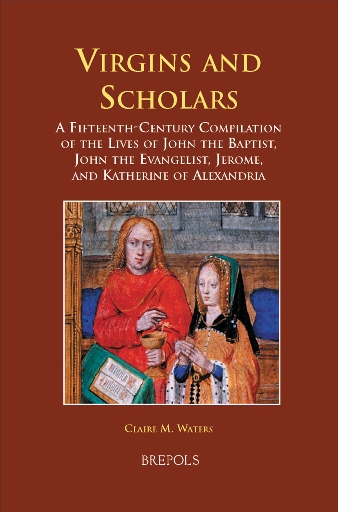
Virgins and Scholars
show More to view fulltext, buy and share links for:Virgins and Scholars show Less to hide fulltext, buy and share links for: Virgins and ScholarsThis collection of prose vitae of four virgins and scholars - Saints John the Baptist, John the Evangelist, Jerome, and Katherine of Alexandria - was almost certainly copied, and the texts very likely composed, at Syon Abbey or Sheen Charterhouse in the mid-fifteenth century. The lives cover a wide range of hagiographic modes, from hagiographic romance to affective, devotional appreciation to doctrinal treatise in narrative form. From the life of Jerome, composed by a monk for his aristocratic spiritual daughter, to the life of Katherine, reputedly translated for Henry V, to those of John the Baptist and John the Evangelist, which set their subjects in a recognizably Birgittine context, they show the interaction of men and women, lay and monastic, in the production of devotional literature. The diversity of their approaches and sources, moreover, shows the links between English dynastic politics and continental religious literature and spiritual traditions. As examples of translation practices, of monastic politics, and of religious instruction, these lives provide a window onto the devotional culture and literary worlds of fifteenth-century Europe.
-
-
-
Chanter en polyphonie à Notre-Dame de Paris aux 12e et 13e siècles
show More to view fulltext, buy and share links for:Chanter en polyphonie à Notre-Dame de Paris aux 12e et 13e siècles show Less to hide fulltext, buy and share links for: Chanter en polyphonie à Notre-Dame de Paris aux 12e et 13e sièclesLa polyphonie chantée au chœur de la cathédrale Notre-Dame de Paris à la fin du XIIe siècle a profondément marqué son temps et la virtuosité dont ont fait preuve les chanteurs dans le maniement de leur art, l’audace des scribes qui ont consigné l’organum dans une notation mesurée alors totalement inédite et l’intérêt que les intellectuels y ont porté, accordent à la polyphonie parisienne une place remarquable dans l’histoire de la musique occidentale.
Cet ouvrage explique comment les chantres de la nouvelle église de Paris ont réussi à exécuter ces majestueuses fresques qui enflammèrent l’imagination des médiévaux par leur étonnante splendeur et qui suscitent toujours autant d’enthousiasme de nos jours.
La musique médiévale entretient d’étroites relations avec les sciences du langage, puisant en elles les éléments de son développement technique et reposant sur une mémoire sans cesse exercée. Cette étude concerne l’ars musica dans ses relations avec les arts du trivium et la mémoire et veut ancrer les compositions dans le contexte intellectuel et éducatif qui a permis leur éclosion et leur développement. Elle montre ainsi comment les clercs de Notre-Dame ont utilisé des procédés rhétoriques d’ornementation afin d’élaborer un discours musical complexe et vise à comprendre dans quelles circonstances, comment et à quelles fins, les chantres ont composé une très haute manifestation de la Parole chantée.
-
-
-
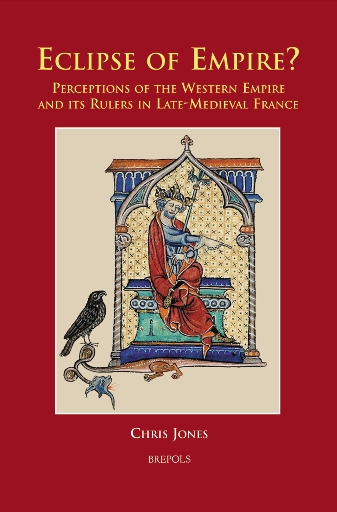
Eclipse of Empire?
show More to view fulltext, buy and share links for:Eclipse of Empire? show Less to hide fulltext, buy and share links for: Eclipse of Empire?Through an innovative and wide-ranging exploration this book examines the reality behind the assumption that the idea of a universal ruler became increasingly irrelevant in late-medieval Europe. Focusing on France in the century before the outbreak of the Hundred Years War, it explores attitudes towards the contemporary institution of the western Empire, its rulers, and its place in the world. Historians have tended to assume that there was little place for a universal Empire and its would-be rulers in late-medieval thought. Pointing to the rapid decline in the fortunes of the Empire after the death of the Emperor Frederick II, the rediscovery of Aristotle’s Politics by western Europeans, and the growing confidence – and burgeoning bureaucracy – of the kings of France and England, it is often argued that the claims to universal domination of men like the Emperor Henry VII, or indeed of popes like Boniface VIII, were becoming increasingly anachronistic, not to say a little ridiculous. Perceptions of the Empire undoubtedly changed in this period. Yet, whether it was in the cloisters of Saint-Denis, the pamphlets of Pierre Dubois, or even the thought of Charles d’Anjou, the first Angevin king of Sicily, this book argues that the Empire and its ruler still had an important, indeed unique, role to play in a properly ordered Christian society.
Chris Jones grew up in the Middle East before reading history at Durham. He now lives in New Zealand where he holds a lectureship in History at the University of Canterbury, Christchurch.
-
-
-
From Ducatus to Regnum. Ruling Bavaria under the Merovingians and Early Carolingians
show More to view fulltext, buy and share links for:From Ducatus to Regnum. Ruling Bavaria under the Merovingians and Early Carolingians show Less to hide fulltext, buy and share links for: From Ducatus to Regnum. Ruling Bavaria under the Merovingians and Early CarolingiansBavaria was a very important country during the early Middle Ages. Its territory included much of the modern German state but also reached across the Alps into what are now Austria and northern Italy. Bavaria thus occupied a strategic position between the rival kingdoms of the Franks and the Langobards. It was ruled by powerful dukes who had close political and personal relations with the Frankish rulers but who also vigorously resisted attempts to limit their own sovereignty. Bavaria’s independence was ended in 788 by Charlemagne who deposed his cousin, Duke Tassilo. Charlemagne’s son, the Emperor Louis the Pious, then established Bavaria as the first monarchy east of the river Rhine for his own son, Ludwig the German. This is the first full study of the entire evolution of Bavarian rule from the mid-sixth century into the early ninth century. It explores the changing strategies adopted by its dukes and then its first king to establish their authority and maintain their autonomy in face of evolving challenges to their rule. An Epilogue continues the story into the early tenth century.
Carl I. Hammer graduated from Amherst College (B.A.) and the University of Toronto (Ph.D.) and also studied at the universities of Munich, Chicago and Oxford. After a career in international business with Westinghouse and Daimler-Benz, he is now retired. He has published two other scholarly books on early-medieval Bavaria and numerous articles in academic journals in N. America and Europe. He lives in Pittsburgh.
-
-
-
La Joute, et autres oeuvres poétiques de Luigi Pulci, augmentées de pièces composées dans le cercle de Laurent de Magnifique
show More to view fulltext, buy and share links for:La Joute, et autres oeuvres poétiques de Luigi Pulci, augmentées de pièces composées dans le cercle de Laurent de Magnifique show Less to hide fulltext, buy and share links for: La Joute, et autres oeuvres poétiques de Luigi Pulci, augmentées de pièces composées dans le cercle de Laurent de MagnifiqueNé à Florence dans une famille noble, mais désargentée, Luigi Pulci (1432-1484) eut la chance d’être introduit très jeune dans le cercle des Médicis. Devenu un des familiers de Laurent le Magnifique, il vécut la vie d’un courtisan, remplissant les missions variées qu’on lui confiait. Mais il était avant tout poète et exerça à ce titre un « véritable magistère », car la poésie a joué à Florence, dans une communauté violente et conflictuelle, un rôle si fondamental pour le maintien du lien social qu’il nous est maintenant difficile de l’imaginer. A côté du Morgante, chef-d’oeuvre incontesté du poème heroï-comique à l’italienne, Pulci a été aussi l’auteur d’une production poétique vaste et diversifiée. Pratiquant tous les genres et tous les tons, de l’élégie à la satire, du burlesque à l’aulique, d’une incroyable virtuosité verbale, il nous fait partager la vie compliquée de la cour médicéenne et les moeurs de la Florence convulsive de cette deuxième moitié du quattrocento. Son attachement à un aristotélisme teinté d’avvéroisme, son refus du mysticisme esthétisant de Marsile Ficin offrent un témoignage précieux et souvent troublant de la pensée intellectuelle et religieuse de son temps. Il nous émeut enfin par l’expression à la fois pathétique et narquoise de son angoisse devant le mal, la solitude, la mort.
-
-
-
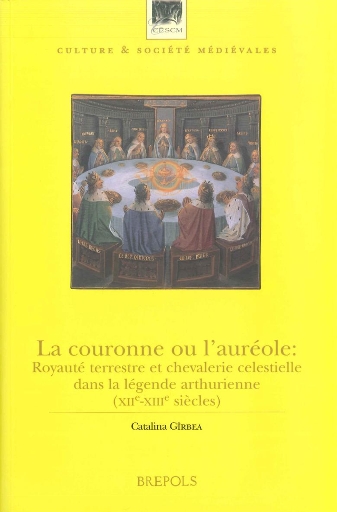
La couronne ou l'auréole
show More to view fulltext, buy and share links for:La couronne ou l'auréole show Less to hide fulltext, buy and share links for: La couronne ou l'auréoleLe roi Arthur et ses chevaliers fascinent les médiévaux. Ils connaissent un grand succès aux XII e et XIII e siècles, succès dont le secret réside dans la tension permanente qui s'établit entre deux systèmes de valeurs opposés: d'une part la royauté, centrée sur la Table Ronde, d'autre part la chevalerie celestielle, centrée sur le Graal, et qui met à l'honneur la vocation chevaleresque à la sainteté. Cette guerre des valeurs, chère à l'axiologie moderne, génère la complexité de la fiction arthurienne, et aussi celle des caractères qui y évoluent: les personnage qui ont enregistré le plus grand succès, précisément Lancelot ou Perceval, sont justement les indécis, systématiquement tiraillés entre les deux systèmes.
La royauté rend maîtrisable un expace saugrenu, peuplé de monstres et de fées. Le but est d'instaurer une sorte de pax arthuriana et de façonner le monde par la force des armes. À la violence environnante, la royauté riposte par la répression légitime. Sur ce canevas la chevalerie celestielle surgit comme valeur différente, mais aussi comme anomalie. Elle oppose la parole et la compréhension à la violence armée. Son émergence est une tentative d'aseptiser un monde qui tire son charme de son bellicisme et de son mystère.
C'est pourquoi le lecteur qui se penche sur les romans arthuriens se heurte continuellement à l'effondrement du sens dès qu'il essaie de leur donner une interprétation systématique. Cette incohérence est en grande partie le résultat du combat sourd des deux systèmes de valeurs concurrentiels, qui s'affrontent dans les profondeurs de la matière arthurienne comme les deux dragons sous la célèbre tour de Vertigier.
-