


Brepols Online Books Other Monographs Archive v2016 - bobar16moot

Collection Contents
11 results
-
-
Crónicas hispanas del siglo XIII
show More to view fulltext, buy and share links for:Crónicas hispanas del siglo XIII show Less to hide fulltext, buy and share links for: Crónicas hispanas del siglo XIIILa Crónica latina de los reyes de Castilla es una historia de los reinos de Castilla y León desde la muerte del conde Fernán González (970) hasta 1236. Transmitida sin nombre de autor, hoy día existe un cierto consenso en atribuirla al obispo Juan de Osma (†1246). No obstante, el estilo diferente de su última parte (capp. 60-75) sugiere la existencia de un segundo redactor que habría trabajado sobre materiales del autor principal. La Historia de la traslación de san Isidoro es un relato hagiográfico anónimo elaborado verosímilmente en el monasterio de San Isidoro de León a finales del s. xii o comienzos del xiii. Se ocupa del traslado de las reliquias del santo desde Sevilla a León en 1063, de los últimos años de Fernando I (†1065) y de los milagros acaecidos junto a la tumba del santo en tiempos de Alfonso VI (1065-1109). El Poema de Julia Rómula, en versos goliárdicos, es obra de Guillermo Pérez de la Calzada, abad de Sahagún (1129-1232), luego privado de su cargo y fallecido en la mayor pobreza en el monasterio de San Zoilo de Carrión. Centrado en la conquista de Sevilla en 1248 por Fernando III (1230-1252), el poema fue dedicado en 1250 al infante don Alfonso, el futuro Alfonso X el Sabio.
El texto latino en el que se basa este volumen apareció en la serie Corpus Christianorum Continuatio Mediaeualis bajo el título de Chronica Hispana saeculi XIII (CCCM 73). En los márgenes de esta traducción pueden encontrarse las referencias a las páginas correspondientes de la edición.
Luis Charlo Brea es profesor emérito en el Departamento de Filología Clásica de la Universidad de Cádiz. Juan Antonio Estévez Sola es profesor titular de Universidad en el Departamento de Filologías Integradas de la Universidad de Huelva. Rocío Carande Herrero es catedrática de Universidad en el Departamento de Filología Griega y Latina en la Universidad de Sevilla.
-
-
-
The Christology of Theodore of Tarsus
show More to view fulltext, buy and share links for:The Christology of Theodore of Tarsus show Less to hide fulltext, buy and share links for: The Christology of Theodore of TarsusTheodore of Tarsus served as archbishop of Canterbury for twenty-two years until his death in 690, aged eighty-eight. Because the only significant record we had of Theodore was that contained in Bede’s Historia, until recently it was very difficult to say anything about his life before this appointment, and even more difficult to determine anything about his thought. All of that changed in the last half of the twentieth century, when the discovery of some biblical glosses from Canterbury was revealed and the ensuing scholarship uncovered more of Theodore’s work than had previously been known. The Laterculus Malalianus is a text that benefited from treatment in this period. This present work examines the Laterculus for what it has to say about the person and work of Christ, and establishes that Theodore’s main theological inspiration was Irenaeus of Lyons and the concept of recapitulation, even while he cast his thought in language heavily drawn from the Syriac East, and Ephrem the Syrian in particular.
The volume represents a contribution to our understanding of the early medieval theological project in Britain, the transmission of eastern Mediterranean thought in the early medieval West and, ultimately, of the work of Theodore of Tarsus.
James Siemens continues to research theological questions arising from the encounter between the Greek and Semitic East and Latin West through the late antique and early medieval periods. He is an honorary research fellow at Cardiff University, and director of the nascent Theotokos Institute for Catholic Studies.
-
-
-
Commentary on Samuel and Kings
show More to view fulltext, buy and share links for:Commentary on Samuel and Kings show Less to hide fulltext, buy and share links for: Commentary on Samuel and KingsAndrew of St Victor († 1175) was an exegete of a rare quality who set out to expound Scripture according to its literal sense, guided by the examples of Jerome and Hugh of Saint Victor.
The books of Samuel and Kings had a great influence on the spirituality and theology of the Middle Ages. To the medieval mind, they were more than just historical accounts; they attested to an important period in God’s dealings with this world. When interpreted typologically, they could also relate to other periods in the history of salvation. Yet before such higher spiritual wisdom could be attained, students at the school of Saint Victor first had to study the scriptural texts at the most basic level of allegorical interpretation: their historical, or literal, sense. The Commentary on Samuel and Kings offers such a literal explanation and gives an opportunity to study Andrew at work: as a critical researcher, who used concepts of grammar, literary theory, and science to elucidate the text and who made Jewish exegesis available to Christian scholarship, and as a compiler. His meticulous scholarship on the literal sense of Scripture formed an important component of the curriculum of the school at Saint Victor, where thorough learning was seen as a preparation for mystical knowledge and spiritual understanding.
The source text of this volume appeared in the series Corpus Christianorum Continuatio Mediaeualis as Andreas de Sancto Victore - Expositio hystorica in librum Regum (CCCM 53A). References to the corresponding pages of the edition are provided in the margins of this translation.
Frans van Liere holds a Ph.D. in medieval studies from Groningen University and is Professor of History at Calvin College (USA). His critical edition of the latin text appeared in 1996.
-
-
-
The Christian Topography of Early Islamic Jerusalem: The Evidence of Willibald of Eichstätt (700-787 CE)
show More to view fulltext, buy and share links for:The Christian Topography of Early Islamic Jerusalem: The Evidence of Willibald of Eichstätt (700-787 CE) show Less to hide fulltext, buy and share links for: The Christian Topography of Early Islamic Jerusalem: The Evidence of Willibald of Eichstätt (700-787 CE)The Christian Topography of Early Islamic Jerusalem: The Evidence of Willibald of Eichstätt (700-787 CE) is an analysis of Willibald’s description of Jerusalem for the year 724-6, as contained in Hugeburc’s Vita Willibaldi, a text composed in Heidenheim (Germany) in 778. The work makes a fresh examination of the Christian landscape of Early Islamic Jerusalem, while describing various aspects of the Byzantine and Crusader city. Willibald’s account of the Holy City includes the Church of the Holy Sepulchre, the Church of Holy Sion, the pool of Bethesda, the Church of St Mary, the Church of the Agony and the Church of the Ascension. Particular attention is given to the monument of the Miraculous Healing (the legend of the Holy Cross), the portico of Solomon, the Jephonias Monument (the Dormition of Mary) and the Jerusalem circuit.
At the same time, the work explores the religious imagination of Willibald, including his perceptions of the holy sites, his image of Jerusalem and his understanding of the Christian life. Willibald’s image of the city as a far and distant place is supported by his attention to personal hardships and to his interactions with the ‘pagan Saracens’, while embedded within the tales of his oriental travels is his vision of the Christian life - whereas Willibald viewed the earthly life as a laborious journey, the Christian life was one of faithful perseverance.
The work makes a significant contribution to two fields of study: the commemorative topography of Jerusalem and the Anglo-Saxon, or Boniface, mission in Germany.
Rodney Aist is a scholar of Christian pilgrimage, both past and present, with a particular expertise in the city of Jerusalem.
-
-
-
Cyrano de Bergerac, Cyrano de Sannois
show More to view fulltext, buy and share links for:Cyrano de Bergerac, Cyrano de Sannois show Less to hide fulltext, buy and share links for: Cyrano de Bergerac, Cyrano de SannoisVoilà trois cent cinquante ans mourait, à l’âge de trente-six ans, le « vrai » Cyrano de Bergerac, personnage et auteur atypique encore peu connu du grand public. En 2005, en commémoration de sa disparition, un colloque international réunissant les meilleurs connaisseurs de l’homme et de l’écrivain se tenait à Sannois - la ville où il avait souhaité finir ses jours. La rencontre, dont on trouvera les actes dans ce volume, sut tenir toutes ses promesses, s’interrogeant sur la personnalité énigmatique et attachante de Cyrano, ses idées et ses idéaux, cherchant à percer les mystères de son oeuvre. Notre époque, à la mémoire sélective, a oublié que ce fut longtemps un auteur à succès, de référence. Cependant nous sommes de plus en plus nombreux à le relire et à étudier ses écrits. Rostand, qui n’est pas le moindre parmi les admirateurs de Cyrano, apprécierait certainement que nous rendions à son modèle la place qu’on lui doit dans l’histoire de la littérature française. Qui peut encore ignorer Cyrano ?
-
-
-
Carmen et prophéties à Rome
show More to view fulltext, buy and share links for:Carmen et prophéties à Rome show Less to hide fulltext, buy and share links for: Carmen et prophéties à RomeThe privileged form of expression of Roman prayer, before Christianism, was the carmen, a « religious formula » carefully scanned, with an aura often archaic and mysterious, if not magical. This book offers a systematic inquiry into the carmen. The author examines its technical aspects within the realm of archaic latin meter, then, based upon the latest research, pursues in-depth studies of the oldest manifestations of this type of prayer : the carmina of the ancient sodalities of Rome, the Salians and the Arval Brothers and the carmina of the corpus of Cato the Elder (the « Censor »), who provides us with precepts and prayers stemming from the earliest beliefs of the farmers of Latium. He adds a study of the carmen taken in another sense, although under foreign influence, that of « oracular formula », « prophetic discourse », a discourse which was assumed to come from the divinity itself. The most famous were the oracles of the Sibyl, entrusted to the strange Sibylline Books, which allowed divination, notably in times of crisis. The Romans also had recourse to the oracles of Etruscan divination, to the renowned « responses » of the haruspices. Charles Guittard thus analyses fundamental aspects and concepts of the Roman religion of the Pagan age, matters upon which Pagans and Christians will greatly debate in later periods.
Charles Guittard is professor of Latin language and literature at the University of Paris at Nanterre (Paris X). A recognized specialist in Roman religion, author of numerous books and articles, he has in particular edited Livy and translated Lucretius.
-
-
-
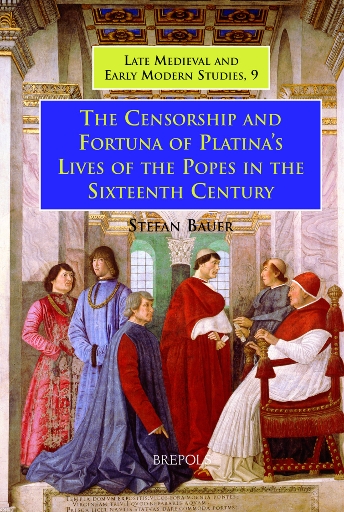
The Censorship and Fortuna of Platina's 'Lives of the Popes' in the Sixteenth Century
show More to view fulltext, buy and share links for:The Censorship and Fortuna of Platina's 'Lives of the Popes' in the Sixteenth Century show Less to hide fulltext, buy and share links for: The Censorship and Fortuna of Platina's 'Lives of the Popes' in the Sixteenth CenturyWhen Bartolomeo Sacchi ('Platina', 1421-1481) wrote his Vitae pontificum (Lives of the Popes) and presented it to Pope Sixtus IV in 1475, he surely could not have imagined how influential it would become over the centuries. His was the first papal history composed as a humanist Latin narrative and, as such, marked a distinct breakthrough in relation to the Liber pontificalis, the standard medieval chronicle of the papacy. Whatever Platina's intentions for the book, it soon came to be regarded as the official history of the Roman pontiffs. After the editio princeps of Venice 1479, updated and extended editions continued to be produced until late in the eighteenth century.
The largely untold story of Platina's Lives of the Popes and its fortuna is the focus of this book. The Lives were particularly popular because of Platina's frank criticisms of papal behaviour which did not live up to his humanist moral values. He reminded the popes that they were mere human beings and urged them not to indulge in luxury and nepotism. Catholics, whether or not they agreed with such indictments, read the Lives eagerly, while Protestants naturally appreciated Platina's fault-finding approach towards the papacy. The role which censorship played in the reception of the Lives was previously unknown. This book examines the censorship process (1587-1592) in detail, including a critical edition of the assessments and corrections by English and Italian censors newly uncovered in the Vatican and in Milan.
-
-
-
Calling the Soul of the Dead
show More to view fulltext, buy and share links for:Calling the Soul of the Dead show Less to hide fulltext, buy and share links for: Calling the Soul of the DeadResearch of Mongolion folk-religion has been the subject of special attention in recent years. Editions and translations of extant texts have appeared, providing detailed descriptions of the rituals. This book examines a very special ritual of folk-religion, the ceremony of calling back the soul of the dead. Among the Mongols it was commonly believed that illness and death were caused by the absence of the soul, so a special ritual was required to call back the wandering soul. The research for this volume has been based on texts preserved in the Institute of Oriental Studies of the Russian Academy of Sciences in St. Petersburg. A background is given by observations of researchers who have visited the relevant areas and personal communications of Mongols. These rituals are still living and carried out by Mongolians and their neighbouring peoples. The very old ceremony, must have belonged to an early layer of folk-religion. It has now become a ritual of the Lamaist church. Influence of Tibetan Buddhism is found. A special chapter is devoted to evil spirits. The volume is richly illustrated.
-
-
-
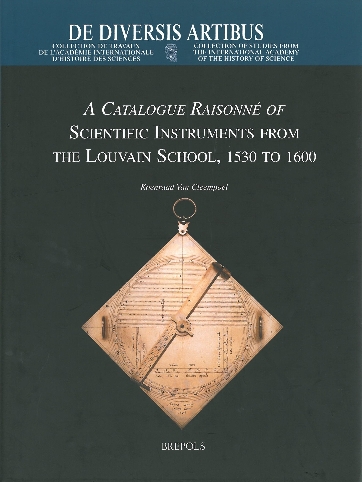
A Catalogue Raisonné of Scientific Instruments from the Louvain School, 1530-1600
show More to view fulltext, buy and share links for:A Catalogue Raisonné of Scientific Instruments from the Louvain School, 1530-1600 show Less to hide fulltext, buy and share links for: A Catalogue Raisonné of Scientific Instruments from the Louvain School, 1530-1600This object-based study concentrates on scientific instruments made in Louvain between c. 1530 and c.1600, a period in which the university fell from the peak of its importance into a state of decline. The instruments are characterised by elaborate decoration and by numerous technical innovations. The book comprises two parts: an introduction followed by a catalogue raisonné of almost ninety instruments from the Louvain masters, both signed and unsigned ones. The introduction outlines the circumstances of the foundation of this ‘Louvain school of instrument makers’, which entailed the merging of an intellectual center (based in the university) and a material culture (based in the workshops). A similar symbiosis occurred elsewhere in Europe, but never on the scale of Louvain. The presence of the Spanish Court in Brussels around 1540-1550 helped to provide the workshops with important commissions. Their role as a Maecenas is also discussed. The most important instrument makers were Gerard Mercator, Michael Piquer, Gualterus Arsenius, Adrian Descrolières and Adrian Zeelst. Little was previously known about these men - apart perhaps from Mercator - and even less about the output of their workshops. This book attempts to present for the first time a comprehensive survey of these workshops and how they may have influenced one another.
-
-
-
Corpus de prières grecques et romaines
show More to view fulltext, buy and share links for:Corpus de prières grecques et romaines show Less to hide fulltext, buy and share links for: Corpus de prières grecques et romainesIn the civilisations of the Ancient World, where the holy was omnipresent, any undertaking of importance was placed under the aegis of the gods, for no other course of action was conceivable. Humankind addressed the divinity in particular through prayer, a means of communication of which Greek and Latin texts furnish numerous examples. The goal of the present work is to reflect the diversity of these speech acts to the gods in presenting a corpus of Greek and Roman pagan prayer. The authors have selected some two hundred texts covering all of the ancient period and representing different sources and genres : formulaic prayers of rituel, literary prayers in verse and prose, private writings, mystical and magical texts, and so on. They have presented the documents in the original tongue with a new translation and a commentary.
This is the companion volume to the Analytic Bibliography of Greek and Roman Prayer (Bibliographie analytique de la prière grecque et romaine) which began the collection.
Frédéric Chapot and Bernard Laurot, specialists of ancient language and literature, are associate professors at Marc Bloch University of Strasbourg.
-
-
-
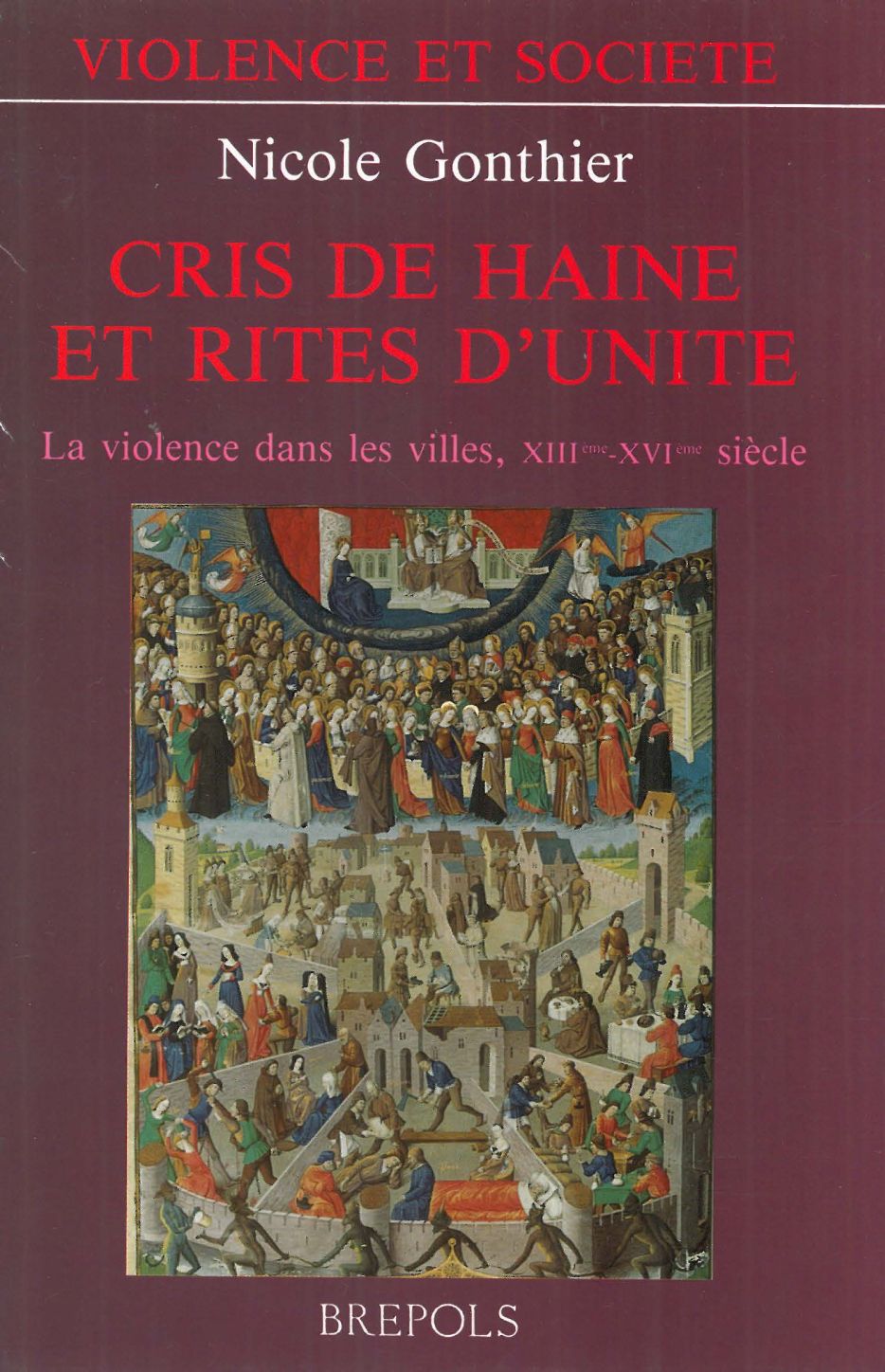
Cris de haine et rites d'unité
show More to view fulltext, buy and share links for:Cris de haine et rites d'unité show Less to hide fulltext, buy and share links for: Cris de haine et rites d'unitéLa violence semble une composante permanente de la vie urbaine au Moyen-Age. Dans l'espace clos que ménagent les remparts, une société particulière s'est constituée en effet, que des dissensions multiples écartèlent. Jeunes et vieux, laïcs et clercs s'y adonnent également, partageant les rivalités politiques, les querelles d'intérêt, les rancœurs des laissés-pour-compte, ou les haines que développent parmi les populations chrétiennes la présence de minorités juives ou arabes. Quelles que soient ces manifestations - rixes, assassinats, viols, crimes crapuleux, attentats contre les forces de l'ordre, insultes ou blasphèmes - la violence trouve en ville le support de solidarités constituées et s'inscrit dans les rythmes quotidiens : ceux de l'habitation, de la rue, ou des multiples lieux de rencontre qu'offre la cité. Les temps exceptionnels de la fête ou de la révolte exaspèrent ses accès, la rendent sauvage et passionnelle. Pour la prévenir ou la maîtriser afin qu'elle se maintienne en deçà d'un seuil de tolérance, les autorités imaginent bien des procédés, depuis les instances de conciliation ou les prédications de paix jusqu'à la répression policière, en dépit des faiblesses qu'elle présente. Cependant, les peines et les exécutions publiques, qui légitiment les manifestations officielles de la pire cruauté, traduisent une interprétation sélective du crime et un jugement inégal des violents. Tolérée lorsqu'elle exprime le style de vie des notables, la violence est réprimée avec ardeur quand elle se charge d'une menace pour l'ordre politique ou social. A la fin du Moyen-Age, au moment où la puissance de l'Etat se veut démonstrative, la seconde interprétation devient plus fréquente et marginalise une fraction de la population urbaine dont on exagère ou redoute les excès.
-