


Brepols Online Books Other Monographs Archive v2016 - bobar16moot

Collection Contents
4 results
-
-
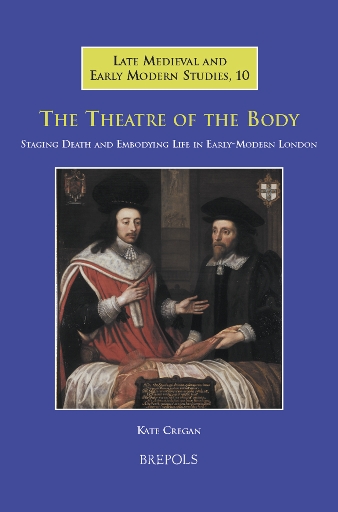
The Theatre of the Body
show More to view fulltext, buy and share links for:The Theatre of the Body show Less to hide fulltext, buy and share links for: The Theatre of the BodyThis study is a threefold investigation of understandings of embodiment - as displayed in the playhouses, courthouses, and anatomy theatres of London between 1540 and 1696. These dates mark the waxing and waning of the Worshipful Company of Barber-Surgeons’ domination of the practice of dissection in London. In 1540 Henry VIII gave them his approval and encouragement but by 1696 Edward Ravenscroft’s The Anatomist: Or the Sham Doctor staged their loss of power. This loss of power, the book contends, is symptomatic of a major shift in the concept of embodiment. The book explains the changing understanding of the human body throughout this period by analysis of the interplay between the texts used in and the material practices of three specific public sites: the public playhouses, the Sessions House, and the Anatomy Theatre of the Worshipful Company of Barber-Surgeons of London. Using an approach which combines the socially textured understandings of fields of practice found in Bourdieu with the interpretations of progression across time found in Elias and Foucault, The Theatre of the Body demonstrates how the three fields of drama, law, and medicine are intimately inter-connected in that process.
In presenting this analysis, the author argues that the quality of embodiment begins to shift during this period from the mid-sixteenth century and throughout the course of the seventeenth century. In this shift one can observe how the earlier, ‘traditional’ interpretation of embodiment is intensified and resolidified into the beginnings of the medicalized ‘modern’ body.
-
-
-
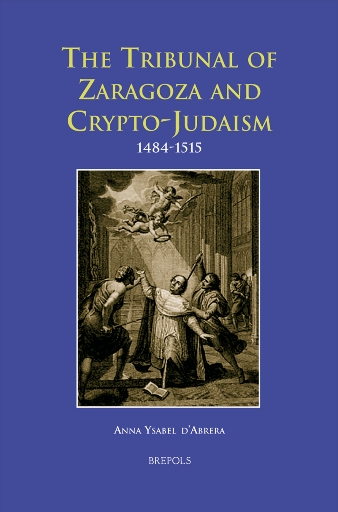
The Tribunal of Zaragoza and Crypto-Judaism
show More to view fulltext, buy and share links for:The Tribunal of Zaragoza and Crypto-Judaism show Less to hide fulltext, buy and share links for: The Tribunal of Zaragoza and Crypto-JudaismSince the opening of the Inquisition's archives in Spain in the nineteenth century, historians and anthropologists alike have seized upon the institution and its remarkable archival legacy, and have scrutinized it from a multitude of political, socio-economic, and cultural angles. Perhaps one of the most contentious hypotheses to have recently emerged from the field has been Benzion Netanyahu's proposal that the inquisitors fabricated charges of Judaizing against the Spanish New Christians (Christians of Jewish descent). This book questions Netanyahu's hypothesis by turning to the extant trial records from Aragon's tribunal of Zaragoza, and employing them as a case study. This range of documents provides ample evidence of a true survival of Jewish ritual life and culture among the Aragonese conversos who were living and working in Zaragoza at the end of the fifteenth century. When the Inquisition was established in Zaragoza in 1484, members of the converso communities across Aragón, although denominationally Christian, were secretly observing the rituals of Judaism. Whether a continuing observance of the Sabbath, Yom Kippur, or Passover, enduring Jewish dietary practices or a deeply rooted prayer life, the picture of converso daily life which emerges from the trial records is essentially a Jewish one.
-
-
-
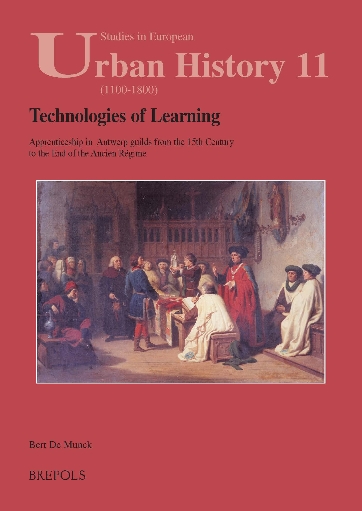
Technologies of Learning
show More to view fulltext, buy and share links for:Technologies of Learning show Less to hide fulltext, buy and share links for: Technologies of LearningThe importance of training and education is on the increase. While the production of ‘human capital’ is seen as a motor for a competitive economy, skills and expertise proof to be necessary for social mobility. Remarkably, in conceiving modern forms of ‘apprenticeship’, several mechanisms from the acien régime, seem to return. The difference between public and private initiative is disappearing, education and training is being confused, and in order to acquire generic skills as flexibility, communicability, self-rule, creativity and so on, youngsters have to learn ‘in context’. Even for maths, scholars now talk of ‘situated learning’.
Before the advent of a formal schooling system, training took place on the shop floor, under the roof of a master. The apprentice not only worked but also lived in his master’s house and was thus trained and educated at the same time. In cities, this system was formally complemented by an official apprenticeship system, prescribing a minimum term to serve and an obligatory masterpiece for those who wanted to become masters themselves. Traditionally, historians see this as an archaic and backward way of training, yet this book’s aim is to show that is was instead a very flexible and dynamic system, perfectly in tune with the demands of an early modern economy.
In order to understand it fully, however, we should differentiate the informal training system organised via a ‘free market’ of indentures on the one hand and the institutionalised system of craft guilds on the other. In Antwerp, early modern guilds had a project of ‘emancipating’ their members. They didn’t simply produce certain skills, but through a system of quality marks defended the honour of craftsmen. This is the difference with current practices. By representing hands-on skills as superior, guilds supplied a sort of symbolic capital for workers.
Bert De Munck is lecturer at the University of Antwerp and member of the Centre for Urban History. His research focuses on the history of the guilds, vocational training and social capital.
-
-
-
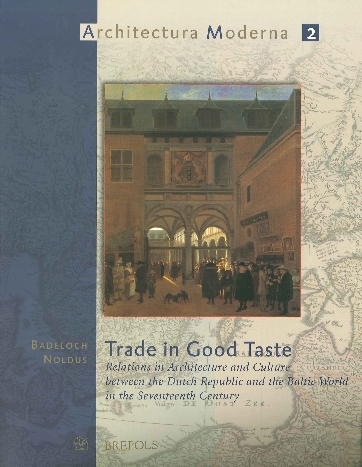
Trade in Good Taste
show More to view fulltext, buy and share links for:Trade in Good Taste show Less to hide fulltext, buy and share links for: Trade in Good TasteDuring the seventeenth century Dutch influence on the Baltic region, both economic and aesthetic, was unrivaled. In the wake of the Dutch monopoly on Baltic trade, cultural contacts between the Dutch Republic and the Baltic world flourished. The Dutch Republic was even to fulfil an exemplary function in the Baltic world (particularly in the Swedish Empire, the dominating power in the region), not solely limited to the commerce of commodities but extending to the domain of architecture and art as well.
In this intensive cultural traffic, an important role was set aside for Dutch immigrants, architects, artists, and their agents. Apart from their regular activities as diplomats or news correspondents, agents mediated in cultural affairs for patrons in the North. As such, they occupied a key role in the relations between the Baltic world and the Dutch Republic. The pivotal element in these networks, they negotiated between Baltic commissioners and Dutch architects, artists, and suppliers of luxury items, including sculptures, tapestries, paintings, as well as a wide range of books and prints - all of which were available on the Amsterdam market. These extensive networks mark the Dutch Republic as a major centre of architecture, art, and information, crucial to the cultural development of northern Europe.
The history of this lively trade in good taste is told on the basis of rich archival material, including drawings, book and art collection inventories, correspondence, travel journals, and diaries.
Badeloch Noldus is a Senior Researcher at Frederiksborg Castle, the Danish Museum of National History. Her interests cover art, agency and art trade in early modern Northern Europe. Recent publications include Your Humble Servant. Agents in Early Modern Europe (2006).
-