


Brepols Online Books Other Monographs Archive v2016 - bobar16moot

Collection Contents
41 - 60 of 149 results
-
-
Mémoire de Gassendi
show More to view fulltext, buy and share links for:Mémoire de Gassendi show Less to hide fulltext, buy and share links for: Mémoire de GassendiCe recueil contribue à poser une solide fondation en vue de l’élaboration de la biographie de Pierre Gassendi. Il regroupe les Vies de Gassendi écrites au XVIIe siècle, et offre la première étude analytique et comparative des deux versions de la vie « de base », rédigée par Antoine de la Poterie, le dernier secrétaire de Gassendi. Pour compléter la collection sont ajoutés plusieurs poèmes commémoratifs et ‘in memoriam’ dont plusieurs inédits. Ces documents permettent de suivre la formation et la diffusion de l’image de Gassendi que ses disciples et amis ont voulu créer. En même temps les événements de sa vie sont racontés en détail, la comparaison de rédactions différentes permettant de les contrôler et les vérifier. Tous les documents sont munis d’introductions et de commentaires. Ceux qui sont composés à l’origine en latin sont traduits.
-
-
-
Pierre Gassendi. De la liberté, de la fortune, du destin et de la divination
show More to view fulltext, buy and share links for:Pierre Gassendi. De la liberté, de la fortune, du destin et de la divination show Less to hide fulltext, buy and share links for: Pierre Gassendi. De la liberté, de la fortune, du destin et de la divinationLe Syntagma philosophicum, tel qu’il occupe les deux premiers tomes des Opera omnia de Pierre Gassendi, constitue une somme philosophique, dont la composition suit les trois grandes divisions hellénistiques de la philosophie : Logique, Physique et Éthique. Publié en latin peu de temps après la mort de son auteur, il n’est pas accessible au lecteur non latiniste, sinon dans des traductions partielles, notamment de l’introduction générale et de la logique. Après l’édition du livre IV de la Physique, Du principe efficient, dont les huit chapitres constituent les conditions de possibilité et les présupposés conceptuels de ce qui constitue, selon ses propres dires, l’aboutissement de sa philosophie, à savoir la Morale, nous proposons ici la première traduction française du dernier livre de l’Éthique.
-
-
-
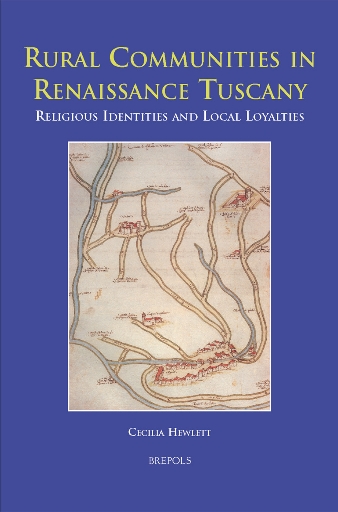
Rural Communities in Renaissance Tuscany
show More to view fulltext, buy and share links for:Rural Communities in Renaissance Tuscany show Less to hide fulltext, buy and share links for: Rural Communities in Renaissance TuscanyAt the conclusion of the fifteenth century and well into the first half of the sixteenth, Florence underwent radical political and social transformations. The republic, which had nurtured the cultural phenomenon of the Renaissance, was finally overthrown and the Medici returned triumphant as outright rulers of the once-free commune. Throughout this period, the administration of the Florentine territory continued to be one of the single most important issues faced by successive Florentine governments, and yet very little is known about the people they governed. This study explores the nature of these communities and the relationships they forged with the central authorities; it provides an overview of the extraordinary diversity of rural communes, and looks in detail at three areas of the Florentine territory. The communes of Gangalandi, Scarperia, and the communities located in the Pistoian mountains provide the vivid contexts in which the fluid natures of local religious, social, and political ties are examined. The character of each of these rural communities was unique, challenging not only the Florentine government’s mechanisms of control, but our own understanding of the ‘peasant’ as a social category. Hewlett demonstrates that these communes were not one-dimentional social organizations, but rather vibrant communities of individuals who pursued a vast range of different activities within a series of complex cultural networks. Rural Communities in Renaissance Tuscany also addresses the importance of religion to these communities; an exciting addition to a field that has been until now dominated by the study of urban religious practice.
-
-
-
Science et théologie dans les débats savants de la seconde moitié du XVIIe siècle
show More to view fulltext, buy and share links for:Science et théologie dans les débats savants de la seconde moitié du XVIIe siècle show Less to hide fulltext, buy and share links for: Science et théologie dans les débats savants de la seconde moitié du XVIIe siècleThe second half of the 17th century witnessed a veritable revolution in communication in the Republic of Letters, with the appearance of the first scientific periodicals, the earliest and most important of which were established in 1665: the Journal des Savants and the Philosophical Transactions. Making use of the book reviews published in these two great scholarly journals, sources still largely underexploited, this book studies the relations between science and theology, and more precisely the narrative of Genesis, in the period leading up to the Enlightenment. Juxtaposition of the two journals, connected respectively to the French Académie royale des sciences and the Royal Society, permits a comparison between France, a Roman Catholic country, and England, a Protestant one, which changes the face of conventional wisdom. The pages devoted to the first decades of the Philosophical Transactions provide an original and welcome study which fills a gap on the subject. The problems raised by the exegesis of certain verses of Genesis evoke a broad range of theological, philosophical, scientific and sometimes even properly political questions. In book reviews, the confrontation between scientific theories and the narrative of Genesis most often discloses little-known works and takes us off the beaten track. Indeed, what posterity has retained as essential has not always received a wide circulation among contemporaries, whereas forgotten authors once found in their own time a large audience through the intermediary of scholarly periodicals. After a systematic inspection, the author has compiled a database on the scientific and theological content of the two scholarly journals. This has been conveniently placed at the reader’s disposal in the form of a CD-ROM attached to the volume.
-
-
-

Sixteenth-century Antwerp and its Rural Surroundings
show More to view fulltext, buy and share links for:Sixteenth-century Antwerp and its Rural Surroundings show Less to hide fulltext, buy and share links for: Sixteenth-century Antwerp and its Rural SurroundingsThis study of sixteenth-century Antwerp and its surroundings is an attempt to combine commercial explanation models concerning the impact of great towns on their surrounding countryside with an approach in which institutional factors, and especially property relations, play the major role. It focuses on four types of influence of Antwerp on its surroundings:
- the demographic impact
- the increasing urban demand for agrarian products
-the impact of the urban economy on non-agrarian types of labour in the countryside and
- the purchases of land and other investments made by Antwerp citizens and their impact on the property relations in the surrounding countryside
Within the framework of these four fields of interaction between town and countryside, three essential questions have to be answered: First, how can we characterize the urban influence in each of these fields? Can it be considered a stimulus for the rural economy or rather an obstacle? Second, what was the economic response of the rural economy to the urban impact? Did it respond by specializing, according to the model presented by J. de Vries, and others, or were there obstacles that obstructed specialization? Third, what role did the medieval legacies play in the interaction between the ‘capitalist’ metropolis and the 'feudal' countryside?
Michael Limberger teaches at the Catholic University Brussels (KUB) and at Ghent University. His research covers late medieval and early modern economic and social history, especially of the Low Countries.
-
-
-
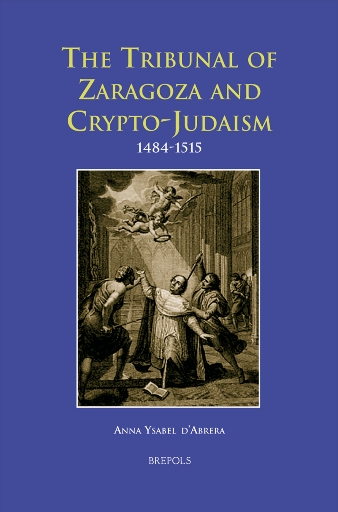
The Tribunal of Zaragoza and Crypto-Judaism
show More to view fulltext, buy and share links for:The Tribunal of Zaragoza and Crypto-Judaism show Less to hide fulltext, buy and share links for: The Tribunal of Zaragoza and Crypto-JudaismSince the opening of the Inquisition's archives in Spain in the nineteenth century, historians and anthropologists alike have seized upon the institution and its remarkable archival legacy, and have scrutinized it from a multitude of political, socio-economic, and cultural angles. Perhaps one of the most contentious hypotheses to have recently emerged from the field has been Benzion Netanyahu's proposal that the inquisitors fabricated charges of Judaizing against the Spanish New Christians (Christians of Jewish descent). This book questions Netanyahu's hypothesis by turning to the extant trial records from Aragon's tribunal of Zaragoza, and employing them as a case study. This range of documents provides ample evidence of a true survival of Jewish ritual life and culture among the Aragonese conversos who were living and working in Zaragoza at the end of the fifteenth century. When the Inquisition was established in Zaragoza in 1484, members of the converso communities across Aragón, although denominationally Christian, were secretly observing the rituals of Judaism. Whether a continuing observance of the Sabbath, Yom Kippur, or Passover, enduring Jewish dietary practices or a deeply rooted prayer life, the picture of converso daily life which emerges from the trial records is essentially a Jewish one.
-
-
-
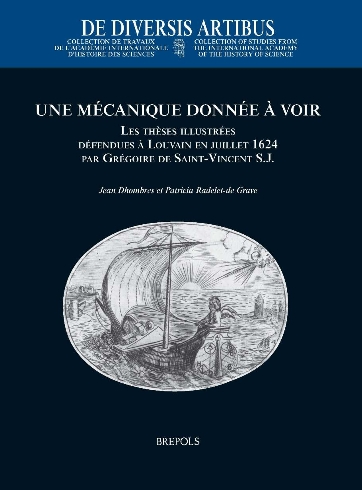
Une mécanique donnée à voir
show More to view fulltext, buy and share links for:Une mécanique donnée à voir show Less to hide fulltext, buy and share links for: Une mécanique donnée à voirEn 1624, quelques mois après l’accession d’Urbain VIII au trône de Saint Pierre, plusieurs espéraient un infléchissement de la condamnation venue interdire en 1616 l’enseignement du mouvement de la Terre autour du Soleil alors défendue publiquement par Galilée. Etait de ceux-là l’inspirateur des thèses, le jésuite Grégoire de Saint-Vincent, né à Bruges une quarantaine d’années auparavant : il avait activement participé à la séance du Collège Romain lorsque Galilée en 1611 commentait ses observations au télescope de planètes comme Saturne ou Vénus, ce qui faisait « murmurer les philosophes ». Ainsi le raconte Grégoire lui-même. Les thèses de 1624 montrent une extraordinaire représentation de Saturne. Voilà un exemple parmi bien d’autres des surprises de ces thèses.
Onze chapitres, suivis d’une bibliographie, organisent l’enquête sur les thèses, cellesci étant traduites au chapitre IX. Le document est d’abord présenté avec les problèmes qu’il pose à l’historien. Puis le moment même des thèses, l’imaginaire des hommes de cette période, et les positions épistémologiques d’alors sont discutés, tant avec le texte qu’avec les images. Cette conjonction d’analyses est essentielle à l’enquête qui se poursuit sur les acteurs des thèses, avec trois récits possibles, le récit historique de la journée des thèses, le récit scientifique du contenu mais aussi le récit iconologique. A ce point, on peut entrer d’une part dans la tradition des thèses universitaires, d’autre part dans la tradition du livre illustré. Ce qui, à partir des travaux des historiens de la mécanique, permet d’aboutir à une discussion sur la place de ces thèses dans une histoire qui a tant servi à constituer les diverses philosophies des sciences, dont le positivisme, le constructivisme, etc. Après la traduction proposée, il convient de revenir à titre de justification sur le détail de chaque théorème et de chaque vignette, et de terminer par le vocabulaire latin des thèses. Cette démarche est tout le contraire de la démarche dogmatique si naturelle à l’histoire des sciences, discipline dont il faut se rappeler qu’elle doit beaucoup au positivisme.
Si l’enquête sur les textes et les images s’avère beaucoup plus longue que les courtes thèses, le plaisir n’est-il pas au final de retrouver la cohérence d’un des mondes du baroque à l’aube de la science moderne ? L’intérêt est en particulier de surprendre la façon dont un intellectuel issu d’un ordre religieux connu pour son obéissance disciplinaire, parvient malgré la rigoureuse orthodoxie récemment mise en place, à raisonnablement donner sa place à une nouvelle imagination, sans entrer en dissidence mais sans céder, cherchant sans aucun doute à libérer la pensée religieuse de la pensée scientifique, et s’aidant alors de la pensée toute profane d’un peintre d’emblèmes.
-
-
-
Carmen et prophéties à Rome
show More to view fulltext, buy and share links for:Carmen et prophéties à Rome show Less to hide fulltext, buy and share links for: Carmen et prophéties à RomeThe privileged form of expression of Roman prayer, before Christianism, was the carmen, a « religious formula » carefully scanned, with an aura often archaic and mysterious, if not magical. This book offers a systematic inquiry into the carmen. The author examines its technical aspects within the realm of archaic latin meter, then, based upon the latest research, pursues in-depth studies of the oldest manifestations of this type of prayer : the carmina of the ancient sodalities of Rome, the Salians and the Arval Brothers and the carmina of the corpus of Cato the Elder (the « Censor »), who provides us with precepts and prayers stemming from the earliest beliefs of the farmers of Latium. He adds a study of the carmen taken in another sense, although under foreign influence, that of « oracular formula », « prophetic discourse », a discourse which was assumed to come from the divinity itself. The most famous were the oracles of the Sibyl, entrusted to the strange Sibylline Books, which allowed divination, notably in times of crisis. The Romans also had recourse to the oracles of Etruscan divination, to the renowned « responses » of the haruspices. Charles Guittard thus analyses fundamental aspects and concepts of the Roman religion of the Pagan age, matters upon which Pagans and Christians will greatly debate in later periods.
Charles Guittard is professor of Latin language and literature at the University of Paris at Nanterre (Paris X). A recognized specialist in Roman religion, author of numerous books and articles, he has in particular edited Livy and translated Lucretius.
-
-
-
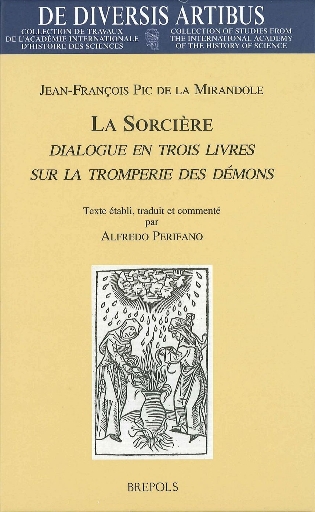
La Sorcière. Dialogue en trois livres sur la tromperie des démons
show More to view fulltext, buy and share links for:La Sorcière. Dialogue en trois livres sur la tromperie des démons show Less to hide fulltext, buy and share links for: La Sorcière. Dialogue en trois livres sur la tromperie des démonsJean-François Pic de la Mirandole (1469-1533), neveu du célèbre Jean Pic de la Mirandole, joua sans aucun doute un rôle de premier plan dans le contexte culturel de la fin du XVe siècle et de la première moitié du XVIe. Il fut à la fois un auteur original et un opérateur culturel qui contribua efficacement à la diffusion de thématiques philosophiques et religieuses au moment où l’Italie et l’Europe connurent de grands bouleversements: l’invasion française de l’Italie par Charles VIII; le début des guerres d’Italie ; la réforme luthérienne; l’affirmation de la puissance impériale de Charles Quint. Jean-François mourut en 1533, après le sac de Rome (1527) et après la capitulation de la république de Florence (1530). Il publia, en 1523, le Dialogus in tres libros divisus. Titulus est Strix, sive de Ludificatione Daemonum. Cet ouvrage, qui s’inscrit dans le cadre défini par la codification inquisitoriale du Malleus maleficarum, vit le jour dans le contexte agité des procès en sorcellerie qui se tinrent dans le comté de la Mirandole entre 1522 et 1523 - protestations contre les bûchers, controverses juridictionnelles entre Concordia et Mirandole, rivalités politico-familiales. Le but de l’auteur était de montrer la réalité des phénomènes liés à la pratique de la sorcellerie et du sabbat. Pour lui, le Démon avait toujours œuvré pour perdre l’humanité, mais, comme le souligne Phronimus dans le dialogue, il se manifeste de façon différente selon les époques; il s’agit de changements dans la forme et non pas dans la substance. C’est pourquoi Jean-François Pic s’attache à montrer à la fois quelles nouvelles formes le Démon assume à son époque et - en s’inspirant du passage des Psaumes (95, 5) « tous les dieux des Gentils sont des démons » - l’essence fondamentalement démoniaque des dieux des Anciens.
-
-
-
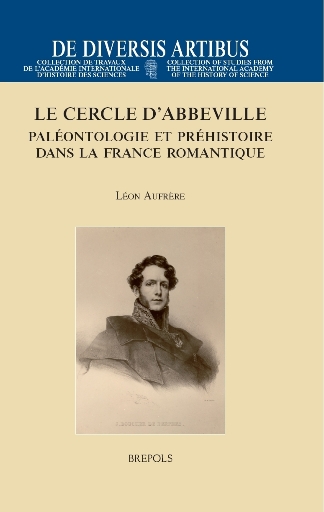
Le Cercle d’Abbeville
show More to view fulltext, buy and share links for:Le Cercle d’Abbeville show Less to hide fulltext, buy and share links for: Le Cercle d’AbbevilleEn mai 1940, le Musée Boucher de Perthes à Abbeville fut anéanti par les bombardements. Mais dans les années d’avant-guerre, Léon Aufrère (1889-1977) y avait pris copie de quantité d’archives et de correspondances. Ces documents, aujourd’hui perdus, sont la source du présent ouvrage, lui-même posthume et publié par sa fille. Léon Aufrère y retrace les premières découvertes paléontologiques et préhistoriques dans la vallée de la Somme et ressuscite un monde d’amateurs éclairés, où s’enracine l’œuvre de Boucher de Perthes. Ce livre est ainsi une contribution décisive à l’étude des origines de la préhistoire, mais aussi des débats sur les ossements fossiles et l’ancienneté de l’homme, et plus généralement à l’histoire de la vie intellectuelle et sociale en France à l’époque romantique.
-
-
-
Les créances de la terre
show More to view fulltext, buy and share links for:Les créances de la terre show Less to hide fulltext, buy and share links for: Les créances de la terreEn Afrique, la confrontation, souvent fort ancienne, entre religions locales et religions du Livre a engendré des situations extrêmement diverses selon les régions et les époques. Au sein des populations jóola du Sénégal et de la Guinée-Bissau, entre forêts et mangroves, le pays jamaat dont il est ici question passe pour un véritable conservatoire des institutions villageoises et des cultes voués à des puissances dont les autels quadrillent le territoire. « Jetées sur la terre » par le Créateur, maître du ciel et de la pluie, ces instances circonscrivent si finement l’espace social et symbolique que, même si les villageois convertis s’abstiennent d’y sacrifier, ils ne peuvent guère se soustraire à leur juridiction.. Pourtant, pas plus que ses voisines, cette région n'a échappé aux tribulations de l'histoire moderne et à l’entreprise missionnaire. Comment comprendre la pérennité et la vitalité de l’activité rituelle liée à ces cultes anciens ? Dans une telle société échappant largement à l’emprise de l’administration étatique, répondre à cette question suppose d’examiner de près la manière dont, à chaque occasion, se tissent et se retissent les liens qui attachent les habitants à leur «terre» et à ses vicissitudes. Pour en suivre les méandres, le lecteur est invité à entrer dans le vif des chroniques villageoises et des observations recueillies par l’auteur lors de ses séjours répétés sur le terrain. Par «terre», les Kujamaat n’entendent pas seulement le sol, le territoire et les habitants qui le peuplent, mais aussi l’espace invisible où transitent les «âmes» du riz et des défunts à renaître et, par synecdoque, l’ensemble des puissances censées résider en ses profondeurs. Or, vis-à-vis de celles-ci, il semble que nul ne soit jamais quitte : dettes sacrificielles contractées volontairement ou à son insu, dettes héritées de parents défunts, il n’est guère de villageois, homme ou femme, qui ne vive sans «une corde attachée». Qu’il s’agisse de pratiques cultuelles, de travail, de rites de procréation, d’homicide, de règles d’évitement ou de représentations eschatologiques, l’expression récurrente «payer la terre» subsume l’ensemble des obligations sociales et rituelles qui tout à la fois brident et instituent comme sujet chacun de ses habitants. Cet ouvrage, nourri d’une ethnographie sur le long terme, convie à l’exploration des différentes figures de cette dette. Il fait une large place à la relation de moments forts ou ténus, heureux ou dramatiques, qui donnent à la vie jamaat une tonalité tout à la fois si singulière et si proche.
Directrice d’études à l’EPHE (ethnologie des religions de l’Afrique Noire), et directrice adjointe du CEMAf (Centre d’Études des Mondes Africains, UMR 8171), Odile Journet-Diallo fréquente depuis de longues années les sociétés jóola du Sénégal et de la Guinée-Bissau sur lesquelles elle a publié de nombreux articles. Elle a notamment contribué aux recherches collectives menées au sein du laboratoire « Systèmes de Pensée en Afrique Noire » sur le sacrifice, le deuil, les objets-fétiches, le totémisme et l’initiation.
-
-
-
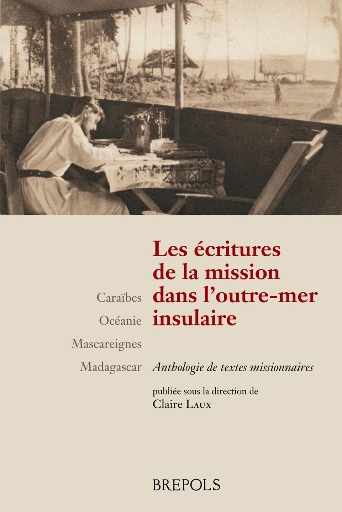
Les écritures de la mission dans l'outre-mer insulaire
show More to view fulltext, buy and share links for:Les écritures de la mission dans l'outre-mer insulaire show Less to hide fulltext, buy and share links for: Les écritures de la mission dans l'outre-mer insulaireLieu de toutes les utopies et de bien des rêves, l’île a souvent représenté des enjeux en terme d’évangélisation très supérieurs à son importance démographique ou économique. Pour les apôtres du christianisme, la rencontre avec les îles de l’outre-mer a souvent été un choc que rendent leurs écrits. A travers des lettres ou des extraits de lettres envoyés par des missionnaires qui exerçaient leur apostolat dans la Caraïbe, dans l’Océan indien, ou encore sur les atolls si éloignés du Pacifique, cet ouvrage se propose de dévoiler certains aspects de leur perception de l’insularité.
Claire Laux est maître de conférence en histoire contemporaine à l’Université Michel de Montaigne de Bordeaux III et chargée de cours en histoire moderne à l’Institut Catholique de Paris. Sa thèse porte sur les théocraties missionnaires de Polynésie et elle est l’auteur d’un nombre important de contributions et d’ouvrages sur l’histoire des missions et sur l’histoire des Français et des Britanniques dans le Pacifique.
-
-
-
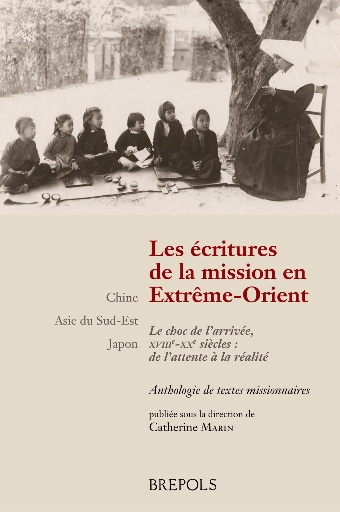
Les écritures de la mission en Extrême-Orient
show More to view fulltext, buy and share links for:Les écritures de la mission en Extrême-Orient show Less to hide fulltext, buy and share links for: Les écritures de la mission en Extrême-OrientCette anthologie regroupe un corpus de lettres de missionnaires écrites lors de leur arrivée en terre de mission. Quatre moments précis de l'histoire missionnaire sont évoqués: l'arrivée de jeunes missionnaires français de la Société des Missions Etrangères de Paris en Asie au xviii e siècle qui reçoivent la charge de communautés chrétiennes déjà bien structurées, le retour des jésuites en Chine à partir de 1841 dans un contexte politique international troublé, les premières tentatives de missionnaires français des Missions Etrangères de pénétrer au Japon par l'île d'Okinawa et enfin l'entrée de missionnaires de la Congrégation des Oblats de Marie au Laos dans la deuxième moitié du xx e siècle dans un contexte politique en pleine révolution politique.
Catherine Marin est maître de conférence à l'Institut Catholique de Paris. Spécialisée dans l'histoire des Missions à l'époque moderne, elle est l'auteur de nombreuses contributions sur l'histoire des Eglises d'Asie au xviii e siècle.
-
-
-
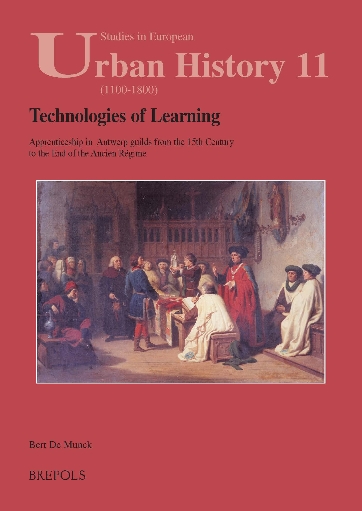
Technologies of Learning
show More to view fulltext, buy and share links for:Technologies of Learning show Less to hide fulltext, buy and share links for: Technologies of LearningThe importance of training and education is on the increase. While the production of ‘human capital’ is seen as a motor for a competitive economy, skills and expertise proof to be necessary for social mobility. Remarkably, in conceiving modern forms of ‘apprenticeship’, several mechanisms from the acien régime, seem to return. The difference between public and private initiative is disappearing, education and training is being confused, and in order to acquire generic skills as flexibility, communicability, self-rule, creativity and so on, youngsters have to learn ‘in context’. Even for maths, scholars now talk of ‘situated learning’.
Before the advent of a formal schooling system, training took place on the shop floor, under the roof of a master. The apprentice not only worked but also lived in his master’s house and was thus trained and educated at the same time. In cities, this system was formally complemented by an official apprenticeship system, prescribing a minimum term to serve and an obligatory masterpiece for those who wanted to become masters themselves. Traditionally, historians see this as an archaic and backward way of training, yet this book’s aim is to show that is was instead a very flexible and dynamic system, perfectly in tune with the demands of an early modern economy.
In order to understand it fully, however, we should differentiate the informal training system organised via a ‘free market’ of indentures on the one hand and the institutionalised system of craft guilds on the other. In Antwerp, early modern guilds had a project of ‘emancipating’ their members. They didn’t simply produce certain skills, but through a system of quality marks defended the honour of craftsmen. This is the difference with current practices. By representing hands-on skills as superior, guilds supplied a sort of symbolic capital for workers.
Bert De Munck is lecturer at the University of Antwerp and member of the Centre for Urban History. His research focuses on the history of the guilds, vocational training and social capital.
-
-
-
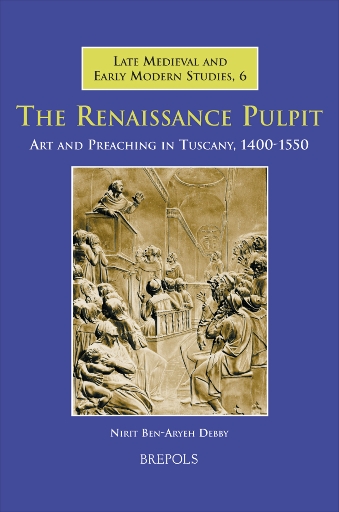
The Renaissance Pulpit
show More to view fulltext, buy and share links for:The Renaissance Pulpit show Less to hide fulltext, buy and share links for: The Renaissance PulpitThis volume examines the relationship between preaching and art, addressing with particular detail the use of works of art in preaching and the importance of the pulpit itself. A challenging issue in the field of sermon studies is the relationship between preaching and art, in particular the manner in which preachers used works of art in their preaching and described specific pictures in their sermons; and the pulpit itself.
The thesis of the book is that pulpits should be viewed in the context of the world of preaching in Renaissance Florence and in connection with sacred oratory. Indeed, like preached sermons, pulpits used rhetorical strategies to deliver religious messages. The author adopts an interdisciplinary approach to the topic by combining art history, historical analysis, and sermon studies; and she examines the pulpit's patronage, location, and function as well as its chronological development. This book combines a general survey of pulpits in Tuscany, with close analysis of five specific pulpits. Designed and executed by important artists located in Florence and Prato, these five pulpits are the most exquisite and impressive monuments of their type, and each has a complex and rich iconographic programme. The author reveals that the period between the fifteenth and early sixteenth centuries constitutes a distinct phase in the development of pulpits, different from the earlier tradition, and from pulpits constructed after the Council of Trent and during the Catholic Reformation.
-
-
-
The Yuezhi. Origin, Migration and the Conquest of Northern Bactria
show More to view fulltext, buy and share links for:The Yuezhi. Origin, Migration and the Conquest of Northern Bactria show Less to hide fulltext, buy and share links for: The Yuezhi. Origin, Migration and the Conquest of Northern BactriaThis book provides a detailed narrative history of the dynasty and confederation of the Yuezhi, whose migration from western China to the northern border of present-day Afghanistan resulted ultimately in the creation of the Kushan Empire. Although the Yuezhi have long been recognised as the probable ancestors of the Kushans, they have generally only been considered as a prelude to the principal subject of Kushan history, rather than as a significant and influential people in their own right. The evidence seemed limited and ambiguous, but is actually surprisingly extensive and detailed and certainly sufficient to compile a comprehensive chronological political history of the Yuezhi during the first millennium BCE. The book analyses textual, numismatic and archaeological evidence in an attempt to explain the probable origin of the Yuezhi, their relationship with several Chinese dynasties, their eventual military defeat and expulsion from the Gansu by the Xiongnu, their migration through the Ili Valley, Ferghana and Sogdia to northern Bactria, and their role in the conquest of the former Greco-Bactria state. All of these events were bound up with broader cultural and political developments in ancient Central Asia and show the extraordinary interconnectedness of the Eurasian historical processes. The domino-effect of the migration of the Yuezhi led to significant changes in the broader Eurasian polity.
-
-
-
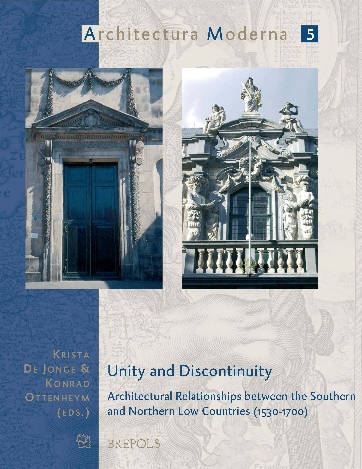
Unity and Discontinuity
show More to view fulltext, buy and share links for:Unity and Discontinuity show Less to hide fulltext, buy and share links for: Unity and DiscontinuityThis study focuses on change and continuity within the architecture of the Southern and Northern Low Countries from 1530 to 1700. Instead of looking at both regions separately and stressing the stylistic differences between the classicist North and the baroque South, the book establishes a new, common history of architecture for both parts of the Low Countries during the seventeenth century. Their reception of Antiquity in the guise of the Italian Renaissance, first introduced in Court circles in the early sixteenth century, constituted the common heritage on which they built after the political separation. The book also reassesses the position of Netherlandish architecture in the international debate on the Renaissance north of the Alps.
Krista De Jonge is professor of history of architecture at the Catholic University of Leuven.
Konrad Ottenheym is professor of history of architecture at Utrecht University.
-
-
-
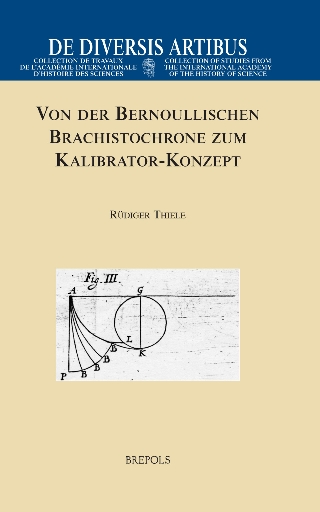
Von der Bernoullischen Brachistochrone zum Kalibrator-Konzept
show More to view fulltext, buy and share links for:Von der Bernoullischen Brachistochrone zum Kalibrator-Konzept show Less to hide fulltext, buy and share links for: Von der Bernoullischen Brachistochrone zum Kalibrator-KonzeptDie Aufgabe der klassischen Variationsrechnung besteht darin, Kurven oder Funktionen zu bestimmen, denen im Vergleich mit anderen eine bestimmte Eigenschaft im größten oder kleinsten Maße zukommt. Die Art des Vergleichens bestimmt dabei den Charakter des Extremums. In dieser Studie wird die Frage untersucht, wie für starke Extrema (in der Norm des C 0) hinreichende Kriterien (sogenannten Feldtheorie) entstanden, entwickelt und eingesetzt worden sind. Diese Untersuchungen sind mit Namen wie Joh. Bernoulli, Jacobi, Weierstraß, Schwarz, Darboux, Hilbert, Kneser, Carathéodory, Lepage und anderen verbunden. Der Zeitraum reicht von Brachistochronenproblem 1696 bis in die Mitte des vorigen Jahrhunderts, betrachtet werden sowohl einfache als auch mehrdimensionale Variationsprobleme mit mehreren gesuchten Funktionen. Neben den entsprechenden gedruckten Arbeiten sind in die Untersuchungen in einem Maße, wie es in der Geschichte der Variationsrechnung bisher noch nicht erfolgt ist, ungedruckte Quellen wie einschlägige Briefe, Notizbücher, Vorlesungskonzepte, -mitschriften und -ausarbeitungen einbezogen worden, wodurch selbst in manchen Fragen auf die allgemeine Entwicklung der Variationsrechnung neues Licht geworfen wird.
-
-
-
Belief and Cult in Fourth-Century Papyri
show More to view fulltext, buy and share links for:Belief and Cult in Fourth-Century Papyri show Less to hide fulltext, buy and share links for: Belief and Cult in Fourth-Century PapyriThis study examines the terms and features in the Greek and Coptic documentary papyri from fourth-century CE Egypt which bear on the religious beliefs of their scribes, composers, senders, and recipients. These include onomastics, formulaic expressions, invocations of particular deities, the way the name of God is written, titles of officials, and linguistic choice. Where previous studies have often found predicative criteria and clear-cut boundaries, here a new narrative of the development of late-antique religious vocabulary and scribal practice is found in the ambiguity and the confluence of religious traditions which the papyri reveal.
Malcolm Choat lectures and researches in the Ancient History Documentary Research Centre and the Department of Ancient History, at Macquarie University, Sydney.
-
-
-
Emblematic Paintings from Sweden’s Age of Greatness
show More to view fulltext, buy and share links for:Emblematic Paintings from Sweden’s Age of Greatness show Less to hide fulltext, buy and share links for: Emblematic Paintings from Sweden’s Age of GreatnessEmblematic Paintings of the Swedish Baroque is the first full-length study of the cycle of emblematic canvases hanging in the corridors at Skokloster Castle outside Stockholm. These imposing paintings were commissioned by a wealthy nobleman and cultural patron from Sweden's Age of Greatness and were inspired by images from one of the most important emblem books of the seventeenth century, Otto Vænius's Emblemata Horatiana. The principal importance of the Skokloster paintings lies in the fact that they appear to be a unique instance of paintings wholly adapted from images in a printed emblem book, a phenomenon never previously recorded in emblem studies. As such, they prompt questions about the place of the emblem within the fine and applied arts, generic issues explored in some detail in the introductory essay. The study presents a detailed reconstruction of the paintings' place within a lost decorative milieu at the Uppland castle of Salsta, and offers interpretations of the role emblems played within its wider conceptive framework. The appeal of Vænius to the commissioning patron is also examined, and through this, a broader consideration of the reception of literary emblematics in seventeenth-century Sweden. This marks a significant attempt at opening up the rich subject of the emblem in Sweden, a national tradition hitherto largely neglected and little understood within emblem studies.
Emblematic Paintings of the Swedish Baroque is the result of extensive field and archival research in major public and private collections in Sweden, and documents a historically significant group of artworks little known outside Scandinavia. The introductory essay presents the necessary groundwork of the pictures' date, provenance, and probable circumstances of commission, as well as an extended reconstruction of the original context in which they were first displayed. Establishing that they were originally owned by Count Nils Bielke, the study examines the intellectual preoccupations of a Swedish nobleman, and the reasons he found the Neo-Stoic ideas promoted in Vænius's emblems conducive to his interests and tastes. The study situates the Skokloster paintings within the intellectual framework of Great Power Sweden, conceiving of the pictures as attempts at private self-representation, but concomitantly aesthetic expressions of the nationalist-mytholopoeic movement promoted by the scholars Olof Rudbeck, Johan Peringskiöld, and Urban Hjärne.
This volume presents the paintings as an emblem text, reassembling the paintings in the order in which they occur in Vænius, and providing each with a commentary on iconography, sources, and analogues. Each plate is accompanied by a moralizing gloss by the seventeenth-century French author and editor of Vænius, Marin Le Roy, Sieur de Gomberville in the translation of Thomas Mannington Gibbs.
-