


EMISCA

Collection Contents
4 results
-
-
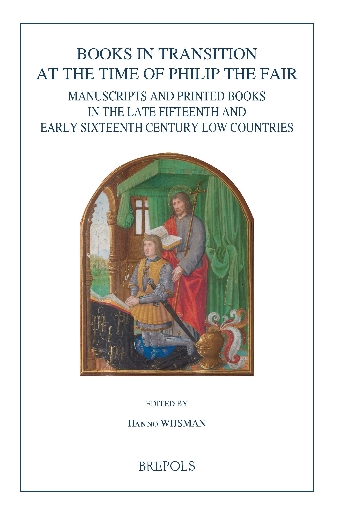
Books in Transition at the Time of Philip the Fair
show More to view fulltext, buy and share links for:Books in Transition at the Time of Philip the Fair show Less to hide fulltext, buy and share links for: Books in Transition at the Time of Philip the FairIn 2006, 500 years after his death, the Royal Library of Belgium organised an exhibition (curated by Bernard Bousmanne and Hanno Wijsman) revealing treasures from the era of Philip the Fair (1478-1506), last duke of Burgundy. This volume reunites most of the papers delivered at a conference held during the exhibition, increased with four new chapters. Ten specialists from Belgium, the Netherlands and the United States discuss the book market and its place in society in this transitional period when manuscripts and printed books were produced and used next to one another. The various chapters are illustrated with more than 70 reproductions, most of which formerly unpublished. The contributions are organised around five topics: Philip the Fair and his books, art in books, music in books, politics in books, the book market.
-
-
-
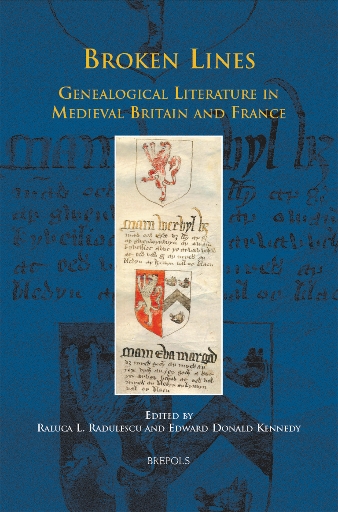
Broken Lines
show More to view fulltext, buy and share links for:Broken Lines show Less to hide fulltext, buy and share links for: Broken LinesThe essays in this important and fascinating collection explore the genealogical literature of late-medieval Britain and France in relation to issues of identity, the transmission of power, and cultural, socio-political, and economic developments. By analyzing the mechanics of cultural and political inheritance and the processes of shaping a sense of identity and descent, the essays in this volume direct the reader towards a complex understanding of genealogical literature and its relationships with other genres, one which will further debate and research in these areas. The present collection presents an interdisciplinary approach to the genealogical literature of the late-medieval period, and brings together specialists in the fields of history, cultural history and literature to raise questions of gender, genre, and theoretical approaches. Broken Lines is also the first book-length study of genealogical literature to date, an exciting intervention into this emerging field of interest.
-
-
-
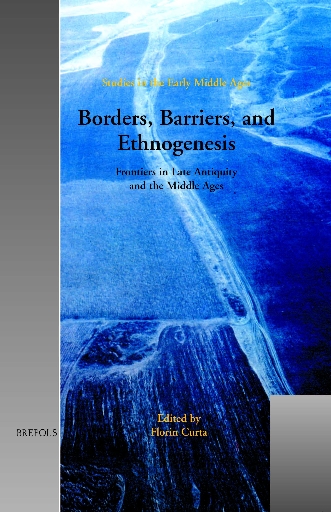
Borders, Barriers, and Ethnogenesis
show More to view fulltext, buy and share links for:Borders, Barriers, and Ethnogenesis show Less to hide fulltext, buy and share links for: Borders, Barriers, and EthnogenesisThis collection addresses an audience of early medievalists with an interest in material culture and its use in building ethnic boundaries. The traditional concept of frontier is a subject of current debate by historians and archaeologists alike, but sometimes without reference to each other. For instance, the social and cultural construction of (political) frontiers remains outside the current focus of post-processualist archaeology, despite the significance of borders for the representation of power, one of the most popular topics with archaeologists interested in symbols and ideology. Similarly, historians of the early Middle Ages have only recently developed an interest in the political manipulation of cultural difference across state frontiers. Perhaps the most interesting aspect of this new direction of research is the emphasis on political frontiers as crucial for the creation, rather than separation, of ethnic configurations. Recent work on the relation between monastic communities and political frontiers has shown the potential for a study of frontier symbolism. The idea of the present volume grew out of the realization that there was a great deal of new work being done in this direction which deserved a wider audience. This was true both of studies of late antique frontiers and of more recent research on medieval frontier societies. In addition, several authors address the issue of religious identities and their relations with ethnicity and state ideology. In that respect, the book is directed to a large audience, particularly because of its wide geographical range, from Iberia and the Balkans to Cilicia and Iran.
-
-
-
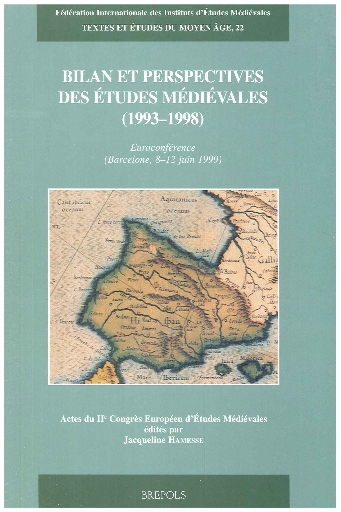
Bilan et perspectives des études médiévales (1993-1998)
show More to view fulltext, buy and share links for:Bilan et perspectives des études médiévales (1993-1998) show Less to hide fulltext, buy and share links for: Bilan et perspectives des études médiévales (1993-1998)Le bilan des études médiévales en Europe dressé lors du Ier Congrès européen d’Etudes médiévales organisé pour la première fois à Spolète en mai 1993 n’avait pas pu couvrir tous les domaines de notre discipline. Aussi le IIème Congrès a-t-il continué ce bilan en s’attachant par priorité à traiter des sujets peu ou insuffisamment couverts en 1993. Ce fut le cas de l’histoire politique, de l’archéologie médiévale, de l’histoire économique et sociale, de l’histoire religieuse, de la spiritualité et de l’hagiographie, de la philologie et de la littérature latines du moyen âge, de l’histoire de l’art, de l’étude des manuscrits, de la philosophie et de la théologie, de l’histoire des sciences, de la musique et de la liturgie, des études byzantines ainsi que du passage du moyen âge à la Renaissance.
Les bilans contenus dans cet ouvrage sont l’œuvre des meilleurs spécialistes en la matière. Ils permettent de voir les progrès réalisés de 1993 à 1998 ainsi que les lacunes qui existent encore dans certaines disciplines. Ils inciteront surtout de jeunes chercheurs à entreprendre des études dans des domaines encore mal connus.
-