EMISCA

Collection Contents
20 results
-
-
Charisma and Religious Authority
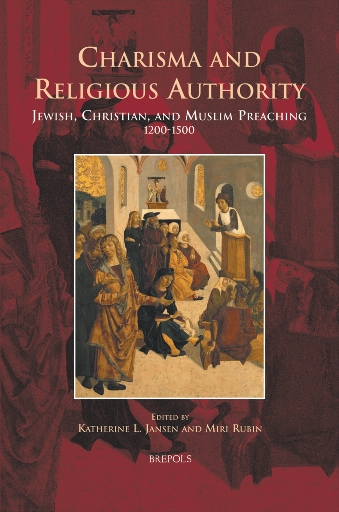
show More to view fulltext, buy and share links for:Charisma and Religious Authority show Less to hide fulltext, buy and share links for: Charisma and Religious AuthorityThis volume of essays concentrates on the effects of preaching in late medieval and early modern Europe, particularly through the concept of charisma, a term introduced into the discussion of religion and politics by Max Weber. Used by Weber, the term indicates the power of a person to move others to action, to animate and mobilize them. The late medieval and early modern periods witnessed the emergence of preachers who became powerful public figures central to the mobilization of populations towards religious reform or crusades. Such preachers were also enmeshed in civic life and the life of courts. Super-preachers like Bernardino of Siena and John of Capestrano shaped opinion on a wide range of issues: the ethics of business, marriage and gender relations, attitudes towards minorities, the poor and social responsibility, as well as the role of kings and other rulers in society. Preaching events were the mass media of the day, and in their wake could follow pogrom, lay revival, crusade, peace movement, or reconciliation within a faction-riven city. The power of these events was great and not merely confined to the Christian community. This volume introduces for the first time a comparative dimension which looks at the theme of charisma and religious authority in the Jewish, Christian, and Muslim preaching traditions.
-
-
-
Computus and its Cultural Context in the Latin West, AD 300-1200
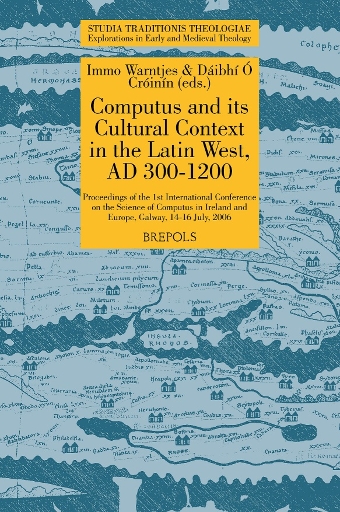
show More to view fulltext, buy and share links for:Computus and its Cultural Context in the Latin West, AD 300-1200 show Less to hide fulltext, buy and share links for: Computus and its Cultural Context in the Latin West, AD 300-1200The scientific knowledge that Irish, English, and continental European scholars nurtured and developed during the years c. AD 500 to c. AD 1200 was assimilated, in the first place, from the wider Roman world of Late Antiquity. Time-reckoning, calendars, and the minute reckonings required to compute the date of Easter, all involved the minutiae of mathematics (incl. the original concept of ‘digital calculation’) and astronomical observation in a truly scientific fashion. In fact, the ‘Dark Ages’ were anything but dark in the fields of mathematics and astronomy.
The first Science of Computus conference in Galway in 2006 highlighted the transmission of Late Antique Mathematical Knowledge in Ireland & Europe, the development of astronomy in Early Medieval Ireland & Europe and the role of the Irish in the development of computistical mathematics. The proceedings of that conference should, therefore, appeal equally to those interested in the history of science in Ireland and Europe, and in the origins of present-day mathematical and astronomical ideas.
-
-
-
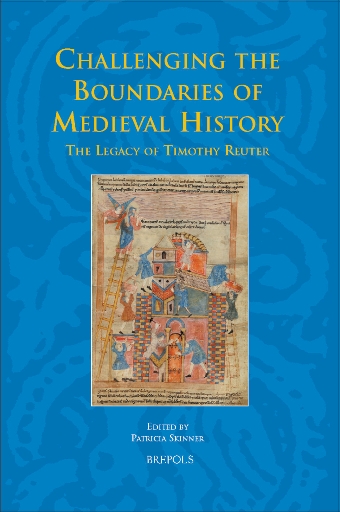
Challenging the Boundaries of Medieval History
show More to view fulltext, buy and share links for:Challenging the Boundaries of Medieval History show Less to hide fulltext, buy and share links for: Challenging the Boundaries of Medieval HistoryHow is the history of medieval Europe written? What national discourses shape the editing of medieval texts and their interpretation in historiography? And how can medieval historians confront these questions by reintegrating their fragmented field through the use of comparison and critiques across national boundaries? In his work, Timothy Reuter regularly posed these challenges to his colleagues, acting as a bridge between the historians of England and Germany, working on an edition of the letters of Wibald of Stavelot (whose own career took him to many of the power centres of medieval Europe), and positioning medieval Europe in the wider discourses of world history. The essays collected here provide a response to this challenge. Dedicated to Prof. Reuter’s memory and in some cases directly continuing his work, all are explicitly comparative in their approach. All of the authors take as their starting point the need to be conscious of the situation from which they themselves are writing and to be sensitive to the training traditions which have shaped their own interpretations. This book shows medieval historians at work, questioning and reflecting on their practice. As well as being of value to specialists in the field, the essays are written in an approachable style and will therefore be of value as a teaching tool to undergraduate and graduate students.
-
-
-
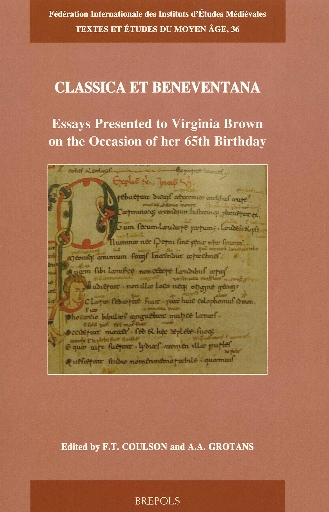
Classica et Beneventana
show More to view fulltext, buy and share links for:Classica et Beneventana show Less to hide fulltext, buy and share links for: Classica et BeneventanaThe Festschrift volume Classica et Beneventana, presented to Virginia Brown on the occasion of her 65th birthday, brings together eighteen insightful new essays by leading scholars devoted to the fields of classical reception and Latin palaeography. The authors investigate a wide-range of topics such as the development and application of the Beneventan script, comparative codicology, use of early liturgical manuscripts, medieval artes and biblical texts and their readers, and the reception and dissemination of classical texts during the Italian Renaissance.
Since 1970, Virginia Brown has been a Senior Research Fellow at the Pontifical Institute of Mediaeval Studies. She is recognized as one of the world’s leading authorities in classical reception and Latin palaeography. Her numerous publications on the Beneventan script have dramatically altered our knowledge of the dissemination of this southern Italian book hand from 800 to 1600. Her editorial work for the Catalogus translationum et commentariorum, as a member of the Editorial Board and since 1986 as Editor-in-Chief, has resulted in several learned volumes tracing the fortuna and study of classical authors from antiquity to the year 1600. As editor of Mediaeval Studies from 1975 to 1988, she single-handedly produced tomes noted for their scholarly rigor and acumen. This collection of essays serves as fitting tribute to a scholar who, via her scholarly research and editorial work, has done so much to advance the fields of palaeography, codicology, and the history of classical scholarship.
-
-
-
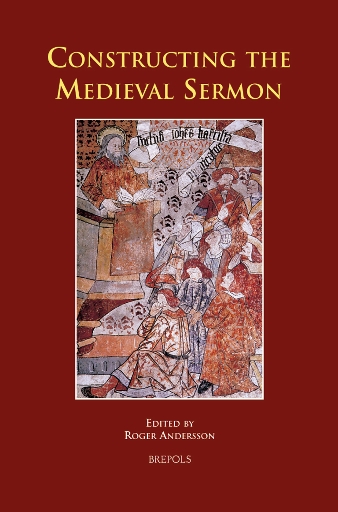
Constructing the Medieval Sermon
show More to view fulltext, buy and share links for:Constructing the Medieval Sermon show Less to hide fulltext, buy and share links for: Constructing the Medieval SermonIn considering the construction of medieval sermons, the term ‘construction’ has many meanings. Those studied here range from questions about sermon composition with the help of artes praedicandi or model collections to a more abstract investigation of the mental construction of the concepts of sermon and preacher. Sermons from a range of European countries, written both in Latin and vernaculars, are subjected to a broad variety of analyses. The approach demonstrates the vitality of this sub-discipline. Most of the essays are more occupied with literary and philological problems than with the religious content of the sermons. While many focus on vernacular sermons, the Latin cultural and literary background is always considered and shows how vernacular preaching was in part based on a more learned Latin culture. The collection testifies both to the increasing esteem of the study of vernacular sermons, and to a revival in the study of all those things contained in a preacher’s ‘workshop’, ranging from rhetorical invention, medieval library holdings and study-aids, through to factors that are crucial for the successful delivery of the sermon, such as the choice of language, mnemonic devices and addressing the audience. The interdisciplinary approach remains ever-present, not only in the diversity of the academic disciplines represented, but also within individual essays. The volume is based on a conference held in Stockholm, 7-9 October 2004.
-
-
-
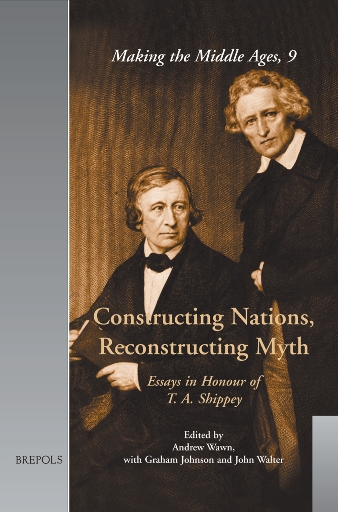
Constructing Nations, Reconstructing Myth
show More to view fulltext, buy and share links for:Constructing Nations, Reconstructing Myth show Less to hide fulltext, buy and share links for: Constructing Nations, Reconstructing MythThis collection of essays examines the ‘Grimmian Revolution’, the paradigm shift in the humanities that came with the publication of Jacob Grimm’s Deutsche Grammatik. In doing so, it honours T. A. Shippey, who has been a leading figure in reconsidering the contributions of the Old Philology and its impact on the humanities, particularly the rediscovery of the ancient languages and literatures of Northern Europe; the role this has played in the creation of national and regional identities; the attempts to extend the methods of comparative philology to comparative mythology; and the collection of folktales, folk-ballads, and the development of folkloristics. The sixteen essays in this collection focus on the impact made by nineteenth- and early-twentieth-century philology in the fields of medieval studies and language studies, and in the construction of Northern European national identities, mythologies, and folklore.
-
-
-
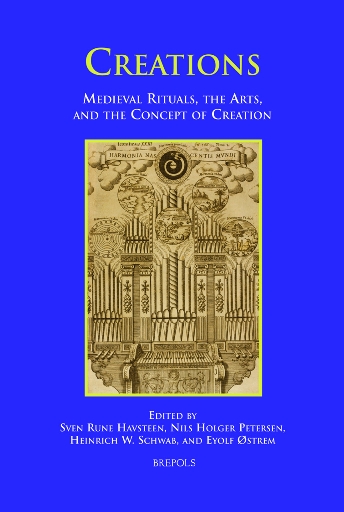
Creations
show More to view fulltext, buy and share links for:Creations show Less to hide fulltext, buy and share links for: CreationsThe meanings of the noun ‘creation’, and the verb ‘to create’, range from the traditional theological idea of God creating ex nihilo to a more recent sense of the process of artistic conception. This collection of thirteen essays, written by scholars of music, literature, the visual arts, and theology, explores the complicated relationship between medieval rituals and theology, and the development of an idea of human artistic creation, which came to the fore in the sixteenth century.
The volume concentrates on the period from the Carolingians to the Counter-Reformation but also includes some twentieth-century musicians. Each essay is dedicated to a particular topic concerned with ritual or artistic beginnings, inventions, harmony and disharmony, as well as representations or celebrations of creation. Central themes include the interplay of the ideas of God as creator, of God acting and recreating in medieval liturgy, of God as artist—the deus artifex of the Pythagorean cosmology, which was occasionally referred to as recently as the early nineteenth century—and, finally, of the homo creator, a concept in which man reflected (and eventually replaced) God in his artistic creativity.
This book therefore features new, significant, individual contributions from a range of scholarly disciplines, but, taken as a whole, it also constitutes a complex interdisciplinary study, with large-scale historical constructions.
-
-
-
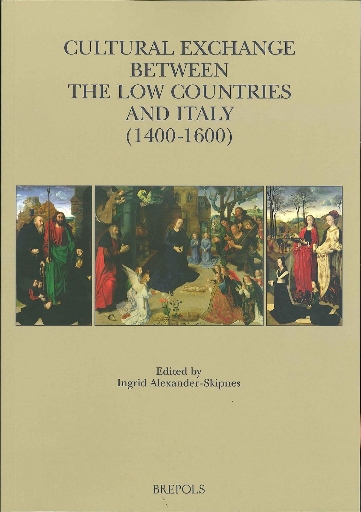
Cultural Exchange between the Low Countries and Italy (1400-1600)
show More to view fulltext, buy and share links for:Cultural Exchange between the Low Countries and Italy (1400-1600) show Less to hide fulltext, buy and share links for: Cultural Exchange between the Low Countries and Italy (1400-1600)
-
-
-
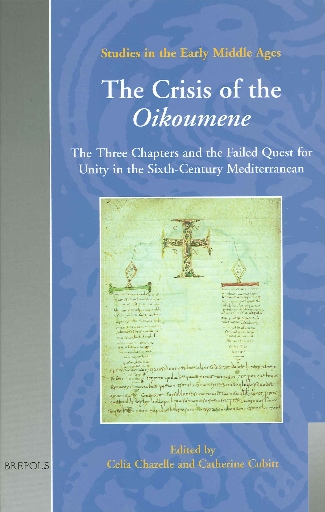
The Crisis of the Oikoumene
show More to view fulltext, buy and share links for:The Crisis of the Oikoumene show Less to hide fulltext, buy and share links for: The Crisis of the OikoumeneThe sixth-century theological controversy over the ‘Three Chapters’, which centred on the nature of Christ, provoked one of the most serious and long-lived religious schisms of the early Middle Ages. The fault lines ran not only between the Byzantine imperial court and the papacy, but between Rome and the churches in the former western empire’s successor states. In Italy, the schism endured into the seventh century, and the repercussions were felt long thereafter. Though rooted in the complexities of christological debate, the tensions reveal the growing political as well as cultural divide between Byzantium, Rome, and the West. Thus the controversy is critical for our understanding of the late-antique and early-medieval Mediterranean world, and of the inheritance of empire in western Europe and North Africa. This book presents ten chapters by an international group of scholars who examine different facets of the Three Chapters Controversy and its profound impact on these regions.
-
-
-
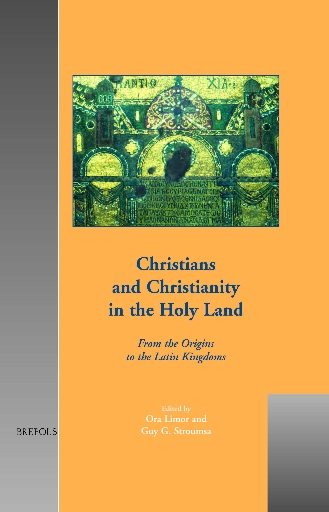
Christians and Christianity in the Holy Land
show More to view fulltext, buy and share links for:Christians and Christianity in the Holy Land show Less to hide fulltext, buy and share links for: Christians and Christianity in the Holy LandThis volume fills a major desideratum in historical scholarship on the religious history of the Holy Land. It presents a synthesis of our knowledge of the history of Christianity and the various churches that coexisted there from the beginnings of Christianity to the fall of the Crusader Kingdoms. It also offers analytical studies of major topics and problems. While the first part is organized chronologically, the second follows a thematic plan, dealing with the major themes pertaining to the topic, from various points of view and covering several disciplinary fields: history, theology, archaeology, and art history. The volume represents the outcome of an international project initiated by Yad Izhak Ben-Zvi of Jerusalem, and the contributors are leading experts in their fields.
-
-
-
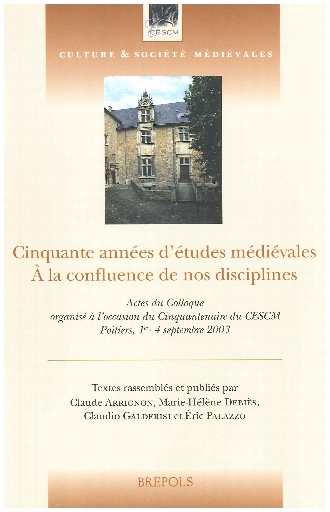
Cinquante années d’études médiévales. À la confluence de nos disciplines
show More to view fulltext, buy and share links for:Cinquante années d’études médiévales. À la confluence de nos disciplines show Less to hide fulltext, buy and share links for: Cinquante années d’études médiévales. À la confluence de nos disciplinesEn 2003, le Centre d’Études supérieures de Civilisation médiévale de Poitiers a célébré ses cinquante années d’existence par la tenue d’une série de manifestations scientifiques et culturelles dont un grand colloque international au titre évocateur, retenu pour la présente publication: Cinquante années d’études médiévales. À la confluence de nos disciplines.
Les Actes de ce colloque, qui a reflété la place prééminente du CESCM au sein des études médiévales internationales ainsi que la diversité et la richesse du travail interdisciplinaire produit par les équipes de recherche et les services documentaires du Centre, constituent donc un ouvrage de référence non seulement pour les domaines abordés mais aussi pour la médiévistique en général.
-
-
-

Corpo e anima, sensi interni e intelletto dai secoli XIII-XIV ai post-cartesiani e spinoziani
show More to view fulltext, buy and share links for:Corpo e anima, sensi interni e intelletto dai secoli XIII-XIV ai post-cartesiani e spinoziani show Less to hide fulltext, buy and share links for: Corpo e anima, sensi interni e intelletto dai secoli XIII-XIV ai post-cartesiani e spinozianiI contributi raccolti nel volume permettono di ricostruire alcuni nuclei storico- dottrinali sulla natura dei sensi interni e sulle complesse relazioni anima-corpo; tale problema attraversa l’intera storia della filosofia, dalla tarda antichità fino al radicale mutamento di prospettiva operato da Cartesio, Spinoza, Malebranche e dai grandi maestri del Seicento. Da queste ricerche emergono le differenze semantico-concettuali e le diverse valutazioni della phantasia, della imaginatio, intesa come cogitatio, o ragionamento estimativo e valutativo, e degli altri sensi interni — mutamenti e novità introdotti soprattutto grazie alla mediazione dei filosofi e degli scienziati arabi. Questi nuovi orizzonti del filosofare costituiscono, secondo modalità gnoseologiche e ontologiche variabili da un filosofo all’altro, il sostrato delle noetiche e delle metafisiche della tradizione aristotelica medievale e rinascimentale. Per quanto concerne la filosofia moderna, gli studi qui condotti mostrano come il nesso anima-corpo non si costituisca attraverso la zione della sensibilità interna o esterna intesa nei modi tradizionali delle correnti filosofiche tardo-antiche e medievali, ma si configuri piuttosto come problema dell’identità della persona psico-fisica e della sua stessa individualità. Tali ricerche evidenziano, quindi, da una parte quanto sia complesso l’orizzonte delle teorie delle funzioni mediane della psiche, tra intelletto e senso; dall’altra, come esse non siano riducibili agli stereotipi modelli interpretativi monisti o dualisti — fisicisti o spiritualisti — tanto della tradizione antica e medievale quanto di quella moderna.
-
-
-
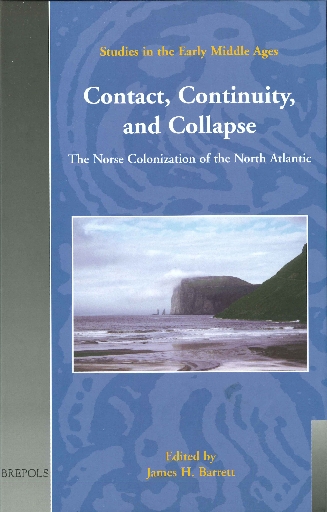
Contact, Continuity, and Collapse
show More to view fulltext, buy and share links for:Contact, Continuity, and Collapse show Less to hide fulltext, buy and share links for: Contact, Continuity, and CollapseThis volume explores the Viking Age colonization and exploration of the North Atlantic, from Arctic Norway to Vinland in eastern North America. Its contributors, predominately archaeologists by training, bring new evidence and an interdisciplinary perspective to a subject often dominated by sources of variable historicity. They explore the creation and transformation of ethnicity in new lands - some occupied, others empty. They also address the historiography of Norse Landnám, unravelling the processes by which scholarly interpretations of the Viking Age have been created. The result illuminates the consequences of migration in the early Middle Ages and the interplay of local and large-scale socio-economic processes. In concluding, the volume assesses the relationship between Norse expansion and later European ‘rediscovery’ of the New World.
-
-
-

Court Culture in the Early Middle Ages
show More to view fulltext, buy and share links for:Court Culture in the Early Middle Ages show Less to hide fulltext, buy and share links for: Court Culture in the Early Middle AgesThe role of the court in early medieval polities has long been recognised as an essential force in the running of the kingdom. The court was not only an organ of central government but a sociological community with its own ideology and culture, and a place where royal power was both displayed and negotiated. The studies within this volume reflect the diversity of modern court studies, considering the court as a social body and considering its educative and ideological activities. The contributors to this volume bring together historical, archaeological, art historical and literary approaches to the topic as they consider aspects of court life in England, Francia, Rome and Byzantium from the eighth to the tenth centuries. The volume therefore looks at court life in the round, emphasizes and invites connections between early medieval courts, and opens new perspectives for the understanding of early medieval courts.
-
-
-
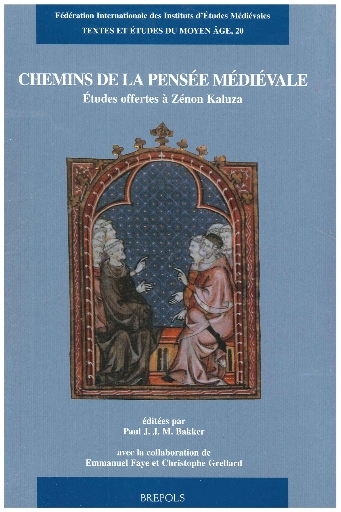
Chemins de la pensée médiévale
show More to view fulltext, buy and share links for:Chemins de la pensée médiévale show Less to hide fulltext, buy and share links for: Chemins de la pensée médiévaleHistorien de la philosophie et de la théologie du Moyen Âge tardif, spécialiste des xiv e et xv e siècles, Zénon Kaluza a profondément marqué les études médiévales des dernières décennies. Ses travaux portent sur plusieurs grands thèmes de l’histoire doctrinale du Moyen Âge, notamment le «platonisme» parisien et pragois, les méthodes et les langages de la philosophie et de la théologie, les contextes institutionnels du savoir et, enfin, la question du rapport entre l’Église et l’État. Pour rendre hommage à l’homme et à son œuvre, ses collègues et amis lui offrent ce recueil d’articles. Réunies sous le titre de Chemins de la pensée médiévale, ces études explorent différents aspects de l’histoire de la philosophie et de la théologie ainsi que, dans une perspective plus large, de l’histoire intellectuelle et sociale du Moyen Âge. Par l’ampleur de son orientation thématique, le présent volume offre une excellente présentation de l’état actuel de la recherche sur la pensée médiévale.
-
-
-
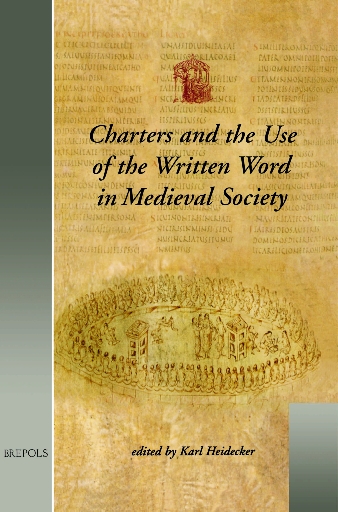
Charters and the Use of the Written Word in Medieval Society
show More to view fulltext, buy and share links for:Charters and the Use of the Written Word in Medieval Society show Less to hide fulltext, buy and share links for: Charters and the Use of the Written Word in Medieval SocietyThere have been periods of growth and of decrease in the quantity of writing produced in the medieval centuries. The present volume is concerned with qualitative developments, asking: which developments can be distinguished in the roles played by writing in medieval societies? In which fields was writing used, and by whom? Why did these changes take place? When attempting to answer these questions, the scholar confronts basic questions about the sources at one’s disposal. Why were documents written? Why were they preserved and in what form? The volume pays especial attention to charters, since these documents have been continuously present throughout the Middle Ages. They also had an impact on most layers of society.
-
-
-
Christianizing Peoples and Converting Individuals
show More to view fulltext, buy and share links for:Christianizing Peoples and Converting Individuals show Less to hide fulltext, buy and share links for: Christianizing Peoples and Converting IndividualsThe anniversary of Augustine’s arrival in Kent in 597, and the subsequent christianization of England, made conversion an obvious theme for the 1997 International Medieval Congress. It was also a theme which attracted massive interest, and not just from early medievalists interested in the christianization of England and its near-contemporary parallels. This volume presents reworkings of 28 of these contributions.
The Early Middle Ages are represented in a number of papers concerned with Central and Eastern Europe and as far east as Georgia. Interest in the Baltic region took this aspect of the christianization of Europe well into the fourteenth century. Papers on these regions constitute a good proportion of the present volume, and they provide a very useful point of entry into work currently being done on christinization in areas which are less well known to most historians than is Western Europe not least because of the range of languages involved.
With respect to later periods of the Middle Ages two issues predominated: one was the interface between Christians and Muslims in Spain and in the Holy Land and also between Christians and Jews once again in Spain, but also in England, and more generally in Western Europe. The other was the rather more theological question of the nature of conversion, as discussed by Aquinas, and in Franciscan writings. This wide-ranging volume concentrates on historical approaches to the topic. The different types of questions posed and materials used are a fascinating indication of the different interpretations to be found among specialists in different fields.
Christianization, as a process affecting complete peoples, or at least large groups, attracts attention, as does conversion of the individual. By putting these varying approaches together, this collection indicates the range of current work on christianization and conversion history and the range itself, quite apart from the individual studies, is an eye-opener.
-
-
-

The Commentary Tradition on Aristotle’s ’De generatione et corruptione’. Ancient, Medieval and Early Modern
show More to view fulltext, buy and share links for:The Commentary Tradition on Aristotle’s ’De generatione et corruptione’. Ancient, Medieval and Early Modern show Less to hide fulltext, buy and share links for: The Commentary Tradition on Aristotle’s ’De generatione et corruptione’. Ancient, Medieval and Early ModernIn this book, a dozen distinguished scholars in the field of the history of philosophy and science investigate aspects of the commentary tradition on Aristotle’s De generatione et corruptione, one of the least studied among Aristotle’s treatises in natural philosophy. Many famous thinkers such as Johannes Philoponus, Albert the Great, Thomas Aquinas, John Buridan, Nicole Oresme, Francesco Piccolomini, Jacopo Zabarella, and Galileo Galilei wrote commentaries on it. The distinctive feature of the present book is that it approaches this commentary tradition as a coherent whole, thereby ignoring the usual historiographical distinctions between the Middle Ages, the Renaissance, and the seventeenth century.
-