


EMISCA

Collection Contents
7 results
-
-
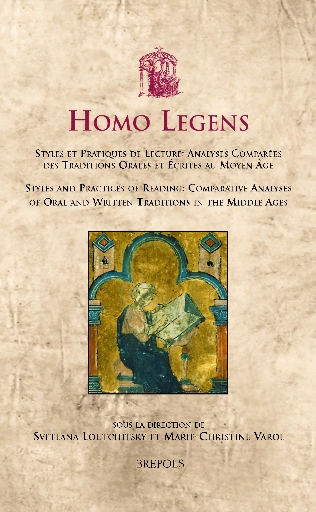
Homo Legens
show More to view fulltext, buy and share links for:Homo Legens show Less to hide fulltext, buy and share links for: Homo LegensHow can we uncover the traces of oral culture in medieval sources when the oral matter we possess survives only in written form? Is it the case that only the written persists while the oral is lost? What was the status of orality in medieval society? The studies in this volume (five chapters in French and two in English) examine the links between the oral and the written traditions in medieval literature. They do this by means of the analysis of literary sources from very diverse backgrounds, both geographically and linguistically speaking: the investigation ranges from medieval Spain, through the Byzantine Empire and the Crusader states, to late medieval and early modern Turkey. This interdisciplinary enquiry by an international group of scholars enables us to define the modes of transmission of medieval texts and how they were memorized as well as to decipher how they were read and appropriated. In addition, the book suggests a methodological basis for research into indices of orality and for analysis of the intertextual links between literary works. This enquiry, undertaken within the framework of the international Homo Legens project, provides an efficacious tool for the study of the practices of reading and writing.
-
-
-
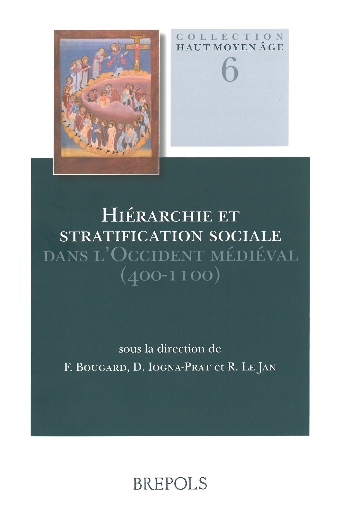
Hiérarchie et stratification sociale dans l’Occident médiéval (400-1100)
show More to view fulltext, buy and share links for:Hiérarchie et stratification sociale dans l’Occident médiéval (400-1100) show Less to hide fulltext, buy and share links for: Hiérarchie et stratification sociale dans l’Occident médiéval (400-1100)Si la notion d’«ordre(s)» est familière aux historiens du Moyen Âge, il est loin d’en être de même pour celle de «hiérarchie». Au reste, le terme n’a pas bonne presse chez les chercheurs en sciences humaines et sociales, qui s’en méfient pour ses relents d’Ancien Régime et préfèrent souvent parler de «stratifications sociales», comme si choisir, distinguer, hiérarchiser les valeurs n’étaient pas dans les mondes du passé comme dans celui d’aujourd’hui à la base même de l’action sociale.
D’origine grecque — hieros (sacré) et archos (fondement, commencement, commandement) — le terme «hiérarchie» est d’un emploi longtemps rare dans la latinité. Les concordances automatisées du latin permettent de savoir avec précision que le succès lexical de hierarchia n’est pas antérieur au tournant des années 800 et qu’il dépend directement de la traduction depuis le grec des écrits du Pseudo-Denys l’Aréopagite, spécialement la Hiérarchie céleste et la Hiérarchie ecclésiastique. Concomitance intéressante, l’adoption généralisée du terme hiérarchie dans l’Occident médiéval, entre le ix e et le xi e siècle, est contemporaine d’une conception de la société rapportée à l’harmonie du cosmos qui fait du monde des hommes un reflet de l’ordonnancement voulu par Dieu — un ordonnancement propre à confondre ecclésial et social ou, dit autrement, à faire d’Église et société deux termes coextensifs. Dans cette logique, puisqu’il ne saurait y avoir de critère laïque d’appartenance aux groupes sociaux, le concept de hiérarchie permet au médiéviste de rendre compte de l’ensemble des processus d’organisation d’une société stratifiée parce qu’aspirée vers le divin. Il permet autant de décrire un jeu de places que de saisir la dynamique de processus à l’œuvre dans la grande fabrique du social.
-
-
-
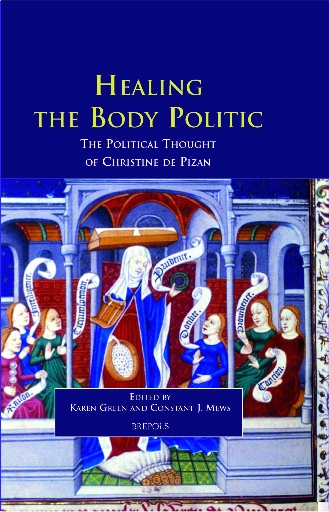
Healing the Body Politic
show More to view fulltext, buy and share links for:Healing the Body Politic show Less to hide fulltext, buy and share links for: Healing the Body PoliticChristine de Pizan (1364-1431) has been recognized as a poet, early humanist and feminist precursor but rarely as political theorist whose works were intended to have a direct impact on the tumultuous politics of her time. The essays in this collection focus on Christine as a political writer and provide an important resource for those wishing to understand her political thought. They locate her political writing in the late medieval tradition, discussing her indebtedness to Aristotle, Aquinas and Augustine as well as her transformations of their thought. They also illuminate Christine’s ‘political epistemology’: her understanding of political wisdom as a part of theology, the knowledge of God. New light is thrown on the circumstances which prompted Christine to write on political issues and on her attitude to Isabeau of Bavaria. These essays show that Christine’s originality consisted in her capacity to modify and feminize the tradition of Christian Aristotelianism through the use of elements of Christian imagery, in particular Mariology, in order to construct an image of the virtuous and prudent monarch which had lost the explicitly manly and warlike character of the Aristotelian phronimos. This reconfigured image of the monarch lent itself to the extension which she developed in her more feminist works, which demonstrated the prudence of women and their capacity, in times of need, to function as authoritative political figures.
-
-
-
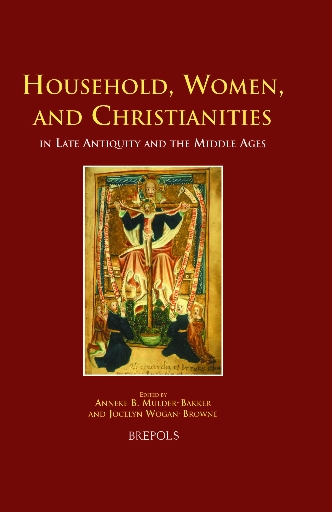
Household, Women, and Christianities
show More to view fulltext, buy and share links for:Household, Women, and Christianities show Less to hide fulltext, buy and share links for: Household, Women, and ChristianitiesFrom its earliest beginnings in the homes of its members, the church has been the ‘house’ of God, and the episcopal and monastic institutions in which many of God’s professed servants and officials dwell have been seen as religious ‘houses’. The church’s history is accordingly the history of an institution largely conceived of as a household. In recent years, secular life and lifestyles in late antiquity and the Middle Ages have been illuminated through renewed attention to the economic and social history of households, while scholarship on women has produced studies of the lives and the devotional reading of laywomen and women religious. This volume is a pioneering collection that unites study of the household with women’s religious practices as a focus of enquiry. It moves beyond consideration of the church’s roles in women’s history to the impact of women’s householding on the history of the church.
-
-
-
Hugues de Saint-Cher († 1263), bibliste et théologien
show More to view fulltext, buy and share links for:Hugues de Saint-Cher († 1263), bibliste et théologien show Less to hide fulltext, buy and share links for: Hugues de Saint-Cher († 1263), bibliste et théologienSi l’action du cardinal Hugues de Saint-Cher († 1263) a parfois suscité l’intérêt des historiens, il s’agit ici du premier ouvrage concernant l’œuvre de cet auteur, dont la place est pourtant capitale dans l’évolution de la pensée en Occident chrétien au xiii e siècle. Ce maître dominicain de la deuxième génération assimile le brillant héritage du xii e siècle et prépare l’essor qui va suivre dans le domaine des études bibliques et de la théologie, avec le développement de l’enseignement universitaire. Les différents aspects de son œuvre sont examinés dans ce volume, qui réunit les spécialistes de l’histoire intellectuelle du xiii e siècle. Le commentaire biblique de Hugues, ou Postille, imprimé jusqu’au xviii e siècle, a connu une fortune étonnante; il est, tout comme les concordances et le correctoire biblique diffusés sous son nom, le résultat d’un travail collectif, dirigé par le maître lors de son séjour parisien au couvent de Saint-Jacques. L’œuvre théologique, comportant le premier véritable commentaire des Sentences et de nombreuses quaestiones, aborde les problèmes de fond de la pensée chrétienne comme des aspects plus pratiques. Le point est fait également sur ses sermons, moins connus mais dont le rôle a été important. Ainsi, cet ouvrage, issu d’un colloque international tenu à Paris en mars 2000, apporte-t-il une contribution majeure à l’histoire de la pensée dans la première moitié du xiii e siècle.
-
-
-
History and Images
show More to view fulltext, buy and share links for:History and Images show Less to hide fulltext, buy and share links for: History and ImagesThis versatile collection of essays sets out to underline the new visual agenda in today’s research into history and the history of art. The impact of alternative imagery, of image databases and of computer-generated material has effectively revealed a separate resource-category, offering further definitions of meaning and information and requiring new methodologies of interpretation. The volume’s subtitle, ‘Towards a New Iconology’, makes the point that our conventional approaches towards the image may no longer be adequate. Its nineteen contributions all represent a moving-away from the tradition passed down ever since Gregory the Great famously pronounced images to be the Bible of the illiterate. On the contrary, the authors of this volume demonstrate that images constitute another world altogether, with its own ideology and store of information, and with its own emotional charge and seductive qualities. History and Images contains articles by eminent scholars from Austria, Denmark, Finland, France, Germany, the Netherlands, Norway, Sweden, Switzerland, the UK and USA.
-
-
-
Humanisme et culture géographique à l’époque du concile de Constance. Autour de Guillaume Fillastre
show More to view fulltext, buy and share links for:Humanisme et culture géographique à l’époque du concile de Constance. Autour de Guillaume Fillastre show Less to hide fulltext, buy and share links for: Humanisme et culture géographique à l’époque du concile de Constance. Autour de Guillaume FillastreDoyen de Reims avant d’être cardinal, un des artisans, avec Pierre d’Ailly, de la résolution du Grand schisme d’Occident, Guillaume Fillastre a constitué, jusqu’à sa mort en 1428, une riche bibliothèque qui témoigne de sa formation d’humaniste et de son intérêt plus particulier pour la géographie de la tradition gréco-romaine. Son époque, qui est aussi celle du Pogge, voit le renouveau des études classiques s’imposer à toute l’Europe. À côté de la personnalité de l’érudit et de l’homme d’Église, on aborde ici les relations entre les premiers humanistes français et l’Italie, l’activité des philologues, les travaux des géographes et des cartographes dans les premières décennies du XVe siècle. Une place toute spéciale a été réservée à la Géographie de Ptolémée, dont la fortune, à la fin du moyen âge, a trouvé en Fillastre un de ses principaux vecteurs.
-