


EMISCA

Collection Contents
6 results
-
-
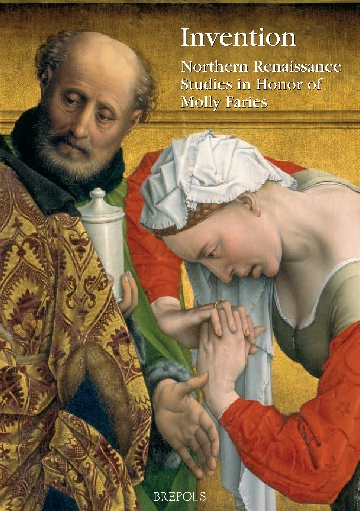
Invention
show More to view fulltext, buy and share links for:Invention show Less to hide fulltext, buy and share links for: InventionElucidating the steps that led to a finished work of art has been one of Molly Faries’ principal concerns in nearly forty years of research and teaching. A pioneer in infrared reflectography, she has demonstrated like no other scholar the importance of technical studies to art history, in the way that they provide insight into an artist’s technique and development, into collaboration within a workshop, and into master-pupil relationships. Molly Faries has taught generations of students and colleagues to view paintings not as static objects but as the results of successive choices.
The volume’s title, Invention: Northern Renaissance Studies in Honor of Molly Faries, evokes Molly’s passion for understanding an artist’s creative process. The term “invention” is here understood in the widest possible sense: How did a work of art come into being? How did an artist react to new stimuli or adapt to a new culture? Was innovation valued above adherence to a local tradition? To what degree could artists shape their patrons’ taste? How did artists transform their own inventions over time and adopt those of others? Was there a concept of invention specific to the Northern Renaissance and how did it differ from ours?
The authors who tackle these and other questions include university professors, curators, conservators, and conservation scientists, all recognized specialists in northern European art of the fifteenth and sixteenth centuries. The artists they discuss are among the greatest painters, manuscript illuminators, printmakers, and sculptors: Johan Maelwael, the Limbourg brothers, Jan van Eyck, Rogier van der Weyden, Hans Memling, Lieven van Lathem, Juan de Flandes, Jean Hey, Albrecht Dürer, Hieronymus Bosch, Master H.L., Jacques Du Broeucq, and Jan Brueghel the Elder.
This book, one of the few devoted specifically to the concept of invention in Northern Renaissance art, is richly illustrated with 32 color plates and 179 black-and-white reproductions; it includes an index.
-
-
-
Insignis Sophiae Arcator
show More to view fulltext, buy and share links for:Insignis Sophiae Arcator show Less to hide fulltext, buy and share links for: Insignis Sophiae ArcatorSome thirty years ago Michael Herren burst on the medieval Latin scene with his edition and translation of the notoriously difficult Hisperica Famina, and followed this a few years later with his translation of the prose works of Aldhelm. Notice was given that a junior scholar, unafraid to tackle some of the most obscure, complex, and arcane Latin, wished to make it accessible to non-Latinists as well as to those Latinists who lacked his particular skills. Not content with labouring alone in that field, Herren gathered scholars in Toronto to a conference on “Insular Latin Studies,” the proceedings of which he published two years later. Over the years he shed considerable light on such obscure texts and authors as Virgilius Maro Grammaticus, John Scottus Eriugena, and the Cosmographia by the pseudonymous Aethicus Ister. His research trail led him again and again to Ireland, and the Irish contribution to early medieval Latinity and to English, Carolingian, and even Italian culture. Recognizing the rich diversity of medieval Latin, Herren in 1990 founded The Journal of Medieval Latin and has, as its editor, provided a home for medieval Latinists of all stripes.
-
-
-
Intellect et imagination dans la philosophie médiévale / Intellect and Imagination in Medieval Philosophy / Intelecto e imaginação na Filosofia Medieval
show More to view fulltext, buy and share links for:Intellect et imagination dans la philosophie médiévale / Intellect and Imagination in Medieval Philosophy / Intelecto e imaginação na Filosofia Medieval show Less to hide fulltext, buy and share links for: Intellect et imagination dans la philosophie médiévale / Intellect and Imagination in Medieval Philosophy / Intelecto e imaginação na Filosofia MedievalLe XIème Congrès International de Philosophie Médiévale de la Société Internationale pour l’Étude de la Philosophie Médiévale (S.I.E.P.M..) s’est déroulé à Porto (Portugal), du 26 au 30 août 2002, sous le thème général: Intellect et Imagination dans la Philosophie Médiévale. A partir des héritages platonicien, aristotélicien, stoïcien, ou néo-platonicien (dans leurs variantes grecques, latines, arabes, juives), la conceptualisation et la problématisation de l’imagination et de l’intellect, ou même des facultés de l’âme en général, apparaissaient comme une ouverture possible pour aborder les principaux points de la pensée médiévale. Les Actes du congrès montrent que «imagination» et «intellect» sont porteurs d’une richesse philosophique extraordinaire dans l’économie de la philosophie médiévale et de la constitution de ses spécificités historiques. Dans sa signification la plus large, la théorisation de ces deux facultés de l’âme permet de dédoubler le débat en au moins six grands domaines: — la relation avec le sensible, où la fantaisie/l’imagination joue le rôle de médiation dans la perception du monde et dans la constitution de la connaissance; — la réflexion sur l’acte de connaître et la découverte de soi en tant que sujet de pensée; — la position dans la nature, dans le cosmos, et dans le temps de celui qui pense et qui connaît par les sens externes, internes et par l’intellect; — la recherche d’un fondement pour la connaissance et l’action, par la possibilité du dépassement de la distante proximité du transcendant, de l’absolu, de la vérité et du bien; — la réalisation de la félicité en tant qu’objectif ultime, de même que la découverte d’une tendance au dépassement actif ou mystique de toutes les limites naturelles et des facultés de l’âme; — la constitution de théories de l’image, sensible ou intellectuelle, et de ses fonctions.
-
-
-
Imagining the Book
show More to view fulltext, buy and share links for:Imagining the Book show Less to hide fulltext, buy and share links for: Imagining the BookImagining the Book offers a snapshot of current research in English manuscript study in the pre-modern period on the inter-related topics of patrons and collectors, compilers, editors and readers, and identities beyond the book. This volume responds to the recent development and institutionalization of ‘History of the Book’ within the wider discipline. Scholars working in the pre-printing era with the material vestiges of a predominantly manuscript culture are currently establishing their own models of production and reception. Research in this area is now an accepted part of twenty-first century medieval studies. Within such a context, it is frequently observed that scribal culture found imaginative ways to deal with the technological watersheds represented by the transition from memory to written record, roll to codex, or script to print. In such an ‘eventful’ environment, texts and books not infrequently slip through the semi-permeable boundaries laboured over by previous generations of medievalists, boundaries that demarcate orality and literacy; ‘literary’ and ‘historical’; ‘religious’ and ‘secular’; pre- and post-Conquest compositions, or ‘medieval’ and ‘Renaissance’ attitudes and writings. Once texts are regarded as offering indices of community- or self-definition, or models of piety and good behaviour (and the codices holding them statements of prestige and influence), the book historian is left to contemplate the real or imagined importance and status of books and writing within the larger socio-political, often local, milieux in which they were once produced and read.
-
-
-
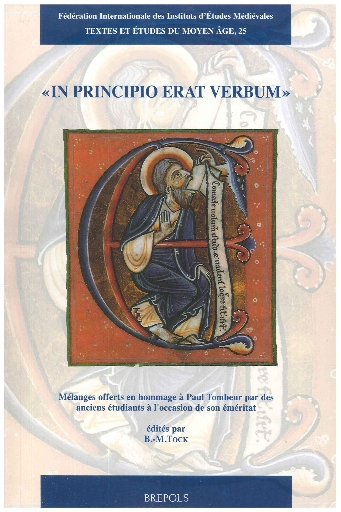
In principio erat verbum
show More to view fulltext, buy and share links for:In principio erat verbum show Less to hide fulltext, buy and share links for: In principio erat verbumPaul Tombeur a, pendant les nombreuses années de son enseignement à l’Université Catholique de Louvain, à Louvain-la-Neuve, été un professeur extraordinaire, passionné, exigeant, stimulant, curieux…
Plusieurs des médiévistes qu’il a formés se sont réunis pour lui rendre hommage. De manière très diverse, mais toujours à partir de textes latins, puisque la diversité chronologique et thématique du latin est très chère à Paul Tombeur. Avec Augustin et Grégoire, Odon de Cluny, Hugues de Saint-Victor, Etienne Langton, Thomas d’Aquin…, mais aussi Gautier de Thérouanne, Honorius Augustodunensis, les commentaires liturgiques du XIIe s., les chartes françaises ou flamandes, c’est bien un latin très divers qui est ici mis à l’honneur. Et qui l’est de manière très diverse, puisque les contributions portent sur la théologie, la philosophie, l’hagiographie, la liturgie, la langue, le droit, la diplomatique…
Un autre point commun entre les auteurs de ces Mélanges est que, comme Paul Tombeur, ils ont mis au cœur de leur recherche et de leur réflexion le texte, et plus encore le mot, qu’ils étudient le plus souvent à l’aide des bases de données informatisées (Cetedoc Library of Christian Latin Texts, Thesaurus Formarum…), dont ils montrent à quel point elles peuvent renouveler les études médiévales.
-
-
-
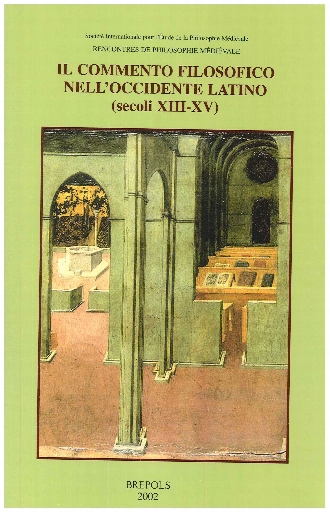
Il commento filosofico nell’occidente latino (secoli XIII-XV)
show More to view fulltext, buy and share links for:Il commento filosofico nell’occidente latino (secoli XIII-XV) show Less to hide fulltext, buy and share links for: Il commento filosofico nell’occidente latino (secoli XIII-XV)The practice of commentary upon authoritative texts is a prominent and fundamental feature of all teaching and learning during the Middle Ages. The roots of medieval commentaries made upon important philosophical texts lay in antiquity, but commentaries upon such texts — both ancient and more recent — flourished as never before during the late Middle Ages. Subsequently, beyond the end of the Middle Ages, the appeal and the habit of commentary declined, and to the point that today a considerable effort is required to understand medieval commentaries — their genres, their techniques, their evolution, their extraordinary persistence in use over many centuries — and perhaps too to understand the much diminished importance of the practice of commentary on select texts in current academic scholarship. The Philosophical Commentary in the Latin West (XIII-XV Centuries) proved to be a rich, varied and seemingly inexhaustible theme for the Colloquium of the International Society for the Study of Medieval Philosophy. The contributors who were invited discussed commentaries on texts of medicine, alchemy, biology, psychology, physics, ethics and politics as well as theology. The medieval commentators themselves were Arabs and Jews as well as Christians.
-