EMISCA

Collection Contents
1 - 20 of 23 results
-
-
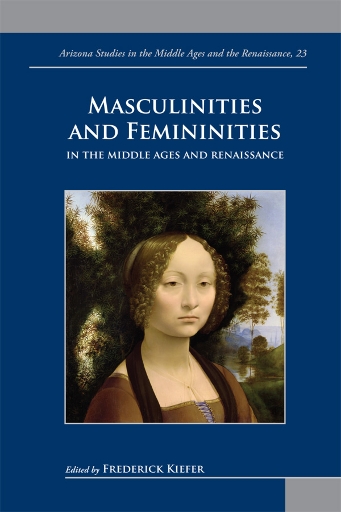
Masculinities and Femininities in the Middle Ages and Renaissance
show More to view fulltext, buy and share links for:Masculinities and Femininities in the Middle Ages and Renaissance show Less to hide fulltext, buy and share links for: Masculinities and Femininities in the Middle Ages and RenaissanceGender issues have been a persistent topic of investigation in European culture for more than a millennium. Today, perhaps no topic is of more immediate interest to students and scholars than sexual identity. If earlier eras imagined the categories of male and female as fixed, our own age has come to believe that notions of gender are, to a considerable extent, constructed by society and thus necessarily unstable. Using current understandings of sexuality, the contributors to this collection examine afresh such diverse works as Augustine’s Confessions, the Old English Beowulf, the French Richard Coer de Lyon, German mæren, Chrétien’s Yvain, writings by Wyclif and other Lollards, the poetry of Aemelia Lanyer, and an Italian portrait by Leonardo da Vinci. As the authors of this collection demonstrate, these thinkers persistently challenged the status quo, questioning assumptions felt as facts. In turn, they demonstrate how the medieval and Renaissance writers who are the subject of these essays helped prepare the way for understanding masculinity and femininity as masculinities and femininities.
-
-
-
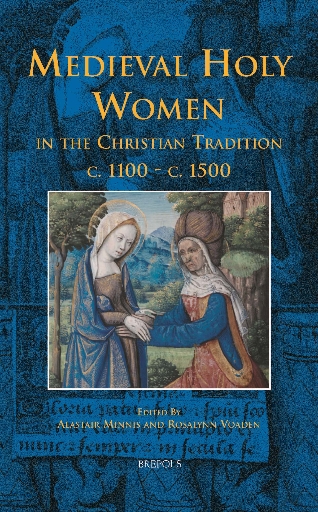
Medieval Holy Women in the Christian Tradition c.1100-c.1500
show More to view fulltext, buy and share links for:Medieval Holy Women in the Christian Tradition c.1100-c.1500 show Less to hide fulltext, buy and share links for: Medieval Holy Women in the Christian Tradition c.1100-c.1500Medieval Holy Women in the Christian Tradition offers the first wide-ranging study of the remarkable women who contributed to the efflorescence of female piety and visionary experience in Europe between 1100 and 1500. This volume offers essays by prominent scholars in the field which extend the boundaries of our previous knowledge and understanding of medieval holy women. While some essays provide new perspectives on the familiar names of the unofficial canon of mulieres sanctae, many others bring into the spotlight women less familiar now, but influential in their own time and richly deserving of scholarly attention. The five general essays establish a context for understanding the issues affecting female religious witness in the later Middle Ages. The geographical arrangement of the volume allows the reader to develop an awareness of the particular cultural and religious forces in seven different regions and to recognize how these influenced the writing and reception of the holy women of that area. Seventeen major figures have essays devoted exclusively to each of them; in addition, the survey chapters on each region introduce the reader to many more. The extensive bibliographies which follow each chapter encourage further reading and study.
Alastair Minnis was Director of the Centre for Medieval Studies and Head of the Department of English at the University of York, and is currently Douglas Tracy Smith Professor of English at Yale University. A Fellow of the Medieval Academy of America and of the English Association, he is the author of six monographs and the editor or co-editor of fifteen further volumes.
Rosalynn Voaden (D.Phil., University of York, UK) is the author of God’s Words, Women’s Voices, and is the editor or co-editor of several volumes in the field. She was a Research Fellow at St Anne’s College, Oxford, and is currently Associate Professor of English at Arizona State University.
-
-
-
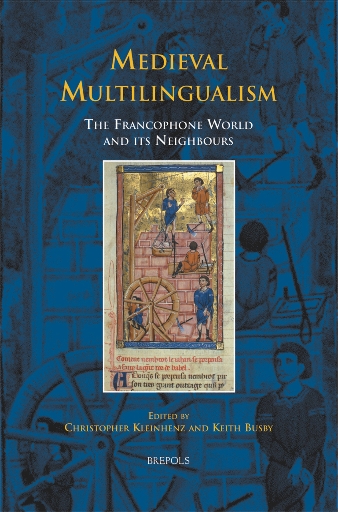
Medieval Multilingualism
show More to view fulltext, buy and share links for:Medieval Multilingualism show Less to hide fulltext, buy and share links for: Medieval MultilingualismThis volume contains essays on various aspects of multilingualism in medieval France, Italy, England, and the Low Countries. The fifteen contributions discuss the use of the different vernaculars and Latin in both literary and non-literary contexts, showing how cultural and social factors determined the choice of language for a particular purpose or type of text. The role of French in non-French contexts is a major theme of these essays: in the British Isles after the Norman Conquest, in Italy as a response to the need for mainly secular types of literature which did not exist in Italian, and in the Low Countries by virtue of geographic contiguity and change of rulers. Special attention is paid in the French context to the use of French and Occitan in areas of the South. Some essays examine specific cases or text-corpora, while others examine questions of multilingualism from more theoretical, linguistic, and rhetorical points of view. Together, they form an invaluable introduction to the topic of medieval multilingualism, illustrated by meticulously executed case-studies, which future work in the area will have to take into account.
-
-
-

Mettre en prose aux XIVe-XVIe siècles
show More to view fulltext, buy and share links for:Mettre en prose aux XIVe-XVIe siècles show Less to hide fulltext, buy and share links for: Mettre en prose aux XIVe-XVIe sièclesLoin de concerner uniquement romans et poèmes épiques — comme le ferait penser l’étude magistrale de Georges Doutrepont (1939) —, le phénomène «mise en prose» a touché aux xiv e-xvi e siècles tous les genres littéraires: vies de saints, œuvres de dérivation biblique, traités de dévotion, nouvelles, pièces de théâtre, voire la traduction en prose française de poèmes antérieurs en langue étrangère. Revisités depuis une trentaine d’années grâce à de nombreuses éditions critiques et à des études surtout littéraires, ces «nouveaux» textes méritaient une réflexion plus articulée: c’est ce qui a fait l’objet du iii e Colloque de l’aiemf (Association Internationale pour l’Étude du Moyen Français), qui s’est tenu à Gargnano del Garda — Università degli Studi di Milano, du 28 au 31 mai 2008. Les contributions réunies ici analysent donc des œuvres très diverses, de trois points de vue: linguistique, philologique, littéraire.
-
-
-
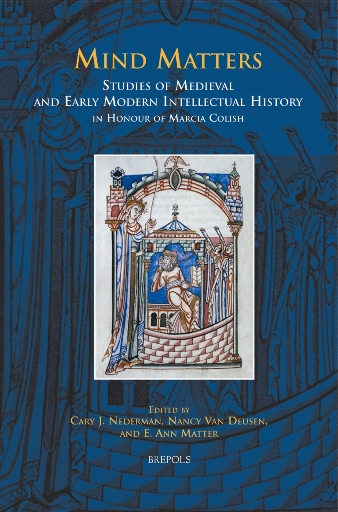
Mind Matters
show More to view fulltext, buy and share links for:Mind Matters show Less to hide fulltext, buy and share links for: Mind MattersMarcia Colish is one of the most influential scholars of the history of medieval and early modern thought, the author of numerous books and scores of articles in the field, as well as a pioneering President of the Medieval Academy of America. This volume honours her accomplishments with papers by her many colleagues, friends, and former students, who are themselves prominent scholars from across a range of disciplines. The chapters are diverse chronologically and topically, yet they are all stimulated by themes that Prof. Colish has explored during her long and distinguished career. They address the richness of European intellectual history between the twelfth and the sixteenth centuries, treating the multiple heritages of philosophy, theology, political theory, historiography, classical reception, and many other subjects to which her scholarship extends. The volume demonstrates the power of ideas in the development of European history generally, revealing that the careful study of the works of the ‘mind’ does indeed ‘matter’.
-
-
-
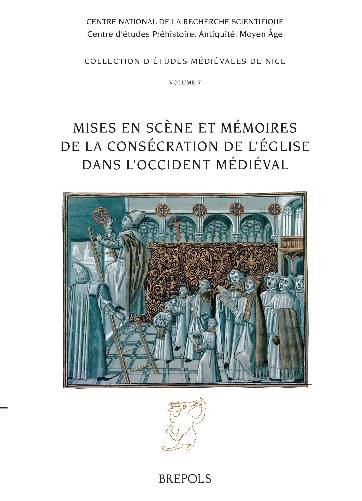
Mises en scène et mémoires de la consécration de l’église dans l’Occident médiéval
show More to view fulltext, buy and share links for:Mises en scène et mémoires de la consécration de l’église dans l’Occident médiéval show Less to hide fulltext, buy and share links for: Mises en scène et mémoires de la consécration de l’église dans l’Occident médiévalLe déroulement de la consécration ou dédicace d’une église est codifié dans l’Église latine aux vii e et viii e siècles pour devenir, au Moyen Âge central, un rituel fastueux. La consécration apparaît alors comme l’acte fondateur d’un nouvel espace-temps polarisé par le bâtiment ecclésial. Les paroles prononcées et les gestes effectués lors du rituel contribuent à manifester cette nouvelle naissance et les transformations qu’elle implique. Les mesures prises pour en conserver le souvenir inscrivent l’événement dans la mémoire de la communauté liée au lieu consacré.
Œuvre commune d’un groupe d’historiens, d’historiens de l’art et d’archéologues médiévistes, le présent ouvrage propose une réflexion sur les implications sociales de la consécration de l’église au Moyen Âge central. Il s’agit tout d’abord de comprendre la dynamique du rituel et ses effets sociaux, en étudiant les déplacements des protagonistes, les gestes des célébrants, tant furtifs (bénédictions, signes de croix, onctions) que durables (marquages au sol ou sur les murs), les paroles prononcées, la musique, les chants et les odeurs qui plongent le rituel dans une atmosphère multi-sensorielle. Il s’agit ensuite d’examiner les conditions de production d’un commentaire normatif et exégétique sur la consécration, tant en amont qu’en aval de la célébration, et de comprendre les liens qui unissent ces différents modes de discours sur le rituel. Il s’agit enfin de comprendre les formes et les effets sociaux des narrations de l’événement-consécration, tant par le verbe (de la notice à la chronique) que par l’inscription monumentale et l’image peinte ou sculptée. Ces trois axes de la réflexion sont envisagés de manière croisée et complémentaire.
Les auteurs ayant contribué à cet ouvrage sont implantés dans des structures universitaires ou de recherche en France, Suisse, Belgique, Canada et États-Unis.
-
-
-
Making and breaking the rules: succession in medieval Europe, c. 1000-c.1600. Établir et abolir les normes: la succession dans l’Europe médiévale, vers 1000-vers 1600
show More to view fulltext, buy and share links for:Making and breaking the rules: succession in medieval Europe, c. 1000-c.1600. Établir et abolir les normes: la succession dans l’Europe médiévale, vers 1000-vers 1600 show Less to hide fulltext, buy and share links for: Making and breaking the rules: succession in medieval Europe, c. 1000-c.1600. Établir et abolir les normes: la succession dans l’Europe médiévale, vers 1000-vers 1600Les stratégies familiales au Moyen Âge recourent à un vaste éventail de dispositifs destinés à assurer la survie de la famille et du pouvoir qu’elle gère parfois. Mariages, alliances, processus d’adoption même permettent de conserver et d’étendre l’identité familiale, que ce soit sous la forme de la lignée ou de la parenté large; mais ce sont sans doute les stratégies adoptées au moment des successions qui sont les plus cruciales pour la perpétuation des familles. Les études réunies ici tentent de confronter et de comparer les systèmes de succession en vigueur dans les différentes régions d’Occident, de la Russie à l’Irlande, de la Scandinavie à la péninsule Ibérique. Dans le cas des successions princières, elles démontrent que l’étude du principe électoral permet de mieux comprendre, a contrario, ce qui fait la force du sentiment dynastique, jamais absent. Et la comparaison avec d’autres domaines où jouent les processus de succession, qu’il s’agisse de l’Église ou de l’office, vient alimenter des interrogations nouvelles sur les formes du désir de pérennité.
-
-
-

Manuscripts and Monastic Culture
show More to view fulltext, buy and share links for:Manuscripts and Monastic Culture show Less to hide fulltext, buy and share links for: Manuscripts and Monastic CultureEach of the studies in this volume draws upon a manuscript, or a group of manuscripts, that shed light on the practice of monastic life during this period of reform. Many, but not all, of the papers focus on the monastery of Admont in central Austria. Admont was one of the most important spiritual, cultural, and intellectual centres in the high Middle Ages, and its magnificent library still houses an extensive collection of manuscripts - a rich resource both for the history of the monastery and for the broader history of medieval religious life. The book brings together the work of an international group of scholars whose work touches on various aspects of twelfth-century Admont, and the broader movement for reform and renewal in Germany and Austria.
With the publication of Charles Homer Haskin’s important work, The Renaissance of the Twelfth Century (1933), came a new way of looking at the civilization of the high Middle Ages. Scholars have since investigated many aspects of this revival: the rise of the universities, the development of canon law, the emergence (or re-emergence) of a heightened sense of human individuality, and the revival of religious fervour that has been labelled a reformation before the Reformation. Much of this scholarly work has focused on northern-central Italy, France, and England. Germany, however, has been little studied in this context, in part because the nature and trajectory of the reform there differed from that seen elsewhere in Europe. The essays in the book both explore connections between Germanic lands and the wider western European context, and consider the unique spiritual and intellectual climate of Germany’s monasteries.
-
-
-
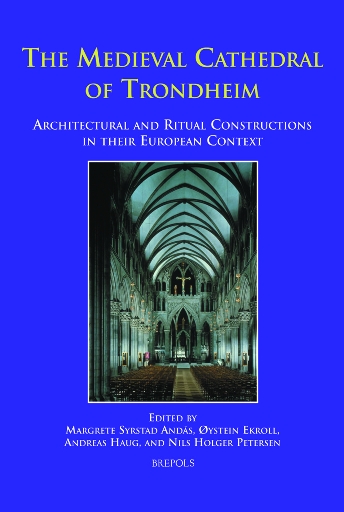
The Medieval Cathedral of Trondheim
show More to view fulltext, buy and share links for:The Medieval Cathedral of Trondheim show Less to hide fulltext, buy and share links for: The Medieval Cathedral of TrondheimMedieval cathedrals and the various practices connected to them form an important and complex part of the European cultural heritage. The buildings themselves and their reception into the modern arts ensure their presence within today’s cultural memories and sensibilities. In the mid-twelfth century, a new archbishop’s seat was erected in the Norwegian city of Trondheim (or Nidaros) in the far north of Europe. This interdisciplinary volume, written by scholars of history, architecture, and liturgy, explores the medieval cathedral of Trondheim as a local construction in a European context. As a see of the Western Church, it was set in an international Latinate culture. At the same time, the construction of the building itself and the ritual practices in and around it were influenced by local political, religious, and cultural conditions. The relationship between the physical construction of a cathedral and its function in medieval liturgical and other ritual practices is a topic of wide relevance for architectural and liturgical scholarship. The so-called Ordo Nidrosiensis, the thirteenth-century ordinal of the province of Nidaros, is an immense help in interpreting the architectural construction and sacred space of Nidaros Cathedral and the Ordo is dealt with in many of the articles. In accordance with general medieval practice, both the Nidaros ordinal and this volume may be described as international in content but edited with regard to local considerations.
-
-
-
The Medieval Translator. Traduire au Moyen Age
show More to view fulltext, buy and share links for:The Medieval Translator. Traduire au Moyen Age show Less to hide fulltext, buy and share links for: The Medieval Translator. Traduire au Moyen Age[Fundamental to all translation work, the concept of “displacement” allows one to take into account the multiple successive states inhering in a single text, and to interpret these variations. Translation is, in effect, a form of transfer; more specifically, it involves a movement from one context to another, be it national, social, political, historical, linguistic or religious. The texts examined here illustrate, each in their unique way, the relationship between contextual change and audience. They are also the product of subtle interactions between a variety of elements, the result of which is a “reinvention” of their respective roles and uses over time. For example, a text intending to entertain may also have educational outcomes; a book of local miracles may attract pilgrims and contribute to the economic life of a monastery; a text and its translations may at some point be appropriated for polemical purposes, while a library of translated texts founded on humanist principals may also serve political ends.
Furthermore, each successive adaptation and its accompanying annotations impacts upon the tonality of a text. While this diversity of meanings may inspire some (such as the medieval poet Marie de France), it moreover raises a number of important and difficult questions for the modern translator. How, for example, does one translate the “harmonics” underlying a series of mystical puns? The “solution” usually involves a compromise that both enhances and undermines the translated text.
This volume presents a selection of twenty-eight papers delivered at the Seventh International Conference dedicated to The Theory and Practice of Translation in the Middle Ages, which took place at the University of Paris III — Nouvelle Sorbonne in July 2004. The period covered by the texts and their translations extends from antiquity to the present day. The literary and critical breadth of these papers, as well as the rigorous interrogation of the modern translation theory, illustrates the remarkable vitality and diversity of current scholarship in this field.
,Au cœur de toute activité de traduction, le concept de déplacement permet de rendre compte des multiples états successifs d’un même texte et d’en interpréter les variations. Toute traduction est en effet une translation, c’est-à-dire un changement d’environnement, que ce dernier soit national, social, politique, historique, linguistique ou ecclésial. Les textes examinés ici témoignent chacun à sa manière des transformations qu’ils ont subies lorsque, changeant de langue, de style ou d’époque, ils ont changé de destinataires. La dynamique qui les traverse se nourrit de subtils côtoiements: un désir légitime de divertir peut fort bien s’accommoder d’une intention didactique; un recueil de miracles locaux peut attirer des pèlerins, contribuant ainsi à la vie économique d’un monastère; un texte et ses traductions peuvent devenir l’objet d’utilisations polémiques; se constituer en humaniste une bibliothèque de traductions peut aussi servir un dessein politique.
Par ailleurs les transpositions successives et leurs gloses, comme en musique, entraînent des changements de tonalité. Ce ‘surplus’ de sens qu’encourage Marie de France pourra cependant se heurter à des résistances: comment par exemple préserver d’une langue à l’autre toutes les harmoniques que libère un enchaînement de jeux de mots mystiques? Ainsi l’inévitable compromis qui s’imposera au traducteur sera souvent le choix d’un enrichissement doublé d’une déperdition.
Ce volume présente une sélection des communications entendues lors du septième colloque international consacré à la théorie et la pratique de la traduction des textes au Moyen Age qui s’est tenu à l’Université de Paris III — Sorbonne Nouvelle en juillet 2004. La période couverte par ces textes et leurs traductions s’étend de l’Antiquité jusqu’à nos jours. Ce sont au total vingt-huit études qui sont ici proposées. La richesse des domaines abordés, la haute technicité des analyses, de même que la place faite aux questionnements de la traductologie moderne illustrent la remarquable vitalité des études actuelles relatives aux multiples aspects de la traduction des textes médiévaux.
]
-
-
-
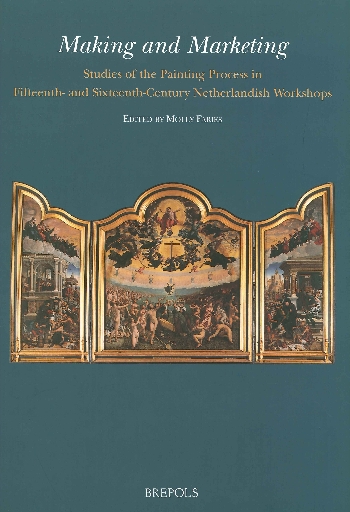
Making and Marketing: Studies of the Painting Process in Fifteenth- and Sixteenth-Century Netherlandish Workshops
show More to view fulltext, buy and share links for:Making and Marketing: Studies of the Painting Process in Fifteenth- and Sixteenth-Century Netherlandish Workshops show Less to hide fulltext, buy and share links for: Making and Marketing: Studies of the Painting Process in Fifteenth- and Sixteenth-Century Netherlandish Workshops
-
-
-

Mary of Oignies
show More to view fulltext, buy and share links for:Mary of Oignies show Less to hide fulltext, buy and share links for: Mary of OigniesMary of Oignies (1177-1213) was one of the first of the holy women who transformed religious life in the late twelfth and early thirteenth centuries. Living as a beguine and a free anchoress, she offered spiritual and temporal guidance to people from a diverse range of social stations and professions, including high clerics and common lay-people. Indeed, contemporary and later accounts reveal that Mary of Oignies greatly influenced the medieval Christian world.
-
-
-
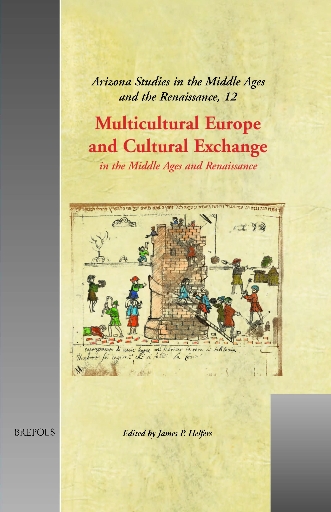
Multicultural Europe and Cultural Exchange
show More to view fulltext, buy and share links for:Multicultural Europe and Cultural Exchange show Less to hide fulltext, buy and share links for: Multicultural Europe and Cultural ExchangeContemporary criticism focuses on contested issues at the borders and in the interstices of cultures. Medieval and Early Modern European culture, previously conceived as monolithic, is now being reconceived as heterogeneous, a site of tensions, contest, accommodation, and subversion. The essays in this volume describe a Europe that is multicultural in fact, and trace the exchanges between cultural groups, subcultures and dominant cultures, and between individuals and the cultures that they inhabit.
The critical works in this volume are drawn from a variety of disciplines: art history, literary studies, history and historiography, and cultural studies. A number are interdisciplinary, examining topics of cultural studies as diverse as fashion, rhetorical self-fashioning, and the history of architecture, all in the context of their surrounding contexts. A special strength of this volume is the visual impact of its three illustrated articles. These essays will appeal to all who see the importance of reconceiving European history in terms of contemporary multicultural perspectives, as well as to those who are specially interested in medieval architecture, the history of fashion, French and English Renaissance literature, Hebraic studies, and medieval and Renaissance Mediterranean history.
-
-
-
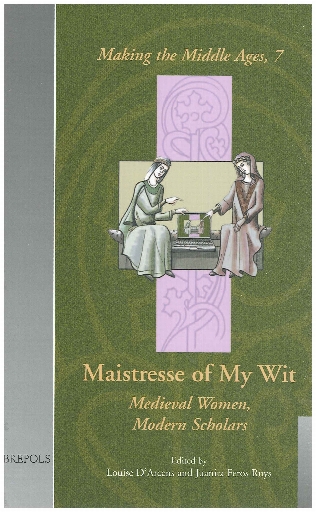
Maistresse of My Wit
show More to view fulltext, buy and share links for:Maistresse of My Wit show Less to hide fulltext, buy and share links for: Maistresse of My WitThis volume explores the reciprocal relationships that can develop between medieval women writers and the modern scholars who study them. Taking up the call to ‘research the researcher’, the authors indicate not only what they bring to their study from their own personal experience, but how their methodologies and ways of thinking about and dealing with the past have been influenced by the medieval women they study. Medieval women writers discussed include those writing in the vernacular such as Christine de Pizan and Margaret Paston, those writing in Latin such as Hildegard of Bingen, Heloise, and Birgitta of Sweden, and the works transcribed from women mystics such as Margery Kempe, Hadewijch, and Julian of Norwich. Attention is also given to medieval women as the readers, consumers and patrons of written works. Issues considered in this volume include the place of ethics, interestedness and social justice in contemporary medieval studies, questions of alterity, empathy, essentialism and appropriation in dealing with figures of the medieval past, the permeable boundaries between academic medieval studies and popular medievalism, questions of situatedness and academic voice, and the relationship between feminism and medieval studies. Linked to these issues is the interrelation between medieval women and medieval men in the production and consumption of written works both for and about women and the implications of this for both female and male readers of those works today. Overarching all these questions is that of the intellectual and methodological heritage - sometimes ambiguous, perhaps even problematic - that medieval women continue to offer us.
-
-
-
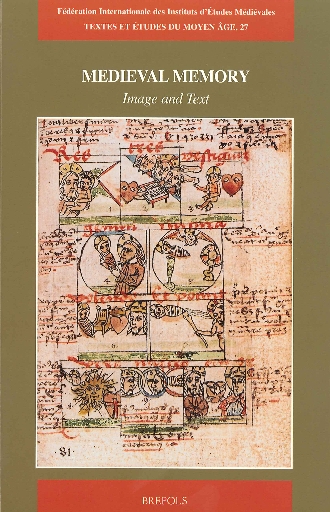
Medieval Memory. Image and Text
show More to view fulltext, buy and share links for:Medieval Memory. Image and Text show Less to hide fulltext, buy and share links for: Medieval Memory. Image and TextScholars of medieval literary and cultural history have grown more aware of the crucial role of memory in the production, reception and functioning of texts and manuscripts. We owe this to the pioneering studies of Frances Yates and, more recently, Mary Carruthers and Susan Hagen.
Historical linguists for their part try to describe the linguistic means by which listeners and readers are enabled to store the information flow in their memories.
The relationship between medieval texts and memory is at the centre of this book. Seven historians of literature, three linguists and one art historian have contributed eleven essays, subsumed under three sections. The first section, ‘Memory Texts’, discusses genres that belong to medieval mnemonics. In the second and most extensive section, ‘Memory Aspects in Texts’, the focus is on literature and, more particularly, on how attention for mnemonics can enhance our insight into the form, composition and functioning of literary texts and manuscripts. Mental and visual images play a central role here. ‘Text Memory’, the final section, analyses medieval (French) literary discourse as a fabric of reference chains, in which different grammatical markers generate and organise mental representations in the memory.
-
-
-
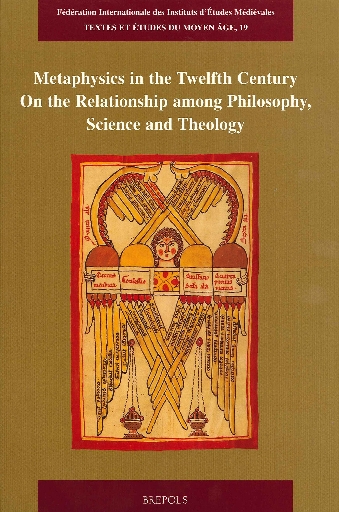
Metaphysics in the Twelfth Century
show More to view fulltext, buy and share links for:Metaphysics in the Twelfth Century show Less to hide fulltext, buy and share links for: Metaphysics in the Twelfth CenturyAlthough metaphysics as a discipline can hardly be separated from Aristotle and his works, the questions it raises were certainly known to authors even before the reception of Aristotle in the thirteenth century. Even without the explicit use of this term the twelfth century manifested a strong interest in metaphysical questions under the guise of “natural philosophy” or “divine science”, leading M.-D. Chenu to coin the expression of a twelfth century “éveil métaphysique”. In their commentaries on Boethius and under the influence of Neoplatonism, twelfth century authors not only anticipate essential elements of thirteenth century metaphysics, they also make an original contribution to the history of metaphysics by attempting to integrate the theory of first principles, philosophical theology and ontology. This volume presents and examines the contributions of the twelfth century to metaphysics made by selected Jewish, Christian and Muslim authors of the Iberian Peninsula and Francia.
-
-
-
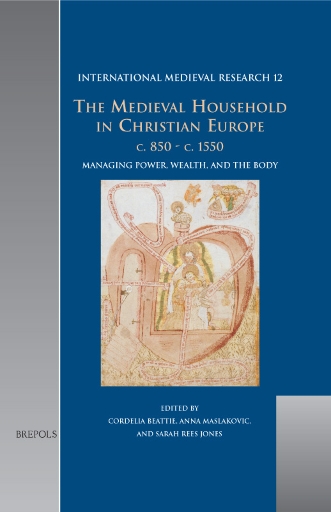
The Medieval Household in Christian Europe, c. 850-c. 1550
show More to view fulltext, buy and share links for:The Medieval Household in Christian Europe, c. 850-c. 1550 show Less to hide fulltext, buy and share links for: The Medieval Household in Christian Europe, c. 850-c. 1550This volume asks whether there was a common structure, ideology, and image of the household in the medieval Christian West. In the period under examination, noble households often exercised great power in their own right, while even quite humble households were defined as agents of government in the administration of local communities. Many of the papers therefore address the public functions and perceptions of the household, and argue that the formulation of domestic (or family) values was of essential importance in the growth and development of the medieval Christian state.
Contributors to this volume of collected essays write from a number of disciplinary perspectives (archaeological, art-historical, historical and literary). They examine socially diverse households (from peasants to kings) and use case studies from different regions across Europe in different periods within the medieval epoch from c. 850 to c. 1550. The volume both includes studies from archives and collections not often covered in English-language publications, and offers new approaches to more familiar material. It is divided into thematic sections exploring the role of households in the exercise of power, in controlling the body, in the distribution of wealth and within a wider economy of possessions.
-