EMISCA

Collection Contents
16 results
-
-
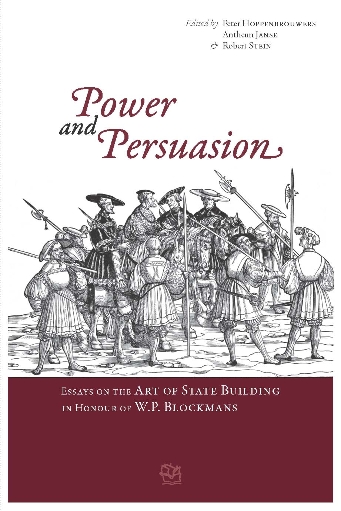
Power and Persuasion
show More to view fulltext, buy and share links for:Power and Persuasion show Less to hide fulltext, buy and share links for: Power and PersuasionThe transformation of the myriad of medieval kingdoms, principalities, local lordships, city-‘states’ and peasant ‘republics’ into ‘modern’ states, claiming some measure of sovereignty, remains one of the core themes of European history, because it goes to the very heart of how we see Europe in our own time. Some 20 leading experts cast new light on various aspects of this process, such as political communication, foreign diplomacy, dynastic self-representation, political economy, national identities, and military resources. The articles are a tribute to the prominent medieval historian, Wim Blockmans, on the occasion of his retirement as professor of medieval history at Leiden University and rector of the Netherlands Institute for Advanced Study in the Humanities and Social Sciences (nias) at Wassenaar.
-
-
-

Priscien
show More to view fulltext, buy and share links for:Priscien show Less to hide fulltext, buy and share links for: PriscienChassé d’Afrique par les invasions vandales et installé à Constantinople vers le début du VIe siècle, Priscien a engagé une refonte de la grammaire antique en faisant confluer ses principaux courants, la tradition grammaticale romaine et les apports grecs issus de la philologie alexandrine, auxquels il a intégré des recherches menées dans d’autres domaines de l’analyse de la parole, en rhétorique et en philosophie.
La création de la première grammaire moderne est ainsi d’abord une synthèse, qui correspond dans la partie orientale de l’Empire aux espoirs qu’au même moment, à Rome, Boèce et son cercle plaçaient dans l’hellénisme pour renouveler la vie intellectuelle d’une partie occidentale tombée aux mains des Barbares.
Auteur à multiples dimensions, chez qui se croisent les spécificités et les ambiguïtés de l’Antiquité tardive, Priscien a été le passeur par qui l’époque médiévale a eu connaissance des éléments les plus complexes de la description linguistique antique. Son influence a été immense durant tout le Moyen Âge et ses échos sont perceptibles jusque dans la tradition classique.
Malgré cela, aucune traduction dans une langue moderne n’a encore été faite des principaux textes de Priscien, et la période actuelle commence seulement à mesurer l’importance et l’originalité de cet auteur.
Le présent volume est la première mise au point d’ensemble et dresse un état des recherches à l’issue du colloque international Priscien (ENS Lettres et Sciences Humaines, Lyon, 10 - 14 octobre 2006). Ses 40 articles présentent les points de vue transversaux d’antiquisants, de linguistes, d’historiens et de médiévistes. Réparties en six sections, les contributions traitent successivement de la position historique de Priscien et de la transmission de ses œuvres, des sources et du contenu de son texte majeur, les Institutions Grammaticales, de ses scripta minora et de la réception de sa doctrine du Haut Moyen Âge à la Renaissance.
L’ouvrage comporte une bibliographie globale et plusieurs index (auteurs anciens et modernes, manuscrits, passages cités, concepts et termes).
-
-
-

Parisian Confraternity Drama of the Fourteenth Century
show More to view fulltext, buy and share links for:Parisian Confraternity Drama of the Fourteenth Century show Less to hide fulltext, buy and share links for: Parisian Confraternity Drama of the Fourteenth CenturyParisian Confraternity Drama of the Fourteenth Century is the first volume of studies devoted solely to the Miracles de Nostre Dame par personnages. These anonymous plays, found in a single luxury manuscript, comprise the only major corpus of dramatic works in French that have survived from the fourteenth century. They derive from a rich diversity of sources: narrative miracle accounts, saints’ lives, epic chansons de geste, vernacular romances, and history. Each play is preceded by a richly detailed miniature, some two dozen include a sermon in prose, and each includes at least one rondel to be sung by the cortege accompanying the Virgin. They constitute both a collective demonstration of the fervent late-medieval devotion to the Virgin, and a substantial archive of contemporary insights into the issues of power, authority, and influence that struggled for dominance in fourteenth-century Paris. As this extraordinary collection has, in its entirety, attracted little critical attention to date, this volume will be of significant interest to scholars wishing to explore the plays in their literary context, as well as those interested in medieval drama, the Marian tradition, and the role of confraternities in fourteenth-century French culture.
-
-
-
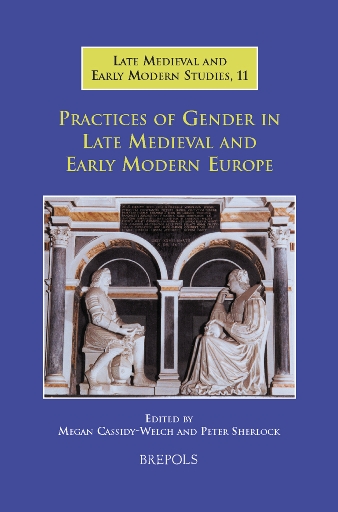
Practices of Gender in Late Medieval and Early Modern Europe
show More to view fulltext, buy and share links for:Practices of Gender in Late Medieval and Early Modern Europe show Less to hide fulltext, buy and share links for: Practices of Gender in Late Medieval and Early Modern EuropeThis collection argues that gender must be considered as both an approach to history, and as a reflection of the deep workings of the lived, historical past. The sixteen original essays explore social and cultural expressions of gender in Europe from the fourteenth to the eighteenth centuries. They examine theories and practices of gender in domestic, religious, and political contexts, including the Reformation, the convent, the workplace, witchcraft, the household, literacy, the arts, intellectual spheres, and cultures of violence and memory. The volume exposes the myriad ways in which gender was actually experienced, together with the strategies used by individual men and women to negotiate resilient patriarchal structures. Overall, the collection opens up new synergies for thinking about gender as a category of historical analysis and as a set of experiences central to late medieval and early modern Europe.
-
-
-
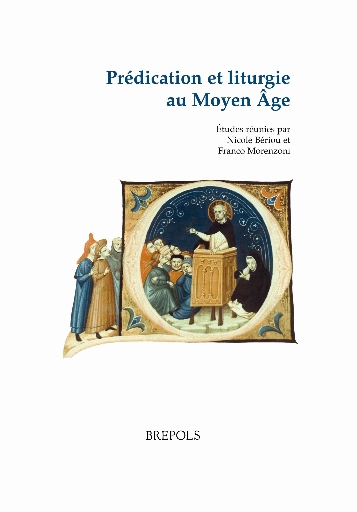
Prédication et liturgie au Moyen Âge
show More to view fulltext, buy and share links for:Prédication et liturgie au Moyen Âge show Less to hide fulltext, buy and share links for: Prédication et liturgie au Moyen ÂgeLa transmission des traces écrites de la prédication médiévale prend habituellement la forme de recueils de sermons ordonnés selon les fêtes du calendrier liturgique. Pour autant, la relation d’intimité entre prédication et liturgie qu’on serait tenté d’en déduire n’est ni nécessaire, ni évidente. La discrétion des liturgistes médiévaux sur les pratiques de prédication l’atteste, et de même, celle des auteurs d’artes predicandi sur la liturgie.
Comment la prédication et la liturgie, ces deux manières complémentaires, mais clairement distinctes, de construire un discours public sur la foi, et de pratiquer la religion, au sein de la société, sous la forme d’actions auxquelles on prête une efficacité symbolique, se sont-elles rejointes, voire mutuellement renforcées au cours de l’histoire de la christianisation? Telle est la question qui sous-tend la quinzaine d’études réunies dans ce volume. Le millénaire médiéval s’y trouve à dessein enchâssé entre la période d’épanouissement de la prédication des Pères, qui est aussi le temps de l’élaboration d’assises durables pour la liturgie, et le moment crucial des remises en question de tous ordres qui, à partir du xvi e siècle, permettent d’observer le temps passé comme dans un miroir. La parole y est surtout donnée aux prédicateurs, en réalité très diserts sur les textes lus et chantés, les gestes, les vêtements, les rites et les usages de la liturgie – en particulier, sur les rituels de consécration ou de dédicace des églises, et sur les processions de la Fête-Dieu. Si les prédicateurs, de la sorte, donnent sens au culte, la liturgie est aussi pour eux un instrument pédagogique mis au service de la mémorisation de leur message, un langage qu’ils s’approprient en recourant à la citation poétique, ou à la transposition métaphorique des mots du rituel, voire une autorité qui leur sert d’argument de persuasion ou, plus rarement, dont ils éprouvent la validité rationnelle. De plus, dès le xiii e siècle, dans les villes, les frères mendiants n’hésitent pas à détacher leurs prises de parole des temps et des lieux ordinaires de la célébration liturgique au profit de la conquête et de la sacralisation d’un temps et d’un espace du quotidien, alors que le théâtre et les livres de lecture s’emparent des techniques du sermon et des ressources de la liturgie, en des formes renouvelées de la pratique pastorale.
-
-
-
Princely Virtues in the Middle Ages
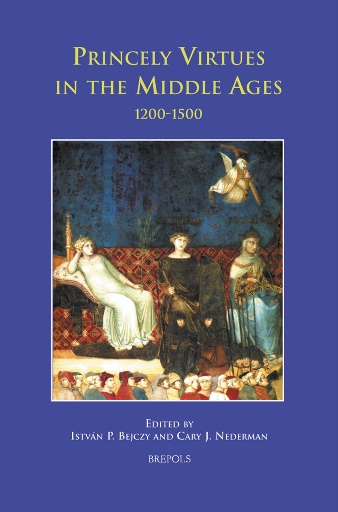
show More to view fulltext, buy and share links for:Princely Virtues in the Middle Ages show Less to hide fulltext, buy and share links for: Princely Virtues in the Middle AgesThe contributors to this book examine the diverse roles played by moral virtues in the political writing of the Later Middle Ages. Medieval political thought has a long tradition of scholarship, and its ethical dimension has always received sustained attention. This volume specifically concentrates on the meaning and function of virtues in a political context, a theme which has thus far been neglected. The authors deal with Latin texts (occasionally in combination with vernacular ones) from the thirteenth to fifteenth centuries that define, legitimize, or criticize secular rule by using catalogues of virtues, originating from ancient philosophy as well as Christian moral theology. The contributions discuss various aspects related to this theme, such as the relation between the virtues of rulers and general moral precepts; the tension between secular or philosophical perspectives on virtue and Christian moral thought; the use of moral virtues for political ends; the balance between praise of the prince’s virtues and criticism of his vices; and so forth. The medieval texts under discussion are of French, German, English, Italian, and Spanish origin, and vary from educational treatises and historiography to moral theology and political philosophy.
-
-
-

People and Space in the Middle Ages, 300-1300
show More to view fulltext, buy and share links for:People and Space in the Middle Ages, 300-1300 show Less to hide fulltext, buy and share links for: People and Space in the Middle Ages, 300-1300This book compares community definition and change in the temperate zones of southern Britain and northern France with the starkly contrasting regions of the Spanish meseta and Iceland. Local communities were fundamental to human societies in the pre-industrial world; crucial in supporting their members and regulating their relationships, as well as in wider society. While geographical and biological work on territoriality is very good, existing archaeological literature is rarely time-specific and lacks wider social context; most of its premises are too simple for the interdependencies of the early medieval world. Historical work, by contrast, has a weak sense of territory and no sense of scale; like much archaeological work, there is confusion about distinctions - and relationships - between kin groups, neighbourhood groups, collections of tenants and small polities.
The contributors to this book address what determined the size and shape of communities in the early historic past and the ways that communities delineated themselves in physical terms. The roles of the environment, labour patterns, the church and the physical proximity of residences in determining community identity are also examined. Additional themes include social exclusion, the community as an elite body, and the various stimuli for change in community structure. Major issues surrounding relationships between the local and the governmental are investigated: did larger polities exploit pre-existing communities, or did developments in governance call local communities into being?
-
-
-

Plantagenêts et Capétiens: confrontations et héritages
show More to view fulltext, buy and share links for:Plantagenêts et Capétiens: confrontations et héritages show Less to hide fulltext, buy and share links for: Plantagenêts et Capétiens: confrontations et héritagesAu printemps 1204, Aliénor d’Aquitaine s’éteint tandis que les armées de Philippe Auguste conquièrent l’Anjou et la Normandie. La disparition de la reine coïncide avec l’effondrement de l’Empire Plantagenêt, tout comme, une cinquantaine d’années auparavant, son remariage avec Henri II avait présidé à la naissance de ce conglomérat disparate de territoires de l’Ouest de la France et des îles britanniques. Épouse, mère ou veuve, Aliénor est le personnage clef de cette construction géopolitique, qui est avant tout une histoire de famille. Il en va de même dans le combat acharné qui oppose les Plantagenêts, sa nouvelle dynastie d’adoption, aux Capétiens de Louis VII, dont elle fut jadis la femme, et de Philippe Auguste, son beau-fils. Le conflit entre les deux maisons touche directement des principautés territoriales du continent. Les lignages aristocratiques de Normandie, Bretagne, Anjou, Poitou et Gascogne participent ainsi à ces luttes, qu’attisent parfois les fils d’Henri II ou le neveu de Jean Sans Terre, en révolte contre leur père ou oncle. Enfin, pour mieux gouverner et pour donner de l’éclat à leur cour, les Plantagenêts s’entourent d’intellectuels promouvant une culture originale. Parenté, guerre et savoir aux XIIe et XIIIe siècles sont au cœur de cet ouvrage.
-
-
-
Prêcher la paix et discipliner la société
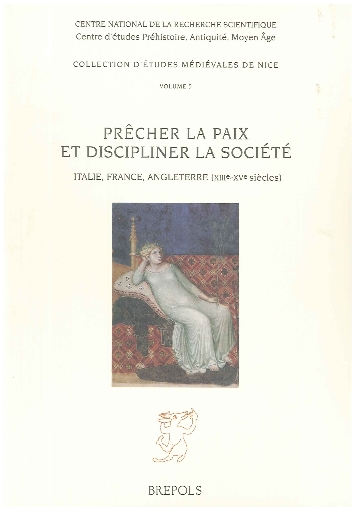
show More to view fulltext, buy and share links for:Prêcher la paix et discipliner la société show Less to hide fulltext, buy and share links for: Prêcher la paix et discipliner la sociétéLa paix donnée par le Christ aux fidèles selon le verset de Jean (14, 27) — «Je vous laisse la paix, je vous donne ma paix» — fut envisagée, au Moyen Âge, en fonction de la capacité qu’avaient les hommes de l’établir au sein de la société et de la sauvegarder. La paix était étroitement liée à une théologie de la domination, renvoyant à Dieu tout en servant de fondement à divers modèles d’autorité et d’obéissance.
C’est de cette paix prêchée pour discipliner et ordonner la société qu’il est surtout question dans ce livre, qui s’ouvre par une étude sur le sens et les usages des concepts de paix et de guerre entre l’Antiquité classique et l’Empire chrétien. La période envisagée ensuite — xiii e-xv e siècles — est celle du renforcement, en Europe occidentale, des institutions urbaines, de la monarchie et de la papauté.
Les études réunies ici ne se limitent pas aux productions savantes; elles tentent aussi de comprendre les relations entre idéologie et pratiques sociales, entre propagande et réception, entre discours et mécanismes de discipline sociale, entre prédication et mouvements collectifs, en observant comment les éléments majeurs énoncés dans les traités se sont glissés dans la parole publique.
À une époque où l’on assiste à l’essor de toutes sortes de prises de parole et à un certain impérialisme de la prédication, le discours sur la paix pose la question des modalités de la rencontre des champs ecclésiastique et laïque dans ce genre de discours: quant au statut des personnes qui prennent la parole (clercs ou laïcs), aux lieux (l’église, la place publique, le conseil urbain, le parlement), aux formes (le sermon ou la harangue), à la langue (latin ou vulgaire), ou encore aux sources (références aux Anciens et à l’Écriture).
-
-
-
Perspectives for an Architecture of Solitude
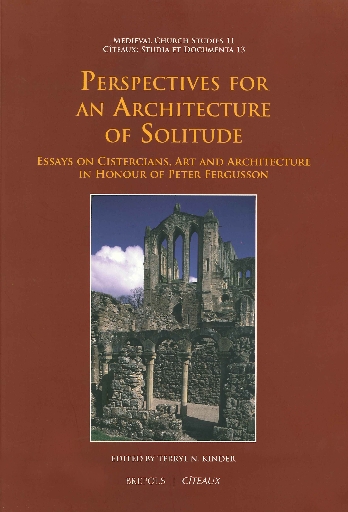
show More to view fulltext, buy and share links for:Perspectives for an Architecture of Solitude show Less to hide fulltext, buy and share links for: Perspectives for an Architecture of SolitudeWhat was it that gave medieval art and architecture its form and style? What is it that attracts people to medieval art and architecture, especially that of the Cistercians? What shaped medieval buildings and determined their embellishments - and what now determines the way we look at them?
Some of the most intriguing questions in monastic and ecclesiastical architecture and archaeology are discussed in this tribute to Peter Fergusson and his lifetime of scholarship as an historian of medieval art and architecture, especially of the Cistercians.
These thirty-four essays range from a discussion of the earliest Christian legislation on art (fourth century) to an account of a garden project of 1811 designed to efface all previous monastic habitation. Between these chronological signposts are studies on the design, siting, building, and archaeology of churches, infirmaries, abbots’ lodgings, gatehouses, private chambers, grange chapels, and the life lived within and around them. Geographically, the papers range from the British Isles through Spain, France, Flanders, and Germany to the centre of the medieval world: Jerusalem.
They treat of the complexities of building and re-building; of architectural and artistic adaptations to place, period, and political upheaval; of the interrelationship of text and structure; and of the form, iconography, and influence of some of the great churches and cathedrals of the Middle Ages. This is a wide-ranging and authoritative collection of studies which is essential reading for any historian of medieval art and architecture.
-
-
-
Political Assemblies in the Earlier Middle Ages
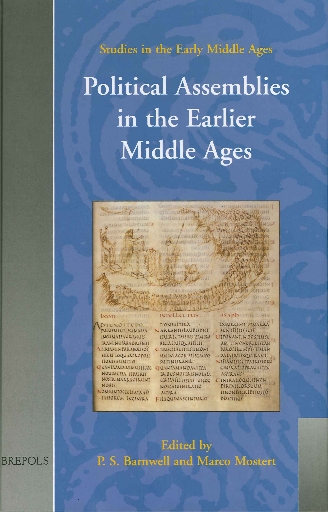
show More to view fulltext, buy and share links for:Political Assemblies in the Earlier Middle Ages show Less to hide fulltext, buy and share links for: Political Assemblies in the Earlier Middle AgesAssembly is a central feature of the European political process between the demise of the Roman Empire and the rise of the bureaucratic state in the twelfth and thirteenth centuries. Historians have often neglected the crucial rule of political assemblies in their own right, concentrating instead on exceptional or extraordinary attention-catching events which occurred at assemblies. Earlier generations of scholars tried to discern in such assemblies the forerunners of later medieval parliaments and other forms of representative government. By contrast, the contributors to this volume present medieval assemblies in their own terms.
Were political assemblies in the earlier Middle Ages convened to confirm decisions already taken elsewhere or were they genuinely deliberative? How, if at all, did political assemblies create consensus? At what level(s) of the political and administrative hierarchy were assemblies held, who attended such gatherings, how were they conducted, and where were they held? The main focus is on assemblies of emperors, kings, and princes, and on those of townsfolk, though some more local assemblies are also discussed. The over-arching thematic structure relates to the purposes of assemblies and how they worked, their practical and ritual or symbolic aspects, and the degree to which they were stage-managed, and by whom. The contributors bring archaeological, as well as historical, evidence to bear and present a range of geographical, political and historiographical approaches and traditions.
-
-
-
Peasants into Farmers?
show More to view fulltext, buy and share links for:Peasants into Farmers? show Less to hide fulltext, buy and share links for: Peasants into Farmers?Since his pioneering article of 1976 the American historian Robert P. Brenner has tried to come to terms with an issue that has puzzled historians for generations: how can we explain the differences in growth-patterns of North Western European countries in the transition from feudalism to capitalism. In a frontal attack on both the ‘(homeostatic) demographic’ and ‘commercialization’ models, Brenner traced the roots of the divergent evolutions back to rural and feudal ‘social-property relations’. In the debate that immediately followed Brenner’s first article, and in subsequent exchanges, the Low Countries were sorely neglected, although areas such as Flanders and Holland played a decisive role in the economic development of Europe. This was partly due to a lack of publications on Dutch rural history in foreign languages. This volume aims to fill this lacuna. It draws upon substantial research, and confronts the Brenner thesis with new results and hypotheses; and it contains a powerful and detailed response by Brenner himself.
-
-
-
Powerbrokers in the Late Middle Ages. The Burgundian Low countries in a European Context
show More to view fulltext, buy and share links for:Powerbrokers in the Late Middle Ages. The Burgundian Low countries in a European Context show Less to hide fulltext, buy and share links for: Powerbrokers in the Late Middle Ages. The Burgundian Low countries in a European ContextThe fifteenth century was of crucial importance for the Low Countries. After centuries of gradual political disintegration, a rapid unification took place during the reign of the Burgundian dukes, Philip the Good and Charles the Bold. How did this new ‘state’ work? To most people the political high-points are well known; but the slow process of integration that had by then started remains, by contrast, largely unknown. In this process, the regional institutions, which were thoroughly modernised by the Burgundian dukes, seem to have played a key role. The first part of this volume discusses the role of these regional institutions. In particular it studies the role in the principalities of Brabant, Holland and Flanders of civil servants as formal and informal ‘powerbrokers’ between central government and subjects in the Low Countries during the Burgundian period.
The Low Countries, however, cannot be treated in isolation from its neighbours: they were situated literally on the frontier of the Holy Roman Empire and France and there were intensive commercial and political contacts with England. Therefore, by way of comparison, the second part of this volume contrasts developments in other European countries, in particular, France, the Empire and England.
The articles in this volume are written by a group of distinguished specialists in the field of administrative history, working at universities in Belgium, France, Germany, the Netherlands and the United Kingdom.
-
-
-
Peace and Negotiation: Strategies for Coexistence in the Middle Ages and the Renaissance
show More to view fulltext, buy and share links for:Peace and Negotiation: Strategies for Coexistence in the Middle Ages and the Renaissance show Less to hide fulltext, buy and share links for: Peace and Negotiation: Strategies for Coexistence in the Middle Ages and the RenaissancePeace was far from a pale, static concept - a simple lack of violence - in the Middle Ages and Renaissance. Rather, it was at times constructed as a rich and complex, positive and dynamic ideal. The thirteen articles in this volume cover a broad range of disciplines, times, and geographical areas and explore strategies that were used in the past to resolve conflict and attain peace. They examine events, texts, and images that date from the fifth through the sixteenth centuries, and their authors focus not only on Western Europe, but also on Scandinavia, the Caucausus, and Egypt. This volume rests on the assumption that peace covers a spectrum of situations that connects the personal and the political. Therefore, the papers presented here examine not only how nations negotiated peace, but also how individuals did. Similarly, although several essays spotlight those in the seat of power, others explore the situation of those lower on the social hierarchy. Our views about peace and conflict, as this collection makes clear, are shaped in part by the mentalités of the past. Although some peacemaking strategies may be unacceptable to us today - forced marriages and conversions, for example - we can learn from other strategies how to transcend or modify various modes of antagonistic thinking.
-